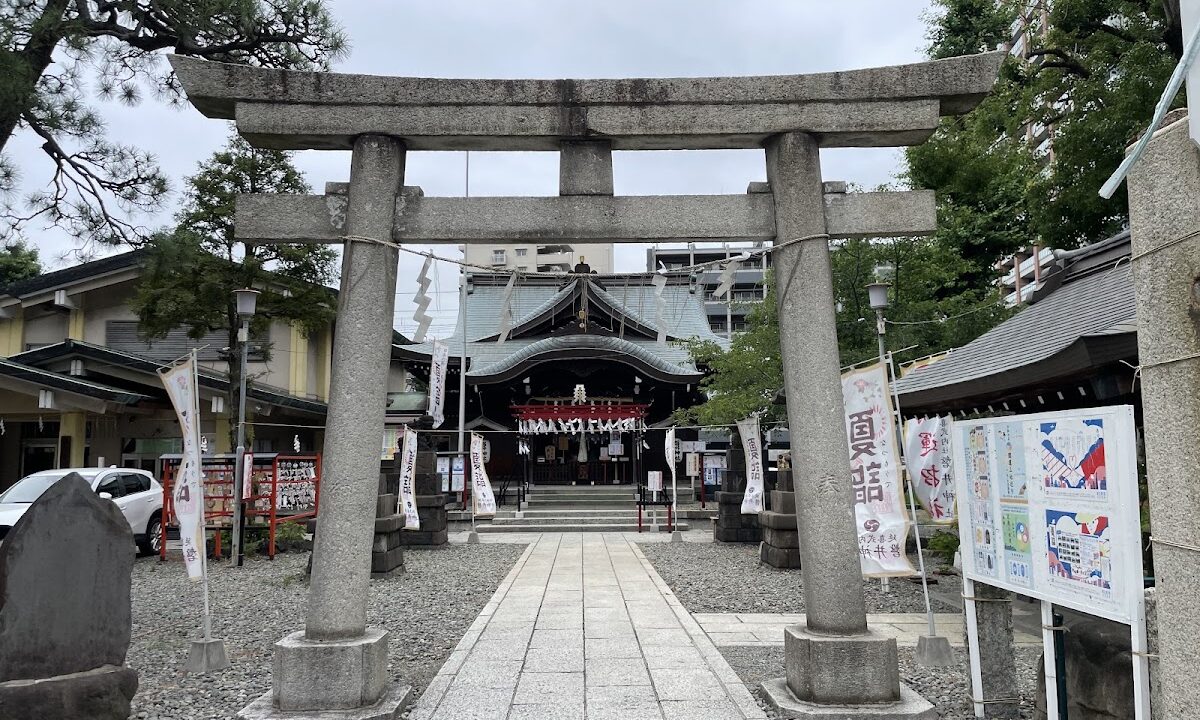
Iwai Shrine (Ota Ward, Tokyo) Complete Guide | History, Goshuin (Shrine Seal), and Access Information
Iwai Shrine, located in Omori Kita, Ota Ward, Tokyo, is a prestigious shrine with over 1000 years of history, listed in the Engishiki Jinmyocho (a list of shrines compiled during the Heian period). Formerly known as Suzumori Hachimangu, it held an important position as the head shrine of Musashi Province, overseeing all Hachiman shrines throughout the province.
This article comprehensively introduces all the information you need to know before visiting Iwai Shrine, including its detailed history, enshrined deities, highlights within the grounds, goshuin information, and access methods.
Basic Information about Iwai Shrine
Location: 2-20-8 Omori Kita, Ota-ku, Tokyo
Former Shrine Rank: Gosha (Village Shrine)
Engishiki-listed Shrine: Engishiki-listed Shrine (Minor Shrine)
Deities Enshrined: Emperor Ojin, Emperor Chuai, Empress Jingu, Hime Okami, Onamuchi no Mikoto
Annual Festival Date: September 15th
Nearest Station: Approximately 2 minutes on foot from Omori Kaigan Station on the Keikyu Main Line, approximately 10 minutes on foot from Omori Station on the JR Keihin Tohoku Line
History of Iwai Shrine
From Founding to the Heian Period
Iwai Shrine is said to have been founded in August of the 2nd year of Emperor Bidatsu’s reign (573 AD). With a history of approximately 1450 years, it is one of the oldest shrines in this region. From the beginning, it has enshrined deities, including Emperor Ojin, as a Hachiman Shrine.
In the first year of the Jōgan era (859) during the Heian period, the *Nihon Sandai Jitsuroku* (True Records of Three Reigns of Japan) records that “Iwai Shrine in Musashi Province was ranked as a Junior Fifth Rank official shrine,” indicating that it was officially recognized as an official shrine by the imperial court. During this period, Iwai Shrine was positioned as the head shrine of Hachiman shrines in Musashi Province and is said to have become a central figure in Hachiman worship within Musashi.
In the *Engishiki Jinmyōchō* (List of Shrines in the Engi Era), compiled in the fifth year of the Enchō era (927) during the late Heian period, it was officially listed as a Shikinaisha (shrine listed in the Engishiki) in Ebara District, Musashi Province. Shikinaisha are historically significant shrines listed in the Engishiki; only about 3,000 such shrines nationwide, and only 44 in Musashi Province, were selected, making them highly prestigious shrines.
From the Medieval Period to the Edo Period
During the Eishō era (1504-1521) of the medieval period, the shrine suffered a disaster when its buildings were destroyed by fire. However, the faith of the local people continued uninterrupted afterward. During the Edo period, Iwai Shrine flourished as a shrine visited by many travelers due to its location near the Tokaido road. Records show that in 1725, Tokugawa Yoshimune, the eighth shogun, commissioned the construction of the shrine buildings, indicating its importance to the shogunate.
During this period, the “Iwai Well” in front of the shrine became widely known as sacred and medicinal water, quenching the thirst of travelers on the Tokaido. A legend circulated that “if one’s heart is pure, the water is clear; if one has an evil heart, it becomes salty,” and it became popular among the common people of Edo as medicinal water effective against all kinds of illnesses.
During the Edo period, it was also known as “Suzumori Hachimangu,” “Suzunomori Hachimangu,” and “Suzugamori Hachimangu,” and was revered as the guardian shrine of the region.
From Modern to Contemporary Times
After the Meiji Restoration’s separation of Shinto and Buddhism, it was ranked as a village shrine in 1872. Subsequently, in 1934 (Showa 9), it was elevated to the rank of a local shrine, further increasing its importance in the region.
However, in the Great Tokyo Air Raid of May 1945 (Showa 20), the shrine buildings were destroyed by fire. After the post-war reconstruction period, the shrine buildings were rebuilt in September 1954 (Showa 29), resulting in its current form.
Even today, it remains a representative shrine of Ota Ward, attracting the faith of local residents and drawing many worshippers due to its historical value as a Shikinaisha (a shrine listed in the Engishiki, an ancient Japanese legal code).
About the Enshrined Deities
Five deities are enshrined at Iwai Shrine.
Emperor Ojin
The 15th Emperor, enshrined as the principal deity. He is worshipped as Hachiman-sama at Hachiman shrines throughout Japan and is revered as a god of military fortune and national protection.
Emperor Chūai
The 14th Emperor of Japan and father of Emperor Ōjin. Known for his military prowess.
Empress Jingū
Empress of Emperor Chūai and mother of Emperor Ōjin. Known for the legend of her conquest of the Three Kingdoms of Korea, she is also worshipped as a goddess of safe childbirth.
Hime Ōkami
One of the three Hachiman gods, she is believed to represent the three Munakata goddesses.
Ōnamuchi no Mikoto
Another name for Ōkuninushi no Mikoto, known as the god of nation-building. He is believed to bestow blessings such as matchmaking, business prosperity, and healing from illness.
These five deities are believed to bestow a wide range of blessings, including lasting military fortune, national peace and security, protection from misfortune and good fortune, family safety, matchmaking, and safe childbirth.
Highlights of the Shrine Grounds
Shrine Building
Rebuilt in 1954, the shrine building follows the traditional style of shrine architecture while being built with post-war technology, resulting in a robust structure. It is a Gongen-zukuri style building, with the worship hall, offering hall, and main sanctuary integrated into one structure.
Komainu and Lion Cub
The pair of guardian lion-dogs (komainu) standing on the shrine grounds have a unique feature, even within Tokyo. Each lion-dog is carved with three lion cubs (a total of six), depicting a parent lion protecting its cubs. These lion-dogs are cherished as symbols of fertility, safe childbirth, and family harmony, and are known for being touched by many worshippers.
Site of Iwai’s Well
There was once a well here, “Iwai’s Well,” which gave the shrine its name. During the Edo period, it was known as a source of pure water for travelers on the Tokaido road, and was believed to be a sacred and medicinal water that could cure all kinds of illnesses. A legend remains that says, “If your heart is pure, the water will be clear; if your heart is evil, it will be salty.” While the well itself no longer exists, an information board commemorating its history has been erected.
Torii Gate and Approach
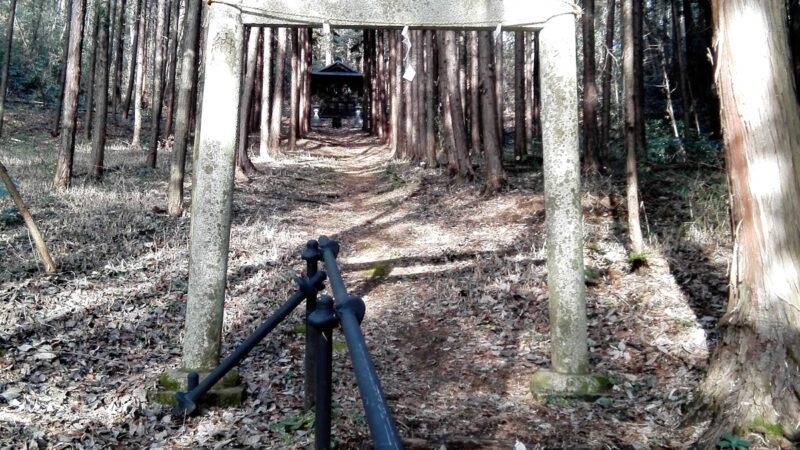
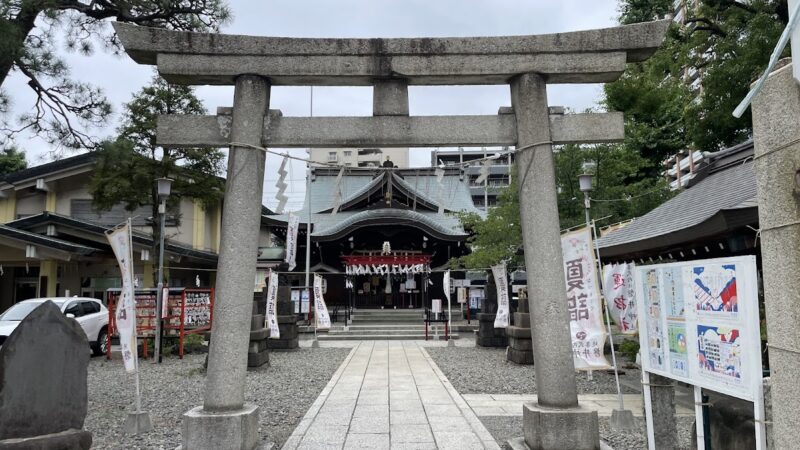
Passing through the torii gate facing Dai-ichi Keihin (National Route 15), a quiet shrine grounds unfolds. Stepping away from the hustle and bustle of the city center, you can feel a tranquility that feels like another world.
Tokai Seven Lucky Gods – Benzaiten
Iwai Shrine is one of the shrines on the Tokai Seven Lucky Gods pilgrimage, and Benzaiten is enshrined there. Benzaiten is worshipped as the goddess of performing arts, learning, and wealth, and many pilgrims on the Seven Lucky Gods pilgrimage visit the shrine. It is especially lively in January each year during the Seven Lucky Gods pilgrimage.
Cultural Properties
Iwai Shrine possesses several cultural properties of historical value.
Stone Structures
Several stone structures from the Edo to Meiji periods remain on the shrine grounds, conveying the state of worship at that time. The names and years of donors are inscribed on the water basin and stone lanterns of the purification fountain.
Ancient Documents
The shrine office houses ancient documents dating back to the Edo period, including construction records by Tokugawa Yoshimune. These are valuable resources for understanding the history of Ota Ward.
Goshuin Information
Iwai Shrine offers goshuin (shrine stamps) to visitors.
Standard Goshuin
You can receive a goshuin with the name of Iwai Shrine and the date of your visit written in ink, stamped with the shrine’s seal. The offering fee is generally 300 yen.
Monthly Goshuin
A unique feature of Iwai Shrine is the monthly goshuin. Featuring designs based on seasonal flowers and events, you can receive a different goshuin each month. The colorful and beautiful designs are popular, attracting many collectors.
Goshuin (Shrine Seal) of the Tokai Seven Lucky Gods
As one of the shrines on the Tokai Seven Lucky Gods pilgrimage, the shrine also offers a Goshuin of Benzaiten (the goddess of fortune). You can collect them on a special commemorative paper.
Hours of Offering
The hours for offering Goshuin are usually from 9:00 AM to around 5:00 PM, but these may change due to religious ceremonies or events. If you want to be sure to receive one, it is recommended to check by phone in advance.
Annual Festivals and Rituals
Grand Festival (September 15th)
This is the most important festival of Iwai Shrine, held annually around September 15th. It is a grand festival involving the entire community, with a portable shrine procession and devotional performances.
New Year’s Visit (January 1st-3rd)
Many worshippers visit the shrine for their first shrine visit of the new year. The shrine is especially crowded with people visiting Benzaiten during the Tokai Seven Lucky Gods pilgrimage.
Monthly Festival
Monthly festivals are held on the 1st and 15th of each month to pray for the peace and well-being of parishioners and worshippers.
Other Rituals
Various rituals are held throughout the year, including the Setsubun Festival, the Summer Purification Ceremony, and the Autumn Grand Festival.
Items Offered
Amulets
Iwai Shrine offers a variety of amulets.
- Exorcism Amulet: For those in their unlucky year or those seeking protection from misfortune.
- Safe Childbirth Amulet: An amulet for safe childbirth, drawing on the divine virtues of Empress Jingu.
- Fertility Amulet: An amulet for those wishing for children, featuring a lion cub design.
- Traffic Safety Amulet: For safe driving and cycling.
- Academic Success Amulet: Popular among students and those taking exams.
- Health Amulet: For those wishing for recovery from illness and longevity.
Ema (Votive Tablets)
Ema, on which you can write your wishes and dedicate them, are also available. Ema designed with lion cubs are especially popular for prayers for fertility and safe childbirth.
Amulets
Amulets for enshrining in your home shrine are also available.
Access Methods
Access by Train
From Keikyu Main Line “Omori-Kaigan Station”
The nearest station is Omori-Kaigan Station on the Keikyu Main Line, and it’s very easily accessible, about a 2-minute walk. Exit the ticket gate and head towards Dai-ichi Keihin (National Route 15). Turn right, and you’ll immediately see the shrine’s torii gate.
From JR Keihin-Tohoku Line “Omori Station”
It’s about a 10-minute walk from JR Omori Station. Exit the east exit and walk towards Dai-ichi Keihin.
Access by Bus
Several bus routes, including Tokyu Bus and Keikyu Bus, pass nearby. The nearest bus stop is “Omori-Kaigan Station”.
Access by Car
Located along Dai-ichi Keihin (National Route 15), it’s about 5km from Shinagawa and easily accessible from Kawasaki. However, dedicated parking is limited, so we recommend using public transportation. There are coin-operated parking lots nearby.
Address and Map
2-20-8 Omori Kita, Ota-ku, Tokyo 143-0016
Nearby Tourist Attractions
Shinagawa Aquarium
An aquarium within walking distance of Omori Kaigan Station. Dolphin and sea lion shows are popular.
Omori Shell Mound Ruins Garden
A park preserving the ruins of the Omori Shell Mound, known as the birthplace of Japanese archaeology. Recommended for those interested in history.
Heiwa-no-Mori Park
A large park where you can enjoy field athletics. A popular spot for families.
Suzugamori Execution Ground Site
The site of an execution ground from the Edo period, known as a historical site. Within walking distance of Iwai Shrine.
Manners and Points for Visiting a Shrine
Proper Way to Visit a Shrine
- Bow before passing through the torii gate.
- Walk on the path, avoiding the center.
- Cleanse your hands and mouth at the water basin.
- Bow twice, clap twice, and bow once in front of the main hall.
- Bow once again at the torii gate on your way out.
Best Time to Visit
The quiet morning hours are recommended for a peaceful visit. If you are visiting to obtain the monthly limited-edition goshuin (shrine stamp), the beginning of the month may be crowded.
Regarding Photography
Photography is generally permitted on the shrine grounds, but consideration should be given to avoid disturbing other visitors or during religious ceremonies. Photography inside the main hall is prohibited.
Summary of the Charms of Iwai Shrine
Iwai Shrine, located in the heart of Tokyo’s Ota Ward, is a Shikinaisha (shrine listed in the Engishiki) with a history of over 1000 years, preserving a place of worship that has continued since ancient times. This shrine boasts a variety of attractions, including its status as the principal Hachiman shrine of Musashi Province, the legend of the Iwai Well known for its sacred water, its unusual guardian lion-dogs accompanied by cubs, and its beautiful, monthly changing goshuin (shrine stamps).
Its convenient location, just a two-minute walk from Omori-Kaigan Station, is another major draw. Known as one of the shrines on the Tokai Seven Lucky Gods pilgrimage, it attracts many visitors throughout the year.
Why not spend some time quietly praying at this historic shrine, forgetting the hustle and bustle of the city and finding peace of mind? For those collecting goshuin, the monthly changing stamps will be another reason to visit.
When you visit Ota Ward, be sure to stop by Iwai Shrine and experience its history and tranquil atmosphere.