Komadome Hachiman Shrine (Setagaya Ward, Tokyo) Complete Guide | History, Deities, Goshuin (Shrine Seal), and Access Information
Komadome Hachiman Shrine, located in Kamiuma, Setagaya Ward, Tokyo, is a historic shrine founded in 1308. Despite its location near the Komadome overpass along the Kan-nana Avenue, the shrine grounds are enveloped in a tranquil atmosphere and are cherished by the local community as the guardian shrine of Kamiuma, Sangenjaya, and parts of Komazawa.
This article comprehensively introduces all the information you need to know before visiting Komadome Hachiman Shrine, including its detailed history, the origin of its deities, highlights of the grounds, annual events, goshuin information, and transportation access.
Basic Information on Komadome Hachiman Shrine
Official Name: Komadome Hachiman Shrine
Alternative Name: Wakamiya Hachiman
Address: 5-35-3 Kamiuma, Setagaya-ku, Tokyo 154-0011
Phone Number: 03-3410-5933
Former Shrine Rank: Village Shrine
Founded: Tokuji 3 (1308)
Annual Festival Date: October 15th
Reception Hours: 8:00 AM – 5:00 PM
Komadome Hachiman Shrine, also known as “Komadome Hachiman Shrine in Kamiuma,” has been selected as one of the “100 Scenic Views of Setagaya” and is known as one of the representative historical shrines of Setagaya Ward.
Deities Enshrined
Komadome Hachiman Shrine enshrines the following two deities:
Amaterasu Omikami
The supreme deity in Japanese mythology, a goddess who personifies the sun. She is revered as the ancestral deity of the Imperial family and is also known as the principal deity of Ise Grand Shrine. She is also written as Amaterasu Omikami.
Emperor Ojin
The 15th Emperor of Japan, he is enshrined as Hachiman Okami in Hachiman shrines throughout Japan. He is worshipped as the god of military fortune and industrial development, and is believed to bring a wide range of blessings, including national peace and security, victory, family safety, academic success, traffic safety, protection from illness and disaster, and prosperity of descendants.
Enshrined Deities and Subsidiary Shrines
Komadome Hachiman Shrine enshrines Wakamiya Hachiman as an enshrined deity and Itsukushima Shrine (Benzaiten) as a subsidiary shrine. These two deities are associated with a sad legend concerning Tokiwa-hime, a concubine of Kira Yoriyasu, lord of Setagaya Castle, which will be explained in detail in the history section below.
History of Komadome Hachiman Shrine
Origin of the Shrine and the Name “Komadome”
According to shrine tradition, Komadome Hachiman Shrine was founded in Tokuji 3 (1308), at the end of the Kamakura period. It is said that a man named Hojo Sakon Taro Nyudo Jogan, the local lord, enshrined Hachiman Daishin, whom he deeply revered, and founded the shrine.
There is an interesting legend regarding the origin of the shrine’s name, “Komadome.” When Hojo Sakon Taro Nyudo Jogan was deciding on a location for the shrine, his horse (koma) suddenly stopped and refused to move. Taking this as a divine sign, Jogan designated that location as the shrine’s site, and it is said that the shrine came to be called “Komadome Hachiman” because the horse “stopped” there.
Relationship with the Kamakura Shogunate
At the time of its founding, the Kamakura Shogunate was in power, and Setagaya was under the influence of the samurai government centered in Kamakura. The Hojo clan was a family that served as regents of the Kamakura Shogunate, and the fact that Hojo Sakontaro Nyudo Jogan, a member of the Hojo clan, invited Hachiman to this area as the local lord is an example of the spread of Hachiman worship in samurai society.
The Legend of Wakamiya Hachiman and Tokiwa-hime
A noteworthy aspect of the history of Komadome Hachiman Shrine is the tragic legend surrounding Kira Yoriyasu, the lord of Setagaya Castle.
Tokiwa-hime, a concubine of Kira Yoriyasu, was falsely accused of infidelity. Unable to prove her innocence, Tokiwa-hime committed suicide while pregnant. Later, the truth was revealed, and Tokiwa-hime’s innocence was proven.
Deeply regretting his stillborn child, Kira Yoriyasu enshrined him at Komadome Hachiman Shrine, naming it Wakamiya Hachiman. It is also said that he enshrined Tokiwa-hime, who lost her life unjustly, as Benzaiten (Itsukushima Shrine) within the shrine grounds.
This legend is also said to be related to the origin of the “Sagi-sou” flower, the official flower of Setagaya Ward, and there is a legend that Tokiwa-hime transformed into a white heron and flew away.
Changes since the Edo Period
During the Tenna era (1681-1684), stone steps were donated, and the shrine buildings were improved. Throughout the Edo period, Komadome Hachiman Shrine was the guardian shrine of Kamiuma Hikisawa Village (present-day Kamiuma area), attracting local faith.
In the Meiji era, under the modern shrine ranking system, it was ranked as a village shrine. Even after the Meiji era, it has continued to be the center of faith for the people of Kamiuma, Sangenjaya, and parts of Komazawa, serving as the local tutelary deity.
Highlights of the Shrine Grounds
Shrine Building
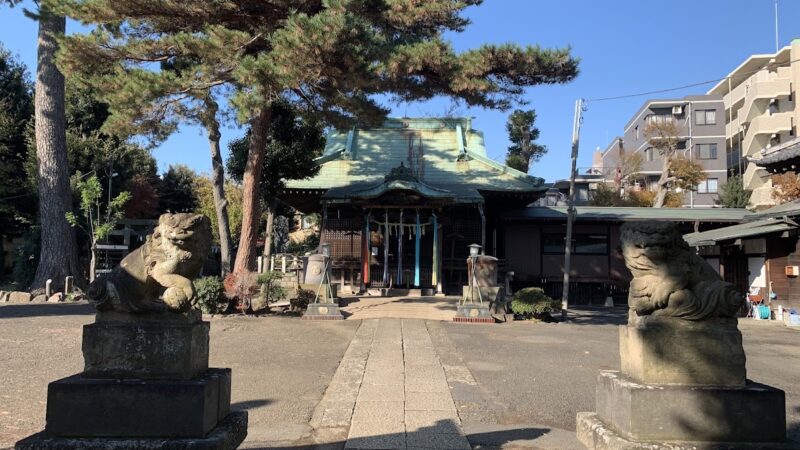
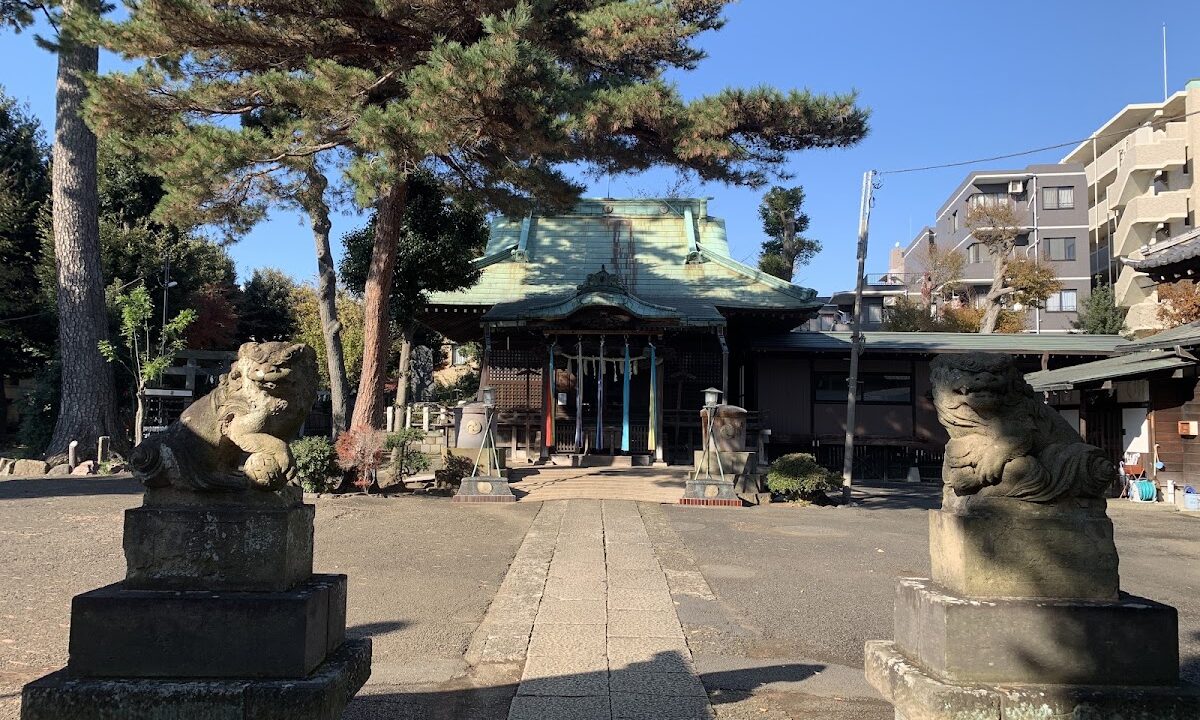
Komadome Hachiman Shrine’s shrine building, despite being located along the major metropolitan thoroughfare of Kan-nana-dori, creates a tranquil space surrounded by trees. The main hall sits at the top of a stone staircase, welcoming visitors with a solemn atmosphere.
Japanese Black Pine, One of Setagaya Ward’s 100 Famous Trees
Within the shrine grounds stands a magnificent Japanese black pine, designated as one of Setagaya Ward’s 100 Famous Trees, a testament to the shrine’s long history. This pine adds a dignified touch to the shrine’s landscape and is a popular spot for photography.
Setagaya Ward Protected Forest Area
The grounds of Komadome Hachiman Shrine are designated as a protected forest area by Setagaya Ward, maintaining abundant greenery despite being in the heart of the city. The shrine grounds, where birdsong can be heard, serve as a place of tranquility away from the hustle and bustle, and a place of relaxation for local residents.
Itsukushima Shrine (Benzaiten)
The Itsukushima Shrine, enshrined within the grounds, originates from the aforementioned legend of Princess Tokiwa. Benzaiten is worshipped as the goddess of performing arts, wealth, and wisdom, and the shrine is particularly popular with female worshippers.
Setagaya’s 100 Scenic Views
The selection of “Kamiuma no Komadome Hachiman Shrine” as one of Setagaya’s 100 Scenic Views demonstrates its high cultural and historical value in the region. It is a beloved landmark representing Setagaya Ward.
Annual Events and Major Festivals
Komadome Hachiman Shrine holds various festivals throughout the year.
January
New Year’s Day – Saitansai (New Year’s Day Festival)
A festival praying for happiness in the new year. It attracts many visitors for the first shrine visit of the year.
February
February 11th – Kigen Kenkokusai (National Foundation Day Festival)
A festival celebrating the founding of Japan is held to coincide with National Foundation Day.
April
Third Sunday – Memorial Service for War Dead
A ceremony to comfort the souls of those who died in the war.
June
June 28th – Summer Purification Ceremony (Nagoshi no Oharai)
A Shinto ritual to purify oneself of sins and impurities accumulated over the past six months and pray for good health and protection from illness for the remaining half of the year. A ritual of passing through a ring of reeds may also be performed.
October
October 15th – Annual Grand Festival Ceremony
This is the most important festival of Komadome Hachiman Shrine.
Saturday and Sunday including the third Sunday – Annual Grand Festival “Komadome Matsuri”
A grand festival involving the entire community, featuring a portable shrine procession, performances, stalls, and many visitors. It is the largest event in the region, bringing together parishioners from Kamiuma, Sangenjaya, and Komazawa.
November
November 23rd – Niiname-sai (Harvest Festival)
A festival to give thanks for a bountiful harvest and to offer the new grain to the gods.
December
December 28th – Oharai (Great Purification Ceremony)
A Shinto ritual to purify oneself of the sins and impurities of the past year and prepare for the new year.
Every Month
1st – Tsukinami-sai (Monthly Festival)
A regular festival held on the 1st of each month to pray for the peace and well-being of the parishioners.
About Goshuin (Shrine Seals)
Komadome Hachiman Shrine offers Goshuin.
Reception Hours: 8:00 AM – 5:00 PM
Offering Fee: Usually around 300-500 yen (subject to change)
Goshuin are given at the shrine office. Please speak to the shrine office after your visit. Even if you don’t have a goshuincho (stamp book), you may be able to receive a pre-printed goshuin (stamp).
The goshuin will have the words “Komadome Hachiman Shrine” written in ink and stamped with the shrine’s seal. During special times such as the annual festival, limited edition goshuin may be available, so we recommend checking the shrine’s official information.
Access
Here’s how to access Komadome Hachiman Shrine.
Access by Bus (Nearest)
Get off at Wakabayashi 3-chome bus stop or Komadome Hachiman Shrine bus stop, then walk for about 2 minutes.
The following bus routes are available:
- Tokyu Bus: Buses from Shibuya Station, Sangenjaya Station, and Denenchofu Station
- Odakyu Bus: Buses from Seijo Gakuenmae Station
Access by Train
The nearest station is a short walk away.
Tokyu Den-en-toshi Line “Sangenjaya Station”
Approximately 15 minutes on foot (approx. 1.2 km)
Tokyu Den-en-toshi Line “Komazawa University Station”
Approximately 12 minutes on foot (approx. 1 km)
Access by Car
Located along Kan-nana-dori (Tokyo Metropolitan Route 318, Loop Route 7), near Komadome Overpass.
Parking: There are a few parking spaces for visitors on the temple grounds, but the number is limited, so we recommend using public transportation. Please be especially careful during crowded times such as the annual festival.
Landmarks in the vicinity
- Near the Komadome Overpass on Kan-nana Street
- 5-chome, Kamiuma, Setagaya Ward
- Midway between Sangenjaya and Komazawa University
Benefits and Faith
The deity enshrined at Komadome Hachiman Shrine, Emperor Ojin (Hachiman Daishin), is believed to grant the following benefits:
- National Peace and Security: Peace and stability of the country
- Good Fortune: Victory in competitions and contests
- Industrial Development: Development of industry, business prosperity
- Family Safety: Health and safety of the family
- Academic Success: Academic achievement, prayers for passing exams
- Traffic Safety: Safe travels, accident prevention
- Protection from Illness: Recovery from illness, prayers for good health
- Protection from Disaster: Protection from evil, protection from disasters
- Prosperity of Descendants: Fertility, safe childbirth, and child-rearing
Furthermore, the child of Kira Yoriyasu, enshrined as Wakamiya Hachiman, is also worshipped as a guardian deity of children. Benzaiten (Itsukushima Shrine) is believed to grant blessings for improvement in performing arts, increased wealth, and the bestowal of wisdom.
Nearby Attractions
When visiting Komadome Hachiman Shrine, why not also explore the surrounding tourist spots?
Sangenjaya Area
Sangenjaya, within walking distance, is a vibrant area lined with shopping streets, cafes, and restaurants. From the observation lobby of Carrot Tower, you can enjoy a panoramic view of Tokyo.
Komazawa Olympic Park
Heading towards Komazawa University Station, you’ll find Komazawa Olympic Park, the venue for the 1964 Tokyo Olympics. The vast grounds include sports facilities and walking paths, making it ideal for weekend recreation.
Other Shrines and Temples in Setagaya Ward
Setagaya Ward has numerous historical temples and shrines, including Shoin Shrine, Gotokuji Temple, and Setagaya Hachimangu Shrine. Enjoying a tour of shrines is also recommended.
Manners and Points for Visiting Shrines
Basic Worship Etiquette
- Bow Before Passing Through the Torii Gate
Bow respectfully before entering the sacred area.
- Purify at the Water Basin
Purify your left hand, right hand, and mouth in that order, and finally your left hand.
- Worship
The basic procedure is two bows, two claps, and one bow. Place your offering, ring the bell, bow twice, clap twice, offer your prayer, and bow once.
- Visiting Subsidiary Shrines
After visiting the main shrine, also visit Wakamiya Hachiman Shrine and Itsukushima Shrine.
Regarding Photography
Photography is generally permitted on the shrine grounds, but consideration should be given to avoiding disturbing other worshippers or during religious ceremonies. Photography inside shrine buildings may be prohibited, so please check beforehand. ### Attire
While casual attire is acceptable, please be mindful of the sacred nature of the place and strive for clean and respectful clothing.
Summary
Komadome Hachiman Shrine is a venerable shrine located in Kamiuma, Setagaya Ward, Tokyo, with a history of over 700 years, founded in 1308 (Tokuji 3). It enshrines Amaterasu Omikami and Emperor Ojin, and preserves the tragic legend of Wakamiya Hachiman and Tokiwa-hime.
Despite being located in the heart of the city along the Kan-nana Avenue, the shrine grounds, surrounded by lush greenery designated as a Setagaya Ward protected forest area, offer a tranquil and peaceful space. The Japanese black pine, one of Setagaya Ward’s 100 Famous Trees, and the scenery selected as one of Setagaya’s 100 Scenic Views are also highlights.
Throughout the year, a variety of festivals are held, including the New Year’s Festival, the Summer Purification Ceremony, the annual “Komadome Festival,” and the Niiname-sai (harvest festival). It is cherished by the people of Kamiuma, Sangenjaya, and Komazawa as the local guardian shrine.
Within walking distance of Sangenjaya Station and Komazawa University Station, and just a 2-minute walk from the Wakabayashi 3-chome or Komadome Hachiman Shrine bus stop, it offers excellent accessibility. Goshuin (shrine stamps) are also available, so please consider visiting when you are in Setagaya Ward.
Why not offer a peaceful prayer at Komadome Hachiman Shrine, which is believed to offer a wide range of blessings, including national peace and security, good fortune, family safety, academic success, and traffic safety?