Complete Guide to Oshima Inari Shrine (Koto Ward, Tokyo) | Goshuin (Shrine Seal), History, Cultural Properties, and Access Information
Located in Oshima 5-chome, Koto Ward, Tokyo, Oshima Inari Shrine is a historic shrine founded during the Keian era (1648-1651). Locally known as “Oshima Shrine,” it has been deeply revered by the people of the area from the Edo period to the present day. This article comprehensively covers everything you need to know before visiting, from the history of Oshima Inari Shrine, its enshrined deities, highlights of the grounds, goshuin information, and access methods.
Basic Information about Oshima Inari Shrine
Official Name: Oshima Inari Shrine
Location: 5-38-16 Oshima, Koto-ku, Tokyo
Former Shrine Rank: Village Shrine
Deities Enshrined: Uganomitama-no-kami, Kagutsuchi-no-mikoto
Main Benefits: Abundant harvests, business prosperity, protection of clothing, food, and shelter, career advancement, protection from disaster, industrial prosperity
Oshima Inari Shrine has been revered as the guardian shrine of the former Oshima Village and Oshima Town (the area around present-day Oshima), and as the local tutelary deity. While originally founded as an Inari shrine, in 1944 (Showa 19), it merged with Atago Shrine, which was also the guardian shrine of Oshima Village, and now serves as the general guardian shrine for the entire Oshima area.
History of Oshima Inari Shrine
Origin of Founding
The founding of Oshima Inari Shrine dates back to the Keian era (1648-1651). At that time, this area was located near the coast, close to the Onagi River. Repeated tsunamis devastated the farmland, and the villagers faced great hardship.
Concerned about this situation, the villagers consulted with each other and invited a divided spirit from Fushimi Inari Taisha in Yamashiro Province, Kyoto (present-day Kyoto Prefecture), and enshrined it as their tutelary deity. This marked the beginning of Oshima Inari Shrine. As a great ancestral deity presiding over protection from disaster, protection of clothing, food, and shelter, success and good fortune, and prosperity of all industries, its divine virtues shone broadly, and it has since been deeply revered by the people of the region.
Merger of Atago Shrine
In 1944, due to the wartime policy of reorganizing shrines, Atago Shrine, which was the guardian shrine of Oshima Village and Oshima Town along with our shrine, was merged with ours. As a result, Oshima Inari Shrine became a shrine that inherited both Inari and Atago faiths, and in addition to Uganomitama-no-kami, Kagutsuchi-no-mikoto (the god of fire) was also enshrined as a deity.
Post-War Reconstruction
In 1967, a new shrine building was constructed, resulting in the current appearance of the shrine. The history of the shrine, which has walked hand in hand with the community through the post-war reconstruction period, is etched into this building.
Enshrined Deities and Benefits
Uganomitama-no-kami
Uganomitama-no-kami, the principal deity, is a representative deity of Inari shrines and the god who presides over food and grains. Also known as Ukanomitama-no-Mikoto, this deity is believed to bring blessings of abundant harvests, business prosperity, and industrial development.
A divided spirit invited from Fushimi Inari Taisha, this deity has been revered as a guardian deity of all aspects of life, from the Edo period to the present day.
Kagutsuchi-no-Mikoto
Kagutsuchi-no-Mikoto, enshrined at Atago Shrine through its merger, is the god of fire. He is believed to offer protection against fire and has been particularly revered as an important deity in Edo/Tokyo, where wooden buildings were densely concentrated.
Main Benefits
- Abundant Harvest: Abundant harvests of food and agriculture
- Business Prosperity: Success and prosperity in business
- Protection from Clothing, Food, and Shelter: Stability and abundance in all aspects of life
- Career Advancement and Good Fortune: Success in work and life
- Protection from Disaster: Protection from all kinds of disasters
- Industrial Prosperity: Development of all industries
- Fire Protection: Protection from fires
Highlights and Cultural Assets on the Shrine Grounds
The grounds of Oshima Inari Shrine are home to numerous stone monuments and cultural assets of high historical and cultural value. In particular, it boasts a wealth of historical sites associated with haiku poets, making it a noteworthy shrine from a literary history perspective.
Megizuka Monument
The most important cultural asset on the shrine grounds is the “Megizuka Monument,” designated as a registered cultural property of Koto Ward. This stone monument bears a haiku by the renowned haiku poet Matsuo Basho.
The Megizuka Monument was erected by Basho’s disciples and bears a haiku composed by Basho during his visit to this Oshima area while he was residing in Fukagawa. As a valuable historical site that conveys the haiku culture of the Edo period, it attracts many literature enthusiasts.
Statue of Matsuo Basho
A statue of Matsuo Basho also stands on the shrine grounds, illustrating the deep connection between this place and Basho. Basho established a hermitage in Fukagawa and is known to have frequently strolled around this area. Oshima Inari Shrine is a valuable spot associated with Basho, allowing visitors to reflect on his life in Edo before he embarked on his “Oku no Hosomichi” (The Narrow Road to the Deep North).
Kobayashi Issa’s Haiku Monument
A haiku monument to Kobayashi Issa, a haiku poet from the late Edo period, stands on the shrine grounds. Issa, too, loved the downtown area of Edo and composed haiku rooted in the lives of ordinary people. Oshima Inari Shrine holds the legacy of two great haiku poets, Matsuo Basho and Kobayashi Issa, making it a sacred place of special significance for haiku enthusiasts.
Other Shrine Facilities
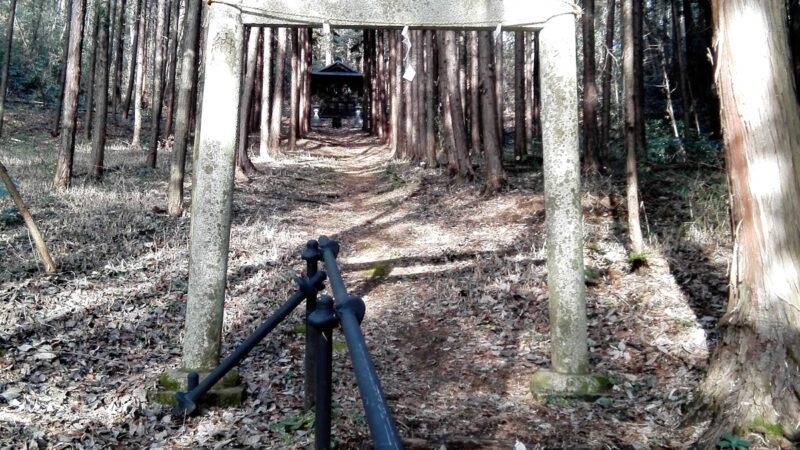
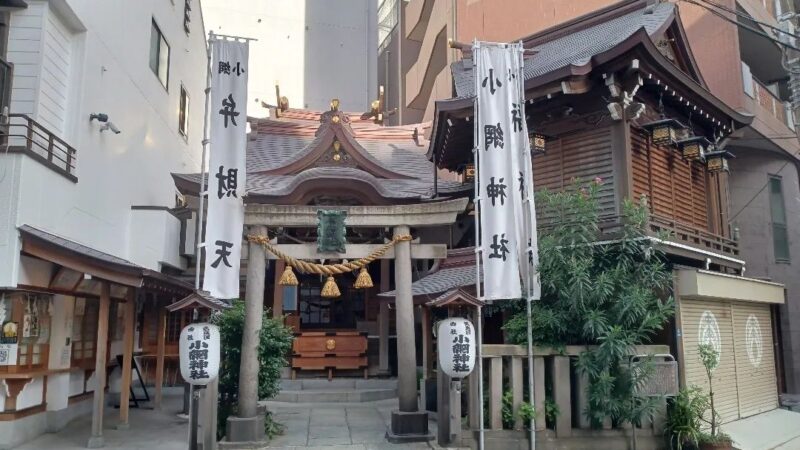
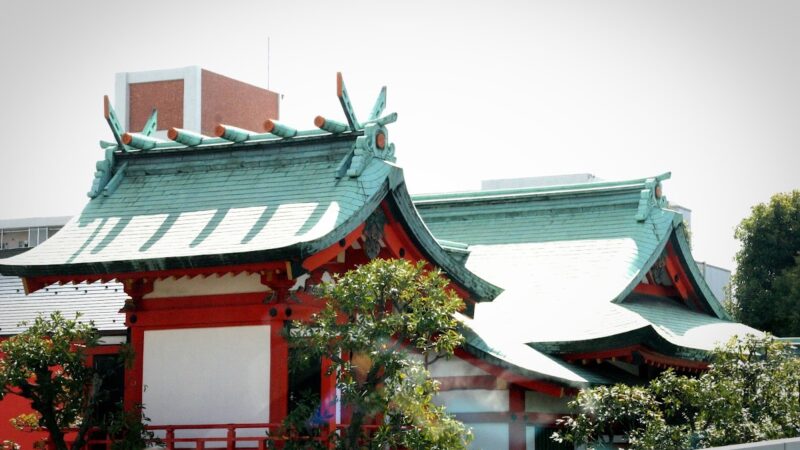
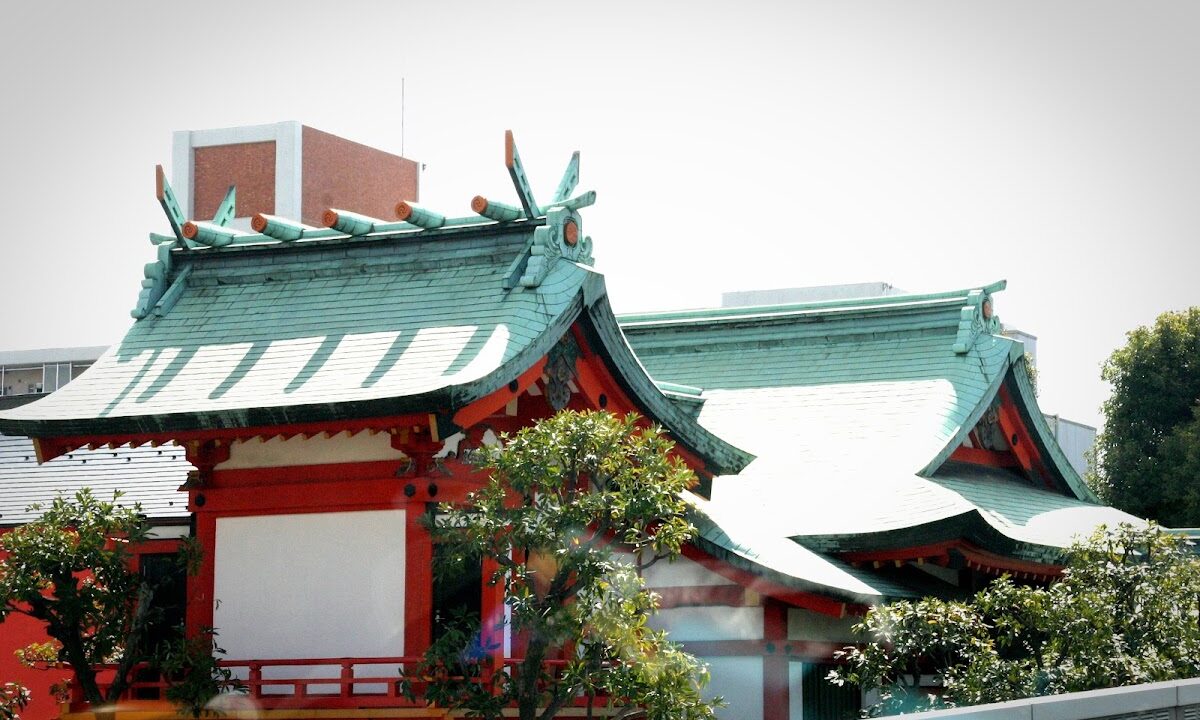
The shrine grounds are well-maintained, allowing for a quiet and peaceful atmosphere for worship. The shrine building, built in 1967 (Showa 42), is relatively new, but it maintains the traditional style of shrine architecture.
The grounds also feature a water basin for purification, guardian lion-dogs, and lanterns, welcoming visitors. Despite being in the city, it maintains a tranquil space surrounded by greenery, serving as a place of relaxation for local residents.
Goshuin (Shrine Seal) and Goshuincho (Shrine Seal Book) Information
About Goshuin
Oshima Inari Shrine offers goshuin to visitors. You can receive a handwritten goshuin for a fee of 500 yen.
The goshuin features the calligraphy of “Oshima Inari Shrine” and the shrine’s seal, and is a popular memento for many visitors. Please speak to a staff member at the shrine office when requesting a goshuin.
Goshuincho (Shrine Seal Book)
Oshima Inari Shrine also offers its own original goshuincho. We recommend checking the design and availability at the shrine office during your visit.
Manners for Receiving a Goshuin (Shrine Stamp)
- First, complete your prayers at the main shrine before receiving your goshuin.
- Visit during the shrine office’s opening hours.
- Prepare your goshuincho (stamp book) and specify the page you want to open.
- Prepare the offering fee in advance.
- Remember to use polite language and express your gratitude.
Manners and Etiquette for Visiting a Shrine
Here are some basic manners for visiting a shrine.
How to Pass Through a Torii Gate
Bow before passing through the torii gate. Avoid walking in the center of the path (the center is considered the path of the gods).
Proper Hand-Washing Ritual
- Take the ladle with your right hand and wash your left hand.
- Switch the ladle to your left hand and wash your right hand.
- Switch the ladle back to your right hand, receive water in your left hand, and rinse your mouth.
- Wash your left hand again.
- Hold the ladle upright, let the water flow down the handle, and return it to its original position.
Worship at the Main Hall
- Place your offering in the offering box.
- If there is a bell, ring it.
- Worship using the two bows, two claps, and one bow ritual.
- Bow deeply twice.
- Clap your hands twice at chest height.
- Pray with all your heart.
- Finally, bow deeply once.
Access Information
Access by Train
From Oshima Station on the Toei Shinjuku Line
- Approximately 5 minutes on foot from Exit A2
- Access from the nearest station is the most convenient.
Other Lines
- Approximately 15 minutes on foot from JR Sobu Line “Kameido Station”
- Approximately 12 minutes on foot from Tokyo Metro Hanzomon Line “Sumiyoshi Station”
Access by Bus
All Toei Bus and Toei Bus routes are available. Get off at the “Oshima 5-chome” bus stop and walk for approximately 2 minutes.
Access by Car
Approximately 10 minutes from the “Kinshicho Exit” of the Metropolitan Expressway Route 7 Komatsugawa Line. However, it is recommended to check in advance whether there is a dedicated parking lot. There are also coin parking lots nearby.
Address and Map
Address: 5-38-16 Oshima, Koto-ku, Tokyo 136-0072
Exit Oshima Station Exit A2, head south on Meiji-dori, and you will see the shrine when you enter the residential area near the Oshima 5-chome intersection.
Nearby Shrines and Tourist Spots
Kameido Tenjin Shrine
A shrine dedicated to Sugawara no Michizane, the god of learning. Famous for its wisteria, the area boasts a beautiful display of wisteria blossoms from late April to early May. Approximately a 20-minute walk from Oshima Inari Shrine.
Fukagawa Fudodo Temple
A Tokyo branch temple of Naritasan Shinshoji Temple. Monthly Goma prayer ceremonies are held, attracting many worshippers. You can also enjoy Fukagawa-meshi (a local rice dish) in Monzen-Nakacho.
Tomioka Hachimangu Shrine
A large shrine known for the “Fukagawa Hachiman Festival,” one of the three major Edo festivals. It also has strong ties to sumo wrestling, with monuments to Yokozuna (grand champion) sumo wrestlers.
Onagigawa River
A canal excavated during the Edo period, it was once a vital hub for logistics. Currently, a promenade has been developed, making it ideal for a stroll. This historical river is also connected to the founding of Oshima Inari Shrine.
Annual Events and Grand Festival
Oshima Inari Shrine holds various festivals throughout the year.
New Year’s Visit (January 1st-3rd)
Many people from the community visit the shrine for the New Year’s visit to pray for happiness. The shrine is bustling with people praying for business prosperity and family safety.
First Horse Day Festival (First Horse Day of February)
The First Horse Day Festival is an important festival of the Inari Shrine. Prayers are offered for a bountiful harvest and business prosperity.
Grand Festival (Autumn)
The most important festival of Oshima Inari Shrine. A procession of portable shrines and devotional performances take place, and the entire community is enveloped in a festive atmosphere. Please check with the shrine for detailed dates.
The Charm of Oshima Inari Shrine
A Shrine Rooted in the Community
The greatest charm of Oshima Inari Shrine is its history of walking alongside the local people for nearly 400 years. As a tutelary deity and guardian deity of the region, it continues to attract the faith of people.
Cultural Heritage Associated with Haiku Poets
This shrine, which bears the legacy of two great haiku poets, Matsuo Basho and Kobayashi Issa, is a rare find even within Tokyo. It holds significant value from a literary history perspective, making it a spot where one can feel history and culture.
A Tranquil Space in the City
Despite being located in the heart of Tokyo, just a 5-minute walk from Oshima Station on the Toei Shinjuku Line, the shrine grounds maintain a quiet and peaceful atmosphere. It is cherished by locals as a place to escape the hustle and bustle of everyday life and find peace of mind.
Diverse Blessings
The shrine is believed to offer a variety of blessings, including abundant harvests, business prosperity, career advancement, and protection from disaster, attracting worshippers with diverse wishes. It is particularly known for its strong devotion from business owners seeking success and those starting new ventures.
Points to Note When Visiting
Visiting Hours
While the shrine grounds are generally open for worship during the day, the shrine office has limited hours. If you wish to receive a Goshuin (temple/shrine stamp) or request a prayer, it is recommended to check the schedule in advance.
Photography
Photography is generally permitted on the shrine grounds, but please be considerate of other visitors. Photography may be restricted inside the shrine buildings or in certain areas.
Dress Code
There are no specific dress code requirements, but please be mindful that this is a sacred place and dress cleanly and appropriately.
Reviews and Reputation of Oshima Inari Shrine
Visitors often comment on the shrine’s “quiet and peaceful atmosphere,” “beloved by the community,” and “interesting as a place associated with Matsuo Basho.” Local residents cherish the shrine as “a shrine they have been familiar with since childhood,” and the faith has been passed down through generations.
Visitors collecting Goshuin have given positive feedback, such as “they were very helpful” and “I was happy to receive a handwritten Goshuin.”
Summary
Oshima Inari Shrine is a historic shrine that has watched over the Oshima area of Koto Ward for approximately 400 years since its founding during the Keian era. It enshrines a divided spirit invited from Fushimi Inari Taisha and is believed to offer various blessings, including abundant harvests, business prosperity, and protection from disaster.
Within the shrine grounds, there are valuable cultural assets associated with haiku poets, such as the Megizuka monument (a registered cultural property of Koto Ward) inscribed with a haiku by Matsuo Basho, and a haiku monument by Kobayashi Issa, making it a shrine of high value from both a historical and literary perspective.
Despite its convenient location just a 5-minute walk from Oshima Station on the Toei Shinjuku Line, it offers a quiet and peaceful atmosphere for worship. During New Year’s visits and the annual festival, it is bustling with local people, showcasing its deep roots in the community.
When visiting Koto Ward, be sure to visit Oshima Inari Shrine. You will be able to spend a precious time praying in peace while feeling the history of the place. Since they also offer Goshuin (temple/shrine stamps), this shrine is also recommended for those who are collecting Goshuin.