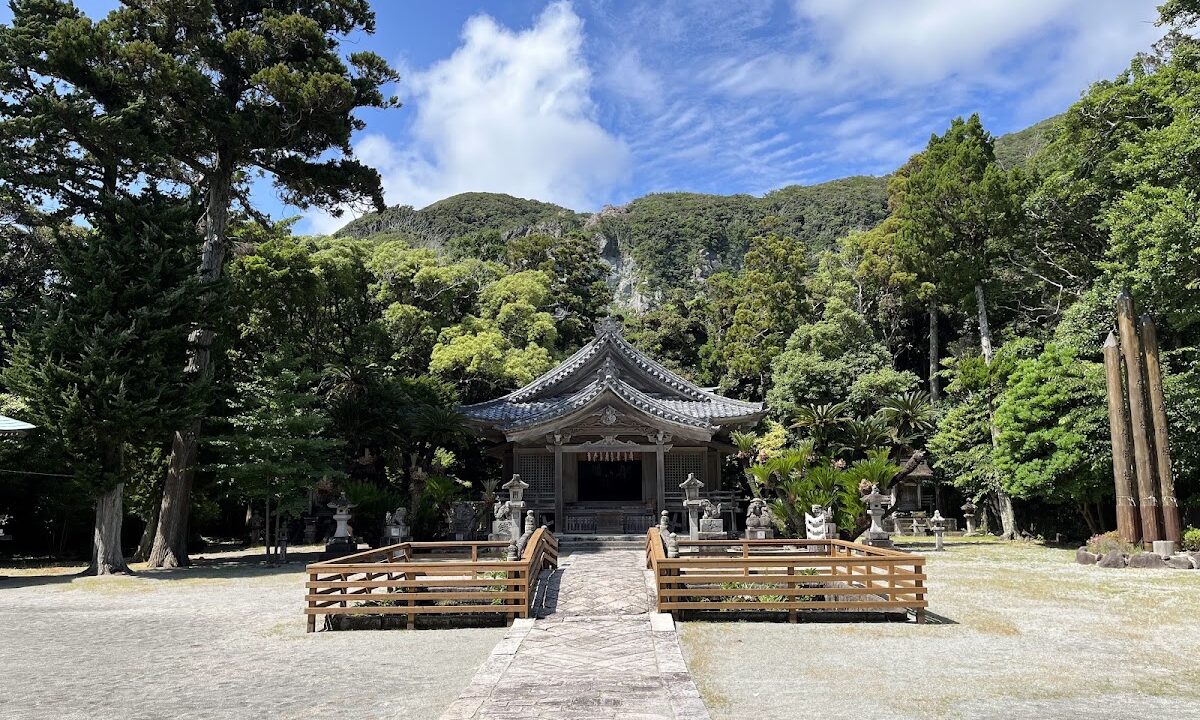
Complete Guide to Jusansha Shrine (Niijima Village, Tokyo) | The Largest Sacred Site and History in the Izu Islands
Jusansha Shrine, located in Honmura, Niijima Village, Tokyo, is known as an ancient shrine boasting the largest sacred site in the Izu Islands. Affectionately called “Myojin-sama” by the islanders as the guardian shrine of Niijima, this shrine, with its majestic atmosphere set against the backdrop of the Miyazuka Mountain cliffs, is under the jurisdiction of the Tokyo Metropolitan Shrine Association and has played an important role as a center of faith in the Izu Islands.
This article provides a detailed explanation of Jusansha Shrine’s history, enshrined deities, annual festival, access methods, and other information you should know before visiting.
Basic Information about Jusansha Shrine
Location: 2-6-13 Honmura, Niijima Village, Tokyo 100-0402
Phone: 04992-5-1870
Main Deity: 12 deities of the same clan, with Kotoshironushi-no-Mikoto as the main deity
Founded: Around 592 (during the reign of Empress Suiko)
Shrine Rank: Former Village Shrine
Annual Festival: December 8th (Shiwasu Festival)
Jurisdiction: Tokyo Metropolitan Shrine Association
The shrine is located approximately 15 minutes on foot or 5 minutes by car from Niijima Port. The rocky face of Miyazuka Mountain rises behind the shrine, creating a sacred space in harmony with nature.
Origin of the Name and Deities of Jusansha Shrine
Meaning of the Name Jusansha
The name Jusansha Shrine originates from the fact that 13 deities are enshrined there. The shrine’s name originates from the fact that it enshrines 13 deities, including the principal deity, Kotoshironushi-no-Mikoto, and 12 other deities of his lineage.
Deities Enshrined
Principal Deity: Kotoshironushi-no-Mikoto
Kotoshironushi-no-Mikoto is a son of Okuninushi-no-Mikoto and played a crucial role in the myth of the transfer of the land. He is worshipped as the guardian deity of business prosperity, maritime safety, and fishing.
Deities Enshrined:
- Daisan-Oji Myojin
- Otosan-Oji Myojin
- Mikurasawa Myojin
- Tomari Mitoguchi Okisaki Myojin
- Other deities of the same lineage as Kotoshironushi-no-Mikoto
These deities are said to have contributed to the pacification and development of the Izu Islands as ancestral deities of their development.
History and Origins of Jusansha Shrine
Legend of Founding
Jusansha Shrine is said to have been founded around 592 (during the reign of Empress Suiko). It is believed that in ancient times, Daisan-Oji Myojin, the son of Kotoshironushi-no-Mikoto, the ancestral deity of the Izu Islands’ development, inherited his father’s will and, together with other deities of his lineage, established his base on Niijima Island, laying the foundation for the pacification of the islands. This legend indicates that Niijima was a center of faith and governance in the Izu Islands, and that the Jusansha Shrine was not merely a village shrine, but an important shrine with influence throughout the entire archipelago.
Relocation during the Edo Period
In 1649 (Keian 2), the Jusansha Shrine was relocated to its current site. This relocation was a result of seeking a more suitable sacred area, and the current location, backed by the cliffs of Miyazuka Mountain, is thought to have enhanced the shrine’s dignity while also serving the practical purpose of protection from natural disasters.
Development in the Modern Era
In the Meiji era’s shrine ranking system, the Jusansha Shrine was ranked as a Gosha (village shrine). This meant that its status as a center of faith on Niijima was officially recognized. After the war, it came under the jurisdiction of the Tokyo Metropolitan Shrine Association, and to this day, it continues to attract the faith of the islanders as the guardian shrine of Niijima.
The Largest Sacred Precinct in the Izu Islands
Size and Characteristics of the Precincts
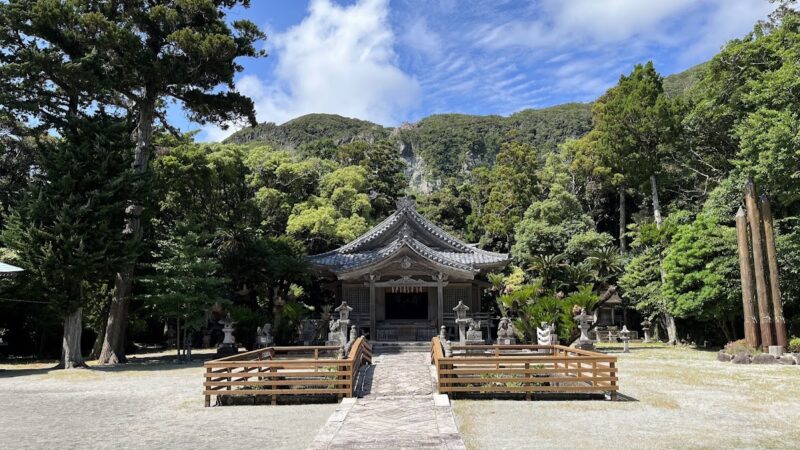
Jusansha Shrine boasts the largest precincts and sacred area in the Izu Islands. The vast grounds house the main hall, worship hall, and shrine office, with a magnificent stone staircase leading to the approach. The landscape, with the rocky face of Mount Miyazuka as a backdrop, possesses a unique solemnity not seen in other shrines in the Izu Islands.
Relationship with Mount Miyazuka
The sheer cliffs of Mount Miyazuka, towering behind the shrine, are an important scenic element of Jusansha Shrine. These rocky faces reflect the geological characteristics of Niijima, a volcanic island, and visually emphasize the sacredness of the precincts. It is believed that the ancient tradition of shrine architecture linked to mountain worship is reflected in this arrangement.
Highlights of the Precincts
Main Hall: Built in the traditional style of shrine architecture, the main hall is a sacred space dedicated to 13 deities.
Shrine Hall: This is where worshippers offer their prayers, and it becomes bustling with many islanders during the annual festival.
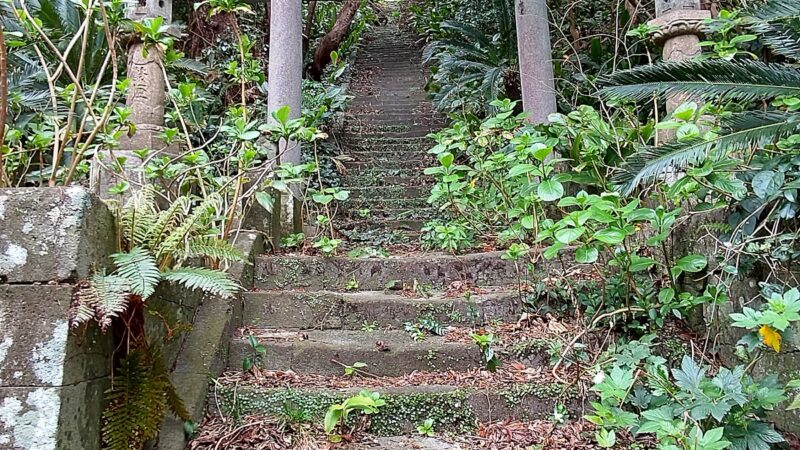
Stone Steps: The stone steps leading to the shrine serve a symbolic role, guiding worshippers from the secular world to the sacred realm.
Shrine Grove: The trees surrounding the shrine grounds create a tranquil atmosphere befitting a sacred area.
Annual Festival “Shiwasu Festival” and Tokyo Metropolitan Intangible Cultural Property
Annual Festival on December 8th
The annual festival of Jusansha Shrine is held every year on December 8th. Also known as the “Shiwasu Festival,” this festival is one of the most important annual events on Niijima Island, attracting many worshippers from both within and outside the island.
During the annual festival, gratitude for the past year is offered to the gods, and prayers are offered for a bountiful catch, safe voyages, and the well-being of the islanders in the coming year. For the islanders, this festival is both the center of their faith and an important opportunity to reaffirm community bonds.
Tokyo Metropolitan Government Designated Intangible Cultural Property: Niijima Kagura
The Shinto rituals “Kagura” and “Shishi Kiyari,” performed at the annual festival, are designated as Tokyo Metropolitan Government Intangible Cultural Properties under the name “Niijima Kagura.” These performing arts are a valuable tradition that conveys the history and culture of Niijima to the present day.
Kagura: A Shinto dance performed to appease the gods and pray for a bountiful harvest and abundant catch. The ancient and elegant movements and music have been passed down through generations.
Shishi Kiyari: A unique performing art combining lion dance and Kiyari (work songs), reflecting Niijima’s maritime culture.
These intangible cultural properties are being passed down by the island’s young people and form the core of the region’s cultural identity.
How to Access Jusansha Shrine
Access to Niijima
Niijima is one of the Izu Islands, located approximately 160km south of Tokyo. Niijima can be accessed by boat or plane.
Access by Ferry:
- Approximately 8 hours 30 minutes by large passenger ship from Takeshiba Pier, Tokyo (overnight service)
- Approximately 2 hours 20 minutes by high-speed jet ferry from Takeshiba Pier, Tokyo (summer service)
- Approximately 2 hours 20 minutes by ferry from Shimoda Port
Access by Airplane:
- Approximately 40 minutes from Chofu Airport (Shin Chuo Airlines)
From Niijima Port to Jusansha Shrine
You can access Jusansha Shrine from Niijima Port (Kurone Port or Maehama Port) using the following methods:
Walking: Approximately 15 minutes
Rental Car/Taxi: Approximately 5 minutes
Rental Bicycle: Approximately 10 minutes
Niijima is a relatively small island, but renting a car or bicycle is convenient for efficiently visiting the tourist spots. There are several rental car and bicycle shops on the island.
Points to Note When Visiting
- The shrine office’s opening hours are irregular, so it is recommended to call ahead to confirm if you wish to receive a Goshuin (shrine stamp).
- Parking is available near the shrine grounds, but congestion is expected during the annual festival.
- Niijima is susceptible to weather conditions, and ferry and flight cancellations may occur, so it is important to allow ample time in your schedule.
Niijima Tourism and Jusansha Shrine
The Charms of Niijima
Niijima is a tourist destination known for its white sandy beaches, crystal-clear waters, and as a surfing mecca. In addition to visiting Jusansha Shrine, you can also visit the following tourist spots:
Habushiura Beach: Known as a world-class surf spot, it hosts international competitions every year.
Yunohama Open-Air Hot Spring: A free open-air hot spring located along the coast, open 24 hours a day.
Niijima Glass Art Center: You can experience glass art using Koga stone, a specialty of Niijima.
Miyazukayama: A mountain towering behind the Jusansha Shrine, popular as a hiking destination.
Shikinejima: A neighboring island about 10 minutes by boat from Niijima, offering beautiful coastlines and hot springs.
Accommodation on Niijima
Niijima has various accommodations, including guesthouses, pensions, and hotels. It gets particularly crowded during the summer, so early reservations are recommended. Many accommodations offer dishes made with fresh seafood, allowing you to enjoy the island’s food culture.
Information on Goshuin (Shrine Seals) at Jusansha Shrine
You can receive a Goshuin at Jusansha Shrine. However, the shrine office is not always open, so it is recommended to call in advance (04992-5-1870) to confirm if you wish to receive a Goshuin.
The Goshuin features the calligraphy of “Jusansha Shrine” and the shrine’s seal, and is a popular souvenir for many visitors to Niijima. For those visiting shrines in the Izu Islands, the Goshuin (seal) of Jusansha Shrine will hold special significance.
The History and Culture of Niijima Island and the Role of Jusansha Shrine
The Development and Faith of the Izu Islands
The history of Jusansha Shrine is deeply intertwined with the history of the development of the Izu Islands. The legend that Kotoshironushi-no-Mikoto and his children laid the foundation for the pacification of the islands demonstrates the importance of Niijima in ancient times.
The Izu Islands have long been a crucial point for maritime traffic and have developed as a base for fishing and shipping. Jusansha Shrine has functioned as a center of this maritime culture, a place to pray for safe voyages and abundant catches.
The Center of Islanders’ Life and Faith
Affectionately known as “Myojin-sama,” Jusansha Shrine has served as the guardian shrine of Niijima Island and a spiritual pillar for the islanders. From life-changing ceremonies such as the first shrine visit for a newborn, Shichi-Go-San (a traditional rite of passage for children), and weddings, to everyday visits, the lives of the islanders are closely intertwined with the Jusansha Shrine.
For those engaged in fishing and shipping, in particular, prayers for safety at sea are a heartfelt wish, and visiting the shrine before setting out to sea is an important custom. Furthermore, even those from Niijima who have left the island always visit the shrine upon returning home, making it a place to reaffirm their connection to their hometown.
The Core of the Local Community
Annual events, including the Grand Festival, provide opportunities for islanders to gather together, strengthening the bonds of the local community. In particular, the preservation of Kagura (sacred dance) and Shishikiyari (lion dance), designated as Tokyo Metropolitan Intangible Cultural Properties, serves as a place for intergenerational exchange, contributing to the preservation of traditional culture and the maintenance of regional identity.
Related Spots in the Surrounding Area
Miyazukayama
Miyazukayama, towering behind the Jusansha Shrine, forms a sacred space integrated with the shrine. From the mountaintop, you can enjoy a panoramic view of Niijima Island, and on clear days, you can even see other islands in the Izu archipelago.
Niijima Port (Kurone Port/Maehama Port)
The port, the gateway to Niijima Island, is within walking distance of the Jusansha Shrine. Restaurants and shops are concentrated around the port, making it convenient for resting or eating after visiting the shrine.
Honmura Settlement
Honmura, where the Jusansha Shrine is located, is the central settlement of Niijima Island. This area retains its old-world charm, allowing you to experience the island’s history and culture.
Manners and Etiquette for Visiting a Shrine
Basic Etiquette for Visiting a Shrine
- Bow before passing through the torii gate: As a sign of respect before entering the sacred area, bow before the torii gate.
- Walk along the edge of the path: The center of the path is considered the path of the gods, so walk along the edge.
- Purify yourself at the water basin: If there is a water basin, purify your hands and mouth before praying.
- Two bows, two claps, one bow: In front of the main hall, bow twice, clap twice, and finally bow once.
- Bow when leaving: When leaving through the torii gate, turn around and bow once.
Regarding Photography
Photography is generally permitted on the shrine grounds, but it is considered good manners to refrain from taking pictures inside the main hall or during Shinto rituals. Also, be considerate of other visitors.
Summary: The Charm and Value of Jusansha Shrine
Located in Honmura, Niijima Village, Tokyo, Jusansha Shrine is an ancient shrine boasting the largest sacred grounds in the Izu Islands, said to have been founded around 592 AD. It enshrines 13 deities, with Kotoshironushi-no-Mikoto as its principal deity, and is affectionately known as “Myojin-sama,” the guardian shrine of Niijima Island.
The shrine retains many elements of high historical and cultural value, including its majestic scenery against the backdrop of the cliffs of Miyazuka Mountain, its annual grand festival held on December 8th, and its Kagura and Shishikiyari dances, which are designated as Tokyo Metropolitan Intangible Cultural Properties.
When visiting Niijima Island, in addition to enjoying its beautiful nature and marine leisure activities, be sure to include a visit to Jusansha Shrine, which conveys the history of the Izu Islands’ development. Despite being approximately 160km from Tokyo, Jusansha Shrine, the spiritual pillar of Niijima Island, which has nurtured its own unique history and culture, will bring deep emotion and new discoveries to visitors.
With its convenient location just a 15-minute walk from Niijima Port, and numerous tourist attractions nearby, it’s an ideal base for exploring the islands. Why not reflect on the long and rich history at the Jusansha Shrine, the heart of faith and culture in the Izu Islands?