Daisan-Oji Shrine (Niijima Village, Tokyo) Complete Guide | History and Visiting Information for this Shikinaisha Shrine
Daisan-Oji Shrine, located on the summit of Mt. Daisan in Niijima Village, Tokyo, is one of the oldest shrines in the Izu Islands. It is identified as the “Takemikaga-no-Mikoto Shrine,” a Shikinaisha shrine listed in the Engishiki Jinmyocho (a list of shrines compiled in the Heian period), and has a long history as a center of faith on Niijima Island. This article provides a detailed explanation of the history, enshrined deities, visiting methods, and current situation of Daisan-Oji Shrine.
Basic Information about Daisan-oji Shrine
Name: Daisan-oji Shrine
Address: 1-1 Daisanzan, Niijima Village, Tokyo 100-0400
Access: Approximately 30 minutes on foot from Niijima Port
Founded: Around 592 (estimated)
Shrine Rank: Shikinaisha (minor shrine)
Annual Festival: July 5th
Daisan-oji Shrine is located on the summit of Mt. Daisanzan, east of Niijima Port. This small shrine, reached by climbing hundreds of stone steps, has long been a place of worship for the people of Niijima.
History of Daisan-oji Shrine
Ancient History
While Daisan-oji Shrine is believed to have been founded around 592, the exact founding date is unknown. However, since it is identified with the “Takemikakanomitama Shrine” listed in the Engishiki Jinmyocho (compiled in 927), its origins are thought to date back to before ancient times.
The Engishiki Jinmyocho lists it as “Takemikakanomitama Shrine, Kamo District, Izu Province,” indicating that Niijima Island belonged to Kamo District of Izu Province at that time. Its recognition as a Shikinaisha (a shrine listed in the Engishiki) suggests that this shrine was an important object of worship in ancient times.
History of Relocation
The Daisan-oji Shrine was relocated in 1686 (Jōkyō 3) from a place called “Nutō” to its current location on the summit of Mt. Daisan. This relocation is thought to be related to changes in Niijima’s topography and evolving religious practices. It can also be said that the shrine’s sanctity was further enhanced by its relocation to the high altitude of Mt. Daisan.
Recent Situation
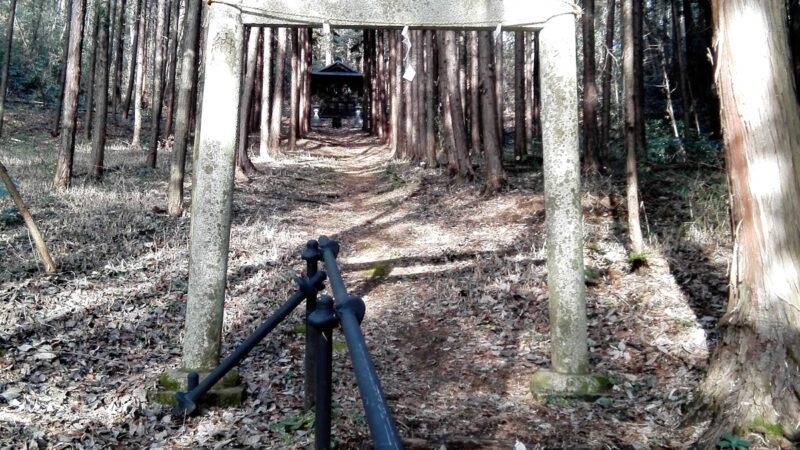
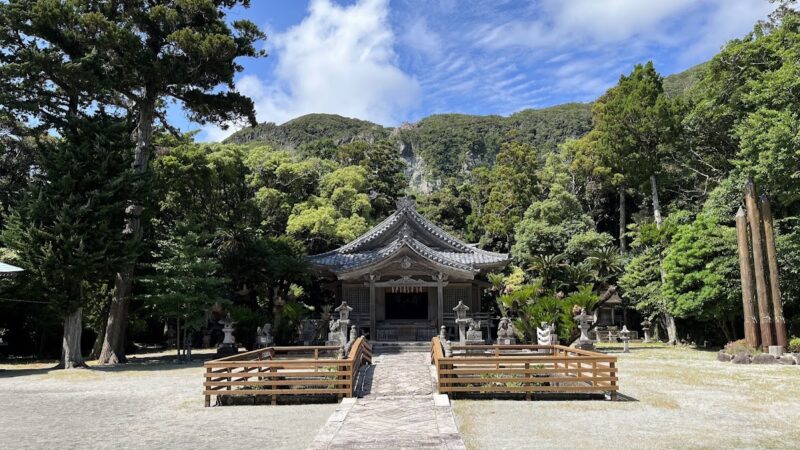
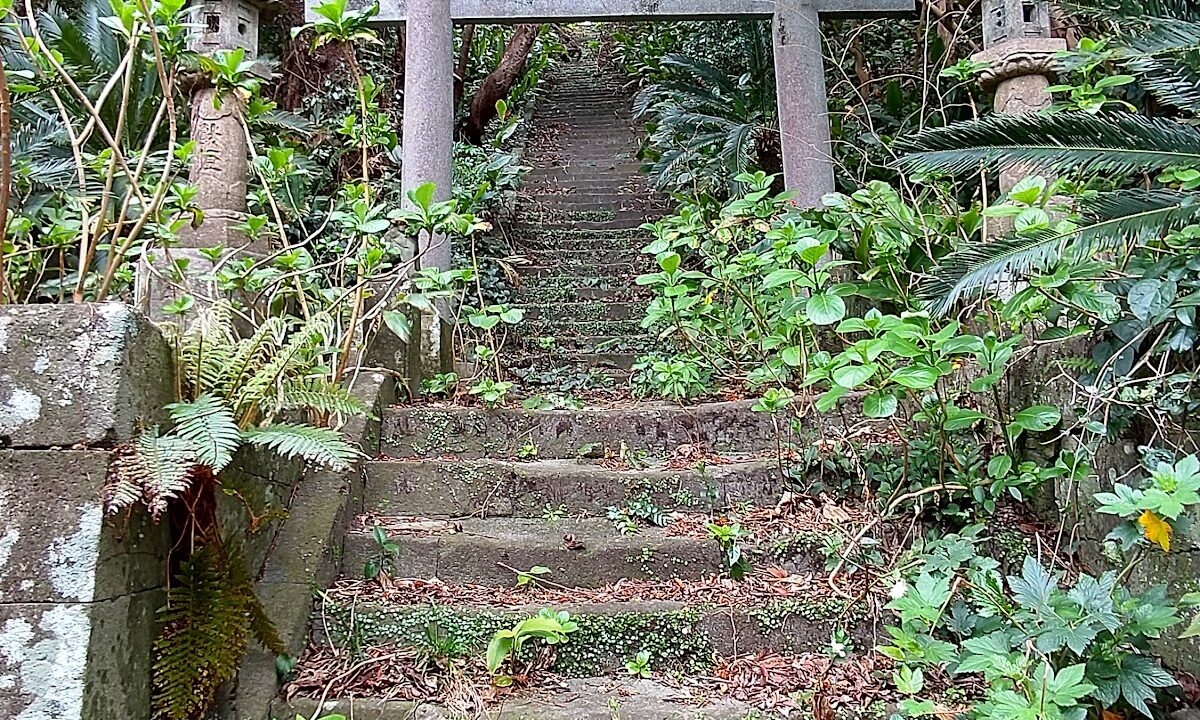
In 2019 (Reiwa 1), the shrine suffered significant damage from a major typhoon, with the shrine building being destroyed. Subsequently, for safety reasons, the shrine building was removed, and as of 2024, the site is vacant land. However, the shrine itself remains, and remnants such as the stone steps and torii gate are still present.
About the Deities
Main Deities
The deities enshrined at Daisan-oji Shrine are as follows:
Daisan-oji Myojin
Considered a child deity of Kotoshironushi-no-mikoto. Kotoshironushi-no-mikoto is a child of Okuninushi-no-mikoto and is also known as Mishima Myojin.
Otosan-oji Myojin
A deity enshrined together with Daisan-oji Myojin.
Relationship with Mishima Myojin
Daisan-oji Myojin is worshipped as the child deity of Mishima Myojin (Kotoshironushi-no-Mikoto). Mishima worship has existed in the Izu Islands since ancient times, and there are Mishima-related shrines on each island, such as the Mishima Shrine on Miyakejima and the Mishima Shrine on Mikurajima.
Daisan-oji Shrine on Niijima has developed as part of this Mishima worship, enshrining the child deity of Mishima Myojin. The expression “Daisan-oji, the child of Futoshironushi-no-Mikoto (another name for Kotoshironushi-no-Mikoto)” also indicates this system of belief.
Characteristics of Mount Daisan and the Approach
400 Stone Steps
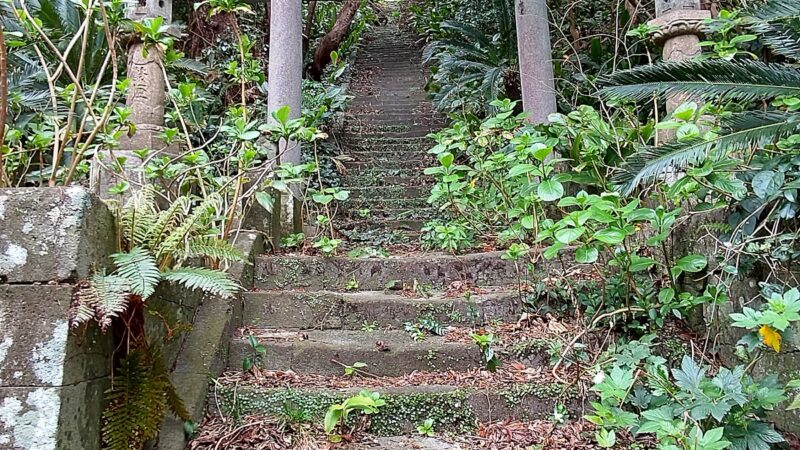
The approach to Daisan-oji Shrine is known for its approximately 400 stone steps leading from Niijima Port to the summit of Mount Daisan. These steps have been exposed to the elements for many years, and some sections are covered in moss and slippery. The wear and tear on each step is evidence of the many worshippers who have climbed them over the years.
The stone steps have some steep sections, requiring considerable physical strength to climb. However, the sense of accomplishment upon reaching the summit and the view of Niijima Island from there are truly exceptional.
Natural Environment of Mt. Daisansan
Mt. Daisansan is a lush, green area on Niijima Island, with evergreen broadleaf forests stretching along both sides of the approach to the shrine. As you climb the stone steps, you can enjoy a peaceful time, basking in the sunlight filtering through the trees and listening to the birdsong.
The approach, surrounded by moss-covered stone steps and ancient trees, exudes a solemn atmosphere, giving the impression of a path leading to a sacred area.
Access and Visiting Information
Access to Niijima Island
Niijima Island can be accessed from central Tokyo in the following ways:
Ferry:
- Approximately 8 hours 30 minutes to 10 hours by large passenger ship from Takeshiba Pier in Tokyo
- Approximately 2 hours 20 minutes to 3 hours by high-speed jet ferry
Airplane:
- Approximately 40 minutes from Chofu Airport
Access to the Shrine
It is approximately a 30-minute walk from Niijima Port to Daisanji Shrine. Head east from the port and climb the stone steps from the foot of Mt. Daisan.
Nearest Bus Stop: The entrance to the shrine is approximately 172 meters (about a 2-minute walk) from the nursing home (Niijima Village).
Points to Note When Visiting the Shrine
- Condition of the Stone Steps: The steps are covered in moss and can be slippery, so we recommend wearing non-slip shoes.
- Physical Fitness: Climbing the 400 stone steps requires a certain level of physical fitness.
- Current Situation: As of 2024, the shrine building has been removed, and the site is an empty lot.
- Weather: The stone steps become particularly slippery during rainy weather, so caution is advised.
- Hydration: We recommend bringing water, especially during the summer.
Annual Festival and Regular Events
The annual festival of Omisao-oji Shrine is held every year on July 5th. As one of Niijima Village’s important festivals, it has been held with the participation of local residents.
While there may be changes to the festival format after typhoon damage, the faith in the shrine itself continues to be preserved by the local people.
Importance as a Shikinaisha Shrine
Position in the Engishiki Jinmyocho (Register of Shrines in the Engi Era)
The “Takemikaga-no-Mikoto Shrine” listed in the Engishiki Jinmyocho is recorded as a Shikinaisha shrine in Kamo District, Izu Province. A Shikinaisha is a shrine listed in the Engishiki Jinmyocho, signifying a historically significant shrine recognized by the imperial court.
The identification of the Daisan-oji Shrine as this Shikinaisha demonstrates the importance of Niijima in ancient times and the historical value of this shrine.
Argument as a Candidate Shrine
The Daisan-oji Shrine is considered a strong candidate for the location of the “Takemikaga-no-Mikoto Shrine.” Identifying Shikinaisha shrines is a historically important topic, and the long history and location of the Daisan-oji Shrine support this identification.
Relationship with Other Temples and Shrines on Niijima
Besides the Daisan-oji Shrine, there are several other shrines and temples on Niijima. Understanding the relationship with these temples and shrines is also important for understanding the religious culture of Niijima Village. The Daisan-oji Shrine, one of the oldest shrines on Niijima Island, has played a central role in the island’s faith. Its position within the island’s overall faith network and its relationships with other shrines are particularly special.
Cultural Value of Daisan-oji Shrine
A Story of Niijima’s History
The Daisan-oji Shrine is an important cultural asset that tells the history of Niijima Island. It possesses various historical elements, including its founding date around 592 AD, its status as a Shikinaisha (a shrine listed in the Engishiki), and its connection to the Mishima faith.
Historical Value of the Stone Steps and Approach
The 400 stone steps are not merely an approach, but a testament to the history of many people who have climbed them with faith over many years. Each worn stone tells the story of the depth of faith of the people of Niijima Island.
Nearby Tourist Attractions
When visiting Daisan-oji Shrine, you can also visit other tourist attractions on Niijima Island:
- Niijima Glass Art Center: Glass art using Koga stone, a specialty of Niijima Island
- Yunohama Open-Air Hot Spring: A free open-air bath where you can enjoy the ocean view
- Habushiura Beach: A beautiful beach known as a mecca for surfing
- Niijima Museum: A facility where you can learn about the history and culture of Niijima Island
Hopes for Reconstruction
Although Daisan-oji Shrine lost its main building due to typhoon damage in 2019, its historical and cultural value remains unchanged. Efforts toward reconstruction by local residents and related parties are highly anticipated.
The reconstruction of a shrine with the status of a Shikinaisha (a shrine listed in the Engishiki, an ancient Japanese legal text) is important not only for rebuilding the building, but also for passing on the history and culture of Niijima Island to future generations.
Summary
Daisan-oji Shrine is an ancient shrine with a history of over 1400 years, located on the summit of Mt. Daisan in Niijima Village, Tokyo. Identified as the “Takemikaga-no-Mikoto Shrine,” a Shikinaisha (shrine listed in the Engishiki Jinmyocho) listed in the Engi-shiki Jinmyocho (a list of shrines compiled in the Heian period), this shrine enshrines Daisan-oji Myojin, the child deity of Mishima Myojin.
Although the shrine building was lost in a typhoon in 2019, the historical value and faith of the shrine, located at the top of 400 moss-covered stone steps, continue to be passed down. Situated about a 30-minute walk from Niijima Port, it is a must-visit shrine for anyone visiting Niijima.
When visiting, be careful of the slippery stone steps, and you can spend a precious time feeling the history and nature of Niijima. Daisan-oji Shrine is an irreplaceable cultural heritage that conveys the faith and culture of the remote islands of Tokyo.