Awa no Mikoto Shrine (Kozushima Village, Tokyo) – History and Visitor Guide to the Engishiki Myojin Taisha Shrine
About Awa no Mikoto Shrine
Awa no Mikoto Shrine is a historic shrine located in Nagahama, Kozushima Village, Tokyo. It is listed in the Engishiki Jinmyocho, a compilation of shrines from the Heian period, and is ranked as a Myojin Taisha, a particularly high-ranking shrine. It is one of only two Myojin Taisha shrines in Tokyo, along with Monokina no Mikoto Shrine, also located on Kozushima Island, making it an extremely valuable entity.
Located in a valley about 100 meters uphill from Nagahama in the northern part of Kozushima Island, its former shrine rank was Prefectural Shrine. Locally, it is affectionately known as “Nagahama Myojin” or “Nagahama-sama,” and has been carefully preserved to this day as the center of faith for the islanders.
Deities and Mythology
Awame-no-Mikoto
The deity enshrined at Awame-no-Mikoto Shrine is Awame-no-Mikoto. Awame-no-Mikoto is a goddess considered to be the principal consort (main wife) of Kotoshironushi-no-Mikoto, and is worshipped as the pioneering deity of Kozushima Island.
Kotoshironushi-no-Mikoto is a son of Okuninushi-no-Mikoto and is known as a god who played an important role in the transfer of the land in Izumo mythology. His principal consort, Awame-no-Mikoto, has been revered as a god who pioneered the land of Kozushima Island and brought blessings to its inhabitants.
Mythology of Kozushima Island and Awame-no-Mikoto
There are various theories about the origin of the name Kozushima Island, but one tradition remains that it was an island where gods gathered. There is a myth that the gods of the Izu Islands gathered on Tenjo-san Mountain and distributed water, and Awame-no-Mikoto is considered one of the important gods appearing in this myth.
Awame-no-Mikoto is revered as the goddess who protects the island’s fertility and safety, and is also worshipped as the guardian deity of fishing and agriculture, deeply rooted in the lives of the islanders.
History
Founding and Ancient Times
The exact founding date of Awame-no-Mikoto Shrine is unclear, but the fact that it is listed as “Awame-no-Mikoto Shrine, Kamo District, Izu Province, Myojin Taisha” in the *Engishiki Jinmyocho* (completed in 927) indicates that it was already a prominent shrine at least by the mid-Heian period.
Myojin Taisha shrines were particularly important to the imperial court and held a significant position in national rituals. The fact that it was ranked as a Myojin Taisha despite being located on a remote island in the Izu Islands indicates that this region held significant importance to the imperial court in ancient times.
Medieval and Early Modern Periods
From the medieval period onward, Awame-no-Mikoto Shrine remained a central place of worship on Kozushima Island. During the Edo period, it received protection from the shogunate and functioned as a spiritual pillar for the islanders.
Modern Era
Due to the reform of the shrine system during the Meiji era, Awa-no-Mikoto Shrine was ranked as a prefectural shrine. This was a mid-ranking shrine in Tokyo Prefecture (present-day Tokyo), signifying official recognition as an important shrine in the region.
During the Showa era, the main shrine building was relocated to its current location. The former site remains behind the shrine office, and its stone masonry remains are protected as a Tokyo Metropolitan Government designated historical site.
Even in the Heisei era, the islanders’ faith has continued unchanged, and Shinto rituals, including the annual festival, are solemnly performed.
Highlights of the Shrine Grounds
Torii Gate and Approach
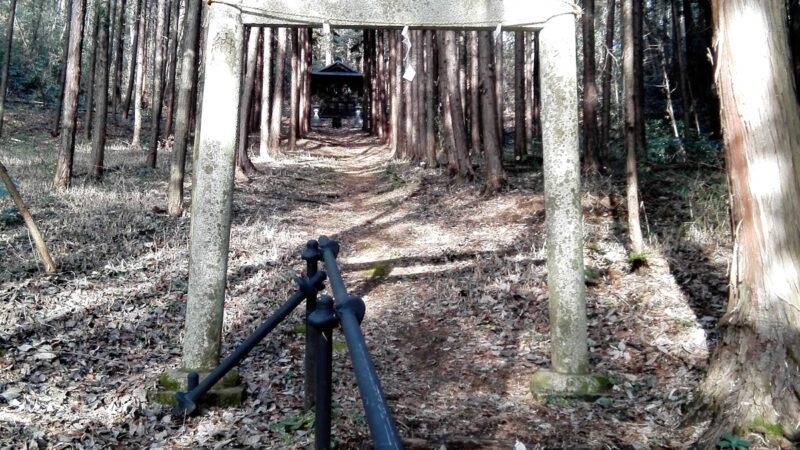
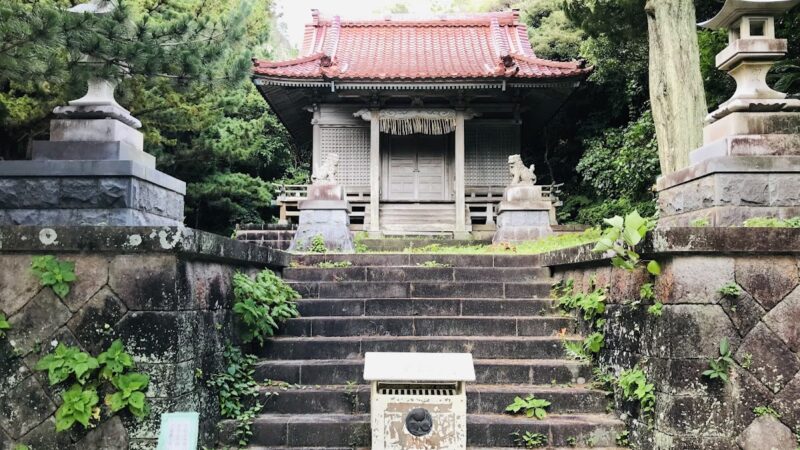
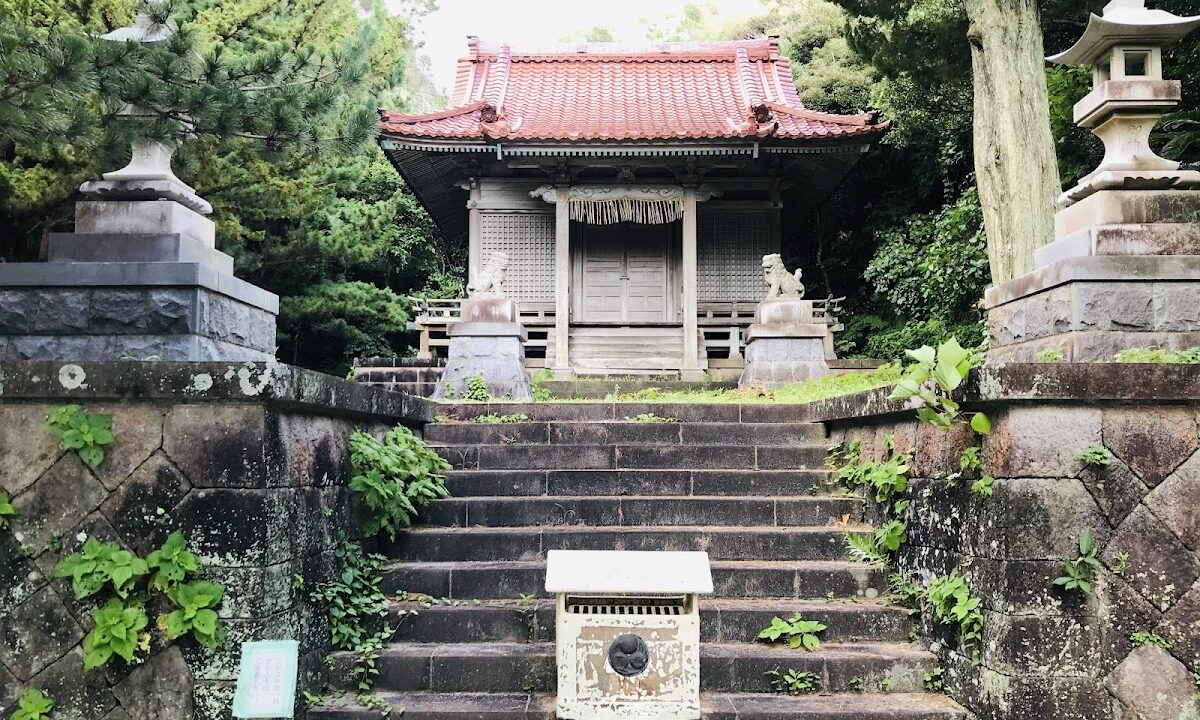
As you proceed along the approach leading uphill from the village of Nagahama, the torii gate of Awa-no-Mikoto Shrine appears. Surrounded by trees in a tranquil environment, a solemn atmosphere envelops you the moment you enter the sacred grounds.
The approach is paved with stone steps, allowing you to walk slowly towards the shrine. Visiting the shrine while experiencing the island’s nature will be a special experience, a welcome escape from everyday life.
Main Shrine
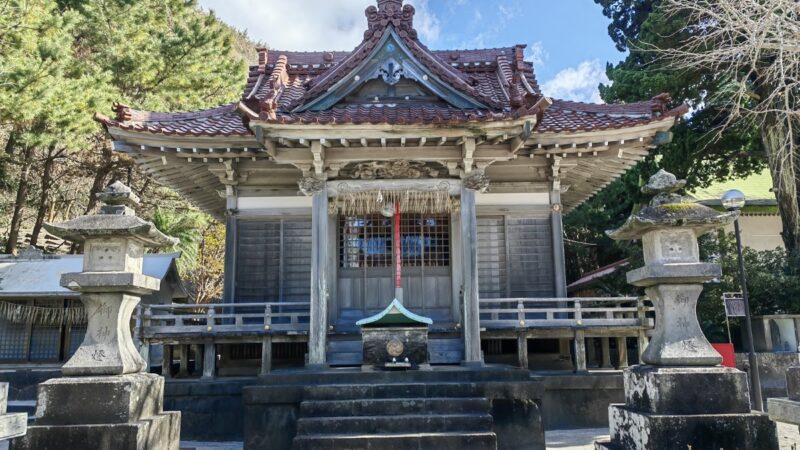
The current main shrine was relocated during the Showa era and retains traditional shrine architectural styles. Awame-no-Mikoto is enshrined within, and it has received the prayers of the islanders.
The architectural style and decorations of the main shrine reflect the climate and beliefs of Kozushima Island, showcasing the characteristics of shrine architecture on remote islands.
Former Location of the Main Shrine (Behind the Shrine Office)
By going behind the shrine office from the current location of the main shrine, you can see the former location of the main shrine. Here, the remains of a cobblestone masonry structure remain, and this cobblestone masonry is a Tokyo Metropolitan Government Designated Historic Site.
Cobblestone masonry is a traditional construction method using rounded stones, and the stones used were transported from the coast of Kozushima Island. This remains are a valuable cultural asset that conveys the shrine architecture techniques from ancient to medieval times.
Standing at the former location, you can feel the atmosphere of the former sacred area and truly grasp the weight of its long history.
Nature within the Shrine Grounds
The shrine grounds are surrounded by the rich nature of Kozushima Island, allowing visitors to observe plants of all seasons. The fresh greenery is particularly beautiful from spring to early summer, and the autumn foliage is a delight.
The birdsong and the sound of the wind in the tranquil sacred grounds bring peace of mind to visitors.
Cultural Properties
Tokyo Metropolitan Government Designated Historic Site – Stone Masonry at the Former Site of the Main Shrine
As mentioned above, the stone masonry at the former site of the main shrine, located behind the shrine office, is designated as a Tokyo Metropolitan Government Historic Site. This stone masonry is a valuable relic demonstrating the structure of the foundation in shrine architecture and is an important cultural property that tells the story of Kozushima Island’s history and culture.
The stone masonry is in excellent condition, conveying the high level of technology at the time. When visiting the shrine, be sure to visit this historic site and feel the breath of history.
Other Cultural Properties
The shrine houses various historical materials, including ancient documents and offerings. These are important historical documents for the study of Kozushima’s history.
Annual Festival and Rituals
Annual Festival (April 15th)
The annual festival of Awamei Shrine is held every year on April 15th. This festival is one of the most important rituals on Kozushima, attracting many worshippers from both within and outside the island, creating a lively atmosphere.
During the festival, Shinto priests solemnly perform rituals, praying for the island’s safety and a bountiful harvest and abundant catches of fish. Traditional Kagura (sacred dance) and dedication ceremonies are also held, providing a valuable opportunity to experience Kozushima’s traditional culture.
Other Rituals
In addition to the annual festival, various rituals are held throughout the year. From the New Year’s visit to the shrine to the summer prayer festival, rituals are continued in accordance with the rhythm of the islanders’ lives, demonstrating that faith remains deeply rooted in their daily lives.
Access and Visiting Information
Access to Kozushima Island
Kozushima Island can be accessed from Tokyo’s Takeshiba Pier by large passenger ship or high-speed jet ferry.
- Large Passenger Ship: Approximately 10 hours from Tokyo’s Takeshiba Pier (overnight service)
- High-Speed Jet Ferry: Approximately 3 hours and 45 minutes from Tokyo’s Takeshiba Pier (summer service)
- Airplane: Approximately 40 minutes from Chofu Airport (Shin Chuo Airlines)
There are also ferry services from Shimoda Port and Atami Port. Since operating conditions vary depending on the season and weather, it is recommended to check in advance.
From Kozushima Port to Awa-no-Mikoto Shrine
Awa-no-Mikoto Shrine can be accessed from Kozushima Port using the following methods:
- Walking: Approximately 40 minutes
- Bus: Approximately 15 minutes (towards Nagahama)
- Taxi: Approximately 10 minutes
- Rental Car/Rental Bicycle: Rental shops are available on the island
The shrine is located in the mountains from Nagahama Beach. Road signs and information boards are installed, making it a relatively easy route.
Precautions for Visiting the Shrine
- The shrine grounds are a sacred place, so please worship quietly.
- Photography is permitted, but there are areas where photography is prohibited, such as inside the main hall.
- The shrine office may be unattended, so it is recommended to check in advance if you wish to receive a Goshuin (shrine stamp).
- To protect the island’s natural environment, please be sure to take your trash with you.
Appropriate Attire for Visiting the Shrine
Kozushima has a maritime climate; summers are hot, and winters are relatively mild. However, it can be windy on some days, so it’s a good idea to bring a light jacket. There are stone steps on the approach to the shrine, so comfortable walking shoes are recommended.
Other Attractions on Kozushima Island
Monoimina-no-Mikoto Shrine
Alongside Awa-no-Mikoto Shrine, Monoimina-no-Mikoto Shrine, also located on Kozushima Island, is designated as a prestigious shrine within Tokyo. Situated near the summit of Mt. Tenjo, it enshrines Monoimina-no-Mikoto.
Visiting both shrines allows you to experience the deep religious culture of Kozushima Island.
Mt. Tenjo
Mt. Tenjo (572m above sea level), the highest peak on Kozushima Island, is a legendary mountain where gods are said to have gathered. The area near the summit boasts unique landscapes such as Fuirigazawa and Urasabaku, making it a popular hiking destination.
Nagahama Beach and Goshikihama Beach
Nagahama Beach, near Awa-no-Mikoto Shrine, is a beautiful beach with white sand. The island also features Goshikihama Beach, where five different colored stones (red, white, blue, black, and yellow) can be seen, allowing you to experience the natural diversity of Kozushima Island. ### Hyuga Shrine
There are several other shrines on the island, including Hyuga Shrine, each with its own unique history and beliefs. Visiting the shrines on the island is one of the attractions of sightseeing on Kozushima.
Kozushima Accommodation and Sightseeing Information
Accommodation
Kozushima offers a variety of accommodations, including guesthouses, pensions, and hotels. Many accommodations offer dishes made with fresh seafood from the island, making the island’s food culture another attraction.
During peak season (summer), reservations can be difficult to obtain, so early booking is recommended.
Tourist Season
Kozushima can be visited year-round, but each season has its own unique charm.
- Spring (April-May): The time of the annual festival, and the weather is mild.
- Summer (June-August): The busiest time, as it’s the swimming season.
- Autumn (September-November): The weather is stable, making it ideal for mountain climbing.
- Winter (December-March): Fewer tourists, allowing for a peaceful visit.
Transportation on the Island
Rental cars, rental bicycles, and rental motorbikes are available. Buses also operate, but the number of services is limited, so it is recommended to check the timetable and plan accordingly.
Significance of Myojin Taisha Shrines in the Kanto Region
In the Kanto region, especially within Tokyo, only two shrines are designated as Myojin Taisha: Awa-no-Mikoto Shrine and Monokina-no-Mikoto Shrine. This demonstrates how highly the Heian period court regarded the gods of the distant Izu Islands.
In ancient Japan, the sea was an important transportation route, and the Izu Islands were a key point on the sea route connecting Honshu and the Izu Peninsula. Furthermore, the islands were recognized as sacred places, and the deities enshrined there were believed to possess special spiritual powers.
The designation of Awame-no-Mikoto Shrine as a Myojin Taisha (a high-ranking shrine) has this historical and religious background, and remains important for understanding Japanese shrine beliefs even today.
Benefits of Worship
Awame-no-Mikoto is believed to bestow the following benefits:
- Good Fortune and Prosperity: As the pioneering deity of the islands, she possesses the power to open new paths.
- Family Safety: She protects the safety and happiness of families.
- Maritime Safety: She ensures the safety of those involved in fishing and shipping.
- Abundant Harvests and Catch: She ensures the prosperity of the island’s industries.
- Matchmaking: As the principal consort of Kotoshironushi-no-Mikoto, she grants the fulfillment of good relationships.
For centuries, islanders have visited Awame-no-Mikoto Shrine at important life milestones and when making important wishes.
Traditions and Beliefs of Kozushima Island
On Kozushima Island, faith in shrines, including Awame-no-Mikoto Shrine, remains deeply rooted in the lives of the islanders. Annual festivals and religious ceremonies play a vital role in uniting the island community and serve as a platform for the transmission of traditional culture.
The island’s children also develop a sense of faith through school events and community activities, naturally fostering their connection to the shrine. This transmission of tradition is supported by a strong sense of community unique to remote islands.
Summary
Awame-no-Mikoto Shrine, located in Kozushima Village, Tokyo, is a prestigious shrine listed in the Engishiki (an ancient Japanese legal code), and one of only two such shrines in Tokyo. The enshrined deity, Awame-no-Mikoto, is revered by the islanders as the pioneering god of Kozushima and has been carefully preserved to this day.
The shrine grounds contain valuable cultural assets, including a stone masonry structure designated as a Tokyo Metropolitan Government historical site, and traditional religious ceremonies are performed annually on April 15th. A trip to Kozushima Island will be a special experience, allowing you to immerse yourself in its beautiful nature, rich history, and vibrant religious culture.
Nestled in the tranquil valley of Nagahama, Awa-no-Mikoto Shrine offers visitors a sense of peace and conveys the beauty of traditional Japanese faith. The fact that such a historic shrine is still carefully preserved just a few hours by boat from central Tokyo is a testament to the richness of Japanese culture.
When visiting Kozushima Island, be sure to include a visit to Awa-no-Mikoto Shrine in your itinerary. A unique world woven from the island’s nature, history, and faith awaits you.