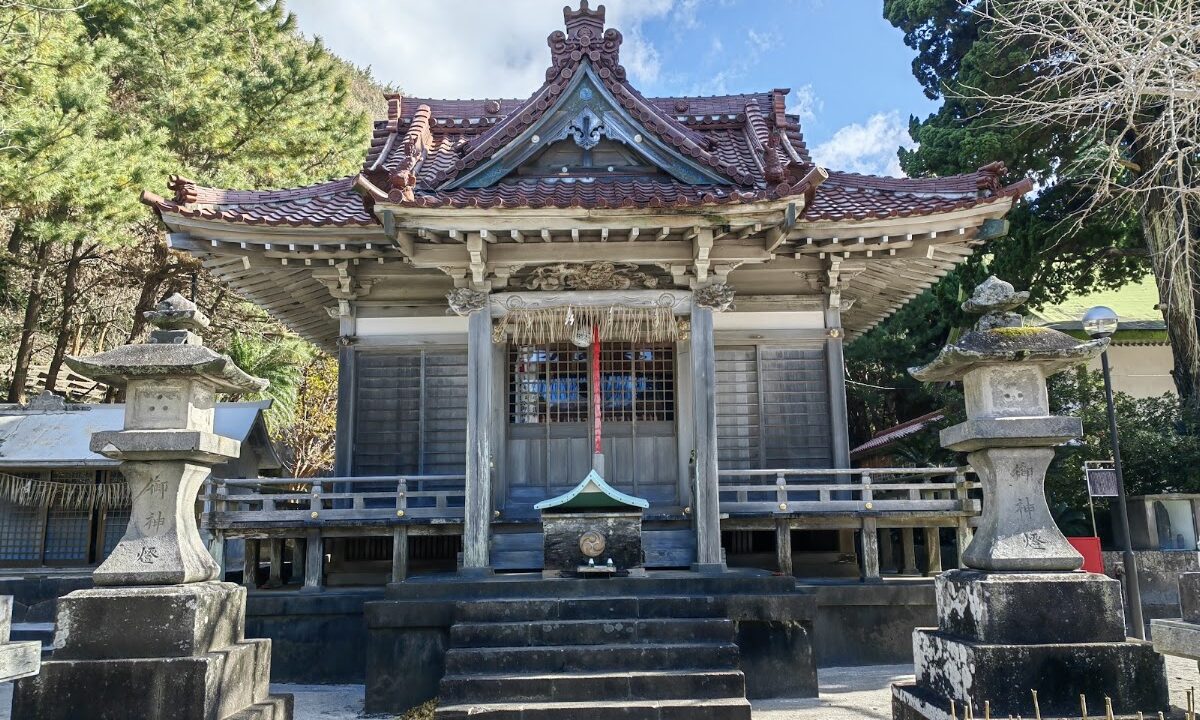
Complete Guide to Monoimina-no-Mikoto Shrine (Kozushima, Tokyo): History, Access, and Visiting Information
Kozushima Island, located approximately 180km off the coast of Tokyo, is home to a shrine of exceptional prestige in Japan. This is Monoimina-no-Mikoto Shrine. Listed as a Myojin Taisha (a major shrine) in the Engishiki Jinmyocho (a list of shrines compiled during the Heian period), it is one of only two such shrines in Tokyo. This guide provides a thorough introduction to this historic and prestigious shrine, covering its history, visiting procedures, and surrounding information.
What is Monoimina-no-Mikoto Shrine?: An Ancient Shrine Dedicated to the Guardian Deity of Kozushima Island
Monoimina-no-Mikoto Shrine is situated on a hill in the northern part of the Maehama settlement in Kozushima Village, Tokyo. Despite its convenient location, just a 5-minute walk from Kozushima Port, a sacred space imbued with tranquility awaits at the top of the stairs.
Pronunciation and Basic Information
The shrine’s name is pronounced “Monoimina no Mikoto Jinja.” Local islanders affectionately refer to it as “Monoimi-sama.”
Basic Data:
- Location: 41 Kozushima Village, Tokyo
- Phone Number: 04992-8-0193 (Kozushima Village Office)
- Shrine Rank: Shikinaisha (Myojin Taisha), Former Prefectural Shrine
- Main Deity: Monoimina no Mikoto
- Annual Festival Dates: August 1st and 2nd
- Visiting Hours: Open 24 hours (Please check the shrine office hours)
- Parking: Public parking available near the port
Status as a Myojin Taisha: A Special Status, One of Only Two in Tokyo
The most distinctive feature of Monoimina no Mikoto Shrine is its status as a “Myojin Taisha.” This is a title bestowed upon 285 shrines considered to possess particularly remarkable spiritual power, from among those listed in the *Engishiki Jinmyocho*, a compilation of shrines completed in 927 during the mid-Heian period.
Myojin Taisha Shrines in Tokyo
Surprisingly, only two shrines in Tokyo are ranked as Myojin Taisha (Grand Shrines): this Monokina-no-Mikoto Shrine and Awa-no-Mikoto Shrine in Nagahama, in the northern part of Kozushima Island. The existence of two such prestigious shrines on the remote Izu Islands is evidence of the region’s importance since ancient times.
Historical Value as a Shikinaisha Shrine
The *Engishiki Jinmyocho* lists it as “Monokina-no-Mikoto Shrine, Kamo District, Izu Province,” indicating it was one of the centers of faith in Izu Province (present-day Izu Peninsula and Izu Islands, Shizuoka Prefecture) at the time. This demonstrates that Kozushima Island was not merely a remote island, but an important religious and cultural center for over 1000 years.
Deity Enshrined: Monokina-no-Mikoto: The Child Deity of Kozushima Island’s Development
Origin of Monokina-no-Mikoto
Monokina-no-Mikoto is considered the child deity of Awame-no-Mikoto, the pioneering deity of Kozushima Island. Awame-no-Mikoto was the consort of Kotoshironushi-no-Mikoto, the grandson of Okuninushi-no-Mikoto of Izumo Taisha Shrine, and is said to have created the islands of the Izu archipelago.
Monokina-no-Mikoto, along with his mother Awame-no-Mikoto, dedicated himself to the development and growth of Kozushima Island, and has been deeply revered by the islanders. The name “Monokina” signifies purification and avoidance of defilement in Shinto rituals, indicating his sacred status.
Relationship with Mishima Taisha Shrine
Monokina-no-Mikoto is also positioned as the child deity of Mishima Taisha Shrine (Mishima City, Shizuoka Prefecture), the Ichinomiya (first-ranked shrine) of Izu Province, demonstrating a deep connection between the deities of the Izu Islands and mainland shrines. This relationship illustrates the importance of maritime transport in ancient times and the fact that the Izu Islands were a place of cultural exchange with the mainland.
Highlights of the Shrine Grounds: A Sacred Space on a Hill
The Approach and Stone Steps
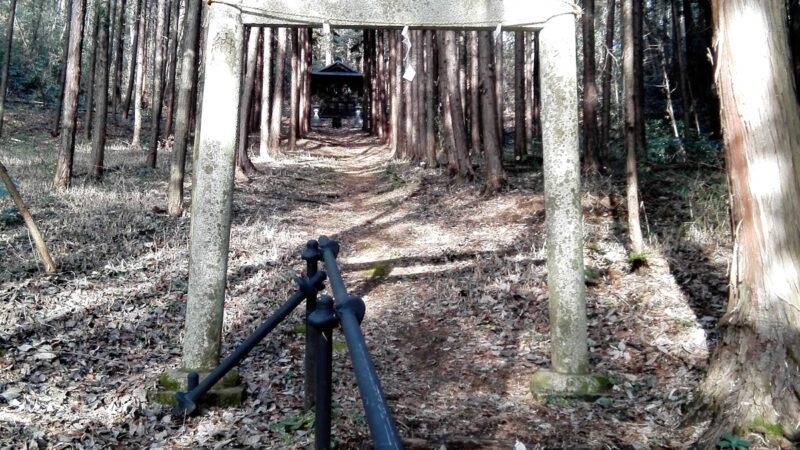
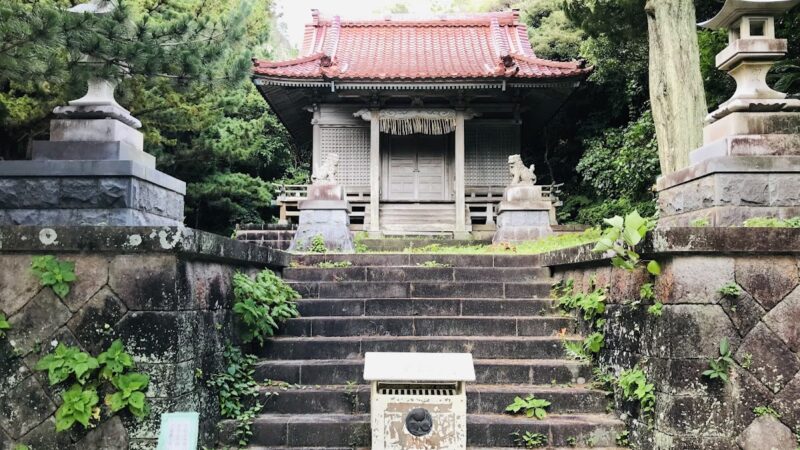
After leaving the village from Kozushima Port and passing through the torii gate of the Monokina-no-Mikoto Shrine, stone steps appear before you. The act of climbing these steps itself has a ritualistic meaning, transitioning from everyday life to a sacred realm. There aren’t many steps, but climbing each one with deliberate steps evokes a feeling of purification.
The Shrine Building and Grounds
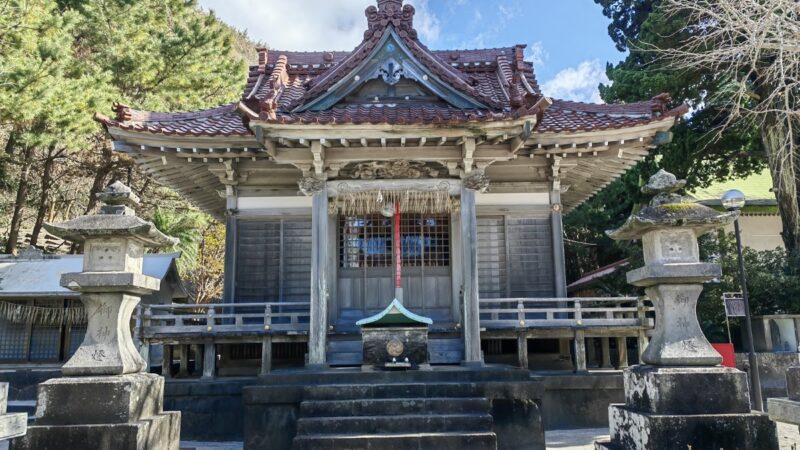
After climbing the stone steps, the shrine building stands on a hill overlooking the fishing port of Maehama. The compact yet dignified shrine building is sturdily constructed to withstand the harsh natural environment of the Izu Islands. From the grounds, you can enjoy a panoramic view of the Maehama village and the blue sea, appreciating the beautiful scenery of Kozushima.
On clear days, you can see the silhouettes of other Izu Islands across the sea, making it a truly spectacular spot. The view at sunset is particularly breathtaking, enveloping you in a divine atmosphere.
Serene Atmosphere
The shrine grounds are always meticulously clean, allowing for a peaceful and tranquil visit. Because it’s rarely crowded with tourists, you can enjoy the sacred atmosphere all to yourself—a unique charm of a shrine on a remote island. Visiting in the silence, where only the sounds of waves and wind can be heard, will deeply soothe your soul.
Annual Festival: A Traditional Event on August 1st and 2nd
The most important annual event at Monokina-no-Mikoto Shrine is the Annual Festival, held every year on August 1st and 2nd. This festival is the largest event on Kozushima Island, attracting many visitors from both within and outside the island.
History and Significance of the Annual Festival
The Annual Festival is a traditional event that has continued since the Edo period, praying for a bountiful catch on Kozushima Island and the safety and prosperity of its inhabitants. Over two days, various Shinto rituals are performed, and the entire island is enveloped in the excitement of the festival.
Mikoshi Procession
In some years, a procession of the portable shrine (mikoshi) takes place. The mikoshi, carried by the islanders, parades through the village, a crucial ritual to spread the divine power of Monokina-no-Mikoto throughout the island. Many islanders and tourists gather along the route the mikoshi takes, cheering it on.
Bonito Fishing Ritual: Nationally Designated Important Intangible Folk Cultural Property
The highlight of the annual festival is the “Bonito Fishing Ritual,” held on the afternoon of August 2nd. This traditional ritual, believed to have begun in the late Edo period, is designated as a Nationally Important Intangible Folk Cultural Property.
In this ritual, Shinto priests and parishioners board boats and perform the act of actually fishing for bonito. The caught bonito are offered to the gods, and prayers are offered for a bountiful catch. Skipjack tuna is an important fishing resource for Kozushima Island, and this Shinto ritual preserves a form of faith closely intertwined with island life.
How to Participate in the Grand Festival
If you plan to visit Kozushima during the Grand Festival, early reservations for accommodation are necessary. Also, since ferries and flights from the mainland will be crowded, it is recommended to plan your trip with plenty of leeway. For detailed festival schedules, please inquire at the Kozushima Village Office or the Tourism Association.
Access: How to Get to Kozushima and Getting Around the Island
From the Mainland to Kozushima
There are two ways to get to Kozushima from central Tokyo: by ferry and by plane.
Access by Ferry:
- Approximately 12 hours by large passenger ship from Takeshiba Pier, Tokyo (overnight service)
- Approximately 3 hours and 45 minutes by high-speed jet ferry from Takeshiba Pier, Tokyo (mainly summer service)
- Approximately 2 hours by ferry from Shimoda Port, Shizuoka Prefecture
- Seasonal service also available from Atami Port
Access by Airplane:
- Approximately 40 minutes from Chofu Airport (Shin Chuo Airlines)
- Approximately 3 flights per day (may be cancelled due to weather)
From Kozushima Port to Monokina-no-Mikoto Shrine
After arriving at Kozushima Port, Monokina-no-Mikoto Shrine is very easily accessible.
On Foot:
- Approximately 5 minutes on foot from Kozushima Port
- Leave the port and head towards the village. Follow the signs and you will see the torii gate.
- Climb the slope and ascend the stone steps to reach the shrine grounds.
By Rental Car/Rental Bicycle:
- Rental car and rental bicycle shops are available around the port.
- Parking is available near the shrine (public parking at the port is also available).
- Accessible by bicycle in about 5 minutes.
Transportation on the Island
Kozushima is a small island with a circumference of approximately 22 km, but tourist spots are scattered, so a rental car or rental bicycle is convenient. A village bus also operates, but the number of services is limited, so it is necessary to plan with ample time.
Goshuin (Shrine Stamp) Information: Self-Service
You can receive a goshuin at Monokina-no-Mikoto Shrine. However, since there is no resident priest, it is a self-service system.
How to Receive a Goshuin (Shrine Stamp)
Goshuin stamps are available on the shrine grounds or near the shrine office, and visitors stamp them themselves in their goshuincho (stamp book). Please place your offering (whatever you feel is appropriate) in the offering box before carefully stamping.
While this self-service format is unusual, it’s a necessary arrangement due to the unique environment of this remote island. Enjoy this format as part of the unique pilgrimage experience at Monokina-no-Mikoto Shrine.
About Goshuincho (Shrine Stamp Books)
Whether or not there are original Kozushima goshuincho available varies depending on the time of year. It’s recommended to check with the Kozushima Village Office or the Tourist Association in advance.
Recommended Nearby Spots: Enjoy Kozushima Sightseeing
After visiting Monokina-no-Mikoto Shrine, explore other attractive spots on Kozushima Island.
Awa-no-Mikoto Shrine
Located in Nagahama in the northern part of the island, this is another prestigious shrine. It enshrines Awa-no-Mikoto, the mother goddess of the deity enshrined at Monokina-no-Mikoto Shrine. Visiting both the Monokina-no-Mikoto Shrine and the Tenjozan Mountain will allow you to gain a deeper understanding of Kozushima’s mythological world. It’s about a 15-minute drive or a 30-minute bike ride from the port.
Tenjozan Mountain
At 572m, it’s the highest peak on Kozushima. From the summit, a 360-degree panoramic view unfolds, offering breathtaking vistas of the Izu Islands and even Mount Fuji. The hiking trail is well-maintained and is a popular round-trip hike of approximately 4 hours. Near the summit is a mystical pond called “Tenjo-no-ike” (Heavenly Pond).
Maehama Beach and Akasaki Promenade
Maehama Beach, located just below the Monokina-no-Mikoto Shrine, is one of Kozushima’s main beaches. The crystal-clear waters are perfect for snorkeling and swimming. The Akasaki Promenade, located in the southwest of the island, is a wooden boardwalk built over the sea, and diving from the diving platform is a popular activity.
Yotane Plaza
A tourist information hub located near Kozushima Port. You can purchase local specialties and souvenirs, and also receive tourist information. It’s within walking distance of the Monokina-no-Mikoto Shrine, making it convenient to stop by before or after your visit.
Hot Spring Facilities
Kozushima Island has several hot spring facilities. At the “Kozushima Hot Spring Health Center,” you can soak in an open-air bath while enjoying the ocean view, perfect for relaxing after a day of sightseeing or visiting the shrine.
Local Cuisine: Enjoy the Flavors of Kozushima
Island Sushi
Island sushi, a local dish of the Izu Islands, is a popular delicacy on Kozushima. It’s nigiri sushi made with fish marinated in a soy sauce-based sauce, and uniquely uses mustard instead of wasabi. You can fully enjoy the delicious flavor of fresh local fish.
Ashitaba Dishes
Don’t miss the dishes using Ashitaba (Angelica keiskei), a specialty of Kozushima Island. It’s served in various ways, including tempura, blanched greens, and Ashitaba soba. It’s a nutritious island delicacy with expected health benefits. ### Seafood Cuisine
Near the fishing port, you’ll find numerous restaurants and izakayas (Japanese pubs) serving fresh seafood. Enjoy a wide variety of seafood dishes, such as simmered splendid alfonsino, sashimi platters, and spiny lobster dishes—a selection you wouldn’t expect to find in Tokyo.
HYUGA BREWERY
A brewery offering craft beer brewed on Kozushima Island. Their unique beers, made with the island’s natural water, are perfect as souvenirs or mementos of your trip.
Accommodation Information: Staying on Kozushima Island
Guesthouses and Ryokans
Kozushima Island boasts numerous guesthouses and ryokans (traditional Japanese inns), offering a homey atmosphere where you can experience island life. Many accommodations serve local island cuisine, making meals a highlight of your stay.
Yamashita Ryokan Annex: A conveniently located ryokan near Kozushima Port. Known for its cuisine using fresh seafood.
Hotels
Hotel Kozukan: One of Kozushima Island’s leading hotels. It features a hot spring facility, ensuring a comfortable stay.
Campsites
Kozushima Island has campsites, and camping under the starry sky is a popular activity. However, campsites may be unavailable during typhoon season and winter, so prior confirmation is necessary.
Booking Time
During the summer (July-August) and the time of the annual festival, accommodations become crowded, so early booking is essential. Conversely, during the off-season (autumn-spring), bookings are relatively easier to obtain, allowing you to enjoy a quiet island experience.
Best Season and Precautions for Visiting
Recommended Time
Spring (March-May): The climate is mild and ideal for sightseeing. The sea is still cold, but it’s a comfortable season for hiking and sightseeing.
Summer (June-August): The best season for swimming and diving. The annual festival in August is also not to be missed. However, it is also typhoon season, so be careful about the weather.
Autumn (September-November): The sea is still warm, and the number of tourists decreases, allowing you to enjoy a relaxed island experience.
Winter (December-February): This is the time of year with the fewest tourists. While weather can be unpredictable and ferry services may be cancelled, it’s recommended for those seeking a quiet and peaceful visit.
Points to Note When Visiting
- Clothing: Comfortable walking shoes are essential as you will be climbing stone steps. In summer, the sun is strong, so don’t forget a hat and sunscreen.
- Weather: As it is an island, ferry and flight services may be cancelled due to weather. Allow ample time in your schedule.
- Cash: Many shops on the island do not accept credit cards, so bring plenty of cash.
- Mobile Phone: Major carriers are generally usable, but signal strength may be weak in some areas.
History and Culture of Kozushima: The Background Surrounding Monokina-no-Mikoto Shrine
Formation of Kozushima
Kozushima is a volcanic island formed by volcanic activity approximately 200,000 years ago. Its unique topography, centered around Mount Tenjo, has inspired awe in people since ancient times. The island’s name, “Kozu,” is said to mean “an island where gods gather,” and the existence of the Monokina-no-Mikoto Shrine and Awa-no-Mikoto Shrine supports this origin.
Ancient Beliefs
As it is listed as a Myojin Taisha (a major shrine) in the Engishiki Jinmyocho (a list of shrines compiled in the Heian period), it is clear that it was already a place of worship highly valued by the imperial court during the Heian period. The Izu Islands were also a key point for maritime traffic connecting the mainland and the continent, and it is thought to have functioned as a place of prayer for safe voyages.
Modern History
Under the Meiji era’s shrine ranking system, it was ranked as a prefectural shrine, positioning it as an important shrine within Tokyo (then Tokyo Prefecture). Even after World War II, it has been carefully preserved as a center of faith for the islanders and as a tourist resource.
Summary: A Special Worship Experience at a Remote Island’s Myojin Taisha
Monokina-no-Mikoto Shrine, located on Kozushima Island far from central Tokyo, is a Myojin Taisha with special status in Japan. With a history spanning over 1000 years, this shrine is a precious relic that preserves the myths and culture of the Izu Islands, deeply moving visitors.
The shrine buildings stand quietly on a hill overlooking the fishing port of Maehama, the stone steps leading up to the shrine, and the blue sea and sky visible from the grounds. Away from the hustle and bustle of the city, a visit enveloped in a sacred atmosphere will deeply heal and refresh your soul.
The annual festival in August offers a valuable opportunity to experience traditional events, including the “Katsuo-tsuri Shinto ritual,” a nationally designated Important Intangible Folk Cultural Property, and to immerse yourself in the island’s culture. Combining this with nature experiences unique to Kozushima, such as hiking Mt. Tenjo, swimming in the sea, and visiting hot springs, will make for an even more fulfilling trip.
A trip to Kozushima requires careful planning regarding boat and flight schedules and weather, but the joy of arrival is all the greater. In the unique environment of this remote island, where time flows slowly, why not experience ancient Japanese beliefs and island culture through a visit to Monokina-no-Mikoto Shrine?
With its abundant nature, beautiful sea, and historic shrines that seem unbelievable for being within Tokyo, Kozushima Island and the Monokina-no-Mikoto Shrine are truly power spots that leave visitors with special memories.