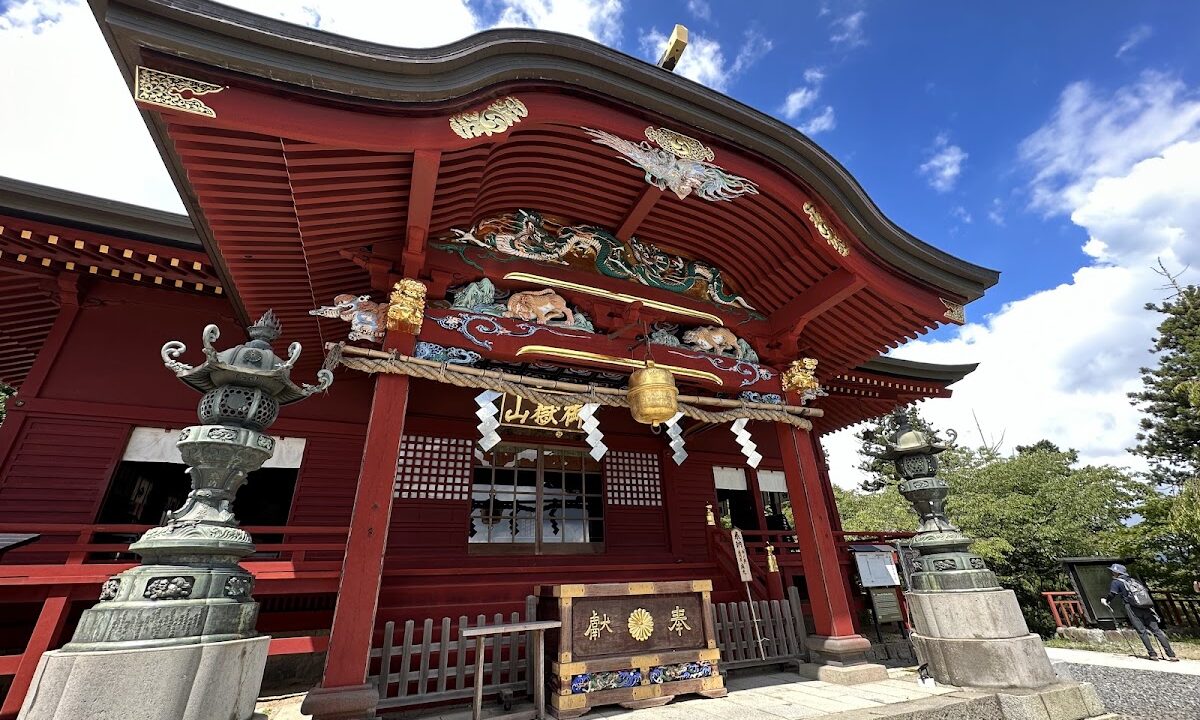
Musashi Mitake Shrine (Tokyo) Complete Guide: One of Kanto’s Foremost Ancient Shrines, Nestled on a Sacred Mountain at an Elevation of 929m
Musashi Mitake Shrine, located on the summit of Mount Mitake in Ome City, Tokyo, at an elevation of approximately 929 meters, is an ancient shrine that has been revered by many people since ancient times as a sacred mountain of mountain worship representative of the Kanto region. This shrine, said to have been founded in 91 BC, offers a sacred space enveloped in deep spirituality and abundant nature, while still being accessible from the city center.
This article provides detailed information necessary for visiting Musashi Mitake Shrine, including its history, enshrined deities, access methods, highlights, valuable cultural assets in the treasure hall (including national treasures), and the “Oinu-sama” (dog deity) worship known for prayers for beloved dogs.
History and Origins of Musashi Mitake Shrine
History from Founding to Ancient Times
According to shrine tradition, the founding of Musashi Mitake Shrine dates back to the 7th year of Emperor Sujin’s reign (91 BC). During the reign of the 10th Emperor Sujin, Takenunakawawake-no-Mikoto, who was ordered to pacify the eastern provinces, enshrined Ōnamuchi-no-Mikoto and Sukunahikona-no-Mikoto on Mount Mitake, which is considered its origin.
This tradition illustrates the historical context in which the governance of the eastern provinces in ancient times was intertwined with mountain worship, indicating that Mount Mitake was recognized as a sacred mountain from ancient times.
The Legend of Yamato Takeru and the Origin of “Oinu-sama”
Indispensable to understanding Musashi Mitake Shrine is the legend surrounding Yamato Takeru-no-Mikoto. During the reign of Emperor Keikō, when Prince Yamato Takeru, on his eastern expedition, became lost on Mount Mitake and faced peril, a white wolf suddenly appeared and guided him safely.
This white wolf was enshrined as Ōkuchi no Magami and became affectionately known as “Oinu-sama” (Lord Dog). Because of this legend, Musashi Mitake Shrine became known as a shrine with miraculous powers for protection against theft, warding off evil, and, in modern times, for praying for the health of beloved dogs.
Development in the Tenpyō Era and Fusion with Shugendō
It is said that in 736 AD (Tenpyō 8), the Nara period high priest Gyōki Bodhisattva visited this area, built a hall, and enshrined a statue of Kongō Zaō Gongen. This added the character of a sacred site for Shugendō, a fusion of Shinto and Buddhism, and it developed as a training ground for mountain asceticism.
From the Heian period to the Kamakura period, Musashi Mitake Shrine attracted the faith of the Kanto samurai clans, and was particularly revered by warlords such as Hatakeyama Shigetada. Throughout the medieval period, Musashi Mitake Shrine flourished as a sacred site for praying for military success and national peace, and as a training ground for Shugendo practitioners.
Prosperity in the Edo Period and the Oshi System
In the Edo period, Musashi Mitake Shrine received the patronage of the Tokugawa shogunate and underwent further development. During this time, a system was established in which Shinto priests called “Oshi” traveled to various regions to spread the faith and guide pilgrims.
The Oshi organized religious groups (ko) throughout the Kanto region, spreading the Mitake faith among farmers and merchants. The shrine was particularly revered as a god of agriculture and water, and many people visited to pray for bountiful harvests and rain. Even today, more than 30 lodging houses (Oshi houses) remain on Mount Mitake, welcoming pilgrims.
Modernization Since the Meiji Era and the Present
Following the Meiji-era decree separating Shinto and Buddhism, Musashi Mitake Shrine was reorganized as a purely Shinto shrine, eliminating its Buddhist elements. In 1873 (Meiji 6), it was designated a local shrine, and later elevated to a prefectural shrine.
In 1927 (Showa 2), the Mitake Mountain Railway (cable car) opened, dramatically improving access. This led to a significant increase in visitors, and today, it is a representative sacred site of mountain worship in Tokyo, bustling with climbers and worshippers throughout the year.
Deities and Characteristics of the Worship
Main Deity
The main deity of Musashi Mitake Shrine is Kushimachi-no-Mikoto. Kushimachi-no-Mikoto is a grandson of Amaterasu Omikami and is revered as the god who presides over the development and protection of Musashi Province.
Enshrined Deities
Along with the main deity, the following gods are enshrined:
- Ōnamuchi-no-Mikoto: God of nation-building, god of matchmaking and business prosperity
- Sukunahikona-no-Mikoto: God of medicine, hot springs, and exorcisms
- Yamato Takeru-no-Mikoto: God of martial prowess, hero of the pacification of the eastern provinces
- Ōkuchi-no-Magami: Guardian deity affectionately known as “Oinu-sama”
These deities, together, are believed to bestow a wide range of divine blessings, including lasting military fortune, protection from theft, protection from evil, abundant harvests, and family safety.
Characteristics of the “Oinu-sama” Worship
The most distinctive feature of Musashi Mitake Shrine is its “Oinu-sama (Ōkuchi-no-Magami)” worship, which is rare throughout Japan. This belief, which deifies the white wolf that guided Yamato Takeru, has the following characteristics:
Protection from theft and evil spirits: The Oinu-sama (sacred dog) is worshipped as a guardian deity protecting homes and property, and during the Edo period, “Oinu-sama amulets” were widely distributed, especially among merchants.
A sacred place for prayers for beloved dogs: In modern times, worshippers from all over the country visit to pray for the health, longevity, and safety of their pet dogs. During the New Year’s visit season, many dog lovers can be seen visiting with their dogs, and it is known as one of the few shrines that welcomes visitors with dogs.
Issuance of sacred dog amulets: The shrine offers a special amulet called “Sacred Dog Amulet,” which is worshipped as a guardian of the home.
Access and Pilgrimage Route
Access by Train and Bus
Access to Musashi Mitake Shrine starts from the JR Ome Line.
From Tokyo:
- Take the JR Chuo Line to Tachikawa Station.
- Transfer to the JR Ome Line and get off at Mitake Station (approximately 50 minutes from Tachikawa).
- From Mitake Station, take the Nishi-Tokyo Bus bound for “Cable-shita” (approximately 10 minutes).
- Get off at the final stop, “Cable-shita”.
Travel time from Shinjuku: Approximately 2 to 2.5 hours.
Using the Cable Car
From Takimoto Station to Mitakeyama Station, use the Mitake Tozan Railway (cable car).
Basic Information on the Mitake Mountain Railway:
- Operating Section: Takimoto Station to Mitakeyama Station
- Travel Time: Approximately 6 minutes
- Elevation Difference: Approximately 423 meters
- Operating Frequency: Every 15-30 minutes (varies seasonally)
- Fare: Adult one-way 600 yen, round-trip 1,130 yen (as of 2024)
- Operating Hours: 7:30 AM – 6:30 PM (varies seasonally)
From the cable car, you can enjoy the natural scenery of each season.
From Mitakeyama Station to the Shrine
After arriving at Mitakeyama Station, it is approximately a 25-30 minute walk to Musashi Mitake Shrine.
Approach Route:
- Proceed along the paved approach from Mitakeyama Station.
- Pass through the shopping street area (lined with souvenir shops and restaurants).
- Pass through the large torii gate and proceed to the stone steps.
- Climb the approximately 330 stone steps.
- Enter the shrine grounds via the Zuishinmon gate.
Along the stone steps, there are various points of interest, such as carvings of demons and guardian lion-dogs. While the approach is well-maintained, the continuous stone steps make it advisable to wear comfortable shoes.
Hiking to the Shrine
Another option is to hike to the shrine without using the cable car.
Main Hiking Routes:
- Omotesando Course: Approximately 1 hour 30 minutes to 2 hours from Takimoto Station
- Urasando Course: Approximately 2 hours via Otsukayama
Hiking routes offer a greater sense of oneness with nature, but require careful planning with sufficient physical fitness and time.
Hiking Routes ### Access by Car
Access by Car:
- Approximately 50 minutes from Hachioji IC on the Chuo Expressway via National Route 411
- Approximately 40 minutes from Ome IC on the Ken-O Expressway
- Parking: Paid parking is available near Takimoto Cable Car Station (approximately 1,500 yen per day)
Parking can get crowded on weekends and during peak seasons, so early arrival is recommended.
Highlights and Facilities within the Temple Grounds
Zuishinmon Gate
After climbing the long stone steps, the first thing you’ll see is the magnificent Zuishinmon Gate. The brightly painted vermilion gate marks the entrance to the sacred area, and guardian deities (Zuishin) are enshrined on either side. Passing through this gate instantly evokes a sense of sacredness.
Haiden and Honden
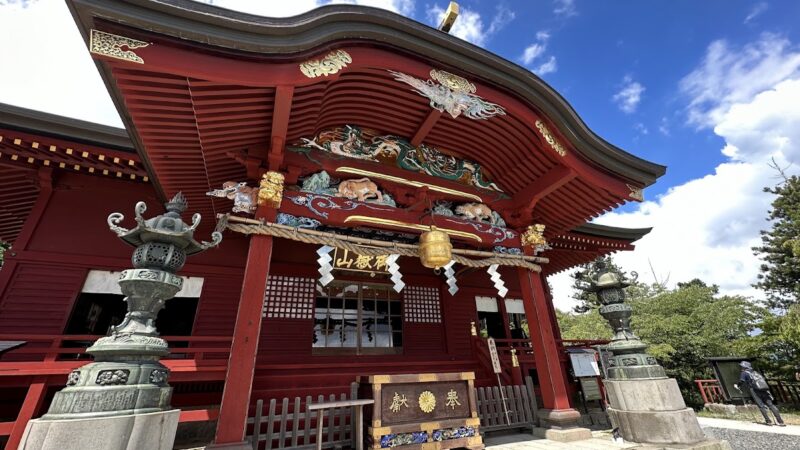
Haiden is a magnificent cypress wood building where many worshippers offer their prayers. A distinctive feature of this shrine is the presence of wolf statues instead of the traditional guardian dogs (komainu) in front of the worship hall.
The main shrine building is constructed in the Ikkensha Shinmei-zukuri style, adopting the same architectural style as Ise Grand Shrine. The cypress bark roof and simple yet dignified construction convey the ancient tradition of shrine architecture.
Treasure Hall
The Treasure Hall of Musashi Mitake Shrine houses and displays numerous valuable cultural artifacts, including national treasures.
Main Collection Items:
National Treasures:
- Red-Laced Armor: A large suit of armor from the Kamakura period, said to have been donated by Hatakeyama Shigetada.
- Red-Laced Large Armor Helmet and Large Sleeves: Exquisitely crafted armor.
Important Cultural Properties:
- Dark Blue-Laced Armor
- Tachi (long sword) inscribed “Masamitsu”
- Various ancient documents
These cultural properties are valuable materials demonstrating the deep connection between medieval samurai and Musashi Mitake Shrine.
Visiting Information:
- Opening Hours: 9:30 AM – 4:00 PM (Varies seasonally)
- Admission Fee: Adults 500 yen, Elementary and Junior High School Students 300 yen
- Closed Days: Irregular (Checking before visiting is recommended)
Kagura Hall and Daidai Kagura
Within the temple grounds is the Kagura Hall, where the “Daidai Kagura” performed is designated as an Intangible Folk Cultural Property of Tokyo.
This Kagura is a traditional performing art passed down from the Edo period and is performed several times a year during the annual festival and special ceremonies. The Kagura, consisting of 12 acts, features many performances based on Japanese mythology and is performed with traditional costumes and movements.
View from the Observation Deck
At the back of the temple grounds is an observation deck offering a panoramic view of the Kanto Plain. If the weather is good, you can enjoy a spectacular view unique to Mount Mitake, which is 929 meters above sea level, with panoramic views of Tokyo Skytree, the skyscrapers of central Tokyo, and even Mount Fuji.
Okumiya (Inner Shrine)
Further along the mountain path from Musashi Mitake Shrine lies the “Okumiya” (Inner Shrine). The hike to the Okumiya takes about 30 minutes one way, but it’s a popular spot for visitors seeking deeper spiritual experiences.
The area around the Okumiya is a mystical space dotted with giant rocks, where you can feel the traces of ancient rock worship.
Goshuin (Shrine Seal) and Souvenirs
Goshuin (Shrine Seal)
At Musashi Mitake Shrine, goshuin are available at the shrine office near the main hall.
Features of the Goshuin (Shrine Seal):
- Calligraphy of “Musashi Mitake Shrine” in the center
- Red seal of the shrine’s crest
- Words of “Homage” in the upper right corner
- Date of visit written
Offering Fee: 500 yen
Reception Hours: 9:00 AM – 4:00 PM (Varies depending on the season)
On special days (such as the annual festival), limited edition Goshuin may be given out. Bring your own Goshuincho (seal book) or purchase one on-site.
Main Items Offered
Amulets:
- Divine Dog Amulet: Amulet of the sacred dog, offering protection against theft and evil spirits
- Pet Amulet: Prayers for the health and longevity of your beloved dog or cat
- Traffic Safety Amulet:
- Exorcism Amulet:
- Academic Success Amulet:
Fortune Slips:
- In addition to regular fortune slips, the cute “Sacred Dog Fortune Slip” is also popular. Amulets:
- Various amulets for family safety, business prosperity, etc.
- Amulets featuring dogs are particularly popular.
Annual Events and Festivals
Main Festivals
New Year’s Day Festival (January 1st):
The first festival of the new year. It is especially lively with worshippers accompanied by their beloved dogs. Many people stay overnight on Mount Mitake from New Year’s Eve to witness the first sunrise of the year.
Setsubun Festival (around February 3rd):
Bean-throwing takes place, and lucky beans are distributed.
Spring Grand Festival (May 8th):
One of the most important festivals at Musashi Mitake Shrine. Daidai Kagura (a type of Shinto ritual dance) is performed, attracting many worshippers.
Sunrise Festival (August 8th):
A Shinto ritual to worship the rising sun over Mount Mitake. Many worshippers gather from early morning.
Annual Grand Festival (Mid-September): A festival to give thanks for the autumn harvest. Includes the dedication of Taidai Kagura (a type of Shinto ritual dance) and a procession of the portable shrine.
Autumn Grand Festival (Mid-October): Coinciding with the autumn foliage season, this festival takes place amidst beautiful nature.
Manners and Precautions for Visiting the Shrine
Clothing and Items to Bring
- Comfortable Shoes: Since there are approximately 330 stone steps, sneakers or trekking shoes are recommended.
- Seasonal Clothing: The temperature at the summit is 5-10 degrees Celsius lower than in the lowlands, so bring a jacket.
- Rain Gear: The weather can change quickly, so a folding umbrella or rain gear is recommended.
- Drinks: Bring beverages to stay hydrated while climbing the stone steps.
Visiting with Your Dog
Musashi Mitake Shrine is a rare shrine that allows visitors to bring their dogs.
Etiquette for Visitors with Dogs:
- Always keep your dog on a leash and hold it short.
- Always take your dog’s waste with you.
- Be considerate of other visitors.
- Pets are not allowed inside the main hall (even if you are carrying your dog, you must pray from outside).
Dogs are allowed on the cable car (small dogs are free, medium and large dogs are charged).
Photography
Photography is generally permitted on the shrine grounds, but please note the following:
- Photography is prohibited inside the main hall.
- Photography is prohibited inside the treasure hall.
- Be considerate of other visitors.
- Avoid using tripods during crowded times.
Nearby Attractions and Hiking Courses
Spots Around Mount Mitake
Rock Garden:
A valley spreading across the north side of Mount Mitake, offering beautiful scenery created by giant rocks and clear streams. It’s about a 1-hour hiking course from Musashi Mitake Shrine.
Nanadai Falls:
A waterfall with a drop of approximately 50 meters located within the Rock Garden. Enjoy forest bathing while breathing in negative ions.
Mt. Otake:
A mountain with an elevation of 1,266 meters, this is a popular route for those who want to enjoy further hiking from Mt. Mitake. The round trip takes approximately 4-5 hours.
Mt. Hinode:
Elevation of 902 meters. A hike of about 1 hour and 30 minutes from Mt. Mitake, offering magnificent views from the summit.
Temple Lodgings on Mt. Mitake
Mt. Mitake has over 30 temple lodgings where you can stay and enjoy vegetarian cuisine and meals made with mountain produce.
Features of Temple Lodgings:
- Early morning visits are possible
- Some temple lodgings offer guidance and prayers by Shinto priests
- Approximately 8,000 to 15,000 yen per night with two meals
- Reservations should be made directly with each temple lodging.
Representative temple lodgings include “Komadori Sanso,” “Nobori,” and “Seizanso.”
Local Cuisine
Mitakeyama Shopping Street:
The path from the Mitakeyama Cable Car Station to the shrine is lined with restaurants and tea houses.
Recommended Menu:
- Mountain Vegetable Soba/Udon: Simple flavors using local mountain vegetables
- Kusamochi: A specialty dish with a rich mugwort aroma
- Tofu Dishes: Tofu made with spring water from Mount Mitake
- Oden: Warm your body after hiking
“Sanraku Chaya Kotanukiyama” is a popular restaurant where you can dine around a traditional Japanese hearth.
Seasonal Charms
Spring (March-May)
Highlights:
- The beauty of fresh greenery
- The blooming of Rhododendron dilatatum and mountain cherry blossoms
- The chirping of wild birds
- Spring Grand Festival (May 8th)
In spring, the fresh greenery is dazzling, and the entire forest is full of vitality.
Summer (June-August)
Highlights:
- Deep green forest bathing
- Cool mountain climate (ideal as a summer retreat)
- Refreshing coolness at Nanadai Falls
- Sunrise Festival (August 8th)
Escape the heat of Tokyo and enjoy the coolness at an altitude of 929 meters.
Autumn (September-November)
Highlights:
- Spectacular autumn foliage (best viewing time: late October to mid-November)
- Annual Grand Festival and Autumn Grand Festival
- Clear air and panoramic views
- Autumn delicacies (chestnuts, mushrooms, etc.)
The autumn foliage of Mount Mitake is among the most beautiful in Tokyo, with maple, beech, and other trees coloring the mountain.
Winter (December to February)
Highlights:
- New Year’s visit (many visitors with their dogs)
- Snowscape (when there is snow)
- Clear skies
- Winter starry sky
Winter offers relatively few visitors, allowing for a peaceful visit. However, warm clothing is essential.
Basic Information and Contact Information
Musashi Mitake Shrine
- Address: 176 Mitakeyama, Ome City, Tokyo 198-0175
- Phone Number: 0428-78-8500
- Official Website: http://musashimitakejinja.jp/
- Visiting Hours: 24 hours (Shrine office open from approximately 9:00 to 16:00)
- Admission Fee: Free (Treasure Hall is subject to a fee)
- Parking: Paid parking available near Takimoto Cable Car Station
Mitake Tozan Railway (Cable Car)
- Phone Number: 0428-78-8121
- Official Website: http://www.mitaketozan.co.jp/
Ome City Tourism Association
- Phone Number: 0428-24-2481
- Official Website: https://www.omekanko.gr.jp/
Summary: The Charm of Musashi Mitake Shrine
Musashi Mitake Shrine is a representative shrine of the Kanto region, blending a long history dating back to before the Common Era, the spirituality of mountain worship, and abundant nature. Located on the summit of Mount Mitake at an altitude of 929 meters, this ancient shrine is accessible from central Tokyo in about two hours, yet offers an experience of a different world enveloped in deep forest and pure air.
Musashi Mitake Shrine is full of diverse attractions, including valuable cultural assets such as national treasures, the rare “Oinu-sama” (dog deity) worship, the unique feature of allowing visitors to bring their dogs, and the natural beauty that changes with the seasons.
Beyond just worship, there are many ways to enjoy the shrine, such as hiking, staying at temple lodgings, and exploring the surrounding nature. It is a sacred place worth visiting throughout the year, whether for New Year’s prayers, autumn leaf viewing, summer retreats, or mountain climbing.
Musashi Mitake Shrine offers a glimpse into the sacred atmosphere of mountain worship right here in Tokyo. Be sure to visit this sacred mountain and experience the breathtaking views of the Kanto Plain and the ancient faith that has continued since ancient times.