Complete Guide to Toshu Inari Shrine (Koto Ward, Tokyo) | History, Deities, Access, and Annual Festival Information
Toshu Inari Shrine, located in Higashisuna, Koto Ward, Tokyo, is a historic shrine that has developed alongside the land reclamation projects of the Edo period. Situated near Bansho Bridge, where the old Nakagawa and Onagigawa rivers merge, it was once revered by the local people as the guardian shrine of Matabei Shinden Village, Nakada Shinden, and Otsuka Shinden.
This article comprehensively introduces all the information you need to know before visiting Toshu Inari Shrine, including its history, deities, access methods, annual events such as the annual festival, and information on Goshuin (shrine stamps).
Basic Information about Toukubi Inari Shrine
Location: 2-14-5 Higashisuna, Koto-ku, Tokyo
Deity: Ukanomitama-no-kami
Founded: Kan’ei era (1624-1644)
Nearest Station: Approximately 6-9 minutes on foot from Higashi-Ojima Station on the Toei Shinjuku Line
Annual Festival: Around August 20th
Toukubi Inari Shrine is located in the Higashisuna area of Koto-ku, in a quiet residential area surrounded by the waterfront environment of the former Nakagawa River. There are various theories about the origin of the shrine’s name, “Toukubi,” but it has been passed down to this day as a name deeply connected to the history of the region.
History and Origins of Toukubi Inari Shrine
New Land Development and Founding in the Edo Period
The founding of Toukubi Inari Shrine dates back to the Kan’ei era (1624-1644). This period was a time when the Edo shogunate actively pursued land reclamation, and a man named Matabei from Onagi Village began developing this area.
Matabei enshrined an Inari shrine to pray for the success of his reclamation project and the prosperity of the region, and this is considered the beginning of the Tokubi Inari Shrine. Inari worship is widely practiced as the god of abundant harvests and business prosperity, and the establishment of an Inari shrine held great significance for the pioneers who prayed for agricultural success in their land reclamation projects.
As the Guardian Shrine of Matabei Shinden Village
After its establishment, the Tokubi Inari Shrine became the guardian shrine of Matabei Shinden Village and a central place of worship in the region. Furthermore, it was also revered as the guardian shrine of the neighboring Nakada Shinden and Otsuka Shinden, forming a broad sphere of worship spanning multiple reclaimed villages.
Throughout the Edo period, these reclaimed areas developed primarily through agriculture, and the Tokubi Inari Shrine functioned as a spiritual pillar for farmers praying for abundant harvests. Festivals such as the annual grand festival and monthly festivals were important opportunities to strengthen the bonds of the local community.
Changes Since the Meiji Era
With the arrival of the Meiji era, the separation of Shinto and Buddhism and the wave of modernization affected shrines. Tokubi Inari Shrine also adapted to the changing times while continuing its role as the local guardian deity.
During the Showa period, there were environmental changes due to war damage and urban development, but the shrine was protected by the deep faith of the local residents and continues to this day. Even as the eastern part of Tokyo industrialized and became residential, Tokubi Inari Shrine continues to exist as a valuable cultural heritage that conveys the history of the region.
Deities and Divine Virtues
Ukanomitama-no-kami
The deity enshrined at Tokubi Inari Shrine is Ukanomitama-no-kami. This deity is an important god in Japanese mythology, appearing in the Kojiki and Nihon Shoki, and is widely worshipped at Inari shrines throughout Japan.
Ukanomitama-no-kami is known as the god who presides over grains, especially rice. “Uka” is an archaic word meaning grain or food. Said to be the birth of Susanoo-no-Mikoto and Kamu-Oichihime, Ukanomitama-no-kami is a central deity of Inari worship, with Fushimi Inari Taisha as its head shrine.
Divine Virtues (Benefits)
The main divine virtues you can expect by visiting Tokubi Inari Shrine are as follows:
Abundant Harvest and Agricultural Prosperity
You can pray for agricultural success and a bountiful harvest, which is the original divine virtue of Inari.
Business Prosperity and Success
Since the Edo period, Inari worship has spread to the merchant class, and the god is also worshipped as a god of business prosperity.
Family Safety and Good Fortune
As the local guardian deity, the god protects the health and happiness of your family.
Industrial Development
As the god who presides over food, the god watches over the development of all industries.
Highlights of the Shrine Grounds
Shrine Buildings and Grounds Layout
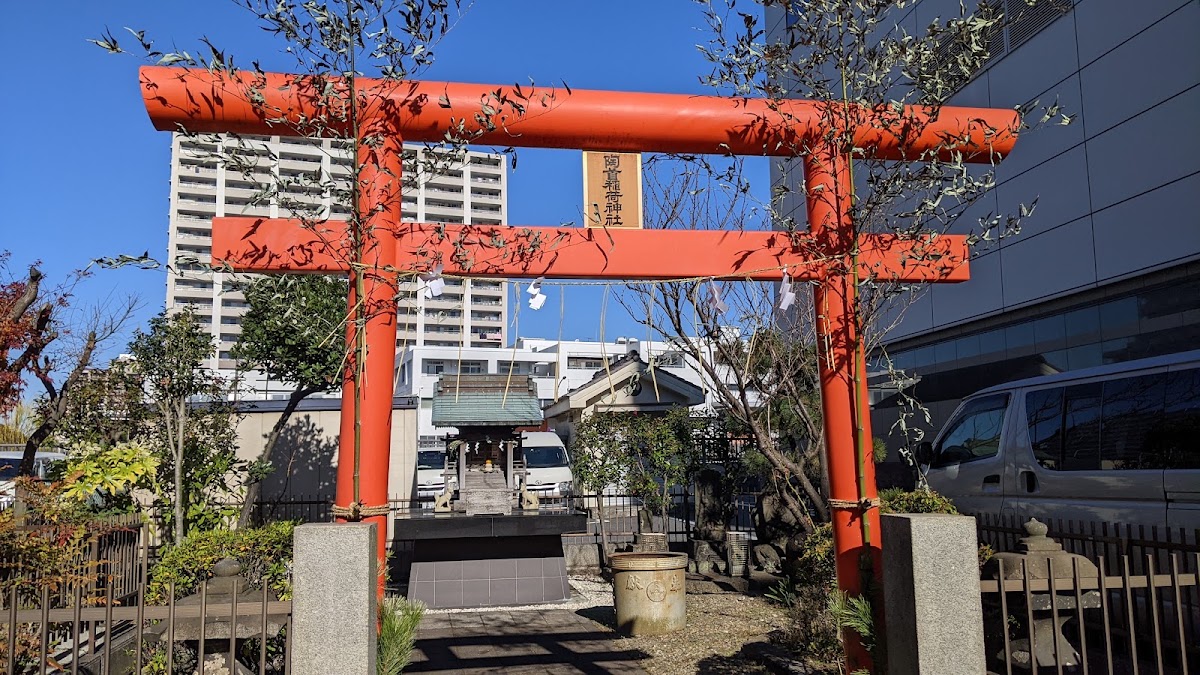
The grounds of Tokubi Inari Shrine are located near the waterfront, at the southern end of Bansho Bridge where the Old Nakagawa and Onagigawa rivers merge. Situated at the end of a road that passes between Paramount Bed Holdings buildings, it maintains a tranquil atmosphere despite being in an urban area.
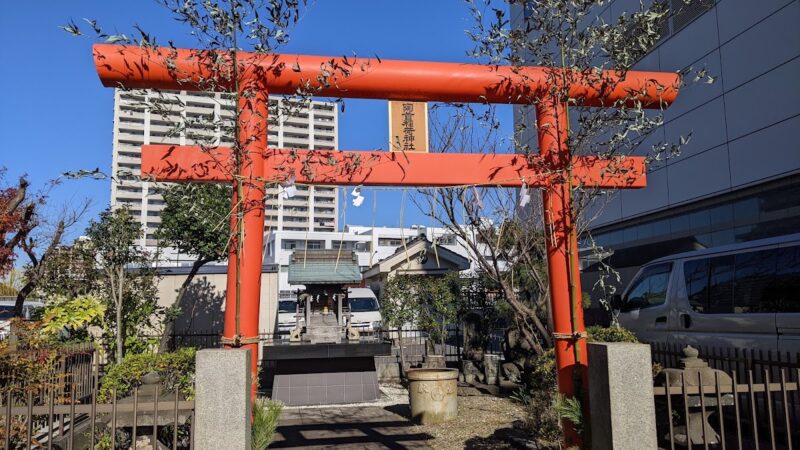
The shrine buildings are in the typical Inari style, with a vermilion torii gate welcoming visitors. The grounds are not particularly large, but are meticulously maintained, reflecting the deep faith of the local people.
Fox Statues and Symbols of Inari Faith
A characteristic feature of Inari shrines is the placement of fox statues, which are considered messengers of the gods. Foxes are believed to be messengers of Ukanomitama-no-kami and are an important element of faith found in many Inari shrines. At Tokubi Inari Shrine, fox statues are placed along the approach to the shrine and in front of the main building, watching over visitors.
Surrounding Waterfront Environment
Near the shrine flow the Old Nakagawa River and the Onagigawa River, allowing visitors to experience the history of water transport dating back to the Edo period. The area around Banshobashi Bridge was a checkpoint for boats during the Edo period, making it a pleasant place to enjoy a stroll along the waterfront while visiting the shrine.
Access and Visiting Information
Access by Train
Using the Toei Shinjuku Line
Nearest Station: Higashi-Ojima Station
Travel Time: Approximately 6-9 minutes on foot
From Higashi-Ojima Station to Tokubi Inari Shrine, the most common route is to head towards the Ojimaguchi intersection and then south along the Old Nakagawa River. Banshobashi Bridge is a good landmark.
Access by Bus
Toei buses and private buses are also available. While the nearest bus stop is within walking distance, using the train is the most convenient option.
Access by Car
Access from the Metropolitan Expressway is possible, but since the surrounding area is residential, it is recommended to check in advance whether there is a dedicated parking lot. Please consider using nearby coin-operated parking lots.
Map and Surrounding Environment
The area around Tokubi Inari Shrine has a promenade along the former Nakagawa River and parks, making it a pleasant environment for strolling. Searching for “Tokubi Inari Shrine” on digital maps such as Google Maps will provide accurate location information and route guidance.
Address: Please use 2-14-5 Higashisuna, Koto-ku, Tokyo as a landmark.
Annual Festival and Regular Events
Annual Festival (Around August 20th)
The most important festival at Tokubi Inari Shrine is the annual festival. Held around August 20th each year, it brings together local people for a portable shrine procession and Kagura (sacred dance) performances.
The annual festival is an important opportunity to deepen the bonds of the local community, with participation from a wide range of generations, from children to the elderly. As a summer tradition, it also plays a role in passing on the region’s traditional culture to future generations.
Other Annual Events
Hatsumode (January 1st-3rd)
Many local worshippers visit the shrine for Hatsumode to pray for happiness in the new year.
Hatsuumasai (First Horse Day of February)
Hatsuumasai is a particularly important festival day for Inari shrines, and special rituals are performed.
Natsukoshi no Harae (Around June 30th)
This ritual purifies the impurities accumulated over the past six months and prays for good health and protection from illness for the remaining half of the year.
Autumn Festival (Autumn)
An autumn festival expressing gratitude for the harvest may also be held.
Goshuin (Shrine Seal) Information
Regarding the Issuance of Goshuin
The issuance of Goshuin at Tokubi Inari Shrine may vary depending on the size of the shrine and whether a shrine official is permanently stationed there. Those wishing to receive a Goshuin are advised to check in advance.
Many small shrines may issue Goshuin on special days such as their annual festival. In some cases, inquiries may be handled through nearby affiliated shrines or the Association of Shinto Shrines.
About Goshuincho (Shrine Stamp Books)
For those visiting shrines in Tokyo, it’s convenient to have a dedicated goshuincho. A “shrine pilgrimage” visiting shrines in Koto Ward, including Tokubi Inari Shrine, is a great opportunity to learn about the local history.
Nearby Shrines and Temples
Major Shrines in Koto Ward
Here are some shrines in Koto Ward that you might want to visit along with Tokubi Inari Shrine.
Tomioka Hachimangu Shrine
A major shrine representing Koto Ward, known for the “Fukagawa Hachiman Festival,” one of the three major Edo festivals.
Kameido Tenjin Shrine
A shrine dedicated to Sugawara no Michizane, the god of learning, and also famous for its wisteria.
Fukagawa Shinmei-gu Shrine
A historical shrine dedicated to the deities of Ise Grand Shrine.
Temples and Shrines in the Higashisuna and Oshima Areas
The Higashisuna area, where Tokubi Inari Shrine is located, is dotted with historical temples and shrines. Visiting them in conjunction with a historical walk through the area is highly recommended.
The Charm of Tokubi Inari Shrine and Points to Note When Visiting
A Quiet Space of Worship in the City
While the eastern part of Tokyo has developed as an industrial and residential area, Tokubi Inari Shrine maintains a tranquil space of worship even amidst urbanization. It serves as a place to escape the hustle and bustle and find peace of mind, a spiritual haven for both local residents and visitors.
Experiencing History from the Edo Period
Founded during the Kan’ei era, Tokubi Inari Shrine boasts a history of approximately 400 years, making it a valuable resource that conveys the history of land reclamation during the Edo period. Visiting the shrine allows you to feel the history of Tokyo’s development firsthand.
The Center of the Local Community
Even today, Tokubi Inari Shrine plays a central role in the local community. Through events such as the annual festival, the bonds among local people are deepened, and traditional culture is passed down.
Manners and Precautions When Visiting a Shrine
Basic Worship Etiquette
How to Pass Through the Torii Gate Bow before passing through the torii gate. Avoid walking in the center of the path.
How to Wash Your Hands Wash your left hand, then your right hand, at the water basin, and rinse your mouth.
How to Bow The basic method is two bows, two claps, and one bow. Bow deeply twice before the shrine, clap your hands twice, and finally bow deeply once.
Photography
Photography is generally permitted on the shrine grounds, but please be considerate of other worshippers. Photography inside the shrine or during religious ceremonies may be discouraged.
Visiting Hours
Visiting shrines during the daytime is generally recommended. Visiting at night or early in the morning requires consideration for surrounding residents.
A Tour of Inari Shrines in Tokyo
Major Inari Shrines in Tokyo
Including Tokubi Inari Shrine, numerous Inari shrines are located throughout Tokyo.
Toyokawa Inari Tokyo Branch Temple (Minato Ward)
A Soto Zen temple, but known for its Inari worship.
Anahachimangu Shrine Inari Shrine (Shinjuku Ward)
Worshipped as the guardian deity of Waseda.
Shozoku Inari Shrine (Kita Ward)
An ancient shrine known for the legend of the fox of Oji.
Inari Shrine Network in Koto Ward
Besides Tokubi Inari Shrine, Koto Ward has many other Inari shrines, each connected to the history of the region. By visiting the Inari shrines in the ward, you can learn about the history of Koto Ward’s origins and development.
Summary: A Recommendation to Visit Tokubi Inari Shrine
Tokubi Inari Shrine is a historic Inari shrine located in Higashisuna, Koto Ward, Tokyo. Since its founding during the Kan’ei era, this shrine has attracted the faith of local people for approximately 400 years, playing an important role as the guardian shrine of the Nitta region, including Matabei Shinden Village.
The enshrined deity, Ukanomitama-no-kami, is widely worshipped as the god of abundant harvests and business prosperity, and even today, many worshippers visit the shrine. Its convenient location, within walking distance of Higashi-Ōjima Station on the Toei Shinjuku Line, is also a major draw.
Annual events, including the grand festival held around August 20th, deepen the bonds of the local community and ensure the transmission of traditional culture to future generations. The waterside environment, where the Old Nakagawa and Onagigawa rivers merge, further enhances the appeal of the shrine.
As part of your shrine pilgrimage in Tokyo or your historical exploration of Koto Ward, we highly recommend visiting Tōkubi Inari Shrine. In this tranquil space of worship remaining in the city, you can find peace of mind and spend precious time praying for daily happiness.
We recommend checking the latest information regarding visits and the dates of the grand festival in advance. By showing respect to the shrine and observing proper etiquette during your visit, you can have a more fulfilling experience.