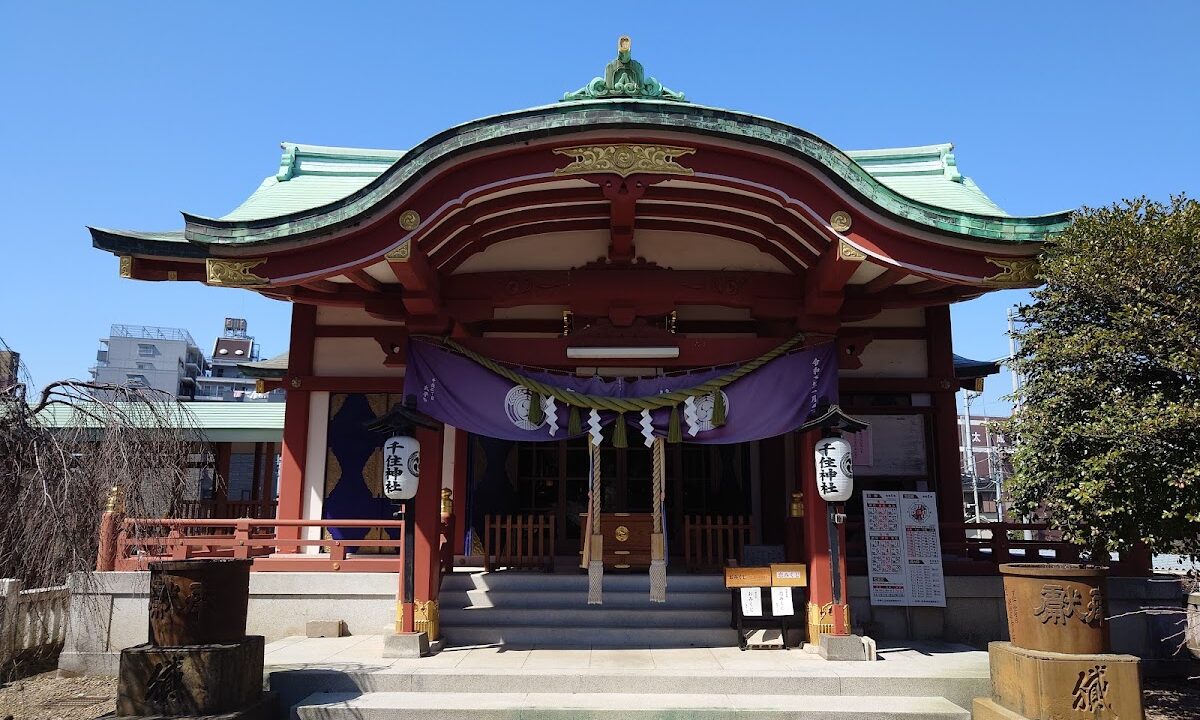
Senju Shrine (Adachi Ward, Tokyo) Complete Guide | History, Goshuin (Shrine Seals), Access, and Benefits: A Thorough Explanation
Senju Shrine, located in Senju Miyamotocho, Adachi Ward, Tokyo, is a venerable shrine said to have been founded in the late Heian period. As the only former village shrine in Adachi Ward, it has a long history as a central figure in the local faith of Senju. It is known as a shrine full of historical romance, with legends related to Minamoto no Yoshiie’s conquest of Oshu and deep connections to Senju-shuku, which flourished as the first post town on the Nikko Kaido during the Edo period.
This article provides comprehensive information useful for those considering visiting Senju Shrine, from its detailed history to information on goshuin (shrine seals), access methods, benefits, and highlights within the shrine grounds.
Basic Information on Senju Shrine
Senju Shrine (Senju Jinja) is a shrine located at 24-1 Senju Miyamotocho, Adachi Ward, Tokyo, and its former shrine rank was a village shrine. The main deity enshrined here is Susanoo-no-Mikoto, and the auxiliary deity is Inari Okami.
Shrine Overview
- Official Name: Senju Shrine
- Former Name: Nishimori Shrine, Senzaki Inari Shrine
- Location: 24-1 Senju Miyamotocho, Adachi-ku, Tokyo
- Phone Number: 03-3881-1768
- Former Shrine Rank: Gosha (The only former Gosha in Adachi-ku)
- Main Deity: Susanoo-no-Mikoto
- Auxiliary Deity: Inari Okami
- Parish Area: Senju 1-chome and 2-chome
Senju Shrine has long been one of the central shrines in the Senju area, attracting the faith of local residents. Even today, many worshippers visit to pray for land protection, abundant harvests, and business prosperity.
The History of Senju Shrine
The history of Senju Shrine dates back to the late Heian period. Let’s unravel its long history based on ancient records and legends.
Origin of Founding and the Legend of Minamoto no Yoshiie
The founding of Senju Shrine is linked to a legend concerning Minamoto no Yoshiie’s conquest of Oshu. It is said that when Minamoto no Yoshiie crossed the Arakawa River near the present-day Senju Ohashi Bridge during his conquest of Oshu, he set up camp in this area.
At that time, there was a small hill called “Futatsumori” in this area, and it is said that Minamoto no Yoshiie prayed for victory there. This story is passed down as one of the origins of Senju Shrine, and it has long been worshipped as a god of military fortune and good luck in competitions.
History of Senzaki Inari Shrine
As a settlement began to form in Senju, Senzaki Inari Shrine was founded by inviting the Inari deity from Fushimi Inari Shrine to pray for the protection of the land and a bountiful harvest. As an Inari shrine, it was revered as the guardian deity of local agriculture and commerce.
In ancient records, it is referred to as “Senju Inari” or “Senzaki Inari,” and is positioned as a shrine deeply connected to the origin of the place name Senju.
Renaming to Nishimori Shrine
In the Edo period, the shrine was renamed Nishimori Shrine. The name “Nishimori” is thought to originate from its location west of Senju-shuku and its surrounding forest.
Edo period records, such as the “Kyū Kōroku,” also record that the Tokugawa shogun visited this area during falconry expeditions, suggesting a connection to the shogunate.
Relationship with Senju, the First Post Town on the Nikko Kaido
When the Nikko Kaido was established during the Kan’ei era (1624-1644), Senju flourished as the first post town on the Nikko Kaido, a route from Edo to Nikko. In Senju, which developed as a post town, Senju Shrine played an important role as a place to pray for the safety of travelers and the prosperity of the region.
It is believed that Matsuo Basho also passed through this area when he visited Senju as the starting point of his journey on “Oku no Hosomichi” (The Narrow Road to the Deep North), and Senju Shrine has etched its name in history as a shrine deeply connected to Edo culture.
Changes Since the Modern Era
In the Meiji era, the system of shrines was reorganized due to the separation of Shinto and Buddhism, and in 1873 (Meiji 6), it was ranked as a village shrine. Later, in 1907 (Meiji 40), it was elevated to a local shrine, recognized as a shrine of high status in the region.
During the Great Tokyo Air Raid of 1945, the Senju area suffered significant damage. However, with the post-war reconstruction, the shrine was rebuilt, and the current shrine buildings were constructed. Since the Heisei era, renovations to the shrine buildings and improvements to the grounds have continued, leading to its present state.
Benefits and Deities of Senju Shrine
Senju Shrine enshrines Susanoo-no-Mikoto as its principal deity and Inari-no-Okami as its auxiliary deity, and is believed to offer a variety of benefits.
Principal Deity: Susanoo-no-Mikoto
Susanoo-no-Mikoto is a heroic deity in Japanese mythology, known for the legend of slaying Yamata-no-Orochi. He is believed to offer benefits such as protection from evil, disaster, matchmaking, and family safety, and is worshipped as a powerful guardian deity.
Auxiliary Deity: Inari-no-Okami
Inari-no-Okami is widely worshipped as the god of abundant harvests, business prosperity, and industrial development. Because Senju Shrine was originally founded as an Inari Shrine, many visitors come to pray for business prosperity and success.
Main Benefits
- Protection from Evil and Disaster: Exorcism through the powerful divine power of Susanoo-no-Mikoto
- Business Prosperity: Development of business through Inari Okami
- Family Safety: Prayers for the health and safety of family members
- Abundant Harvest: Abundance related to agriculture and food
- Matchmaking: Prayers for successful relationships
- Long-lasting Military Fortune: Good fortune in battles based on the legend of Minamoto no Yoshiie
- Traffic Safety: As the guardian deity of the post town
Highlights of the Shrine Grounds
The grounds of Senju Shrine are dotted with historical buildings and cultural assets.
Shrine Building
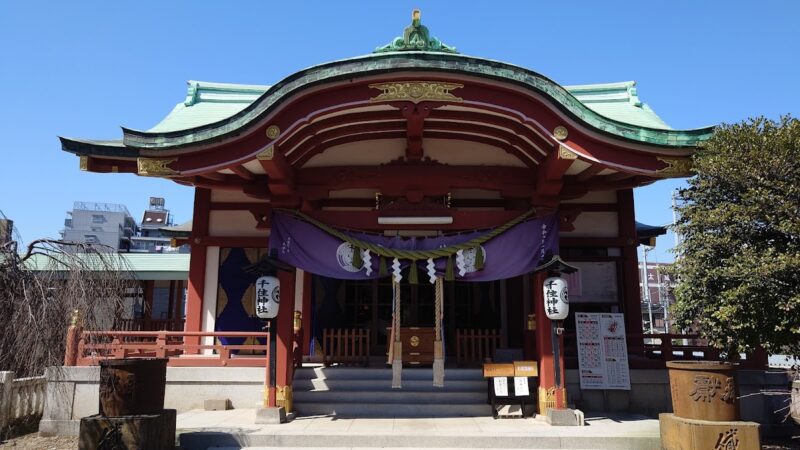
The current shrine building was rebuilt after the war. While adhering to traditional shrine architectural styles, it was constructed using modern techniques. It consists of a worship hall and a main sanctuary, creating a solemn atmosphere.
Edo-style Portable Shrine
Senju Shrine still possesses the Edo-style portable shrine, which has been passed down since the Edo period. This shrine is a valuable cultural asset, showcasing the pinnacle of Edo-era craftsmanship, and is paraded through the community during the annual festival. Its imposing construction and intricate decorations possess an overwhelming presence.
Happiness Shrine (Ebisu)
Within the shrine grounds is a shrine dedicated to Ebisu, known as the Happiness Shrine. This Ebisu is known as the “Revolving Ebisu” and is believed to bring prosperity in business and complete happiness. It has a unique form of worship where good fortune is invited by revolving the Ebisu statue.
Komainu (Guardian Lion-Dogs) and Stone Monuments
Within the shrine grounds, you’ll find historically significant guardian lion-dogs and stone monuments from various eras. These are valuable historical artifacts that tell the story of Senju Shrine’s long history and deep connection to the local community.
Atmosphere of the Shrine Grounds
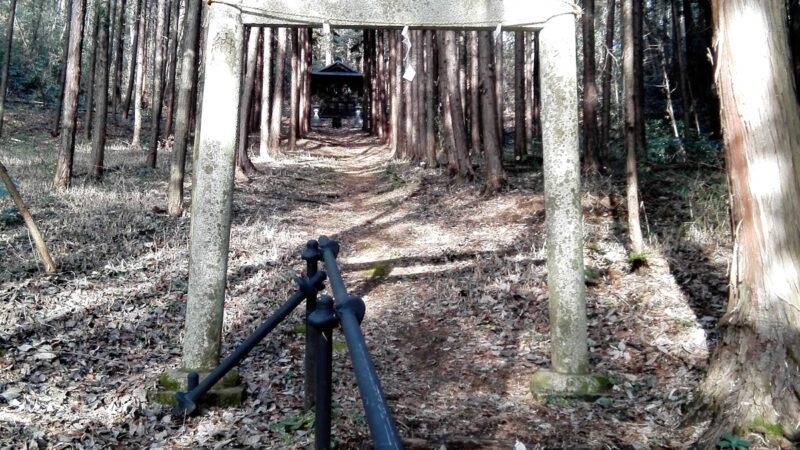
Despite its proximity to the city center, the shrine grounds are enveloped in a tranquil atmosphere. Surrounded by trees, the grounds offer a healing space that allows you to forget the hustle and bustle of the city, and it is a beloved place of relaxation for local residents.
Goshuin (Shrine Seal) and Goshuincho (Shrine Seal Book) Information
At Senju Shrine, you can receive a goshuin as a memento of your visit.
About Goshuin
Goshuin at Senju Shrine can be obtained at the shrine office. The goshuin features the calligraphy of “Senju Shrine” and the shrine’s seal, a simple yet dignified design.
Offering Fee: Usually around 300-500 yen (may vary depending on the season)
Hours for Receiving Goshuin (Shrine Seals)
Goshuin can be obtained during the hours the shrine office is open. However, they may not be able to provide service during Shinto rituals or festivals, so if you definitely want to receive a goshuin, we recommend calling ahead to confirm.
Shrine Office Hours: Usually around 9:00 AM to 5:00 PM (approximate)
About Goshuincho (Shrine Seal Books)
Senju Shrine also offers original goshuincho. Please contact the shrine directly for information on designs and availability.
Manners for Receiving a Goshuin (Shrine Stamp)
- Please complete your prayers before receiving your goshuin.
- Prepare your goshuincho (stamp book) and show the open page when requesting the stamp.
- It’s a good idea to have small change ready to avoid needing change.
- Don’t forget to express your gratitude to the shrine priest.
Annual Festivals and Events
Senju Shrine holds various festivals and religious ceremonies throughout the year.
Annual Festival
Senju Shrine’s Annual Festival is held grandly every September. The annual festival is the most important festival for the shrine, and the entire parish area is enveloped in a festive atmosphere.
The sight of the Edo-style portable shrine parading through the area is breathtaking, attracting many spectators. In addition to the portable shrine procession, you can enjoy traditional festival atmospheres such as kagura (sacred dance) performances and stalls.
New Year’s Visit
Many worshippers visit the shrine for their first shrine visit of the new year. The shrine is especially crowded from New Year’s Day through the third day, but you can offer your New Year’s prayers in a solemn atmosphere.
Other Annual Events
- Setsubun Festival: Around February 3rd, bean-throwing and prayers for warding off evil
- Shichi-Go-San: November, prayers celebrating the growth of children
- Summer Purification Ceremony: June 30th, a Shinto ritual to purify sins and impurities accumulated over the past six months
- Year-End Purification Ceremony: December 31st, a Shinto ritual to purify sins and impurities accumulated over the past year
Access and Transportation Information
The most convenient way to access Senju Shrine is by train.
Access by Train
Nearest Station:
- Keisei Main Line “Senju-Ohashi Station”: Approximately 8 minutes on foot (closest station)
- JR Joban Line, Tokyo Metro Hibiya Line, Chiyoda Line, Tobu Skytree Line “Kita-Senju Station”: Approximately 15 minutes on foot
- Tokyo Metro Hibiya Line “Minami-Senju Station”: Approximately 20 minutes on foot
Directions from Senju-Ohashi Station
- Exit Senju-Ohashi Station and head towards National Route 4 (Nikko Kaido)
- Proceed north along National Route 4 for approximately 500m
- Turn left at the Senju Police Station Entrance intersection
- After approximately 150m, you will see the entrance to Senju Shrine on your left
Directions from Kita-Senju Station
- Exit the west exit of Kita-Senju Station
- Proceed south along Nikko Kaido (National Route 4).
- Turn right at the Senju Police Station Entrance intersection.
- After approximately 150m, Senju Shrine will be on your left.
Access by Car
If using the Metropolitan Expressway:
- Metropolitan Expressway Route 6 Mukojima Line “Mukojima Exit”: Approximately 10 minutes
- Metropolitan Expressway Central Circular Route “Kosuge Exit”: Approximately 10 minutes
Parking: There is parking space for visitors on the shrine grounds, but the number of spaces is limited. Congestion is expected during festivals and weekends, so we recommend using public transportation.
Address and Contact Information
- Address: 24-1 Senju Miyamotocho, Adachi-ku, Tokyo 120-0047
- Phone Number: 03-3881-1768
Nearby Attractions and Tourist Spots
There are many spots around Senju Shrine where you can experience history and culture.
Historical Walk in Senju
Senju was a thriving post town during the Edo period, serving as the first post town on the Nikko Kaido road. Even today, the town retains its historical charm with many historical sites, making it a great place for a historical walk.
Senju Honcho Shopping Street
Senju Honcho Shopping Street is a bustling, old-fashioned shopping street. With local specialties and traditional Japanese confectionery shops scattered throughout, it’s a delightful area to explore.
Susanoo Shrine
Located in Minami-Senju, Susanoo Shrine, like Senju Shrine, is a historically significant shrine dedicated to Susanoo-no-Mikoto. Visiting both is highly recommended.
Arakawa Riverbank
The Arakawa Riverbank around Senju Ohashi Bridge is an ideal spot for walks and cycling. You can reflect on history while gazing at the Arakawa River, which is said to have been crossed by Minamoto no Yoshiie.
Manners and Etiquette for Visiting Shrines
Let’s review the basic manners for visiting shrines.
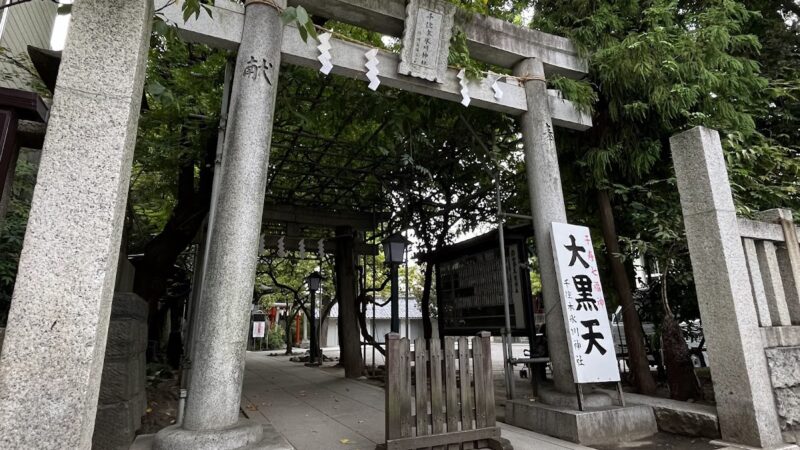
How to Pass Through a Torii Gate
A torii gate is the entrance to a sacred area. Before passing through the torii gate, bow once, and walk while avoiding the center of the path (the path of the gods).
Proper Ritual for Washing Hands
- Hold the ladle in your right hand and wash your left hand.
- Switch the ladle to your left hand and wash your right hand.
- Switch the ladle back to your right hand, receive water in your left hand, and rinse your mouth.
- Wash your left hand again.
- Hold the ladle upright, wash the handle, and return it to its original position.
Proper Ritual for Worshiping at the Main Hall
- Place your offering in the offering box.
- If there is a bell, ring it.
- Worship using the two bows, two claps, one bow method.
- Bow deeply twice.
- Clap your hands twice.
- Pray with all your heart.
- Finally, bow deeply once.
Prayers and Supplications at Senju Shrine
Senju Shrine accepts various prayers and supplications.
Main Prayer Services
- Exorcism Prayer: Exorcism for those in their unlucky year
- Family Safety: Health and safety for the family
- Business Prosperity: Development and prosperity of the business
- Traffic Safety: Blessing of the car, etc.
- Prayer for Success in Exams: Success in exams and tests
- Prayer for Safe Childbirth: Prayers for safe childbirth for pregnant women
- First Shrine Visit: Prayers for the healthy growth of the baby
- Shichi-Go-San: Celebration of a child’s growth
Shinto Wedding Ceremony
Senju Shrine is known as the only shrine in Senju where you can have a Shinto wedding ceremony. It is popular with couples who desire a traditional Shinto wedding ceremony, allowing them to celebrate the beginning of their life together in a solemn atmosphere.
If you are considering a Shinto wedding ceremony, please contact the shrine in advance to discuss the details.
How to Apply for a Prayer
If you wish to have a prayer ceremony, we recommend making a reservation by phone in advance. While same-day registration may be possible, it may not be possible due to religious ceremonies.
Contact Information: 03-3881-1768
The Charm and Characteristics of Senju Shrine
The charm of Senju Shrine lies in its long history and deep connection to the local community.
The Only Former Village Shrine in Adachi Ward
Senju Shrine is the only shrine in Adachi Ward with the status of a former village shrine. A village shrine is a rank given to shrines that held an important position in the region under the old shrine ranking system. This status indicates that Senju Shrine was historically a central place of worship in the region.
A Site of Minamoto no Yoshiie’s Legends
As a shrine where legends related to the conquest of Oshu by Minamoto no Yoshiie, a military commander of the Heian period, remain, it is a place where one can feel the romance of history. Many worshippers visit to pray for military success and good fortune in competitions.
Deep Connections to Edo Culture
This shrine is deeply intertwined with the history of Senju, which flourished as the first post town on the Nikko Kaido road. It is a valuable presence that conveys the culture and beliefs of the Edo period. Cultural assets, including the Edo-period portable shrine, also tell the story of its history.
Center of the Local Community
Even today, it attracts the faith of local residents and plays a role in strengthening community bonds through festivals and annual events. As a shrine embodying the history and identity of Senju, it is still carefully preserved.
Suitable Time of Visit
Senju Shrine is open for visits throughout the year, but different seasons and times of day offer different charms.
Recommended Times to Visit
- Hatsumode (January 1st-3rd): Bustling with people praying for the New Year.
- Reitaisai (September): Enjoy the festive atmosphere, including the procession of the Edo-style portable shrine.
- Shichi-Go-San (November): A heartwarming time to see children in their festive attire.
- Spring/Autumn: Pleasant weather, ideal for a visit combined with a stroll.
Visiting Hours
While you can generally visit the shrine grounds anytime during the day, if you wish to receive a Goshuin (shrine stamp) or prayers, it is recommended to visit during the shrine office’s opening hours (generally 9:00 AM to 5:00 PM).
Summary
Senju Shrine is a historic shrine that has walked hand in hand with the history of Senju, which flourished as the first post town on the Nikko Kaido during the Edo period, beginning with the legend of Minamoto no Yoshiie in the Heian period. As the only former village shrine in Adachi Ward, it remains a center of local faith and is cherished by many people.
Senju Shrine, dedicated to Susanoo-no-Mikoto and Inari Okami, is believed to offer a variety of blessings, including protection from evil, business prosperity, and family safety. It boasts numerous attractions, including the Edo-style portable shrine and the Ebisu statue at the Happiness Shrine.
Conveniently located within walking distance of Kita-Senju Station, the shrine grounds maintain a tranquil atmosphere, making it an ideal place to escape the hustle and bustle of the city and find peace of mind. Visitors can receive Goshuin (shrine stamps) and even hold Shinto wedding ceremonies, making it a popular destination for important life events.
Why not combine a visit to Senju Shrine with a historical stroll through Senju? The time spent quietly offering prayers in this place of faith, nurtured by a long history, will surely be a memorable experience.
Senju Shrine Basic Information Summary
- Location: 24-1 Senju Miyamotocho, Adachi-ku, Tokyo
- Phone: 03-3881-1768
- Nearest Station: 8-minute walk from Keisei Main Line “Senju Ohashi Station”, 15-minute walk from various lines “Kita-Senju Station”
- Main Deities: Susanoo-no-Mikoto, Inari Okami
- Former Shrine Rank: Gosha (village shrine)
- Main Blessings: Protection from evil, business prosperity, family safety, abundant harvest, matchmaking
- Annual Grand Festival: September
- Goshuin (Shrine Seal): Available
- Parking: Available (limited number of spaces)
May your visit to Senju Shrine be a time of enrichment for everyone.