Complete Guide to Motojukuzeki Inari Shrine: History and Blessings of the Guardian Shrine of Senju’s Four Chimneys
Motojukuzeki Inari Shrine is an Inari shrine located in Senju Sakuragi, Adachi Ward, Tokyo. Since its founding in 1754, it has attracted the faith of local residents and was formerly revered as the guardian deity of the Tokyo Electric Power Company’s Senju Thermal Power Plant, known as the “Guardian Shrine of Senju’s Four Chimneys.” This article provides a detailed introduction to the shrine, including its history, enshrined deities, highlights of the grounds, access methods, and information on its Goshuin (shrine stamp).
Basic Information on Motojukuzeki Inari Shrine
Motojukuzeki Inari Shrine is an Inari shrine located at 1-15-5 Senju Sakuragi-cho, Adachi Ward. The nearest station is Kita-Senju Station (various lines), and it is within walking distance from the station. Although its shrine rank was formerly unranked, it has a long history as the guardian shrine of the region and continues to receive fervent devotion from local residents.
Deities and Divine Virtues
The deities enshrined at Motoyadozeki Inari Shrine are the following two:
Ukanomitama-no-Mikoto
A widely known deity of grain and food, and the principal deity of Inari shrines. Believed to bring blessings of business prosperity, abundant harvests, and industrial development.
Okuninushi-no-Okami
A deity of nation-building, also known as the principal deity of Izumo Taisha Shrine. Benefits include matchmaking, family safety, and business prosperity.
By enshrining these two deities, Motoyadozeki Inari Shrine is revered as a shrine with a wide range of divine virtues, including business prosperity, family safety, abundant harvests, and matchmaking.
History: A Story of Faith Continuing from the 4th Year of the Hōreki Era
Origin of the Shrine and the Motoyado Canal
The Motoyado Weir Inari Shrine was founded in the 4th year of the Hōreki era (1754). Its founding is deeply connected to the water management projects in this region.
At that time, construction was underway on a waterway called the Motoyado Canal. This canal was intended to play an important role as an entrance and exit for boats to the Arakawa River, but the construction proved extremely difficult. Therefore, a shrine was built at the entrance of the canal using the same material as the bricks used for the weir, and Inari-sama was enshrined there. It is said that after this, the construction proceeded smoothly. This is considered the beginning of the Motoyado Weir Inari Shrine.
The name “Motoyado Weir” originates from this weir (sluice gate), and the shrine has a unique origin, combining water deity worship and Inari worship.
The Motoyado Canal in the Showa Era
Until around the 10th year of the Showa era, the Motoyado Canal was actively used as an entrance and exit for boats to the Arakawa River. It is said that a dozen or so boatmen lived nearby, creating a bustling atmosphere like a small port. Motoyadozeki Inari Shrine also functioned as a place to pray for the safety and prosperity of those involved in water transport.
The Period as the Guardian Shrine of the Four Chimneys of Senju
A particularly noteworthy period in the history of Motoyadozeki Inari Shrine is when it was known as the “Guardian Shrine of the Four Chimneys of Senju.”
The Tokyo Electric Power Company’s Senju Thermal Power Plant (Senju Thermal Power Plant) once boasted four towering chimneys, a local landmark. To pray for the safety and stable operation of this power plant, Motoyadozeki Inari Shrine came to be revered as the power plant’s guardian deity.
Power plant employees and local residents visited the Inari Shrine as a guardian deity of industry, praying for the safety of the factory and the prosperity of the region. During this period, Motoyadozeki Inari Shrine, in addition to its role as a water deity, also took on the role of a guardian deity of industry and manufacturing.
Relationship with Motoyado Shrine
When discussing the history of Motoyado Inari Shrine, its relationship with Motoyado Shrine is important. At one point, Motoyado Inari Shrine was incorporated as a subsidiary shrine within the grounds of Motoyado Shrine. However, it later became independent and is now in its current form. This process of independence is thought to reflect changes in local religious practices and a reorganization of the parishioner organization.
Highlights of the Shrine Grounds
Shrine Building and Torii Gate
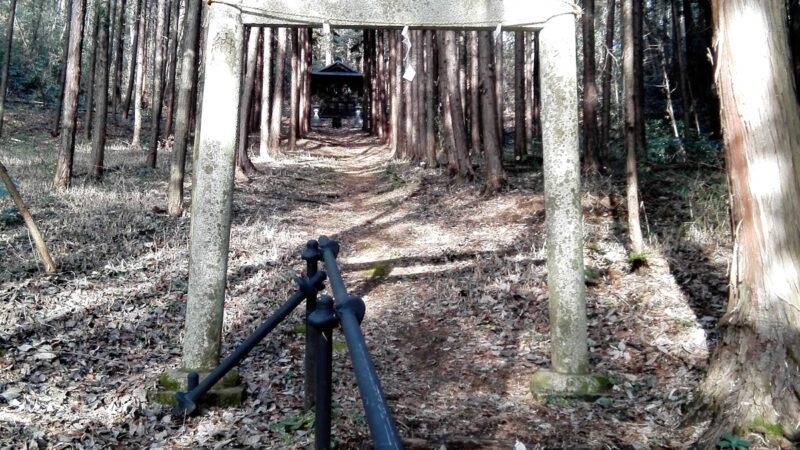
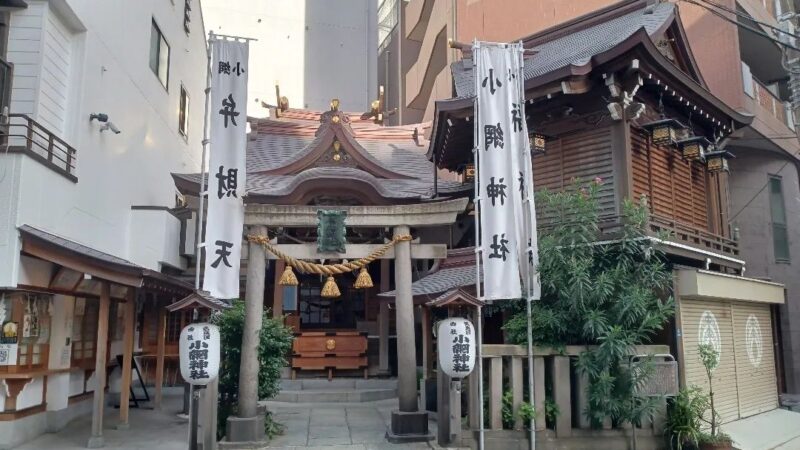
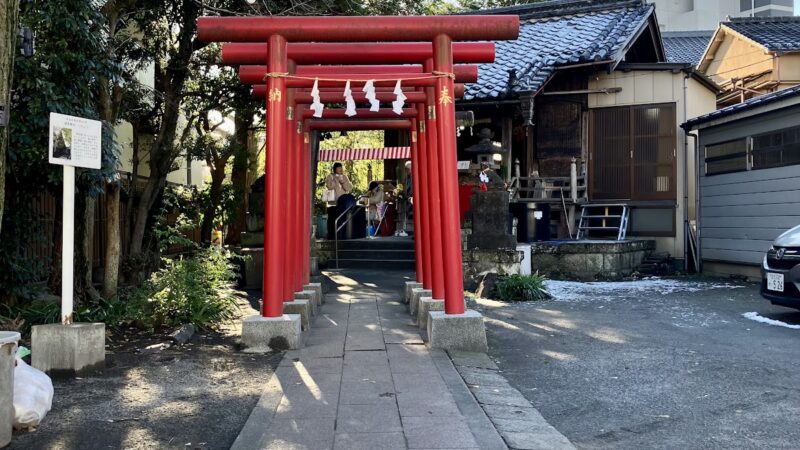
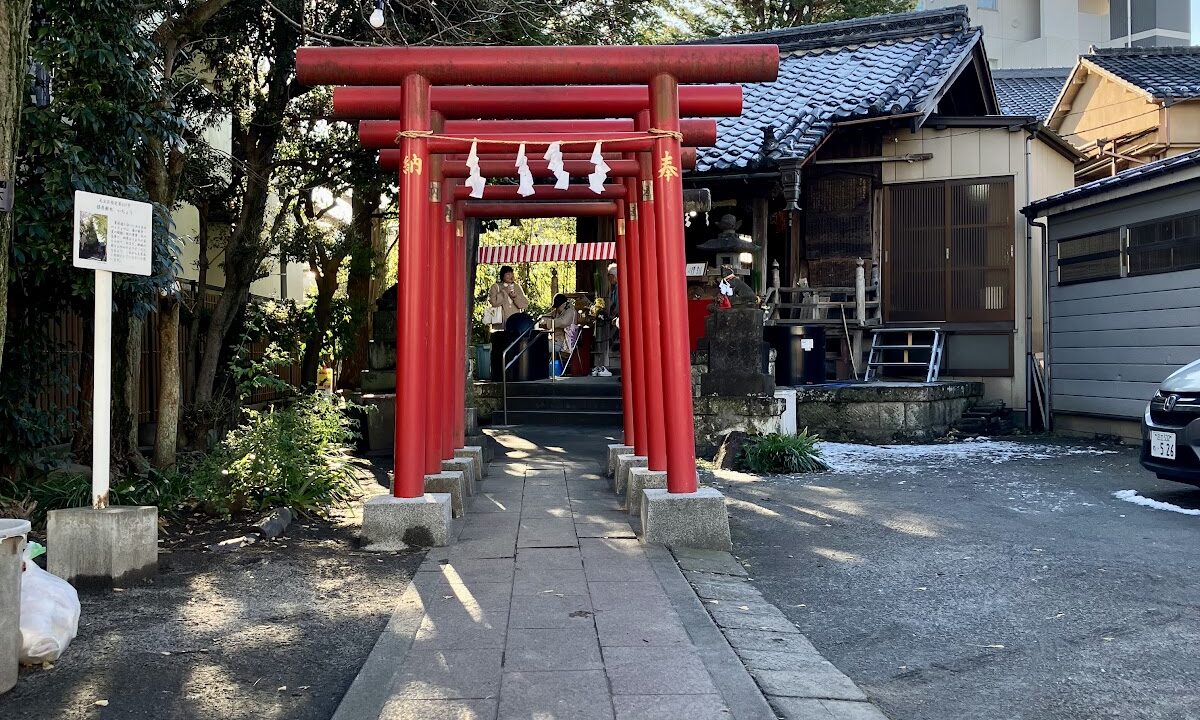
Despite being located in a residential area, the grounds of Motoyado Inari Shrine maintain a tranquil atmosphere. Passing through the torii gate, a compact but meticulously maintained shrine grounds unfolds.
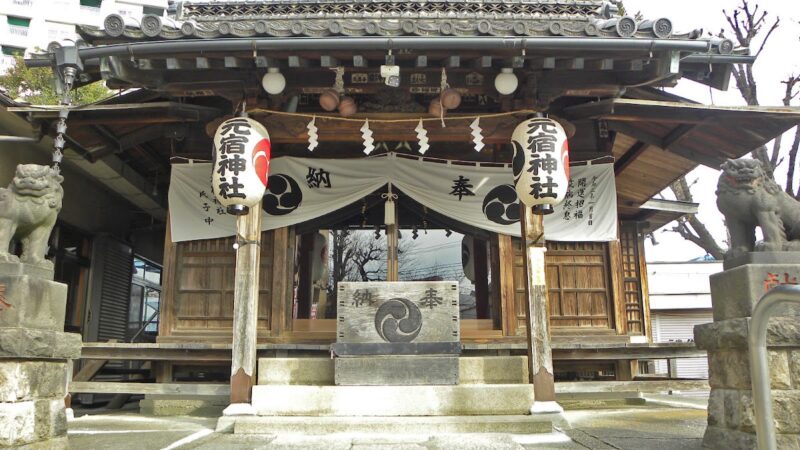
The shrine building is built in the vermilion color typical of Inari shrines and is carefully maintained by local residents. Despite its small size, it possesses a distinctive appearance that evokes a long history.
Water God Shrine
A water god shrine is also enshrined within the grounds. This is a unique feature of this shrine, which has a deep connection to the Motoyado Canal. The Suijin-shi (Water God Shrine) is an object of worship, where people pray for gratitude for the blessings of water and for protection from floods.
Considering the history of Motoyadozeki Inari Shrine, which was founded during water management construction, the existence of this Suijin-shi is an important element that conveys the origins of the shrine.
Shrine Grounds and Stone Monuments
Within the shrine grounds, you can see stone monuments and lanterns that have been donated over the long history. These are evidence of how much the local people have cherished this shrine.
Access Methods
Access by Train
Motoyadozeki Inari Shrine is conveniently accessible from Kita-Senju Station.
Walking Access from Kita-Senju Station
- Approximately 10-minute walk from Kita-Senju Station on the JR Joban Line
- Approximately 10-minute walk from Kita-Senju Station on the Tokyo Metro Chiyoda Line
- Approximately 10-minute walk from Kita-Senju Station on the Tokyo Metro Hibiya Line
- Approximately 10-minute walk from Kita-Senju Station on the Tobu Skytree Line
- Approximately 10-minute walk from Kita-Senju Station on the Tsukuba Express
Kita-Senju Station is a terminal station served by multiple lines, making it easily accessible from various parts of Tokyo.
Location
Address: 1-15-5 Senju Sakuragi, Adachi-ku, Tokyo
Located in a residential area, it is recommended that first-time visitors use a map app. It is situated in a quiet residential area of Senju Sakuragi-cho, and the surrounding area has a peaceful atmosphere.
Parking Information
There is no dedicated parking lot for the shrine. If you are visiting by car, you will need to use a nearby coin-operated parking lot. However, since parking space is limited due to the residential area, we recommend using public transportation.
About Goshuin (Shrine Seals) and Goshuincho (Shrine Seal Books)
According to visitor reports, the issuance of Goshuin at Motoyadozeki Inari Shrine appears to be irregular. Considering the size and management system of the shrine, there may not be a permanent shrine office.
If you wish to receive a Goshuin, please note the following:
- Check the latest information on visitor information and review sites beforehand.
- Weekends and festival days are more likely to be able to receive a Goshuin than weekdays.
- Even if you cannot receive a Goshuin, you are free to visit the shrine.
If your purpose is to collect Goshuin, you may want to consider visiting other nearby shrines as well.
Annual Events and Festivals
Motoyadozeki Inari Shrine, as a small local shrine, holds annual events such as its annual festival. However, rather than large-scale festivals, it focuses on quiet worship by local residents.
On the first day of the Horse (Hatsuuma), the number of visitors tends to increase, as it holds special significance for Inari shrines. Hatsuuma is the first day of the Horse in February and is considered a festival day for Inari shrines.
Nearby Attractions
Historical Walks in the Senju Area
The Senju area, where Motoshuku-seki Inari Shrine is located, is a historic region that flourished as Senju-shuku during the Edo period. In addition to visiting the shrine, we recommend exploring the following nearby spots:
Historical Sites of Senju-shuku
Senju, which prospered as a post town on the old Nikko Kaido road, has many historical sites that retain the atmosphere of that time.
Arakawa Riverbed
Considering that the Motoshuku Canal was connected to the Arakawa River, visiting the Arakawa Riverbed allows you to imagine what water transport was like in those days.
Nearby Shrines and Temples
Adachi Ward has many shrines and temples. After visiting Motoshukuseki Inari Shrine, you can also enjoy a “Goshuin pilgrimage” (collecting Goshuin stamps) or a “Shrine and Temple Pilgrimage” in the surrounding area.
There are several historical temples and shrines around Kita-Senju Station, making it possible to visit multiple temples and shrines within walking distance.
Manners and Precautions for Visiting Shrines
Basic Visiting Etiquette
When visiting Motoshukuseki Inari Shrine, please observe the following basic etiquette.
- Bow before the Torii Gate: Before entering the shrine grounds, bow before the torii gate.
- Purify at the Water Basin: If there is a water basin, purify your hands and mouth.
- Two Bows, Two Claps, One Bow: In front of the shrine building, bow twice, clap twice, and bow once.
- Worship Quietly: As it is located in a residential area, please refrain from loud conversations.
Regarding Photography
Photography is generally permitted on the shrine grounds, but please note the following:
- Be considerate of other worshippers.
- Refrain from taking photos inside the shrine building.
- Avoid using flash.
- Be mindful of location information when posting on social media (as it is a residential area).
Considerations Unique to Small Shrines
Motoyadozeki Inari Shrine is a place of worship for local residents, and there may not be a resident priest. Therefore, please consider the following:
- Keep the shrine grounds clean
- Always take your trash with you
- Avoid visiting in large groups
- Be considerate of the lives of nearby residents
The Charm and Value of Motoyadozeki Inari Shrine
A Faith Rooted in the Community
The greatest charm of Motoyadozeki Inari Shrine lies in its history of faith deeply rooted in the community. Since its founding in 1754, it has served as a spiritual anchor for local residents for approximately 270 years.
While it lacks the grandeur of large shrines, this shrine retains a simple form of faith that has been carefully preserved by the local people.
Guardian Deity of Water and Industry
Its founding stems from the construction of the Motoyado Canal, the existence of a water deity shrine, and its history as the guardian shrine of the four chimneys of Senju. These demonstrate that Motoyadozeki Inari Shrine is not merely an Inari shrine, but a shrine that has watched over the blessings of water and the development of industry.
This shrine quietly conveys the history of faith and prayer that lay behind the infrastructure we take for granted today, such as water and electricity.
History Remaining Amidst Urbanization
The continued existence of a small shrine like Motoyadozeki Inari Shrine in the metropolis of Tokyo is a valuable cultural heritage. Even amidst urban development, the fact that local people have continued to protect this shrine speaks to the strength of their community bonds.
Visitor Voices and Experiences
According to visitor reviews and experiences, Motoyadozeki Inari Shrine is praised for its “quiet and peaceful atmosphere,” “sense of local history,” and “careful maintenance despite its small size.”
In particular, it is highly regarded as a “hidden gem” by those interested in history and local culture, and those who enjoy visiting small shrines.
Photos of the shrine grounds and seasonal scenery are shared on photo-sharing websites, which can be helpful before visiting.
Summary: The Significance of Visiting Motoyadozeki Inari Shrine
Motoyadozeki Inari Shrine is a historic Inari shrine located in Senju Sakuragi, Adachi Ward, Tokyo, founded in 1754. Its unique origins stemming from the construction of the Motoyado Canal, its history as the guardian shrine of the four chimneys of Senju, and the fervent devotion of local residents that continues to this day—all of these contribute to the great appeal of this small shrine.
Its convenient location, within walking distance of Kita-Senju Station, is another attractive feature. Please consider visiting Motoyadozeki Inari Shrine during your Tokyo sightseeing or as part of a historical exploration of the Senju area.
Unlike large-scale tourist shrines, you can quietly experience a simple form of faith rooted in the community and the history of a shrine that has watched over water and industry. Why not pray to the enshrined deities, Ukanomitama-no-Mikoto and Okuninushi-no-Okami, for business prosperity, family safety, and successful relationships?
Motoshukuseki Inari Shrine will undoubtedly continue to be cherished by many people as a precious place to find peace and tranquility amidst the hustle and bustle of the city.