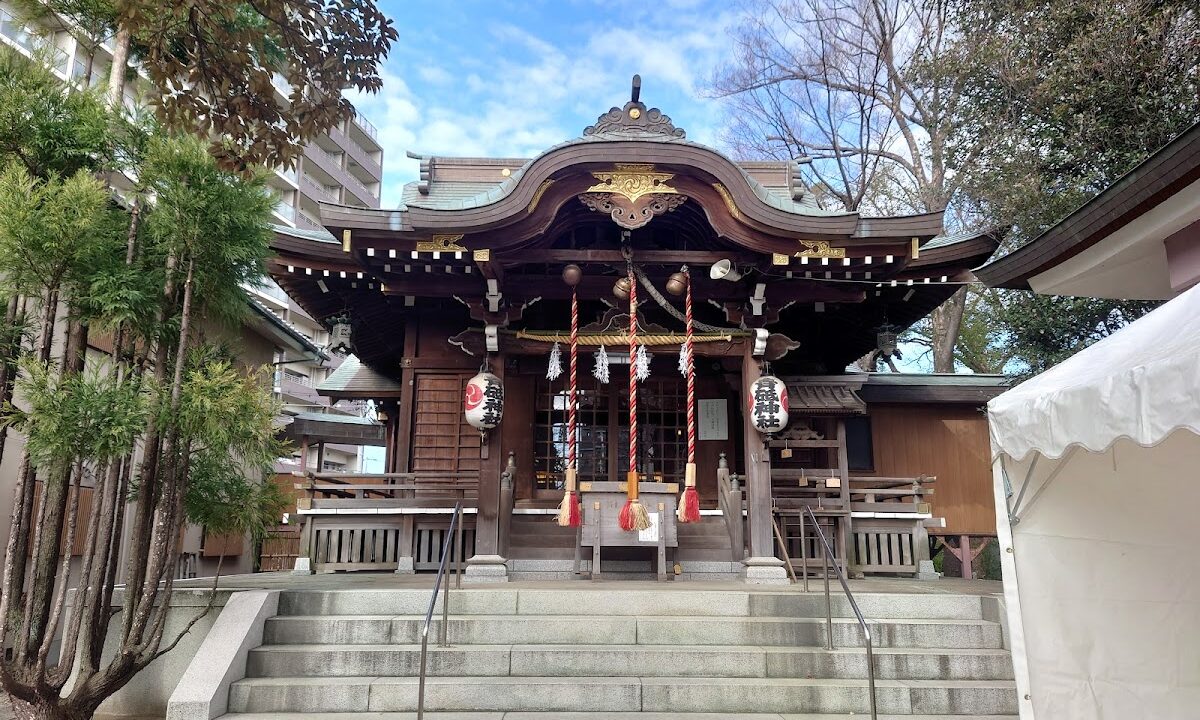
Aoto Shrine (Katsushika Ward, Tokyo) Complete Guide | History, Deities, Access, and Goshuin Information
Aoto Shrine, located in Aoto, Katsushika Ward, Tokyo, is a historic shrine founded in 1576. Formerly known as “Sansha Myojin,” it has been revered by local residents as the guardian shrine of the Aoto and Shiratori areas. This article provides a detailed explanation of everything you need to know before visiting Aoto Shrine, including its history, enshrined deities, highlights within the grounds, access methods, and goshuin information.
Overview of Aoto Shrine
Aoto Shrine is located at 7-34-30 Aoto, Katsushika Ward, Tokyo, and is the guardian shrine of the Aoto and Shiratori areas. It is approximately a 15-minute walk from Aoto Station on the Keisei Line, and stands quietly in a residential area.
Basic Information
Location: 7-34-30 Aoto, Katsushika-ku, Tokyo
Postal Code: 125-0062
Phone Number: 03-3602-9585
Shrine Office Hours: 9:00 AM – 4:00 PM
Former Shrine Rank: Village Shrine
Access: Approximately 15-minute walk from Aoto Station on the Keisei Line
Aoto Shrine was enshrined as the guardian shrine of the former Aoto Village and has a long history as the center of local faith. Even today, it serves as a spiritual pillar for local residents, and various prayers are performed there, including those for first shrine visits for newborns, Shichi-Go-San (a traditional rite of passage for children), and exorcism.
History of Aoto Shrine
The history of Aoto Shrine dates back to the late Muromachi period, and through changes in its name and history of mergers with other shrines, it is an important presence that tells the story of the region’s transformation.
Founding and the Three Shrines of Myojin Era
Aoto Shrine is believed to have been founded in 1576 (Tensho 4). This was during the late Sengoku period, a time when the Hojo clan held considerable power in the Kanto region. Initially known as “Three Shrines of Myojin,” it became the guardian shrine of Aoto Village, enshrining three deities: Sarutahiko-no-Mikoto, Takeminakata-no-Mikoto, and Ukanomitama-no-Mikoto.
The name “Three Shrines of Myojin” originates from the fact that three shrines (Shirahige, Suwa, and Inari) were enshrined in a single building. This is thought to have been intended to integrate multiple beliefs within the village community at the time, thereby strengthening the village’s unity.
Relationship with Kasai Castle Ruins
The area where Aoto Shrine is located is believed to be the site of Kasai Castle (also known as Aoto Castle) from the medieval period. Kasai Castle was the residence of the Kasai clan, who ruled this area from the Kamakura period to the Muromachi period. The area around the current Aoto Shrine is said to retain traces of a former castle, indicating its historical importance.
The fact that the shrine was founded in this location after the turbulent Sengoku period suggests that it embodied the hopes of people for regional stability and recovery.
Renaming in the Meiji Era
In 1872 (Meiji 5), Aoto Shrine was renamed “Shirahige Shrine.” This was part of the Meiji government’s reform of the shrine system, a period when shrines were consolidated and renamed nationwide. The name Shirahige Shrine is thought to originate from the Shirahige faith, which enshrines Sarutahiko-no-Mikoto, one of the main deities.
During the Meiji-era shrine system reforms, it was positioned as a village shrine, and its role as a public religious facility for the region was clarified.
Consolidation and Renaming to the Current Shrine Name in the Showa Era
In 1943 (Showa 18), Aoto Shrine underwent a major turning point. In this year, the nearby Hakusan Shrine was merged with the current shrine, and its name was changed to the current “Aoto Shrine.” This name change originated from the local place name “Aoto” and aimed to clearly define its identity as the guardian shrine of the region.
Due to the influence of the wartime shrine consolidation policy, several smaller shrines and temples in the surrounding area were merged into Aoto Shrine, and it now enshrines nine deities.
Post-War Reconstruction and the Present
After World War II, Aoto Shrine was rebuilt from the damage caused by the war and reconstructed as a spiritual center for the local residents. Through the changing times from Showa to Heisei and Reiwa, the shrine buildings were repaired and the grounds were improved, leading to its current appearance.
Even today, as the guardian shrine of the Aoto and Shiratori areas, it plays a central role in local festivals and annual events, attracting many worshippers.
About the Enshrined Deities
Through its history of mergers, Aoto Shrine currently enshrines nine deities. Each deity possesses unique divine virtues, and these shrines are known for granting diverse wishes.
Main Deities
Sarutahiko-no-Mikoto
Known as the god of opening paths, he guides people at crossroads in life towards the right path. He is believed to bestow divine blessings for starting new businesses, moving, and safe travel.
Takeminakata-no-Mikoto
Also known as the deity of Suwa Grand Shrine, he is a god of martial prowess. He is worshipped as the god of good fortune in competitions, long-lasting military success, and abundant harvests.
Ukanomitama-no-Mikoto
Widely worshipped as Inari, he is the god of grain and food. He bestows divine blessings for business prosperity, abundant harvests, and industrial development.
Deities Enshrined Together
Izanami-no-Mikoto
The goddess of creation in Japanese mythology, worshipped as the god of matchmaking, safe childbirth, and child-rearing.
Takamimusubi-no-Kami
One of the primordial deities involved in the creation of heaven and earth, revered as a god with the power to generate all things.
Honda-wake-no-Mikoto
Hachiman, the deified form of Emperor Ojin, worshipped as the god of military fortune, national protection, and protection against misfortune.
Sugawara-no-Michizane
A Tenjin-sama worshipped nationwide as the god of learning. He is believed to grant blessings for academic success, passing examinations, and improvement in literary arts.
Mizuhanome-no-Kami
As the god of water, he is believed to grant blessings for irrigation, flood control, and protection against water-related disasters. Aoto Fujitsuna
A samurai from the Kamakura period, known for the “Ten Coin Anecdote.” The story tells of him buying a torch for 50 mon to search for ten coins he dropped on a dark road, making him a symbol of frugality and rational thinking. He is also believed to be related to the origin of the place name Aoto and is enshrined as a historical figure of the region.
By enshrining these nine deities, Aoto Shrine has become a comprehensive shrine that caters to diverse beliefs.
Shrine Grounds Guide
Despite being located in a residential area, Aoto Shrine maintains a tranquil atmosphere, providing a peaceful space for visitors.
Torii Gate and Approach
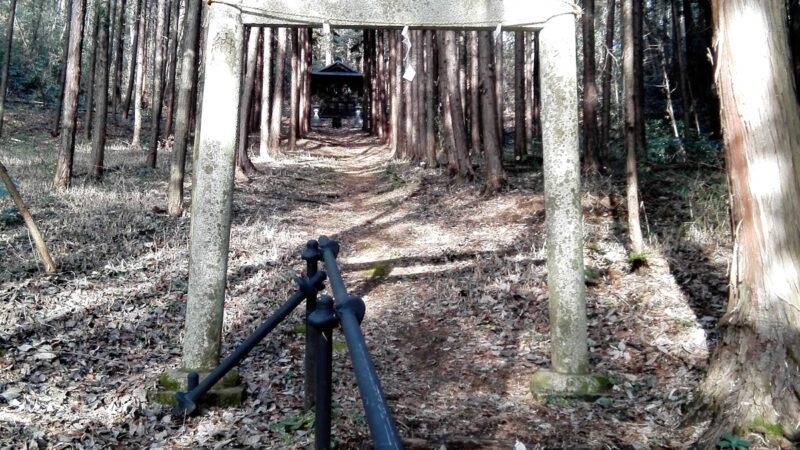
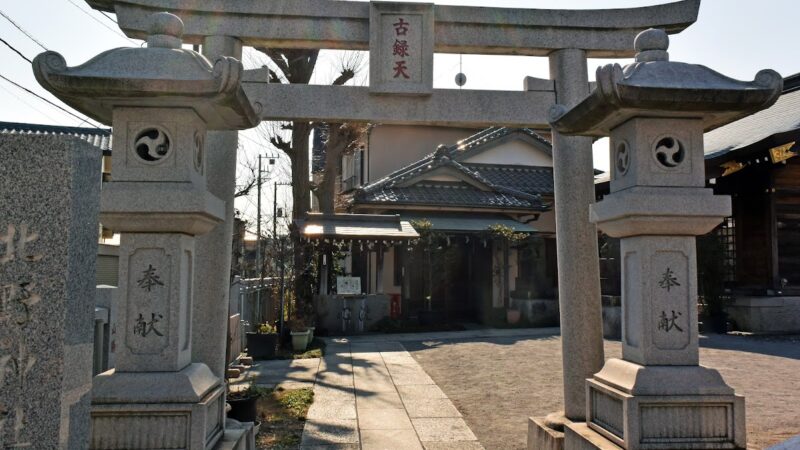
A magnificent torii gate stands at the entrance to Aoto Shrine. Passing through the gate, a well-maintained approach leads to the shrine building. Trees are planted on both sides of the approach, creating a quiet space that makes you forget the hustle and bustle of the city.
Shrine Building
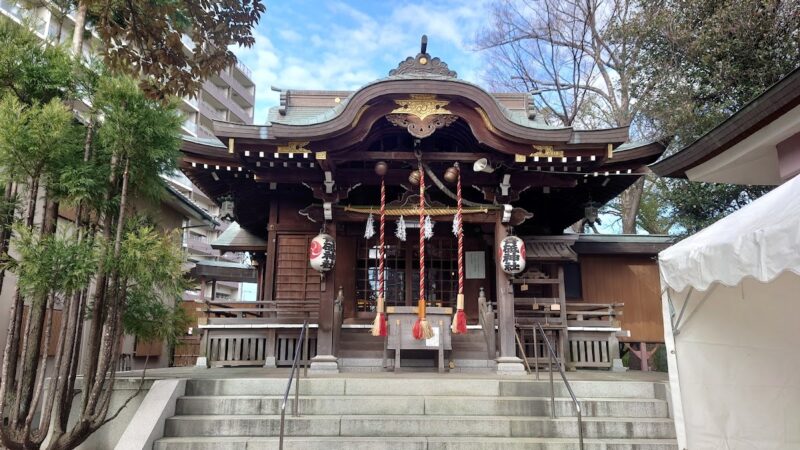
The shrine building is constructed in the traditional style of Shinto shrine architecture, creating a solemn atmosphere. In addition to daily prayers, various prayers are performed in the worship hall, including those for first shrine visits for newborns, Shichi-Go-San (a traditional rite of passage for children), protection from evil, and family safety.
A donation box is placed in front of the shrine building, and worshippers pray using the traditional two bows, two claps, and one bow ritual.
Subsidiary Shrines and Stone Monuments
Besides the main shrine building, several small shrines and stone monuments are scattered throughout the grounds. These are remnants of shrines that were later merged and important historical remains that convey the history of the region.
By strolling through the grounds, you can feel the long history of Aoto Shrine and the forms of faith of the people who lived in this region.
Shrine Office
The shrine office is located on the grounds and is open from 9:00 AM to 4:00 PM. They provide services such as issuing Goshuin (shrine stamps), amulets and talismans, and accepting prayer requests. If you have any questions during your visit, you can inquire at the shrine office.
Annual Events and Festivals
Aoto Shrine holds various festivals and events throughout the year.
Annual Grand Festival
The Aoto Shrine Annual Grand Festival is the most important festival in the region, attracting many parishioners and worshippers every year. It features a portable shrine procession and devotional performances, providing an opportunity to strengthen community bonds.
New Year’s Visit
During the first three days of the New Year, many worshippers visit the shrine for their first visit of the year. The shrine grounds are bustling with people praying for good health, family safety, and business prosperity in the new year.
Other Annual Events
- Setsubun Festival: Bean-throwing ceremonies are held in February during Setsubun (February) to pray for protection against evil.
- Summer Purification Ceremony: Passing through a ring of reeds is held at the end of June to purify oneself of the impurities accumulated over the past six months.
- Shichi-Go-San Festival: Many families visit in November to pray for the healthy growth of their children.
- Year-End Purification Ceremony: At the end of December, the impurities of the past year are purified, and preparations are made for welcoming the New Year.
About Goshuin (Shrine Seals)
Aoto Shrine offers Goshuin. Goshuin are popular among many visitors as proof of their visit and as a record of their connection with the shrine.
Goshuin Issuance Hours
Goshuin are issued during the shrine office hours, from 9:00 AM to 4:00 PM. However, this may not be possible during festivals and events. If you wish to be sure to receive a Goshuin, it is recommended to call in advance to confirm.
About Goshuincho (Stamp Books)
If you bring your goshuincho, you can have your stamp directly inscribed. Even if you don’t have a goshuincho, pre-printed stamps may be available.
Access and Transportation Information
Detailed instructions on how to access Aoto Shrine are provided.
Access by Train
Using the Keisei Line
Approximately a 15-minute walk from Keisei Line’s “Aoto Station.” Aoto Station is a terminal station where the Keisei Main Line and Keisei Oshiage Line intersect, offering good access from central Tokyo.
Directions from the Station
Exit Aoto Station and head towards Aoto. After crossing the Kan-nana-dori (Ring Road 7) and proceeding through the residential area, you will arrive at Aoto Shrine. There are signs along the way, making it a relatively easy route to follow.
Access by Bus
It is also possible to take a bus from Aoto Station. Katsushika Ward Community Buses and other services operate, and you can get off at a bus stop near the shrine.
Access by Car
If you are visiting by car, the nearest interchanges are the Yotsugi IC or Kosuge IC on the Metropolitan Expressway Central Circular Route. However, since there is limited dedicated parking on the shrine grounds, we recommend using nearby coin-operated parking lots.
Landmarks in the Surrounding Area
Aoto Shrine is located in a residential area in Aoto 7-chome, Katsushika Ward. Nearby are places like Aoto Peace Park, and it blends seamlessly into the daily lives of the local residents.
Manners and Etiquette for Visiting a Shrine
There are basic manners to observe when visiting a shrine. When visiting Aoto Shrine, please observe the following manners.
How to Pass Through the Torii Gate
The torii gate is the entrance to the sacred area. Before passing through the torii gate, bow once, and since the center of the path (the seichu) is considered the path of the gods, it is polite to walk slightly to the side.
Proper Ritual for Washing Hands
- Hold the ladle in your right hand and wash your left hand.
- Switch the ladle to your left hand and wash your right hand.
- Switch the ladle back to your right hand, receive water in your left hand, and rinse your mouth.
- Wash your left hand again.
- Hold the ladle upright, let water flow over the handle, and return it to its original place.
Proper Ritual for Worshiping at the Shrine
- Place your offering in the offering box.
- If there is a bell, ring it.
- Bow twice (two deep bows).
- Clap your hands twice.
- Bow once (one deep bow).
This “two bows, two claps, one bow” is the basic ritual for worship.
Nearby Attractions
When visiting Aoto Shrine, there are also nearby spots worth visiting.
Aoto Peace Park
This park is within walking distance of Aoto Shrine and serves as a place of relaxation for local residents. Visitors can enjoy the changing seasons.
Other Shrines and Temples in Katsushika Ward
Katsushika Ward has many historical temples and shrines, including Shibamata Taishakuten (Daikyoji Temple). Those who enjoy visiting shrines might want to consider visiting these as well.
The Anecdote of Aoto Fujitsuna
There is a famous anecdote about Aoto Fujitsuna, one of the deities enshrined at Aoto Shrine.
The Anecdote of the Ten Coins
During the Kamakura period, Aoto Fujitsuna dropped ten coins into a river at night. He is said to have bought a torch for fifty coins and used its light to find the ten coins that had fallen into the river.
When a retainer asked, “Isn’t it wasteful to spend fifty mon for ten mon?”, Fujitsuna is said to have replied, “If ten mon are lost, the total amount of currency in the country will decrease by ten. However, fifty mon will become profit for merchants, and the economy of the country will not be harmed.”
This anecdote is not merely an example of frugality, but is passed down as a symbol of rational thinking that understood the economic cycle, and is known as an episode that demonstrates Aoto Fujitsuna’s wisdom.
Prayers for First Shrine Visit, Shichi-Go-San, and厄除け (Exorcism/Protection from Evil)
Aoto Shrine accepts various prayers for milestones in life.
First Shrine Visit (Omiyamairi)
This is a ceremony to report the birth of a baby to the gods and pray for their healthy growth. While the formal date is the 31st day after birth for boys and the 32nd day for girls, it is flexibly adjusted according to the mother and child’s health and the family’s circumstances.
Shichi-Go-San (7-5-3 Festival)
This festival celebrates the growth of children aged 3, 5, and 7, and prays for their future health and happiness. While the busiest time is around November 15th, prayers are accepted from October to November.
Exorcism/Protection from Misfortune
Prayers for protection from misfortune are also offered for those entering their unlucky years. For men, the main unlucky years are 25, 42, and 61; for women, 19, 33, and 37. Many also receive prayers in the years before and after these unlucky years.
How to Apply for Prayer
If you wish to receive prayer, it is recommended to contact the shrine office (03-3602-9585) in advance. Providing information such as the type of prayer, desired date and time, and number of participants will ensure a smooth prayer process.
The Charm and Characteristics of Aoto Shrine
Aoto Shrine, located in the urban area of Katsushika Ward, Tokyo, is a shrine that maintains a long history and tradition. Its charm is summarized below.
Layers of History
From its founding in 1576 (Tensho 4), the shrine has consistently functioned as the guardian shrine of the region, changing its name from Sansha Myojin to Shirahige Shrine and then to Aoto Shrine. This change in name reflects the evolution of Japan’s shrine system and the transformation of local communities.
Diverse Deities
By enshrining nine deities, the shrine caters to a variety of divine blessings, including opening paths, military success, business prosperity, and academic achievement. The ability to pray for various wishes at a single shrine is a major attraction for visitors.
Deep Ties with the Community
As the guardian shrine of the Aoto and Shiratori areas, it plays a central role in the local community. Through its annual festivals and other events, it fosters intergenerational community bonds.
Historical Background at the Site of Kasai Castle
The historical background of its location at the site of the medieval Kasai Castle speaks to the importance of this region. The fact that a shrine was built on the special site of a castle ruin is a valuable legacy that conveys the history of the region to the present day.
Easy Access
Located within walking distance of Aoto Station on the Keisei Line, it offers excellent access from central Tokyo. While easily accessible, it maintains a peaceful environment for worship.
Summary
Aoto Shrine is a historical shrine located in Aoto, Katsushika Ward, Tokyo. Since its founding in 1576, it has changed its name several times, including Sansha Myojin and Shirahige Shrine, before becoming the current Aoto Shrine in 1943. It enshrines nine deities, including Sarutahiko-no-Mikoto, Takeminakata-no-Mikoto, and Ukanomitama-no-Mikoto, and is cherished by local residents as the guardian shrine of the Aoto and Shiratori areas.
With its historical background of being located on the site of the medieval Kasai Castle, it also has interesting legends, such as the anecdote of Aoto Fujitsuna and his ten coins. Aoto Shrine, conveniently located about a 15-minute walk from Aoto Station on the Keisei Line, is a popular destination for visitors seeking prayers for important life events such as a baby’s first shrine visit, Shichi-Go-San (a traditional rite of passage for children), and protection against misfortune.
Despite being in an urban area, Aoto Shrine maintains a tranquil atmosphere, making it a valuable place that preserves history and tradition. When visiting Katsushika Ward, be sure to pay your respects. You’ll be able to offer a peaceful prayer while feeling the history of the region.