Ninoe Shrine (Edogawa Ward, Tokyo) Complete Guide | History, Goshuin (Shrine Seal), and Access Information
Ninoe Shrine, located in Edogawa 6-chome, Edogawa Ward, Tokyo, is a beloved local shrine. Although relatively new, having been established in 1967, it is steeped in the history of two ancient shrines dating back to the Edo period. This article provides a detailed overview of Ninoe Shrine, including its history, enshrined deities, highlights within the grounds, goshuin information, access methods, and nearby attractions.
Basic Information about Ninoe Shrine
Name: Ninoe Shrine
Address: 6-44-1 Edogawa, Edogawa-ku, Tokyo
Nearest Station: Approximately 15 minutes on foot (approx. 1.2 km) from Ichinoe Station on the Toei Shinjuku Line
Access: Approximately 20 minutes on foot from Ichinoe Station’s Kan-nana Exit or from Kasai Station on the Tokyo Metro Tozai Line
Founded: December 1967 (Founded through merger of shrines)
Shrine Rank: Former Village Shrine (during the Katori Shrine era)
Ninoe Shrine is located in a residential area of Edogawa Ward, and its well-maintained grounds function as a community hub. Surrounded by shops and houses, it serves as a place of daily worship for local residents.
History and Origins of Ninoe Shrine
History of Katori Shrine
The current location of Ninoe Shrine was formerly home to Katori Shrine, the guardian shrine of Ninoe Village. While the exact founding date is unknown, it is believed to have attracted local devotion since the Edo period. In 1873 (Meiji 6), under the modern shrine ranking system, it was designated a village shrine and officially recognized as the guardian shrine of Ninoe Village.
Katori Shrine is a shrine whose head shrine is Katori Jingu in Katori City, Chiba Prefecture, and its enshrined deity is Futsunushi-no-Okami. This deity is known as a god of war and victory, and in the Ninoe region, where agriculture and fishing were thriving, it was revered as an object of prayer for bountiful harvests and safety.
History of Hachiman Shrine
Meanwhile, Hachiman Shrine, believed to have been founded during the Kanbun era (1661-1673), also existed in the Ninoe region. This shrine was positioned as an outlying subsidiary shrine of Katori Shrine and was a Hachiman shrine with Emperor Ōjin as its principal deity. Hachiman was widely worshipped as the god of military fortune and the guardian deity of common people.
Merger and the Birth of Ninoe Shrine
In the 1960s, with the progress of urbanization and changes in the local community, the merger of shrines was considered. Between 1966 and 1967, Katori Shrine and Hachiman Shrine were formally merged, and a new Ninoe Shrine was established.
This merger unified the history and beliefs of the two shrines, giving birth to Ninoe Shrine as a new spiritual center of the region. Even today, the deities of both Katori Shrine and Hachiman Shrine are enshrined, and the traditions of both shrines are carried on.
Deities and Divine Virtues
Ninoe Shrine enshrines the deities of both shrines before their merger.
Main Deity
Futsunushi-no-Okami
- Deity of Katori Shrine
- God of War and Swords in Japanese Mythology
- Known for his role in the myth of the transfer of the land
- Divine virtues of long-lasting military fortune, victory, protection from evil, and good fortune
Emperor Ojin
- Deity of Hachiman Shrine
- The 15th Emperor, revered as Hachiman-sama
- God of military fortune, national protection, industrial development, and education
- Widely worshipped as a guardian deity of ordinary people
Divine Virtues and Benefits
Ninoe Shrine is said to offer the following divine virtues:
- Long-lasting military fortune and improved victory: Both Futsunushi-no-Okami and Emperor Ojin possess characteristics of gods of war
- Protection from evil and good fortune: The power to overcome difficulties and open new paths
- Safety for the family: As the guardian deity of the region, it protects the peace and safety of families.
- Business Prosperity: The development of businesses through the divine virtue of promoting industry.
- Academic Achievement: The aspect of Emperor Ojin as a god of education.
- Traffic Safety: Prayers for safety in daily life in modern times.
Highlights of the Shrine Grounds
Shrine Buildings
The shrine buildings of Ninoe Shrine were renovated in 1967 when the shrines were merged. They are traditional shrine buildings with wooden main halls and worship halls. Although not large in scale, the grounds are meticulously maintained, giving a sense of cleanliness and a warm, welcoming atmosphere for visitors.
Torii Gate and Approach
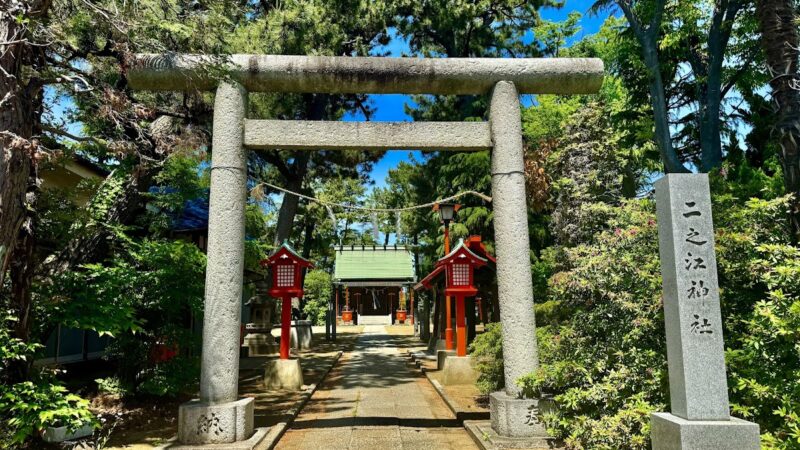
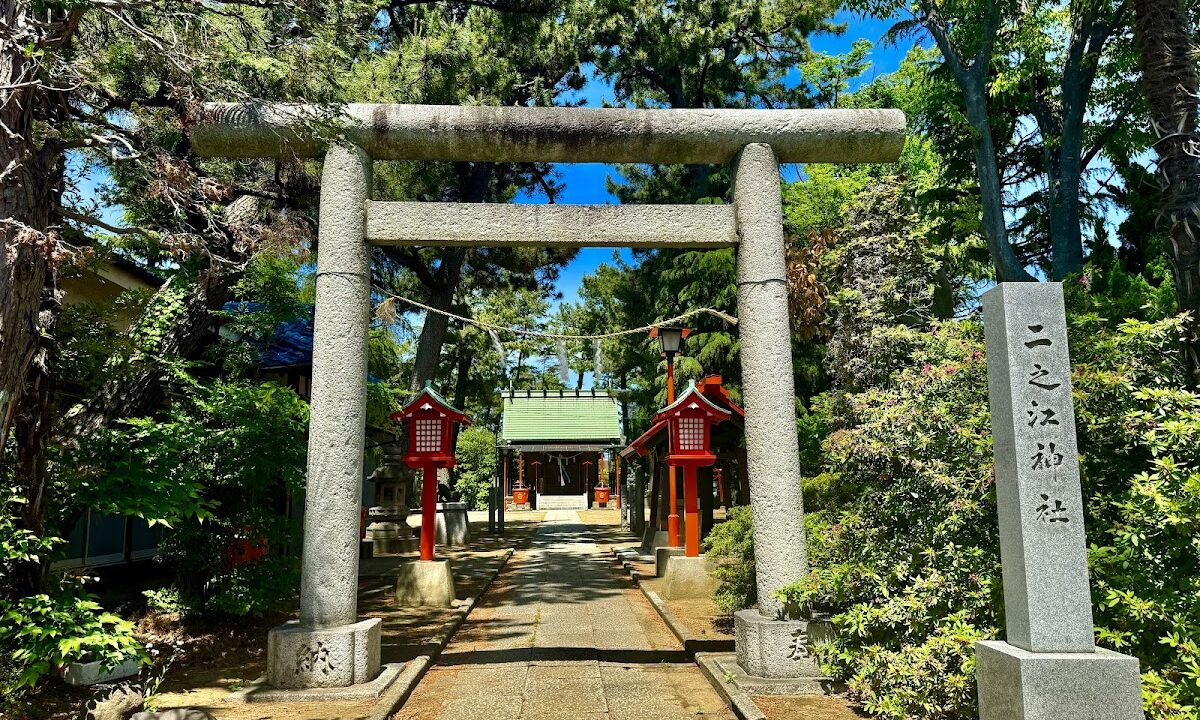
A Myojin-style torii gate stands at the entrance to the shrine grounds, and a well-maintained approach leads from there to the shrine buildings. Despite being located in a residential area, passing through the torii gate reveals a tranquil space, allowing one to feel a sacred atmosphere, a step away from everyday life.
Shrines and Stone Monuments
Within the shrine grounds, there are stone monuments and memorials that tell the history of the area before the merger of the main shrines, providing clues to the region’s history. There are also small subsidiary shrines, allowing visitors to experience the diversity of local beliefs.
Seasonal Scenery
Trees are planted within the shrine grounds, allowing visitors to enjoy the changing seasons. Especially during the fresh greenery of spring and the vibrant autumn foliage, it offers a peaceful oasis in the city.
Goshuin (Shrine Seal) Information
Regarding the issuance of Goshuin at Ninoe Shrine, there is no permanent shrine office, so prior confirmation is necessary. Generally, at smaller shrines, Goshuin are only issued during festivals or on special days.
Those wishing to receive a Goshuin (temple/shrine stamp) are advised to check the following methods:
- Contact the Edogawa Ward Shrine Association
- Check the schedule of events such as annual festivals
- Inquire at nearby shrines, as the Goshuin stamp may be handled by another shrine in the area.
If you bring your Goshuincho (stamp book), it is important to observe proper etiquette during your visit and make your request politely.
Annual Events and Annual Festivals
Ninoe Shrine, as the guardian shrine of the region, holds various festivals throughout the year.
Main Annual Events
New Year’s Day Festival (January 1st)
A festival to pray for happiness and peace in the new year. Local residents visit for their first shrine visit of the year.
Setsubun Festival (around February 3rd)
An event where beans are scattered to ward off evil and invite good fortune.
Grand Annual Festival (Autumn)
Ninoe Shrine’s most important festival. A procession of portable shrines and dedication ceremonies may be held.
Shichi-Go-San (November)
Many visitors come to pray for the healthy growth of their children.
Great Purification Ceremony (June & December)
A Shinto ritual to purify and cleanse away the impurities accumulated over the past six months.
Specific dates and details may change from year to year, so it is recommended that those wishing to participate check in advance.
Access and Parking Information
Access by Train
From Ichinoe Station on the Toei Shinjuku Line
- Approximately 15 minutes on foot from the Kan-nana Exit (approx. 1.2 km)
- Exit the station and head north, cross Kanjo-Nana-go Line, and proceed through the residential area.
- This is the most common method of access.
From Kasai Station on the Tokyo Metro Tozai Line
- Approximately 20 minutes on foot (approx. 1.6 km)
- Head north, passing through the residential area of Edogawa Ward to arrive.
- Since it’s a bit of a distance, consider using the bus.
Access by Bus
Toei Buses and Keisei Buses operate in the surrounding area. The nearest bus stops are “Ninoe-cho” or “Edogawa 6-chome,” which are a few minutes’ walk away. Bus routes may change depending on the season, so please check the latest information.
Access by Car
From the Metropolitan Expressway
- Approximately 10 minutes from the Komatsugawa Exit of the Metropolitan Expressway Central Circular Route
- Accessible via Loop Route 7
Parking Information
While there is a dedicated parking lot on the shrine grounds, the number of spaces is limited, so using public transportation is recommended. There are also coin-operated parking lots nearby, but due to the residential area, the number of spaces is limited.
Map and Navigation
Entering “Ninoe Shrine” or the address “6-44-1 Edogawa, Edogawa-ku, Tokyo” into your smartphone’s map app will display route guidance from your current location.
Nearby Spots and Tourist Information
Here are some nearby spots you might want to visit when you come to Ninoe Shrine.
Shrines and Temples
Maekawa Shrine
Another guardian shrine within Edogawa Ward, within walking distance of Ninoe Shrine. You can experience the history of the region.
Inari Shrines (Various Locations)
There are several Inari shrines within Edogawa Ward, where you can pray for business prosperity and a bountiful harvest.
Gourmet Spots
There are many restaurants around Ichinoe Station, making it convenient for meals after visiting the shrine. There are diverse options, including local diners, ramen shops, and cafes. Edogawa Ward retains a downtown atmosphere, and is characterized by many shops with friendly, affordable prices.
Shopping
There is a shopping street in front of Ichinoe Station, where you can find everything from daily necessities to groceries. You can enjoy the downtown atmosphere where traditional independent shops and modern chain stores coexist.
Parks and Nature
Edogawa Riverbank
Heading south from Ninoe Shrine, you will reach the Edogawa River. The vast riverbank is ideal for walks and jogging, and on clear days you can even see Mt. Fuji.
Ninoe Second Park
This park is a local gathering place and is popular with families with children.
Transportation
Edogawa Ward is located at the eastern edge of Tokyo’s 23 wards, close to the border with Chiba Prefecture. Access to the city center is excellent; it takes about 30 minutes from Ichinoe Station to Shinjuku Station on the Toei Shinjuku Line, and about 20 minutes from Kasai Station to Otemachi Station on the Tokyo Metro Tozai Line.
History and Culture of the Ninoe Area
Origin of the Name Ninoe
The name “Ninoe” originates from the land reclamation project during the Edo period. When low-lying wetlands in the Edogawa River basin were reclaimed to create farmland, the areas were named “Ichinoe,” “Ninoe,” “Sannoe,” etc., in order of development. Ninoe literally means “the second bay (inlet/wetland),” reflecting the origins of this area.
From Rural Village to Residential Area
From the Edo period to the mid-Showa era, the Ninoe area was a village centered on agriculture. Taking advantage of the abundant water of the Edogawa River and fertile soil, rice cultivation and vegetable farming flourished. During Tokyo’s post-war period of rapid economic growth, urbanization progressed rapidly, and Ninoe also underwent rapid residential development.
With the opening of the Toei Shinjuku Line in the 1960s, the Ninoe area developed as a commuter zone to the city center, and its population surged. The merger of Katori Shrine and Hachiman Shrine to form Ninoe Shrine during this period is not unrelated to these changes in the area.
Modern Ninoe
The current Ninoe area is known as a livable town where residential and commercial facilities coexist harmoniously. While retaining the warmth of a traditional downtown area, it also has many new residents, forming a multi-generational community. Ninoe Shrine remains a spiritual center for the area, cherished by local residents.
Manners and Etiquette for Visiting the Shrine
Here are some basic manners to observe when visiting Ninoe Shrine.
Basic Etiquette for Worship
- Bow Before the Torii Gate: Before entering the sacred area, bow before the torii gate.
- Walking Along the Path: The center of the path is considered the path of the gods, so walk along the sides.
- Watering Procedure: If there is a watering pavilion, cleanse in the following order: left hand → right hand → mouth → left hand.
- Worship at the Main Hall: The basic procedure is two bows, two claps, one bow (two bows, two claps, one bow).
- Bow deeply twice.
- Clap your hands twice at chest height.
- Finally, bow deeply once.
- When Leaving: After leaving the torii gate, turn around and bow towards the shrine.
Attire for Worship
For everyday worship, no special attire is required, but clean and subdued clothing is desirable. For prayers or formal worship, formal attire such as a suit or kimono is recommended.
Regarding Photography
Photography is generally permitted on the shrine grounds, but please note the following:
- Do not take photos in areas where photography is prohibited, such as inside the main hall.
- Be considerate of the privacy of other worshippers.
- Use flash sparingly.
- Refrain from taking photos during religious ceremonies.
Planning Your Visit to Ninoe Shrine
Recommended Time to Visit
Hatsumode (January 1st-3rd)
The busiest time of year, when people pray for happiness in the new year. However, crowds are expected.
Reitaisai (Autumn)
The most important festival of the shrine, where you can experience local traditional events.
Weekday Mornings
For those who want to visit in peace and quiet, weekday mornings are recommended.
Estimated Time Required
Given the size of the shrine grounds, 15-30 minutes is sufficient for the visit itself. Including exploring the surrounding area and taking photos, allow about an hour.
Combined Sightseeing Plans
Edogawa Ward Shrine Pilgrimage Plan
A course visiting multiple shrines in Edogawa Ward, including Ninoe Shrine, Maekawa Shrine, and Koiwa Shrine.
Edogawa River Stroll Plan
A course enjoying nature along the Edogawa River after visiting Ninoe Shrine. Beautiful cherry blossoms in spring and cosmos in autumn.
Downtown Gourmet Plan
A course enjoying downtown cuisine at restaurants around Ichinoe Station after visiting the shrine.
Summary: The Charm of Ninoe Shrine
Ninoe Shrine is a relatively new shrine, established in 1967 through the merger of Katori Shrine and Hachiman Shrine. However, its history and faith, dating back to the Edo period, are deeply rooted in the region.
Located at 6-44-1 Edogawa, Edogawa Ward, Tokyo, this shrine is situated in a residential area about a 15-minute walk from Ichinoe Station on the Toei Shinjuku Line and is cherished as a spiritual haven for local residents. Ninoe Shrine enshrines two deities, Futsunushi-no-Okami and Emperor Ojin, and is believed to bestow blessings such as military success, protection from evil, and family safety.
While not a large-scale tourist shrine, its well-maintained grounds are clean and tranquil, making it an ideal place to escape the hustle and bustle of everyday life and find peace of mind. If you’re visiting Edogawa Ward or have business near Ichinoe Station, be sure to stop by Ninoe Shrine. The warm atmosphere unique to a shrine deeply rooted in the community will welcome visitors.
Spending time quietly praying in this small sanctuary in the heart of the city, while feeling the history of Edogawa Ward, is sure to bring new vitality to your daily life. Ninoe Shrine is a fascinating spot where Tokyo’s downtown culture and traditional shrine faith harmonize.