Myoshoji Temple Complete Guide | A Thorough Explanation of the History, Access, and Highlights of Famous Temples Nationwide
There are several temples named Myoshoji throughout Japan. Many of them are Nichiren Buddhist temples, preserving a long history and unique culture. This article provides detailed information on the history, characteristics, and access to Myoshoji temples in various locations, including Edogawa Ward in Tokyo, Tsuyama City and Okayama City in Okayama Prefecture, and Awaji Island in Hyogo Prefecture.
What is Myoshoji Temple? | Characteristics and Origins of Nichiren Buddhist Temples
Myoshoji is pronounced “myōshōji,” and its name means “wonderful victory” or “conquering the wondrous Dharma.” Many of these temples are based on the teachings of Nichiren Buddhism, and their faith revolves around chanting the mantra “Namu Myōhō Renge Kyō.”
Nichiren Buddhism is a Buddhist sect founded by Nichiren Shōnin during the Kamakura period, and its fundamental scripture is the Lotus Sutra. Myoshoji temples throughout Japan have upheld the teachings of the Nichiren sect and functioned as centers of faith for local people.
Myoshoji Temple in Edogawa Ward, Tokyo | A historic temple boasting 700 years of history
History of Honkakuzan Myoshoji Temple
Myoshoji Temple, located in Edogawa, Edogawa Ward, Tokyo, is a Nichiren sect temple with the mountain name Honkakuzan and the temple name Jojuin. Founded in 1307 by Nichisho Shonin, it is known as one of the oldest temples in Edogawa Ward.
With a history of over 700 years since its founding, this temple was originally a branch temple of Nakayama Hokkeji Temple (Ichikawa City, Chiba Prefecture), and was once a prestigious temple of the rank of Chuhonji, boasting 14 branch temples. Its former head temple was the Daihonzan Hokkeji Temple, and it belongs to the Tatsushi lineage.
Features and Highlights of the Temple Grounds
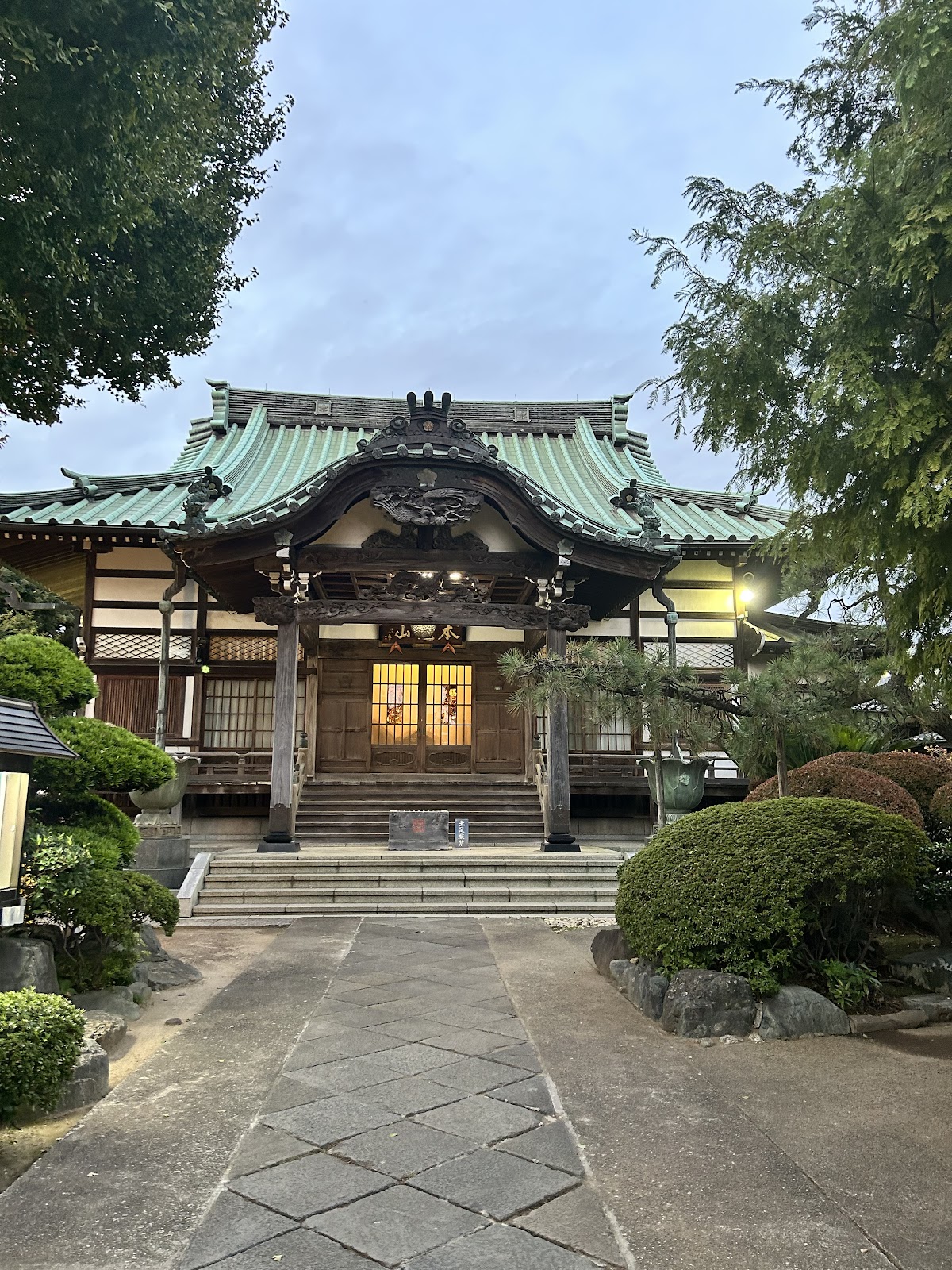
The most striking feature of Myoshoji Temple in Edogawa Ward is its grounds, surrounded by lush greenery that feels almost unbelievable for being in Tokyo. Stepping inside, you’re greeted by a tranquil space far removed from the hustle and bustle, offering peace and tranquility to visitors.
The grounds contain the main hall and other buildings, as well as the sub-temple, Renshobo. The landscape, a harmonious blend of historical architecture and nature, displays different expressions throughout the seasons.
Access Information
Location: Edogawa, Edogawa-ku, Tokyo
Nearest Station:
- Within walking distance from Shinozaki Station on the Toei Shinjuku Line
- Also accessible from the Keisei Main Line
Parking: Parking available on the temple grounds (for visitors)
Telephone Number: Please contact the official website or the temple directly.
Currently, part of the temple grounds has been renovated, creating a more accessible environment for visitors. It’s also ideally located for day trips.
Myoshoji Temple in Tsuyama City, Okayama Prefecture | History and Culture of Hokozan Myoshoji Temple
Origin of Hokozan Myoshoji Temple
Hokozan Myoshoji Temple, located in Nishidera-cho, Tsuyama City, Okayama Prefecture, is a Nichiren Buddhist temple cherished as a center of local faith. This temple has a fascinating history.
Originally, it was built under the name “Kongoji Temple” within the grounds of Yoshida Shrine in Kambe Village (present-day Innosho). In 1604, as part of Mori Tadamasa’s town development project, it was relocated to Minami-Shinza, and at that time, the temple’s name was changed to “Myoshoji Temple.” Simultaneously, the sect changed from Shingon Buddhism to Nichiren Buddhism, resulting in its current form.
Relationship with Rissho Aoba Gakuen
Myoshoji Temple in Tsuyama City has a deep connection with Rissho Aoba Gakuen, developing activities that integrate education and religion. Through memorial services, prayers, and festivals, it is widely cherished not only by parishioners but also by the local community.
Access
Location: Nishidera-cho, Tsuyama City, Okayama Prefecture
Access: Walking or bus ride from JR Tsuyama Station
Parking: Parking available for visitors
Myoshoji Temple in Okayama City | The Serene Atmosphere of Myokozan Myoshoji Temple
A History Dating Back to the Muromachi Period
Myokozan Myoshoji Temple, located in the heart of Okayama City, is a quiet temple founded over 600 years ago in the early Muromachi period by the Great High Priest Daikaku. Despite its urban location, it maintains a tranquil atmosphere.
Currently, the 52nd head priest, Genyu Fujita, upholds the temple’s traditions and transmits the teachings of Nichiren Buddhism. Throughout its long history, it has cherished its ties with the local community and continues to function as a place of worship to this day.
Atmosphere of the Temple Grounds
Despite its location in the heart of Okayama City, the temple grounds are enveloped in tranquility, offering a space to forget the hustle and bustle of the city. The historical main hall and the trees within the grounds provide peace and tranquility to visitors.
Access Information
Location: Okayama City (Central Area)
Transportation Access: Walking or bus from Okayama Station
Parking: Parking available nearby
Myoshoji Temple, Awaji Island, Hyogo Prefecture | A Famous Temple Associated with Ashikaga Takauji
A Temple with Legends of Ashikaga Takauji
Myoshoji Temple, located on Awaji Island in Hyogo Prefecture, is a Nichiren Buddhist temple with fascinating legends related to Ashikaga Takauji.
On February 8, 1336 (Kenmu 3), Ashikaga Takauji, defeated by Kusunoki Masashige and Nitta Yoshisada and driven out of Kyoto, stopped at this temple on his way to Kyushu. While his ship was anchored offshore waiting for favorable winds, Takauji saw a light on a mountaintop and inquired about its location, being told it was “Myoshoji Temple.”
It is said that when Takauji heard the name “Myosho,” he was greatly pleased, believing it to be a sign of victory in his army, and donated a sword to pray for victory. This legend is still recounted today as a valuable historical episode illustrating the footsteps of Ashikaga Takauji, the founder of the Muromachi Shogunate.
Historical Value
Myosho-ji Temple on Awaji Island is not merely a religious site, but also holds historical value as a place involved in a crucial turning point in Japanese history. Considering that Ashikaga Takauji later rebuilt his power in Kyushu and returned to Kyoto to establish the Muromachi Shogunate, it is conceivable that his prayers at Myosho-ji Temple provided him with spiritual support.
Access and Tourist Information
Location: Awaji Island, Hyogo Prefecture
Tourism: Can be visited as part of Awaji Island sightseeing.
Access: Awaji Island can be reached via the Akashi Kaikyo Bridge from Honshu or the Onaruto Bridge from Shikoku.
Parking: Parking available for visitors.
Featured in Awaji Island tourist guides, it’s a popular spot for history buffs and those who enjoy temple hopping.
Other Myoshoji Temples | Kisarazu City, Chiba Prefecture, etc.
Myoshoji Temple in Kisarazu City, Chiba Prefecture
There is also a Myoshoji Temple in Kisarazu City, Chiba Prefecture. Founded in May of Kansho 6 (1465), its founder was Nichitsu Shonin. It is a temple of the Nichiju school and is positioned as a branch temple of Jojuji Temple in Kisarazu City.
Although completely destroyed by fire in December of Tenmei 2 (1782), it was rebuilt in July of Tenmei 5 (1785), and the current temple buildings date from that time. Within the temple grounds is the grave of the Tengu Party, making it a valuable historical site that conveys the history of the late Edo period.
Ishirekiyama Myoshoji Temple (Shinozaki)
There is another Myoshoji Temple in Tokyo, Ishirekiyama Myoshoji. It boasts a history of over 700 years and functions as a center of local faith.
Guidelines for Visiting Myoshoji Temple | Etiquette at Nichiren Buddhist Temples
Basic Etiquette for Visiting Temples
When visiting Myoshoji Temple, a Nichiren Buddhist temple, please keep the following basic etiquette in mind.
- A Bow at the Temple Gate: Before entering the temple grounds, bow at the temple gate.
- Purification at the Water Basin: Purify your hands and mouth before proceeding to the main hall.
- Worship at the Main Hall: Join your hands in prayer and chant “Namu Myoho Renge Kyo.”
- Offering a Coin: Offer your coin with sincerity.
- A Bow Upon Departure: Bow at the temple gate again when leaving.
How to Chant the Title
In the Nichiren sect, the title “Namu Myoho Renge Kyo” is chanted. This expresses devotion to the Lotus Sutra, and it is important to chant it with sincerity.
Annual Events at Myoshoji Temple | Seasonal Events
Main Annual Events
Various events are held throughout the year at each Myoshoji temple.
Spring Events:
- Spring Equinox Service
- Flower Festival (Buddha’s Birthday)
Summer Events:
- Obon Memorial Service
- Segaki Service
Autumn Events:
- Autumn Equinox Service
- Oeshiki (Memorial Service for Nichiren Shonin’s Death Anniversary)
Winter Events:
- New Year’s Eve Bell Ringing
- New Year’s Prayer Service
Importance of Oeshiki
The Oeshiki service, especially held in October, is one of the most important events for Nichiren Buddhist temples. Held around October 13th, the anniversary of Nichiren Shonin’s death, it features a grand procession of lanterns and a memorial service.
Memorial Services and Prayers at Myoshoji Temple
About Memorial Services
Myoshoji Temple accepts various memorial services, including ancestral memorial services and memorial services for stillborn babies. Please contact each temple directly for information on the types and dates of services.
Main Memorial Services:
- Annual memorial services (first anniversary, third anniversary, seventh anniversary, etc.)
- Obon memorial service
- Higan memorial service
- Monthly memorial service
Types of Prayers
Nichiren Buddhist temples offer various types of prayers.
- Family safety
- Business prosperity
- Academic success
- Recovery from illness
- Traffic safety
- Protection from evil
For various prayers, it is recommended to contact the temple by phone in advance and make a reservation.
Access to Myoshoji Temple and Points to Note When Visiting
Best Time to Visit
The best time to visit Myoshoji Temple is generally from 9:00 AM to around 5:00 PM. However, opening hours may vary depending on the temple, so it is recommended to check in advance.
For those who wish to visit in peace, weekday mornings are relatively less crowded, allowing for a leisurely stroll through the temple grounds.
Parking and Transportation
Most Myoshoji temples have parking available for visitors, but space may be limited. Especially during memorial services and events, crowds are expected, so consider using public transportation.
Many temples are accessible on foot, and it’s recommended to enjoy a stroll around the surrounding area while visiting.
Attire for Visiting
Unless you are attending a special memorial service, everyday attire is acceptable. However, please avoid revealing or overly flashy clothing and strive for modest attire appropriate for a temple.
Cultural Assets and Highlights of Myoshoji Temple
Architectural Features
Each Myoshoji temple retains architecture that reflects its respective era. The main halls and temple gates built during the Edo and Meiji periods are valuable cultural heritage that convey the architectural techniques and aesthetic sensibilities of the time.
In particular, Myoshoji Temple in Edogawa Ward, as a temple of the status of a Chuhonji (a high-ranking temple), boasts a magnificent temple layout.
Nature on the Temple Grounds
Many Myoshoji temples have lush greenery on their grounds. Especially in urban areas, this greenery serves as a precious oasis, allowing visitors to enjoy nature in every season.
From cherry blossoms in spring, lush greenery in summer, vibrant autumn leaves, to snowy winter landscapes, the temple grounds display different expressions with each season, offering fresh discoveries with every visit.
Myoshoji Temple’s Relationship with the Local Community
Bonds with Parishioners
Myoshoji Temple is not merely a religious institution; it also plays a central role in the local community. While cherishing deep bonds with its parishioners, the temple ensures the transmission of faith across generations.
Participation in Local Events
Many Myoshoji temples actively participate in local festivals and events, deepening their ties with the community. Festivals and events attract not only parishioners but also a wide range of local residents, forming a community centered around the temple.
Role in Modern Times
Currently, in addition to its traditional religious activities, Myoshoji Temple also assumes various social roles. It develops activities that meet the needs of the times, such as end-of-life planning consultations, mental health counseling, and the preservation of local history and culture.
The renovated facilities have been made more accessible to a wider audience, including barrier-free features.
Notes on Visiting Myoshoji Temple
Manners and Etiquette
When visiting a temple, please observe the following manners:
- Be quiet within the temple grounds
- Take photographs only in designated areas
- Remove your hat inside the main hall
- Set your mobile phone to silent mode
- Take all your trash with you
- Do not touch plants or buildings within the temple grounds
About Goshuin (Temple Seals)
Many Myoshoji temples offer Goshuin. When requesting a Goshuin, please do so politely after your visit. It is good manners to bring your Goshuincho (stamp book) and wait quietly while the stamp is being written.
Summary | Experience the Charm of Myoshoji Temple
Myoshoji temples throughout Japan each possess their own unique history and charm. Myoshoji Temple in Edogawa Ward boasts a history of over 700 years; Myoshoji Temple on Awaji Island is associated with Ashikaga Takauji; Myoshoji Temple in Okayama City has a history of 600 years; and Myoshoji Temples in Tsuyama City and Kisarazu City, among others, continue to preserve the faith and culture of their respective regions.
Surrounded by abundant nature that seems unbelievable for a temple in Tokyo, the temple grounds exude a sense of history, and above all, the abbots and parishioners warmly welcome you. A visit to Myoshoji Temple will be a precious opportunity to escape the hustle and bustle of everyday life and find peace of mind.
Myoshoji Temple is easily accessible even for a day trip. Check the access information and phone number and be sure to visit at least once. You are sure to spend a time of peace and tranquility in the serene space of this historic temple.