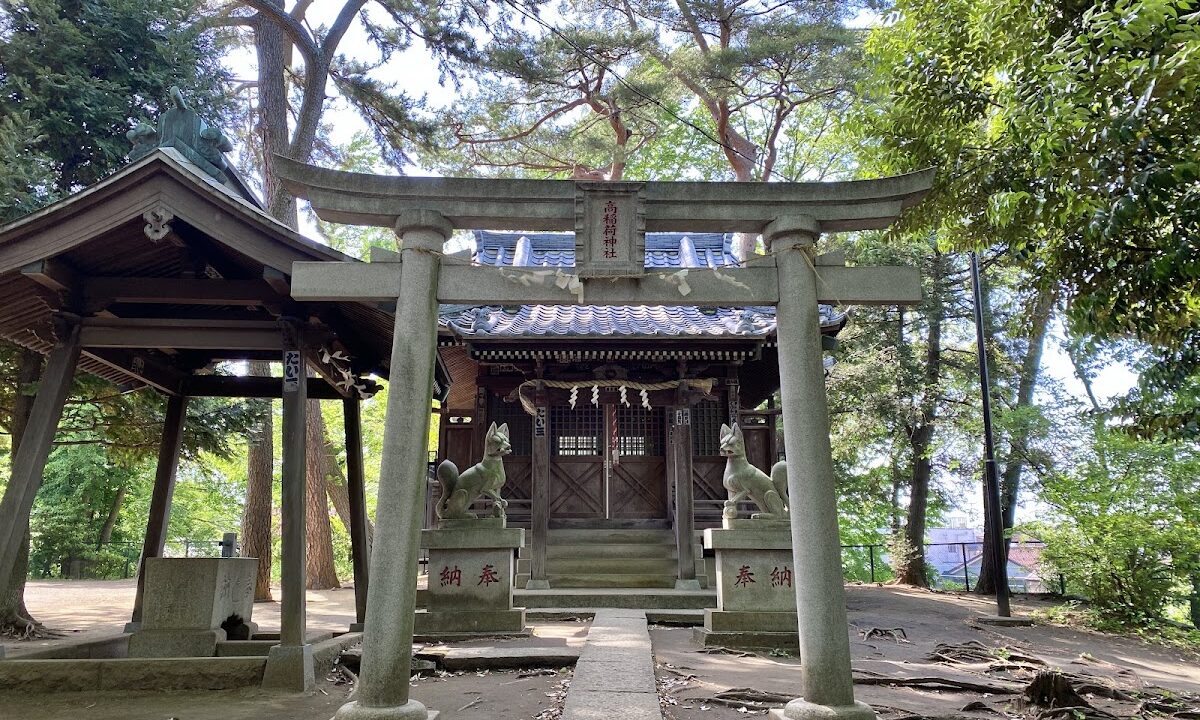
Taka Inari Shrine (Nerima Ward, Tokyo) Complete Guide | History, Goshuin (Shrine Seal), and Access Information
Taka Inari Shrine, located in Sakuradai, Nerima Ward, Tokyo, is an Inari shrine situated on a hill along the Shakujii River. Approximately 130 cherry trees are planted on the grounds, making it a popular cherry blossom viewing spot in the area during spring, attracting many worshippers and flower viewers. This article provides detailed information useful for visiting Taka Inari Shrine, including its history, enshrined deities, highlights of the grounds, goshuin information, and access methods.
Basic Information on Taka Inari Shrine
Location 6-25-7 Sakuradai, Nerima Ward, Tokyo 176-0002
Main Deity Ukemochi-no-Mikoto
Shrine Rank Unranked Shrine
Founding Date The exact date is unknown, but it is estimated to be before the late Edo period.
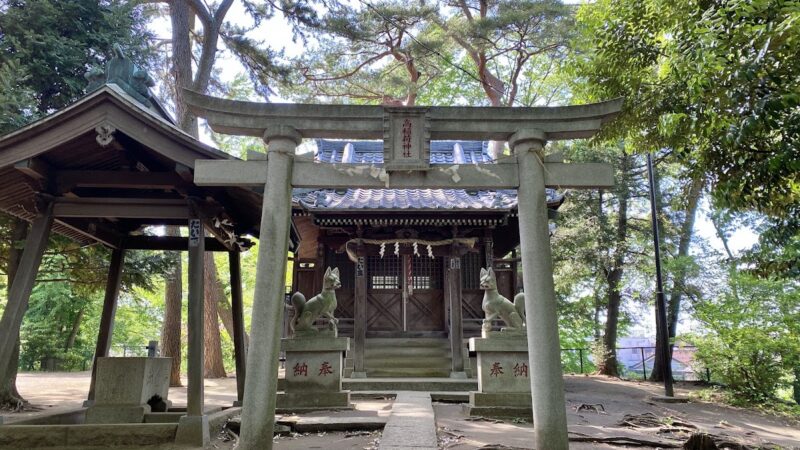
Taka Inari Shrine is located on a hill in Taka Inari Park, in a lush green environment facing the Shakujii River. While there are 47 shrines in Nerima Ward, it is a distinctive shrine known for its cherry blossoms.
Deity and Divine Virtues
Uke-mochi-no-Mikoto
The deity enshrined at Taka Inari Shrine is Uke-mochi-no-Mikoto. Uke-mochi-no-Mikoto is the goddess of food in Japanese mythology and is widely worshipped as the principal deity of Inari shrines.
Divine Virtues (Benefits)
- Abundant harvests
- Business prosperity
- Family safety
- Industrial development
- Blessings of food and clothing
There are said to be approximately 30,000 Inari shrines nationwide, making them the most numerous type of shrine in Japan. Taka Inari Shrine is one of them, and has long been a center of faith for local people. Uke-mochi-no-Mikoto is an important deity for those involved in agriculture and commerce, and even today, worshippers visit the shrine to pray for business prosperity and family safety. ## History of Taka Inari Shrine
Founding and History
The exact founding date of Taka Inari Shrine is unknown as no records remain, but stone structures within the grounds confirm its existence as early as the late Edo period.
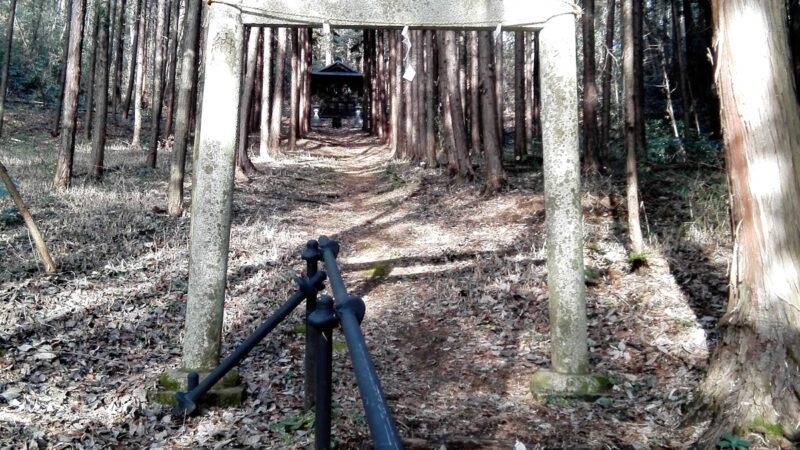
The oldest existing stone structure on the grounds is the torii gate inscribed with the year 1853 (Kaei 6), standing in front of the main shrine building. This torii gate dates from the late Edo period, indicating that the shrine was a center of local faith even then. 1853 was the year Commodore Perry arrived in Uraga, a time of great transformation for Japan.
Changes in the Shrine Building
The main shrine building of Taka Inari Shrine has undergone at least two major renovations.
Renovation in 1931 (Showa 6)
A “Shrine Building Renovation Commemorative Monument” stands on the grounds, recording that the shrine building was renovated in the early Showa period. Despite the impact of the Showa Depression during this period, the shrine building was restored thanks to the faith of the local people. Newly Built in 1980
The current shrine building was newly constructed in 1980. A monument erected to commemorate this construction stands alongside a monument commemorating the 1931 (Showa 6) reconstruction, conveying the shrine’s history spanning approximately half a century.
Connection to the Community
Taka Inari Shrine has long been revered as the tutelary deity of the Sakuradai area of Nerima Ward. Especially during times of thriving agriculture, it is believed that many worshippers visited the shrine to pray for a bountiful harvest. Although now surrounded by residential areas, the shrine grounds, developed as Taka Inari Park, remain a popular place of relaxation for the community.
Highlights of the Shrine Grounds
Shrine Building
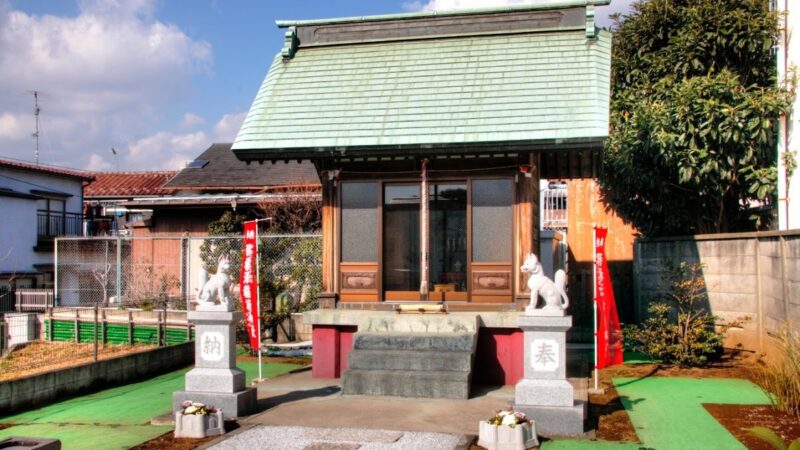
The shrine building, newly constructed in 1980 (Showa 55), follows traditional shrine architectural styles while incorporating modern construction methods. Its compact yet dignified appearance, with its striking vermilion color, is particularly impressive.
Torii Gate with Kaei 6th Year Inscription
The stone torii gate standing in front of the shrine is the oldest stone structure on the grounds. It bears an inscription from Kaei 6th year (1853), giving it a history of over 170 years. Its weathered appearance conveys the weight of the shrine’s history.
Memorial Monuments
Two memorial monuments stand side-by-side on the shrine grounds.
- Shrine Reconstruction Memorial Monument (Showa 6th year, 1931)
- New Shrine Construction Memorial Monument (Showa 55th year, 1980)
These monuments are evidence of how the local people have cherished and protected this shrine for generations.
Cherry Trees
The most distinctive feature of Takainari Shrine is the approximately 130 cherry trees planted on and around the shrine grounds. Most of the trees on the grounds are cherry trees, creating a magnificent landscape during the spring blooming season.
The shrine grounds, developed as Takainari Park, are continuous with the cherry tree-lined banks of the Shakujii River, making it one of the region’s premier cherry blossom viewing spots during the season. Various varieties of cherry trees, primarily Somei Yoshino, are planted there.
Takainari Park
The shrine grounds have been developed as Takainari Park, serving as a place of relaxation for local residents. Taking advantage of its hilltop location, visitors can enjoy panoramic views overlooking the Shakujii River. Walking paths are also maintained within the park, making it ideal for strolling.
Goshuin (Shrine Seal) Information
Takainari Shrine is an unmanned shrine; therefore, there are no resident priests, and Goshuin are not issued.
Those collecting Goshuin in Tokyo or Nerima Ward are recommended to visit the following shrines:
Main Shrines in Nerima Ward
- Hikawa Shrine (Nerima Ward)
- Shakujii Hikawa Shrine
- Tagara Atago Shrine
These shrines do issue Goshuin.
Access and Directions
Access by Train
Takainari Shrine is accessible from several train stations.
Nearest Station and Travel Time
- Tokyo Metro Yurakucho Line/Fukutoshin Line “Hikawadai Station”
Approximately 9 minutes on foot (approx. 730m)
*This is the closest station.
- Tokyo Metro Yurakucho Line/Fukutoshin Line “Heiwadai Station”
Approximately 12 minutes on foot (approx. 1.3km)
- Seibu Ikebukuro Line “Sakuradai Station”
Approximately 14-17 minutes on foot (approx. 1.4km)
Directions from Hikawadai Station (Recommended Route)
- Exit Hikawadai Station from Exit 2
- Head north along Kan-nana Street
- Cross the Shakujii River
- Head west along the riverbank
- Follow the signs for Takainari Park and climb the hill
- Arrive at Takainari Shrine
Access by Car
There is no dedicated parking lot. If you are visiting by car, you will need to use a nearby coin-operated parking lot. However, since the surrounding roads become congested during the cherry blossom season, we recommend using public transportation.
Address and Map
6-25-7 Sakuradai, Nerima-ku, Tokyo 176-0002
You can find the exact location by searching for “Takainari Shrine Nerima-ku” or “Takainari Park” in a navigation app such as Google Maps.
Points and Manners for Visiting
Proper Worship Etiquette
Takainari Shrine is a small shrine, but the basic worship etiquette is the same as for other shrines.
- Bow before passing through the torii gate.
- Purify your hands and mouth if there is a water basin. (※This step can be omitted if there is no water basin.)
- Offer your donation in front of the shrine.
- Two bows, two claps, one bow.
- Two deep bows
- Two claps
- One deep bow
Recommended Time for Visiting
Taka Inari Shrine is open 24 hours a day, but the following times are recommended:
- Early morning: Quiet and refreshing atmosphere
- Morning to early afternoon: Bright and easy to visit
- Evening during cherry blossom season: Beautiful contrast between cherry blossoms and the sunset
At night, lighting is limited, so please be careful of your footing.
Photography
Photography is generally permitted on the shrine grounds. The cherry blossom season, in particular, is an excellent time for photography. However, please observe the following manners.
- Please be considerate of other worshippers.
- Please refrain from taking photos directly in front of the shrine.
- Avoid using tripods during crowded times.
Nearby Attractions and Tourist Spots
Cherry Blossom Trees along the Shakujii River
A cherry blossom tree-lined path stretches for approximately 2 km along the Shakujii River, which flows very close to Takainari Shrine. It’s a representative cherry blossom viewing spot in Nerima Ward, and can be enjoyed in conjunction with the cherry blossoms at Takainari Shrine.
Best Viewing Time: Typically late March to early April
Nerima Art Museum
An art museum within walking distance of Hikawadai Station. It mainly exhibits modern and contemporary art, making it ideal for a visit before or after your shrine visit.
Shakujii Park
A representative metropolitan park in Nerima Ward. A rich natural environment unfolds around two ponds, Shakujii Pond and Sanpoji Pond. It is accessible on foot or by bus from Takainari Shrine.
Nearby Shrines and Temples
Hikawa Shrine (Nerima Hikawadai)
A shrine located near Hikawadai Station. Goshuin (shrine stamps) are available.
Shakujii Hikawa Shrine
A historic shrine near Shakujii Park. It boasts one of the largest scales in Nerima Ward.
Annual Events and Festivals
Takainari Shrine is an unmanned shrine, so large-scale festivals are not held. However, it is regularly maintained and cleaned by local residents.
New Year’s Visit
From New Year’s Day to the third day of the year, local residents visit for their first shrine visit of the year. It is not as crowded as large shrines, allowing for a quiet New Year’s visit.
Cherry Blossom Festival (Unofficial)
At Takainari Park, local residents hold a cherry blossom viewing event during the blooming season. While not an official event organized by the shrine, many people visit to enjoy the cherry blossoms.
The Charm of Takainari Shrine
A Quiet Sanctuary in the City
Despite being located in the urban area of Nerima Ward, Takainari Shrine maintains a quiet and peaceful atmosphere. Situated on a hill, it offers a special space far removed from the surrounding hustle and bustle.
Beauty in Every Season
While particularly beautiful during cherry blossom season, it displays different expressions throughout the year, from the fresh green of spring to the autumn foliage and snowscapes.
A Faith Rooted in the Community
Although an unmanned shrine, its careful preservation by the local community reflects the traditional Japanese way of community building.
Points to Note When Visiting
About Facilities
- No Shrine Office: There are no resident Shinto priests.
- No Goshuin (Shrine Seals): Goshuin are not issued.
- No Parking: There is no dedicated parking lot.
- Restrooms: Please check the restroom facilities in the park.
- Vending Machines: There are none on the shrine grounds.
Crowds During Cherry Blossom Season
The shrine gets very crowded with cherry blossom viewers from late March to early April. For those who wish to worship in peace, we recommend visiting early in the morning or on weekdays.
Slopes and Stairs
Taka Inari Shrine is located on a hill, so access requires climbing slopes and stairs. We recommend wearing comfortable shoes.
Other Inari Shrines in Tokyo
After visiting Taka Inari Shrine, why not visit other Inari shrines in Tokyo?
Major Inari Shrines
Toyokawa Inari Tokyo Branch (Minato Ward)
A branch temple of Toyokawa Inari in Toyokawa City, Aichi Prefecture. One of the leading centers of Inari worship in Tokyo.
Anahachimangu Shrine (Shinjuku Ward)
A shrine famous for its Ichiyo Raifuku (return of spring) amulets.
Karasumori Shrine (Shinbashi, Minato Ward)
A shrine popular for its colorful goshuin (shrine stamps).
Takao Inari Shrine (Nihonbashi, Chuo Ward)
A rare Inari shrine dedicated to Takao Tayu. This is a different shrine from Taka Inari Shrine.
Shrine Pilgrimage in Nerima Ward
Nerima Ward has 47 shrines, making it an enjoyable route for shrine pilgrimage.
Recommended Route
- Taka Inari Shrine (Sakuradai)
- Hikawa Shrine (Hikawadai)
- Shakujii Hikawa Shrine (Shakujii Park)
- Tagara Atago Shrine (Hikarigaoka)
By visiting each shrine, you can experience the history and culture of Nerima Ward.
Summary
Taka Inari Shrine is a historic Inari shrine located in Sakuradai, Nerima Ward, Tokyo. It enshrines Uke-mochi-no-Mikoto and is believed to bestow blessings of abundant harvests and business prosperity.
Features of Taka Inari Shrine
- Historical stone structures, including a torii gate bearing the inscription “Kaei 6” (1853)
- A famous cherry blossom viewing spot with approximately 130 cherry trees
- Excellent location on a hill overlooking the Shakujii River
- A beloved place of relaxation for local residents
Access
- 9-minute walk from Hikawadai Station on the Tokyo Metro
- 12-minute walk from Heiwadai Station
- 14-minute walk from Sakuradai Station on the Seibu Ikebukuro Line
While they do not offer Goshuin (shrine stamps), this is a valuable shrine where you can worship in a quiet and peaceful atmosphere. Especially during cherry blossom season, you can enjoy one of the most beautiful views in Tokyo. When you visit Nerima Ward, be sure to stop by Taka Inari Shrine.
Combining a stroll along the Shakujii River with visits to other nearby shrines will make for a fulfilling day. Taka Inari Shrine, where you can feel the history and nature of the region, is a special place that will make you forget the hustle and bustle of the city.