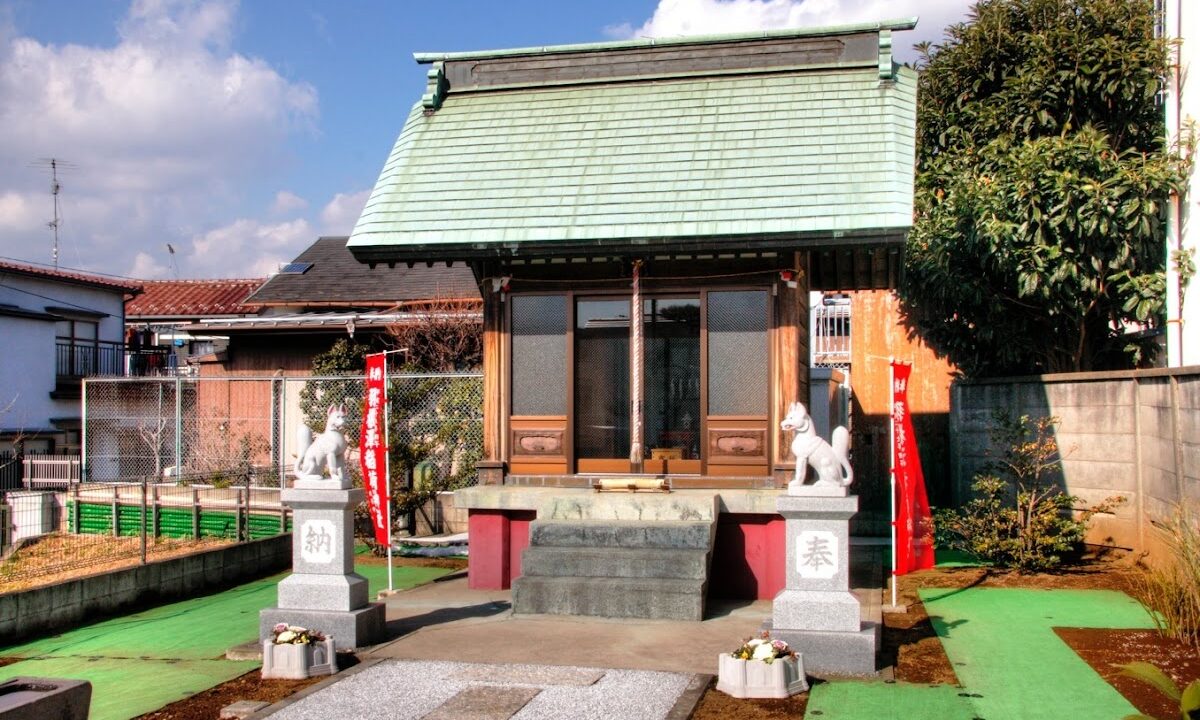
Complete Guide to Hanezawa Inari Shrine (Nerima Ward, Tokyo) | History, Deities, Access, and Visiting Information
Located in Hanezawa, Nerima Ward, Tokyo, Hanezawa Inari Shrine is a historic Inari shrine that has been cherished by the local community since the late Edo period. Despite being in the heart of Tokyo, this shrine stands quietly in a residential area and is still carefully preserved as a place of worship for local residents. This article provides detailed information you should know before visiting Hanezawa Inari Shrine, including its history, deities, access methods, visiting information, and nearby attractions.
Basic Information on Hanezawa Inari Shrine
Hanezawa Inari Shrine is a community-oriented shrine located in Hanezawa 2-chome, Nerima Ward.
Location
2-22-19 Hazawa, Nerima-ku, Tokyo 176-0044
Nearest Stations
- Hikawadai Station (Tokyo Metro Yurakucho Line/Fukutoshin Line) – Approximately 8 minutes on foot
- Nerima Station (Seibu Ikebukuro Line) – Approximately 15 minutes on foot
- Shin-Egota Station (Toei Oedo Line) – Approximately 12 minutes on foot
Deity Enshrined
Ukemochi-no-kami (Goddess of Food)
Shrine Rank
Former Unranked Shrine
Annual Festival Date
Please inquire with the local parishioners’ representative for details.
History and Origins of Hanezawa Inari Shrine
Founding Period and Beliefs in the Edo Period
The exact founding date of Hanezawa Inari Shrine is unknown, but since the inscription “Kaei 7 (1854)” is carved on a stone shrine housed within the main hall, it is believed to have been founded at least by the late Edo period. The year 1854 (Kaei 7) was a turbulent time, marking the end of the Edo shogunate and the year after the arrival of the Black Ships.
At that time, this area was called “Hanezawa Village” and had developed as an agricultural region. Inari worship was widely practiced as a popular faith among ordinary people, praying for abundant harvests and business prosperity. It is presumed that Hanezawa Inari Shrine was carefully preserved by the local farmers.
Merger with Suga Shrine
Hanezawa Inari Shrine has an interesting history. Previously, there were two shrines in this area: Inari Shrine and Suga Shrine. Suga Shrine was dedicated to Gozu Tenno (Susanoo-no-Mikoto) and attracted worshippers seeking protection from disease and misfortune.
As part of the shrine consolidation policies after the Meiji era, Suga Shrine was merged with Hanezawa Inari Shrine. As a result, Hanezawa Inari Shrine inherited not only Inari worship but also the misfortune-warding beliefs of Suga Shrine.
Origin of the Place Name “Hanezawa”
There are several theories regarding the origin of the place name “Hanezawa (Hanezawa)” that remains in the shrine’s name. One theory suggests that the character “zawa” (沢) was used because this area was a low-lying wetland along the Hazawa tributary (Shimonerima Diversion Channel), a tributary of the Shakujii River, and “Hane” (羽根) is thought to originate from some geographical feature or legend.
While the current official town name is “Hanezawa,” the shrine name retains the older spelling “Hanezawa,” making it a valuable record of the region’s history.
About the Deity: Ukemochi-no-Kami
Divinity and Beliefs of Ukemochi-no-Kami
Ukemochi-no-Kami, the deity enshrined at Hanezawa Inari Shrine, is a goddess of food in Japanese mythology. She is a deity mentioned in the *Nihon Shoki* (Chronicles of Japan) and is said to have produced grains such as rice, millet, and wheat, as well as fish and animals, from her mouth.
Ukemochi-no-kami is often identified with Ukanomitama-no-kami, widely worshipped as Inari-no-kami, and is believed to bestow blessings such as abundant harvests, business prosperity, and family safety.
Characteristics of Inari Worship
Inari shrines are said to number over 30,000 throughout Japan, making them the most numerous type of shrine. Their worship extends beyond agriculture; with the development of commerce and industry, they have also become widely revered as a god of business prosperity.
Hanezawa Inari Shrine, while once a shrine dedicated to praying for bountiful harvests in rural areas, is now located in a residential area and is cherished as a guardian deity watching over the lives of local residents.
Shrine Grounds and Highlights
Shrine Buildings and Grounds Environment
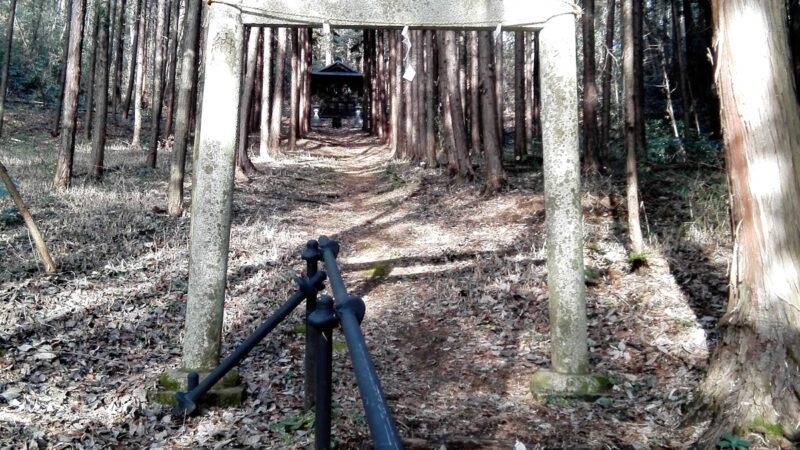
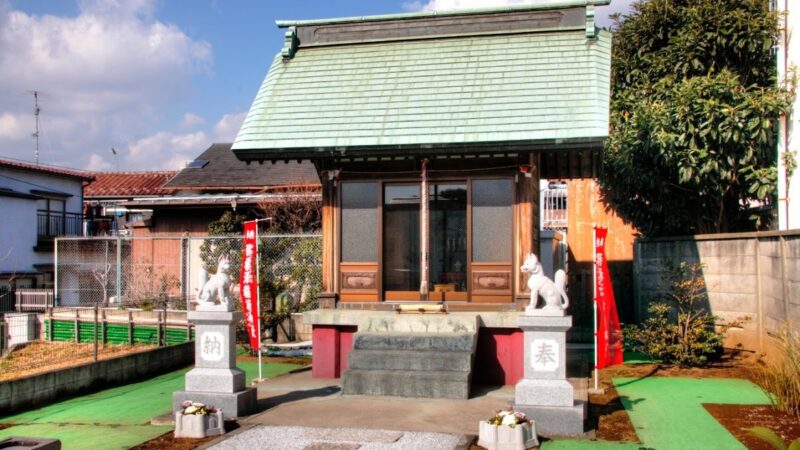
The grounds of Hanezawa Inari Shrine are located in a residential area and, while small, are kept clean. It is believed that it once had a larger sacred grove, but due to urbanization, the grounds are now relatively compact.
The shrine, though simple, is meticulously maintained, reflecting the deep faith of the local people. A stone shrine bearing the inscription of the 7th year of the Kaei era (1854) is housed within the shrine building, a valuable cultural artifact that tells the history of the shrine.
Relationship with the Shakujii River System
Near Hanezawa Inari Shrine, the Hanezawa tributary (Shimonerima branch), a tributary of the Shakujii River, once flowed. This waterway supported local agriculture as irrigation water, suggesting a close relationship between the blessings of water and Inari worship.
Currently, much of this tributary has been covered over, but traces can still be seen in the topography. Walking around the shrine grounds, you can imagine the former waterside landscape.
Access and Visiting Information
Access by Train
From Hikawadai Station (Nearest Station)
Approximately 8 minutes on foot from Exit 1 of Hikawadai Station on the Tokyo Metro Yurakucho Line and Fukutoshin Line. Exit the station and head northwest. After passing through the residential area, you will arrive at the shrine.
From Nerima Station
Approximately 15 minutes on foot from the north exit of Nerima Station on the Seibu Ikebukuro Line. Head north along Senkawa Street towards Hazawa.
From Shin-Egota Station
Approximately 12 minutes on foot from Shin-Egota Station on the Toei Oedo Line. Take the route via Kan-nana Street towards the Hazawa area.
Access by Bus
Take a Kokusai Kogyo Bus or Seibu Bus from Nerima Station or Narimasu Station and get off at the “Hazawa” bus stop. It’s approximately a 3-minute walk from there. Bus schedules vary depending on the time of day, so please check the timetable in advance.
Access by Car and Parking
There is no dedicated parking lot for the shrine. If you are coming by car, we recommend using nearby coin-operated parking lots or public transportation. As the shrine is located in a residential area, please refrain from street parking as it will inconvenience the neighbors.
Visiting Hours and Etiquette
Hanezawa Inari Shrine is always open and can be visited at any time during the day. However, nighttime visits may disturb local residents, so daytime visits are recommended.
Worship Etiquette
- Bow before passing through the torii gate.
- Walk away from the center of the path.
- If there is a purification fountain, cleanse your hands and mouth.
- Worship in front of the main hall using the “two bows, two claps, one bow” method.
- Bow again after passing through the torii gate when leaving.
About Goshuin (Shrine Seals) and Souvenirs
Hanezawa Inari Shrine is a small shrine, so there may not be a resident priest or shrine office. For information regarding goshuin and souvenirs, we recommend contacting the Shrine Association, which oversees shrines in Nerima Ward, or a larger nearby shrine in advance.
As this shrine is quietly worshipped as the local guardian deity, visiting with the purpose of worship itself will be the greatest expression of respect for the shrine.
History of Nerima Ward and the Hazawa Area
The Origins of Nerima Ward
Nerima Ward was established in 1947 (Showa 22), separating from Itabashi Ward, making it the newest of Tokyo’s 23 wards. However, its history is long, and during the Edo period, it was known as a production area for Nerima radishes and developed as an agricultural area.
Characteristics of the Hazawa Area
The Hazawa area is located in the southeastern part of Nerima Ward and was blessed with abundant water resources from the Shakujii River system. Until before the war, it was mostly farmland, but during the post-war period of rapid economic growth, it rapidly developed into a residential area, and is now a quiet residential neighborhood.
Besides the Hazawa Inari Shrine, several small shrines and Jizo statues are scattered throughout the area, showing traces of ancient faith.
Nearby Shrines, Temples, and Recommended Spots
Nearby Shrines
Hikawa Shrine (Nerima Hikawa Shrine)
A large shrine known as the guardian shrine of Nerima Ward, located about a 3-minute walk from Hikawadai Station. Visiting it along with Hanezawa Inari Shrine is also recommended.
Kotake Inari Shrine
An Inari shrine located in Kotake-cho, Nerima Ward, also beloved as the local guardian deity.
Nearby Cultural Facilities
Nerima Art Museum
About a 10-minute walk from Hikawadai Station. A municipal art museum exhibiting mainly modern and contemporary Japanese art.
Shakujii Park
A representative park of Nerima Ward, a nature-rich park centered around two ponds, Shakujii Pond and Sanpoji Pond. While a bit of a distance from Hanezawa Inari Shrine, it’s a popular walking course within Nerima Ward.
Gourmet & Cafe Spots
There are many restaurants and cafes loved by locals scattered around Hikawadai Station. After visiting the shrine, it’s recommended to stop by and enjoy the local atmosphere.
Annual Events and Community Connections
At Hanezawa Inari Shrine, traditional festivals are believed to be held by local parishioners. Because it’s a small shrine, it doesn’t have large-scale festivals, but rather a quiet form of worship preserved by local residents.
During the Hatsuumasai (First Horse Day Festival) and the annual festival, you might see local people gathering to clean the shrine and make offerings. This role as a center of the local community is an important function of small shrines in urban areas.
Significance of Visiting Hanezawa Inari Shrine
A Place to Experience Local History
Hanezawa Inari Shrine is not a large, famous tourist destination. However, as a place of local worship that has continued since the Edo period, it is a valuable presence that conveys the history of this land.
In urbanized Tokyo, the fact that such a small shrine is still carefully preserved is a testament to the strength of the local community and respect for their ancestors.
A Quiet Worship Experience
Unlike shrines in famous tourist areas, Hanezawa Inari Shrine offers a quiet and peaceful worship experience. It’s a valuable space not only for local residents but also for those seeking tranquility in the city, providing a place to escape the hustle and bustle and reflect on oneself.
Understanding the Diversity of Inari Worship
While there are numerous Inari shrines throughout Japan, each has its own unique history and connection to its region. Visiting Hanezawa Inari Shrine allows you to learn about the realities of folk belief and the characteristics of community-based shrines, aspects that cannot be learned from larger Inari shrines alone.
Precautions and Manners During Worship
Consideration in a Residential Area
Hanezawa Inari Shrine is located in a residential area. Please note the following points when visiting.
- Please keep loud conversations to a minimum.
- When taking photographs, please be considerate and avoid including surrounding houses in the shot.
- Always take your trash with you.
- Never park on the street.
- Please refrain from visiting at night.
Protection of Shrine Facilities
As this is a small shrine, the maintenance and management of its facilities are supported by the goodwill of local residents.
- Do not damage the plants or facilities on the shrine grounds.
- Do not leave money anywhere other than the offering box.
- Do not enter the shrine grounds or touch the buildings without permission.
- Do not bring offerings (this can lead to damage from crows, etc.).
Pilgrimage to Inari Shrines in Tokyo
Starting from Hanezawa Inari Shrine, pilgrimage to Inari shrines throughout Tokyo is a fun experience.
Inari Shrines in Nerima Ward
Besides Hanezawa Inari Shrine, there are several other Inari shrines scattered throughout Nerima Ward. Each has a different history and characteristics, allowing you to learn about the different forms of faith in each region.
Famous Inari Shrines in Tokyo
Toyokawa Inari Tokyo Branch (Minato Ward)
A Soto Zen temple located in Akasaka, and one of the centers of Inari worship.
Anahachimangu Shrine (Shinjuku Ward)
A shrine famous for its Ichiyo Raifuku amulet, with an Inari shrine on its grounds.
Oji Inari Shrine (Kita Ward)
A prestigious shrine considered one of the main Inari shrines in the Kanto region.
By comparing these large Inari shrines with small, community-oriented shrines like Hanezawa Inari Shrine, you can truly appreciate the diversity and depth of Inari worship.
Summary: The Charm of Hanezawa Inari Shrine
Hanezawa Inari Shrine is a historic shrine quietly situated in Hanezawa, Nerima Ward, Tokyo, dating back to the late Edo period. It enshrines Uke Mochi no Kami (the goddess of food) and has been cherished by local people for its divine blessings of abundant harvests and family safety.
Even in today’s increasingly urbanized world, Hanezawa Inari Shrine, cherished as the heart of the local community, is a precious place that, while unpretentious, embodies the deep faith and affection for one’s region held by the Japanese people.
Conveniently located within walking distance of Hikawadai Station, Hanezawa Inari Shrine offers a quiet and peaceful atmosphere for worship. When visiting Nerima Ward, why not pay a visit? You’ll experience a simple, community-based form of faith that you won’t find in larger shrines.
Visiting a shrine allows us to reflect on the history, culture, and lives of the people of that land. Perhaps this is an important practice that we, living in the modern age, should never forget.