Somanohakatsura Shrine (Ome City, Tokyo) | Complete Guide to Goshuin (Shrine Seal), History, and Access
Somahokatsura Shrine, located in Fujihashi, Ome City, Tokyo, is a historic shrine that was formed during the Meiji era through the merger of two shrines. It has a history dating back to when the lord of Fujihashi Castle enshrined it to protect the castle grounds, and it has long been a place of worship for the local community. This article provides a detailed overview of Somanohakatsura Shrine, including its history, enshrined deities, highlights of the grounds, and access information.
Overview of Somanohakatsura Shrine
Somahokatsura Shrine is a village shrine located in the Fujihashi district of Ome City. Its current name was established in 1910 (Meiji 43) through a shrine merger, combining “Somaho Shrine,” “Katsura Shrine,” and “Hie Daijinja Shrine.”
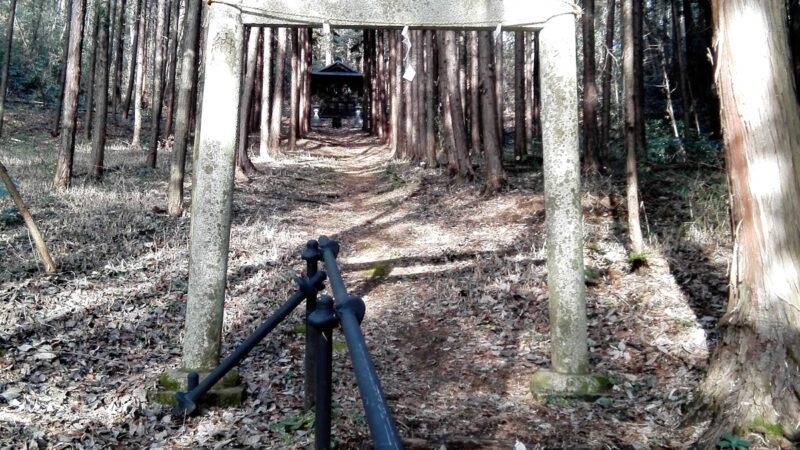
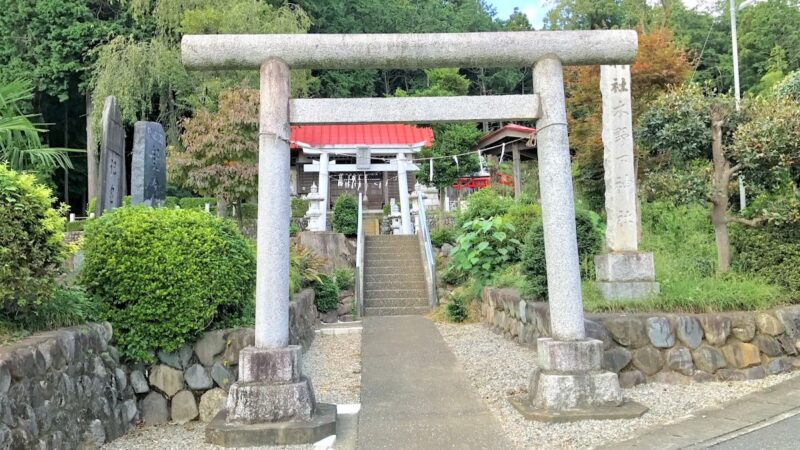
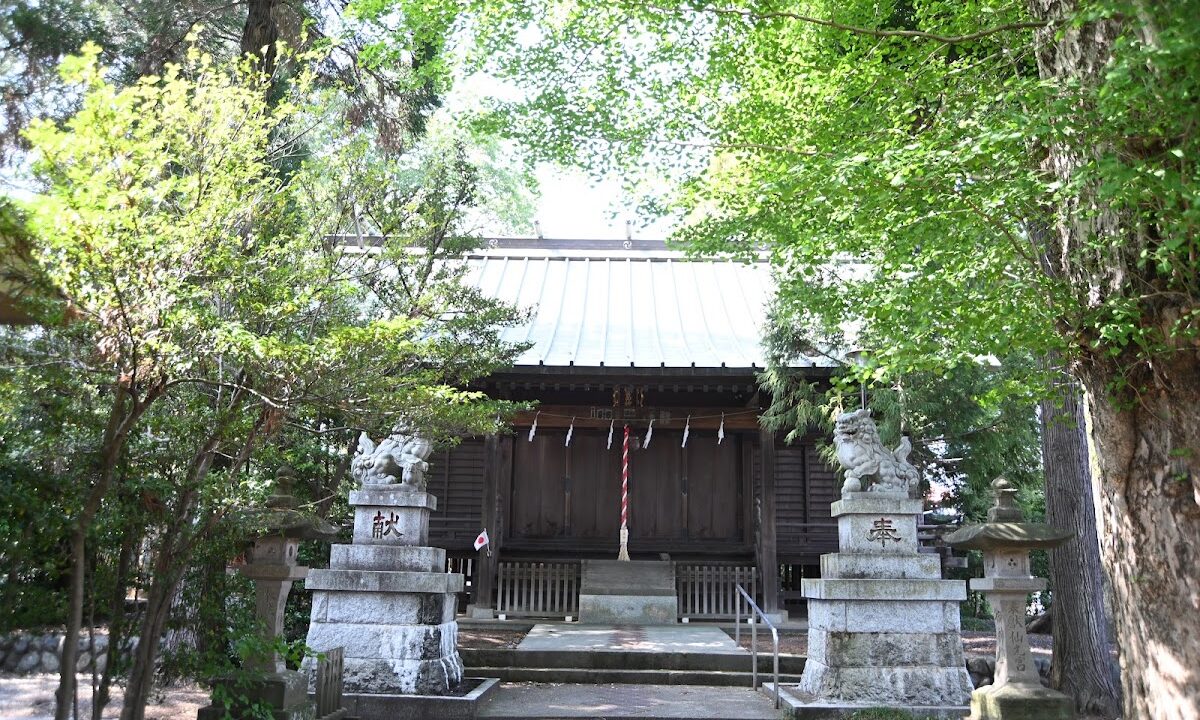
Nestled in a quiet residential area, its lush grounds serve as a place of relaxation for local residents. This shrine features two torii gates, a Shinmei-style torii and a Myojin-style torii, and an impressive approach surrounded by trees.
Location
Address: 2-107 Fujihashi, Ome City, Tokyo 198-0022
Located in the southern part of Ome City, north of the Tama River, the Fujihashi area is a historical site where Fujihashi Castle once stood. The surrounding area is a quiet residential neighborhood, and the shrine remains a cherished spiritual center of the community.
Deities Enshrined
The following five deities are enshrined at Somaho Kuzu Shrine:
- Takehayasusano-no-Mikoto: God of protection against misfortune and disaster
- Takemikazuchi-no-Kami: God of war and good fortune in competitions
- Futsunushi-no-Kami: God of war and pacification of the land
- Oonaobi-no-Kami: God who rectifies misfortunes
- Kamunaobi-no-Kami: God who corrects calamities
These enshrined deities are a consolidation of the gods worshipped at each shrine before the merger. In particular, Takehayasusano-no-Mikoto was the principal deity of the original Atago Shrine (Somaho Shrine), while Takemikazuchi-no-Kami and Futsunushi-no-Kami were worshipped as the deities of Kuzu Shrine.
History of Somaho Kuzu Shrine
The history of Somaho Kuzu Shrine dates back to the Sengoku period at Fujihashi Castle. The current shrine was formed through the Meiji-era shrine merger policy, but each of the constituent shrines has its own long history.
History of Somaho Shrine
Somaho Shrine is said to have originated during the Genki and Tensho periods (1570-1591) when Hirayama Echizen-no-kami Shigeyoshi, the lord of Fujihashi Castle, enshrined it as an Atago Shrine to protect the castle. The Hirayama clan were samurai descended from the Nishi clan, one of the seven clans of Musashi Province, and ruled this region.
During the Edo period, the shrine received a shuinjo (official document granting land) of 10 koku from the shogunate and was protected as an important local shrine. Receiving a shuinjo indicates the high status of the shrine at that time. In 1873 (Meiji 6), it was ranked as a village shrine and recognized as the official tutelary deity of the region.
History of Kuzu Shrine
Kuzu Shrine is also a shrine that has been enshrined in the Fujihashi area since ancient times. The shrine, dedicated to Takemikazuchi-no-kami and Futsunushi-no-kami, was revered as the guardian deities of the region. These two gods are known in Japanese mythology as warrior gods who accomplished the transfer of the land, and it is believed they were deeply revered by samurai families.
Kuzu Shrine was also elevated to the rank of a village shrine in 1873 (Meiji 6), and along with Somaho Shrine, it was an important shrine in the Fujihashi area.
Meiji-era Shrine Mergers
The Meiji government implemented a policy to consolidate and abolish shrines. This was called the “Shrine Consolidation Order,” and aimed to consolidate small shrines, with the principle of one shrine per town or village.
In 1910 (Meiji 43), based on this policy, Somaho Shrine, Kuzu Shrine, and Hie Daijingu Shrine in the Fujihashi area merged to form Somaho Kuzu Shrine. The shrine’s name is a combination of the names of the two main shrines. Initially, it was also called “Soma Kuzu Shrine,” but currently, “Somaho Kuzu Shrine” is the more common spelling.
The merger resulted in the integration of the deities enshrined at each shrine, leading to the current arrangement of five deities.
History of Somaho Kuzu Shrine according to the Shinpen Musashi Fudoki-ko
The Shinpen Musashi Fudoki-ko is a geographical record of Musashi Province compiled in the late Edo period (Bunsei era, 1810s-1820s). It contains descriptions of the Somaho Shrine (Atago Shrine) before the merger.
According to the book, Atago Shrine was the guardian shrine of Fujihashi Village and attracted the faith of the villagers. It confirms that it was already a prestigious shrine with a designated shuinchi (land granted by the shogunate) at that time. It also records that a local temple was involved as the betto-ji (temple managing the shrine).
During the Edo period, when Shinto and Buddhism were closely intertwined, it is presumed that Atago Shrine also had a form of worship that included Buddhist elements.
History of Somaho Kuzujinja Shrine according to the Tokyo Metropolitan Shrine Directory
The “Tokyo Metropolitan Shrine Directory” is the official record of shrines in Tokyo compiled by the Tokyo Metropolitan Shrine Association. Within this directory, the following is described regarding Somaho Kuzujinja Shrine:
It records that Somaho Shrine and Kuzujinja Shrine, which were ranked as village shrines in 1873 (Meiji 6), merged in 1910 (Meiji 43) to become Somaho Kuzujinja Shrine. It also records that Somaho Shrine was established during the Genki and Tensho periods by Hirayama Echizen-no-kami Shigeyoshi, the lord of Fujihashi Castle, as an Atago shrine for the protection of the castle. Furthermore, it records that during the Edo period, the shrine received a shuinjo (official document granting land) of 10 koku.
It also clearly states that Hie Daijinja Shrine was integrated at the time of the merger, officially confirming the circumstances of the three-shrine merger.
History of Somaho Kuzujinja Shrine according to the “Ome City History”
The “Ome City History,” compiled by Ome City, contains a more detailed description of the history of Somaho Kuzujinja Shrine and the Fujihashi area. The text describes how Fujihashi Castle functioned as the residence of the Hirayama clan during the Sengoku period, how Atago Shrine was enshrined as part of its fortifications, how it served as the guardian shrine of Fujihashi Village during the Edo period and was the center of the villagers’ faith, and how several shrines were consolidated due to the Meiji-era shrine reorganization policy.
In particular, it provides a detailed explanation of the historical background, including the relationship between the Hirayama clan and the Later Hojo clan, and the Hirayama clan’s position in Musashi Province, making it an important document for understanding the origins of the shrine.
Highlights of the Shrine Grounds
The grounds of Somaho Kuzu Shrine harmoniously blend historical buildings with nature.
Torii Gates
There are two torii gates on the grounds.
The first torii gate is in the Shinmei-torii style, possessing a simple and linear beauty. The Shinmei-torii style, exemplified by Ise Grand Shrine, exudes an ancient and dignified atmosphere.
The second torii gate is in the Myojin-style, characterized by its long, outstretched kasagi (top beam) and shimaki (bottom beam). Passing through this gate intensifies the feeling of entering a sacred area.
Approach to the Shrine
From the first torii gate to the second, a straight approach lined with trees continues. Despite being in an urban area, the tree-lined approach maintains a tranquil atmosphere, guiding worshippers into a sacred space.
Worship Hall
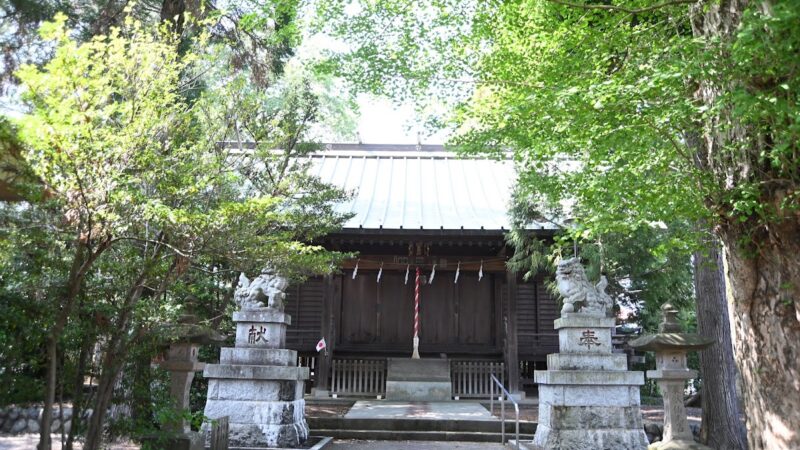
The worship hall is a traditional shrine building with a gabled roof, a flat entrance (with the entrance on the longer side of the building), and a projecting portico (a section of the roof extending forward).
Despite its simple wooden construction, it is meticulously maintained, reflecting the respect the local people have for the shrine. It is said that the interior of the worship hall houses plaques detailing the history of each shrine before the merger, as well as votive offerings.
Main Shrine and Protective Structure
Behind the worship hall is the main shrine, protected by a protective structure (ooi-ya). An ooi-ya is a building constructed to protect the main shrine from wind and rain, a common structure found at many shrines.
Although relatively small, the main shrine maintains the traditional style of shrine architecture and is cherished as a sacred space where the enshrined deity resides.
Subsidiary Shrines
Within the shrine grounds, there may be remnants of the shrine before the merger, or small shrines that have been worshipped in the local area. These are valuable examples that demonstrate the diversity of local history and beliefs.
Nearest Station/Line
The most convenient way to access Somaho Kuzu Shrine is via the JR Ome Line.
Access by Train
Nearest Station: JR Ome Line “Kawabe Station”
- Approximately 15-20 minutes on foot from Kawabe Station
- Exit from the south exit of the station and head towards the Tamagawa River.
Alternative Station: JR Ome Line “Higashi-Ome Station”
- Accessible on foot from Higashi-Ome Station (approximately 20-25 minutes)
- Buses are also available.
The JR Ome Line is a line that heads towards Ome from Tachikawa Station and Haijima Station, and is relatively easy to access from central Tokyo. It takes approximately 20-30 minutes from Tachikawa Station and about 1 hour from Shinjuku Station via the Chuo Line.
Nearest Bus Stop and Route
To get closer to the shrine using public transportation, taking the bus is also an option.
Access by Bus
Nishi-Tokyo Bus operates from Kawabe Station, with routes heading towards Fujihashi.
- Board the bus from Kawabe Station South Exit
- Get off at the “Fujihashi” bus stop and walk for about 5 minutes.
Bus services vary depending on the time of day, so we recommend checking the Nishi-Tokyo Bus timetable in advance. Please note that there may be fewer buses, especially on holidays, early mornings, and late nights.
Access by Car
If you are visiting by private car, the following route is convenient:
- Approximately 10 minutes from the Ken-O Expressway “Ome IC”
- From National Route 411 (Ome Kaido) towards Fujihashi
There may not be a dedicated parking lot around the shrine, so please avoid street parking and consider using nearby coin-operated parking lots or public transportation.
About Goshuin (Shrine Seals)
Regarding the issuance of Goshuin at Somaho Kuzu Shrine, there may not be a permanent shrine office. Many small shrines have priests who also serve at other shrines, and may be absent.
If you wish to receive a Goshuin, please note the following:
- We recommend calling ahead to confirm.
- If the shrine is managed by multiple shrines, they may be able to assist you at another shrine.
- Even if the shrine office is closed during your visit, contact information may be posted.
Goshuin (shrine stamps) are proof of your visit to the shrine, not a stamp rally. First and foremost, it’s important to pray respectfully and offer your gratitude to the deities.
Annual Events and Festivals
At Somaho Kuzu Shrine, various festivals are held throughout the year as the local guardian shrine.
Annual Grand Festival
The annual grand festival is held every autumn. This is the most important festival for the shrine, and local residents gather, potentially including a procession of the portable shrine and dedication ceremonies.
Specific dates may vary from year to year, so we recommend checking before your visit.
Other Events
- New Year’s Day Festival (January 1st): A festival celebrating the New Year
- Setsubun Festival (around February 3rd): Events such as bean-throwing
- Summer Purification Ceremony (end of June): A Shinto ritual to purify oneself of the impurities accumulated over the past six months
- Shichi-Go-San Festival (November): A visit to the shrine to celebrate the growth of children
These events are passed down as local traditions and demonstrate the connection between the shrine and the local community.
Nearby Historical Sites and Places
Around Somaho Kuzu Shrine, there are numerous historical sites and places that offer a glimpse into the history and culture of Ome City.
Fujihashi Castle Ruins
The site of Fujihashi Castle, which is also related to the origins of Somaho Kuzu Shrine, is now a residential area, but some traces of the castle remain. This castle, which functioned as the residence of the Hirayama clan, is an important historical site for understanding the history of Musashi Province during the Sengoku period.
Temples and Shrines in Ome City
Ome City is home to many historical temples and shrines.
- Musashi Mitake Shrine: A representative shrine of Ome City and a sacred site of mountain worship.
- Shiofune Kannon-ji Temple: An ancient temple known for its azaleas.
- Ome Railway Park: A park where you can learn about the history of railways.
Visiting these facilities together will allow you to gain a deeper understanding of Ome City’s history and culture.
Tama River
The Tama River flows south of the shrine, and the riverbank is ideal for walks and recreation. You can enjoy the scenery of the four seasons in a rich natural environment.
Manners and Etiquette for Visiting Shrines
When visiting a shrine, it is important to observe basic manners and etiquette.
How to Pass Through a Torii Gate
The torii gate is the entrance to the sacred area. Bow before passing through, and walk along the side of the path, as the center (seichu) is considered the path of the gods. ### Proper Hand-Washing Ritual
- Take the ladle with your right hand and wash your left hand.
- Switch the ladle to your left hand and wash your right hand.
- Switch the ladle back to your right hand, receive water in your left hand, and rinse your mouth.
- Wash your left hand again.
- Hold the ladle upright, wash the handle, and return it to its original position.
Worship at the Main Hall
- Place your offering in the offering box (do not throw it in, gently place it).
- If there is a bell, ring it.
- Perform the two bows, two claps, and one bow ritual (bowing deeply twice, clapping twice, bowing deeply once).
- After worship, quietly leave.
The Charm of Somaho Kuzu Shrine
The charm of Somaho Kuzu Shrine lies in the fact that, in the rapidly urbanizing city of Ome, it remains a quiet place of worship deeply rooted in the community.
The history of this shrine, from its worship as a guardian deity of a castle by a warlord during the Sengoku period, to its status as a land granted official seals during the Edo period, and through the wave of modernization brought about by the merger of shrines in the Meiji era, demonstrates the continuity of Japanese shrine culture, as it continues to be cherished as the local guardian deity.
Unlike large-scale tourist shrines, this small, community-oriented shrine offers a simple sense of faith and a carefully maintained atmosphere that provides peace of mind to visitors.
Ome City and Shrine Culture
Ome City is located in the western part of Tokyo and is a region where rich nature and historical cultural heritage coexist. During the Edo period, it flourished as a post town on the Ome Kaido road and developed through forestry and textile industries.
Numerous shrines and temples are scattered throughout the city, each deeply connected to the history of the region. Somaho Kuzu Shrine is one such example, a valuable presence that conveys the history of the Fujihashi district.
In recent years, Ome City has been focusing on the preservation of historical buildings and the utilization of cultural properties, and the number of tourists enjoying temple and shrine visits has been increasing. When visiting Somaho Kuzu Shrine, exploring the surrounding historical sites will allow you to appreciate the charm of Ome City even more deeply.
Summary
Somaho Kuzu Shrine is a historic shrine located in Fujihashi, Ome City, Tokyo, with a history dating back to the Sengoku period (Warring States period). It originated as an Atago Shrine established by Hirayama Echizen-no-kami Shigeyoshi, the lord of Fujihashi Castle, for the protection of the castle grounds. In the Meiji era, several shrines merged to form the current shrine.
It enshrines five deities, including Takehaya Susanoo-no-Mikoto, and continues to attract worshippers as the guardian deity of the region. The shrine grounds offer many points of interest, including the Shinmei-torii and Myojin-torii gates, the tree-lined approach, and the traditional worship hall and main shrine, allowing for a peaceful and serene visit.
It is accessible on foot or by bus from Kawabe Station on the JR Ome Line, and is recommended to visit along with other historical sites in Ome City. Despite being in an urban area, Somaho Kuzu Shrine maintains a tranquil atmosphere, making it a valuable place to experience Japanese shrine culture and local history. When you visit Ome City, be sure to stop by Somaho Kuzu Shrine and experience its history and tranquil atmosphere.