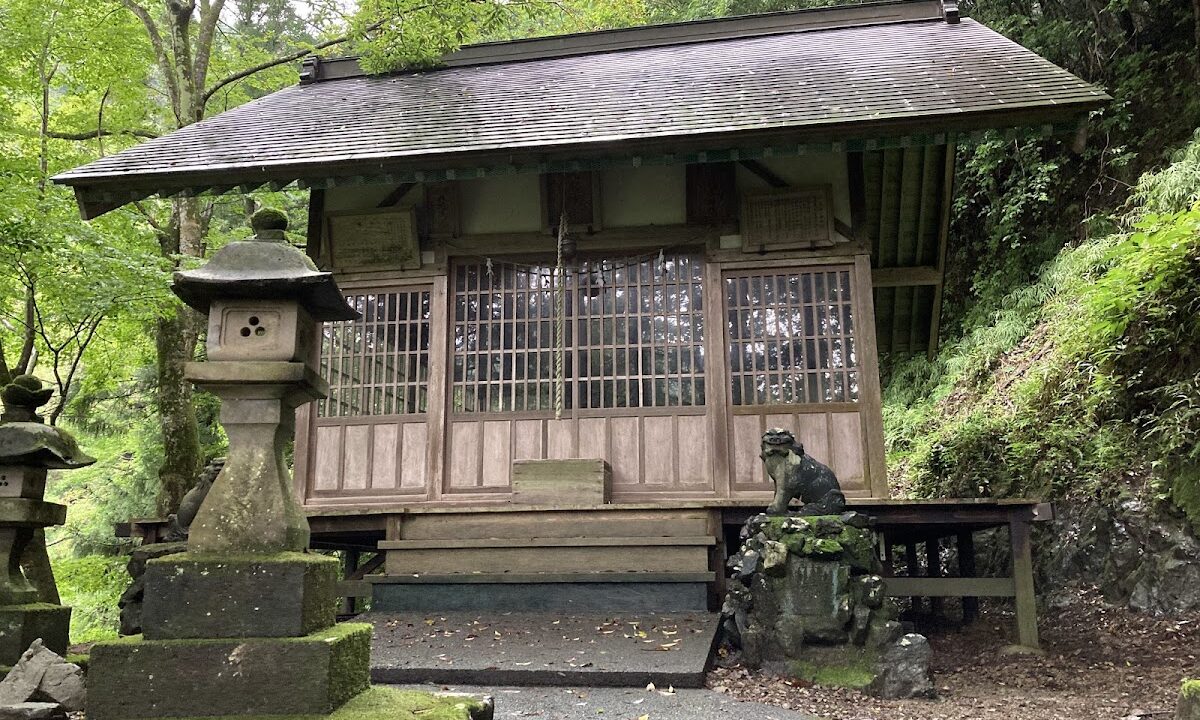
Kaminari Shrine (Ome City, Tokyo): History and Charm | Complete Guide to its History, Deities, and Access
Kaminari Shrine, located in the Nariki district of Ome City, Tokyo, is a historic shrine that has long been revered by the local people. Formerly known as Shinmei Shrine, and having undergone renovations during the Tenpo era, this shrine, a village shrine belonging to the Tokyo Metropolitan Shrine Association, is still worshipped as the local guardian deity. This article provides a detailed introduction to Kaminari Shrine, from its historical background to its highlights within the grounds and information on visiting.
Overview of Kaminari Shrine
Kaminari Shrine is located at 7-685 Nariki, Ome City, Tokyo. Formerly known as Shokubo Shrine, and even earlier known as Shinmei Shrine, it is situated in the mountainous area of the Nariki district in the northwestern part of Ome City, functioning as a center of local faith amidst a tranquil natural environment.
Basic Information
- Location: 7-685 Nariki, Ome City, Tokyo
- Deities Enshrined: Amaterasu Omikami, Toyouke Omikami
- Former Shrine Rank: Village Shrine
- Affiliation: Tokyo Metropolitan Shrine Association
- Former Name: Tokokubo Shrine, Shinmei Shrine
Amaterasu Omikami, the enshrined deity, is the supreme goddess in Japanese mythology, enshrined at the Inner Shrine of Ise Grand Shrine. Toyouke Omikami is known as the goddess who presides over food and grains, and is enshrined at the Outer Shrine of Ise Grand Shrine. The fact that these two deities are enshrined explains why the shrine was formerly called Shinmei Shrine.
History of Kaminari Shrine
There are no clear records regarding the founding date of Kaminari Shrine, and the details are unknown. However, various historical materials suggest that it is an ancient shrine that has been located in the Nariki area since before the Edo period. This shrine has long been revered as the local guardian deity, and its history has progressed alongside the development of the region.
Records from the Edo Period
During the Edo period, it was known as Shinmei-sha and was an important place of worship in Nariki Village. Records show that the shrine building was renovated in 1836 (Tenpo 7), indicating that it was already functioning as a central shrine in the region at that time.
Changes in the Meiji Era
With the arrival of the Meiji era, the shrine underwent significant changes due to the establishment of the shrine system. In 1873 (Meiji 6), Kami-Nariki Shrine was ranked as a village shrine. It is believed that the name was changed from Shinmei-sha to Tokokubo Shrine around this time. Under the Meiji government’s shrine ranking system, village shrines were officially recognized as the local guardian deity, demonstrating the importance of Kami-Nariki Shrine to the region.
Later, the name was changed from Tokokubo Shrine to the current Kami-Nariki Shrine, but the exact timing of this name change varies depending on the source. In any case, the inclusion of the place name “Kami-Nariki” in the Nariki district further clarifies its connection to the local community.
History of Kami-Nariki Shrine according to the Shinpen Musashi Fudoki-ko
The Shinpen Musashi Fudoki-ko is a geographical record of Musashi Province compiled during the Bunsei era (1818-1830) of the late Edo period. This valuable historical document includes descriptions of the Shinmei Shrine (the former name of Kami-Nariki Shrine) along with the state of Nariki Village at the time.
According to the book, the Shinmei Shrine is recorded as a shrine located in Nariki Village and is described as being the center of the village’s faith. Nariki Village in the Edo period was a mountain village centered on forestry, and the Shinmei Shrine was closely intertwined with the lives of the villagers. The book also records the worship customs and festivals of the time, making it a valuable resource for understanding the forms of faith in the Edo period.
History of Kaminari Shrine According to the Tokyo Metropolitan Shrine Directory
The “Tokyo Metropolitan Shrine Directory,” compiled by the Tokyo Metropolitan Shrine Association, contains detailed information on shrines located within Tokyo. Kaminari Shrine is also documented in detail, including its history, enshrined deities, and annual festival dates.
According to the directory, Kaminari Shrine has long been the tutelary shrine of the Nariki district in Ome City, attracting the faith of local residents. Even after being designated a village shrine in 1873 (Meiji 6), it has continued to function as a central hub for local festivals and annual events, and is currently managed and operated appropriately under the jurisdiction of the Tokyo Metropolitan Shrine Association.
There are 1,398 shrines located within Tokyo, and the Tokyo Metropolitan Shrine Association functions as the organization that oversees these shrines. Kaminari Shrine is a member of this organization, continuing its traditional shrine management.
The History of Kaminari Shrine According to the “Ome City History”
The “Ome City History,” compiled by Ome City, contains detailed descriptions of the city’s history and cultural properties, including important information about Kaminari Shrine.
According to this history, Kaminari Shrine is deeply intertwined with the history of the Nariki district and has evolved alongside the region’s development. The Nariki district has long been a thriving forestry area, and the shrine played a vital role as a place for people engaged in timber felling and transportation, serving as a place for praying for safety and a bountiful harvest.
The renovation in 1836 (Tenpo 7) addressed the aging of the shrine building and is attributed to donations from local residents. This renovation is recorded as an event demonstrating the economic strength and strong faith of Nariki Village at the time.
The history also details the changes since the Meiji era, explaining the process of its designation as a village shrine and the changes in its name. Furthermore, records show that the shrine continued to function as the local guardian deity both before and after the war, demonstrating its irreplaceable importance to the community.
History of Kaminari Shrine according to the “Nishitama County Village History”
The “Nishitama County Village History” is a valuable document compiled during the Meiji era, recording the conditions of villages in Nishitama County (an area including present-day Ome City and Okutama Town). This history includes descriptions of Nariki Village at the time, as well as information about Tokokubo Shrine (the Meiji-era name for Kaminari Shrine).
According to the history, Tokokubo Shrine was the village shrine of Nariki Village and a central figure in the village’s faith. The history records the circumstances of its name change from Shinmei Shrine to Tokokubo Shrine during the early Meiji-era reforms of the shrine system, making it an important source of information for understanding the state of shrine administration at the time.
The history also includes descriptions of the annual festivals and events of the time, showing that many villagers visited the shrine during the spring and autumn festivals, which served as a place to reaffirm community unity. During the Meiji era, Nariki Village was a mountain village society based on forestry and agriculture. The shrine functioned not only as a place of worship but also as the center of the community.
Deities enshrined at Kami-Nariki Shrine
Kami-Nariki Shrine enshrines two deities: Amaterasu-Omikami and Toyouke-Omikami.
Amaterasu-Omikami
Amaterasu-Omikami is the supreme deity in Japanese mythology and is revered as the sun goddess. She is also known as the ancestral deity of the Imperial family and is enshrined at the Inner Shrine of Ise Grand Shrine. In ancient Japan, where agriculture was central, the blessings of the sun were the source of life, and the worship of Amaterasu-Omikami spread throughout the country.
The fact that Kami-Nariki Shrine enshrines Amaterasu-Omikami is directly linked to its history as a Shinmei-sha shrine. Shinmei-sha is a general term for shrines that enshrine Amaterasu-Omikami as their principal deity and refers to shrines that were established by inviting deities from Ise Grand Shrine.
Toyouke-no-Okami
Toyouke-no-Okami is known as the goddess who presides over food and grains, and is enshrined at the Outer Shrine of Ise Grand Shrine. As a god associated with agriculture and food production, she has long been revered by people. Her worship alongside Amaterasu-Omikami has fostered a form of faith that prays for peace and prosperity in all aspects of life.
Even in mountainous areas like the Nariki district, agriculture is a vital livelihood, and the worship of Toyouke-no-Okami held profound significance for the local residents. Toyouke-no-Okami has played a central role in harvest festivals and celebrations of thanksgiving.
Grounds and Highlights of Kami-Nariki Shrine
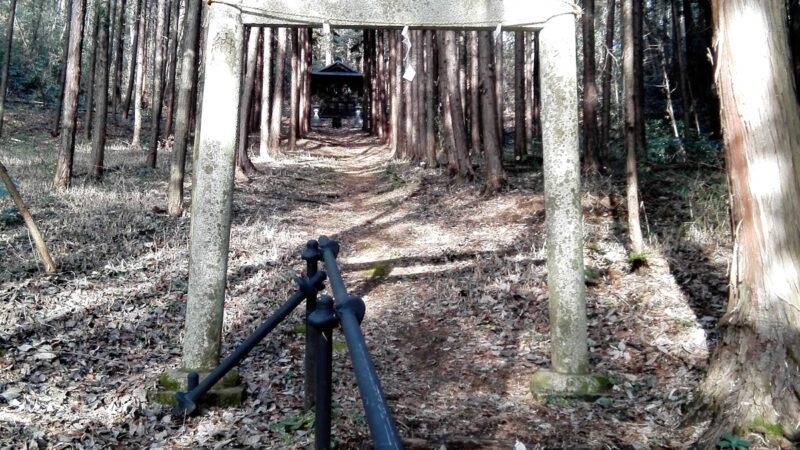
The grounds of Kami-Nariki Shrine are located in the naturally rich environment of the Nariki district in Ome City. It welcomes visitors in a tranquil atmosphere characteristic of mountainous regions.
Shrine Building
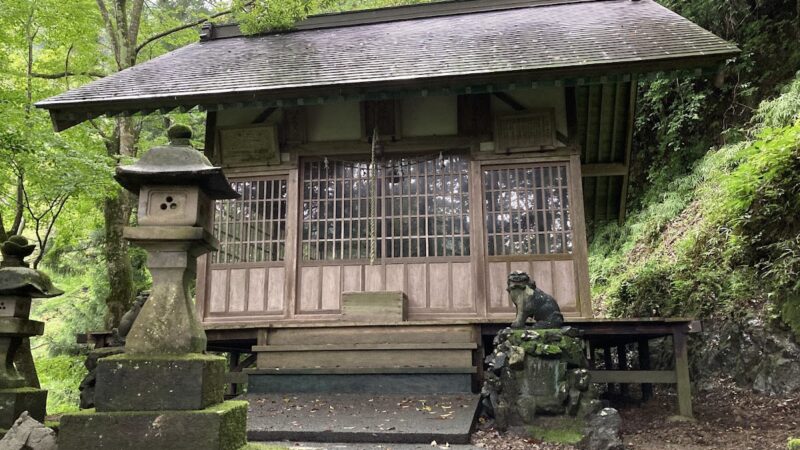
The current shrine building has been maintained through historical renovations. Since its major renovation in 1836 (Tenpo 7), the shrine has been properly maintained, preserving the traditional style of shrine architecture. The wooden main hall has a simple yet robust construction, typical of shrines in mountainous areas, reflecting its long history of withstanding the elements.
Natural Environment of the Shrine Grounds
The grounds of Kaminari Shrine are surrounded by abundant nature. Cedar and cypress trees flourish in the surrounding area, displaying different expressions throughout the seasons. Especially in spring with its fresh green leaves and autumn with its vibrant foliage, the grounds are enveloped in beautiful natural colors.
The Nariki area has long been a thriving forestry region, and the forests surrounding the shrine are deeply intertwined with the local forestry industry. The trees on the grounds are not merely a natural landscape, but also tell the story of the region’s history.
Stone Monuments and Memorials
Within the shrine grounds, there are stone monuments commemorating its designation as a village shrine, as well as monuments recording successive renovation works. These stone monuments are valuable historical documents for understanding the history of Kaminari Shrine, conveying the shrine’s origins to visitors.
Annual Festivals and Events of Kaminari Shrine
Kaminari Shrine holds various festivals and events throughout the year.
Grand Festival
The Grand Festival is the most important festival at the shrine and is held at a fixed time each year. Local parishioners gather for the procession of the portable shrine and dedication ceremonies, making it an important opportunity to reaffirm community unity.
Spring and Autumn Festivals
Traditional festivals such as the spring Kinensai (harvest festival) and the autumn Niinamesai (harvest festival), which are linked to agriculture, have also been held. In spring, a festival is held to pray for a bountiful harvest, and in autumn, a festival is held to give thanks for the harvest, closely linking the local agricultural cycle with the shrine’s festivals.
New Year’s Visit and Shichi-Go-San (7-5-3) Ceremony
Even today, many worshippers visit the shrine for life-changing rituals such as New Year’s visits and Shichi-Go-San (7-5-3). As the guardian deity of the region, it has continued to watch over the milestones in people’s lives.
How to Access Kaminari Shrine
Kaminari Shrine is located in the Nariki district in the northwestern part of Ome City, and is accessible by both public transport and private car.
Access by Train and Bus
The nearest stations are Higashi-Ome Station or Kawabe Station on the JR Ome Line. From the station, take the Nishi-Tokyo Bus Nariki Loop Line or similar to head towards the Nariki district. Access from the bus stop is on foot, but since it is in a mountainous area, it is a considerable distance, so plan accordingly and allow ample time.
For detailed bus timetables and route information, we recommend checking the Nishi-Tokyo Bus official website.
Access by Car
If traveling by private car, take the Ken-O Expressway to the Ome Interchange, then take National Route 411 (Ome Kaido) towards the Nariki district. The route from Ome city center to the Nariki district involves climbing mountain roads, so careful driving is necessary.
There is parking space for visitors on the shrine grounds, but it may be full during busy times such as festivals, so it’s best to arrive early.
Address and Navigation Settings
- Address: 7-685 Nariki, Ome City, Tokyo
- Car Navigation Settings: Search for the above address or “Kami-Nariki Shrine”
Attractions Around Kami-Nariki Shrine
When visiting Kami-Nariki Shrine, you can also visit nearby tourist spots.
Nature of the Nariki Area
The Nariki area, while within Tokyo, retains abundant nature. Hiking trails are well-maintained, allowing you to enjoy nature throughout the seasons. Many hikers visit, especially during the cherry blossom season in spring and the autumn foliage season.
Sightseeing in Ome City
Ome city center offers tourist spots such as Showa-era retro streets, Ome Railway Park, and Mount Mitake. You can enjoy sightseeing in the Ome area in conjunction with your visit to Kami-Nariki Shrine.
Access to the Okutama Area
The Nariki area is located at the entrance to the Okutama area and is also convenient as a starting point for exploring deeper mountainous regions. It offers good access to spots where you can enjoy the natural beauty of Tokyo, such as Lake Okutama and the Mitake Valley.
Etiquette and Manners for Visiting a Shrine
When visiting Kami-Nariki Shrine, please observe basic shrine etiquette.
How to Pass Through the Torii Gate
The torii gate is the entrance to the sacred area. Bow before passing through the torii gate, and walk along the side of the path, as the center of the path is considered the path of the gods.
How to Purify Yourself at the Water Basin
- Hold the ladle in your right hand and purify your left hand.
- Switch the ladle to your left hand and purify your right hand.
- Switch the ladle back to your right hand, receive water in your left hand, and rinse your mouth.
- Finally, stand the ladle upright and purify the handle.
How to Worship at the Main Hall
- Place your offering in the offering box.
- If there is a bell, ring it.
- Worship using the two bows, two claps, and one bow method.
- Bow deeply twice.
- Clap your hands twice at chest height.
- Finally, bow deeply once.
Kaminari Shrine and the Local Community
Kaminari Shrine has played an important role not only as a place of worship but also as the center of the local community.
Role as a Guardian Deity
A guardian deity is a god that protects the people living in a specific area. Kaminari Shrine, as the tutelary shrine of the Nariki district, has been closely intertwined with the lives of the local residents. Visits to the shrine have been made at various milestones in life, such as birth, growth, marriage, and the unlucky years.
Center of Community Events
Annual events, including the Grand Festival, provide valuable opportunities for local residents to gather together. Even in today’s increasingly urbanized world, the community bonds centered around the shrine remain, serving as a place for intergenerational exchange.
Preservation of Traditional Culture
Through festivals and events at the shrine, the region’s traditional culture is passed down to the next generation. Preparations for festivals, the methods of carrying the portable shrine, and performing arts such as Kagura and Shishimai (lion dance) have all been handed down using the shrine as a stage.
Tokyo Metropolitan Shrine Association and Kaminari Shrine
The Tokyo Metropolitan Shrine Association is an organization that oversees 1,398 shrines located within Tokyo. Kaminari Shrine is also a member of the Tokyo Metropolitan Shrine Association, ensuring proper management and operation.
Role of the Association of Shinto Shrines
The Tokyo Association of Shinto Shrines handles communication and coordination among shrines in Tokyo, provides training for Shinto priests, and offers information about shrines. It provides various forms of support to ensure that each shrine is properly managed while preserving its traditions.
Searching for Shrines and Providing Information
The official website of the Tokyo Association of Shinto Shrines allows you to search for shrines in Tokyo using maps, train line names, station names, etc. You can also find basic information and location details for Kaminari Shrine.
Summary
Kaminari Shrine is a historical shrine located in the Nariki district of Ome City, Tokyo. It enshrines Amaterasu Omikami and Toyouke Omikami, and was formerly known as Shinmei Shrine and Tokokubo Shrine. With a long history intertwined with the community, including renovations in 1836 (Tenpo 7) during the Edo period and its designation as a village shrine in 1873 (Meiji 6), it is a shrine that has walked hand in hand with the community.
Historical materials such as the Shinpen Musashi Fudoki-ko (New Compilation of the Topography of Musashi Province), the Ome City History, and the Nishitama County Village History confirm its history and importance in the region. Even today, it continues to serve as the local guardian shrine, attracting the faith of the people and playing a central role in the local community.
Kami-Nariki Shrine, surrounded by abundant nature, offers a peaceful place to spend time praying. When you visit Ome City, why not pay a visit? This shrine, nestled in the mountains a little distance from the city center, offers a valuable experience of encountering traditional Japanese faith and local culture.