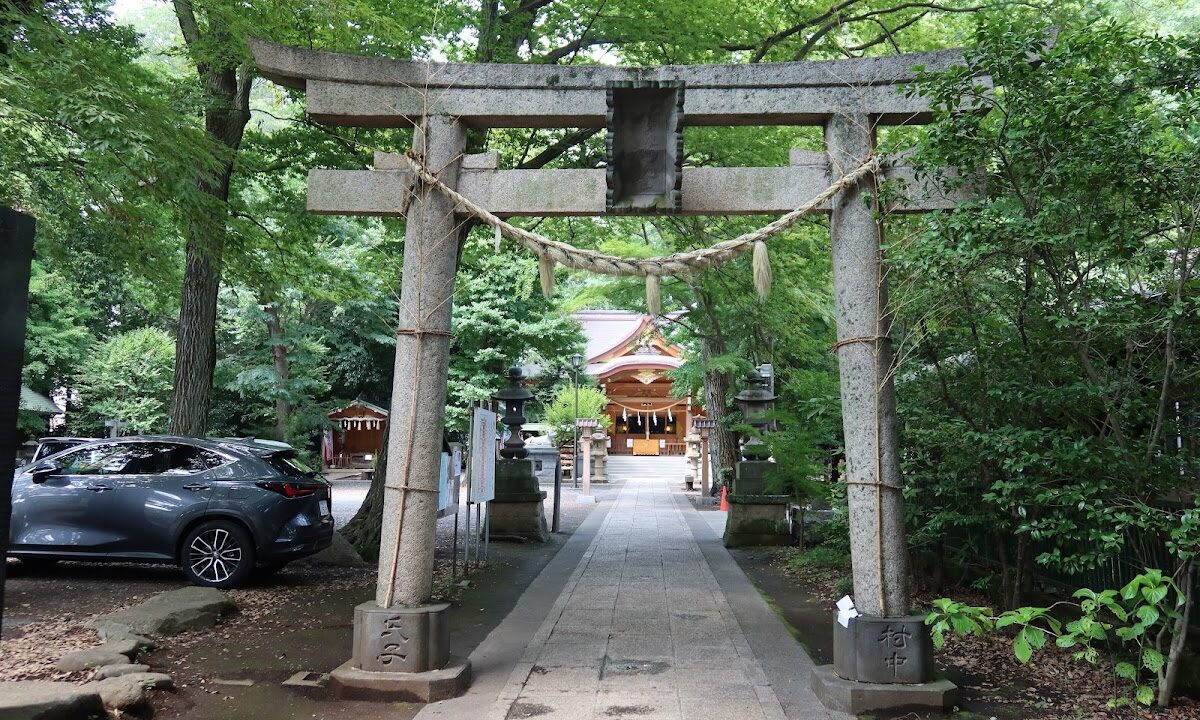
Complete Guide to Koganei Shrine (Tokyo) | History, Goshuin (Shrine Seals), Access, and Highlights of the Grounds
Koganei Shrine, located in Nakamachi, Koganei City, Tokyo, is a historical shrine founded in 1205. Affectionately known as “Koganei’s Tenjin-sama” and “Tenmangu Koganei Shrine” by the local people, it has been revered for over 800 years as the guardian shrine of Koganei, dedicated to Sugawara no Michizane, the god of learning. This article provides detailed information useful for visitors, including the history of Koganei Shrine, its goshuin (shrine seals), highlights of the grounds, and access methods.
History and Origins of Koganei Shrine
Circumstances of Founding and Musashino Development
Koganei Shrine was founded in 1205, during the early Kamakura period. This period marked the beginning of the full-scale development of Musashino. It is believed that the people who settled in the newly opened land revered the virtues of Sugawara no Michizane, known as the god of learning, and built a shrine to enshrine his spirit.
Developing the Musashino plateau was extremely difficult, but the villagers, remembering the virtues of Sugawara no Michizane, built the Tenmangu shrine, praying for the development of the land and the advancement of learning. Since then, it has functioned as a center of faith in Koganei.
Changes in the Shrine’s Name
Initially known as “Tenmangu,” Koganei Shrine underwent a change in name following the Meiji Restoration.
During the Meiji Restoration, due to the separation of Shinto and Buddhism, the shrine’s name was changed from “Tenmangu” to “Tenman Shrine.” Later, in 1870 (Meiji 3), to clearly define its role as the guardian shrine and tutelary deity of the Koganei area, the shrine was renamed “Koganei Shrine,” after the local place name, and has retained its current name ever since. This renaming was a significant event that established its position as the guardian shrine of the region.
From Showa to Reiwa
Koganei Shrine continued to attract the faith of the local community throughout the Showa era, developing into a shrine visited by many worshippers. With the transition from the Heisei to the Reiwa era, the shrine underwent a large-scale renovation project.
In 2019 (Reiwa 1), construction of the worship hall began as part of the commemorative projects celebrating the imperial succession, and the new worship hall was completed in 2020 (Reiwa 2). The worship hall that worshippers see today is the building renovated at that time, a beautiful shrine that incorporates modern technology while maintaining traditional styles. Further renovation work was carried out in 2021 (Reiwa 3), creating an even more accessible environment for worshippers.
Deities and Benefits
Main Deity: Sugawara no Michizane
The main deity enshrined at Koganei Shrine is Sugawara no Michizane. Sugawara no Michizane was a nobleman, scholar, and politician of the Heian period, known for his outstanding learning and literary talent. He rose to the position of Minister of the Right, but due to political intrigue, he was exiled to Dazaifu, where he spent the rest of his life.
After his death, a series of strange occurrences occurred in Kyoto, leading to the construction of Tenmangu shrines to appease Michizane’s vengeful spirit. Eventually, he became revered throughout Japan as the god of learning and literature. Currently, Tenjin worship has spread throughout Japan, and during exam season, many students and their parents visit to pray for success.
Benefits
Because Koganei Shrine enshrines Sugawara no Michizane, the following benefits are believed to be offered:
Academic Achievement and Passing Exams
The most famous benefit is academic achievement and passing exams. Many people visit this shrine, not only students preparing for entrance exams, but also those preparing for qualification exams and job interviews.
Academic Improvement and Wisdom
It is revered not only by students, but also by those engaged in lifelong learning and self-improvement.
Improvement in Calligraphy and Literature
Because Sugawara no Michizane was an excellent Chinese poet and calligrapher, people also visit to pray for improvement in calligraphy and literature.
Protection from Evil and Good Fortune
As the guardian deity of the region, it is believed to offer protection from evil and bring good fortune.
Improvement of Financial Fortune
Due to the place name “Koganei,” visitors also come to pray for improved financial fortune.
Highlights of the Shrine Grounds
Worship Hall and Main Hall
The worship hall of Koganei Shrine is a new building completed in 2020. While following the style of traditional shrine architecture, it is a refined structure that highlights the beauty of the wood. Behind the worship hall stands the main shrine, exuding a solemn atmosphere that evokes a sense of history.
When praying, you should perform the ritual of two bows, two claps, and one bow in front of the worship hall. Especially during exam season, the shrine is bustling with many worshippers, and numerous ema (votive tablets) praying for success in exams are offered.
Nade-ushi (Reclining Ox Statue)
In front of the worship hall stands a statue of an ox, a symbol of Tenmangu shrines. Due to the deep connection between Sugawara no Michizane and oxen, ox statues are found at Tenmangu shrines throughout Japan, and the Nade-ushi at Koganei Shrine is particularly popular with worshippers.
There is a belief that stroking the same part of the statue as the part of your body that is ailing will bring healing, and that stroking its head will bestow wisdom. Because so many worshippers stroke the statue, its surface is polished smooth.
Stone Mill Mound (Ishiusuzuka)
A particularly unusual feature within the grounds of Koganei Shrine is the “Stone Mill Mound.” This is a pile of worn-out stone mills, erected as a memorial, and is a rare sight in Japan.
Until the Showa era, stone mills were widely used in Japanese households for grinding grain, but their role ended with modernization. It is an interesting cultural artifact that represents the Japanese spirit of expressing gratitude and offering prayers for tools that have been used for many years. The area around the Stone Mill Mound has a unique atmosphere and is a popular spot for photography.
Shrine Precincts
Within the grounds of Koganei Shrine, there are several subsidiary shrines, each attracting its own devotion.
Inari Shrine
This shrine enshrines Inari, the god of business prosperity and abundant harvests. It is characterized by its vermilion torii gate.
Kumano Shrine
This shrine enshrines Kumano Gongen and is believed to grant blessings for health, longevity, and healing from illness.
Ōtori Shrine
This shrine is worshipped as a god of good fortune and business prosperity.
Suiten-gū Shrine
This shrine is particularly worshipped by female worshippers as a god of safe childbirth, fertility, and child-rearing.
These subsidiary shrines, when visited along with the main shrine, allow you to pray for various wishes.
Archery Range
Koganei Shrine has an archery range on its grounds, used by local archery enthusiasts. It is relatively rare for a shrine to have an archery range, and this facility reflects the connection between martial arts and Shintoism.
The sight of archery practice taking place in a tranquil corner of the shrine grounds evokes a sense of traditional Japanese culture. General visitors can also observe and experience the dignified atmosphere of archery.
Nature on the Shrine Grounds
Despite being located in an urban area, Koganei Shrine’s grounds are blessed with abundant nature. Various trees are planted on the grounds, displaying different appearances with each season.
Especially in spring, the plum blossoms bloom beautifully, attracting many visitors due to the association with the plum trees beloved by Sugawara no Michizane. The red plum blossoms are particularly magnificent, with the best viewing period being from February to March. Furthermore, the trees on the shrine grounds provide shade in summer and offer beautiful autumn foliage, creating a space where visitors can experience the beauty of nature throughout the seasons.
Goshuin (Shrine Seal) Information
Issuance of Goshuin
Koganei Shrine offers goshuin (shrine seals). Goshuin are popular among many visitors as proof of their visit and as a tangible memento of their connection with the shrine.
Goshuin are available at the shrine office and can be received upon payment of a donation (usually around 300-500 yen). While goshuin can be written directly in your goshuincho (seal book), pre-written goshuin may be available during busy times or when the shrine priests are absent.
Shrine Office Hours
The shrine office at Koganei Shrine is usually open from 9:00 AM to 4:00 PM. However, due to festivals and religious ceremonies, there may be times when they are closed. If you wish to be sure to receive a Goshuin (shrine stamp), it is recommended to call in advance to confirm.
Phone Number: 042-381-3500
Limited-Time Special Goshuin
Koganei Shrine sometimes offers limited-time special Goshuin in accordance with the seasons and special events. On special days such as New Year’s Day and the annual festival, Goshuin with different designs than usual may be available, so please check the official information.
Annual Events and Annual Festival
Annual Festival (September 25th)
The annual festival at Koganei Shrine is held every year on September 25th. This date originates from the 25th day of the 9th month of the lunar calendar, which is the anniversary of the death of Sugawara no Michizane. The annual festival is the most important festival for the shrine and is the most grandly celebrated event of the year.
During the annual festival, Shinto rituals are solemnly performed, with many local parishioners and devotees in attendance. The procession of the portable shrine and dedication ceremonies also take place, making it an important opportunity to reaffirm the unity of the Koganei community.
New Year’s Visit
During the New Year’s visit period (January 1st to 3rd), many worshippers visit to pray for happiness in the new year and safety throughout the year. The shrine is bustling with worshippers from early morning on New Year’s Day, and the grounds are filled with a festive atmosphere of the new year.
During the New Year’s visit period, lucky charms such as hama-ya (demon-repelling arrows) and kumade (rakes) are given out, and sometimes sweet sake is offered.
Setsubun Festival
The Setsubun Festival is held in February. A bean-throwing ritual takes place, with lucky beans scattered while chanting “Good fortune in, demons out!” Local children also participate, creating a lively atmosphere as this traditional event wards off evil spirits and invites good fortune.
Tenjin Festival (Plum Blossom Festival)
During the time when the plum blossoms, beloved by Sugawara no Michizane, bloom (late February to early March), events celebrating the plum blossoms are sometimes held. This time, when the red plum blossoms in the shrine grounds are in full bloom, is ideal for photography.
Shichi-Go-San Festival
In November, the shrine is bustling with visitors celebrating Shichi-Go-San (a traditional Japanese rite of passage for children). Many families visit to pray for the healthy growth of their children, and the shrine grounds become vibrant with children in their festive attire. Koganei Shrine also accepts Shichi-Go-San prayers and is a popular spot for commemorative photos.
Access and Visiting Information
Basic Information
Shrine Name: Koganei Shrine
Address: 4-7-2 Nakamachi, Koganei City, Tokyo 184-0012
Phone Number: 042-381-3500
Shrine Office Hours: 9:00 AM – 4:00 PM
Visiting Hours: Grounds are freely accessible (24-hour visitation possible)
Parking: Available (limited number of spaces)
Official Website: None (information can be found on local information websites)
Access by Train
From JR Chuo Line “Musashi-Koganei Station”
The nearest station to Koganei Shrine is Musashi-Koganei Station on the JR Chuo Line. Access from the station is as follows:
- By Foot: Approximately 12-18 minutes on foot (about 1.2 km) southeast from Musashi-Koganei Station South Exit.
- By Bus: Take a bus from Musashi-Koganei Station South Exit, get off at the nearest bus stop, and walk for a few minutes.
To access on foot, exit Musashi-Koganei Station South Exit, go through the shopping street, and head southeast. It’s a quiet route through a residential area; you can easily find your way by following the signs. On sunny days, you can enjoy a stroll while admiring the streetscape.
Access by Car
From the Chuo Expressway
Approximately 20 minutes from the Chuo Expressway “Chofu IC”. Access is via National Route 20 (Koshu Kaido).
Parking Information
Koganei Shrine has a parking lot for visitors, but the number of spaces is limited, so it may be full during busy periods such as New Year’s visits and festivals. In that case, we recommend using a nearby coin-operated parking lot or public transportation.
Nearby Tourist Attractions
The following tourist attractions are located near Koganei Shrine:
Koganei Park
Koganei Park is one of the largest parks in Tokyo and is known as a famous cherry blossom viewing spot. It is within walking distance of Koganei Shrine and is ideal for a stroll after visiting the shrine.
Edo-Tokyo Open Air Architectural Museum
This open-air museum is located within Koganei Park and features historical buildings from the Edo period to the early Showa period that have been relocated and restored. It is a valuable facility where you can learn about Japanese architectural culture.
Musashino Walking Trails
The area around Koganei City has walking trails that retain the atmosphere of Musashino, allowing you to enjoy nature while walking.
Manners and Points for Visiting Shrines
Etiquette for Visiting Shrines
By observing the basic etiquette for visiting shrines, you can have a more heartfelt visit.
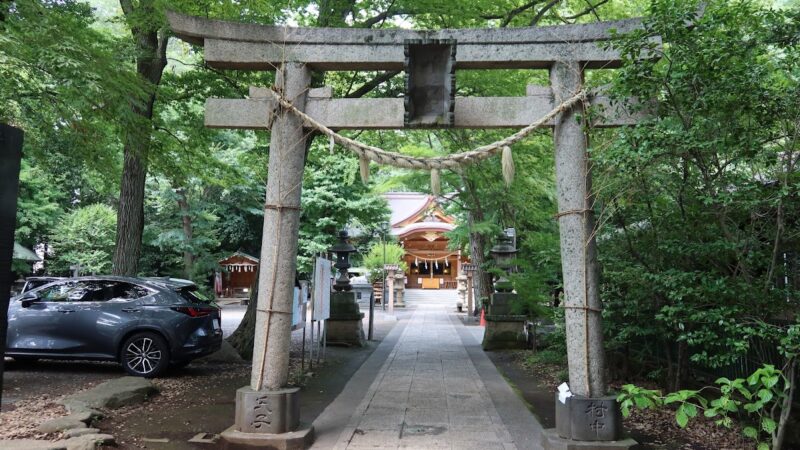
- Bow before passing through the torii gate: As a sign of respect before entering the sacred area, bow before the torii gate.
- Purify yourself at the water basin: Purify your hands and mouth at the water basin. Hold the ladle in your right hand and purify your left hand, then switch to your left hand and purify your right hand, switch back to your right hand, receive water in your left hand, rinse your mouth, and finally hold the ladle upright to purify the handle.
- Walking along the approach: The center of the approach is considered the path of the gods, so it is respectful to walk along the sides.
- Worship at the main hall: Place your offering in the offering box, ring the bell, and pray using the two bows, two claps, and one bow ritual.
Photography Etiquette
Photography is generally permitted on the shrine grounds, but please observe the following points.
- Please refrain from taking photos inside the main shrine or during Shinto rituals.
- Please be considerate of other worshippers.
- Please refrain from using tripods during crowded times.
- When posting on social media, please be considerate of other worshippers in your photos.
Recommended Time to Visit
Koganei Shrine can be visited throughout the year, but the following times are especially recommended:
Plum Blossom Season (Late February to Early March)
The red plum blossoms in the shrine grounds are in full bloom, creating a beautiful atmosphere befitting a shrine dedicated to Tenjin-sama.
Exam Season (December to March)
The shrine is bustling with students praying for success in their exams to Sugawara no Michizane, the god of learning.
Annual Festival (September 25th)
You can witness the most important festival of the year.
Shichi-Go-San (November)
The shrine grounds are vibrant with children in their festive attire.
A Summary of the Charms of Koganei Shrine
Koganei Shrine is a venerable Tenmangu shrine with a history of over 800 years, serving as the guardian shrine of Koganei City, Tokyo, and attracting the faith of the local community. As it enshrines Sugawara no Michizane, the god of learning, many visitors, especially students, come to pray for success in exams and academic achievement.
The shrine boasts numerous attractions, including a beautifully renovated main hall (renovated in the Reiwa era), a unique stone mortar mound, several subsidiary shrines, and an archery range. Despite being in an urban area, the shrine grounds are blessed with abundant nature, allowing visitors to enjoy the scenery of each season. In particular, the beautiful red plum blossoms welcome visitors during the plum blossom season.
Its convenient location, within walking distance of Musashi-Koganei Station on the JR Chuo Line, is another attractive feature, making it an easily accessible shrine. Why not visit Koganei Shrine, a place that has long been revered in Koganei?
Koganei Shrine is a precious place where you can feel the history and culture of the region, and you can receive various blessings, including academic success, passing exams, good fortune, and protection from evil. When you visit, take your time to stroll around the shrine grounds and spend some time calming your mind in the tranquil atmosphere.