Complete Guide to Hajikama Shrine (Tokyo) | History, Deities, and Access Information for the Shikinaisha Shrine on Izu Oshima Island
Hachikama Shrine, located in Izumizu, Oshima Town, Tokyo, is a historic shrine situated in the Izumizu district of Izu Oshima Island. With its moss-covered approach and surrounded by towering cedar trees, it possesses a mystical atmosphere and has long been revered by the islanders as a Shikinaisha shrine. This article provides a detailed introduction to Hachikama Shrine, including its history, deities, highlights, and access information.
What is Hachikama Shrine?
Hachikama Shrine is a shrine located in Izumizu, Oshima Town, Tokyo, and is identified as the Shikinaisha shrine “Haji Shrine” listed in the Engishiki Jinmyocho (a list of shrines compiled in the Heian period). Located in the northwestern part of Izu Oshima Island, it is known as an ancient shrine nestled in a tranquil cedar forest.
Basic Information
Official Name: Hajikama Shrine
Location: Izumizu, Oshima-machi, Tokyo
Main Deities: Haji-no-mikoto, Ohiroki-no-mikoto
Shrine Rank: Shikinaisha (Izu Province, Kamo District), Former Village Shrine
Annual Festival Date: May 28th
Visiting Hours: Open 24 hours
Admission Fee: Free
Hajikama Shrine is one of the oldest shrines in the Izu Islands, and since it is mentioned in the Engishiki (an ancient Japanese legal code), it is believed to have been founded at least before 905 AD.
History and Origins of Hachikama Shrine
Ancient Beliefs
The founding date of Hachikama Shrine is unknown, but it is listed as “Hachi Shrine, Kamo District, Izu Province” in the Engishiki Jinmyocho (a list of shrines compiled in 927 AD) from the Heian period, confirming that it is an ancient shrine with a history of over 1000 years.
The Muromachi period document, “Miyakeki,” records that descendants of the Great Deity are enshrined there, suggesting that it has been an important center of worship on the island since ancient times.
Changes in the Shrine’s Name
The shrine was formerly located in an area called “Hachigama” or “Hachigama,” and it is believed that this place name is the origin of the shrine’s name. There are various theories about the origin of “Hachi,” but it is thought to be based on an old local name.
Different names are recorded on the ridgepole inscriptions from the Genroku era (1688 and 1700), confirming that the shrine’s name changed over time. The current spelling, “Hachikama Shrine,” has become established as a way to indicate its status as a Shikinaisha (a shrine listed in the Engishiki, an ancient Japanese legal code).
Current Shrine Building
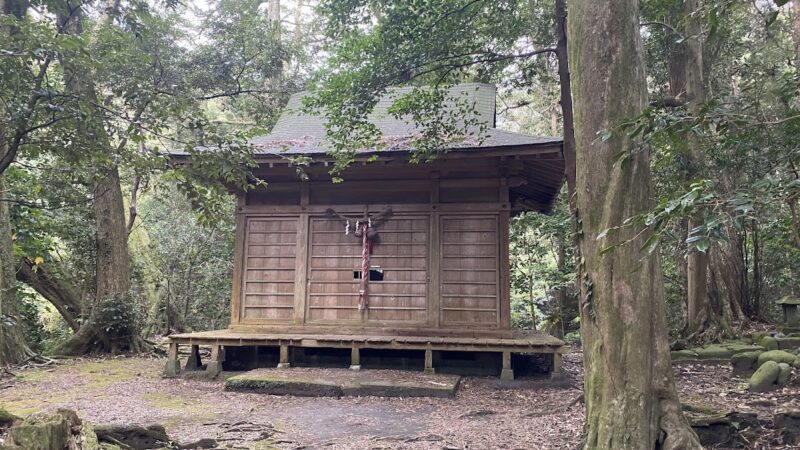
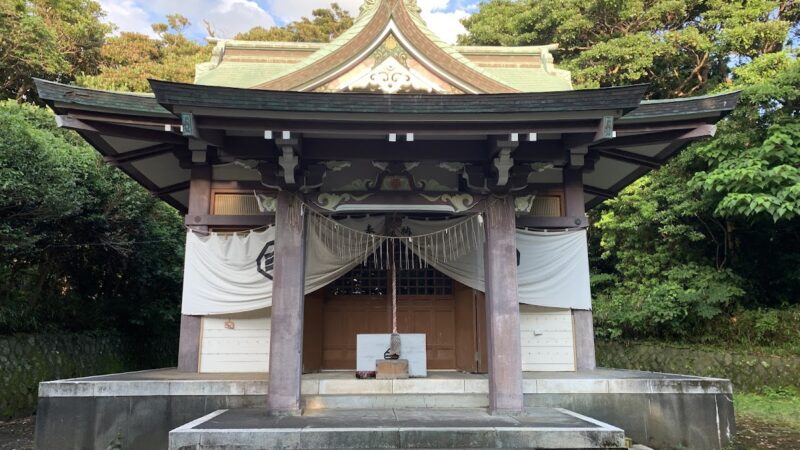
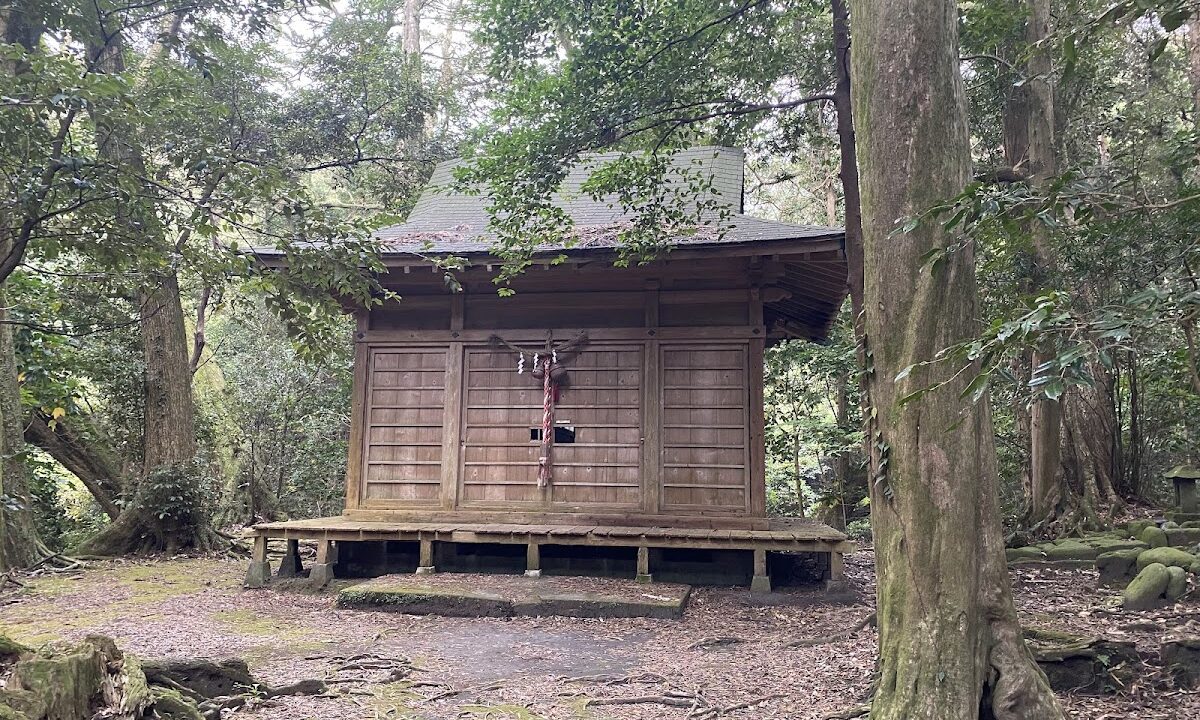
The current shrine building was constructed during the Showa era and is built to withstand the harsh natural environment of Izu Oshima. The wooden shrine building harmonizes with the surrounding cedar forest, creating a tranquil atmosphere.
Deities and Divine Virtues
Main Deity: Haji-no-Mikoto
The main deity of Hachikama Shrine is Haji-no-Mikoto. This deity is considered to have been involved in the development and cultivation of the Izu Islands and has been revered as a guardian deity of the region.
Enshrined Deity: Ohiroki-no-Mikoto
Some documents state that Ohiroki-no-Mikoto is also enshrined. Ohiroki-no-Mikoto is known as the god of the land and earth, and is the deity who presides over abundant harvests and the peace and security of the region.
Divine Virtues
The following are said to be the divine virtues of Hachikama Shrine:
- Maritime Safety: Protection of the sea, which is essential to the lives of the islanders.
- Abundant Harvest: Prosperity of agriculture and fishing.
- Regional Peace and Tranquility: Peace and development of the entire island.
- Protection from Misfortune and Good Fortune: Protection from disaster and attracting good fortune.
Highlights of Hachikama Shrine
Mysterious Approach
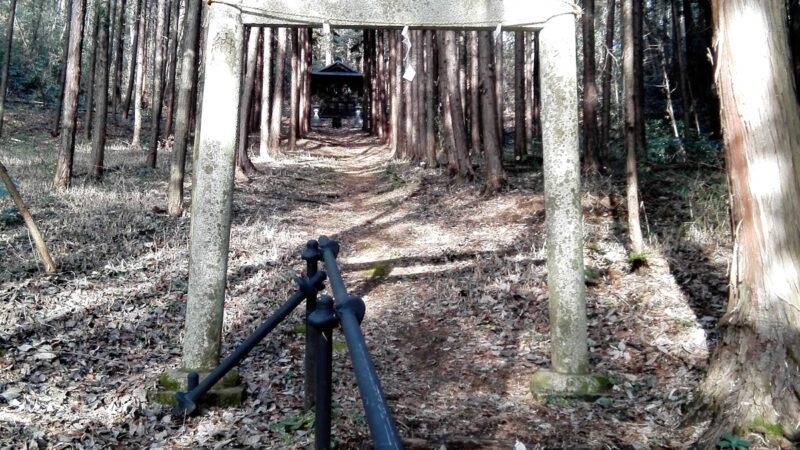
The greatest charm of Hachikama Shrine is its approach, which stretches for about 200-300 meters. Moss-covered stone steps and towering cedar trees lining both sides create a mystical space, like an entrance to another world.
The cedar avenue, reminiscent of Togakushi Shrine, possesses a solemn atmosphere that inspires awe in visitors. Walking along the tranquil approach, bathed in dappled sunlight, allows you to experience a special time away from everyday life.
Moss-Covered Shrine Grounds
Due to the humid climate of Izu Oshima, moss grows everywhere on the shrine grounds, creating a fantastical landscape. Especially after rain, the moss’s green becomes even more vibrant, creating a photogenic scene.
Giant Cedar Trees
Giant cedar trees, estimated to be hundreds of years old, line the approach to the shrine and within the grounds, telling the story of the shrine’s long history. These giant trees symbolize the rich natural environment of Izu Oshima and the sacredness of the shrine.
Serene Shrine
The shrine, nestled amongst the trees, possesses a simple yet solemn atmosphere. Its harmonious presence with the surrounding nature brings peace of mind to visitors.
The Legend of Hiinki-sama
A legend called “Hiinki-sama” is passed down around Hachikama Shrine. This legend is an important part of Izu Oshima’s folk beliefs and is a story worth knowing when visiting the shrine.
Summary of the Legend
During the Edo period, a corrupt magistrate oppressed the islanders of Oshima. Unable to bear it any longer, 25 young men killed the magistrate, but afterwards, they perished at sea.
The islanders enshrined these young men, who sacrificed their lives for justice, as “Hiki-sama” (日忌様), to appease their spirits. It is believed that the spirits of these 25 men return to the island every year on January 24th, and memorial services are still held today.
Beliefs and Rituals
The spirits of Hiki-sama are revered as the guardian deities of the island, and a special memorial service is held on January 24th. This day is an important day for the islanders to remember their ancestors and the loyal warriors.
This legend is an important element in understanding the religious culture surrounding Hachikama Shrine and demonstrates the deep connection the shrine has with the local community.
How to Access Hachikama Shrine
How to Access Izu Oshima Island
Izu Oshima Island, where Hachikama Shrine is located, is an island situated approximately 120 kilometers south of Tokyo. First, let’s look at how to access the island.
Access by Ferry
Tokai Kisen (Large Passenger Ships & High-Speed Jet Ferries)
- Departure from Takeshiba Pier: Approximately 6 hours by large passenger ship and approximately 1 hour 45 minutes by high-speed jet ferry from Takeshiba Pier in Tokyo.
- Departure from Atami Port: Approximately 45 minutes by high-speed jet ferry from Atami Port.
- Departure from Kurihama Port: Approximately 3 hours 45 minutes by large passenger ship from Kurihama Port.
Large passenger ships mainly operate overnight, arriving on Oshima Island in the morning. High-speed jet ferries operate during the day and may be cancelled due to weather conditions.
Access by Airplane
Shin Chuo Airlines (Small Propeller Aircraft)
- Departure from Chofu Airport: Approximately 25 minutes from Chofu Airport
Since flights are susceptible to weather conditions, it is recommended to check the flight status in advance.
Access on the Island
Hachikama Shrine is located in the Izumizu area, in the northwestern part of Oshima Island.
Access by Bus
Take the Oshima Bus and get off at the “Izumizu” bus stop. The shrine entrance is approximately a 5-10 minute walk from the bus stop. It’s about a 20-minute walk from Oshima Park.
Access by Rental Car/Rental Bike
Renting a car or motorcycle is convenient on the island. You can reach the vicinity of the shrine in about 10-15 minutes by rental car from Motomachi Port or Okada Port. However, the shrine entrance is only marked by a small arrow sign, so be careful not to miss it.
Access on Foot
If walking from Oshima Park, it takes about 20 minutes. The journey offers beautiful natural scenery, but due to the low traffic volume, it’s recommended to allow ample time for your visit.
Parking Information
There is no dedicated parking lot around the shrine, but there are a few parking spaces near the entrance to the approach. Since there are few visitors, parking is usually not a problem.
Notes and Manners for Visiting
Visiting Hours
Hachikama Shrine is open 24 hours a day, but because the approach is through a cedar forest, visibility becomes poor after sunset. Visiting during daylight hours is recommended.
Clothing and Equipment
- The path to the shrine is slippery with stone steps and moss, so please wear comfortable shoes.
- It is especially slippery in rainy weather, so please be careful.
- Insect repellent spray is useful in summer.
- There are many trees to provide shade, but it’s a good idea to bring a hat and sunscreen.
Visiting Etiquette
- This is a sacred place, so please pray quietly.
- Photography is permitted, but please refrain from taking pictures inside the shrine.
- Please take all your trash with you.
- Please respect nature and be careful not to damage the plants or moss.
About Goshuin (Shrine Seals)
Hachikama Shrine does not have a resident priest, so goshuin are not issued. If you wish to receive a goshuin, please inquire at other shrines on Oshima Island.
Nearby Tourist Attractions
When visiting Hachikama Shrine, you can also enjoy nearby tourist attractions.
Oshima Park
Located about a 20-minute walk from the shrine, Oshima Park features a zoo and a camellia garden, making it a popular spot for families. The camellias are particularly beautiful during their blooming season (January to March).
Izumizu Pass
The Izumizu area boasts a unique geological formation called a “pass,” created by lava flows, making it a geologically interesting spot.
Akihama Beach
Akihama Beach, located a few minutes’ drive from Hachikama Shrine, is a famous diving spot. Visitors can observe the crystal-clear waters and abundant marine life.
Geological Cross Section
On the western side of Izu Oshima, a geological cross section approximately 30 meters high and 800 meters long is exposed, offering a glimpse into the history of this volcanic island.
Mount Mihara
Mount Mihara, a symbol of Izu Oshima, is known as an active volcano. Hiking trails are maintained to the summit, allowing visitors to see the crater up close.
Accommodation on Izu Oshima
Many visitors to Izu Oshima will likely consider staying overnight when visiting Hachikama Shrine. There are various types of accommodations on the island.
Hotels & Ryokans
The island has several hotels where you can enjoy hot springs and ryokans where you can savor fresh seafood. Accommodations are concentrated around Motomachi Port, making it a convenient base for sightseeing.
Guesthouses & Pensions
There are also many guesthouses and pensions with a homey atmosphere, allowing you to enjoy interacting with the islanders. Many of these accommodations pride themselves on dishes made with fresh seafood.
Campsites
For those who want to enjoy nature, campsites on the island are also recommended. There are several campsites with different locations, such as along the coast and in the forest.
Points to Note When Booking Accommodation
- During peak tourist seasons such as the Camellia Festival (late January to late March) and Golden Week, early booking is recommended.
- During the summer, the island becomes crowded with tourists seeking diving, so early booking is also recommended.
- It’s a good idea to check the cancellation policy in case of ferry or flight cancellations.
How to Enjoy Izu Oshima
Why not combine a visit to Hachikama Shrine with some unique Izu Oshima experiences?
Hot Springs
Izu Oshima has several hot spring facilities, and open-air baths with ocean views are particularly popular. “Hama no Yu” is an open-air bath located along the coast, offering especially spectacular views at sunset.
Gourmet
In addition to fresh seafood, you can enjoy Oshima’s unique cuisine, such as island sushi, bekko sushi, and dishes using ashitaba (Angelica keiskei). Products made with Oshima milk and camellia oil are also popular souvenirs.
Activities
- Diving & Snorkeling: Observe marine life in the crystal-clear waters.
- Trekking: Walk through volcanic terrain such as Mount Mihara and the Ura-Sabaku (back desert).
- Cycling: A cycling course is maintained that circles the island.
- Fishing: Enjoy shore fishing and boat fishing.
- Stargazing: Due to minimal light pollution, you can observe a sky full of stars.
Summary
Hachikama Shrine is a Shikinaisha (a shrine listed in the Engishiki, an ancient Japanese legal text) located in the Izumizu district of Oshima Town, Tokyo. It is an important place of worship on Izu Oshima with a history of over 1000 years. The mystical atmosphere, surrounded by moss-covered paths and giant cedar trees, deeply impresses visitors.
This shrine, which enshrines the main deity Hajime-no-Mikoto and is believed to bestow divine blessings for maritime safety and abundant harvests, conveys the history and culture of the region along with the legend of Hinokami-sama. The shrine is open 24 hours a day, and its tranquil environment allows for peaceful worship, which is one of its main attractions.
Izu Oshima Island is accessible from Tokyo by ferry or plane, and offers a variety of activities including nature, hot springs, and gourmet food. Why not experience the charm of Izu Oshima to the fullest, with a visit to Hachikama Shrine as your centerpiece?
Hachikama Shrine, while relatively close to the city center, offers a mystical space that feels like another world. When you visit Izu Oshima, be sure to stop by. Walking along the cedar-lined path and offering your prayers in the serene shrine will surely create unforgettable memories.