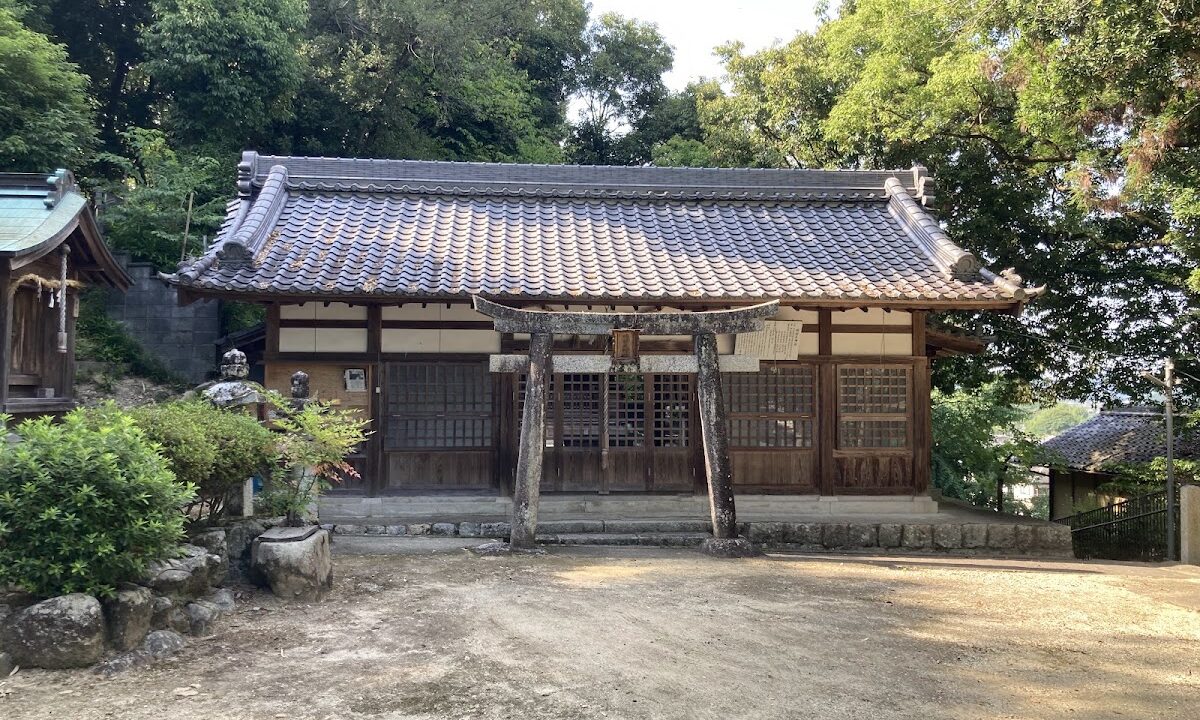
Kamonaraita Shrine (Osaka Prefecture) Complete Guide | History, Deities, Access, and Highlights of the Shrine Grounds
Kamonaraita Shrine is a historic shrine located in Kamiyama, Kanan-cho, Minamikawachi-gun, Osaka Prefecture. It is a Shikinaisha (a shrine listed in the Engishiki Jinmyocho, compiled in 927 AD) and has played an important role in Ishikawa-gun, Kawachi Province since ancient times. This article provides a detailed explanation of everything you need to know before visiting Kamonaraita Shrine, including its history, deities, access methods, and highlights of the shrine grounds.
What is Kamonaraita Shrine?
Kamonaraita Shrine is located at 595 Kamiyama, Kanan-cho, Minamikawachi-gun, Osaka Prefecture. Its former shrine rank was Village Shrine. It is a Shikinaisha listed in the Engishiki Jinmyocho (compiled in 927 AD) as “Kamonaraita Shrine, Ishikawa-gun, Kawachi Province,” and is known as an ancient shrine with a history of over 1000 years.
The current Kamo Narita Shrine is a small shrine nestled in a quiet mountain village, but its historical value is extremely high, and connections to the ancient Kamo and Mononobe clans have been pointed out. Locally known as “Tenmangu,” it has been a place of worship for the people of the region for many years.
Basic Information
- Location: 595 Kamiyama, Kanan-cho, Minamikawachi-gun, Osaka Prefecture
- Phone Number: 0721-72-0534 (Tatemizuwake Shrine)
- Former Shrine Rank: Village Shrine
- Shikinaisha: Kamo Narita Shrine (Small Shrine), Ishikawa-gun, Kawachi Province
- Annual Festival Day: Third Sunday of October
Deities and History of the Shrine
Main Deities
The main deities of Kamo Narita Shrine are the following three:
- Nigihayahi-no-Mikoto: A deity considered the ancestral god of the Mononobe clan, and a significant god in mythology who is said to have descended to Kawachi Province aboard the Heavenly Rock Boat before the descent of the heavenly grandchild.
- Amateru-Kuniteru-Hiko-Hoakari-no-Mikoto: A grandson of Amaterasu-Omikami, and considered the ancestral god of the Owari clan.
- Kushitama-no-Mikoto: A child of Nigihayahi-no-Mikoto, and considered the direct ancestor of the Mononobe clan.
From this combination of enshrined deities, it is clear that Kamo-Naritai Shrine is a shrine of the Mononobe clan lineage.
Enshrined Deities
In addition to the main deity, the following deities are also enshrined:
- Takamimusubi-no-Mikoto: One of the gods of creation
- Sugawara no Michizane: A Heian period nobleman known as the god of learning
Especially because Sugawara no Michizane is enshrined here, the shrine has been affectionately known locally as “Tenmangu.”
History of Kamo Narita Shrine
Founding and Ancient Times
The founding date of Kamo Narita Shrine is unknown, but since it is listed in the Engishiki Jinmyocho (927 AD), it is certain that it already existed in the early Heian period. It has also been suggested that the actual founding is much older, possibly dating back to the Kofun period.
There are various theories regarding the name “Kamo Narita.” “Kamo” suggests a connection to the Kamo clan, and “Naraita,” when read as “naraita,” may be related to some kind of ritual or custom. Other shrines related to the Kamo clan, such as “Kamo Shrine” and “Kamo Takada Shrine,” exist in Kawachi Province, indicating that the Kamo clan’s influence extended to this region.
Decline and Period of Unknown Location in the Middle Ages
Despite being a shrine listed in the Engishiki Jinmyocho (a list of shrines compiled in the Heian period), Kamo-Naritai Shrine declined after the Middle Ages, and there was a period when its location was unknown. This was due to the fact that many small shrines fell into disrepair due to the turmoil and social changes of the Sengoku period (Warring States period).
Restoration in the Edo Period
According to records from the Manji era (1658-1661), there was a shrine called “Tenjin Kamiyama Shrine” near the then Kamiyama Village, which is believed to be the successor to Kamo-Naritai Shrine. Around this time, it seems to have been restored as a Tenmangu shrine with Sugawara no Michizane as its main deity.
Throughout the Edo period, it was affectionately known as “Tenmangu” as the local tutelary shrine, and the worship of Sugawara no Michizane, the god of learning, was central.
Changes in the Meiji Era
In the Meiji era, the shrine system was improved. A survey of shrines in the early Meiji period identified the Tenmangu shrine in Kamiyama Village as the “Kamo-Naritai Shrine,” a shrine listed in the Engishiki (an ancient Japanese legal code).
In 1872 (Meiji 5), it was ranked as a village shrine, and the name “Kamo-Naritai Shrine” was officially restored. At this time, Nigihayahi-no-Mikoto, the original enshrined deity, became the main deity, and Sugawara no Michizane was positioned as a subordinate deity.
Modern Era
The current Kamo-Naritai Shrine is a small shrine located in the quiet hamlet of Kamiyama, Kanan-cho, but its historical value as a shrine listed in the Engishiki is highly regarded. It serves as the local tutelary shrine and welcomes visitors from history enthusiasts and those who visit shrines.
Management is concurrently handled by Take-Mizuwake Shrine (also a shrine listed in the Engishiki, located in Kanan-cho), and Shinto rituals such as the annual festival are also performed there.
Highlights of the Shrine Grounds
Shrine Building
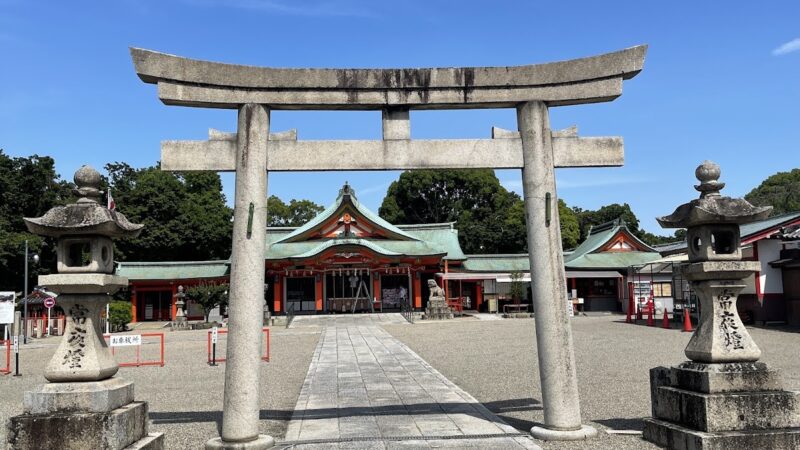
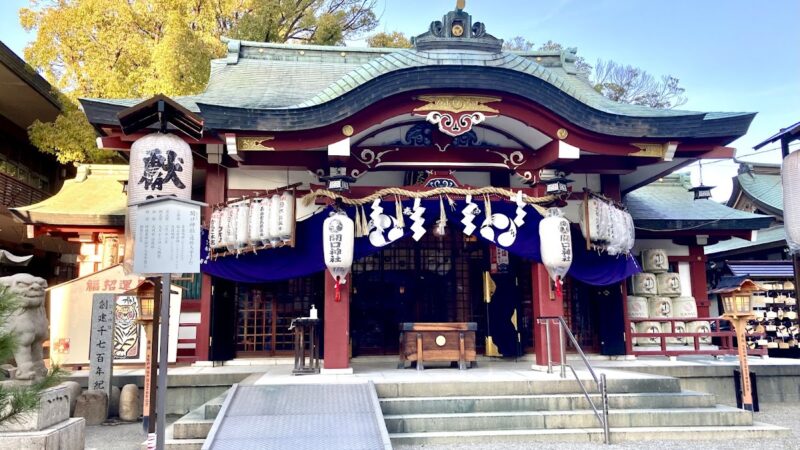
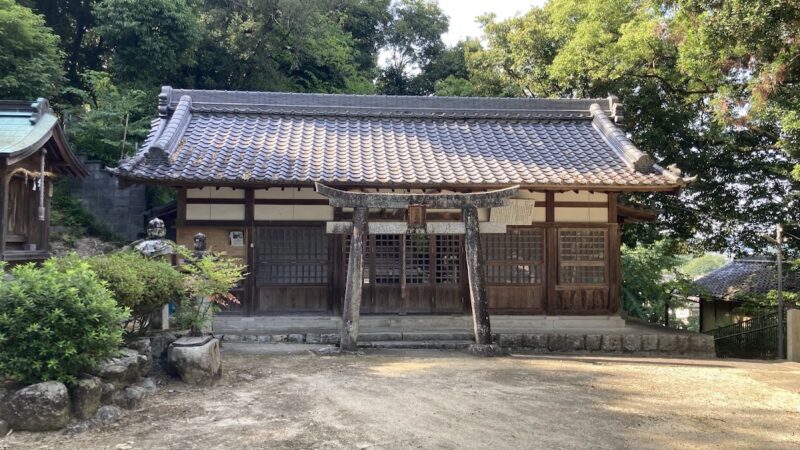
The shrine building of Kamo-Naritai Shrine, though small, is carefully maintained. The main shrine is built in the Ikkensha Nagare-zukuri style, with the worship hall and main shrine arranged side by side. Surrounded by a quiet forest, it exudes the atmosphere of an ancient shrine.
Atmosphere of the Shrine Grounds
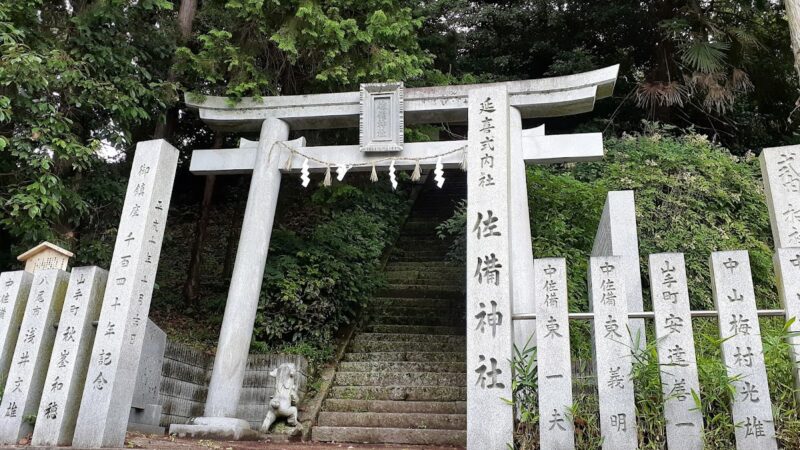
Located in a secluded spot within the Kamiyama settlement, Kamo-Naruta Shrine is rarely visited and enveloped in a tranquil atmosphere. Ancient trees flourish within the grounds, and a small shrine appears after climbing the stone steps. It truly has the feel of a “hidden ancient shrine,” far removed from the hustle and bustle of the city.
Stone Monument and Historical Information
A stone monument indicating that it is a Shikinaisha (a shrine listed in the Engishiki, an ancient Japanese legal code) stands on the grounds, informing visitors of the shrine’s history. A brief historical information is also posted, allowing visitors to learn about the shrine’s history.
Photography Tips
Although small, Kamo-Naruta Shrine offers opportunities for photographs with an ancient, shrine-like atmosphere. Particularly recommended photo spots include the shrine viewed from the stone steps, the ancient trees within the grounds, and the full view of the shrine nestled in the quiet forest. The changing seasons are beautiful, especially during the fresh green season and the autumn foliage season.
Access Methods
Access by Public Transportation
While it is possible to access Kamo-Naruta Shrine by public transportation, a bus and a short walk are required from the nearest station.
Nearest Station: Kintetsu Nagano Line “Tondabayashi Station” or “Kawanishi Station”
Using the Bus:
- Take the Kongo Bus bound for “Chihaya Ropeway-mae” from Tondabayashi Station
- Get off at the “Kamiyama” bus stop and walk for approximately 5 minutes.
Since bus services are limited, it is recommended to check the timetable in advance.
Access by Car
Access by car is the most convenient.
- From National Route 309, turn onto Prefectural Route 705 and head towards Kamiyama.
- Enter “595 Kamiyama, Kanan-cho, Minamikawachi-gun, Osaka Prefecture” into your car navigation system.
- There are a few parking spaces on the shrine grounds or nearby.
Travel Time from Major Nearby Locations
- From central Osaka: Approximately 50 minutes by car
- From Sakai City: Approximately 40 minutes by car
- From Tondabayashi city center: Approximately 20 minutes by car
Manners and Precautions for Visiting the Shrine
Visiting Hours
Kamo Narita Shrine is open for worship at all times, but since there is no permanently stationed shrine office, the availability of goshuin (shrine stamps) and other items is limited. If you wish to receive a goshuin, it is recommended that you contact the managing shrine, Takemizuwake Shrine (0721-72-0534), in advance.
Shrine Visiting Etiquette
- Bow before passing through the torii gate.
- If there is a purification fountain, cleanse your hands and mouth.
- Bow twice, clap twice, and bow once in front of the main hall.
- Maintain silence within the shrine grounds and refrain from speaking loudly.
- Take your trash with you.
Clothing and Items to Bring
- Comfortable shoes are recommended as there are stone steps within the grounds.
- Insect repellent is useful in the summer.
- Bring a camera if you wish to take photographs.
Nearby Shrines and Temples
There are several other historical shrines scattered around Kamo-Naruta Shrine.
Takemikumari Shrine
A Shikinaisha (shrine listed in the Engishiki) located in Kanan-cho, it also manages Kamo-Naruta Shrine. It is an ancient shrine dedicated to the god of water, and visiting it together with Kamo-Naruta Shrine is recommended.
Ishikawa Shrine
Also a Shikinaisha located in Kanan-cho, it is an important shrine in the Ishikawa River basin.
Iwafune Shrine
Located in Katano City, this shrine is associated with Nigihayahi-no-Mikoto and is known for its massive rock formation serving as its sacred object. It is related to Kamo-Naritai Shrine as a shrine dedicated to Nigihayahi-no-Mikoto.
Relationship between Kamo-Naritai Shrine and the Kamo/Mononobe Clans
About the Kamo Clan
The Kamo clan was one of the powerful clans of ancient Japan, known for serving as priests at the Kamo Shrines (Kamigamo Shrine and Shimogamo Shrine) in Kyoto. However, the Kamo clan’s influence extended beyond Kyoto to Kawachi Province.
In Kawachi Province, there are several shrines believed to be related to the Kamo clan, including “Kamo Shrine,” “Kamo-Takada Shrine,” and “Kamo-Naritai Shrine.” The distribution of these shrines suggests that the Kamo clan’s influence was widespread in ancient Kawachi Province.
About the Mononobe Clan
On the other hand, Nigihayahi-no-Mikoto, the enshrined deity of Kamo-Naritai Shrine, is the ancestral deity of the Mononobe clan. The Mononobe clan was also a powerful clan in ancient times, and Kawachi Province, in particular, was one of their strongholds.
Regarding the fact that the name of the shrine, Kamo Narita Shrine, contains “Kamo,” while the enshrined deity is of Mononobe lineage, the following possibilities can be considered:
- The shrine was originally worshipped by the Kamo clan and later came under the influence of the Mononobe clan.
- There was some kind of relationship between the Kamo and Mononobe clans.
- The place name “Kamo” remained in the shrine’s name.
In any case, Kamo Narita Shrine is an important historical site that shows the power dynamics of ancient clans.
Annual Festival and Events
Annual Festival
The annual festival of Kamo Narita Shrine is held every year on the third Sunday of October. Local parishioners and related parties gather for the Shinto rituals. Although small in scale, it is a valuable festival that continues to preserve tradition.
Other Events
As it is a small shrine, the number of annual events is limited, but local people visit for seasonal events such as the first shrine visit of the New Year and Setsubun (bean-throwing festival).
The Charm of Kamo-Naruta Shrine
A Place to Experience Historical Romance
Kamo-Naruta Shrine, listed in the Engishiki Jinmyocho (a list of shrines compiled in the Heian period), boasts a history of over 1000 years. Although the shrine building is small, it holds the history of ancient faith. For history enthusiasts, it is a valuable place to trace the footsteps of ancient clans.
A Tranquil Atmosphere
Kamo-Naruta Shrine, not a tourist destination, has few visitors, allowing for a peaceful visit. It is the perfect shrine for those who want to escape the hustle and bustle of the city and offer prayers in tranquility.
One of the Shrines on the Engishiki Pilgrimage
As one of the shrines on the “Engishiki Pilgrimage” of Kawachi Province, it is attracting attention from shrine enthusiasts. Visiting this shrine along with Takemizuwake Shrine and Ishikawa Shrine, both located in the same Kanan-cho town, allows for a deeper understanding of the ancient history of Kawachi Province.
Visitor Records and Reviews
Visitor Voices
Visitors who have visited Kamo Narita Shrine have shared the following impressions:
- “Although small, it is a carefully maintained shrine, and I could feel the atmosphere of an ancient shrine.”
- “Located in a quiet forest, it is a peaceful place.”
- “I could feel the weight of its history as a Shikinaisha (shrine listed in the Engishiki).”
- “Access is somewhat inconvenient, but it is a shrine worth visiting.”
Photo Submissions
Many visitors take photos as a record of their shrine visit and share them on social media and blogs. Photos are also posted on shrine information websites such as Hotokami, which are helpful for gathering information before visiting.
About Shikinaisha in Osaka Prefecture
Osaka Prefecture has numerous Shikinaisha listed in the Engishiki Jinmyocho (a list of shrines compiled in the Heian period). Kamo Narita Shrine is one of them, and is an important shrine that conveys the history of Ishikawa District in Kawachi Province.
The major Shikinaisha shrines in Osaka Prefecture range in size from large shrines like Sumiyoshi Taisha, Hiraoka Shrine, and Ishikiri Tsurugi Shrine to smaller ones like Kamo Narita Shrine. Visiting these shrines offers a deep understanding of the history and culture of ancient Osaka.
Summary
Kamo Narita Shrine is a Shikinaisha shrine located in Kanan-cho, Minamikawachi-gun, Osaka Prefecture, and is a historical shrine with Nigihayahi-no-Mikoto as its main deity. While its founding date is unknown, its inclusion in the Engishiki Jinmyocho (a list of shrines compiled in the Heian period) indicates it was an ancient shrine existing as early as the Heian period.
Although it declined and its whereabouts became unknown during the medieval period, it was revived as a Tenmangu shrine during the Edo period and regained its status as a Shikinaisha shrine during the Meiji era. Currently a small shrine, it is attracting attention from history enthusiasts and shrine-visiting people as a valuable historical site showing connections to the ancient Kamo and Mononobe clans.
The shrine grounds, surrounded by a quiet forest, offer a peaceful place to worship away from the hustle and bustle of the city. While access is somewhat inconvenient, this shrine is a must-visit for anyone interested in the ancient history of Kawachi Province or those visiting shrines listed in the Engishiki (ancient Japanese legal code).
Visiting it along with the nearby Takemizuwake Shrine and Ishikawa Shrine will allow you to gain a deeper understanding of the history and culture of Kanan Town. As a hidden historical spot in Osaka Prefecture, we highly recommend visiting Kamo Narita Shrine.