Complete Guide to Sabi Shrine (Tondabayashi City, Osaka Prefecture) | History of the Shikinaisha Shrine, Unique Komainu (Guardian Dogs), and the Charm of the Kagura Festival
Nestled quietly at the northwestern foot of the Kongo Mountains in Tondabayashi City, Osaka Prefecture, Sabi Shrine is an ancient shrine with over a thousand years of history, listed in the Engishiki Jinmyocho (a list of shrines compiled during the Heian period). This shrine, dedicated to the ancestral deity of the Imbe clan, boasts many attractions, including unique guardian dogs gazing at each other from above and below, and the Tominaga-ryu Naniwa Kagura (a type of Shinto ritual dance) designated as an Intangible Folk Cultural Property of Osaka Prefecture.
This article comprehensively introduces everything you need to know before visiting Sabi Shrine, from its history and enshrined deities to its grounds, annual events, and access methods.
Basic Information about Sabi Shrine
Location: 467 Sabi, Tondabayashi City, Osaka Prefecture
Shrine Rank: Shikinaisha (listed in the Engishiki Jinmyocho), former village shrine
Deity Enshrined: Amenofutodama-no-mikoto
Annual Festival: October 17th
Telephone: 0721-34-6993
Sabi Shrine is a Shikinaisha belonging to Ishikawa District, Kawachi Province, and is a shrine deeply connected to the history of the region. Even today, it is affectionately known as “Sabi-san” by the locals, and maintains its sacred grounds within a quiet residential area.
History of Sabi Shrine
Founding and Ancient Sabi Village
According to the shrine’s traditions, it was founded in January of Ten’an 2 (858). This area was formerly Sabi-go in Ishikawa County, the residence of the Sabi clan, a branch of the Inbe clan, in ancient times.
The Heian period geographical record, *Wamyō Ruijushō*, lists “Sabi-go” in Ishikawa County, Kawachi Province, confirming the ancient existence of the place name “Sabi.” While there are various theories regarding the etymology of “Sabi,” the most widely accepted theory is that it derives from the archaic word “sabi,” meaning iron. The possibility of iron production in this region has also been suggested.
The Inbe Clan and Ame-no-Futotama-no-Mikoto
The Inbe clan was an ancient powerful family classified as “Shinbetsu” (divine lineage) in the *Shinsen Shōjiroku* (New Compilation of Family Names), primarily responsible for court rituals. Ame-no-Futotama-no-Mikoto is considered the ancestral deity of the Inbe clan and appears in the *Kojiki* and *Nihon Shoki* as the god who presided over rituals when Amaterasu-Ōmikami hid in the Amano-Iwato cave.
The Sami clan, who resided in the Sabi region, are believed to have worshipped their ancestral deity, Amenotama-no-Mikoto, as a branch of the Imbe clan. During the Nara period, the Imbe clan gradually declined with the rise of the Nakatomi clan (later the Fujiwara clan), who also performed religious rites. However, Sabi Shrine has continued to attract worshippers to this day as a witness to that history.
Status as a Shikinaisha (Shrine Listed in the Engishiki)
The Engishiki Jinmyocho (Completed in 927), compiled in the mid-Heian period, lists “Sabi Shrine” as a shrine in Ishikawa District, Kawachi Province. Being listed as a Shikinaisha signifies that it was a historically significant shrine officially recognized by the imperial court at the time, demonstrating the high status of Sabi Shrine.
While detailed records from the medieval to early modern periods are limited, the shrine’s worship as a local tutelary deity was passed down, and during the Edo period, it played a central role in the local community as a village shrine.
Developments Since the Modern Era
Under the Meiji era’s shrine ranking system, it was ranked as a village shrine, positioning it as a local shrine. From the post-war reforms to the shrine system, the shrine has continued to attract the reverence of local residents to this day.
Notably, the Tominaga-ryu Naniwa Kagura dance, passed down at Sabi Shrine, was designated an Intangible Folk Cultural Property of Osaka Prefecture in 1984. This means that Sabi Shrine plays an important role not only in terms of historical value but also in the cultural aspect of preserving traditional performing arts.
Deities and Divine Virtues
Main Deity: Amenofutodama-no-Mikoto
Amenofutodama-no-Mikoto is the ancestral deity of the Imbe clan and is known as the god who presided over the rituals when Amaterasu Omikami hid in the Amano-Iwato cave. “Futodama” means “magnificent jewel,” representing the deity’s role in presiding over sacred tools in rituals.
Divine Virtues:
- Family Safety
- Industrial Development
- Protection from Evil
- Good Fortune
Enshrined Deities
In addition to the main deity, the following deities are enshrined in the left and right side shrines of Sabi Shrine.
Left Side Shrine: Matsuo-no-Okami
- Oyamatsumi-no-Kami
- Nakatsushima-hime-no-Kami
Matsuo-no-Okami is known as the god of sake brewing, and is also worshipped as the god of water and agriculture.
Right Side Shrine: Kasuga-no-Okami
- Takemikazuchi-no-Mikoto
- Iwai-nushi-no-Mikoto
- Amanokoyane-no-Mikoto
- Himegami
Kasuga-no-Okami is the deity enshrined at Kasuga Taisha Shrine in Nara and is known as the tutelary deity of the Fujiwara clan. It is believed to bestow blessings of military success and career advancement.
These enshrined deities are thought to have been added later due to local beliefs and the requests of parishioners, demonstrating the widespread faith of Sabi Shrine.
Highlights of the Shrine Grounds
Approach and Torii Gate
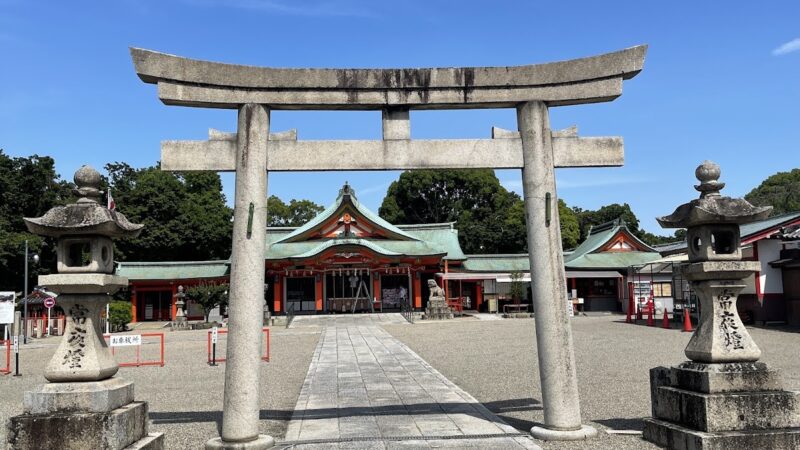
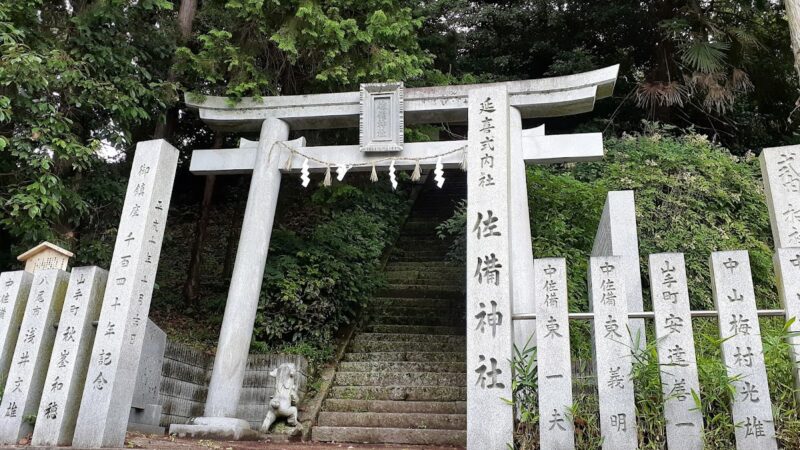
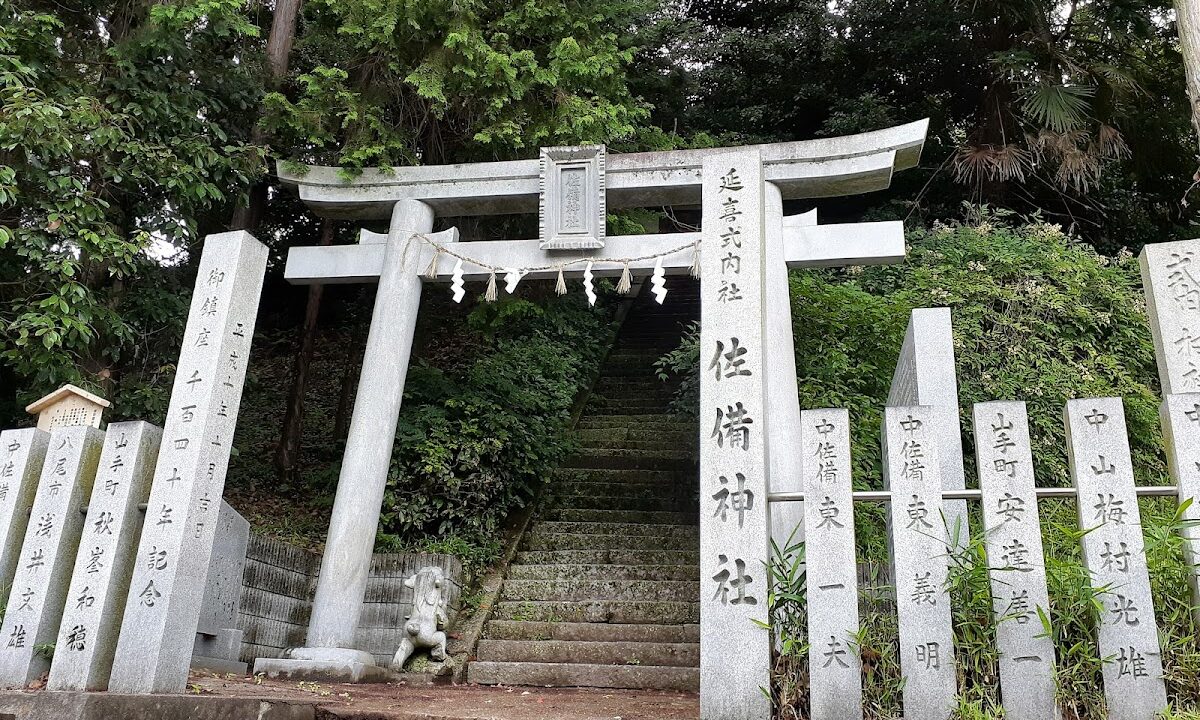
Despite being located in a residential area, Sabi Shrine maintains a tranquil atmosphere. Passing through the torii gate, stone steps lead to the main shrine. The guardian lion-dogs (komainu) positioned above and below these steps are the most distinctive feature of Sabi Shrine.
Unique Guardian Lion-Dogs: A Parent and Child Gazing at Each Other
What surprises visitors to Sabi Shrine the most is the sight of the guardian lion-dogs gazing at each other from above and below.
The guardian lion-dogs at the bottom of the steps both face upwards. On the other hand, the guardian lion-dogs at the top of the steps look down with a powerful expression. This arrangement is rare nationwide, resembling a mother lion and her cub facing each other across a valley.
According to folklore, it is said to represent the parent-child relationship between a lion and its cub, with the mother lion dropping the cub into the valley and watching over it as it climbs back up on its own. This unique arrangement of guardian lions leaves a strong impression on visitors and has become a symbolic presence at Sabi Shrine.
As you climb the stone steps, you can feel the gaze of the cub looking up from below and the watchful gaze of the parent lion watching over you from above, creating a unique worship experience unlike any other shrine.
Main Hall and Worship Hall
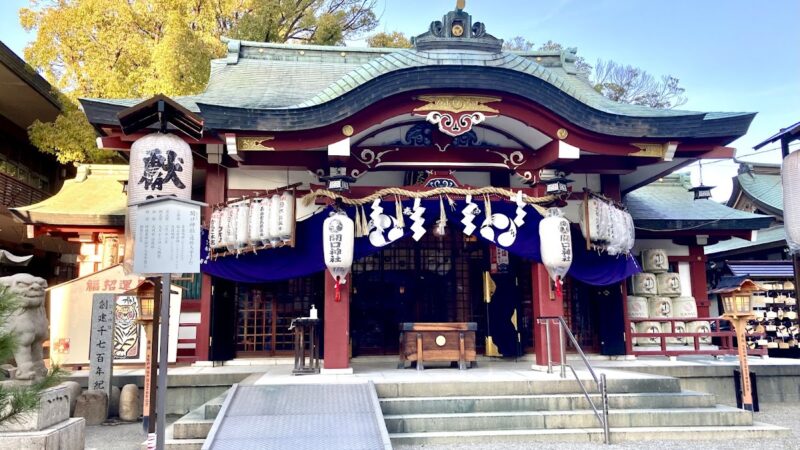
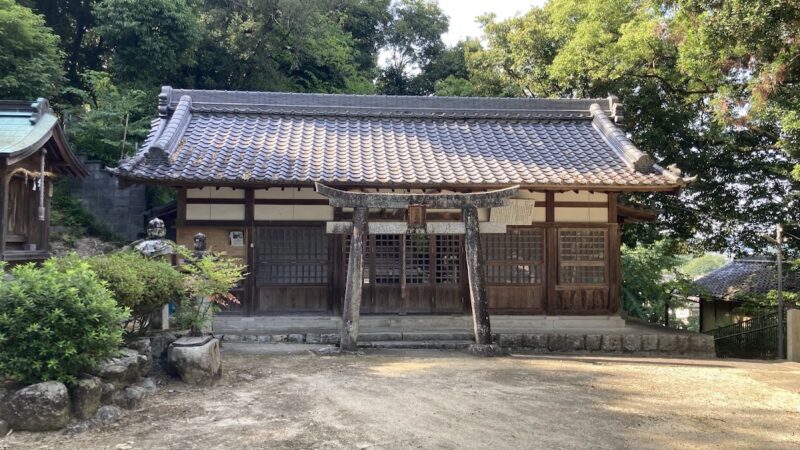
Upon reaching the top of the stone steps, the worship hall and main hall appear. The main hall is protected by a protective structure, preserving the traditional style of shrine architecture. The shrine grounds are meticulously clean and well-maintained, reflecting the careful upkeep by the local community.
Shrines within the Precincts (Subsidiary and Minor Shrines)
Besides the main shrine dedicated to the principal deity, several subsidiary shrines are enshrined within the grounds of Sabi Shrine. These subsidiary and minor shrines demonstrate the diversity of local beliefs.
While detailed information on these subsidiary shrines is limited, it is believed that they enshrine local guardian deities and gods closely associated with daily life. When visiting, paying attention not only to the main shrine but also to these smaller shrines will allow you to feel the depth of local faith.
Tominaga-ryu Naniwa Kagura: Osaka Prefecture Intangible Folk Cultural Property
What is Naniwa Kagura?
The greatest cultural asset of Sabi Shrine is the Tominaga-ryu Naniwa Kagura. This kagura was designated as an Osaka Prefecture Intangible Folk Cultural Property in 1984 and is highly regarded as a traditional performing art of Osaka.
Naniwa Kagura is a branch of Kagura (Shinto ritual dance) that developed in Osaka during the Edo period. It is a sacred performing art offered at shrine festivals. The Tominaga style is particularly prestigious, characterized by its complex movements and graceful dances.
Kagura Festival (Annual Festival)
At Sabi Shrine, the Tominaga style Naniwa Kagura is performed annually on October 17th during the shrine’s annual festival. This Kagura, preserved by a local preservation society, is a solemn dance using traditional costumes and masks, expressing gratitude to the gods and praying for a bountiful harvest and peace in the community.
On the day of the Kagura Festival, many worshippers visit the usually quiet shrine grounds to appreciate this traditional art form. As a valuable site for the transmission of Kagura within Osaka Prefecture, it is an important shrine from the perspective of cultural property preservation.
Efforts for Preservation and Transmission
The dedicated efforts of local people are essential for the transmission of the Tominaga style Naniwa Kagura, which is an intangible folk cultural property. At Sabi Shrine, a local preservation society is working to pass on the techniques to the younger generation.
Shinto ritual practice takes place throughout the year, with preparations underway for the performance at the annual festival. This initiative not only preserves the performing art but also strengthens the bonds of the local community.
Annual Events
Sabi Shrine holds various Shinto rituals throughout the year.
Main Annual Events
Annual Festival (Kagura Festival): October 17th
The largest festival at Sabi Shrine. Tominaga-ryu Naniwa Kagura is performed, attracting many worshippers.
New Year’s Day Festival: January 1st
A Shinto ritual celebrating the New Year. Many worshippers visit for their first shrine visit of the year.
Setsubun Festival: Around February 3rd
A Shinto ritual praying for protection from evil and good fortune.
Summer Purification Ceremony: June 30th
A Shinto ritual to cleanse away the impurities accumulated over the past six months.
Year-End Purification Ceremony: December 31st
A Shinto ritual to cleanse away the impurities accumulated over the past year and prepare for the New Year.
These rituals are passed down as local traditions, and visiting the shrine at these seasonal turning points allows you to experience traditional Japanese annual events.
About Goshuin (Shrine Seals)
Goshuin are available at Sabi Shrine. They are given out at the shrine office, but staff may not always be present, so it is recommended to call ahead to confirm if you definitely want a goshuin.
Goshuin Reception: Shrine Office (may be unattended)
Offering Fee: Typical amount (around 300-500 yen)
Inquiries: 0721-34-6993
Bring your goshuincho (seal book) or you may be able to receive a pre-printed goshuin. Receiving a Goshuin (temple/shrine stamp) as a memento of your visit or as part of a shrine pilgrimage is a good idea.
Access and Parking Information
Access by Public Transportation
Nearest Station: Kintetsu Minami-Osaka Line “Tondabayashi Station”
By Bus: Take the Kongo Bus from platform 4 in front of Tondabayashi Station. Get off at the “Shimosabi” bus stop and walk for approximately 3 minutes (total travel time approximately 10 minutes).
The shrine is relatively easy to access, about 10 minutes by bus from Tondabayashi Station. Since bus service is limited, it is recommended to check the timetable in advance.
Access by Car
Parking: Available (small space for 2-3 cars)
There are a few parking spaces near the shrine grounds, but the number is limited, so using public transportation is recommended during busy times. During large events such as festivals, please consider using nearby parking lots or public transportation.
Car Navigation Settings:
Searchable by address: “467 Sabi, Tondabayashi City, Osaka Prefecture”
Nearby Attractions
Around Sabi Shrine, there are several spots where you can experience the history of Tondabayashi City.
Tondabayashi Jinai-machi: A preservation district for important traditional buildings, preserving the townscape of the Edo period.
Koki-ji Temple: An ancient temple of the Shingon sect.
Mt. Kongo: A mountain where you can enjoy hiking and mountain climbing.
By visiting these spots in conjunction with a visit to Sabi Shrine, you can fully enjoy the history and nature of the Minami-Kawachi region.
Manners and Precautions for Visiting a Shrine
Basic Worship Etiquette
- Bow at the Torii Gate: Bow before passing through the torii gate.
- Purify at the Water Basin: Purify your left hand, then your right hand, then your mouth.
- Walking Along the Path: The center is the path for the gods, so walk along the sides.
- Bow at the Main Hall: Two bows, two claps, and one bow is the basic form.
Points to Note Specific to Sabi Shrine
- Climbing and Descending the Stone Steps: Enjoy the experience of looking up and down at the guardian lion-dogs, while paying attention to your footing as you ascend and descend.
- Photography: Photography is generally permitted within the shrine grounds, but please refrain from taking pictures inside the main hall or during religious ceremonies.
- Quiet Residential Area: The surrounding area is a residential area, so please be considerate of noise.
Summary of Sabi Shrine’s Charms
Sabi Shrine is a shrine with multifaceted charms, as described below.
- Historical Value: Its status as a Shikinaisha (a shrine listed in the Engishiki Jinmyocho, a historical record of the Heian period)
- Cultural Property: The site of the Tominaga-ryu Naniwa Kagura, designated as an Intangible Folk Cultural Property of Osaka Prefecture
- Unique Komainu (Guardian Lion-Dogs): A rare arrangement nationwide, with the lions facing each other from above and below.
- History of the Imbe Clan: As a shrine associated with the ancient Imbe clan, it conveys the history of ancient Japan to the present day.
- Local Belief: A tutelary deity protected by the local people for over a thousand years.
Sabi Shrine, easily accessible from Osaka city, is a place where you can escape the hustle and bustle and quietly contemplate history. Especially during the Kagura Festival, it offers a valuable opportunity to appreciate traditional performing arts.
When visiting Tondabayashi City, be sure to visit Sabi Shrine and see the parent and child lion-dogs facing each other from above and below. In the tranquil atmosphere of this thousand-year-old Shikinaisha, you can feel the depth of Japanese traditional culture and ancient faith. ## The Future and Preservation Efforts of Sabi Shrine
Sabi Shrine has been carefully preserved by local parishioners and devotees, but it also faces modern challenges such as depopulation and an aging population. In particular, the participation of younger generations is essential for the continuation of intangible folk cultural assets such as the Tominaga-ryu Naniwa Kagura.
Currently, the local preservation society and the cultural property protection department of Tondabayashi City are working together to preserve the Kagura and maintain the shrine. The interest and support of each visitor will be a force in connecting this precious cultural heritage to the future.
Visiting Sabi Shrine is not merely sightseeing; it is contributing to the preservation of Japan’s traditional culture that has continued for over a thousand years.