Complete Guide to Hata Shrine (Hannan City, Osaka Prefecture) | A Thorough Explanation of the National Important Cultural Property Main Hall and History
Hata Shrine, located in Ishida, Hannan City, Osaka Prefecture, is a historical shrine listed in the Engishiki (a compilation of laws and regulations from the Heian period) and boasts a main hall designated as a National Important Cultural Property. Formerly known as Tottori Omiya and Hata Hachimangu, it has long been revered as the principal shrine of the Hine and Tottori districts.
This article comprehensively explains everything you need to know before visiting Hata Shrine, including its history, architectural value, cultural properties, festivals, goshuin (shrine stamp) information, and access methods.
Basic Information about Hata Shrine
Location: 167 Ishida, Hannan City, Osaka Prefecture 599-0221
Phone Number: 072-472-0951
Former Shrine Rank: Prefectural Shrine
Main Deities: Tsunokori-no-Mikoto, Emperor Ojin, Empress Jingu
Shrine Rank: Shikinaisha (listed in the Engishiki Jinmyocho)
Cultural Properties: Main Hall (National Important Cultural Property), Main Halls of the Three Subsidiary Shrines (Osaka Prefecture Designated Tangible Cultural Properties)
History of Hata Shrine
Founding and Origin
The exact founding date of Hata Shrine is unknown, but according to shrine tradition, its origin lies in the enshrinement of Tsunokori-no-Mikoto, the ancestor of the ancient Tottori clan.
Tsunokori-no-Mikoto was enshrined in the Hata area as the ancestral deity of Amenoyukawatana when he was granted the surname Tottoribe. The Tottori clan was a powerful local family that ruled this region in ancient times, and the Hata Shrine was worshipped as the Tottori clan’s tutelary deity.
Records from the Mid-Heian Period
The “Engishiki Jinmyocho” (completed in 927), compiled in the mid-Heian period, lists the shrine as “Hata Shrine, Hine District, Izumi Province,” indicating that it was a historically significant shrine recognized by the imperial court since ancient times. This listing suggests that Hata Shrine held the status of a Shikinaisha (a shrine listed in the Engishiki) and was positioned as an important shrine in Hine District.
From the Medieval to the Early Modern Period
In the medieval period, it was also known as “Tottori Omiya” and “Hata Hachimangu,” becoming the central shrine of the region’s faith as the principal shrine of Hine and Tottori districts. The enshrinement of Emperor Ojin and Empress Jingu led to its connection with Hachiman worship, and it came to be revered by the samurai class as well.
Records show that during Oda Nobunaga’s invasion of Kishu Province in the Sengoku period, his headquarters were located at Hata Shrine, indicating its strategic importance.
Reconstruction in the Edo Period
The current main hall was built in 1638 (Kanei 15). It is designated as a National Important Cultural Property, a valuable structure that preserves the architectural style of the early Edo period. Architecture from this period possesses a unique beauty, blending the splendor of the Momoyama style with the stable techniques of the Edo period.
The worship hall was rebuilt in the Showa era, presenting a majestic presence that welcomes modern worshippers.
Cultural Properties of Hata Shrine
National Important Cultural Property: Main Hall
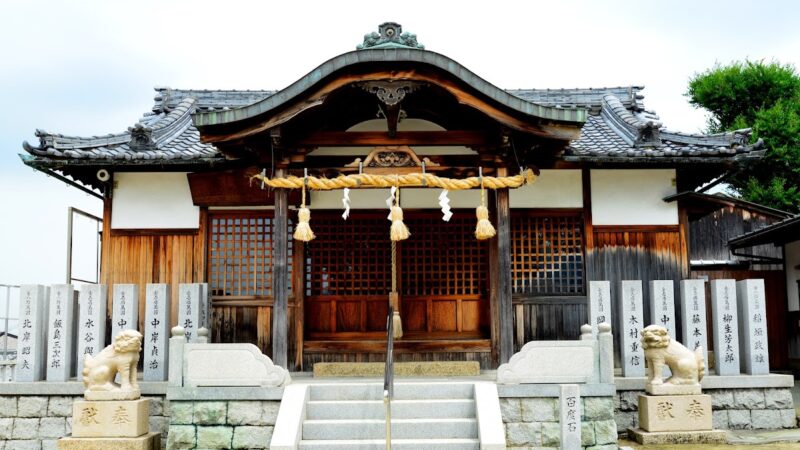
The greatest highlight of Hata Shrine is the main hall, designated as a National Important Cultural Property. Built in 1638 (Kanei 15), it employs the “Sangensha Nagare-zukuri” architectural style.
Characteristics of the Three-Bay Nagare-zukuri Style:
- A shrine building style with three bays (three bays between pillars) on the front.
- The Nagare-zukuri style features a roof that flows long and gracefully across the front.
- A uniquely elegant architectural style of the Senshu region.
- Features magnificent Momoyama-style decorations.
This architectural style is characteristic of the Senshu region (present-day southern Osaka Prefecture) and is a rare style not often seen in other areas. The main hall of Namita Shrine is a valuable legacy that conveys the architectural culture of this region to the present day.
The details showcase early Edo period carving techniques, and traces of coloring remain. It is highly regarded in architectural history as a cultural property that conveys the technology and aesthetic sense of the time of its construction to the present day.
Osaka Prefecture Designated Tangible Cultural Property: Main Hall of the Three Subsidiary Shrines
Along with the main hall, the main hall of the three subsidiary shrines is also designated as a tangible cultural property of Osaka Prefecture. This is also an important building that conveys Edo period architectural techniques and demonstrates the spread of faith within the grounds of Namita Shrine.
The subsidiary shrines enshrine local deities, and visiting them along with the main shrine offers a deeper religious experience.
Cultural Landscape of the Shrine Grounds
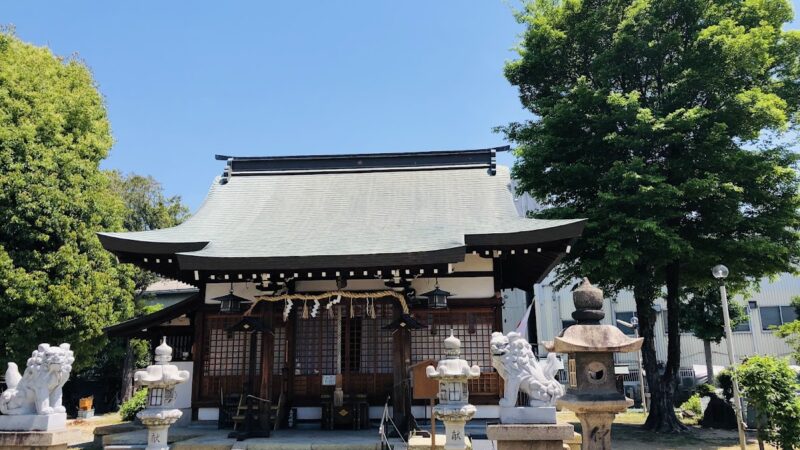
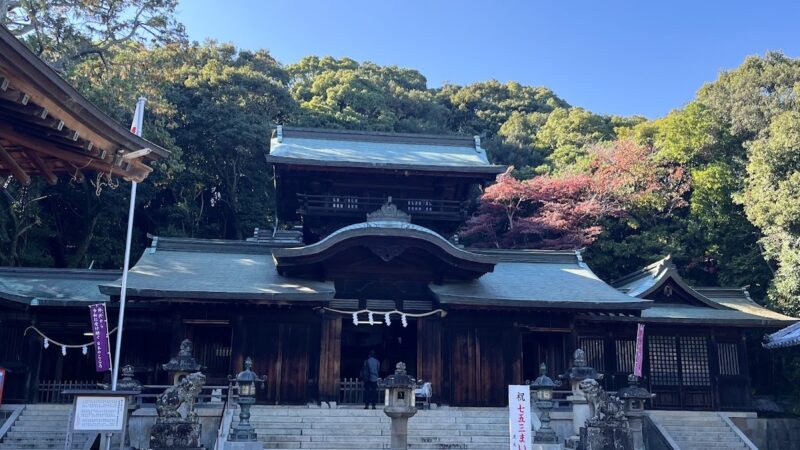
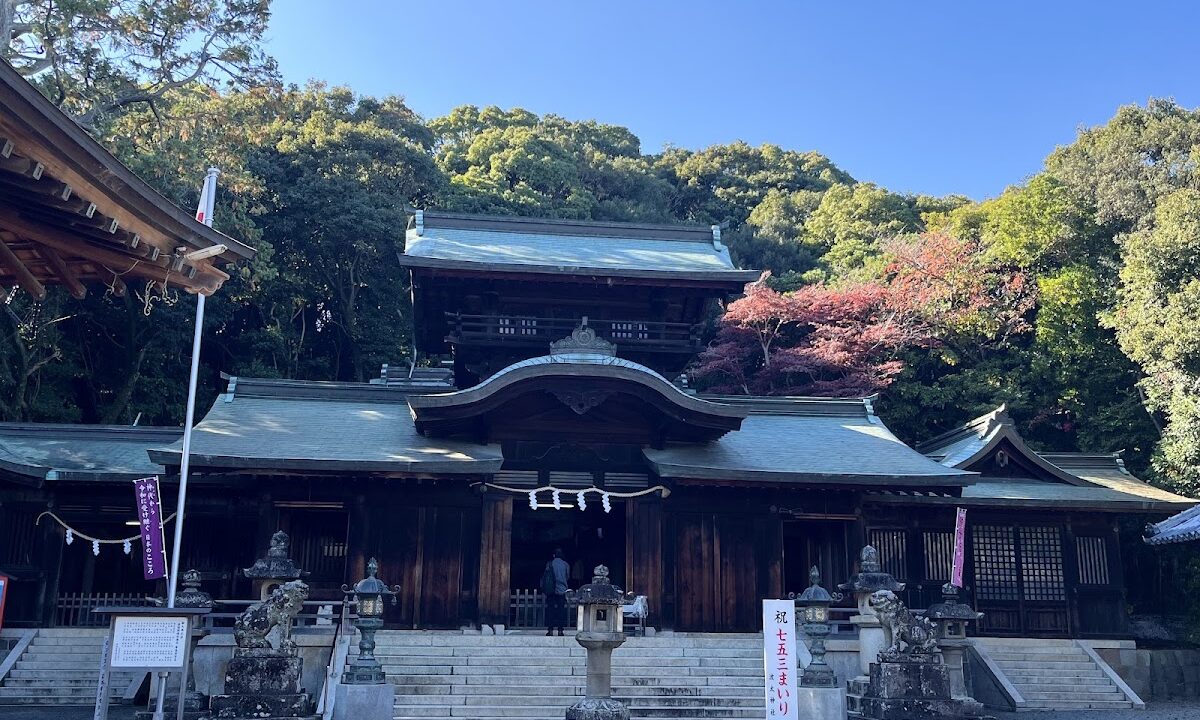
The grounds of Hata Shrine are a tranquil space surrounded by ancient trees. The stone steps of the approach, the torii gate, and the lanterns all evoke a sense of history, and the entire grounds form a single cultural landscape.
Especially during the autumn festival, the magnificent sight of the danjiri (float) rushing up the shrine steps is a testament to the enduring traditions of the region.
Festivals and Annual Events of Hata Shrine
Autumn Festival
The most spectacular festival at Hata Shrine is the autumn festival. It is a well-known festival in Hannan City, attracting many worshippers and spectators.
The highlight is the “Miyairi,” where the danjiri (float) rushes up the shrine steps. The sight of the festival floats powerfully ascending the steep stone steps is breathtaking, and the enthusiasm of the bearers and the cheers of the spectators unite to create a vibrant festival atmosphere. This tradition has been passed down through generations as an event symbolizing the unity of the community and the depth of their faith.
Dedication of Ise Daikagura
Every July, the grand performance of “Ise Daikagura,” a nationally designated Important Intangible Folk Cultural Property, is dedicated. Known as the largest Ise Daikagura dedication in the Kansai region, the entire Daikagura troupe, which tours throughout Japan, gathers at Namita Shrine.
Traditional performing arts such as lion dances and acrobatics are showcased, creating a precious opportunity to blend the solemnity of a Shinto ritual with the splendor of entertainment. It is also an important event from the perspective of preserving and passing on folk cultural properties.
Other Annual Events
- New Year’s Day Festival: A first shrine visit to celebrate the New Year
- Setsubun Festival: A ceremony to ward off evil and invite good fortune
- Summer Purification Ceremony: A Shinto ritual to purify oneself of the impurities accumulated over the past six months
- Annual Grand Festival: The shrine’s most important festival
These events are deeply rooted in the lives of local residents and connect the shrine and people at each seasonal turning point.
Goshuin (Shrine Seal) and Goshuincho (Shrine Seal Book) Information
Namita Shrine offers Goshuin. Many visitors receive Goshuin as a memento of their visit and as a way to document their connection with the shrine.
Goshuin Reception: At the shrine office
Reception Hours: Usually 9:00 AM to 4:00 PM (may vary depending on events)
Offering Fee: A typical amount (around 300-500 yen)
The Goshuin will have the words “Namita Shrine” written in ink and stamped with the shrine’s seal. This is a precious goshuin (temple/shrine stamp) that reflects the shrine’s status as a Shikinaisha (a shrine listed in the Engishiki, an ancient Japanese legal text) and its history as a shrine possessing a nationally important cultural property.
Regarding the availability of original goshuin notebooks, we recommend contacting the shrine directly before your visit.
Access Information
Access by Train
Using the JR Hanwa Line:
- Get off at “Izumi-Tottori Station,” approximately 15 minutes on foot.
- Head southwest from the station, and you will arrive at the shrine after passing through a residential area.
Using the Nankai Main Line:
- Get off at “Tottori-no-Sho Station,” approximately 15-20 minutes on foot.
- Get off at “Ozaki Station,” approximately 20 minutes on foot.
While the shrine is within walking distance from either station, it is a bit of a distance, so we recommend allowing ample time for your visit. Since the route passes through a residential area, using a map app will be helpful.
Access by Car
Using the Hanshin Expressway Wangan Line and Hanwa Expressway:
- Approximately 10 minutes from Hannan IC
- Approximately 15 minutes from Sennan IC
Parking: There is a parking lot for visitors on the shrine grounds. Spaces are limited, so it may be crowded during festivals and holidays.
Nearby Tourist Attractions
When visiting Namita Shrine, exploring the surrounding tourist attractions will allow you to gain a deeper understanding of the history and culture of Hannan City.
- Rinsho-ji Temple: An ancient temple near Namita Shrine
- Hannan City Coastline: Beautiful views of Osaka Bay
- Historical Townscape of Izumi Tottori: A place associated with the ancient Tottori clan
Manners and Points for Visiting Shrines
Etiquette for Visiting Shrines
- Bow before passing through the torii gate: Show respect for entering the sacred area
- Purify yourself at the water basin: Purify your left hand, right hand, and mouth in that order
- Worship at the main hall: The basic procedure is two bows, two claps, and one bow
- View the main hall: Quietly appreciate the architectural beauty of the main hall, which is an important cultural property
- Visit the subsidiary shrines: If you have time, visit the subsidiary shrines as well
Regarding Photography
Photography is generally permitted on the shrine grounds, but consideration is needed during festivals and Shinto rituals. Furthermore, while photography of cultural properties such as the main shrine is permitted, please refrain from using flash photography and take other precautions to protect these cultural assets.
Clothing and Belongings
While no special attire is required for visiting the shrine, it is advisable to dress appropriately for a sacred place. Since you will need to climb stone steps, comfortable walking shoes are recommended.
In summer, a parasol, hat, and drinks will make your visit more comfortable. In winter, warm clothing will be helpful.
The Charm of Namita Shrine
A Fusion of Architectural Beauty and History
The greatest charm of Namita Shrine lies in the architectural beauty of its main shrine, a nationally designated Important Cultural Property. Built in 1638, the main shrine is built in the unique Senshu style of the Sanma-sha Nagare-zukuri, a magnificent fusion of the splendor of the Momoyama style and the technology of the Edo period.
This cultural property is a must-see for anyone interested in architecture, as well as those who wish to experience the traditional beauty of Japan.
A Faith Rooted in the Community
As the tutelary shrine of the Tottori clan, which has existed since ancient times, and as the principal shrine of Hine-go and Tottori-go, Hata Shrine continues to be the center of faith for the local people. Active festivals, such as the procession of floats into the shrine during the autumn festival and the dedication of Ise Daikagura (a type of Shinto ritual dance), are still held, making it a vibrant place of faith.
A Tranquil Shrine Grounds
Despite its easily accessible location from urban areas, the shrine grounds offer a tranquil space surrounded by ancient trees. This environment, away from the hustle and bustle of everyday life, provides a precious place of healing for modern people seeking solace.
Life Rituals such as Baby’s First Shrine Visit and Shichi-Go-San
Hata Shrine also performs life rituals such as baby’s first shrine visit, Shichi-Go-San (a traditional Japanese rite of passage for children), and exorcism. As the tutelary shrine of the community, it has watched over the milestones in people’s lives.
Main Life Rituals:
- First Shrine Visit (Omiyamairi)
- Shichi-Go-San Ceremony
- Prayer for Protection from Evil
- Prayer for Traffic Safety
- Prayer for Success in Exams
For detailed prayer times and whether reservations are required, please contact the shrine in advance.
Summary: The Value of Visiting Hata Shrine
Hata Shrine in Hannan City, Osaka Prefecture, is a shrine that combines three attractions: its history as a Shikinaisha (a shrine listed in the Engishiki), the architectural beauty of its main hall (a nationally important cultural property), and its active festivals that continue to this day.
Founded as the tutelary shrine of the ancient Tottori clan, it was recognized by the imperial court in the mid-Heian period, the current beautiful main hall was built in the Edo period, and it has continued to function as a center of local faith to this day.
It is a shrine worth visiting for a wide range of people, from history enthusiasts and architecture fans to those who enjoy visiting shrines and temples, and those who want to calm their minds in a quiet place. When visiting southern Osaka Prefecture, be sure to visit Namita Shrine and experience its history, culture, and tranquil atmosphere.
Contact Information:
Namita Shrine
167 Ishida, Hannan City, Osaka Prefecture 599-0221
Phone: 072-472-0951
We recommend checking official information and the latest opening hours before your visit.