Shindachi Shrine (Sennan City, Osaka Prefecture) Complete Guide | History, Goshuin (Shrine Seal), and Access Information
Shindachi Shrine, located in Shindachi Kinokumadera, Sennan City, Osaka Prefecture, is a historic shrine known for its approach surrounded by lush greenery and its vividly colored main hall. Affectionately known as “Gongen-san” by locals, it, along with the adjacent Kinokumadera Temple, has been selected as one of Osaka’s 100 Green Spaces. This article provides a detailed introduction to Shindachi Shrine, including its history, enshrined deities, cultural properties, goshuin information, and access methods.
Basic Information on Shindachi Shrine
Shindachi Shrine is located at 795 Shindachi Kinokumadera, Sennan City, Osaka Prefecture. Its former shrine rank was Village Shrine. It is located approximately 2km southeast of Izumisunagawa Station on the JR Hanwa Line, and is situated in a quiet environment surrounded by abundant nature.
Basic Data
- Location: 795 Shindachi Kinokumadera, Sennan City, Osaka Prefecture 590-0514
- Phone Number: 072-483-3632
- Former Shrine Rank: Village Shrine
- Common Name: Gongen-san
- Main Deities: Kamuyamato Iwahiko no Mikoto, Kanayamahiko no Mikoto, Izanami no Mikoto
- Main Hall Style: Five-bay Nagare-zukuri style
In 2024, along with the adjacent Kinokumadera Temple, it was designated a Japan Heritage site, and its historical and cultural value was re-evaluated.
Deities of Shindachi Shrine
Three deities are enshrined at Shindachi Shrine.
Kamuyamato Iwahiko no Mikoto
Kamuyamato Iwahiko no Mikoto is another name for Emperor Jimmu, the first emperor of Japan. According to the shrine’s tradition, the shrine’s founding dates back to the drifting of a statue of Emperor Jimmu on the coast of Tarui, which was then recovered and enshrined. He is revered as the founder of Japan and is believed to bestow blessings of national peace, good fortune, and prosperity.
Kanayamahiko no Mikoto
Kanayamahiko no Mikoto is the god of mines and metals, and is known as the guardian deity of blacksmithing and industry. He is also a deity whose presence suggests that this region was once involved in metalworking and mining. He is believed to bestow blessings of increased wealth and industrial development.
Izanami no Mikoto
Izanami no Mikoto is the goddess of creation in Japanese mythology and the mother goddess who gave birth to many other gods. The shrine is believed to bestow blessings for matchmaking, safe childbirth, child-rearing, and family safety, and is particularly revered by women.
History of Shindachi Shrine
Founding and Ancient Beliefs
The exact founding date of Shindachi Shrine is unclear, but according to shrine tradition, it began when a statue of Emperor Jimmu drifted ashore on the coast of Tarui. It is said that this statue was recovered and enshrined in Tarui, and later moved to its current location.
In ancient times, it was called “Kinokumadera Gongen Shrine” or “Kinokumadera Daigongen-gu,” and functioned as the guardian shrine of the adjacent Kinokumadera Temple. As the tutelary deity of the 13 villages of Shindachi-sho, it received deep reverence from the entire region.
From the Medieval to the Early Modern Period
From the medieval to the early modern period, Shindachi Shrine developed in conjunction with Kinokumadera Temple. During the era of syncretism of Shinto and Buddhism, Kinokumadera Temple, a Buddhist temple, and the shrine became closely intertwined, and as “Kinokumadera Daigongen-gu,” it became the center of regional faith.
The current main shrine building dates back to the early Edo period and is considered one of the oldest existing early Edo period shrine buildings in Osaka Prefecture. It is a valuable cultural asset that preserves the architectural style of that era.
Separation of Shinto and Buddhism in the Meiji Era
Due to the Meiji-era decree separating Shinto and Buddhism, Kinokuma-dera Temple and Shindachi Shrine were separated. As a result, the name was changed from “Kinokuma-dera Daigongen-gu” to “Shindachi Shrine,” and it remains an independent shrine to this day. Under the Meiji-era shrine ranking system, it was ranked as a village shrine.
Shindachi Shrine in the Modern Era
Shindachi Shrine, which has continued to attract worshippers as the local guardian deity even after the war, was selected as one of “Osaka’s 100 Green Spaces” along with the adjacent Kinokuma-dera Temple, and its rich natural environment has been recognized. In 2024, it was designated a Japan Heritage site, and its historical value was recognized nationwide.
Highlights of the Shrine Grounds
Deep Green Approach
The approach to Shindachi Shrine is a tranquil space enveloped in deep greenery. The abundant nature befitting its selection as one of Osaka’s 100 Best Green Spaces welcomes visitors. The approach to the shrine, winding through a tunnel of trees, offers a tranquil space that allows you to forget the hustle and bustle of the city.
The Vividly Colored Main Hall
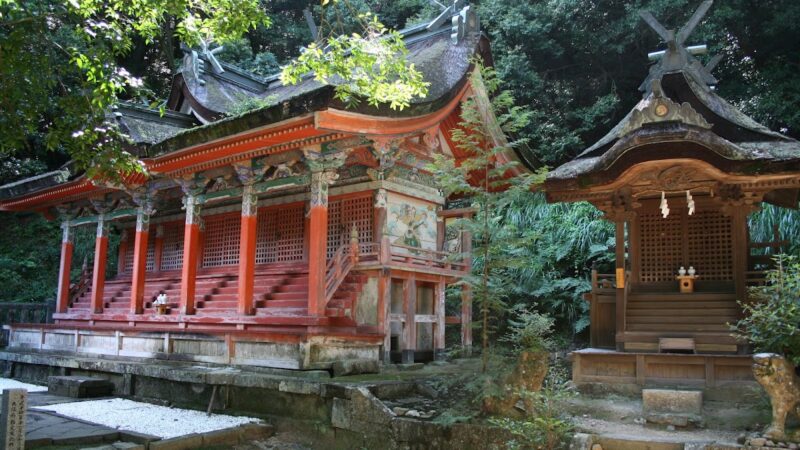
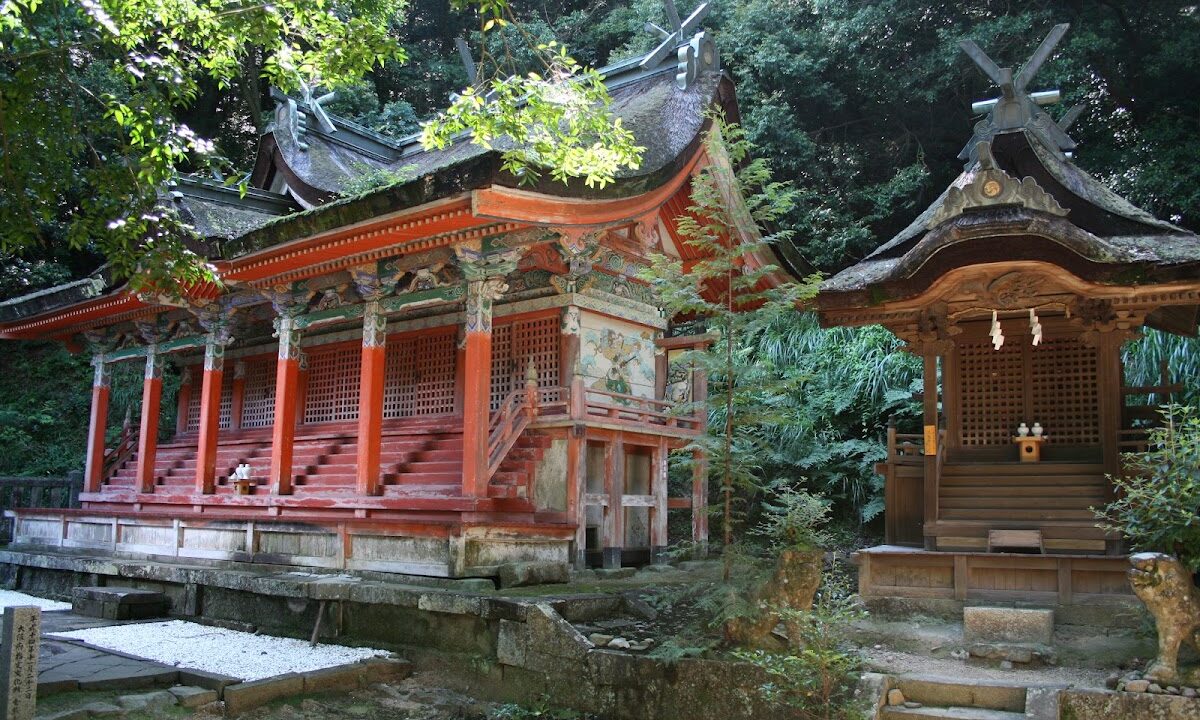
As you proceed along the approach, you will come across the vividly colored main hall, a five-bay nagare-zukuri style building. Built in the early Edo period, it holds high historical value as one of the oldest shrine buildings in Osaka Prefecture.
The five-bay nagare-zukuri style refers to a type of shrine building with five bays in the front, a style commonly found in relatively large shrines. The vividly colored decorations of the main hall speak to the high status of Shindachi Shrine across generations.
Sacred Trees and Nature on the Shrine Grounds
Sacred trees such as Nagi (Podocarpus nagi) and Ogatamanoki (Magnolia obovata) grow on the shrine grounds.
Nagi is an evergreen tree deeply associated with Kumano faith. Because its leaves have veins running only vertically, making them resistant to horizontal splitting, it has been considered a charm for matchmaking and marital harmony, symbolizing “unbreakable ties.”
Ogatamanoki is a tree considered sacred in Shinto, and its name is believed to be a corruption of “Okitama” (inviting spirits). It has been used in Shinto rituals since ancient times and planted on the shrine grounds as a tree to invite the gods.
These sacred trees can be considered living cultural assets that convey the long history and faith of Shindachi Shrine.
Subsidiary Shrines
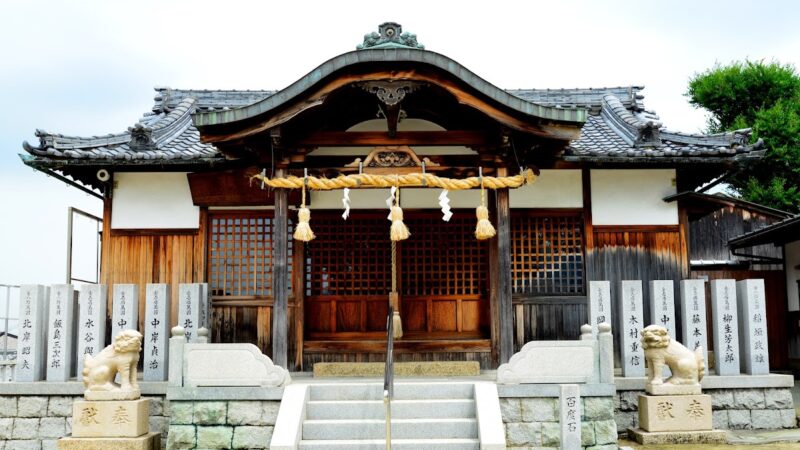
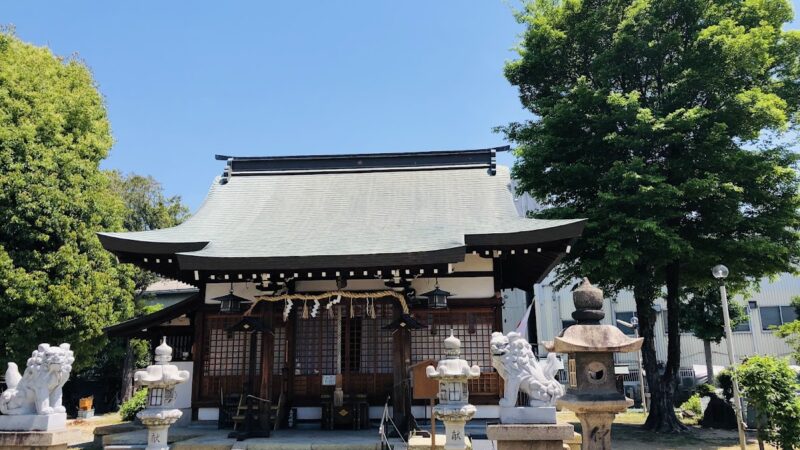
Several subsidiary shrines are enshrined around the main hall. These small shrines are also important, having supported the local faith. When touring the shrine grounds, please be sure to visit these subsidiary shrines as well.
Designated Cultural Property
Osaka Prefecture Designated Cultural Property
The main hall of Shindachi Shrine is protected as a cultural property due to its historical and architectural value. The Gokensha Nagare-zukuri architectural style from the early Edo period is a valuable surviving example within Osaka Prefecture and serves as important historical material for understanding the shrine architecture techniques of that time.
Osaka’s Top 100 Green Spaces
Shindachi Shrine, along with the adjacent Kinokuma-dera Temple, has been selected as one of “Osaka’s Top 100 Green Spaces.” This designation recognizes outstanding green spaces and natural environments within Osaka Prefecture, and is highly valued as a precious green space in urbanizing Osaka.
Japan Heritage Designation
In 2024, Shindachi Shrine and Kinokuma-dera Temple were designated as Japan Heritage sites. Japan Heritage designations recognize stories that tell of Japan’s culture and traditions through the historical charm and characteristics of a region. This designation has led to nationwide recognition of the historical and cultural value of Shindachi Shrine.
Goshuin (Shrine Seal) Information
Shindachi Shrine offers Goshuin. Please note the following points if you wish to receive a Goshuin:
Goshuin Reception Hours
The Goshuin office is open from 8:30 AM to 3:00 PM. While visiting the shrine grounds is free, those wishing to receive a Goshuin (shrine stamp) must visit within the designated hours.
Prior Contact
Shinodachi Shrine recommends contacting them by phone in advance if you wish to receive a Goshuin. Since the chief priest may be absent, it is recommended to call (072-483-3632) before visiting to ensure you receive a Goshuin.
Goshuin Design
Shinodachi Shrine’s Goshuin features the shrine’s name written in ink and stamped with a red seal. Its simple yet dignified design makes it a popular memento of visits.
Access
Access by Train
Nearest Station: JR Hanwa Line “Izumisunagawa Station”
Shinodachi Shrine is approximately 2km southeast of Izumisunagawa Station, about a 25-30 minute walk. Since it’s a bit of a distance from the station, taking a taxi or bus is recommended.
Access by Bus
You can take a community bus or taxi from Izumisunagawa Station. If taking the bus, get off at “Kinokumadera” or a nearby bus stop and walk for a few minutes.
Access by Car
If using the expressway:
- Approximately 10 minutes from the Hanwa Expressway “Sennan IC”
- Approximately 20 minutes from Kansai International Airport
Parking: There is parking space on the temple grounds or nearby, but spaces are limited, so please be aware of potential congestion.
Address and Navigation
Please enter the following address into your car navigation system or smartphone map app:
795 Shindachi Kinokumadera, Sennan City, Osaka Prefecture 590-0514
Manners and Precautions for Visiting
Visiting Hours
While visiting the temple grounds is generally free, please refrain from visiting early in the morning or late at night. If you wish to receive a Goshuin (temple stamp) or other items, please visit during the temple’s opening hours (8:30 AM to 3:00 PM).
Attire and Etiquette
Please dress appropriately for visiting a shrine. Since the approach to the shrine is in a lush natural environment, comfortable shoes are recommended.
The basic etiquette for worship is “two bows, two claps, one bow.” Cleanse your body and mind at the water basin before proceeding to the main hall and offer your prayers respectfully.
Photography
Photography is generally permitted within the shrine grounds, but photography inside the main hall or of the sacred object may be prohibited. When taking photographs, please be considerate of other worshippers and maintain quiet.
Nearby Attractions
Kinokuma-dera Temple
Kinokuma-dera Temple, adjacent to Shindachi Shrine, is a historical temple that was once integrated with Shindachi Shrine. Even after the separation of Shinto and Buddhism, the two temples remain adjacent and are both designated as one of Osaka’s 100 Green Spaces and a Japan Heritage site. When visiting Shindachi Shrine, be sure to also visit Kinokuma-dera Temple.
Nature and History of Sennan City
Besides Shindachi Shrine, Sennan City boasts many historical sites and areas rich in natural beauty. Beautiful sunsets can be enjoyed along the coastline, while the inland areas offer stunning mountain scenery.
Kansai International Airport
Sennan City is close to Kansai International Airport, approximately 20 minutes by car. It’s an ideal stop before or after your trip.
Annual Events at Shindachi Shrine
Shindachi Shrine holds various festivals throughout the year. As the local guardian shrine, seasonal festivals and rituals have been carefully preserved.
Annual Festival
Every autumn, the annual festival is held, bringing together local residents to express their gratitude for divine blessings. Traditional rituals are solemnly performed, providing an important opportunity to deepen community bonds.
New Year’s Visit
Many worshippers visit the shrine for their first shrine visit of the new year. The custom of praying for a safe year and welcoming the new year before the gods continues.
Other Shinto Rituals
Various rituals are held throughout the year, including monthly festivals and seasonal ceremonies. Please contact the shrine in advance for detailed schedules.
Divine Virtues of Shindachi Shrine
The three deities enshrined at Shindachi Shrine are believed to bestow various divine blessings.
National Peace and Good Fortune
Emperor Jimmu (Kamuyamato Iwahiko no Mikoto), as the founder of Japan, is believed to bestow divine blessings of national peace and good fortune.
Increased Financial Fortune and Industrial Development
Kanayamahiko no Mikoto, as the god of mines and metals, bestows divine blessings of increased financial fortune, industrial development, and business prosperity.
Matchmaking, Safe Childbirth, and Family Safety
Izanami no Mikoto, as the goddess of creation, bestows divine blessings of matchmaking, safe childbirth, child-rearing, and family safety, and is particularly revered by women and families.
About Sennan City and the Shindachi Area
The Shindachi area of Sennan City, where Shindachi Shrine is located, is situated in the southern part of Osaka Prefecture, in the Sennan region. Known since ancient times as Shindachi-sho, it is a region blessed with abundant nature and historical heritage.
History of Shindachi-sho
In the Middle Ages, Shindachi-sho was formed as a manor, developing as the center of a region consisting of 13 villages. Shindachi Shrine was revered as the tutelary deity of the entire Shindachi-sho and has served as a spiritual pillar of the region.
Modern Sennan City
Modern Sennan City has achieved development by leveraging its proximity to Kansai International Airport, while also carefully preserving its historical temples, shrines, and natural environment. The area around Shindachi Shrine, in particular, maintains a lush green environment, creating a region where urban life and nature harmonize.
Summary
Shindachi Shrine is a shrine blessed with history and nature, located in Shindachi-Kinokumadera, Sennan City, Osaka Prefecture. Affectionately known as “Gongen-san,” this shrine boasts numerous attractions, including its vividly colored main hall from the early Edo period, its lush green approach, and its sacred trees.
Along with Kinokuma-dera Temple, it has been designated one of Osaka’s 100 Green Spaces and a Japan Heritage site, highly regarded for its historical and cultural value. It enshrines three deities: Emperor Jimmu, Kanayamahiko-no-Mikoto, and Izanami-no-Mikoto, and is believed to offer various divine blessings, including good fortune, increased wealth, and matchmaking.
Located approximately 2km from Izumi-Sunagawa Station on the JR Hanwa Line and close to Kansai International Airport, it offers excellent access. Those wishing to receive a Goshuin (shrine stamp) are advised to contact the shrine in advance. When visiting southern Osaka Prefecture, be sure to visit Shindachi Shrine and experience its history and natural beauty.