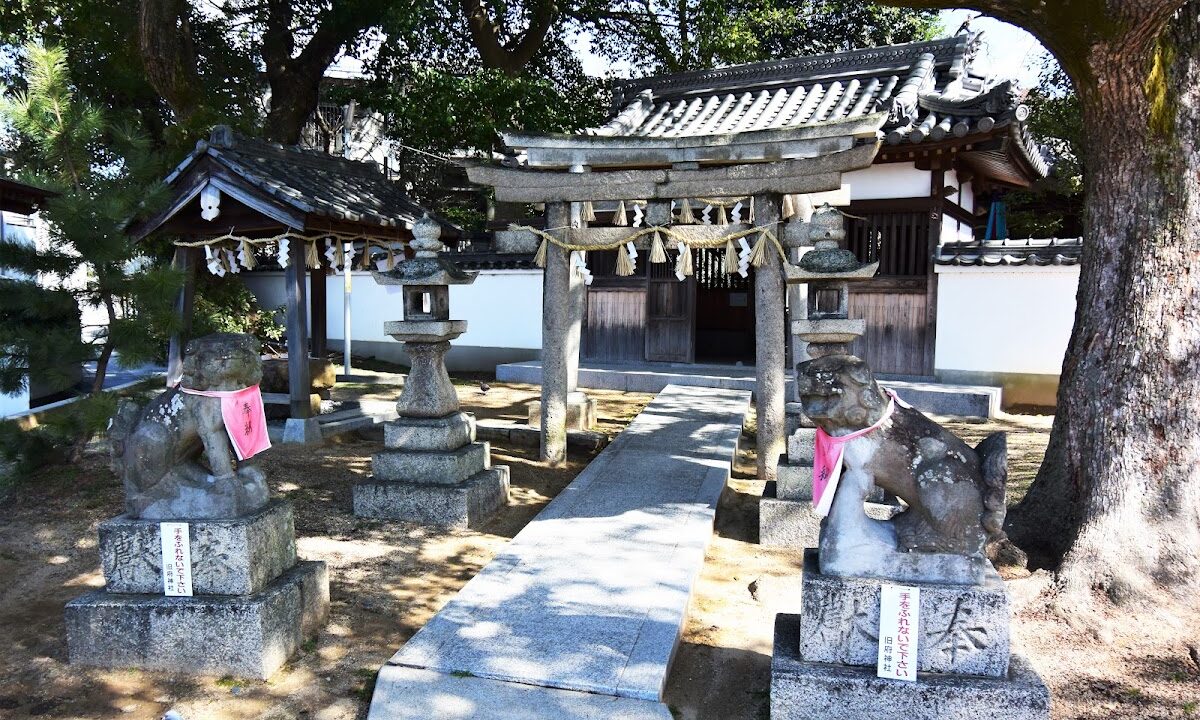
Furufu Shrine (Izumi City, Osaka Prefecture): A Complete Guide to the History, Origins, and Access of this Ancient Shrine
Furufu Shrine, located in Oimachi, Izumi City, Osaka Prefecture, is a historical shrine known as a Shikinaisha (a shrine listed in the Engishiki Jinmyocho, a historical record of shrines). Situated near Shinoda Forest, it is also known as a place associated with the legend of Kuzunoha. This article comprehensively explains everything you need to know before visiting, from the detailed history of Furufu Shrine, its enshrined deities, highlights within the grounds, to access methods.
Basic Information about Furufu Shrine
Furufu Shrine is located at 198 Oimachi, Izumi City, Osaka Prefecture. Its official name is written as “舊府神社” or “旧府神社”. It is pronounced “Furufu Jinja”.
Location and Shrine Rank
- Location: 198 Oimachi, Izumi City, Osaka Prefecture
- Former Shrine Rank: Village Shrine
- Shikinaisha: Kyufu Shrine, Izumi District, Izumi Province (Listed in the Engishiki Jinmyocho)
- Religious Corporation Status: Independent Shrine
A Shikinaisha is a shrine listed in the Engishiki Jinmyocho, compiled in the mid-Heian period, indicating that it was a prestigious shrine recognized by the imperial court at that time. Kyufu Shrine is listed as a Shikinaisha in Izumi District, Izumi Province, and is an ancient shrine with a history of at least 1000 years.
Deity
The current deity of Kyufu Shrine is Susanoo-no-Mikoto. Susanoo-no-Mikoto is a representative god in Japanese mythology, known as the younger brother of Amaterasu-Omikami, and famous for the legend of slaying the Yamata no Orochi (eight-headed serpent). It is widely worshipped as a god of protection against misfortune, disease, and agriculture.
Changes in the Deity
During the Edo period, it was also called “Gozu Tenno Shrine.” Gozu Tenno is a deity from the era of syncretism of Buddhism and Shinto, and was identified with Susanoo-no-Mikoto. Following the Meiji-era separation of Shinto and Buddhism, it officially became a shrine dedicated to Susanoo-no-Mikoto.
While there is a lack of historical records regarding the original deity, it is believed to have attracted worshippers seeking protection against disease and misfortune since ancient times.
History and Origins
There are no reliable historical records regarding the founding date or circumstances of the Kyufu Shrine, so the details are unknown. However, since it is listed in the Engishiki Jinmyocho (completed in 927), it is certain that it is an ancient shrine that existed at least before the mid-Heian period.
Origin of the Company Name “Kyūfu”
There are two main theories regarding the distinctive name “Kyūfu” (Old Capital).
Theory 1: The Odake-no-miya Theory
The first theory suggests the name originates from “Odake-no-miya,” the temporary palace of Empress Jingū. It is said that Empress Jingū established a temporary palace in this area during or after her conquest of the Three Kingdoms of Korea, and the “old palace (fu)” became the origin of the company name.
Theory 2: The Former Provincial Capital Theory
The second theory suggests that the Izumi Provincial Capital was located in this area before its relocation. Izumi Province was established in 713 AD, separating from Kawachi Province, and the provincial capital is believed to have been located near present-day Fuchu-cho, Izumi City. However, this theory suggests that the provincial capital or a related facility existed in this area before or for a period of time. This interpretation suggests that “old capital (kokufu)” became the company name.
Neither theory has definitive proof, but both suggest that the place name and shrine name “Kyūfu” (躊府) indicated an important location from ancient times.
Edo Period to Meiji Period
During the Edo period, it was known as “Gozu Tennō-sha” (五頭天王社) and attracted local devotion. Gozu Tennō was a popular deity in folk religion as a god who wards off epidemics, and was also associated with Gion faith.
In 1872 (Meiji 5), with the establishment of the modern shrine ranking system, it was designated a village shrine. This means that when shrine ranks such as Gōsha (郷社) and Murasha (村社) were established, Kyūfu Shrine was recognized as a village shrine.
Consolidation and Reconstruction in the Taisho Period
A noteworthy event in the history of Kyūfu Shrine is the temporary consolidation of shrines during the Taisho period.
- June 23, 1915 (Taisho 4): Enshrined together with Shinodamori Kuzunoha Inari Shrine in Kuzunoha-cho, Izumi City.
- 1916 (Taisho 5): Re-enshrined in its original shrine building.
From the late Meiji period to the Taisho period, due to the government’s policy of consolidating shrines, many small shrines were merged into larger nearby shrines. Kyufu Shrine was also temporarily enshrined with the nearby Shinodamori Kuzunoha Inari Shrine, but was returned to its original location after only about a year. This is thought to be due to strong demand from local residents, indicating the shrine’s importance to the community.
Showa to the Present
After the war, it has remained an independent shrine, attracting worshippers as the local guardian deity. Despite its small size, it possesses a history and status as a Shikinaisha (a shrine listed in the Engishiki, an ancient Japanese legal text), and has been carefully preserved by the local people.
Shrine Grounds
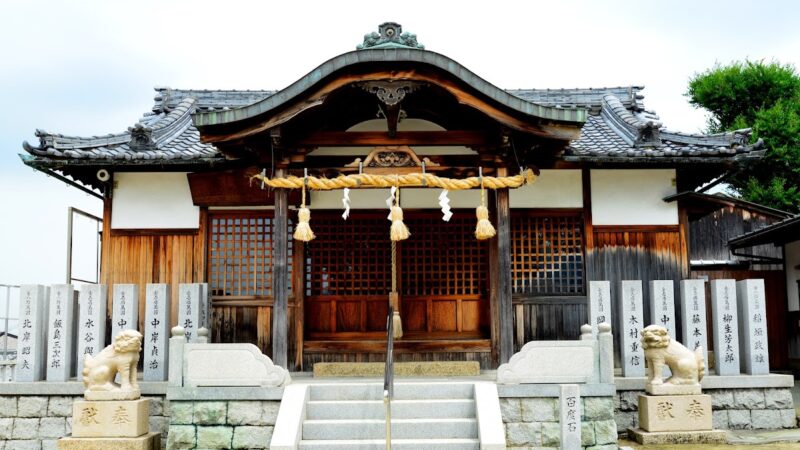
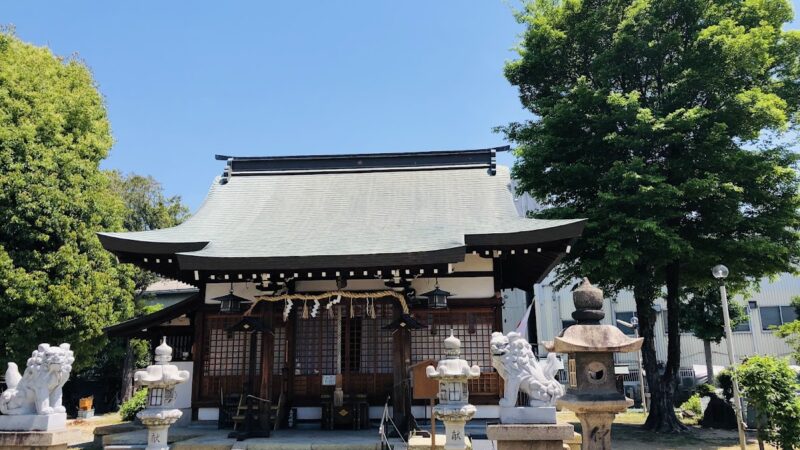
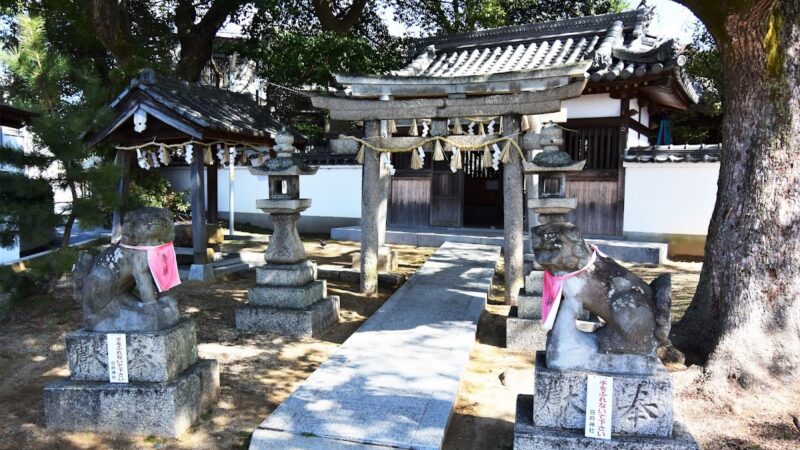
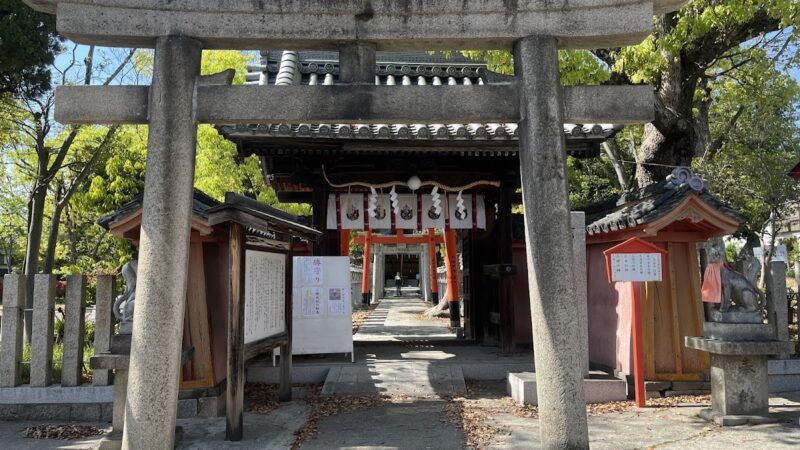
Although located in a residential area, the grounds of Kyufu Shrine are a tranquil space surrounded by a lush forest. Even from a distance, the shrine’s presence is immediately apparent, resembling a forest with large trees.
Shrine Buildings
The main hall, though small, maintains a traditional shrine architectural style. The layout from the worship hall to the main hall follows the typical shrine form.
Subsidiary Shrines
In addition to the main hall, several small subsidiary shrines are enshrined within the grounds. While detailed records are limited, numerous small shrines that attract local devotion are scattered throughout.
Sacred Trees and Natural Environment
The grounds are characterized by ancient trees and lush greenery. In the increasingly urbanized city of Izumi, the grounds of Kyufu Shrine are a valuable green space, preserving a forest-like environment that evokes the dignity of an ancient shrine. This rich natural environment is one of the shrine’s important characteristics.
Relationship between Shinoda Forest and the Kuzunoha Legend
Kyufu Shrine is located near Shinoda Forest, a place associated with the famous “Kuzunoha Legend.”
The Legend of Kuzunoha
The legend of Kuzunoha tells of a white fox that Abe Yasuna helped in the Shinoda Forest. The fox transformed into a beautiful woman named Kuzunoha, became his wife, and gave birth to Dojimaru (later known as the Onmyoji, Abe no Seimei). This legend is famous as a subject for Noh and Kabuki plays, and the Shinoda Forest area is known as the birthplace of Abe no Seimei.
Relationship with Shinoda Mori Kuzunoha Inari Shrine
The Shinoda Mori Kuzunoha Inari Shrine, located near the Kyufu Shrine, is a central sacred site of the Kuzunoha legend. It was at this Shinoda Mori Kuzunoha Inari Shrine that the Kyufu Shrine was temporarily merged in 1915 (Taisho 4). The two shrines have deep geographical and religious ties, and it is believed that they formed a unified religious sphere as a group of shrines in the Shinoda Forest area.
Annual Events and Festivals
At the Kyufu Shrine, as the local tutelary shrine, various festivals are held throughout the year. Since the detailed festival schedule may vary from year to year, it is recommended to check before visiting.
Like most shrines, it is believed that annual events such as New Year’s Day festivals, spring festivals, and autumn festivals are held. The autumn grand festival, in particular, has been held as an important local event.
Access and Transportation Information
Detailed instructions on how to access Kyufu Shrine are provided below.
Access by Train
Nearest Station: JR Hanwa Line “Kita-Shinoda Station”
- Approximately 6 minutes on foot from Kita-Shinoda Station (approx. 460m)
- Exit from the west exit of the station and proceed west through the residential area to access the location.
Access from Osaka City
- From JR Tennoji Station: Approximately 20 minutes on the JR Hanwa Line Rapid Service, get off at Kita-Shinoda Station
- From Osaka Station/Umeda: Take the JR Osaka Loop Line to Tennoji Station, then transfer to the JR Hanwa Line
Access from Sakai City
- From Sakai City Station: Approximately 10 minutes on the JR Hanwa Line, get off at Kita-Shinoda Station
From Other Major Stations
- From Kishiwada City: Approximately 15 minutes on the JR Hanwa Line, get off at Kita-Shinoda Station
- From Izumi-Fuchu Station: Approximately 5 minutes on the JR Hanwa Line, get off at Kita-Shinoda Station (one station away).
Access by Car
- Hanwa Expressway: Approximately 10 minutes from “Kishiwada-Izumi IC”
- National Route 26: Accessible from Izumi city center via prefectural roads.
Parking: There may be parking spaces for visitors on the shrine grounds or nearby, but since it is located in a residential area, we recommend using public transportation.
Combining Visits with Nearby Shrines
When visiting Kyufu Shrine, we also recommend visiting the following nearby shrines.
- Shinoda Mori Kuzunoha Inari Shrine: Approximately 15 minutes on foot, the central sacred site of the Kuzunoha legend
- Izumi Inoue Shrine: Fuchu-cho, Izumi City, an ancient shrine listed in the Engishiki (ancient Japanese legal code) and known for the spring water of Izumi Shimizu
- Ootori Taisha Shrine: Nishi-ku, Sakai City, the Ichinomiya (first-ranked shrine) of Izumi Province
Manners and Precautions for Visiting Shrines
We will introduce basic manners and precautions when visiting former shrines.
Basic Etiquette for Visiting a Shrine
- Bow before passing through the torii gate: This is a courtesy before entering the sacred area.
- Walk along the edge of the path: The center is considered the path of the gods.
- Purify yourself at the water basin: If there is a water basin, purify your hands and mouth.
- Worship at the main hall: The basic method is two bows, two claps, one bow (two bows, two claps, one bow).
Precautions
- As it is located in a residential area, please be considerate of the neighbors.
- The shrine grounds are a sacred place. Please refrain from making loud noises or littering.
- Photography is permitted, but please be considerate of other worshippers.
- The shrine office may not always be staffed. If you wish to receive a Goshuin (shrine stamp), please check in advance.
Other Major Shrines in Izumi City
Besides Kyufu Shrine, Izumi City is home to many other historical shrines.
Other Major Shrines in Izumi City ### Izumi Inoue Shrine
Located in Fuchu-cho, Izumi City, this is a Shikinaisha (a shrine listed in the Engishiki, an ancient Japanese legal code) and is known for its spring water, Izumi Shimizu. It is said to be the origin of the place name Izumi and is one of Izumi City’s representative ancient shrines.
Hijiri Shrine
Located in Oji-cho, Izumi City, it is counted as one of the five major shrines of Izumi.
Shinoda Mori Kuzunoha Inari Shrine
As mentioned above, this shrine is famous for the Kuzunoha legend and attracts many worshippers as the birthplace of Abe no Seimei.
Shikinaisha Shrines and the Former Shrine Ranking System in Osaka Prefecture
Understanding the historical background of shrines in Osaka Prefecture is important for understanding the former prefectural shrines.
What are Shikinaisha Shrines?
Shrines listed in the Engishiki Jinmyocho (completed in 927) are called Shikinaisha shrines. Numerous Shikinaisha shrines exist within Osaka Prefecture (formerly the provinces of Settsu, Kawachi, and Izumi), and Kyufu Shrine is one of them. Shikinaisha are prestigious shrines recognized by the imperial court in ancient times and are considered to have high historical value.
Modern Shrine Ranking System
From the Meiji era to the pre-war period, shrines were ranked according to a system called “shrine rank.”
- Kanpei-sha/Kokuhei-sha: Shrines receiving offerings from the state (classified into major, medium, and minor shrines)
- Fuken-sha: Shrines receiving offerings from prefectures
- Go-sha: Shrines receiving offerings from counties and cities
- Mura-sha: Shrines receiving offerings from villages
- Mugaku-sha: Shrines without a shrine rank
Kyufu Shrine was ranked as a village shrine and recognized as the local tutelary deity. Although the shrine ranking system was abolished after the war, terms such as “former village shrine” and “former prefectural shrine” are still used today as indicators of the shrine’s history.
Former Prefectural Shrines of Osaka Prefecture
There are 24 shrines designated as former prefectural shrines within Osaka Prefecture. These were considered particularly prestigious shrines within the prefecture. The main former prefectural shrines include:
- Toyonaka City: Hattori Tenjin Shrine
- Ikeda City: Gofuku Shrine
- Sakai City: Ishizu Taijin Shrine, Sugawara Shrine
- Kishiwada City: Kishijo Shrine
Compared to these former prefectural shrines, the “Kyu-Fujinja” (former prefectural shrines) were ranked as village shrines, but they possess unique value due to their long history as Shikinaisha (shrines listed in the Engishiki).
Charm and Highlights of Kyu-Fujinja
The charm of Kyu-Fujinja lies in their tranquil atmosphere and profound history.
The Dignity of an Ancient Shrine
With a history of over 1000 years as a Shikinaisha, they possess the dignity of an ancient shrine, even if small in scale. In today’s increasingly urbanized world, the fact that these ancient places of worship are still preserved is of great value.
Abundant Natural Environment
Despite being located within a residential area, the shrine grounds are surrounded by a lush forest, creating a healing space that allows you to forget the hustle and bustle of the city. The sacred atmosphere created by the large trees provides visitors with tranquility and peace.
Historical Walk in the Shinoda Forest Area
Kyufu Shrine can be visited as part of a historical walk in the Shinoda Forest area. While visiting places associated with the Kuzunoha legend, you can experience the history of the Izumi region from ancient to medieval times.
Community-Rooted Faith
As evidenced by its history of being rebuilt immediately after being merged with another shrine during the Taisho era, this shrine has been deeply loved by the local residents. As the guardian deity of the region, it continues to attract worshippers to this day.
Nearby Tourist Spots
Here are some nearby tourist spots that you might want to visit when you come to Kyufu Shrine.
Shinoda Hills
The Shinoda Hills are a hilly area spreading across the northern part of Izumi City, where nature remains abundant. There are hiking trails, allowing you to enjoy nature walks.
Izumi City Kubosou Memorial Museum
This museum is known for its collection of East Asian ancient art, including national treasures and important cultural properties. It is located about 15 minutes by car from Kyufu Shrine.
Matsuo-ji Temple
A Shingon Buddhist temple located in Matsuo-ji-cho, Izumi City, and a sacred site of Shugendo (mountain asceticism) said to have been founded by En no Gyoja.
Izumi Recycling Environmental Park
A facility that has been repurposed from an industrial waste disposal site into a park, where visitors can enjoy flowers throughout the seasons.
Summary
Kyufu Shrine is a venerable ancient shrine located in Izumi City, Osaka Prefecture, with a history of over 1000 years as an Engishiki-listed shrine. It enshrines Susanoo-no-Mikoto and, during the Edo period, was known as Gozu Tenno Shrine, attracting worshippers seeking protection against epidemics.
Although small in scale, this shrine possesses the prestige of a Shikinaisha (a shrine listed in the Engishiki, an ancient Japanese legal code) and a history of deeply rooted faith in the region. The story of its consolidation and reconstruction during the Taisho era speaks volumes about the deep affection the local residents have for it. It’s a shrine well worth visiting, both as part of a historical walk through the Shinoda no Mori area and as a place for tranquil worship.
Its excellent accessibility—just a 6-minute walk from Kita-Shinoda Station on the JR Hanwa Line—makes it easily accessible from Osaka City and Sakai City. When visiting Izumi City, be sure to visit Kyufu Shrine and experience its ancient history and the serene atmosphere of the forest.
External Links
For more detailed and up-to-date information about Kyufu Shrine, please refer to the following resources:
- Izumi City Tourism Association Official Website
- Osaka Prefectural Shrine Association Website
- Association of Shinto Shrines Database
When visiting, it is recommended to check the latest visiting hours and event schedule in advance.