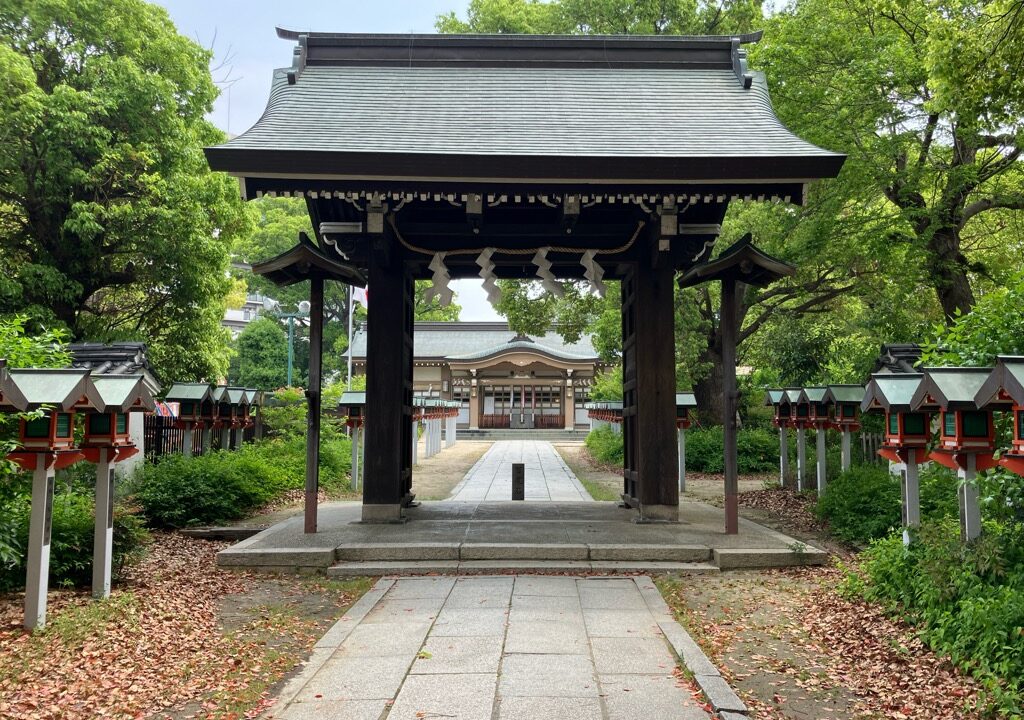
Kaguhashi Shrine (Osaka Prefecture) Complete Guide: History, Deities, Access, and Highlights Explained in Detail
Kaguhashi Shrine, located in Kashima, Yodogawa-ku, Osaka City, is a historic shrine with a legend of Emperor Kotoku’s visit. Also known as “Kashima Shrine” and “Kashima Daimyojin,” it has been cherished by the local community. This article provides detailed information useful for visitors, including the history of Kaguhashi Shrine, its enshrined deities, highlights within the grounds, and access methods.
Basic Information on Kaguhashi Shrine
Kaguhashi Shrine is located in Kashima 1-chome, Yodogawa-ku, Osaka City, and its former shrine rank was Village Shrine. Despite being situated in a residential area, it boasts lush green grounds and has been preserved as a center of local faith to this day.
Basic Data
- Location: 1-50-1 Kashima, Yodogawa-ku, Osaka City, Osaka Prefecture
- Former Shrine Rank: Village Shrine
- Deities Enshrined: Ukanomitama-no-kami and seven other deities
- Founded: Heian period (Tentoku era, 957-961)
- Other Names: Kashima Shrine, Kashima Daimyojin
- Nearest Station: Kashima Station, Hanshin Electric Railway Main Line
Origin of the Shrine Name and the Legend of Emperor Kotoku
The name of Kaguhashi Shrine has a special origin. It is based on a legend that during the Asuka period, when the 36th Emperor Kotoku visited this area, he admired the scenery and fragrance of the place and composed a poem saying “Kaguhashi” (fragrant, wonderful).
These words of the Emperor became the origin of the place name “Kashima” and were also passed down to the shrine’s name. Emperor Kōtoku was the emperor who established the Naniwa Nagara Toyosaki Palace, and therefore has strong ties to Osaka. The legend of his visit to this area speaks to its importance since ancient times.
History of Kaguhashi Shrine
Founded in the Heian Period
Kaguhashi Shrine is believed to have been founded during the Tentoku era (957-961) of the Heian period. This was the reign of Emperor Murakami, a time when Heian culture flourished. As an ancient shrine with a history of over 1000 years, it has attracted the faith of the local community.
From its founding, Inari-sama (the fox deity) has been enshrined as the main deity, and people have visited the shrine to pray for abundant harvests and business prosperity. The Kashima district, near the mouth of the Yodo River, has long been an important point for water transport, and a region where agriculture and commerce flourished.
Development during the Edo Period
During the Edo period, the shrine was revered by the villagers as the tutelary deity of Kajima Village. During this time, it was affectionately known as “Kajima Daimyojin” and played a central role in the village festivals. As commercial activities utilizing the Yodo River’s water transport flourished, the shrine’s reverence as a god of business prosperity also grew.
Establishment of Shrine Rank in the Meiji Era
With the establishment of the shrine system during the Meiji era, Kaguhashi Shrine was designated a village shrine. This meant that its status as a local shrine was officially recognized. From the Meiji to the early Showa period, the shrine buildings were improved along with the development of the region.
The Great Hanshin-Awaji Earthquake and Reconstruction
A major turning point in the history of Kaguhashi Shrine was the Great Hanshin-Awaji Earthquake of 1995 (Heisei 7). This earthquake caused immense damage, resulting in the collapse of the shrine buildings, which had a long history.
However, thanks to the enthusiasm of the parishioners and local residents, reconstruction progressed, and the shrine building was rebuilt around 1998. While the current shrine building is relatively new, it follows the traditional style of shrine architecture while incorporating earthquake-resistant construction. This reconstruction demonstrated the strong unity of the local community and their deep faith in the shrine.
Deities and Divine Virtues
Kaguhashi Shrine enshrines seven deities. Each deity possesses different divine virtues and responds to the various wishes of worshippers.
Main Deity: Ukanomitama-no-kami
The main deity is Ukanomitama-no-kami, widely known as Inari-sama, the god of food and grains. This deity bestows blessings of abundant harvests, business prosperity, and industrial development. “Uka” means grain, and “Mitama” means divine spirit, attracting the faith of people involved in agriculture and commerce.
Enshrined Deities
Ukemochi-no-kami
A goddess who presides over food, appearing in the *Nihon Shoki* (Chronicles of Japan). She is revered as the guardian deity of all food production, including agriculture, fishing, and sericulture.
Wakumusubi-no-kami
A deity who presides over the growth of grains, and is worshipped for abundant harvests. “Waku” means youthful vitality, and “Musubi” means the power of creation.
Haniyama-hime-no-kami
A goddess of the earth, worshipped as the guardian of the land, and the god of architecture and agriculture. She is a deity who brings blessings and stability to the earth.
Amaterasu-Omikami
The supreme deity of Japanese mythology and the ancestral deity of the Imperial family. As the sun goddess, she is worshipped as the source of life and the goddess of national peace and security.
Sumiyoshi-no-Okami
The god of safe voyages and traffic safety. This deity is enshrined at Sumiyoshi Taisha in Osaka, making it a fitting deity for the Kashima area, which has deep ties to the Yodo River water transport.
Hachiman-no-Okami
A warrior god, a deified representation of Emperor Ojin, widely worshipped as a god of good fortune in competitions, protection from evil, and national peace.
Summary of Divine Virtues
At Kaguhashi Shrine, these seven deities bestow a variety of divine blessings, as listed below.
- Abundant harvests and business prosperity (Ukanomitama-no-kami, Uke-mochi-no-kami)
- Family safety and traffic safety (Sumiyoshi-no-kami)
- Protection from evil and good fortune (Hachiman-no-kami)
- Land protection and building safety (Haniyama-hime-no-kami)
- Agricultural prosperity (Wakumusubi-no-kami, Uke-mochi-no-kami)
- National peace and fulfillment of wishes (Amaterasu-Omikami)
Highlights of the Shrine Grounds
Shrine Buildings
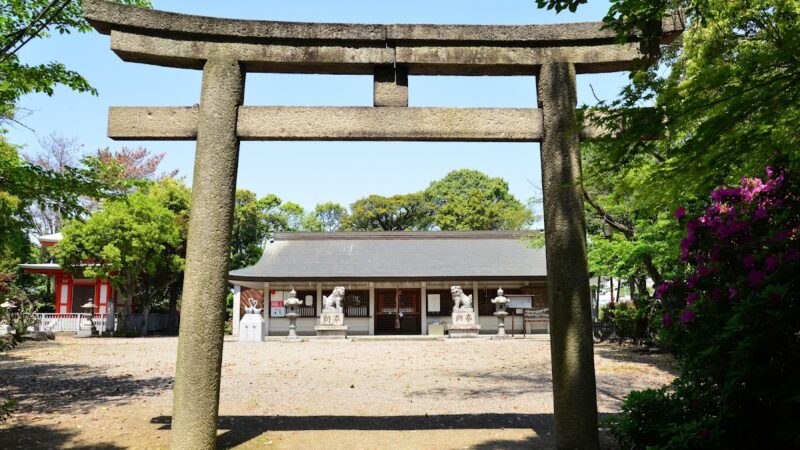
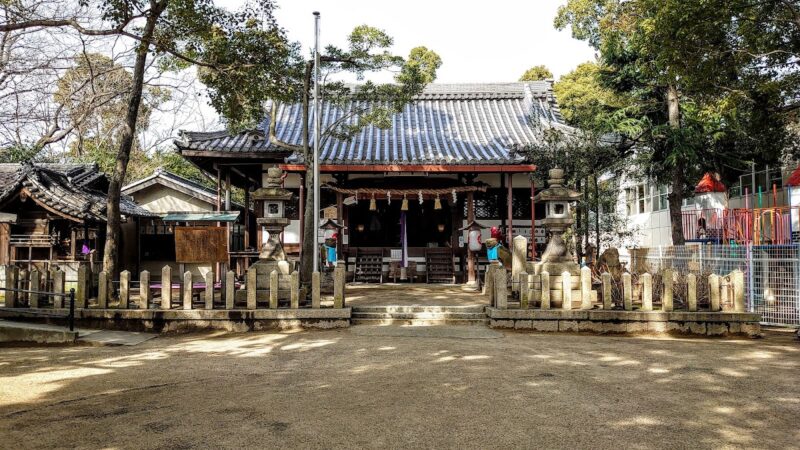
The shrine buildings, rebuilt around 1998, retain the beauty of traditional shrine architecture while incorporating modern earthquake-resistant structures. Both the main hall and the worship hall have the warmth of wooden architecture, exuding a sense of dignity despite their newness.
In front of the worship hall, there is a space for worshippers to offer their prayers, allowing for a quiet and peaceful atmosphere. The area around the shrine buildings is meticulously clean, reflecting the careful maintenance by the parishioners.
Atmosphere of the Shrine Grounds
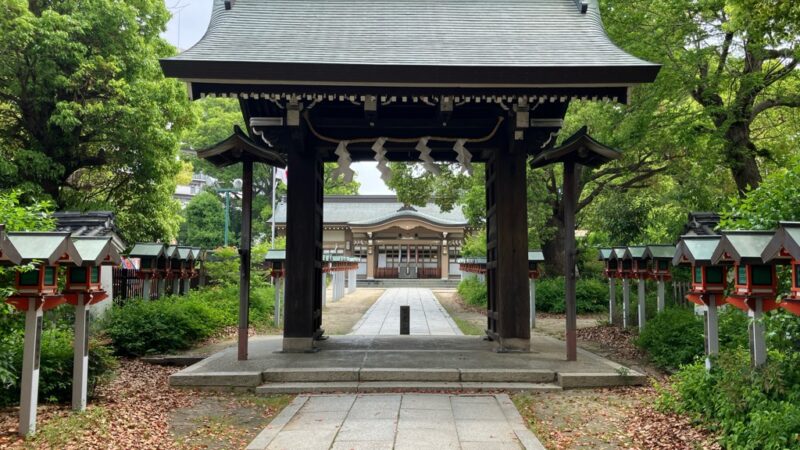
Despite being located in a residential area, the shrine grounds boast a pleasant amount of greenery, creating a tranquil space that allows visitors to forget the hustle and bustle of the city. The grounds are compact but well-organized, making it easy to visit.
With a nursery school nearby, the shrine also plays a role in watching over the growth of local children. Many families visit for life’s milestones such as Shichi-Go-San (a traditional rite of passage for children) and Hatsumiyamairi (a first shrine visit for newborns), demonstrating its deep roots in the community.
Seasonal Scenery
In spring, the trees on the grounds are enveloped in fresh greenery, creating a refreshing atmosphere for worship. During the summer festival, local people gather, creating a lively atmosphere. In autumn, the grounds welcome visitors with their subdued colors, and in winter, one can offer prayers for the new year in a serene atmosphere.
Cultural Assets and Offerings
Cultural Assets
Although the old shrine building collapsed in the Great Hanshin-Awaji Earthquake, and no cultural assets as structures remain, the history of the shrine itself is a valuable cultural heritage of the region. The legend of Emperor Kōtoku’s visit and the history of faith spanning over 1000 years hold value beyond mere tangible cultural assets.
Items Offered and Goshuin (Shrine Seals)
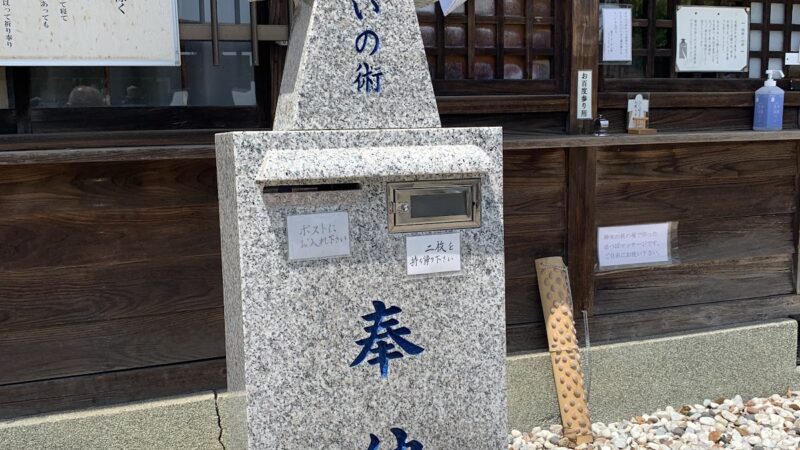
At Kaguhashi Shrine, you can receive a Goshuin. Many visitors receive one as a memento of their visit and as proof of their connection to the shrine. Regarding items offered, it is recommended to check in advance, as the shrine office is not always open.
Items such as amulets and talismans are also available, catering to various wishes including family safety, business prosperity, and traffic safety.
Access
Access by Train
Walking distance from Kashima Station on the Hanshin Electric Railway Main Line
The nearest station is Kashima Station on the Hanshin Electric Railway Main Line. It’s approximately a 5-7 minute walk from Kashima Station. Exit the station and head northwest, passing through a residential area to reach the shrine. It’s very conveniently located near the station.
Kashima Station is located approximately 15 minutes from Osaka Umeda Station on the Hanshin Main Line, and approximately 5 minutes from Amagasaki Station. Only local trains stop at this station; therefore, if you wish to use express or limited express trains, you will need to transfer at Amagasaki Station.
Walking from JR Kobe Line Tsukamoto Station
It is also accessible on foot from JR Kobe Line Tsukamoto Station. The walk takes approximately 12-15 minutes. This is another option if you are using JR.
Access by Bus
Osaka City Bus
Get off at the “Kashima” bus stop on the Osaka City Bus and it’s a short walk. Multiple bus routes are available, providing access from Umeda and Juso. It is recommended to check the bus timetable in advance.
Access by Car
Hanshin Expressway
Approximately 10 minutes from the “Toyosaki Exit” of the Hanshin Expressway Route 11 Ikeda Line, or approximately 10 minutes from the “Amagasaki East Exit” of the Hanshin Expressway Route 3 Kobe Line.
Parking
There is no large-scale parking lot specifically for the shrine, but there are coin-operated parking lots nearby. During busy periods such as New Year’s Day and annual festivals, we recommend using public transportation.
Landmarks in the Area
The shrine is located in a residential area, so using a map app is convenient for first-time visitors. It is located northwest of Kashima Station, on the way to the Yodogawa riverbank. Kashima Nursery School is nearby, and local residents are happy to provide directions.
Manners and Etiquette for Visiting the Shrine
Basic Etiquette for Visiting the Shrine
- Bow Before Passing Through the Torii Gate: As a sign of respect upon entering the sacred area, bow before the torii gate.
- Purify at the Water Basin: If there is a water basin, purify your left hand, then your right hand, and then your mouth.
- Worship: Worship in front of the main hall using the “two bows, two claps, one bow” ritual.
- Bow deeply twice
- Clap your hands twice
- Silently recite your wish
- Finally, bow deeply once more
- When leaving the shrine grounds: After exiting the torii gate, turn around and bow towards the shrine.
Attire for Visiting the Shrine
Casual clothing is acceptable, but please avoid overly casual or revealing attire. Clothing that reflects the respect you have for the deities is desirable.
Photography
Photography is generally permitted within the shrine grounds, but please refrain from taking photos inside the main hall or in sacred areas. Also, please be considerate of other visitors. When posting on social media, please be careful not to tarnish the shrine’s reputation.
Annual Events and Festivals
Annual Festival
Kaguhashi Shrine holds various Shinto rituals throughout the year. The most important festival, the annual festival, is a significant event where local people gather to carry on the shrine’s history and traditions. The date of the annual festival can be found at the shrine or on local bulletin boards. ### New Year’s Visit
Many worshippers visit the shrine for their first shrine visit of the year. As the local guardian deity, families and local residents pray for safety and prosperity throughout the year. While not as crowded as large shrines, the shrine is bustling with more worshippers than usual from New Year’s Day to the third day.
Shichi-Go-San (7-5-3 Festival)
In November, many families visit the shrine for Shichi-Go-San. This is an important event to celebrate children’s growth and pray for their continued healthy development. Because there is a nursery school nearby, the shrine is cherished as a place that watches over the growth of local children.
Nearby Attractions
Yodogawa Riverbank
The Yodogawa Riverbank is within walking distance of the shrine. The vast riverbank is ideal for walks and jogging, and in spring, the cherry blossom trees create a beautiful scene, making it a place of relaxation for local residents. A stroll along the riverbank after visiting the shrine is highly recommended.
History of the Kashima District
The Kashima district has a history of flourishing as a key point on the Yodo River waterway. In the past, many ships came and went, and it was a bustling center for the collection and distribution of goods. Although it is now a residential area, traces of the old townscape remain in places, making it enjoyable for historical walks.
Nearby Shrines and Temples
There are many other historical shrines and temples scattered throughout Yodogawa Ward. Enjoying a “shrine pilgrimage” by visiting several shrines is also a good idea. Learning about the unique history and enshrined deities of each shrine deepens your understanding of the local culture.
The Charm of Kaguhashi Shrine
A Shrine Rooted in the Community
The greatest charm of Kaguhashi Shrine is that it is a shrine deeply rooted in the community. With a history of over 1000 years, it continues to be close to the lives of the local people, watching over important milestones in their lives. Its history of recovery from the Great Hanshin-Awaji Earthquake speaks to the strong community unity and deep faith in the shrine.
Legend of Emperor Kōtoku
The legend of Emperor Kōtoku’s visit and the shrine’s name, derived from the word “Kaguhashi,” enhance its historical value. The beauty of this land, cherished by ancient emperors, continues to be passed down to the present day.
Diverse Divine Blessings
By enshrining seven deities, the shrine offers a wide range of divine blessings, from abundant harvests and business prosperity to traffic safety and protection from evil. It is a deeply compassionate shrine that responds to the individual wishes of each worshipper.
Easy Access
Its convenient location, just a few minutes’ walk from Hanshin Electric Railway’s Kashima Station, is another attractive feature. It’s easily accessible from central Osaka, making it a convenient place to visit.
Visitor Testimonials
The following are some comments from people who have actually visited Kaguhashi Shrine:
“It’s a quiet shrine located in a residential area, and I was able to pray in peace.”
“Learning about the history of recovery from the Great Hanshin-Awaji Earthquake, I felt the depth of faith of the local people.”
“Although the shrine building is new, it has a traditional atmosphere, and I felt my soul cleansed.”
“It’s close to the station, making it easily accessible and convenient to visit.”
“I felt that this is a shrine cherished by the local community.”
These comments show that Kaguhashi Shrine is loved by the community and provides peace to its visitors.
Points to Note When Visiting
Shrine Office Opening Hours
The shrine office is not open all the time, so if you wish to receive a goshuin (shrine stamp) or other items, it is recommended to check in advance. General worship is possible at any time, but consideration for the surroundings is necessary when visiting early in the morning or late at night.
Consideration in a Residential Area
Since the shrine is located in a residential area, please behave quietly when visiting and remember to be considerate of the nearby residents. Especially if you are coming by car, please be careful not to cause inconvenience to the neighbors by parking on the street.
Weather Preparations
The shrine grounds are not very large, so it is possible to visit even in rainy weather, but we recommend bringing an umbrella or rain gear. In summer, there is little shade, so precautions against heatstroke are also necessary.
Summary
Kaguhashi Shrine is a venerable shrine with a history of over 1000 years, dating back to the Heian period, and its name originates from the legend of Emperor Kotoku’s visit. Having overcome the ordeal of the Great Hanshin-Awaji Earthquake, the shrine buildings, rebuilt through the faith and efforts of the local people, showcase a beautiful blend of tradition and modernity.
Kaguhashi Shrine, which enshrines seven deities and bestows various divine blessings such as abundant harvests, business prosperity, family safety, and traffic safety, remains a beloved guardian deity of Kashima in Yodogawa Ward, Osaka City, and is still cherished by the local community.
Its convenient location, just a few minutes’ walk from Hanshin Electric Railway Kashima Station, is also a major attraction, making it easy to stop by during your Osaka sightseeing. Nestled in a quiet residential area, stepping onto the shrine grounds reveals a tranquil atmosphere that makes you forget the hustle and bustle of the city.
Kaguhashi Shrine is steeped in history, tradition, and the warm faith of the local people. Why not pay a visit? You’re sure to find a moment of peace and tranquility.