Complete Guide to Kurahashi Sōsha Shrine (Toyonaka City, Osaka Prefecture) | History, Goshuin (Shrine Seals), and Highlights of an Ancient Shrine Associated with the Carp Legend and the Jōkyū War
Kurahashi Sōsha, located in Shōmoto-machi, Toyonaka City, Osaka Prefecture, is a shrine known for its long history dating back to ancient times and its unique carp legend. Also known as “Koi no Miya” (Carp Shrine), it has attracted the faith of the local community. This article comprehensively introduces information you should know before visiting Kurahashi Sōsha, including its history, enshrined deities, goshuin information, highlights within the grounds, and access methods.
What is Kurahashi Sōsha? | The Guardian Deity of an Ancient Manor
Kurahashi Sōsha is a shrine that has been revered since ancient times as the guardian deity of Kurahashi no Shō (Kurahashi Manor). The Mukubashi Manor was established in the mid-12th century as a territory of the Sekkan family (regent family). Divided into eastern and western sections, it was located near the confluence of the Inagawa and Kanzaki Rivers, in what is now the southwestern part of Toyonaka City, Osaka Prefecture, and the vicinity of Tonouchi-cho, Amagasaki City, Hyogo Prefecture.
The Mukubashi Sōsha Shrine is situated in Shōmoto (present-day Shōmoto-chō), the center of the eastern and western Mukubashi Manors. It is called “Sōsha” (general shrine) because it enshrines multiple deities from within the manor. It was formerly known as the Gozu Tennō Shrine and was counted as one of the Three Great Gozu Tennō Shrines of Toshima, along with Kanda Yasaka Shrine (Kanda, Ikeda City, Osaka Prefecture) and Rikura Kasuga Shrine (Rikura, Toyonaka City, Osaka Prefecture).
Alternative Name as the Carp Shrine
The Mukubashi Sōsha Shrine is also affectionately known as the “Carp Shrine.” This name originates from a carp legend described later. Carp are actually kept on the shrine grounds, delighting visitors. It is particularly known as a sacred site visited by fans of the Hiroshima Toyo Carp baseball team, and even today it exhibits a unique form of worship.
History of Mukuhashi Sōsha Shrine | A History Dating Back to the Age of the Gods
Founding History and the Legend of the Carp
The founding of Mukuhashi Sōsha Shrine is ancient, dating back to the 7th year of Emperor Sujin’s reign, according to shrine tradition. According to legend, in the distant age of the gods, Susanoo-no-Mikoto descended from Takamagahara (the High Plain of Heaven) riding a carp, passing through the Kanzaki water gate to this place.
Following this descent, Ikagashikoo-no-Mikoto, the ancestor of the Kurahashibe-no-Muraji clan, established and enshrined the deity, marking the beginning of Mukuhashi Sōsha Shrine. This legend of Susanoo-no-Mikoto descending on a carp is the origin of the shrine’s alternative name, “Koi-no-Miya” (Carp Shrine), and is its most distinctive feature.
Deep Connection to the Jōkyū War
Mukubashi Sōsha Shrine is also known as the starting point of the Jōkyū War (1221), a significant event in Japanese history. The Jōkyū War was an incident in which Emperor Go-Toba ordered the pursuit and defeat of Hōjō Yoshitoki, the regent of the Kamakura Shogunate. The incident that triggered this war occurred in Mukubashi Manor.
At the time, Mukubashi Manor was Emperor Go-Toba’s estate, but the conflict between the jitō (land steward) and the manor official intensified, leading to an incident where the shogunate’s jitō killed the emperor’s manor official. This incident solidified the conflict between the emperor and the shogunate, escalating into the Jōkyū War. The area around Mukubashi Sōsha Shrine is of high historical value as the stage for this historical turning point.
From the Edo Period to the Modern Era
During the Edo period, it was widely worshipped as Gozu Tennō Shrine, a deity believed to ward off epidemics. As one of the three major Gozu Tenno shrines of Toshima, it has been deeply revered by the local people. Following the separation of Shinto and Buddhism during the Meiji era, the shrine’s name was changed from Gozu Tenno Shrine to Mukubashi Sōsha, which it remains to this day.
In modern times, the shrine suffered damage during the Great Hanshin-Awaji Earthquake (1995), when its torii gate collapsed. However, it was rebuilt in 1996, resulting in its current appearance.
Deities Enshrined | A Sōsha Shrine Dedicating Diverse Gods
Mukubashi Sōsha, as a Sōsha (general shrine), enshrines multiple deities.
Main Deity
- Susanoo-no-Mikoto: The main deity said to have descended to earth riding a carp. He is worshipped as a god of protection against disease and misfortune.
Enshrined Deities
- Empress Jingū: The empress known for her conquest of the Three Kingdoms of Korea. It is revered as the god of safe childbirth and child-rearing.
- Hachiman Okami: Refers to Emperor Ojin, known as the god of military fortune.
- Amaterasu Omikami: The supreme deity in Japanese mythology.
- Kasuga Okami: A collective term for the gods known as the tutelary deities of the Fujiwara clan.
These gods are thought to be a collection of deities worshipped in various locations within the Mukubashi estate, clearly demonstrating its character as a general shrine.
Mukubashi General Shrine Grounds | Highlights and Cultural Assets
Torii Gate and Approach
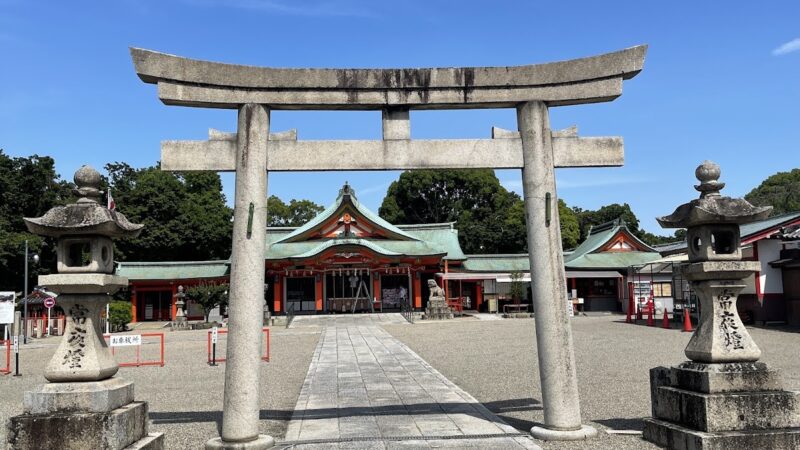
The current torii gate was rebuilt in 1996, replacing the old gate that collapsed in the Great Hanshin-Awaji Earthquake. Passing through the torii gate, a quiet approach leads to the main hall. Despite being located in a residential area, the shrine grounds are enveloped in a tranquil atmosphere. ### Worship Hall and Main Shrine
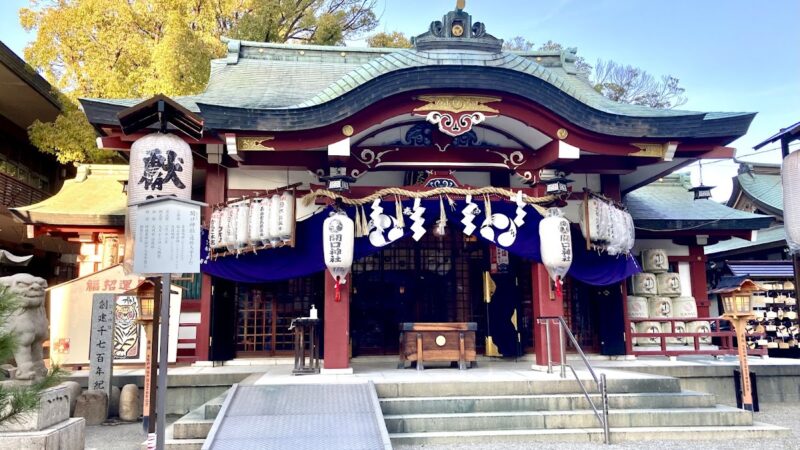
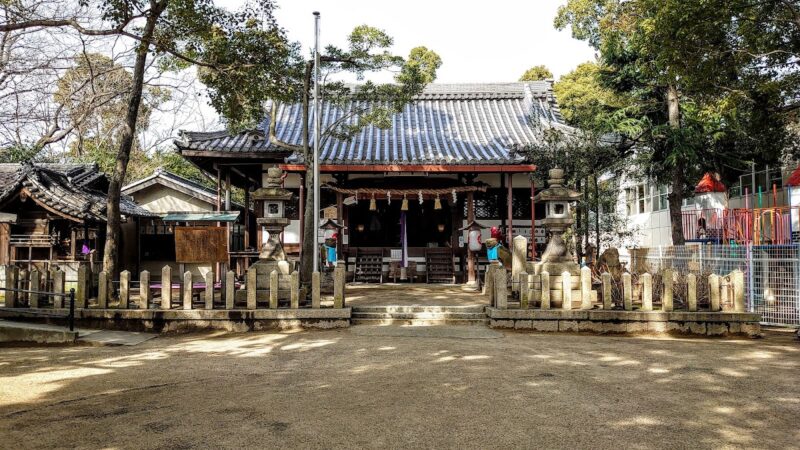
The worship hall is built in the traditional style of Shinto shrine architecture and welcomes worshippers. The main shrine is located behind the worship hall and enshrines the deity. The grounds are not particularly large, but they are meticulously maintained, reflecting the deep faith of the local people.
Carp Pond
In front of the worship hall is a carp pond where lively carp swim. This commemorates the carp legend of Mukubashi Sōsha Shrine and is a popular spot for worshippers. In particular, many Hiroshima Toyo Carp fans visit due to the “carp” symbol, making it a noteworthy example of a unique form of worship.
Subsidiary Shrines and Stone Monuments
Several subsidiary shrines and stone monuments are located within the grounds, telling the story of its long history. Information boards related to the Jōkyū War are also installed, making it a must-see for history buffs.
Information on Goshuin (Shrine Seals) at Mukubashi Sōsha Shrine
About the Issuance of Goshuin
Mukubashi Sōsha Shrine offers Goshuin. The Goshuin features the calligraphy and red seal of “Mukubashi Sōsha” and serves as a memento of your visit. Those wishing to receive a Goshuin should inquire at the shrine office.
Goshuin Issuance Hours: During visiting hours (it is recommended to check in advance for details)
Offering Fee: Similar to other shrines (approximately 300-500 yen)
About Goshuincho (Shrine Seal Books)
Please inquire at the shrine office upon your visit regarding the availability of Mukubashi Sōsha’s original Goshuincho. For those visiting shrines throughout Osaka Prefecture, a Mukubashi Sōsha Goshuin will be a valuable addition to your collection.
Annual Events and Festivals
Mukubashi Sōsha Shrine holds various festivals throughout the year.
Annual Festival
An annual festival is held at a fixed time each year, with local residents in attendance. The festival often includes the performance of Kagura (sacred dance) and a procession of a portable shrine, making it an important annual event for the community.
New Year’s Visit, Setsubun Festival, and Summer Festival
Seasonal events such as the New Year’s visit, Setsubun festival, and summer festival are also held. Many worshippers visit during the New Year’s visit to pray for a safe year.
Access Information | How to Get to Mukubashi Sōsha Shrine
Basic Information
Address: 1-2-4 Shōmoto-machi, Toyonaka City, Osaka Prefecture 561-0835
Phone Number: Please check the latest information before visiting.
Access by Train
Mukubashi Sōsha Shrine is accessible from several stations, but the walking distance from each station is somewhat long.
- Approximately 22 minutes on foot from Kanzakigawa Station on the Hankyu Kobe Line
- Approximately 28 minutes on foot from Shonai Station on the Hankyu Takarazuka Line
You may also consider using a bus or taxi from the station. Taxis are especially convenient during the summer months or if you have a lot of luggage.
Access by Car
If you are visiting by private car, please enter the above address into your car navigation system. However, parking space on the shrine grounds may be limited, so we recommend considering using nearby coin-operated parking lots.
Nearby Shrines and Temples
Several other shrines and temples are scattered around the Mukubashi Sōsha area. If you are planning a shrine tour in Toyonaka City, we recommend visiting the following shrines as well.
- Rikura Kasuga Shrine (Rikura, Toyonaka City): One of the three major Gozu Tenno shrines in Toshima
- Hattori Tenjin Shrine (Hattori, Toyonaka City): Famous as the god of feet
- Harada Shrine (Nakazakurazuka, Toyonaka City): The guardian shrine of Toyonaka City
Points to Note When Visiting Mukunohashi Soja Shrine
Manners for Visiting Shrines
Please observe basic manners when visiting a shrine.
- Bow before passing through the torii gate
- Cleanse your hands and mouth at the water basin
- Bow twice, clap twice, and bow once in front of the main hall
- Quietly observe the shrine grounds
- Bow once again at the torii gate when leaving
Regarding Photography
Photography is generally permitted on the shrine grounds, but please refrain from taking photos inside the main hall or during religious ceremonies. Also, please be considerate of other visitors. The carp pond is a popular photo spot, but please take photos quietly so as not to startle the carp.
Recommended Time to Visit
While Mukobashi Sōsha Shrine is open year-round, the following times are especially recommended:
- Spring (March-May): Beautiful fresh greenery and mild weather, ideal for visiting.
- Autumn (September-November): Beautiful autumn foliage and a pleasant season.
- During the Annual Festival: A valuable opportunity to experience local traditional events.
Faith and Benefits of Mukobashi Sōsha Shrine
Main Benefits
Mukubashi Sōsha Shrine is believed to offer the following benefits:
- Protection from plague and evil spirits: By the divine virtue of Susanoo-no-Mikoto
- Safe childbirth and child-rearing: By the divine virtue of Empress Jingu
- Long-lasting military fortune and victory: By the divine virtue of Hachiman-Okami
- Good fortune and prosperity: By the divine virtue of Amaterasu-Omikami
- Academic success: By the divine virtue of Kasuga-Okami
Beliefs related to carp
As its alternative name, “Koi-no-Miya” (Carp Shrine), suggests, there are also beliefs related to carp. Because carp “climb waterfalls,” they are considered a symbol of success and advancement, and because the word for carp sounds similar to “love,” they are also believed to bring good fortune in matchmaking. Its role as a sacred site for Hiroshima Toyo Carp fans can also be seen as a modern form of faith.
Cultural value of Mukubashi Sōsha
Historical importance
Mukubashi Sōsha is not merely a local shrine; it is a historically very important place as the starting point of the Jōkyū War, a significant conflict in Japanese history. This shrine is a valuable historical site that conveys the realities of the medieval manorial system, and is highly valuable from the perspective of historical research.
Folkloric Value
Mukubashi Sōsha, which preserves various aspects of folk beliefs such as the carp legend and the worship of Gozu Tenno, is a valuable site from a folkloric perspective. Its character as a Sōsha (general shrine) and the form of enshrining multiple deities are excellent examples of the changes in shrine belief from ancient to medieval times.
Center of the Local Community
Even in modern times, Mukubashi Sōsha functions as the spiritual center of the local community. It serves as a place to deepen community bonds through festivals and annual events, and can be said to be a valuable example of maintaining the traditional form of local community even as urbanization progresses.
Shrines to Visit in Toyonaka City | Shrines to Visit Along with Mukubashi Sōsha
In addition to Mukubashi Sōsha, there are many other attractive shrines in Toyonaka City.
Tokura Kasuga Shrine
Like Mukubashi Sōsha, this shrine is counted as one of the three major Gozu Tenno shrines of Toshima. This shrine enshrines Kasuga Okami and is also worshipped as the god of learning. It’s relatively close to Mukobashi Sōsha, so visiting both is recommended.
Hattori Tenjin Shrine
This shrine is nationally known as the god of feet and is famous for attracting many athletes and dancers. It enshrines Sugawara no Michizane and is revered as the god of learning.
Harada Shrine
As the guardian shrine of Toyonaka City, this shrine has long been a center of local faith. Its spacious grounds contain several smaller shrines, making it a worthwhile place to visit.
Points to Note When Visiting Mukobashi Sōsha
Visiting Hours
Mukubashi Sōsha is generally open for daytime visits, but please refrain from visiting at night or in the early morning. If you wish to receive a Goshuin (shrine stamp) or prayers, it is recommended to check the shrine office’s operating hours in advance.
Attire
Please dress appropriately for visiting a shrine. Especially when making a formal visit or receiving prayers, you should avoid overly casual attire.
What to Bring
- Goshuincho (stamp book) (if you wish to receive a Goshuin stamp)
- Hatsuhoryo (offering money, Goshuin stamp fee, etc.)
- Camera (for commemorative photos)
- Drinks (especially in summer)
Surrounding Facilities
The area around Mukubashi Sōsha is a residential area, and there are not many large commercial facilities. It is best to do your meals and shopping around Shōnai Station.
Summary | The Charm of Mukubashi Sōsha
Mukubashi Sōsha is a shrine with multifaceted charm, possessing a unique legend of carp, historical importance as the starting point of the Jōkyū War, and faith as one of the three major Gozu Tenno shrines of Teshima.
Despite being located in the urban area of Toyonaka City, Osaka Prefecture, it continues to be loved by the local people as a valuable presence that conveys history and traditions that have continued since ancient times. With its friendly nickname, “Koi no Miya” (Carp Shrine), and its modern aspect as a sacred site for Hiroshima Carp fans, Mukubashi Sōsha Shrine exudes a unique atmosphere where tradition and modernity harmonize.
For those planning a shrine tour in Osaka Prefecture, those interested in Japanese history, or those seeking a unique shrine, Mukubashi Sōsha Shrine is a must-see. Be sure to visit and experience its history and charm firsthand.
When you visit, reflect on the legend of the carp, gaze upon the carp pond in front of the main hall, and truly feel that you are standing on the site of the historical turning point of the Jōkyū War. A visit to Mukubashi Sōsha Shrine is sure to become a memorable experience.