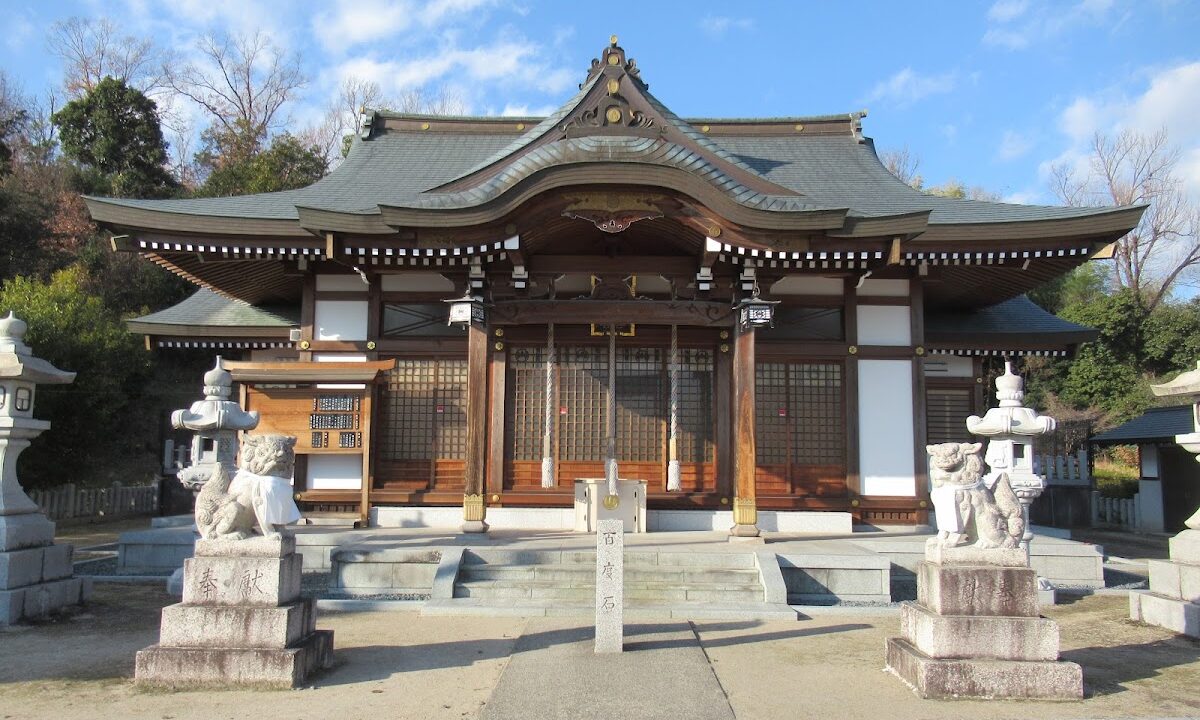
Complete Guide to Tsugeno Shrine (Takatsuki City, Osaka Prefecture) | The Mystery of the Approach Crossing the Meishin Expressway and the Tsugenoyama Tumulus
Tsugeno Shrine, located in Himuro-cho, Takatsuki City, Osaka Prefecture, is a shrine with unique features that have quietly become a topic of conversation among shrine and temple enthusiasts. Its surprising structure—an overpass crossing the Meishin Expressway—and the historical heritage of the Kofun-era Tsugenoyama Tumulus behind it, make this shrine truly special.
This article provides a detailed explanation of everything about Tsugeno Shrine, from its history and the charm of its unique approach to its relationship with the Tsugenoyama Tumulus and how to access it.
What is Tsugeno Shrine? | The Guardian Deity of the Himuro District
Tsugeno Shrine is located in Himuro-cho 6-chome, Takatsuki City, Osaka Prefecture, and is cherished by the local people as the guardian deity of the Himuro district. The unusual name “Tsugeno” is said to originate from the idea that the crowing of a rooster “announces” a divine oracle, and is pronounced “Tsugeno.”
Deities and Founding
The following three deities are enshrined at Tsugeno Shrine:
- Amaterasu Omikami: The supreme deity in Japanese mythology
- Emperor Ojin: The 15th Emperor
- Amenokoyane no Mikoto: The principal deity of Kasuga Taisha Shrine
While detailed records of the shrine’s founding date are scarce, the Tsugenoyama Kofun (ancient burial mound) behind the shrine is believed to have been constructed around the 4th century, suggesting its origins may date back to the Kofun period. The relationship between the burial mound and the shrine suggests that this area has been an object of worship since ancient times.
Origin of the Name “Tsugeno”
There are several theories regarding the origin of the unique name “Tsugeno.” The most plausible theory is that the name “Tsuge” originated from the idea that the crowing of roosters “announced” the will of the gods. In ancient times, rooster crowing is thought to have played an important role in conveying divine oracles.
Furthermore, the history of this region’s transformation from “Tsuchimuro” (土室) to “Himuro” (氷室) is also intriguing, and the place name Kamitsuchimuro (上土室) remains in the surrounding area. The relationship between these changes in place names and the shrine’s name also provides important clues to unraveling the region’s history.
The approach to the shrine is an overpass of the Meishin Expressway | A rare sight nationwide
The most distinctive feature of Toukeino Shrine is undoubtedly that its approach is an overpass spanning the Meishin Expressway. This unique structure has become a topic of conversation among shrine and temple enthusiasts and is a popular spot for photography.
Why is the approach to the shrine on top of the expressway?
The Meishin Expressway, which opened in 1963 (Showa 38), was constructed as Japan’s first intercity expressway. Because the construction route had to cross the approach to Toukeino Shrine, an overpass was built to ensure access to the shrine.
Normally, when constructing a highway, the relocation of the shrine is sometimes considered, but in the case of Toukeino Shrine, due to its integration with the Toukeyama Kofun (ancient burial mound) behind it and its importance as a center of local faith, the method of developing the approach road as an overpass was chosen.
View from the Approach Road
From the overpass on the approach road, you can look down on the vehicles traveling on the Meishin Expressway. It’s a place where you can experience the contrasting sights of the tranquil act of visiting a shrine and modern high-speed traffic simultaneously—a true “crossroads of history and modernity.”
Especially on holidays, there’s a unique atmosphere that can’t be experienced at other shrines, as you can worship while watching the flow of cars on the highway. This landscape is also interesting as a legacy of Japan’s period of rapid economic growth.
Toukeyama Kofun | Ancient Heritage Sleeping Behind the Shrine
Behind Toukeino Shrine lies the Toukeyama Kofun, an important archaeological site from the Kofun period. The existence of this burial mound further enhances the historical value of the shrine.
Overview of the Tokeiyama Burial Mound
The Tokeiyama Burial Mound is a keyhole-shaped burial mound believed to have been constructed around the 4th century. Boasting a total length of approximately 86 meters, it is thought to be the tomb of a powerful local clan that ruled this region.
The most remarkable feature of this burial mound is that it was discovered in an unlooted state. While many burial mounds have been looted, the Tokeiyama Burial Mound has remained almost entirely in its ancient state, making it an extremely valuable archaeological site.
Vertical Shaft Stone Chamber and Excavated Artifacts
A vertical shaft stone chamber has been confirmed inside the Tokeiyama Burial Mound, and the following important artifacts have been unearthed through investigations.
- Triangular-rimmed bronze mirror with divine beast motif: A bronze mirror believed to have been a gift from the Wei dynasty of China, an important artifact demonstrating international exchange during the Kofun period.
- Stone artifacts: Various stone ornaments.
- Iron weapons: Armor from that period.
The discovery of the triangular-rimmed bronze mirror with divine beast motif is particularly noteworthy as evidence of the strong ties between the local powerful families and the Yamato regime.
Relationship between Kofun and Shrines
Examples of shrines being built on or around kofun (ancient burial mounds) can be found throughout Japan. This is thought to be because kofun were revered as sacred places where ancestral spirits resided, and later came to be worshipped as shrines.
The relationship between Toukeino Shrine and Toukeyama Kofun (ancient burial mound) is also highly likely to inherit this tradition of kofun worship, indicating that this area has been a place of continuous worship since ancient times.
Highlights of the Shrine Grounds | Worship Hall and Hyakudo-ishi (Hundred-Time Stone)
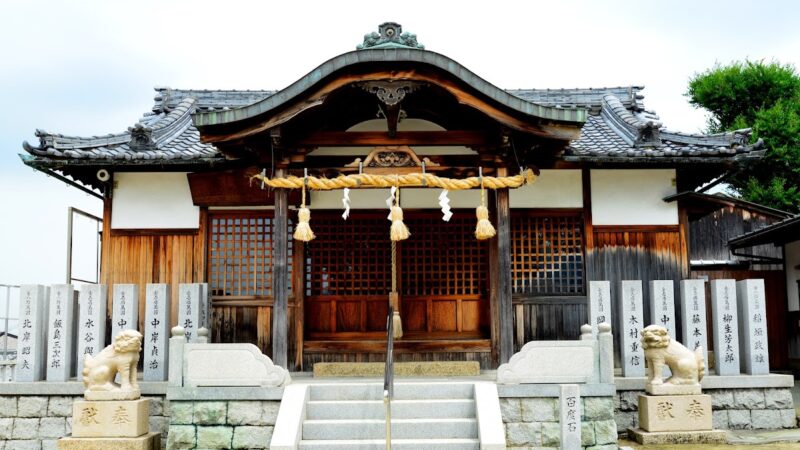
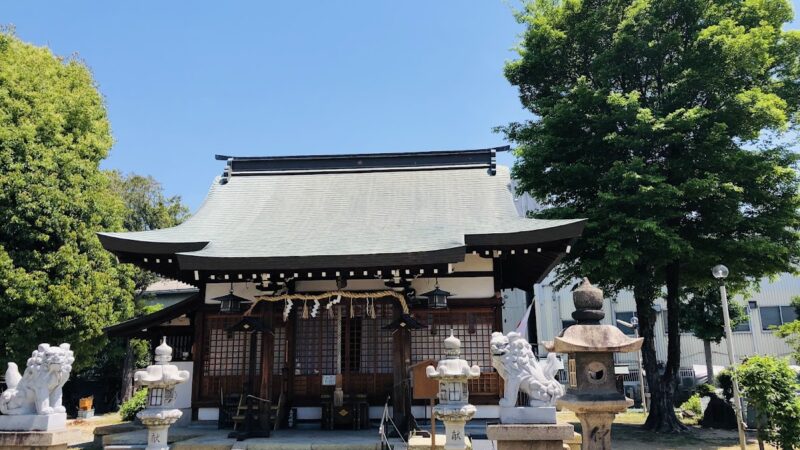
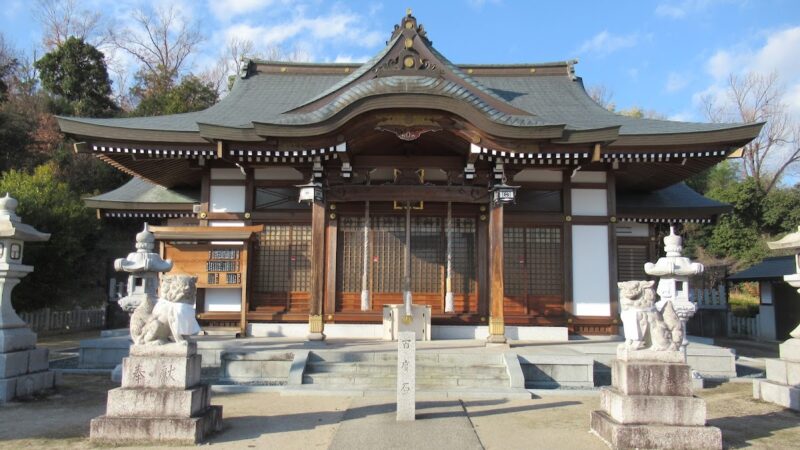
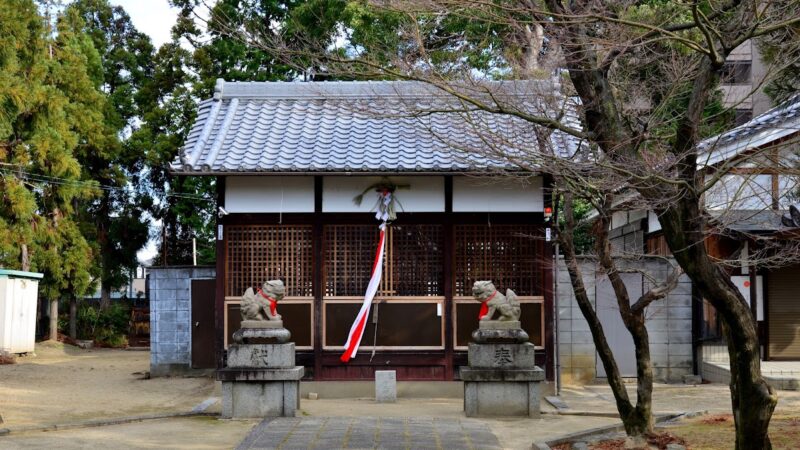
The grounds of Toukeino Shrine are small but well-maintained.
The Main Hall
The main hall stands beyond the overpass of the Meishin Expressway. While the main hall is a relatively new building, it’s clear that it’s carefully maintained as the local guardian shrine.
A donation box is placed in front of the main hall, allowing worshippers to quietly offer their prayers. The tranquil space beyond the hustle and bustle of the expressway creates a striking contrast unique to urban shrines.
The Hyakudo-ishi (Hundred-Time Stone)
A Hyakudo-ishi (Hundred-Time Stone) is installed in front of the main hall. Hyakudo-mairi is a traditional Japanese practice of visiting the same shrine 100 times to have one’s wishes granted.
The Hyakudo-ishi serves as a marker for counting these round trips, indicating that devout believers made their wishes at this shrine. Even today, it’s a relic that reflects the deep faith of the local people.
Stories Related to Cockfighting | The Relationship Between Oracles and Cock Crowing
Many might wonder if actual cockfighting took place here, given the name “Tokeino” (Cockfighting Field).
The Rooster That Announces Oracles
As mentioned earlier, the most widely accepted theory is that the “Tsuge” in Toukeino (Tsugeno) derives from the idea that the crowing of a rooster “announces” an oracle. In ancient Japan, roosters were considered sacred birds, and their crowing was believed to convey the will of the gods.
The Kojiki and Nihon Shoki also depict a scene in the Ama-no-Iwato myth where a long-crowing rooster is used to lure out Amaterasu Omikami. Thus, the relationship between roosters and oracles is deeply rooted in Japanese mythology.
Difference from Toukei Shrine in Wakayama Prefecture
The search results also show Toukei Shrine in Tanabe City, Wakayama Prefecture, but this is a completely different shrine from Toukeino Shrine in Takatsuki City.
The Toukei Shrine in Wakayama Prefecture is known for a legend that during the Genpei War, Kumano Betto Tanzo held a cockfight on the shrine grounds, and after the white rooster won, he sided with the Minamoto clan. In 2016, it was registered as a component of the World Heritage Site “Sacred Sites and Pilgrimage Routes in the Kii Mountain Range.”
On the other hand, the Toukeino Shrine in Takatsuki City is thought to have a stronger religious significance, with the rooster crowing to announce divine oracles rather than actual cockfighting. It’s an interesting example of two shrines, both containing the characters for “cockfighting,” having different origins and characteristics.
Access Method | How to Get to Toukeino Shrine
Access to Toukeino Shrine is possible by both public transport and private car, but it’s located in a somewhat difficult-to-find place, so prior confirmation is important.
Basic Information
- Address: 6-chome, Himuro-cho, Takatsuki City, Osaka Prefecture
- Nearest Station: JR Kyoto Line “Settsu-Tomita Station” or JR “Takatsuki Station”
- Parking: Limited space available on the temple grounds
Access by Public Transportation
From JR Settsu-Tomita Station
- Approximately 20-25 minutes on foot from the north exit of JR Settsu-Tomita Station
- Alternatively, take a bus from the station (Takatsuki City Bus, get off at “Himuro” stop, approximately 5 minutes on foot)
From JR Takatsuki Station
- Take the Takatsuki City Bus bound for “Himuro” from the north exit of JR Takatsuki Station
- Get off at the “Himuro” bus stop, approximately 5 minutes on foot
Since the number of buses is limited, it is recommended to check the timetable in advance.
Access by Private Car
Approximately 10 minutes from the Meishin Expressway “Ibaraki IC”. However, since the shrine itself is adjacent to the Meishin Expressway, please set your car navigation system to “Tōkei-no Shrine” or “6-chome, Himuro-cho, Takatsuki City.”
There are a few parking spaces on the shrine grounds, but if they are full, you will need to use nearby paid parking lots.
Notes on Access
- The approach to the shrine is an overpass for the Meishin Expressway, so pedestrians must cross the overpass.
- The surrounding area is a residential area, so please be considerate of noise levels during your visit.
- The burial mound is protected, so please do not enter restricted areas.
Nearby Tourist Spots | Highlights of Takatsuki City
When visiting Tōkei-no Shrine, you can also visit other tourist spots in Takatsuki City.
Imashirozuka Kofun Park
This is a keyhole-shaped burial mound believed to be the true mausoleum of Emperor Keitai, and it has been developed as a burial mound park. Visiting it together with the Tōkeiyama Kofun will give you a deeper understanding of Takatsuki City’s burial mound culture.
Takatsuki Castle Ruins Park
This is the site of Takatsuki Castle, which existed from the Sengoku period to the Edo period. It is now a park. It is also known as a famous cherry blossom viewing spot.
Settsu Gorge
This gorge, located in the northern part of Takatsuki City, is a popular spot for hiking and viewing autumn foliage. Recommended for those who want to enjoy nature.
Points to Note and How to Enjoy Your Visit
Here are some ways to enjoy your visit to Tokeino Shrine.
Photo Spots
The approach to the shrine, which crosses the Meishin Expressway, is a rare sight nationwide and an excellent spot for photography. The following angles are especially recommended:
- A composition overlooking the expressway from the overpass
- A composition including both the overpass and the main shrine building
- A composition combining the ancient burial mound and the shrine
However, please be considerate of the privacy of vehicles traveling on the expressway and observe proper photography etiquette within the shrine grounds.
Historical Exploration Course
As a place where you can feel the layered history from the Kofun period to the present day, it would be interesting to visit from the following perspectives:
- Ancient Times: Imagine the power of the Kofun period clans from the Tokeiyama Kofun (burial mound)
- Medieval to Early Modern Periods: Consider the establishment of the shrine and the development of local beliefs
- Modern Times: Learn about the history of urban development, such as the coexistence of the shrine with the construction of the Meishin Expressway
Quiet Visiting Hours
While the shrine is visited daily by worshippers as the local guardian shrine, weekday mornings are relatively quiet. This time is recommended for those who want to stroll around the grounds at a leisurely pace.
Utilizing Information from the Takatsuki City Tourism Association
The latest information on Tokeino Shrine can be found on the official website of the Takatsuki City Tourism Association. It also includes event information, nearby tourist spots, and local products, so it is recommended to check it before visiting.
The Takatsuki City Tourism Association also provides a spot search function and gallery page within the city, making it easy to find other points of interest besides Tokeino Shrine. ## Summary | A Unique Shrine Where History and Modernity Intersect
Tōkei-no Shrine is a nationally rare shrine with a unique feature: its approach is built over the Meishin Expressway. Behind it lies the Tōkei-yama Kofun, an unlooted burial mound dating back to the 4th century. This keyhole-shaped burial mound holds significant archaeological value, having yielded valuable artifacts such as a triangular-rimmed bronze mirror.
The name “Tōkei-no” is said to originate from the idea that the crowing of a rooster “announces” a divine oracle, preserving the ancient tradition of faith. The shrine enshrines Amaterasu Ōmikami, Emperor Ōjin, and Amenokoyane-no-Mikoto, and is cherished by the local people as the tutelary deity of the Himuro district.
The landscape, where modern transportation infrastructure like the expressway coexists with historical heritage dating back to the Kofun period, truly symbolizes the multi-layered nature of Japanese history. When visiting Takatsuki City, be sure to stop by this unique shrine.
Relying on the address, 6-chome, Himuro-cho, Takatsuki City, Osaka Prefecture, the experience of crossing the Meishin Expressway overpass and walking along the approach to the shrine will surely be a unique and precious pilgrimage experience unlike any other. Why not enjoy a dialogue between history and modernity in the hilly area of the Tokeiyama Kofun, where ancient powerful clans are buried?