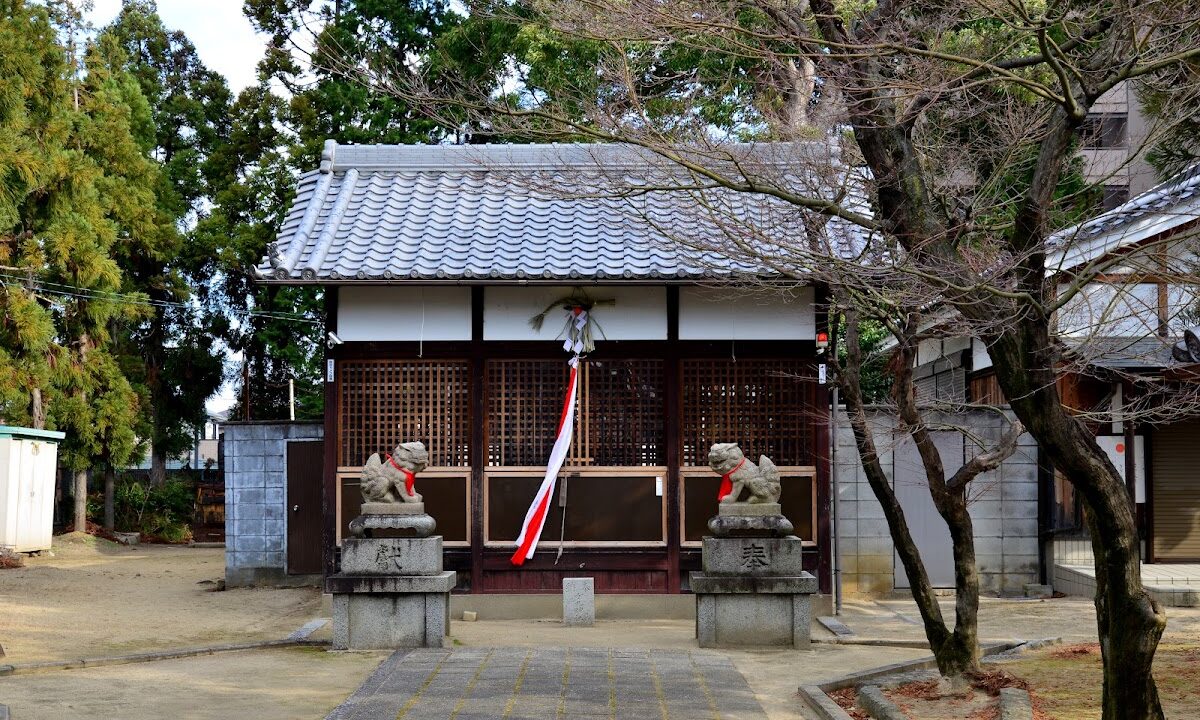
Megujinja Shrine (Ibaraki City, Osaka Prefecture) – A Complete Guide to a Historic Shrine Dedicated to the Consorts of Emperor Keitai
Megujinja Shrine, located in Higashi-Ota, Ibaraki City, Osaka Prefecture, is a historic shrine dedicated to the consorts of Emperor Keitai. It is a valuable historical site that preserves the legend of ritual suicide in ancient history, and attracts the faith of the local community. This article comprehensively introduces information useful for visiting Megujinja Shrine, including its history, enshrined deities, grounds, access methods, and surrounding area information.
Overview of Megujinja Shrine
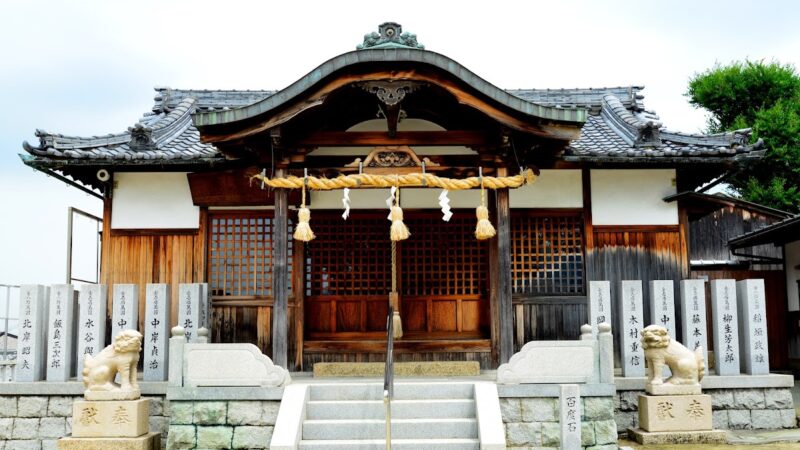
Megujinja Shrine is located at 3-5-31 Higashi-Ota, Ibaraki City, Osaka Prefecture, and enshrines the nine consorts of Emperor Keitai as its main deities. It is pronounced “Megujinja” and is affectionately known as “Mekusan” in the local area.
Located near the tomb of Emperor Keitai (Ota Chausuyama Kofun), it is known as a shrine originating from the legend of ritual suicide upon Emperor Keitai’s death. Although it is now a small shrine quietly nestled in a residential area, its historical value is immeasurable.
Basic Information
- Location: 3-5-31 Higashi-Ota, Ibaraki City, Osaka Prefecture
- Main Deities: Nine consorts of Emperor Keitai
- Annual Festival: October 11th
- Shrine Rank: Village Shrine
- Founding: Unknown (Ancient)
About the Deities
The main deities of Onna-Kyu Shrine are the nine consorts of Emperor Keitai. According to the “Settsu Meisho Zue” (Illustrated Guide to Famous Places in Settsu Province), it is said that when Emperor Keitai died, nine of his twelve consorts committed suicide to follow him in death.
Emperor Keitai and His Consorts
Emperor Keitai (reigned 507-531) is the 26th Emperor of Japan and holds an important position in ancient Japanese history. He was brought from Echizen Province (present-day Fukui Prefecture) and is considered the fifth-generation descendant of Emperor Ojin. Emperor Keitai had several consorts, including:
- Tashiraka no Himemiko: Daughter of Emperor Ninken and Empress of Emperor Keitai
- Menokohime: Daughter of Owari no Muraji Kusaka
- Other consorts
These nine consorts are enshrined at the Onna-kyu Shrine, where they are said to have committed suicide.
Historical Background of the Suicide Legend
In ancient times, suicide was a custom where retainers or consorts would follow a powerful figure in death. In Japan, this custom is believed to have existed during the Kofun period, and some theories suggest that Haniwa (clay figures) originated as a substitute for this suicide.
The legend of Emperor Keitai’s consorts committing suicide is recorded in Edo period geographical records such as the “Settsu Meisho Zue” (Illustrated Guide to Famous Places in Settsu Province) and has been passed down as a local tradition for a long time. While historical verification is needed to determine whether actual suicides occurred, it is certain that this legend forms the basis of local beliefs.
History and Origins
The exact founding date of Nyokujinja Shrine is unclear, but it is believed to date back to ancient times due to its connection with the tomb of Emperor Keitai.
Ancient to Medieval Periods
Emperor Keitai died in 531 and is believed to have been buried in the Ota Chausuyama Kofun (present-day Ota, Ibaraki City). It is said that Nyokujinja Shrine originated from the burial and enshrinement of the consorts who committed suicide to follow him in death, near this tomb.
The “Settsu Meisho Zue” (illustrated guide to famous places in Settsu Province) (published 1796-1798) states that “when Emperor Keitai died, nine of his twelve consorts committed suicide to follow him in death, were buried beside the tomb, and enshrined here,” indicating that it was already recognized as a historically significant shrine during the Edo period.
Modern and Post-Modern Period Changes
In the Meiji era, the area around Nyokujinja Shrine underwent significant changes.
In 1875 (Meiji 8), the dense forest surrounding the shrine was cut down for timber due to the construction of the Tokaido Main Line railway. The landscape of the shrine, which had previously been enveloped in a deep forest, changed dramatically, becoming the open environment it is today.
In the late Meiji period, it was ranked as a village shrine under the modern shrine ranking system, officially establishing itself as a local shrine.
In the early Showa period, its value as a historical site, scenic spot, and natural monument of Osaka Prefecture was recognized, and it came to be protected as an important historical heritage of the region.
Modern Onna-kyu Shrine
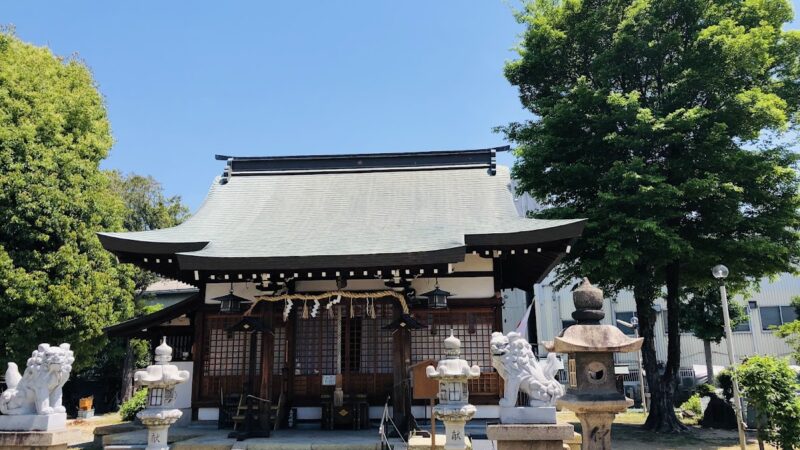
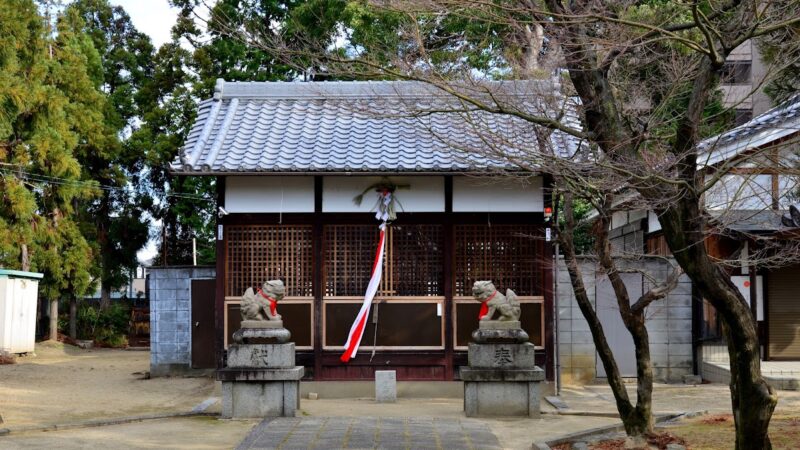
The current Onna-kyu Shrine is a small shrine quietly nestled in a residential area. It is carefully preserved by local residents and plays a central role in the community through activities such as annual festivals and daily cleaning.
The shrine grounds are well-maintained, making it easily accessible for visitors. Due to its historical connection to the tomb of Emperor Keitai, it attracts many researchers and history enthusiasts interested in ancient history.
Highlights of the Shrine Grounds
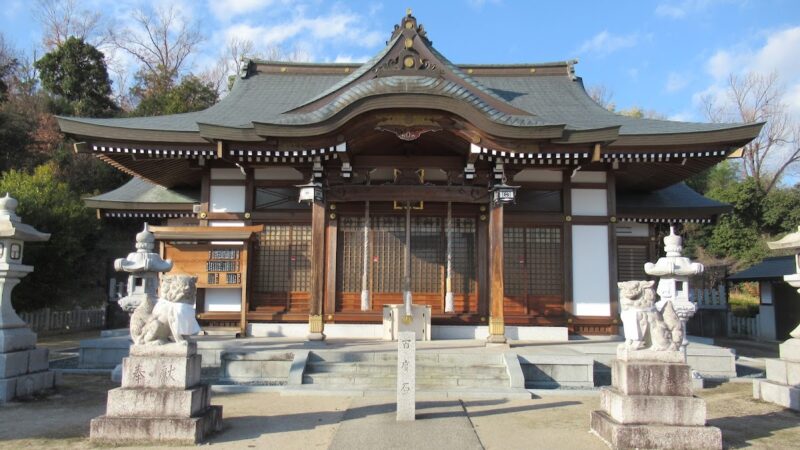
Although small, the grounds of Onna-kyu Shrine have a historical atmosphere.
Main Shrine and Worship Hall
The main shrine is built in the traditional style of Shinto shrine architecture and enshrines the nine consorts of Emperor Keitai. The worship hall is kept clean as a place for worshippers to offer prayers.
Shrine Grove and Natural Environment
Although the once lush forest was lost due to logging during the Meiji era, trees still remain on the shrine grounds, making it a valuable green space in an urban area. The shrine grounds, which show different expressions with each season, provide peace to visitors.
Stone Monuments and Historical Records
Stone monuments and information boards detailing the history of Onna-kyu Shrine are installed on the shrine grounds. Reading these will deepen your understanding of the shrine’s history and the enshrined deities.
Annual Festival and Annual Events
Every year on October 11th, the annual festival is held, and local residents gather to express gratitude to the enshrined deities and pray for the peace and prosperity of the community. The festival involves solemn Shinto rituals, preserving local traditions.
Access Information
This guide provides directions to Onna-ku Shrine.
Access by Train
Nearest Station: JR Tokaido Main Line “Settsu-Tomita Station”
- Approximately 13 minutes on foot (approx. 1 km) from Settsu-Tomita Station
- Exit the station and head northeast. The shrine is located through a residential area.
If using the Hankyu Kyoto Line: Approximately 15 minutes on foot from “Tomita Station”
Access by Car
- Approximately 15 minutes from Meishin Expressway “Ibaraki IC”
- There is no dedicated parking lot, but nearby paid parking lots are available.
- Please avoid street parking as it is located in a residential area.
Access by Bus
Take a Hankyu Bus and get off at the “Higashi-Ota” bus stop. Approximately 5 minutes on foot.
Notes on Access
- As it is located in a residential area, please visit quietly.
- Some roads are narrow, so walking is recommended.
- There are few signs, so it is recommended to check a map app beforehand.
Nearby Attractions
Around the Nyokujinja Shrine, there are numerous historical sites and points of interest associated with Emperor Keitai.
Ota Chausuyama Kofun (Emperor Keitai’s Mausoleum)
Located about a 10-minute walk from Nyokujinja Shrine, this is a keyhole-shaped burial mound believed to be the mausoleum of Emperor Keitai. A large burial mound measuring 226 meters in length, it is managed by the Imperial Household Agency. Visiting it in conjunction with Nyokujinja Shrine will allow for a deeper understanding of Emperor Keitai’s history.
Imashirozuka Kofun
Located in Koriyama, Ibaraki City, this large keyhole-shaped burial mound has recently been suggested by research to be the true mausoleum of Emperor Keitai. It has been developed as a burial mound park, where visitors can see a reconstructed exhibit of a Haniwa (clay figure) ritual site. It is about a 10-minute drive from Nyokujinja Shrine.
Ota Shrine
This shrine is dedicated to Emperor Keitai and, along with Nyokujinja Shrine, is known as a place associated with him. It boasts a magnificent shrine building and grounds, and is a central shrine in the region, attracting many worshippers.
Ibaraki City Cultural Heritage Museum
This facility allows you to learn about the history and cultural heritage of Ibaraki City. It exhibits materials related to Emperor Keitai and the Kofun period, and visiting before or after visiting the Onna-kyu Shrine will deepen your understanding.
Manners and Precautions for Visiting
Here are some basic manners to observe when visiting Onna-kyu Shrine.
Etiquette for Visiting the Shrine
- Bow before passing through the torii gate.
- Walk along the approach to the shrine, avoiding the center.
- Purify your body and mind at the water basin (this step can be omitted if there is no water basin).
- Bow twice, clap twice, and bow once in front of the main hall.
- Bow once again at the torii gate when leaving.
Photography
Photography is generally permitted on the shrine grounds, but please note the following:
- Refrain from photographing inside the main hall.
- Be considerate of other visitors.
- Obtain permission in advance for commercial use.
Clothing and Belongings
- There are no specific dress code requirements, but please dress appropriately for a sacred place.
- Sun protection is recommended in summer, and warm clothing in winter.
- Bring your goshuincho (stamp book) if you wish to receive a goshuin (check the shrine office’s opening hours in advance).
Cultural Value of Onnakyu Shrine
Onnakyu Shrine is not merely a religious facility, but also possesses value as an important cultural heritage site that conveys the ancient history of Japan. ### Memories of Ancient Suicide Customs
Meikyu Shrine is a valuable historical site that preserves the ancient custom of suicide in Japan. This custom, which is also related to the origin of Haniwa (clay figures), is rarely found in shrines nationwide, making it an important subject of archaeological and folkloric research.
A Part of Emperor Keitai Research
Emperor Keitai, while said to be a descendant of Emperor Ojin, had a unique enthronement history, having been brought from Echizen Province. Research into his reign and the location of his tomb continues, and Meikyu Shrine is an important clue in this research.
A Witness to Local History
Meikyu Shrine has been a central presence in the history of the Higashi-Ota area of Ibaraki City. Having witnessed the environmental changes brought about by the construction of the railway in the Meiji era, the wave of modernization, and the transformations of modern urbanization, the shrine is a valuable presence that preserves the memory of the region.
The Significance of Visiting Onnakyu Shrine
Visiting Onnakyu Shrine holds more meaning than mere sightseeing.
Dialogue with History
At Onnakyu Shrine, which conveys events from 1500 years ago, reflecting on the beliefs and views on life and death of ancient people is a valuable experience for us living in the modern age.
Introspection in Silence
Despite being in an urban area, the tranquil shrine grounds are ideal for escaping the hustle and bustle of everyday life and confronting oneself. Learning about the stories of the consorts of Emperor Keitai will provide an opportunity to deeply reflect on life and love.
Understanding Local Culture
Visiting a shrine rooted in the local community allows you to understand the history, culture, and activities of the people of that land. Onnakyu Shrine is an indispensable presence in understanding the history of Ibaraki City.
Connections with Other Shrines in Ibaraki City
Besides Onnakyu Shrine, Ibaraki City has many other historical shrines.
Relationship with Ota Shrine
Ota Shrine is also a shrine dedicated to Emperor Keitai and has a close relationship with Nyokujinja Shrine. Visiting both shrines will give you a comprehensive understanding of the worship of Emperor Keitai.
Ibaraki Shrine
Located in the heart of Ibaraki City, Ibaraki Shrine is known as the largest shrine in the city. Although it differs in scale from Nyokujinja Shrine, both are important institutions that have supported local faith.
Mizokui Shrine
Also known as Mishima Kamo Shrine, this ancient shrine is a highly prestigious shrine listed in the Engishiki (ancient Japanese legal code). When touring the shrines of Ibaraki City, it is recommended to visit these shrines together.
Annual Events and Festivals
Nyokujinja Shrine holds various Shinto rituals throughout the year, centered around its annual festival.
Annual Festival (October 11th)
The annual festival, the most important annual event, is a solemn ritual to express gratitude to the deity and pray for the peace and prosperity of the community. Local residents gather, and the traditional festival is passed down through generations.
Monthly Festival
A monthly festival is held on a fixed day each month to maintain the shrine and offer prayers to the enshrined deities.
New Year’s Visit
At the start of the new year, local residents visit the shrine for their first shrine visit of the year, praying for safety and happiness throughout the year. Despite its small size, it is an important place of worship for the local community.
Summary
Mekyu Shrine, located in Ibaraki City, Osaka Prefecture, is a historical shrine dedicated to the nine consorts of Emperor Keitai. It has a history of over 1500 years, serving as a valuable historical site that preserves ancient legends of ritual suicide, and as a center of local faith.
Conveniently located about a 13-minute walk from JR Settsu-Tomita Station, it maintains a tranquil atmosphere in a quiet residential area. Visiting it along with other nearby historical sites such as the Emperor Keitai Mausoleum (Ota Chausuyama Tumulus) and the Imashirozuka Tumulus will deepen your understanding of ancient Japanese history.
Despite its small size, Mekyu Shrine possesses immeasurable historical and cultural value. As a precious place where you can experience forms of faith that have been passed down from ancient times to the present day, why not visit it at least once? When you stand on the temple grounds, the thoughts and feelings of the people who lived 1500 years ago will quietly resonate in your heart.