Complete Guide to Tsurumishima Shrine (Yao City, Osaka Prefecture): A Thorough Explanation of the History, Access, and Deities of this Shikinaisha Shrine
Tsurumishima Shrine, quietly nestled in Tsuzuka, Yao City, Osaka Prefecture, is a historically significant shrine listed in the Engishiki Jinmyocho (a list of shrines compiled in the Heian period). This shrine, nestled discreetly within a park, has deep ties to ancient history, including its connection to the Yugi Palace (a detached palace of Empress Shotoku) and its historical background as the birthplace of Yuge no Dokyo. It’s a shrine known to those in the know.
This article provides a detailed explanation of Tsurumishima Shrine’s history, enshrined deities, access methods, goshuin (shrine stamp) information, and nearby attractions—all essential information for visitors arriving on foot.
Basic Information about Tsurumishima Shrine
Shrine Overview
Official Name: Tsurumishima Shrine (also written as Tsurumishima Jinja)
Pronunciation: Tsurumishima Jinja
Location: 3-5 (or 296) Tsuzuka, Yao City, Osaka Prefecture 581-0023
Shrine Rank: Shikinaisha (Engishiki Jinmyocho, Kawachi Province, Wakae District, Tsurumishima Shrine, Kuwa), Former Village Shrine
Deity Enshrined: Kuramitsuha no Okami
Annual Festival Date: October 20th
Managing Shrine: Onchi Shrine
Telephone Number: 072-943-7059 (Onchi Shrine)
Tsurumishima Shrine is a Shikinaisha listed in the Engishiki Jinmyocho as “Tsurumishima Shrine, Kuwa,” and belonged to Wakae District, Kawachi Province. Under the modern shrine ranking system, it was classified as a village shrine and continues to attract local devotion.
Location and Characteristics of the Shrine
The grounds of Tsurumishima Shrine are located on a small hill called “Miyazuka.” This mound-like terrain is thought to have been a burial mound in the past, indicating that this area was important since ancient times. Currently, it has been developed as Miyazuka Park, serving as a place of relaxation for local residents, and possesses a unique atmosphere as the shrine quietly sits within the park.
About the Deity: Kuramitsuha-no-Okami
The deity enshrined at Tsurumishima Shrine is Kuramitsuha-no-Okami. While this deity does not directly appear in the Kojiki or Nihon Shoki, the names “Kurami” and “Mitsuha” suggest that this deity has characteristics of a water god or agricultural god.
“Mitsuha” may mean “water’s edge” or “waterside,” suggesting that this deity, as a god who controls water, was an object of prayer for agricultural abundance. At Tsurumishima Shrine, situated in the agricultural region of the Kawachi Plain, water and agriculture are inseparable elements, and it is evident that the shrine has been revered by local people as a place to pray for a bountiful harvest.
History of Tsurumishima Shrine
History as a Shikinaisha Shrine
Tsurumishima Shrine is listed in the *Engishiki Jinmyocho* (927 AD), compiled in the early Heian period, as “Tsurumishima Shrine, Wakae District, Kawachi Province, Hoe.” The mention of “hoe” indicates that a hoe was offered by the imperial court during the Kinensai (harvest festival), confirming its character as a shrine of agricultural deity.
Shrines listed in the Engishiki are called “Shikinaisha,” and are considered prestigious shrines recognized by the imperial court since ancient times. While there are several Shikinaisha shrines in Wakae District, Kawachi Province, Tsurumishima Shrine holds a historically significant position among them.
Connection to Yugenomiya Palace
This region gained attention as the birthplace of Yuge no Dōkyō during the reign of Empress Shōtoku (Empress Kōken’s second throne) at the end of the Nara period. In 769 (Jingo-Keiun 3), Empress Shōtoku had Yugenomiya Palace built in Kawachi Province for Yuge no Dōkyō, temporarily making it the western capital (secondary capital).
The area around Tsukazuka, where Tsurumishima Shrine is located, is thought to have been close to the center of Yugenomiya Palace. Although Yugenomiya Palace was abandoned after Dōkyō’s downfall, it remains a valuable trace indicating the politically and religiously important location of this area in ancient times.
Relationship with the Yuge Clan
This region is believed to have been the base of the Yuge clan. The Yuge clan was a powerful ancient family, and Yuge no Dōkyō was also from this clan. It has been suggested that Tsurumishima Shrine may have been a shrine worshipped by the Yuge clan as the guardian deity of the region.
The historical background of this shrine as the base of the Yuge clan suggests that it may not have been merely a village shrine, but rather the tutelary deity of an ancient powerful clan.
Connection to Kofun (Ancient Burial Mounds)
The current shrine grounds, “Miyakozuka,” are considered highly likely to have been a burial mound based on their topography. Many burial mounds are scattered throughout the Kawachi Plain, and Miyakozuka is thought to have been one of them. It is not uncommon for shrines to be built on top of burial mounds, and there are many examples throughout Japan of ancient tombs becoming sacred sites and objects of worship in later periods.
In the case of Tsurumishima Shrine, it is presumed that by enshrining a deity in the sacred place of a burial mound, it became the center of local faith.
Access
Access from the Nearest Station
The nearest station to Tsurumishima Shrine is Onchi Station on the Kintetsu Osaka Line.
Access from Onchi Station (on foot):
- Approximately 7-10 minutes on foot from Onchi Station
- Distance: Approximately 500-600 meters
Walking Route:
- Exit Onchi Station and head southwest.
- Walk through the residential area towards Tsukazuka Park.
- The shrine is located within Tsukazuka Park.
Since it is within walking distance from the station, access by public transport is convenient. Searching for “Tsurumishima Shrine” or “Tsukazuka Park” on a map app will display the latest route.
Access by Car
Address: 3-5 Tsukazuka, Yao City, Osaka Prefecture
If accessing by car, there is no dedicated parking lot for the shrine, but there may be street parking spaces around Tsukazuka Park. However, caution is advised as it is a residential area. We recommend using nearby paid parking lots or public transport.
Access to the Surrounding Area
- From Osaka City: Take the subway or Kintetsu Line from Namba Station to Onchi Station (approximately 20 minutes).
- From Nara: Direct access is possible via the Kintetsu Osaka Line.
- Access by Bus: Since the nearest bus stops are limited, train access is the most convenient.
Goshuin (Shrine Seal) Information
Regarding the Issuance of Goshuin
Tsurumishima Shrine is an unmanned shrine with no resident priests. Therefore, it is not possible to receive a goshuin directly on the shrine grounds.
Location for Issuing Goshuin: Onchi Shrine
Address: 5-10 Onchi-nakamachi, Yao City, Osaka Prefecture
Phone Number: 072-943-7059
If you require a goshuin from Tsurumishima Shrine, you must visit Onchi Shrine, the managing shrine. Onchi Shrine is within walking distance of Tsurumishima Shrine and is easily accessible from Onchi Station.
Points to Note When Receiving a Goshuin (Shrine Stamp)
- It is recommended to check the reception hours of the Onchi Shrine office in advance.
- Bring your Goshuincho (stamp book).
- Prepare the offering fee (generally 300-500 yen).
- Clearly state that you wish to receive a Goshuin from Tsurumishima Shrine.
Shrine Grounds and Highlights
Shrine Grounds
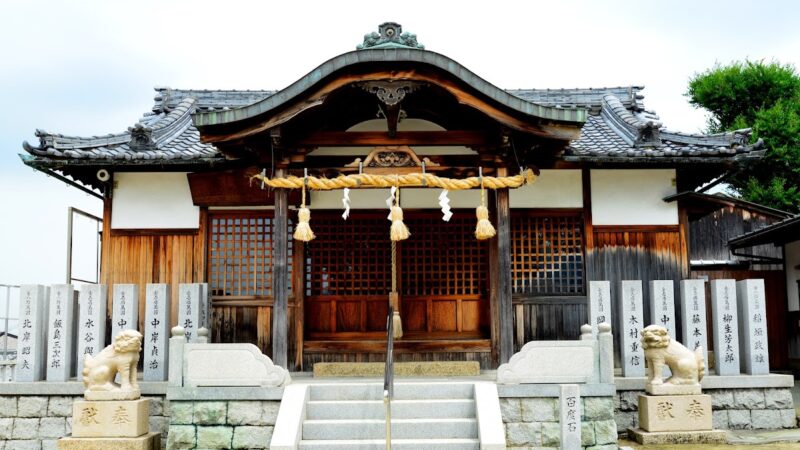
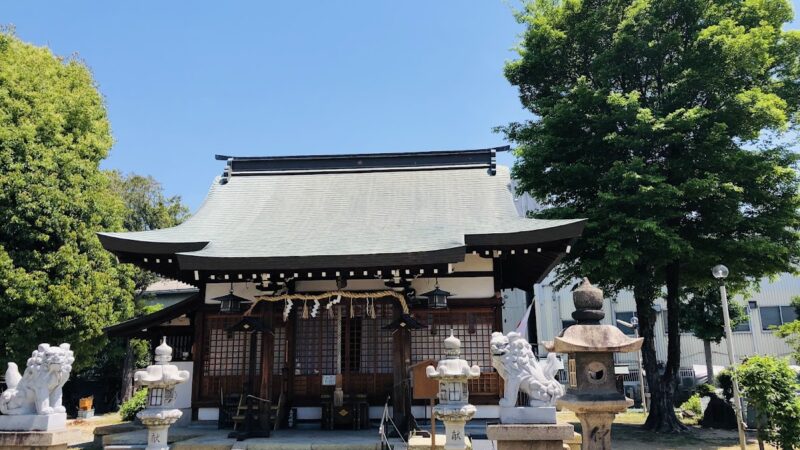
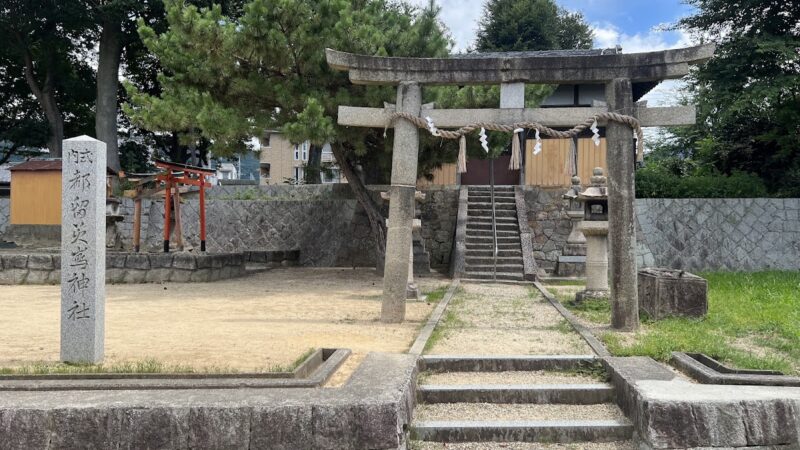
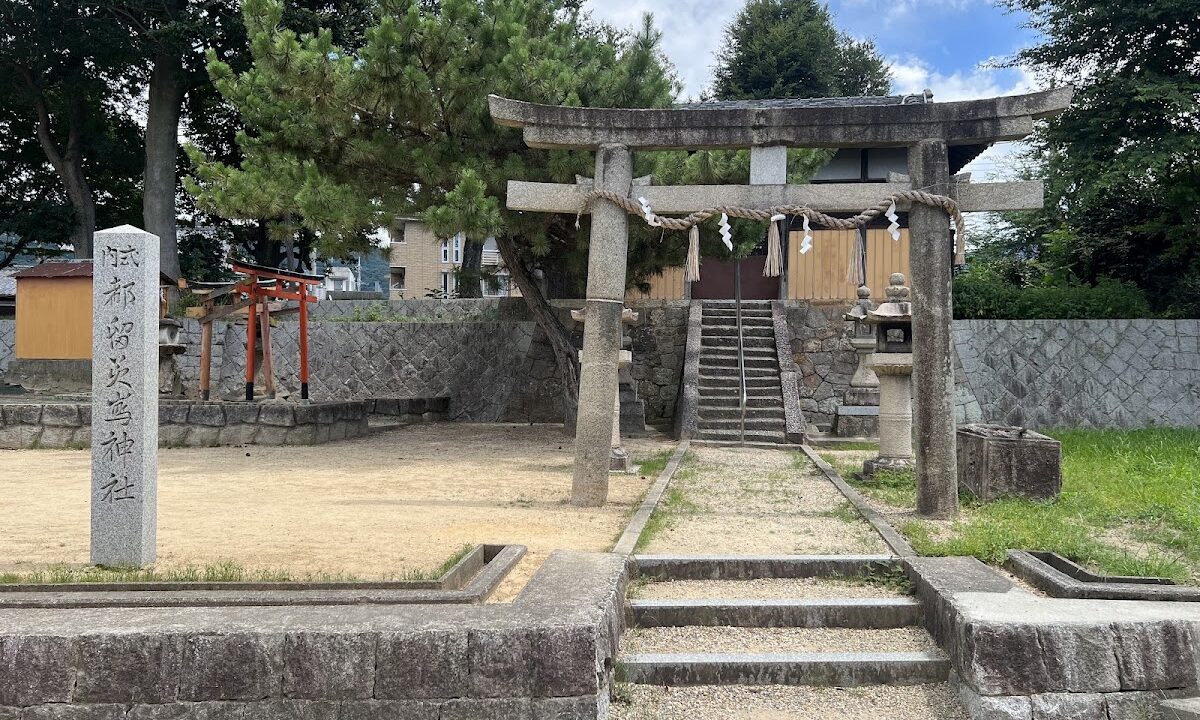
The grounds of Tsurumishima Shrine are very compact, nestled quietly in a corner of a park. While there are no large shrine buildings or facilities, its simplicity evokes the atmosphere of an ancient shrine.
Main Shrine Facilities:
- Main Hall: Small but meticulously maintained
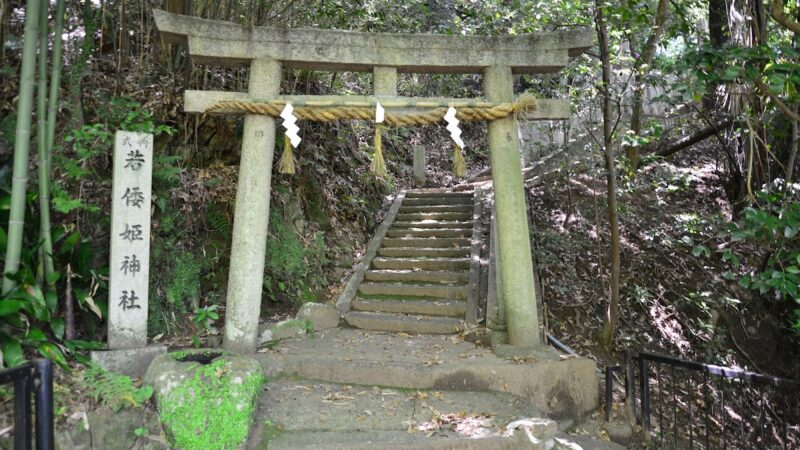
- Torii Gate: Stands at the entrance to the shrine grounds
- Shrine Name Marker: Inscribed with “Tsurumishima Shrine” or “Tsurumishima Jinja”
- Stone Lanterns: Donated stone structures
Integration with Miyazuka Park
The shrine is located within Miyazuka Park, and the boundary between the park and the shrine grounds is sometimes ambiguous. For local residents, the park and shrine are integrated into a place of relaxation, and it is also used as a playground for children.
This coexistence of the park and shrine represents one form of modern shrine existence, playing a central role in the local community.
Tranquil Atmosphere
The greatest charm of Tsurumishima Shrine is its tranquil atmosphere. Unlike large tourist shrines, it is not crowded, allowing for a peaceful visit. Surrounded by the greenery of the park, the shrine grounds offer a healing space that allows you to forget the hustle and bustle of the city.
Points to Note When Visiting
Etiquette for Visiting
When visiting Tsurumishima Shrine, follow the general etiquette for visiting a shrine.
- Bow before passing through the torii gate.
- If there is a purification fountain, cleanse your hands and mouth (as it is a small shrine, there may not be a purification fountain).
- Place your offering in front of the main hall.
- Pray with two bows, two claps, and one bow.
- Stroll quietly around the shrine grounds.
- Bow at the torii gate when leaving.
Best Time to Visit
Tsurumishima Shrine is open for visits throughout the year, but the following times are particularly recommended.
- Spring (March-May): A beautiful time for cherry blossoms and fresh greenery in the park.
- Autumn (September-November): The time of the annual festival (October 20th), when you can also enjoy the autumn foliage.
- New Year’s Visit (January): Ideal for those who want to enjoy a quiet New Year’s visit.
While there are fewer visitors in mid-summer and mid-winter, allowing for a more peaceful visit, please be mindful of the weather.
Regarding Photography
Photography is generally permitted on the shrine grounds, but please observe the following points:
- Refrain from taking photos inside the main hall.
- Be considerate of other visitors.
- Be mindful not to disrupt the peaceful atmosphere.
- Post to social media with respect for the shrine.
Nearby Shrines and Temples
When visiting Tsurumishima Shrine, we recommend also visiting the surrounding shrines and temples.
Onchi Shrine
Distance: Approximately 10 minutes on foot
Features: A prestigious shrine known as the second-ranked shrine of Kawachi Province, and the managing shrine of Tsurumishima Shrine. Goshuin (shrine stamps) can also be obtained here.
Nearby Shikinaisha Shrines
Several other Shikinaisha shrines are scattered throughout Wakae District of Kawachi Province, making it enjoyable to tour them. For history buffs, a “Shikinaisha pilgrimage” with a map in hand is highly recommended.
Historical Background of Yao City
Yao City, where Tsurumishima Shrine is located, has flourished as the center of the Kawachi Plain since ancient times.
Importance of Kawachi Province
Kawachi Province was an important region in ancient Japan, closely connected to the Yamato court. Many burial mounds were built here, and powerful local clans established their bases in this area.
Yuge no Dōkyō and Yugi Palace
As mentioned earlier, this area is the birthplace of Yuge no Dōkyō and the site where Empress Shōtoku built Yugi Palace. Although a Buddhist monk, Dōkyō wielded significant political power and, at one point, even became involved in the imperial succession.
While Yugi Palace was abandoned after a short period, it represents an important event in the history of this region, and Tsurumishima Shrine stands as a witness to that history.
Modern Yao City
Modern Yao City has developed as a residential city adjacent to the eastern part of Osaka City, but many historical legacies remain within the city. Visiting ancient shrines like Tsurumishima Shrine allows you to feel the ancient history sleeping beneath the modern cityscape.
The Significance of Visiting Tsurumishima Shrine
Experiencing Historical Romance
Tsurumishima Shrine, listed in the Engishiki Jinmyōchō (a list of shrines compiled in the Heian period), boasts a history of over 1000 years. Although a small shrine, it is backed by a multi-layered history encompassing ancient powerful clans, the construction of detached palaces, and the Kofun culture. For those interested in history, this shrine is not merely a place to visit, but a valuable location where you can experience ancient history firsthand.
A Quiet Worship Experience
At Tsurumishima Shrine, which is not a tourist destination, you can enjoy a quiet worship experience away from the hustle and bustle. Taking your time to stroll through the grounds at your own pace and reflecting on the ancient beliefs will be a healing experience for your soul.
Experiencing Local Faith
By visiting Tsurumishima Shrine, which has been protected by local residents, you can see the origin of Japanese shrine faith: the shrine as a “guardian deity of the community.” You can experience a simple and warm form of faith that differs from large-scale shrines.
Precautions When Visiting
Understanding that it is an Unmanned Shrine
Tsurumishima Shrine is an unmanned shrine without resident priests. Therefore, please note the following points.
- Goshuin (temple/shrine stamps) must be obtained at Onchi Shrine.
- Amulets, votive tablets, and other items cannot be obtained on the shrine grounds.
- For emergencies, please contact Onchi Shrine (072-943-7059).
Consideration for Park Users
Since the shrine is located within Tsuka Park, consideration for local residents and children using the park is necessary.
- Do not shout.
- Use park facilities appropriately.
- Take your trash home.
- Please greet local residents.
Proper Worship Etiquette
- Refrain from eating or drinking on the shrine grounds.
- Be considerate of others when visiting with pets.
- Avoid visiting at night (for security reasons).
- Do not damage plants or facilities on the shrine grounds.
How to Obtain the Latest Information
The latest information regarding Tsurumishima Shrine can be obtained through the following methods:
Contacting Onchi Shrine
You can inquire about festival schedules and the condition of the shrine grounds by calling Onchi Shrine, the managing shrine.
Phone Number: 072-943-7059
Internet Information
You can check the latest visitor records and photos from people who have actually visited the shrine on review sites and blogs about shrine visits. It’s also important to check the location using a map app and obtain the latest route information.
Yao City Tourism Information
The Yao City Tourism Association and the city hall websites also provide information on historical spots within the city.
Summary
Tsurumishima Shrine, located in Tsukazuka, Yao City, Osaka Prefecture, is an Engishiki-listed shrine and a valuable shrine that conveys a history and faith that has continued since ancient times. It enshrines Kuramitsuha-no-Okami as its main deity and has a multi-layered history, including connections to Yuginomiya, Yuge no Dokyo, and ancient burial mounds.
With its easy access (approximately 7 minutes on foot from Kintetsu Onchi Station), its quiet atmosphere within Tsukazuka Park, and its tranquil environment, it’s the perfect place to escape the hustle and bustle of the city and reflect on ancient history.
While you need to obtain a Goshuin (temple/shrine stamp) at Onchi Shrine, the managing shrine, visiting both will allow you to gain a deeper understanding of the history and faith of this region.
For history buffs, those seeking a peaceful visit, and those on a pilgrimage to Shikinaisha (shrines listed in the Engishiki) are must-see spots at Tsurumishima Shrine. Please visit this ancient shrine and immerse yourself in a place of worship that has continued for over 1000 years. You will surely forget the hustle and bustle of modern life and enjoy a peaceful time.