Complete Guide to Wakayamatohime Shrine (Kashiwara City, Osaka Prefecture): History and Visiting Information for this Shikinaisha Shrine
What is Wakayamatohime Shrine?
Wakayamatohime Shrine is a historical shrine located in Yamanoi-cho, Kashiwara City, Osaka Prefecture. It is a Shikinaisha shrine listed in the Engishiki Jinmyocho (a list of shrines compiled in 927), and is a venerable ancient shrine officially recognized as “Wakayamatohime-no-Mikoto Shrine, Oagata-gun, Kawachi Province” since the Heian period.
Kashiwara City is located in the eastern part of Osaka Prefecture, a historical area close to the border with Nara Prefecture. Many clans have resided in this region since ancient times, and Wakayamatohime Shrine is known as a shrine deeply connected to one of these ancient clans, the “Wakayamatobe clan.”
Status as a Shikinaisha Shrine
A Shikinaisha shrine refers to a shrine listed in the Engishiki Jinmyocho (compiled in 927). These shrines were officially recognized by the imperial court at the time, and approximately 3,000 such shrines were listed nationwide. Wakayamatohime Shrine, belonging to Oagata District in Kawachi Province, is included in this prestigious list.
While numerous Shikinaisha shrines exist within Osaka Prefecture, Wakayamatohime Shrine holds a particularly important position from a historical research perspective due to its clear ties to ancient clans.
Deity and Shrine History
Deity: Wakayamatohime-no-Mikoto
The deity enshrined at Wakayamatohime Shrine is Wakayamatohime-no-Mikoto. This deity has been revered as the ancestral deity of the Wakayamatobe clan. While historical records regarding the detailed genealogy of Wakayamatohime-no-Mikoto are limited, she has been worshipped as a deity associated with the ancient Yamato court and as a guardian deity of the region.
Relationship with the Wakayamatobe Clan
The founding of Wakayamatohime Shrine is closely related to the ancient clan known as the Wakayamatobe, who resided in this region. The Wakayamatobe clan was a highly prosperous clan in this area around the 6th century, and it is believed that they founded the shrine to enshrine their ancestral deity.
The name “be” (部) suggests that the Wakayamatobe clan was a clan group with specific occupational functions. In ancient Japan, various occupational groups were organized as “be” and served the imperial court and local powerful families. The Wakayamatobe clan was one such group, and it is believed that they were based in the area around Kashiwara City.
Founding Period and History
The exact founding date of Wakayamatohime Shrine is unclear, but since it is listed in the Engishiki Jinmyocho (a list of shrines compiled in the Heian period), it is certain that it already existed and was recognized by the imperial court at least by the early Heian period (9th century). The actual founding is believed to be even older, likely dating back to the late Kofun period (6th to 7th centuries) or the Asuka period.
Relationship with Wakayamatohiko Shrine
Paired Shrines
When discussing Wakayamatohime Shrine, the existence of Wakayamatohiko Shrine, also located in the Hirano district of Kashiwara City, is indispensable. These two shrines have had a close relationship since ancient times as a pair.
The enshrined deity of Wakayamatohiko Shrine is Wakayamatohiko-no-mikoto, worshipped together with Taketsutsukusa-no-mikoto. Wakayamatohiko-no-mikoto and Wakayamatohime-no-mikoto, as a male and female pair, formed the core of the ancestral deity worship of the Wakayamatobe clan.
Significance of Geographical Arrangement
The geographical arrangement of Wakayamahime Shrine in Yamanoi-machi and Wakayamahiko Shrine in the Hirano district is thought to reflect ancient forms of worship and the settlement patterns of clans. The two shrines are relatively close, within walking distance of each other.
This arrangement of paired shrines is not uncommon in ancient Japanese Shinto beliefs, and it is believed that the intention was to protect a wider area by enshrining married couples or brothers in separate locations.
Historical Changes of the Shrine
Merger in the Meiji Era
A significant turning point in the history of Wakayamahime Shrine was the Meiji era’s policy of merging shrines. In 1908 (Meiji 41), Wakayamahime Shrine was merged with Nudehiko Nudehime Shrine, located in the Ogata district of Kashiwara City.
The Meiji government implemented a policy of consolidating and reorganizing Shinto shrines, resulting in many small shrines being merged into neighboring shrines. Wakayamahime Shrine was also affected by this policy, temporarily losing its function as an independent shrine.
Restoration of Independence in the Showa Era
Approximately 40 years after its merger, in 1947 (Showa 22), Wakayamahime Shrine became independent from Takuhiko Takuhime Shrine and was restored to its original location in Yamanoi Town. This was achieved through the strong demands and efforts of local residents during the chaotic period following World War II.
Post-war shrine restoration was seen throughout Japan as part of a movement to protect regional identity and traditional culture. The restoration of Wakayamahime Shrine’s independence was also a manifestation of the deep faith of local residents in the shrine and their strong will to protect the history of their hometown.
Status as a Village Shrine
Wakayamahime Shrine was ranked as a village shrine under the modern shrine ranking system. A village shrine was one of the ranks in the old shrine ranking system, given to the central shrine of each village. The fact that Wakayamahime Shrine was both a Shikinaisha (a shrine listed in the Engishiki, an ancient Japanese legal text) and a village shrine indicates its important position in the region.
Shrine Grounds and Highlights
Shrine Grounds Layout
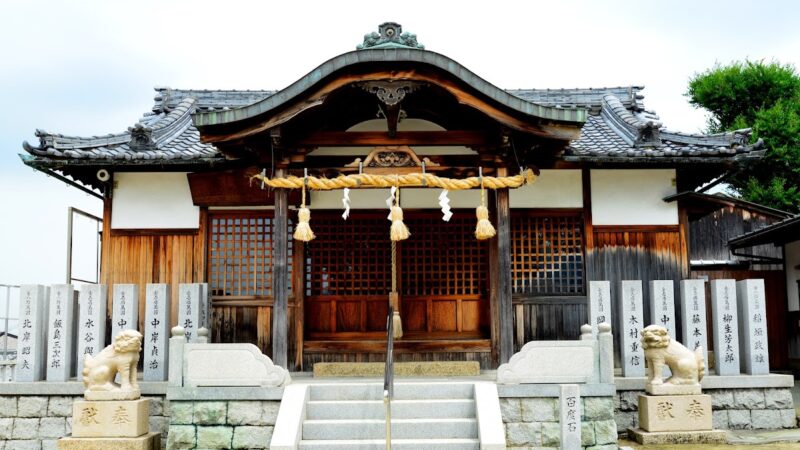
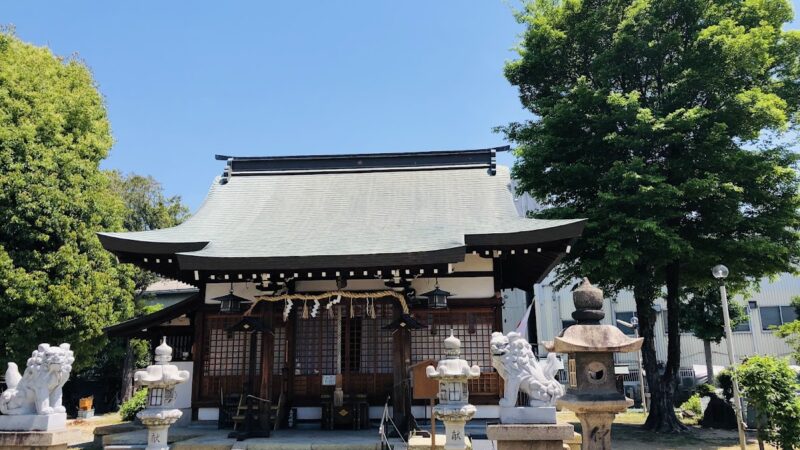
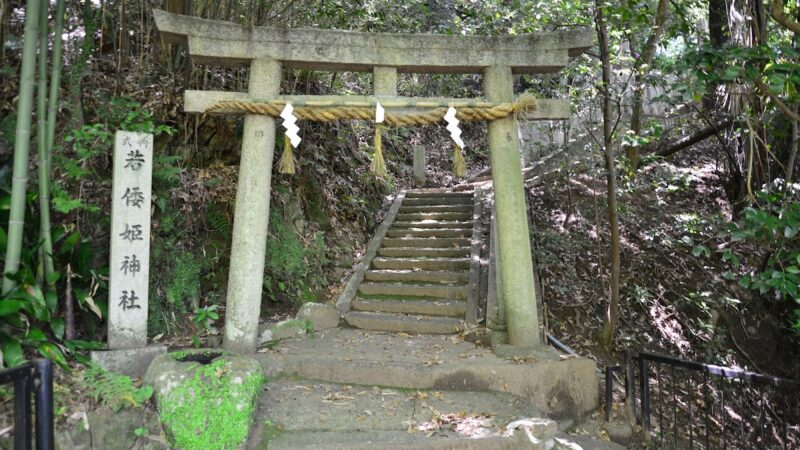
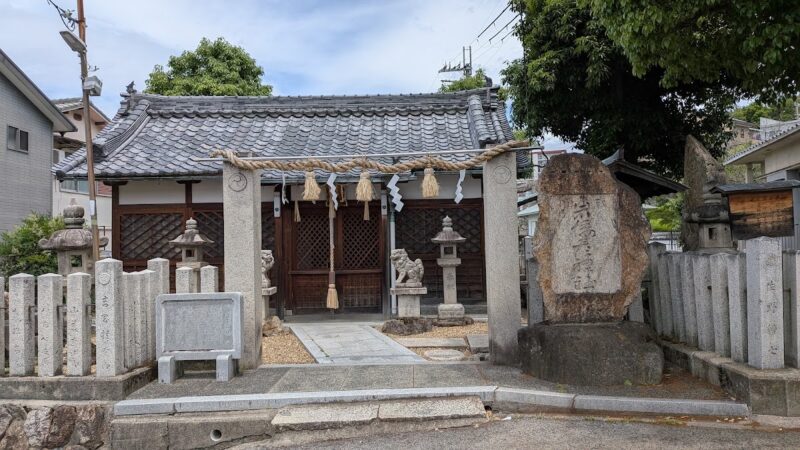
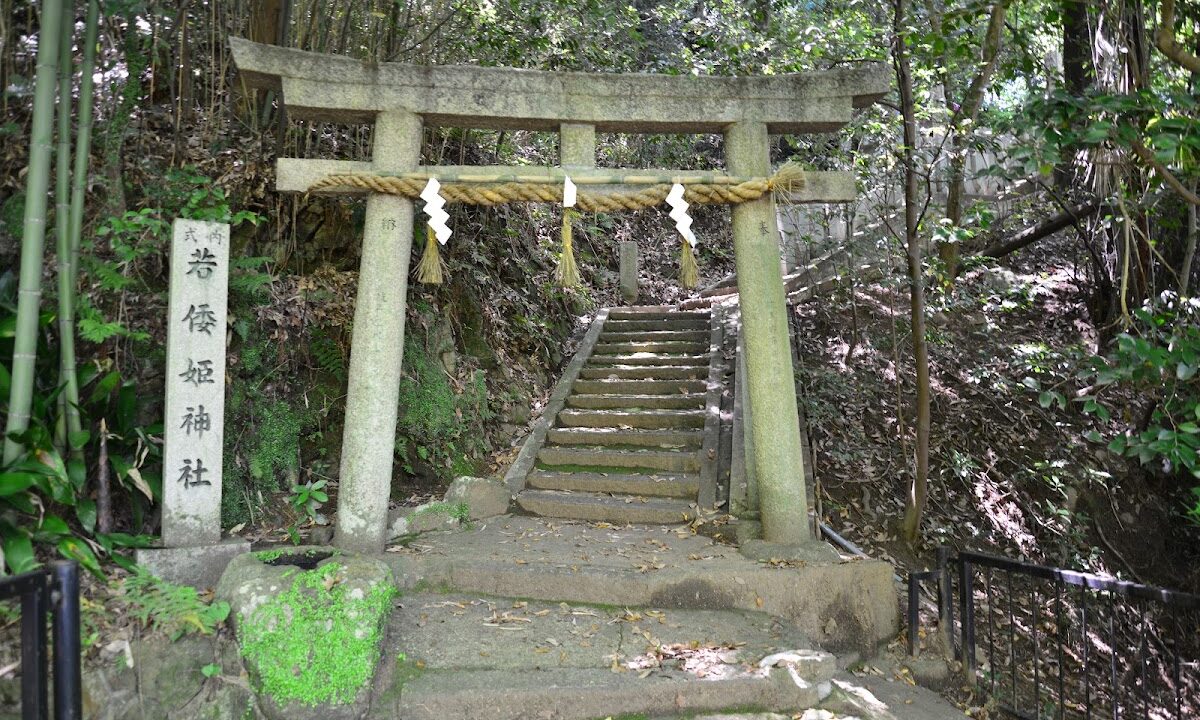
The grounds of Wakayamahime Shrine are a small but orderly space quietly nestled in a residential area. Passing through the torii gate, a path leads to the main shrine. In addition to the worship hall and main shrine, stone lanterns and other elements are arranged within the grounds, giving it the feel of an ancient shrine.
Torii Gate and Path
A torii gate stands at the entrance to the shrine, guiding worshippers into the sacred area. The torii gate is an important element of shrine architecture, serving as a boundary separating the secular world from the sacred realm. The torii gate of Wakayamahime Shrine is simple yet exudes a solemn atmosphere.
Worship Hall and Main Sanctuary
The worship hall is where worshippers offer their prayers, and the main sanctuary is located behind it. The main sanctuary is the most sacred place where the enshrined deity resides. While the shrine buildings of Wakayamahime Shrine were renovated after the Showa-era restoration, they preserve the traditional style of shrine architecture.
Stone Lanterns and Shrine Grounds
Stone lanterns are placed throughout the shrine grounds, quietly telling the story of the shrine’s history. These lanterns demonstrate the faith of those who donated them and are an important element indicating the shrine’s status.
Furthermore, ritual implements such as drums are stored on the grounds and used during festivals.
Annual Events and Festivals
Annual Festival
Wakayamahime Shrine holds various Shinto rituals throughout the year. Particularly important is the annual festival (reisai), the most important annual event for the shrine. During the annual festival, prayers of gratitude are offered to the enshrined deity, and prayers are made for peace and prosperity in the region.
Connection to the Community
As the tutelary shrine of Yamanoi-cho, Wakayamahime Shrine is a central place of worship for the local residents. It remains a popular place of worship for many people today, serving as a place of prayer for important life events such as New Year’s visits, Shichi-Go-San (a traditional rite of passage for children), and exorcisms.
Access Information
Address and Contact Information
Address: 7-4 Yamanoi-cho, Kashiwara City, Osaka Prefecture
Wakayamahime Shrine is located in the residential area of Yamanoi-cho, Kashiwara City, and is situated in a quiet environment.
Access by Public Transportation
Nearest Station: JR Kansai Main Line (Yamatoji Line) Kashiwara Station, or Kintetsu Domyoji Line Kashiwara-Minamiguchi Station
- Approximately 15 minutes on foot from JR Kashiwara Station
- Approximately 20 minutes on foot from Kintetsu Kashiwara-Minamiguchi Station
From Osaka city, you can access Kashiwara Station without transfers using the JR Osaka Loop Line or Yamatoji Line. It’s about 25 minutes from Tennoji Station and about 40 minutes from Osaka Station.
Access by Car
Major Roads: National Route 25, Osaka Prefectural Route 185
- Approximately 10 minutes from the Nishimeihan Expressway “Kashiwara IC”
- Approximately 20 minutes from the Hanshin Expressway “Hirano Exit” via National Route 25
Parking is limited as the area around the shrine is residential. We recommend using public transportation.
Simultaneous Visit to Nearby Shrines
When visiting Wakayamatohime Shrine, we highly recommend also visiting its counterpart, Wakayamatohiko Shrine (Hirano, Kashiwara City). The distance between the two shrines is about 20 minutes on foot.
Furthermore, there are other historical shrines scattered throughout Kashiwara City, such as Kashiwara Kuroda Shrine, which can be combined into a shrine-visiting route.
Historical Background of Kashiwara City
Center of Ancient Kawachi Province
Kashiwara City belonged to the ancient Oagata District of Kawachi Province. Kawachi Province was an ancient province occupying the eastern part of present-day Osaka Prefecture, and was an important region located between Yamato Province (Nara Prefecture) and Settsu Province (northern Osaka Prefecture).
Oagata District is a particularly old region within Kawachi Province, and many burial mounds and archaeological sites have been discovered there. The area around Yamanoi-cho, where Wakayamatohime Shrine is located, is also an area where people have lived since ancient times and is an archaeologically important site.
The Yamato River and a Key Transportation Hub
Kashiwara City is located at the point where the Yamato River flows into the Osaka Plain, and has been a key transportation hub since ancient times. It was an important route connecting Yamato Province and Kawachi Province, and a region with a bustling flow of people and goods.
These geographical conditions are thought to have formed the basis for the prosperity of clans like the Wakayamatobe clan in this region.
Significance in the Study of Shikinaisha Shrines
The Value of the Engishiki Jinmyocho (Register of Shrines in the Engi Era)
The Engishiki Jinmyocho is the most important historical source for understanding the distribution of shrines and the actual state of worship during the Heian period. The fact that Wakayamahime Shrine is listed as “Wakayamahime-no-Mikoto Shrine, Oagata District, Kawachi Province” indicates that this shrine has existed for at least 1000 years and was recognized by the imperial court.
Research on Clan Deity Beliefs
Wakayamahime Shrine occupies an important position in the study of Japanese shrine history as a typical example of a shrine where ancient clans worshipped their ancestral deities. The clear relationship between the specific clan name, Wakayamabe-shi, and the shrine is a valuable example for understanding ancient clan deity beliefs.
Research on Paired Shrines
The existence of the paired shrines, Wakayamahime Shrine and Wakayamahiko Shrine, is an important example of the worship form of male and female paired deities in ancient Shinto beliefs. Such paired shrines can be found throughout Japan, but the example of Wakayamatohime and Wakayamatohiko is particularly noteworthy due to its clear connection to a clan.
Manners and Etiquette for Visiting Shrines
Basic Worship Etiquette
When visiting Wakayamatohime Shrine, please observe the following basic etiquette:
- Bow before the Torii Gate: Before entering the sacred area, bow before the torii gate.
- Walking along the Path: The center of the path is considered the path of the gods, so walk along the sides.
- Watering Procedure: If there is a watering basin, cleanse your left hand, then your right hand, then your mouth.
- Worship at the Main Hall: The basic procedure is two bows, two claps, and one bow.
Photography
Photography is generally permitted on the shrine grounds, but please refrain from taking pictures in particularly sacred areas such as the main hall, or during festivals. It is also important to be considerate of other visitors.
Quiet Worship
Wakayamahime Shrine is a small shrine located in a residential area. When visiting, please be considerate of the nearby residents and worship quietly.
Other Shikinaisha Shrines in Osaka Prefecture
Besides Wakayamahime Shrine, there are many other Shikinaisha shrines in Osaka Prefecture. Historic shrines are scattered throughout the prefecture, including Osaka City, Sakai City, Toyonaka City, Suita City, Takatsuki City, Ikeda City, Moriguchi City, Kishiwada City, Kaizuka City, and Izumiotsu City.
Those interested in visiting shrines can deepen their understanding of Osaka’s ancient history and shrine culture by visiting these Shikinaisha shrines.
Summary
Wakayamahime Shrine is a historical Shikinaisha shrine located in Yamanoi-cho, Kashiwara City, Osaka Prefecture. As a shrine dedicated to the ancestral deity of the ancient Wakayamabe clan, it has attracted local devotion since around the 6th century.
Having been merged with other shrines during the Meiji era, Wakayamahime Shrine regained its independence in 1947 and is a symbol of the faith and love for their homeland held by the local residents. Together with its counterpart, Wakayamahiko Shrine, it is a valuable cultural heritage site that conveys the history of ancient Kawachi Province.
When visiting Kashiwara City, be sure to visit this historic shrine and reflect on its history of faith that has continued for over a thousand years. As you offer your prayers in the tranquil grounds, you will feel the depth of Japan’s Shinto faith that has continued since ancient times.
Visiting Wakayamahime Shrine is not merely sightseeing; it is a valuable opportunity to experience ancient Japanese history and local culture. Its status as a Shikinaisha (a shrine listed in the Engishiki), its connection to the ancient Wakayamabe clan, and its history preserved by the local residents—all of these are condensed within this small shrine.