Kagata Shrine (Kawachinagano City, Osaka Prefecture) Complete Guide | Detailed Information on History, Deities, Access, and Annual Events
Kagata Shrine, located in Kawachinagano City, Osaka Prefecture, is a historic shrine that preserves its main hall and traditional Shinto rituals dating back to the Genroku period. This article provides detailed information useful for visitors, including the deities enshrined at Kagata Shrine, its history, cultural properties, annual events, and access methods.
Basic Information about Kagata Shrine
Location and Address
Official Name: Kagata Shrine
Location: 135 Kagata, Kawachinagano City, Osaka Prefecture 586-0071
Phone Number: 0721-64-1753
Official Website: http://www.doihata.jp/kagata/
Shrine Grounds Visiting: Free (No Admission Fee)
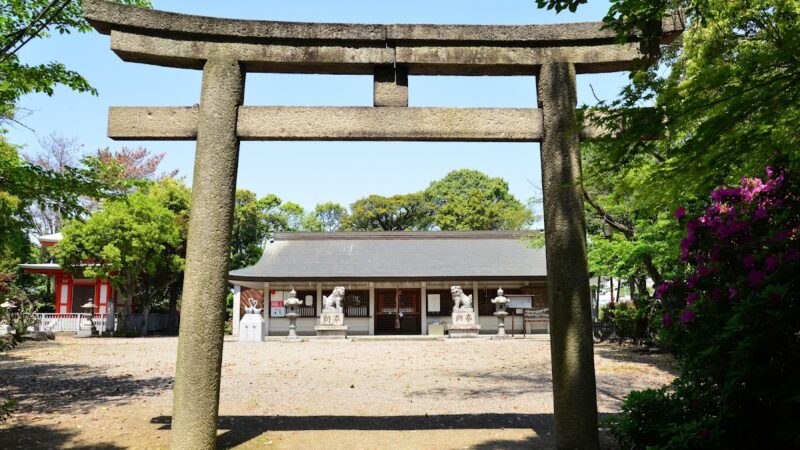
Kagata Shrine is located in the Kagata district of Kawachinagano City, in a quiet environment surrounded by abundant nature. As a shrine belonging to the Osaka Prefectural Shrine Association, it has long been cherished as the local guardian deity.
Deities Enshrined
The following deities are enshrined at Kagata Shrine:
Main Deities:
- Honda-wake no Mikoto – Emperor Ojin
- Tarashinakatsuhiko no Mikoto – Emperor Chuai
- Okinagatarashihime no Mikoto – Empress Jingu
Enshrined Deities:
- Susanoo no Mikoto
- Okami no Kami – Water God
From these enshrined deities, it is clear that Kagata Shrine is a shrine based on Hachiman worship. The composition, with Emperor Ojin and his parents, Emperor Chuai and Empress Jingu, as the main deities, is a typical form of Hachiman shrine.
History and Origins of Kagata Shrine
Founding and Ancient History
The exact founding date of Kagata Shrine is unknown, but it has been revered as the tutelary deity of the Kagata area since ancient times. As a shrine deeply intertwined with the region’s history, it has served as a spiritual anchor for local residents for hundreds of years.
Reconstruction in the Muromachi Period
The oldest surviving document indicates that the shrine was rebuilt in Bunmei 11 (1480). This period falls within the late Muromachi period, a time of turmoil following the Onin War, yet it suggests that the shrine was maintained through the faith of the local people.
Development in the Edo Period
A ridge beam inscription from Shoo 3 (1654) still exists, confirming that some kind of construction or repair work was carried out during this period.
Even more important is the large-scale renovation of the shrine in Genroku 16 (1703). Tani Zen’emon, a parishioner living in Sakai, invested his private funds to renovate the shrine. The current main hall was built at this time and has been carefully preserved to this day as a valuable structure with over 300 years of history.
The Genroku period was a time of stability for the Edo shogunate and a flourishing of townspeople culture. The large donation made by Tani Zen’emon, a merchant from Sakai, to his hometown shrine speaks to the economic prosperity and deep faith of the time.
Modern Era
Under the Meiji-era shrine system, Kagata Shrine was designated a village shrine. Village shrines are positioned as central shrines in their respective regions and have played a vital role as the core of the local community.
Cultural Properties and Architectural Features
Main Hall (Kawachinagano City Designated Cultural Property)
The main hall of Kagata Shrine is designated as a Kawachinagano City Designated Cultural Property.
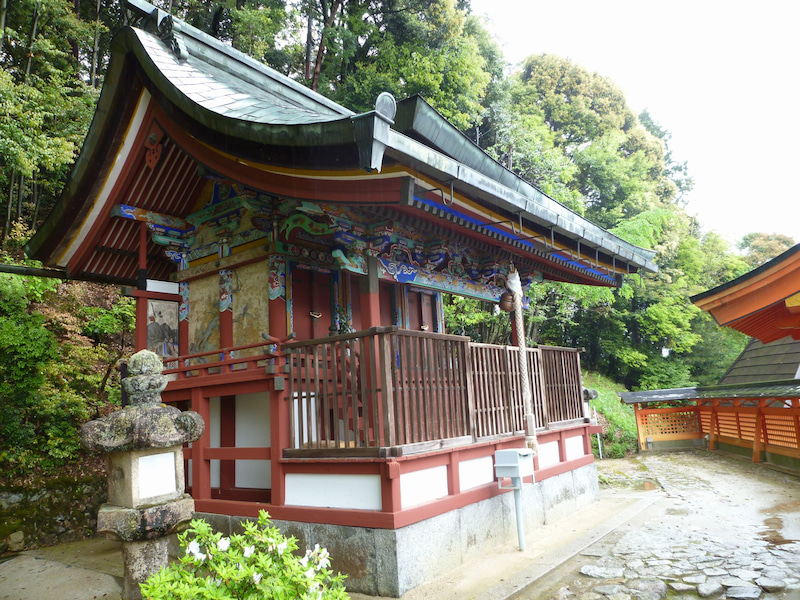
Architectural Style: Sangensha Nagare-zukuri (Three-bay Nagare-zukuri style)
Year of Construction: Genroku 16 (1703)
Structure: Two bays in width, with a one-bay portico extending across the three bays at the front
Roof: Copper plate roofing (originally estimated to be cypress bark or persimmon bark)
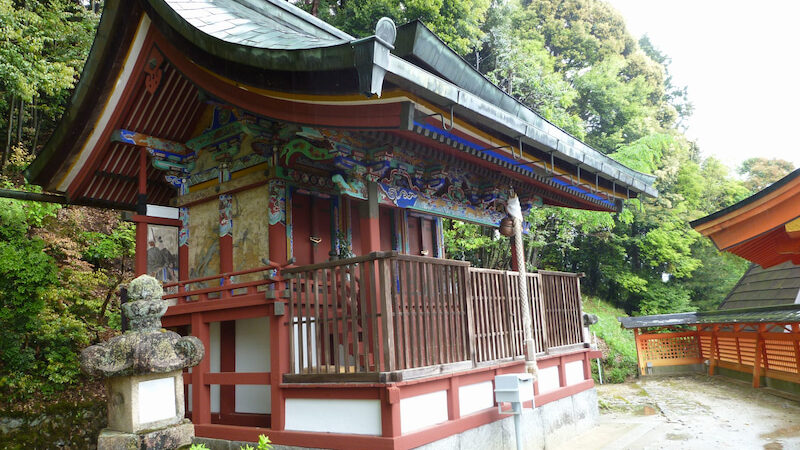
The Sangensha Nagare-zukuri style is a highly formal shrine building in the Nagare-zukuri style with a front facade of three bays (approximately 5.4 meters). A portico, called a Kōhai, extends across the entire front, providing a functional structure to protect worshippers from rain and dew.
This main hall, which strongly retains the architectural style of the Genroku period, is a valuable resource for understanding shrine architecture of the mid-Edo period. The high level of skill of the time can be seen in the detailed carvings and joinery.
Boiling Cauldron
A boiling cauldron, which has been in use since the Genroku period, still exists. The Yudate Shinto ritual is a traditional Shinto ceremony in which water is boiled in front of the shrine and sprinkled on worshippers with bamboo leaves to purify and cleanse them of impurities. This cauldron is a valuable ritual object that has been used in Shinto ceremonies for over 300 years.
Annual Events and Festivals
Kagata Shrine holds various festivals throughout the year.
Main Annual Events
January 10th – Ebisu Festival
This festival is held to pray for business prosperity and family safety. Ebisu, the god of fortune, is enshrined in a subsidiary shrine on the grounds, and this event is popular among local people as a way to receive blessings in the new year.
January – Okonai (Sacred Procession)
This is a traditional event performed by local representatives called Zashu. Okonai is a folk event widely seen in the Kinki region, praying for a bountiful harvest and the safety of the community. The Okonai festival at Kagata Shrine is attracting attention as a valuable event that preserves the region’s traditional culture.
March – Tenjin Festival
This festival is dedicated to Sugawara no Michizane, enshrined in a subsidiary shrine within the grounds. Worshippers visit to pray for academic success and passing exams.
Other Festivals
- Spring Grand Festival
- Autumn Grand Festival
- Monthly Festival
These festivals play an important role in preserving local traditions and strengthening community bonds.
Highlights of the Shrine Grounds
Main Hall
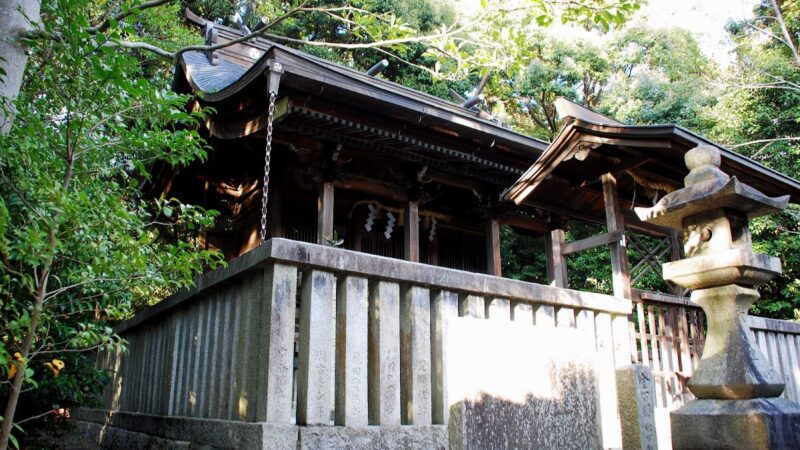
As mentioned above, the main hall, built during the Genroku period, is the greatest highlight of Kagata Shrine. Its elegant three-bay nagare-zukuri style architecture conveys the architectural beauty of the Edo period to the present day.
Subsidiary Shrines
Right side of the main hall: Subsidiary shrine dedicated to Ebisu and Otoshi-no-kami
Left side of the main hall: Tenjin Shrine dedicated to Sugawara no Michizane
These subsidiary shrines serve to fulfill various wishes of the local people, such as business prosperity, abundant harvests, and academic success.
Natural Environment of the Shrine Grounds
Kagata Shrine is surrounded by abundant nature, allowing visitors to enjoy the scenery of each season. The fresh greenery of spring and the vibrant autumn foliage are particularly beautiful, offering a peaceful and tranquil experience for worshippers.
Access
Nearest Station/Line
Approximately 3km south from Mikkaichicho Station on the Nankai Koya Line
Approximately 1km northwest from Mikanodai Station on the Nankai Koya Line (approximately 12 minutes on foot)
Access from Mikanodai Station is the closest, and walking is possible. From Mikkaichicho Station, it is further away, so using a bus or taxi is recommended.
Nearest Bus Stop and Route
If using Nankai Bus, there is a bus route from Mikkaichicho Station towards Kagata. For detailed timetables and service information, we recommend checking the Nankai Bus official website or at the station.
Access by Car
From Osaka City: Approximately 1 hour via Hanshin Expressway and Hanwa Expressway
Parking: Parking space for visitors is available on the shrine grounds.
Access is possible via National Route 170 (Outer Ring Road) or prefectural roads. Entering “Kagata Shrine” or the address “135 Kagata, Kawachinagano City, Osaka Prefecture” into your car navigation system will guide you.
Manners and Precautions for Visiting a Shrine
Proper Way to Visit a Shrine
- Bow before passing through the torii gate.
- Purify your body and mind at the water basin.
- Take the ladle with your right hand and purify your left hand.
- Switch the ladle to your left hand and purify your right hand.
- Switch the ladle back to your right hand, receive water in your left hand, and rinse your mouth.
- Finally, hold the ladle upright and purify the handle.
- Bow twice, clap twice, and bow once in front of the main hall.
About Goshuin (Shrine Seals)
Goshuin are available at Kagata Shrine. Many visitors receive them as a memento of their visit and to deepen their connection with the shrine.
When requesting a Goshuin, please complete your prayers first and then speak to the shrine office. Bringing your Goshuincho (seal book) is recommended.
Regarding Photography
Photography is generally permitted on the temple grounds, but please note the following:
- Refrain from photographing sacred areas such as the interior of the main hall.
- Refrain from photography during religious ceremonies, or obtain permission in advance.
- Be considerate of other visitors.
Nearby Tourist Attractions
Highlights of Kawachinagano City
Kanshinji Temple: An ancient temple with a national treasure, the main hall.
Kongoji Temple: A famous temple on Mt. Amano with numerous important cultural properties.
Enmeiji Temple: A temple associated with Kobo Daishi.
Takihata Dam: A scenic spot around a dam lake rich in nature.
By visiting historical and cultural spots in Kawachinagano City in conjunction with your visit to Kagata Shrine, you can enjoy a more fulfilling day.
Kagata Shrine’s Faith and Connection to the Community
Role as a Guardian Deity
Kagata Shrine, as the guardian deity of the Kagata district, is deeply connected to the lives of the local residents. Kagata Shrine serves as a place for prayer at life’s milestones, such as a baby’s first shrine visit, Shichi-Go-San (a traditional rite of passage for children), and exorcism, and also functions as a gathering place for the local community during New Year’s and festivals.
Preservation of Traditional Culture
As exemplified by the Okonai ceremony in January, Kagata Shrine plays an important role in passing on the region’s traditional culture to future generations. Traditional rituals, such as the performance of Shinto rites by the zashu (sacred monks) and the Yudate Shinto ritual, are still practiced today.
Relationship with the Osaka Prefectural Association of Shinto Shrines
As a shrine belonging to the Osaka Prefectural Association of Shinto Shrines, Kagata Shrine plays a vital role in the prefecture’s network of shrines. Activities such as priest training and information exchange regarding shrine management are also conducted through the Osaka Prefectural Association of Shinto Shrines.
Summary: The Significance of Visiting Kagata Shrine
Kagata Shrine is a shrine where three elements harmoniously combine: a cultural asset—the main hall with a history of over 300 years dating back to the Genroku period; traditional Shinto rituals; and deeply rooted community faith.
Located approximately one hour from Osaka city center, this shrine offers a tranquil natural environment where you can calm your mind and pray, providing a precious opportunity to escape the hustle and bustle of modern life and find peace of mind.
For history buffs, the beauty of Edo-period architecture; for shrine enthusiasts, traditional Shinto rituals; and for those interested in local culture, folk events—each shrine offers something to enjoy from a different perspective.
When visiting Kawachinagano City, we highly recommend visiting Kagata Shrine and spending some peaceful time in a space steeped in long history and tradition.
Contact Information for Visitors:
Kagata Shrine Office
Phone: 0721-64-1753
Address: 135 Kagata, Kawachinagano City, Osaka Prefecture 586-0071
For the latest information on festivals and details regarding visits, please check the official website or contact the shrine directly.