Akasaka Kaminoyama Shrine (Kawachinagano City, Osaka Prefecture) | Complete Guide to History, Deities, and Access
About Akasaka Kaminoyama Shrine
Akasaka Kaminoyama Shrine is a historical shrine located at 1-25-2 Mikanodai, Kawachinagano City, Osaka Prefecture. It was formerly a village shrine and is located within the grounds of Kōzenji Temple.
Located in the innermost part of the Mikanodai residential area in southern Kawachinagano City, this shrine is said to have been founded by Gyōki during the Nara period. It was once the principal shrine of Nishikibe District in Kawachi Province, attracting the faith of the local community. Even today, it is carefully preserved as the tutelary deity of the local residents.
Table of Contents
- Deities Enshrined at Akasaka Kaminoyama Shrine
- History and Origins of Akasaka Kaminoyama Shrine
- Highlights of the Shrine Grounds
- How to Access Akasaka Kaminoyama Shrine
- Precautions When Visiting
- Nearby Shrines and Temples
- Frequently Asked Questions
Deities Enshrined at Akasaka Kaminoyama Shrine
The deities enshrined at Akasaka Kaminoyama Shrine are three gods based on Hachiman worship.
Main Deities
Emperor Chuai
The 14th Emperor and husband of Empress Jingu. Known as a brave warrior, he is revered as a god of military fortune.
Empress Jingu
The Empress of Emperor Chuai, known for the legend of her conquest of the Three Kingdoms of Korea. She is worshipped as a goddess of safe childbirth and child-rearing, and as a goddess of national protection.
Emperor Ōjin
He was the 15th Emperor of Japan and the son of Empress Jingū. He is enshrined as Hachiman-sama in Hachiman shrines throughout Japan and is widely worshipped as the god of military fortune, victory, and career advancement.
These three deities are known as the “Three Hachiman Gods” and have been revered since ancient times as guardian deities of samurai families and protectors of the lives of ordinary people.
History and Origins of Akasaka Kaminoyama Shrine
Origin of Founding
Akasaka Kaminoyama Shrine is said to have been founded in the first year of Jingō-Keiun (767 AD). It is believed to have been founded by Gyōki, a high-ranking monk of the Nara period, as the guardian shrine of the ancient Shōdarakusan Jingūji Temple (present-day Kōzenji Temple).
Gyōki is known as a monk who contributed to the construction of the Great Buddha of Tōdai-ji Temple and was involved in many temples and social projects, mainly in the Kinai region. Many temples and shrines associated with Gyōki remain in Kawachi Province, and Akasaka Kaminoyama Shrine is one of them, serving as a center of local faith.
As the Principal Shrine of Kinbe District, Kawachi Province
At its founding, Akasaka Kaminoyama Shrine served as the principal shrine of Kinbe District in Kawachi Province. A principal shrine is a shrine that enshrines the deities of the major shrines in a region, established to facilitate the visits of the provincial governor.
This suggests that Akasaka Kaminoyama Shrine held an important position in Kinbe District at the time. It is thought to have functioned as a center of local religious ceremonies and also played an administrative role.
Relationship with Jingūji Temple
Akasaka Kaminoyama Shrine was founded as the guardian shrine of Kōzenji Temple (formerly Jingūji Temple). During the era of syncretism of Shinto and Buddhism, it was common for temples and shrines to be worshipped together.
Many Jinguji (temples associated with Shinto shrines) were abolished or separated due to the Meiji-era decree separating Shinto and Buddhism. However, Akasaka Kaminoyama Shrine still stands within the grounds of Kōzenji Temple, preserving the historical connection between the two.
Development since the Modern Era
Under the Meiji-era shrine ranking system, Akasaka Kaminoyama Shrine was ranked as a village shrine. Village shrines were one of the ranks under the old shrine ranking system, given to shrines that served as the tutelary deity of a village and attracted the faith of local residents.
Although the shrine ranking system was abolished after World War II, its historical position as a “former village shrine” is still recorded.
Highlights of the Shrine Grounds
Main Hall and Worship Hall
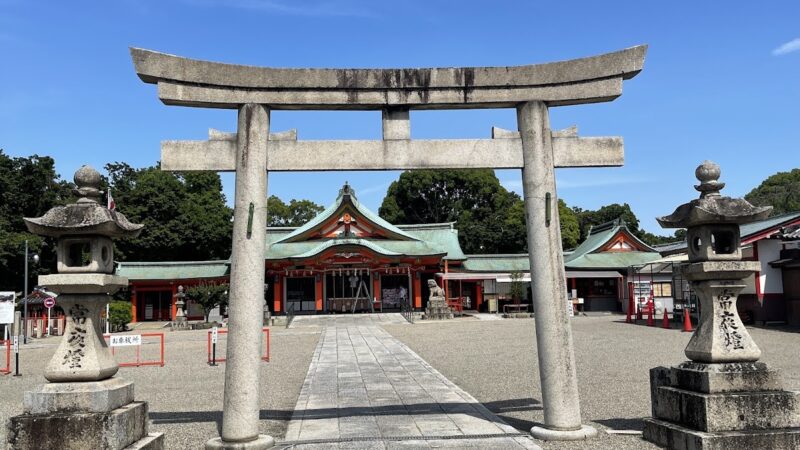
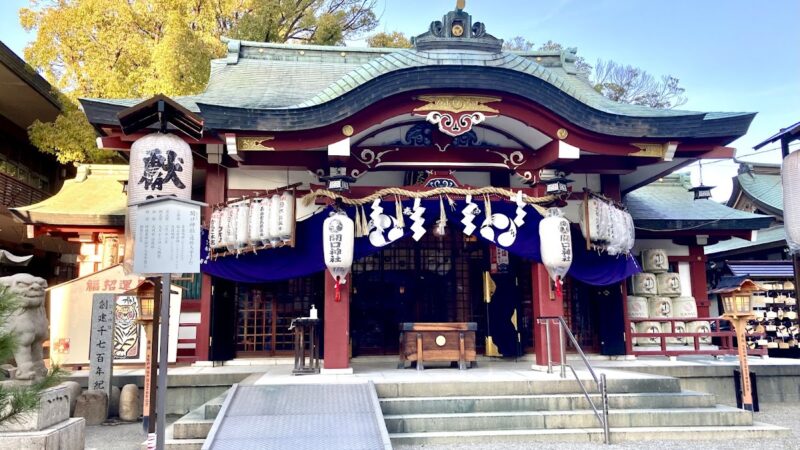
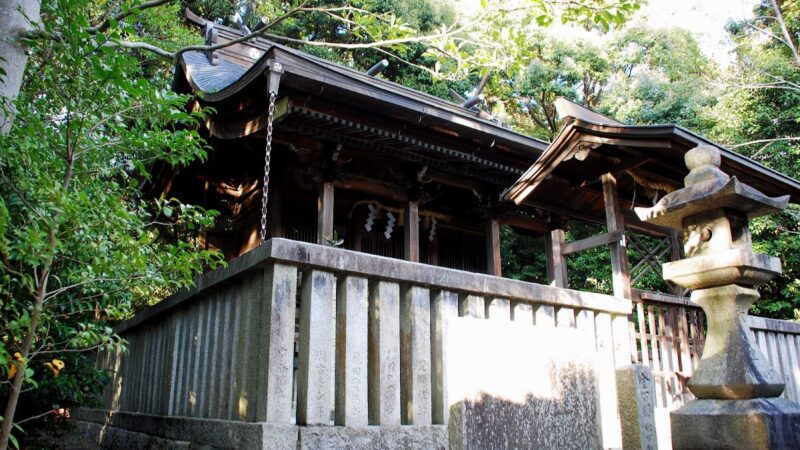
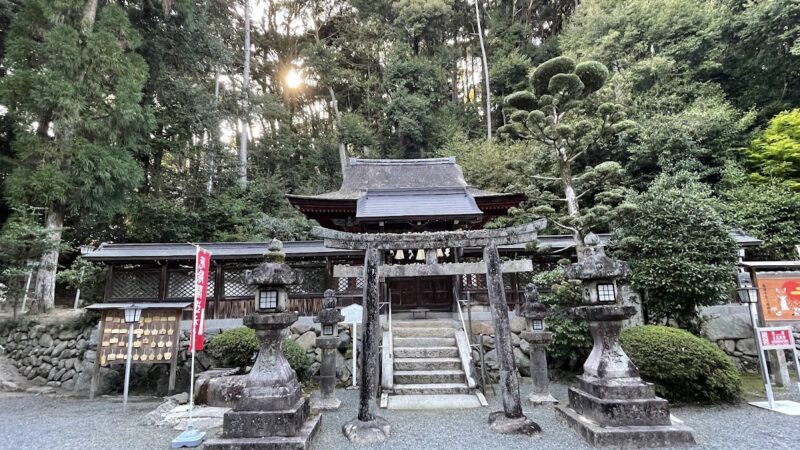
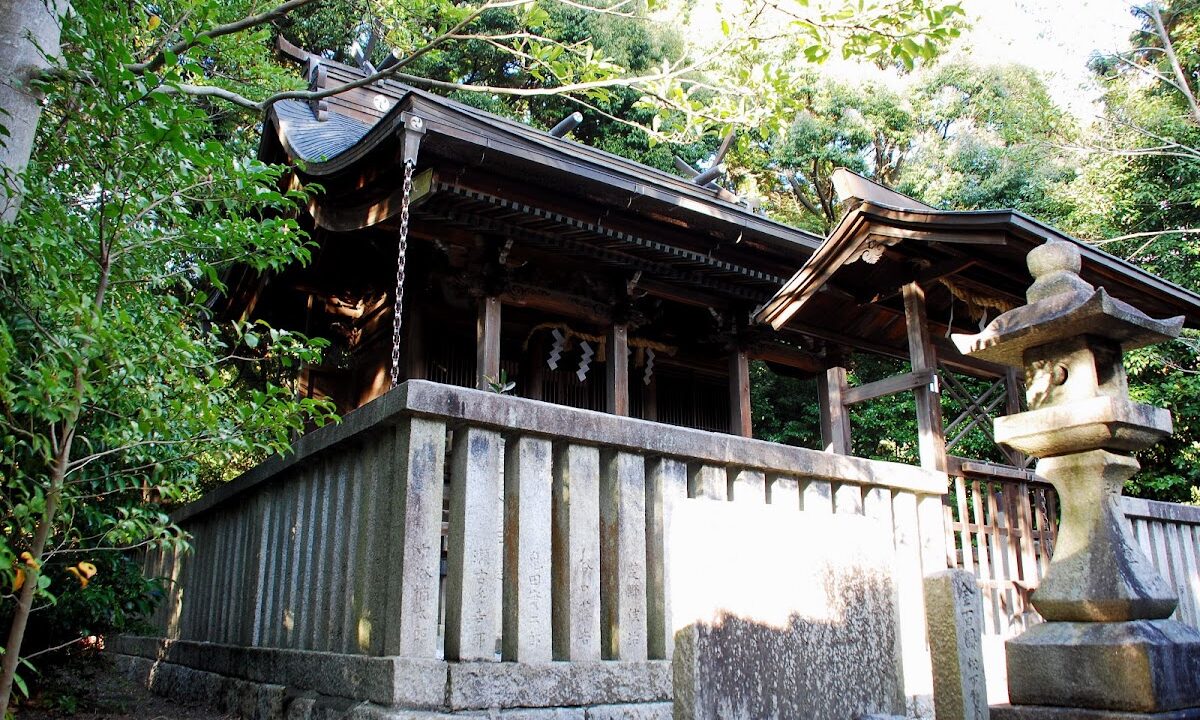
The main hall of Akasaka Kaminoyama Shrine stands quietly in a corner of the Kōzenji Temple grounds. While not large in scale, the carefully maintained shrine reflects the deep faith of the local people.
The worship hall is a building where worshippers pay their respects to the deity, and it is located in front of the main hall. It is characterized by its simple yet dignified appearance.
Harmony with Kōzenji Temple
Kōzenji Temple, where Akasaka Kaminoyama Shrine is located, is a temple that traces its roots back to the former Jingūji (shrine-temple complex). Within its grounds, the shrine and temple coexist, creating a valuable space where one can feel the remnants of the syncretism of Shinto and Buddhism.
The shrine blends seamlessly into the tranquil atmosphere of the temple, providing a uniquely peaceful environment for worship.
Natural Environment of Mikadai
Mikadai, where Akasaka Kaminoyama Shrine is located, is a residential area built by clearing a mountain. Because it is located at the very back of the residential area, abundant nature remains in the surrounding area.
One of the charms of this shrine is that worshippers can experience the changing seasons. Especially during the seasons of fresh greenery and autumn leaves, one can enjoy beautiful scenery.
How to Access Akasaka Kaminoyama Shrine
Access by Train
Nearest Station: Mikanodai Station, Nankai Koya Line
The shrine is located approximately a 5-minute walk from Mikanodai Station, making it very easily accessible from the station.
【Access via Nankai Koya Line】
- From Namba Station: Approximately 30 minutes by Nankai Koya Line express train, alight at Mikanodai Station
- From Kawachinagano Station: Approximately 5 minutes by Nankai Koya Line, alight at Mikanodai Station
Mikanodai Station is a relatively new station on the Nankai Koya Line, and the surrounding area is a well-developed residential area.
Walking Route
The following route is convenient from Mikanodai Station to Akasaka Kaminoyama Shrine.
- Exit Mikanodai Station and proceed south along the roads within the residential area.
- Climb the slope towards the back of the Mikanodai residential area.
- Follow the signs for Kōzenji Temple.
- Arrive at the grounds of Kōzenji Temple; Akasaka Kaminoyama Shrine is located within the grounds.
The roads within the residential area are well-maintained and easy to walk on. However, there are some slight inclines, so comfortable walking shoes are recommended.
Access by Car
Access from Major Roads
- From National Route 170 (Outer Ring Road), take the prefectural road towards Mikanodai.
- Approximately 15 minutes from Kawachinagano city center.
Parking Information
Kōzenji Temple may have parking spaces for visitors, but it is recommended to check in advance. Since it is a residential area, please avoid street parking and be considerate of the neighbors.
Address and Basic Information
Location: 1-25-2 Mikanodai, Kawachinagano City, Osaka Prefecture (within the grounds of Kōzenji Temple)
Visiting Hours: Grounds are freely accessible (however, subject to Kōzenji Temple’s opening hours)
Admission Fee: Free
Phone Number: Please inquire at Kōzenji Temple
Precautions When Visiting
Visiting Etiquette
When visiting Akasaka Kaminoyama Shrine, please observe the following etiquette.
- Bow before passing through the torii gate – As a sign of respect before entering the sacred area, bow before the torii gate before entering the grounds.
- Walk along the edge of the path – The center of the path is considered the path of the gods, so it is proper etiquette to walk along the edge.
- Purify yourself at the water basin – If there is a water basin, purify your hands and mouth before praying.
- Two bows, two claps, one bow – In front of the main hall, bow twice, clap your hands twice, and finally bow once.
Coexistence with Kōzenji Temple
Akasaka Uenoyama Shrine is located within the grounds of Kōzenji Temple, so consideration for the temple is necessary.
- If temple events or ceremonies are taking place, pray quietly.
- Do not enter temple facilities or cemeteries.
- Avoid loud conversations and noise.
Regarding Photography
Photography is generally permitted on the shrine grounds, but please note the following points.
- Be considerate of other visitors.
- Refrain from taking photos in sacred areas such as the main hall.
- Be careful with location information when posting on social media.
Seasonal Precautions
Summer (June-September)
- Bring a hat or parasol as the sun is strong.
- Stay hydrated by drinking water frequently.
- Insect repellent is also effective.
Winter (December-February)
- Dress warmly.
- Watch your step as the shrine grounds may be frozen.
Rainy Weather
- Be extremely careful of slippery slopes.
- Be considerate of other visitors when using an umbrella.
Nearby Shrines and Temples
When visiting Akasaka Kaminoyama Shrine, why not also visit other shrines and temples in Kawachinagano City?
Nagano Shrine
Location: Nagano-cho, Kawachinagano City, Osaka Prefecture
Features: A shrine known as “Nagano Ebisu,” formerly a village shrine. The Toka Ebisu festival held every January attracts many worshippers. It is deeply revered in the region as a god of business prosperity.
Access: Approximately 10 minutes on foot from Kawachinagano Station on the Nankai Koya Line and Kintetsu Nagano Line.
Eboshigata Hachiman Shrine
Location: 305 Kita-machi, Kawachinagano City, Osaka Prefecture
Features: Formerly a village shrine. Known as a shrine associated with Kusunoki Masashige, it boasts towering trees hundreds of years old within its grounds. A shrine where you can feel history and nature.
Access: Approximately 15 minutes on foot from Kawachinagano Station on the Nankai Koya Line and Kintetsu Nagano Line.
Kawakami Shrine
Location: Kawachinagano City, Osaka Prefecture
Features: Originally named Hatobara Shrine, it enshrined Susanoo-no-Mikoto, but in the Meiji era, it was renamed Kawakami Shrine after merging with nearby shrines. It is a shrine that preserves the history of the region.
Kanshinji Temple
Location: 475 Teramoto, Kawachinagano City, Osaka Prefecture
Features: An ancient Shingon Buddhist temple, known as the family temple of Kusunoki Masashige. It is a renowned temple possessing many cultural assets, including the national treasure, the seated statue of Nyoirin Kannon. It is also famous as a spot for cherry blossoms and autumn leaves.
Access: Approximately 15 minutes by bus from Kawachinagano Station on the Nankai Koya Line and Kintetsu Nagano Line.
Kongoji Temple
Location: 996 Amanomachi, Kawachinagano City, Osaka Prefecture
Features: A large Shingon Buddhist temple known as “Amanosan Kongoji.” It flourished as a women’s Koyasan and houses many important cultural properties. The vast grounds offer beautiful natural scenery throughout the seasons.
Access: Approximately 20 minutes by bus from Kawachinagano Station on the Nankai Koya Line and Kintetsu Nagano Line.
History and Culture of Kawachinagano City
Kawachinagano City, where Akasaka Kaminoyama Shrine is located, is situated in the southeastern part of Osaka Prefecture and is blessed with abundant nature and historical and cultural heritage.
A Key Point on the Koyasan Road
Kawachinagano developed as a post town on the Koyasan Road, a pilgrimage route to Mount Koya. The area has a history of many pilgrims passing through, and commerce and culture flourished.
Even today, the city retains traces of the Koya Kaido road and is dotted with historical sites, making it a great place to enjoy historical walks.
Places Associated with Kusunoki Masashige
Kawachinagano City is also known as a place associated with Kusunoki Masashige, a samurai from the Nanboku-cho period. Historical sites related to the Kusunoki clan remain throughout the city, including Kanshinji Temple, attracting the attention of history enthusiasts.
Rich Natural Environment
Approximately 70% of the city area is covered by forests, and it is characterized by a rich natural environment surrounded by mountains such as Mt. Kongo and Mt. Iwawaki. Hiking trails are well-maintained, and there are many spots where you can enjoy nature.
Annual Events at Akasaka Kaminoyama Shrine
It is believed that various festivals are held throughout the year at Akasaka Kaminoyama Shrine, which serves as the local guardian shrine.
Main Annual Events (Examples of Typical Shrines)
New Year’s Day Festival (January 1st)
A festival to pray for happiness in the new year. Many worshippers visit for their first shrine visit of the year.
Spring Festival
Celebrating the arrival of spring and praying for a bountiful harvest and peace in the community.
Summer Purification Ceremony (Around June 30th)
A Shinto ritual to purify oneself of sins and impurities accumulated over the past six months. A ritual of passing through a ring of reeds may also be performed.
Autumn Festival
A festival to express gratitude for the autumn harvest and report a good harvest to the gods. An important festival in the community.
Year-End Purification Ceremony (December 31st)
A Shinto ritual to purify oneself of sins and impurities accumulated over the past year and welcome the new year with a fresh start.
*For specific dates and details of festivals, please contact Kōzenji Temple or the local parishioners’ representative.
Benefits of Akasaka Uenoyama Shrine
The three Hachiman deities enshrined at Akasaka Uenoyama Shrine (Emperor Chuai, Empress Jingu, and Emperor Ojin) are believed to offer the following benefits:
Long-lasting Military Fortune and Success in Competitions
Hachiman has been revered as a god of war since ancient times. He attracted the faith of samurai seeking military success, and today, visitors come to pray for success in competitions such as exams, job hunting, and sports.
Career Advancement and Business Prosperity
Emperor Ojin is also known as a god of career advancement and success. He is worshipped by those seeking promotions in their careers and business success.
Safe Childbirth and Child-rearing
Empress Jingu is worshipped as a god of safe childbirth and child-rearing, based on the legend that she carried out the conquest of the Three Kingdoms of Korea while pregnant with Emperor Ojin and gave birth safely upon her return. Many pregnant women and those raising children visit the shrine.
Protection from Evil and Family Safety
Hachiman is worshipped as a god of protection from evil and is cherished by local people as a deity who protects the health and safety of families.
Mindset for Worship
When visiting a shrine, it is important to have the following mindset:
A Heart of Gratitude
The basis of shrine worship is to express gratitude to the gods for things that we often take for granted, such as our daily lives, health, and the safety of our families. Worship with a heart of gratitude, not just for making requests.
A Pure Heart
When entering the sacred grounds, it is important to purify your mind and body and worship with a pure heart. Purification at the water basin is not merely a formality, but also has the meaning of calming the mind.
A Reverent Attitude
Shrines are sacred places. It is expected that you worship quietly and with a reverent attitude. Remember to be considerate of other worshippers.
Summary
Akasaka Kaminoyama Shrine is a historic shrine located in Mikanodai, Kawachinagano City, Osaka Prefecture. It is said to have been founded by the high-ranking Buddhist monk Gyoki during the Nara period, and it once played an important role as the principal shrine of Nishikibe District in Kawachi Province.
Located within the grounds of Kōzenji Temple, it is a valuable presence that preserves the remnants of the syncretism of Shinto and Buddhism, and is protected by the local people. It enshrines the three Hachiman deities and is believed to offer various blessings, including military success, career advancement, safe childbirth, and child-rearing.
Its convenient location, approximately a 5-minute walk from Mikanodai Station on the Nankai Koya Line, is also a major attraction, making it a shrine worth visiting when in Kawachinagano City. Situated in a quiet residential area, it offers a peaceful atmosphere for a leisurely visit.
Kawachinagano City also boasts many other historic shrines and temples, including Nagano Shrine, Eboshigata Hachiman Shrine, Kanshinji Temple, and Kongoji Temple. Visiting Akasaka Kaminoyama Shrine in conjunction with this location will allow you to gain a deeper understanding of the rich history and culture of this region.
Frequently Asked Questions (FAQ)
Q1: Can I get a Goshuin (shrine stamp) at Akasaka Kaminoyama Shrine?
A1: For information on obtaining a Goshuin at Akasaka Kaminoyama Shrine, please inquire with Kōzenji Temple or the local parishioners’ representative. As it is a small shrine, they may not always be able to provide this service.
Q2: Can I have a wedding ceremony or prayer at Akasaka Kaminoyama Shrine?
A2: For wedding ceremonies, prayers, and other Shinto rituals, you need to consult with Kōzenji Temple or the shrine staff in advance. As it is a small shrine, the services they can provide may be limited.
Q3: Is there parking available?
A3: Kōzenji Temple may have parking spaces for visitors, but the number of spaces may be limited. We recommend using public transportation. It is conveniently located about a 5-minute walk from Mikanodai Station, making it easily accessible by train.
Q4: Are there any suitable times to visit?
A4: You can generally visit the shrine grounds freely, but please follow the opening hours of Kōzenji Temple. Early mornings and evenings offer a quiet and peaceful visit, but for safety reasons, we recommend visiting during daylight hours.
Q5: When are the festivals at Akasaka Kaminoyama Shrine held?
A5: For specific festival dates, please inquire with Kōzenji Temple or the local parishioners’ representative. Generally, the annual festivals are held in spring and autumn, but details should be confirmed in advance.
Q6: Is the shrine barrier-free?
A6: Located in a residential area with some slopes, it may be difficult to visit in a wheelchair. We recommend contacting Kōzenji Temple in advance to check the conditions of the grounds.
Q7: Are there any places to eat nearby?
A7: Mikanodai is a residential area, so restaurants are limited. There are various restaurants if you go back to the area around Kawachinagano Station. It would be a good idea to plan to have a meal around Kawachinagano Station before or after visiting the shrine.