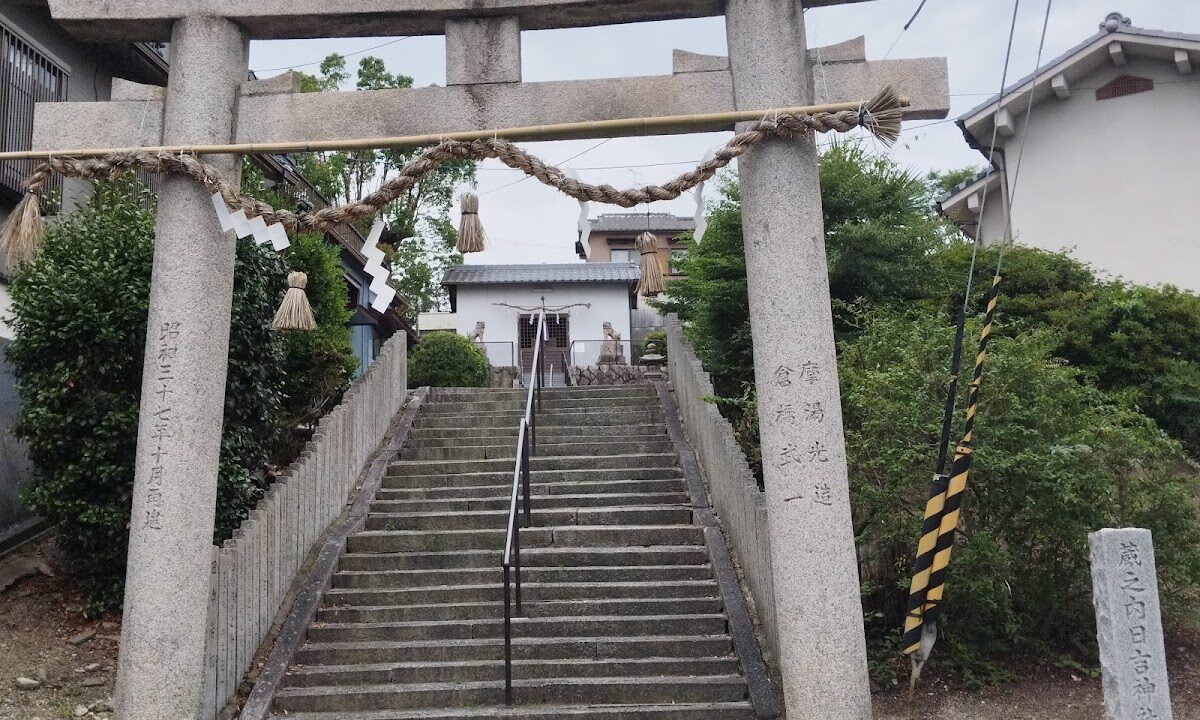
Complete Guide to Kuranouchi Hiyoshi Shrine (Habikino City, Osaka Prefecture) | Thorough Explanation of History, Deities, and Access
The Hiyoshi Shrine, located in Kuranouchi, Habikino City, Osaka Prefecture, is a shrine deeply intertwined with the history of the region. While several Hiyoshi Shrines exist within Habikino City, the Kuranouchi Hiyoshi Shrine has a unique history, having undergone shrine consolidation during the Meiji era and reconstruction during the Showa era. It remains a cherished center of faith for local residents.
This article provides a comprehensive explanation of the shrine’s charm, including its history, its connection to the ancient Kuranouchi clan (from which the place name originates), its enshrined deities, the current state of the grounds, access methods, and nearby attractions.
History of Kuranouchi Hiyoshi Shrine
From Founding to the Edo Period
The exact founding date of Kuranouchi Hiyoshi Shrine is unknown due to a lack of historical records, but it is believed to have existed since ancient times as a center of local faith. Hiyoshi Shrines are a group of shrines whose head shrine is Hiyoshi Taisha (Hie Sanno Gongen) located in Otsu City, Shiga Prefecture, and there are said to be approximately 3,800 such shrines throughout Japan.
Hiyoshi Taisha, as the guardian deity of Enryaku-ji Temple on Mount Hiei, was established during the Heian period and medieval period, and its branches were spread throughout Japan along with the spread of the Tendai sect. It is presumed that the Hiyoshi Shrine in Kuranouchi was also founded within this spread of Hiyoshi faith.
While detailed records up to the Edo period have not been found, it is certain that the shrine was revered by the local residents as their tutelary deity.
Meiji-era Shrine Consolidation Policy and Village Shrine Designation
In 1872 (Meiji 5), Kuranouchi Hiyoshi Shrine was designated a village shrine. As part of the Meiji government’s modernization of the shrine system, local shrines were given a rank. A village shrine was a rank given to shrines that enshrined the tutelary deity of a village, which was the administrative division at the time.
Under the Meiji era’s shrine system, a hierarchy was established: official shrines (government-supported shrines and national shrines), various shrines (prefectural shrines, local shrines, village shrines, etc.), and unranked shrines. Kuranouchi Hiyoshi Shrine established its position as a village shrine, a formal religious institution in the region.
Consolidation and Temporary Disappearance in 1907
In 1907 (Meiji 40), Kuranouchi Hiyoshi Shrine underwent a major turning point. Due to the shrine consolidation policy promoted by the Meiji government, it was merged with the Hiyoshi Shrine in Nishiura.
The shrine consolidation policy was implemented nationwide based on the principle of “one shrine per town/village,” based on Imperial Ordinance No. 220 of 1906, “Regarding the Disposal of Sites Formerly Merged Shrines, Temples, and Buddhist Halls.” The purpose of this policy was to improve the financial health of shrines through consolidation and strengthen the State Shinto system.
As a result of this policy, it is estimated that approximately 70,000 of the roughly 200,000 shrines nationwide were consolidated. The Kuranouchi Hiyoshi Shrine was also swept up in this wave, and its history as an independent shrine was temporarily interrupted.
Reconstruction in 1962 and the Present
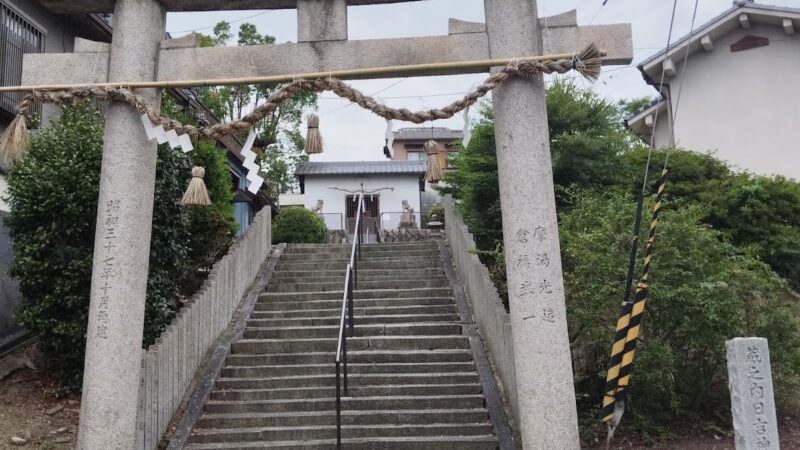
55 years after the merger, in 1962 (Showa 37), thanks to the enthusiasm of local residents, the Kuranouchi Hiyoshi Shrine became independent from the Nishiura Hiyoshi Shrine and was rebuilt at its current location.
During the post-war period of rapid economic growth, the residents’ desire to maintain community cohesion and protect their ancestral faith made the shrine’s reconstruction a reality. This reconstruction was not merely the revival of a religious facility, but also represented the restoration of regional identity.
Since its reconstruction, the Kuranouchi Hiyoshi Shrine has continued to be cherished by residents as the local guardian deity.
The Connection Between the Place Name Kuranouchi and the Kuranouchi Clan
Origin of the Place Name and Ancient Powerful Clan
The origin of the place name “Kuranouchi” is thought to be related to the “Kuranouchi clan,” a powerful ancient clan.
The Kurano-shi clan was a family associated with the Kurano-tsukasa, the Imperial Treasury, which managed the finances of the imperial court. They were based in Kawachi Province (present-day eastern Osaka Prefecture). The Kurano-tsukasa was an important official position responsible for managing the court’s treasures and grains, and it is presumed that the clans holding this position wielded considerable influence in this region.
The place name “Kurano-uchi” is highly likely to have been named as meaning “the territory of the Kurano-shi clan” or “land associated with the Kurano-tsukasa.”
History of Kawachi Province and Ancient Powerful Clans
Kawachi Province, including Habikino City, was a region deeply connected to the Yamato court from the Kofun period to ancient times. As evidenced by the Furuichi Kofun Group, including the Emperor Ojin Mausoleum (Homuda Gobyoyama Kofun), this region was a base for powerful clans close to the royal power.
The fact that a finance-managing clan like the Kurano-shi clan held influence in this area indicates that Kawachi Province was also an economically important region. The place name Kurano-uchi can be considered a valuable cultural heritage that conveys this ancient history to the present day.
Deities and Beliefs
Main Deity: Ōyamakui-no-kami
The main deity of Kuranouchi Hiyoshi Shrine is Ōyamakui-no-kami. Ōyamakui-no-kami is a deity appearing in the Kojiki (Records of Ancient Matters), and is described as residing on Mount Hiei (Hieyama) in Ōmi Province (present-day Shiga Prefecture) and at Matsuo in Kadono (Matsuo Taisha Shrine in Kyoto).
“Yamakui” means “owner of the mountain” or “god who rules the mountain,” and the deity is worshipped as a mountain god and a god of agriculture. They are also believed to have divine powers of protection against evil, warding off misfortune, and matchmaking.
Relationship with Hiyoshi Taisha Shrine
Hiyoshi Taisha Shrine, as the guardian deity of Mount Hiei, played a role in protecting the northeast direction (the “demon’s gate”) of Heian-kyō (Kyoto), and was deeply revered by the imperial court as a shrine praying for the safety of the capital and the peace of the nation.
After Saichō, the founder of the Tendai sect, established Enryaku-ji Temple on Mount Hiei, Hiyoshi Shrine came to be revered as the guardian deity of the Tendai sect and was known as “Sannō Gongen.” Along with the spread of Tendai temples throughout Japan, Hiyoshi Shrines were also established in various locations.
Kuranouchi Hiyoshi Shrine was founded within this tradition of Hiyoshi worship, and by enshrining Ōyamakui-no-kami, it became a place to pray for the safety of the region and a bountiful harvest.
Current Kuranouchi Hiyoshi Shrine
Shrine Grounds
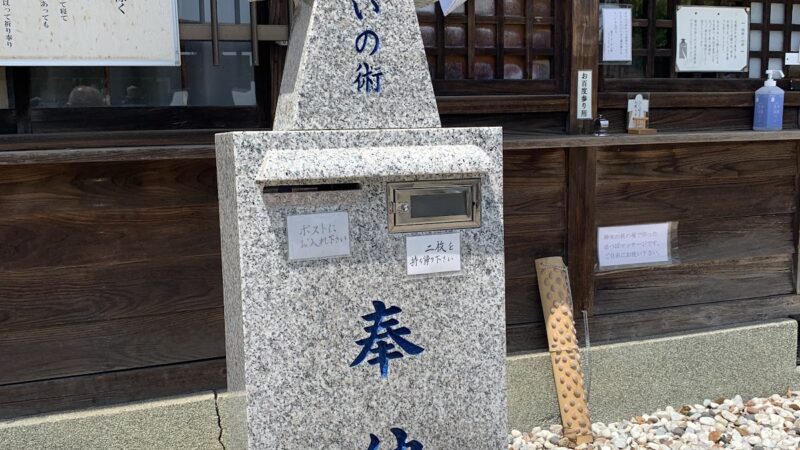
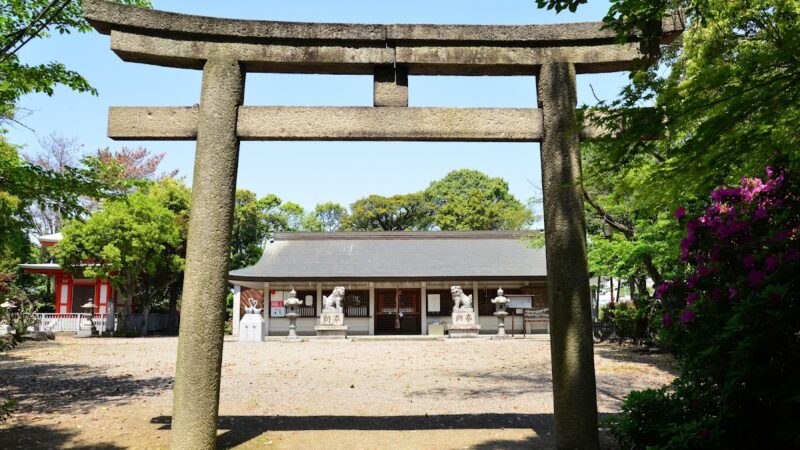
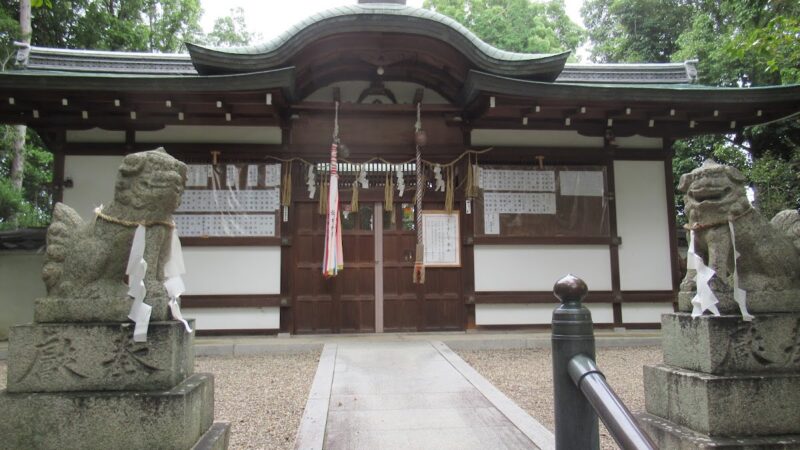
The current Kuranouchi Hiyoshi Shrine sits quietly amidst a residential area. The grounds are not particularly large, but they are carefully maintained, and it is clear that they are cherished as a place of worship for the local residents.
The main hall was rebuilt in 1962 and follows the traditional style of shrine architecture. The grounds include a torii gate, worship hall, main hall, and basic facilities such as a purification fountain.
Connections to the Community
Kuranouchi Hiyoshi Shrine is central to local festivals and annual events. Maintained by local residents, it attracts visitors for important life events such as New Year’s visits, Shichi-Go-San (a traditional rite of passage for children), and exorcisms.
Despite its small size, it continues to play a vital role as a spiritual pillar of the local community.
About Goshuin (Shrine Seals)
Regarding the issuance of Goshuin at Kuranouchi Hiyoshi Shrine, it is recommended to check in advance, as there may not always be a resident priest. The priest may also be responsible for other shrines in Habikino City.
Access and Basic Information
Location
Address: Kuranouchi, Habikino City, Osaka Prefecture
Access by Train
Kuranouchi Hiyoshi Shrine can be accessed using the following transportation options.
- Approximately 15-20 minutes on foot from Kintetsu Minami-Osaka Line “Furuichi Station”
- Approximately 20-25 minutes on foot from Kintetsu Minami-Osaka Line “Komagatani Station”
Access from the nearest stations is on foot. Since it is located in a residential area, we recommend using a map app or map.
Access by Car and Parking
Access by car is possible, but prior confirmation of dedicated parking is necessary. Since the surrounding area is residential, we recommend avoiding street parking and using nearby coin-operated parking lots.
- Approximately 10 minutes from Nishi-Meihan Expressway “Fujiidera IC”
- Approximately 15 minutes from Hanwa Expressway “Habikino IC”
Visiting Hours
While the shrine grounds are generally open for free visits, the shrine office may have limited opening hours. If you wish to receive a Goshuin (shrine stamp) or prayers, we recommend inquiring in advance.
Other Hiyoshi Shrines in Habikino City
Besides Kuranouchi Hiyoshi Shrine, there are several other Hiyoshi Shrines in Habikino City.
Nishiura Hiyoshi Shrine
As mentioned above, Kuranouchi Hiyoshi Shrine was merged with Nishiura Hiyoshi Shrine from 1907 to 1962. Nishiura Hiyoshi Shrine still stands in Nishiura, Habikino City, and is worshipped as the local guardian deity.
Other Hiyoshi Shrines
There are several other Hiyoshi Shrines in Habikino City, each with its own unique history and connection to the region. This can be seen as evidence that Hiyoshi faith was widely prevalent in the Kawachi region.
Recommended Nearby Spots
When visiting Kuranouchi Hiyoshi Shrine, we recommend also visiting other historical spots in Habikino City.
Furuichi Kofun Group
Habikino City is located in the Furuichi area of the World Cultural Heritage site “Mozu-Furuichi Kofun Group.” Numerous burial mounds, including the Emperor Ōjin Mausoleum (Homuda Gobyōyama Kofun), are scattered throughout the area, allowing visitors to experience ancient history.
- Emperor Ōjin Mausoleum – The largest keyhole-shaped burial mound in the Furuichi Kofun Group
- Shiratori Mausoleum – Believed to be the mausoleum of Yamato Takeru
- Minegatsuka Kofun – A valuable burial mound that can be viewed from the inside
Homuda Hachiman Shrine
An ancient shrine dedicated to Emperor Ōjin, considered one of the oldest Hachiman shrines in Japan. Located within walking distance of Kuranouchi Hiyoshi Shrine, it boasts a magnificent shrine building and a historical atmosphere.
Habikino City Historical Museum (Habikino Museum)
A facility where you can learn in detail about the history of the Furuichi Kofun Group and the Kawachi region. Exhibits of excavated artifacts and models of burial mounds deepen your understanding of local history.
Gourmet & Lunch Spots
Habikino City is a region where fruit cultivation, such as grapes and figs, is thriving. There are restaurants, cafes, and direct sales outlets using local ingredients, allowing you to enjoy gourmet food after visiting the temple.
History and Culture of Habikino City
History from Ancient Times
Habikino City flourished as one of the centers of the Kawachi government during the Kofun period (Tumulus period). The construction of burial mounds of emperors such as Emperor Ojin indicates that this region was close to the political and cultural center of ancient Japan.
Development from the Medieval Period Onward
In the medieval period, temples, shrines, and manors developed as part of Kawachi Province. A local community was formed under the influence of powerful clans such as the Kura-no-uchi clan.
In the early modern period, a regional economy centered on agriculture developed, laying the foundation for present-day Habikino City.
Modern Habikino City
Present-day Habikino City has developed as a commuter town with excellent access to central Osaka, while also possessing aspects of a historical and cultural city with World Heritage-listed burial mounds and historical shrines and temples.
Small local shrines like Kuranouchi Hiyoshi Shrine have become important elements supporting the region’s identity within this accumulation of history.
Summary: The Charm of Kuranouchi Hiyoshi Shrine
Kuranouchi Hiyoshi Shrine is not a large shrine, but it has a unique history of merger during the Meiji period and reconstruction in the Showa period, and has been preserved through the faith and efforts of local residents.
The place name “Kuranouchi,” which is thought to originate from the ancient Kuranouchi clan, the faith in Oyamakui-no-kami, who was invited from Hiyoshi Taisha Shrine, and the deep connection with the local community—all of these contribute to the great charm of this small shrine.
When you visit Habikino City, be sure to visit not only the World Heritage-listed burial mounds, but also these locally rooted shrines. You will be able to feel the layers of history and the continuation of religious practices that go on to the present day.
Kuranouchi Hiyoshi Shrine is a valuable place for considering the diversity of Japanese shrine faith and the role of shrines in local communities. Why not visit this shrine, which continues to watch over the community even today, nestled in a quiet residential area?