Complete Guide to Kano Tenmangu Shrine (Gifu Prefecture): History, Goshuin (Shrine Seals), Access, and Highlights
Kano Tenmangu Shrine is a Tenmangu shrine located in Kano Tenjin-cho, Gifu City, Gifu Prefecture. It enshrines Sugawara no Michizane, known as the god of learning, and boasts a long history dating back to the Muromachi period. It attracts many worshippers from all over Japan, as well as locals. Its excellent accessibility, just a 5-minute walk from JR Gifu Station, is another of its attractions.
This article provides detailed information useful for visiting Kano Tenmangu Shrine, including its history, goshuin (shrine seals) and other offerings, highlights within the grounds, annual festivals and rituals, and access methods.
What is Kano Tenmangu Shrine?
Kano Tenmangu Shrine is a former prefectural shrine located in Gifu City, Gifu Prefecture, and enshrines Sugawara no Michizane as its main deity. This shrine is believed to bring blessings for academic success, passing exams, and improving calligraphy skills, and is especially popular during exam season, attracting many students and their parents who come to pray for success.
Basic Information
- Location: 4-1 Kano Tenjin-cho, Gifu City, Gifu Prefecture
- Main Deity: Sugawara no Michizane
- Shrine Rank: Former Prefectural Shrine
- Founded: Bun’an 2 (1445)
- Phone Number: 058-271-0706
- Visiting Hours: Open 24 hours
- Shrine Office Hours: 9:00 AM – 4:00 PM (Entry for prayers must be by 3:30 PM)
- Closed Days: Open all year round
- Parking: Available (Free)
History of Kano Tenmangu Shrine
The history of Kano Tenmangu Shrine dates back to the Muromachi period. Let’s take a closer look at its changes from its founding to the present day.
Origins: As the Guardian Deity of Kutsui Castle
In 1445 (Bun’an 2), Saito Toshinaga, the deputy governor of Mino Province, built Kutsui Castle in Kutsui-go (present-day Kano area of Gifu City). At this time, he invited the deity of Tenmangu Shrine from Kitano Tenmangu Shrine in Kyoto to serve as the castle’s guardian deity, which is considered the beginning of Kano Tenmangu Shrine.
Kutsui Castle was the predecessor of the later Kano Castle and played an important role as a base for the Saito clan. It is said that Saito Toshinaga, the lord of the castle, revered Sugawara no Michizane, the god of learning, as his guardian deity and also focused on promoting culture in the castle town.
From the Sengoku Period to the Edo Period
Later, Kutsui Castle was temporarily abandoned, but the local people’s faith in Tenmangu Shrine continued without interruption. This demonstrates the deep-rooted reverence for Sugawara no Michizane in the region.
After the Battle of Sekigahara in 1600, Tokugawa Ieyasu decided to build a new castle in Kano, a strategic point on the Tokaido road. The following year, 1601, Okudaira Nobumasa became the first lord of Kano Castle, and construction of the castle began.
During the construction of Kano Castle, the Tenmangu shrine was located within the castle grounds, and was therefore relocated to its current location in Kano Tenjin-cho. Records show that Okudaira Nobumasa and his wife, Kamehime (Tokugawa Ieyasu’s eldest daughter), were devout followers of the Tenmangu shrine, and they renovated the shrine buildings and worshipped with great care.
Development during the Edo Period
Throughout the Edo period, Kano Tenmangu Shrine was deeply revered by the lords of Kano Castle and the people of the castle town. The successive lords of the Kano Domain protected the Tenmangu Shrine, providing support for its repairs and festivals.
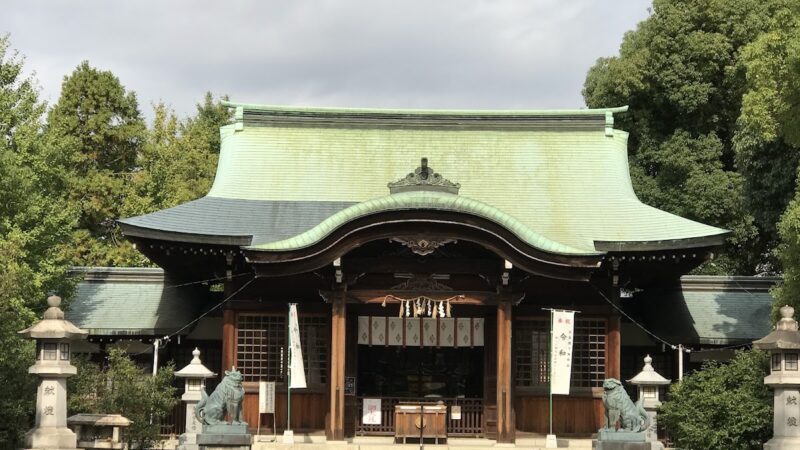
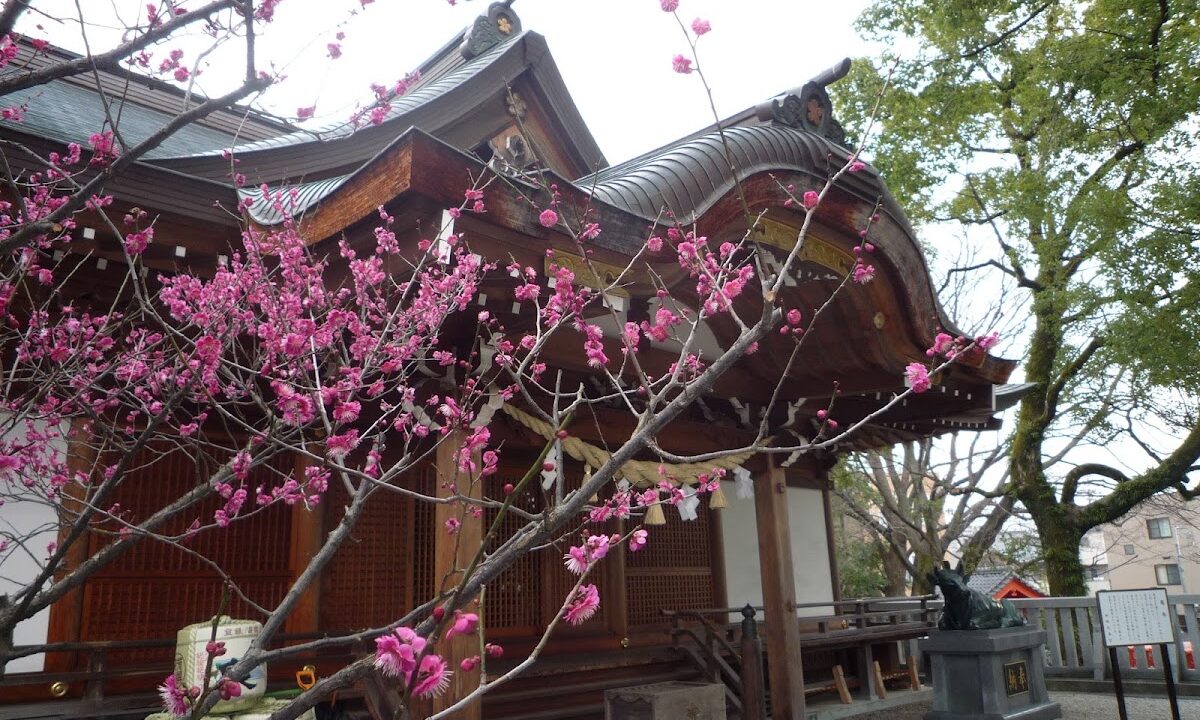
The current worship hall (dance hall) was rebuilt in 1810 (Bunka 7) and features a traditional shrine architectural style with a hipped roof, tiled roofing, and a curved gable front. Its size, five bays in length and three bays in width, reflects the high status of the Tenmangu Shrine at the time.
From the Meiji Era to the Present
Due to the Meiji-era reforms to the shrine system, Kano Tenmangu Shrine was elevated to the rank of a prefectural shrine. This signifies its recognition as one of the most prestigious shrines in Gifu Prefecture.
Even as times have changed through the Showa, Heisei, and Reiwa eras, Kano Tenmangu Shrine continues to be cherished by the local people as the god of learning. Especially during exam season, it is bustling with students and their parents praying for success.
In recent years, efforts have been made to preserve traditional events, such as the revival of the float procession at the Tenjin Festival during the Heisei era.
Deities and Benefits
Main Deity: Sugawara no Michizane
The main deity of Kano Tenmangu Shrine is Sugawara no Michizane, widely known throughout Japan as the god of learning.
Sugawara no Michizane was a nobleman, scholar, and politician of the Heian period, also known as an excellent Chinese poet. He was highly favored by Emperor Uda and Emperor Daigo, and rose to the position of Minister of the Right, but was demoted to Dazaifu due to slander from political enemies, where he ended his life.
After his death, various calamities occurred in Kyoto, leading to the construction of Kitano Tenmangu Shrine to appease Michizane’s vengeful spirit. Since then, Tenmangu shrines have been built throughout Japan. Eventually, he evolved from a vengeful spirit to a god of learning and literature, and even today, he is widely revered as a god of success in examinations.
Benefits
Kano Tenmangu Shrine is believed to offer the following benefits:
- Academic Success and Passing Exams: Passing exams, passing tests, and improving academic ability
- Calligraphy Improvement: Improving calligraphy skills
- Literary Improvement: Flourishing talent in poetry and literature
- Protection from Misfortune: Protection from disasters and warding off evil
- Family Safety: Health and peace for the family
- Business Prosperity: Success and prosperity in business
Especially during exam season (January to March), many students visit to pray for success, and the shrine grounds are filled with votive tablets.
Highlights of the Shrine Grounds
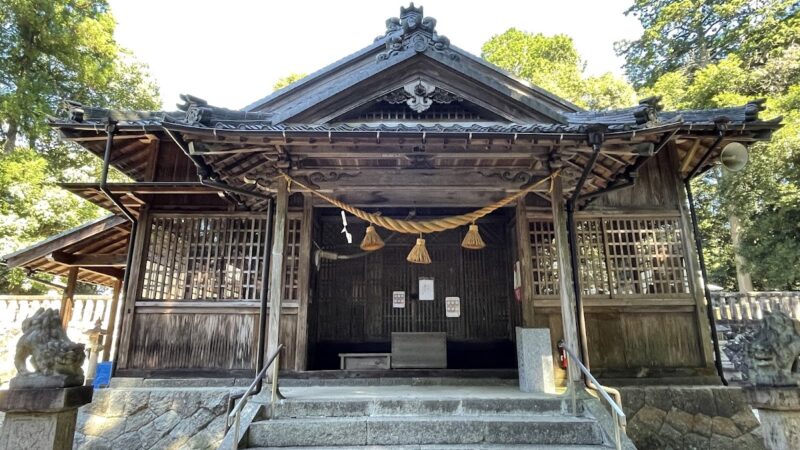
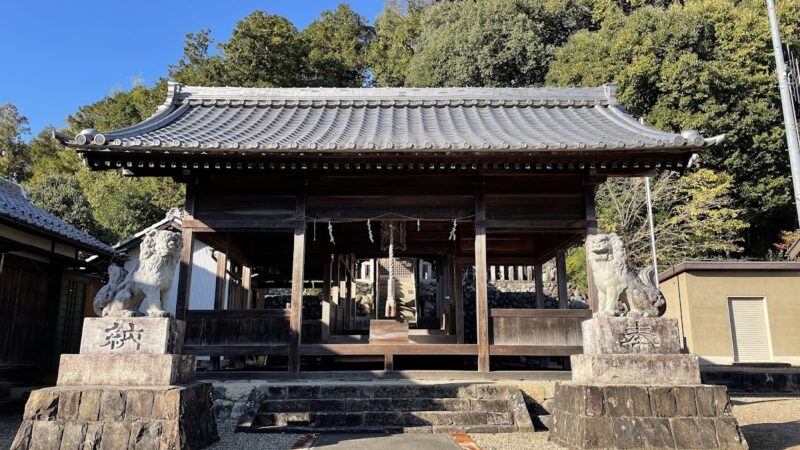
The grounds of Kano Tenmangu Shrine retain many historical buildings and cultural assets.
Worship Hall (Dance Hall)
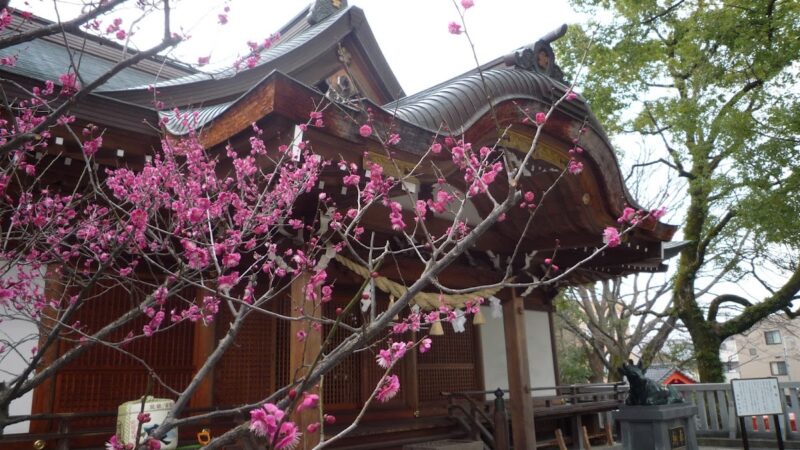
Rebuilt in 1810 (Bunka 7), the worship hall is the central building of Kano Tenmangu Shrine. This shrine boasts a traditional style with a hipped roof, tiled roofing, and a curved gable at the front, and is a magnificent structure measuring five bays in length and three bays in width.
It retains many characteristics of late Edo period shrine architecture, and the carvings and decorations showcase the craftsmanship of the time. The curved beauty of the curved gable is particularly impressive, making it a popular spot for photography.
Main Hall
The main hall, situated behind the worship hall, is a sacred place dedicated to Sugawara no Michizane. The cypress bark roof and intricate carvings of the main hall symbolize the history and prestige of Kano Tenmangu Shrine.
Ox Statue
While “sacred oxen” are famous at Tenmangu shrines, Kano Tenmangu Shrine also has an ox statue on its grounds. Because Sugawara no Michizane was born in the Year of the Ox, and due to legends that an ox helped him on his journey to Dazaifu, oxen are considered divine messengers at Tenmangu shrines.
Visitors are believed to receive blessings for academic success and recovery from illness by stroking the head of the cow statue.
Water Basin
Near the entrance to the shrine grounds, the water basin allows visitors to purify their minds and bodies before praying. Pure water flows continuously, and it is customary to purify one’s hands and mouth with the ladle before praying.
Shrine Office/Gift Shop
The shrine office provides goshuin (stamped seals), distributes amulets and votive tablets, and accepts requests for prayers. Reception hours are from 9:00 to 16:00, and those wishing to receive prayers must enter by 15:30.
Votive Tablet Hanging Area
Within the shrine grounds, there is a place to hang votive tablets. Especially during exam season, it is filled with votive tablets praying for success, imbued with the earnest wishes of students.
About Goshuin (Shrine Seals) and Goshuincho (Shrine Seal Books)
Kano Tenmangu Shrine offers Goshuin as a memento of your visit.
About the Issuance of Goshuin
- Location of Issuance: Shrine Office (Goshuin Distribution Area)
- Hours of Issuance: 9:00 AM – 4:00 PM
- Donation Fee: Usually around 300-500 yen (subject to change)
- Method of Issuance: Leave your Goshuincho at the shrine office and have it inscribed.
The Goshuin will have the words “Kano Tenmangu” written in ink and the shrine’s seal stamped on it. The beautifully written calligraphy makes for a wonderful memento of your visit.
Original Goshuincho
Kano Tenmangu Shrine also offers original design Goshuincho (stamp books) (availability may vary depending on stock). The Goshuincho, featuring designs of plum blossoms and oxen characteristic of Tenmangu shrines, are popular as souvenirs of your visit.
Etiquette for Receiving a Goshuin (Temple/Shrine Seal)
A Goshuin is not merely a stamp rally; it is a token of your visit. Please observe the following etiquette:
- Complete your prayers before receiving your Goshuin.
- Greet the shrine office staff politely.
- Hand over your Goshuincho (stamp book) with both hands.
- Wait quietly while your Goshuin is being written.
- Express your gratitude when receiving your Goshuin.
Items Offered (Amulets, Ema, etc.)
Kano Tenmangu Shrine offers a variety of items.
Amulets for Academic Success and Passing Exams
As befits a Tenmangu shrine dedicated to the god of learning, there is a wide variety of amulets for academic success and passing exams:
- Success Amulet: An amulet for praying for success in exams
- Academic Success Amulet: An amulet for wishing for improved academic ability and grades
- Academic Pencil: A pencil blessed for use in exams and tests
- Academic Success Talisman: A talisman to be displayed on a study desk at home
Other Amulets
- Exorcism Amulet: An amulet for warding off evil and misfortune
- Health Amulet: An amulet for praying for good health
- Traffic Safety Amulet: An amulet for wishing for traffic safety
- Family Safety Amulet: An amulet for wishing for the peace and safety of the family
Ema (Votive Tablets)
The ema at Kano Tenmangu Shrine are decorated with designs such as plum blossoms and cows. You can write your wishes for passing exams and academic success on them and dedicate them to the shrine.
Other Items Offered
- Omikuji: Fortune-telling slips used to predict one’s fortune
- Hama-ya: Lucky charms given out during the New Year and other occasions
- Kumade: Lucky charms for wishing for business prosperity
Annual Festivals and Rituals
Kano Tenmangu Shrine holds various festivals and rituals throughout the year.
Tenjin Festival
The Tenjin Festival is the most important annual festival of Kano Tenmangu Shrine. Traditionally, floats were pulled through the streets, but this practice was discontinued for a time. However, thanks to the efforts of local people, the float procession was revived in the Heisei era and is now passed down as an important cultural event in the region.
The festival includes a portable shrine procession, float parade, and devotional performances, attracting many worshippers and spectators.
Hatsumode (First Shrine Visit of the New Year)
During the first three days of the New Year, the shrine grounds are bustling with visitors praying for happiness in the new year. Especially from January 1st to 3rd, many worshippers visit.
Setsubun Festival
On Setsubun (February 3rd or 4th), the Setsubun Festival is held. Events such as bean-throwing are held, and prayers are offered for protection against evil and for good fortune.
Plum Blossom Festival
Because Sugawara no Michizane loved plum blossoms, many Tenmangu shrines hold a Plum Blossom Festival. Kano Tenmangu Shrine also sometimes holds festivals to coincide with the plum blossom season.
Summer Purification Ceremony
On June 30th, the “Summer Purification Ceremony” is held to cleanse away the impurities accumulated over the past six months. Shinto rituals such as passing through a ring of reeds are performed.
Shichi-Go-San Festival
In November, many Shichi-Go-San prayers are offered. Families celebrate their children’s growth and pray for their healthy development.
Access Information
Kano Tenmangu Shrine is conveniently located within walking distance of JR Gifu Station.
Access by Train
From JR Gifu Station
- Approximately 5 minutes on foot from the South Exit of JR Gifu Station
- Head straight south from the station towards Kano Tenjincho
- Very easy to access; even first-time visitors can arrive without getting lost.
From Meitetsu Gifu Station
- Approximately 10 minutes on foot from Meitetsu Gifu Station
- Head towards JR Gifu Station, then south from there.
Access by Car
Using Expressways
- Approximately 20 minutes from the Tokai-Hokuriku Expressway “Gifu-Kakamigahara IC”
- Approximately 30 minutes from the Meishin Expressway “Gifu-Hashima IC”
Using General Roads
- Approximately 10 minutes from Gifu city center via National Route 21
- Car navigation setting: 4-1 Kano Tenjincho, Gifu City, Gifu Prefecture
Parking
Kano Tenmangu Shrine has free parking for visitors. However, the parking lot can become full during peak seasons such as New Year’s Day and annual festivals, so we recommend using public transportation.
Access by Bus
If using Gifu Bus, get off at the “Kano Tenjincho” bus stop and it’s a short walk. However, considering its proximity to JR Gifu Station (a 5-minute walk), walking from the station is more convenient.
Nearby Tourist Attractions
Around Kano Tenmangu Shrine, there are numerous tourist spots where you can experience the history and culture of Gifu City.
Kano Castle Ruins
The ruins of Kano Castle, deeply connected to the history of Kano Tenmangu Shrine, are nearby. Currently, some remains of the castle are still visible, allowing visitors to enjoy a historical walk.
Gifu Castle and Kinka Mountain
Gifu Castle, a symbol of Gifu City, is located on the summit of Kinka Mountain and is famous as a castle associated with Oda Nobunaga. It is accessible by bus from JR Gifu Station, and you can take a ropeway to the summit.
The Old Townscape of Kawaramachi
Kawaramachi, located along the Nagara River, is charming for its old townscape that retains the atmosphere of the Edo period. Traditional townhouses line the streets, and cafes and souvenir shops are scattered throughout.
Gifu Daibutsu (Shōhōji Temple)
The Gifu Daibutsu, one of Japan’s three great Buddha statues, is one of the largest dry lacquer Buddha statues in Japan. It is within walking distance of JR Gifu Station.
Points and Manners for Visiting a Shrine
Etiquette for Visiting a Shrine
Please observe the basic etiquette for visiting a shrine:
- Bow before passing through the torii gate: Bow before entering the shrine grounds, in front of the torii gate.
- Purify yourself at the water basin: Purify your left hand, then your right hand, then your mouth.
- Walk along the edge of the path: The center of the path is considered the path of the gods.
- Pray in front of the main hall: Pray using the two bows, two claps, and one bow method.
- Bow upon leaving: Turn around and bow when leaving the torii gate.
Regarding Clothing
There are no specific dress code requirements, but it is desirable to wear clothing that reflects the sacred nature of the place. If you are receiving a prayer, it is advisable to wear somewhat formal attire.
Regarding Photography
Photography is generally permitted on the shrine grounds, but please observe the following points:
- Do not take photos in areas where photography is prohibited, such as inside the main hall.
- Be considerate of other worshippers.
- Follow instructions during religious ceremonies and festivals.
- When posting on social media, be careful not to include other worshippers in your photos.
Advice for Students Taking Exams
Kano Tenmangu Shrine, dedicated to the god of learning, is a strong ally for students taking exams.
Best Time to Pray for Success
While prayers for success are most common during the exam season from January to March, you can actually visit the shrine anytime throughout the year. In fact, it’s recommended to visit early, such as when you start studying for exams or before mock exams, to refresh your spirits.
About Prayer Ceremonies
If you wish to pray for success in your exams more earnestly, you can receive a prayer ceremony:
- Reception Hours: 9:00 AM – 3:30 PM (ends at 4:00 PM)
- Duration: Approximately 20-30 minutes
- Offering Fee: From 5,000 yen (please confirm the amount)
- Reservation: Advance reservations are recommended (Tel: 058-271-0706)
How to Carry Your Amulet
It’s a good idea to keep your exam success amulet in your everyday bag or pencil case. Remembering to bring it with you on the day of the exam will provide emotional support.
Summary
Kano Tenmangu Shrine has been a beloved historical Tenmangu shrine in Gifu City since the Muromachi period. Founded as the guardian deity of Kutsui Castle, it has continued through the era of Kano Castle and continues to welcome many worshippers as the god of learning.
Kano Tenmangu Shrine boasts exceptional accessibility, being just a 5-minute walk from JR Gifu Station. Its beautiful shrine buildings, dating back to the Edo period, and the deep devotion to Sugawara no Michizane are major attractions. Many people visit seeking various blessings, including success in exams, academic achievement, improvement in calligraphy, and protection from misfortune.
When visiting Gifu, we highly recommend visiting Kano Tenmangu Shrine and receiving the blessings of the god of learning. The time spent quietly offering prayers in the shrine grounds, steeped in history and tradition, will surely be a memorable experience.
To all students taking exams, we sincerely pray that Sugawara no Michizane of Kano Tenmangu Shrine will watch over your efforts and guide you to success.