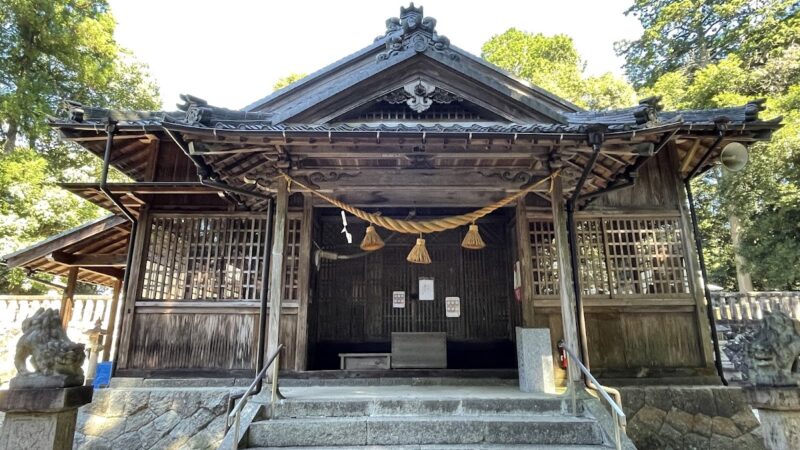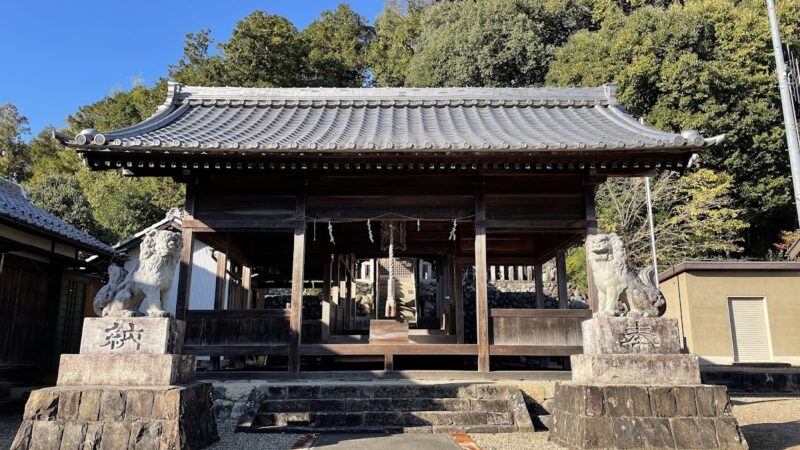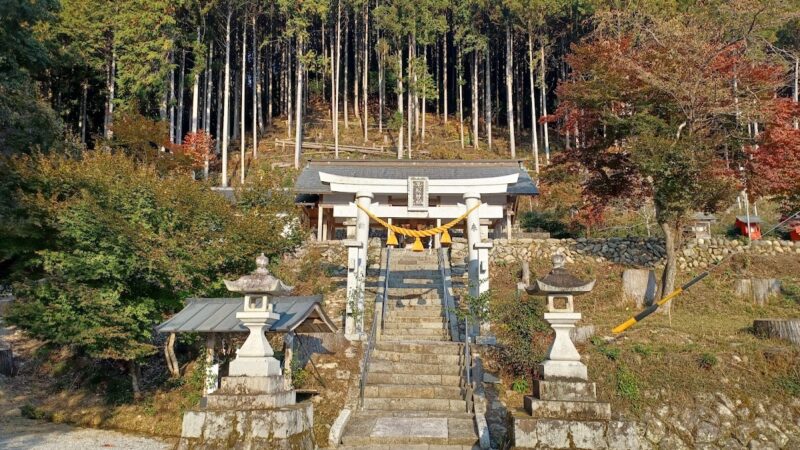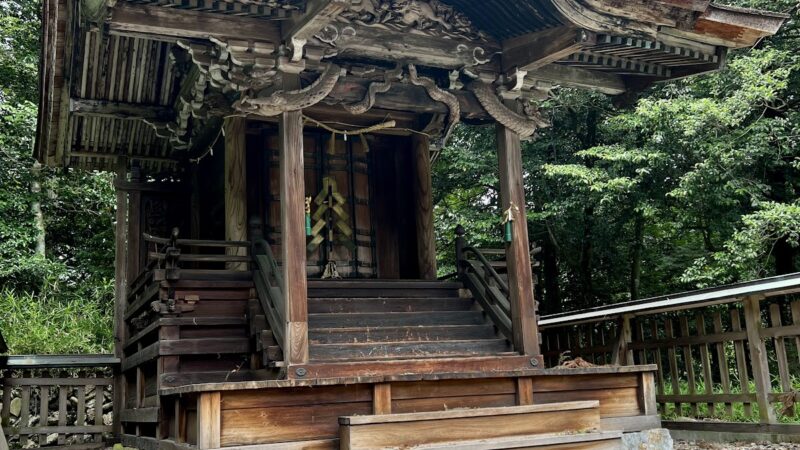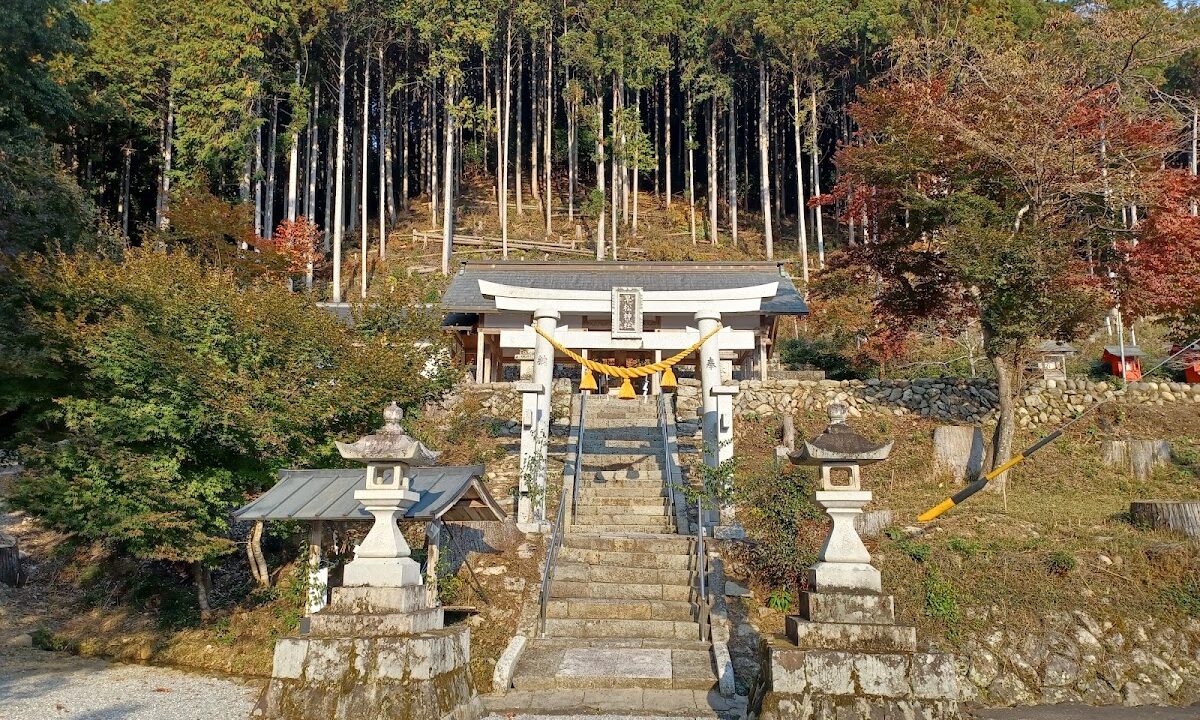
Sarahayamatsu Shrine (Mino City, Gifu Prefecture) Complete Guide: History, Deities, Access, and Goshuin (Shrine Seal) Information
Sarahayamatsu Shrine is a historic shrine located in Kamikawa, Mino City, Gifu Prefecture. It stands quietly in the mountains, along the Kawado Valley, which flows from Mt. Suisho (546 meters above sea level), a peak rising at the border with Gujo District, where the Nagara River makes a large bend. Deeply connected to the Hakusan faith, this shrine boasts a history of over 1300 years and has been preserved as a center of local faith to this day.
Basic Information on Sarahayamatsu Shrine
Location: 1582-1 Kamikawa, Mino City, Gifu Prefecture
Deities Enshrined: Ugayafukiaezu-no-Mikoto, Kukurihime-no-Mikoto
Annual Festival Day: April 3rd (Sunday)
Former Shrine Rank: Village Shrine
Special Designation: Silver Coin Shrine (Designated by Gifu Prefecture Shrine Association, 1958)
Corporate Number: 5200005007817
History and Origins of Sarahayamatsu Shrine
Origin of Founding and Taicho Daishi
Sarahayamatsu Shrine has an extremely long history, dating back to the second year of the Yoro era (718 AD). It is said to have begun when Taicho Daishi, a high-ranking priest known for opening Mount Hakusan, enshrined the Hakusan Shrine at the local tutelary shrine. It is said that in 717 AD, the year after opening Mount Hakusan to the faith, Taichō Daishi visited this area and founded this shrine to spread the worship of Mount Hakusan.
The fact that it was founded by Taichō Daishi indicates that this shrine was not merely a local tutelary shrine, but functioned as part of a broader network of mountain worship known as Hakusan faith. Mount Hakusan has been revered as a sacred mountain since ancient times, attracting worshippers from the three regions of Kaga, Echizen, and Mino.
The Relationship Between the Seven Shrines of Hakusan and Sarahayamatsu
Understanding Sarahayamatsu Shrine is essential, as it relates to the Seven Shrines of Hakusan. In Hakusan City, Ishikawa Prefecture, there is a historical site called “Saramiya Ruins,” which, according to the “Hakusan no Ki,” was built in 982 AD. This Saramiya was one of the three central shrines of the Seven Shrines of Hakusan and was also known as “Sara Daimyōjin.”
The *Genpei Seisui Ki* (The Rise and Fall of the Minamoto and Taira Clans) states, “Among the seven shrines of Mount Hakusan, the portable shrine of Sara no Hayamatsu is enshrined. Its principal form is Fudō Myōō, in the wrathful form of demon subjugation, a great deity with strict rewards and punishments.” This description reveals the important position Sara no Hayamatsu held in Hakusan worship.
The Sara no Hayamatsu Shrine in Mino City is believed to have a deep connection to this Sara Shrine of Mount Hakusan, and it is presumed to have been established during the process of Hakusan worship spreading to the Mino region. The unique shrine name, “Sara no Hayamatsu,” is a valuable testament to the history of Hakusan worship.
Developments since the Modern Era
In the Meiji era, in 1873 (Meiji 6), Sara no Hayamatsu Shrine was ranked as a village shrine. This meant that, under the shrine ranking system of the time, it was officially recognized as the guardian shrine of the village.
In 1958 (Showa 33), it was designated a Silver Coin Shrine by the Gifu Prefectural Shrine Association. The Ginpei-sha designation is a unique system established by the Gifu Prefectural Shrine Association. It is a title bestowed upon shrines among the approximately 3,200 shrines in the prefecture that are recognized for their exceptional history and prestige. As of 2021, only about 90 shrines held this designation, and Sarahayamatsu Shrine holds a significant position as one of them.
About the Enshrined Deity
Ugayafukiaezu-no-Mikoto
Ugayafukiaezu-no-Mikoto is a deity in Japanese mythology, born to Toyotama-hime-no-Mikoto, the daughter of the sea god, and Yamasachi-hiko (Hikohodemi-no-Mikoto). Known as the father of Emperor Jimmu, he is revered as one of the ancestral deities of the imperial lineage.
During childbirth, Toyotama-hime no Mikoto, the mother, instructed her father not to look until the roof of the birthing hut had been thatched with cormorant feathers. However, the father peeked in, and the baby was born before the roof was finished, hence the name “Ugayafukiaezu” (meaning “unable to thatch the roof”).
This deity inherited the characteristics of both the sea god and the mountain god, and as the father of Emperor Jimmu, who laid the foundation of the nation, he is believed to bestow divine blessings for safe childbirth, child-rearing, and national peace.
Kukuri-hime no Mikoto
Kukuri-hime no Mikoto is a central deity of Hakusan worship and the principal deity of Hakusan Hime Shrine. She appears in one version of the Nihon Shoki (Chronicles of Japan) and is known as the god who mediated when Izanagi and Izanami fought in the underworld.
The name “Kukuri” is related to “kukuru” (to tie/bound), and is said to have meanings such as forming bonds, settling disputes, and bringing things together. Therefore, it is believed to offer divine blessings for matchmaking, marital harmony, and reconciliation.
The fact that Sarahayamatsu Shrine enshrines Kukurihime-no-Mikoto demonstrates its deep connection to Hakusan faith and is an important element supporting the founding history by Taicho Daishi.
Highlights of the Shrine Grounds
Sacred Bridge (Goshinbashi)
One of the most memorable structures at Sarahayamatsu Shrine for visitors is the sacred bridge. The shrine is situated right next to the Kawado Valley River, and a sacred bridge spans this river.
Visitors often comment, “The sacred bridge is amazing!”, and it is known as a picturesque bridge befitting a shrine nestled in the mountains. Crossing the sacred bridge, surrounded by a clear stream and lush greenery, and entering the shrine grounds gives a real sense of the boundary between the secular world and the sacred realm.
Atmosphere of the Shrine and Grounds
Nestled along the Kawado Valley, which flows from Mt. Suisho (546 meters above sea level), Sarahayamatsu Shrine possesses a tranquil atmosphere nestled deep in the mountains. Its geographical feature—a large bend in the Nagara River—enhances the shrine’s mystical aura.
The shrine grounds are surrounded by a rich natural environment, allowing visitors to enjoy the beauty of each season. The fresh greenery of spring and the vibrant autumn foliage, in particular, offer a special charm, complemented by the majestic beauty of the mountains.
Access Methods
Access by Train
Nearest Station: Nagara River Railway “Mono Station”
While it is possible to access the shrine on foot from Mono Station, it is a considerable distance due to its mountainous location. Taking a taxi from the station or visiting by private car is recommended.
Access by Car
The most convenient way to access Sarahayamatsu Shrine is by car.
Main Route:
- Approximately 20 minutes from Mino IC on the Tokai-Hokuriku Expressway via National Route 156
- From Mino city center, take the prefectural road towards Kamikawa
Address: 1582-1 Kamikawa, Mino City, Gifu Prefecture
Car Navigation Setting: Search using the above address or phone number
Driving along the scenic road beside the Nagara River to the shrine is one of the pleasures of visiting. However, there are narrow roads in the mountainous areas, so caution is required while driving.
Parking
There is parking space for visitors around the shrine, but it is not large. It is expected to be crowded on special days such as festivals, so it is recommended to visit with plenty of time to spare.
About Goshuin (Shrine Seals)
Regarding the issuance of Goshuin at Sarahayamatsu Shrine, there may not be a permanently staffed shrine office, so it is recommended to check in advance.
Points to Note When Receiving a Goshuin (Shrine Stamp)
- Prior Contact: It is recommended to contact the Gifu Prefectural Shrine Association or a nearby shrine before visiting.
- Visiting Hours: Avoid visiting during times when the shrine office is closed, such as early morning or evening.
- Preparation of Goshuincho (Shrine Stamp Book): Bring your goshuincho with you.
- Offering Fee: Generally, prepare around 300 to 500 yen.
At small shrines in mountainous areas, the chief priest may not be permanently stationed, so prior confirmation is essential if you want to be sure to receive a goshuin.
Annual Festival and Events
Annual Festival (April 3rd)
The annual festival of Sarasamatsu Shrine is held every year on April 3rd. It is an important Shinto ritual to celebrate the arrival of spring and pray for a bountiful harvest and the safety of the community.
At the annual festival, Shinto rituals such as the recitation of prayers by Shinto priests and the offering of tamagushi (sacred branches) are solemnly performed, and local parishioners and devotees attend. Although it is a small shrine nestled in the mountains, it attracts the faith of the local people and preserves its traditions.
Other Annual Events
Regarding detailed annual events, it is believed that festivals based on local traditions are held, but it is recommended to check the specific dates and contents in advance.
Nearby Tourist Attractions
Suhara Shrine
Near Sarahayamatsu Shrine is Suhara Shrine, an ancient shrine representative of Mino City. Suhara Shrine also has deep ties to the Hakusan faith and has been revered since ancient times as the second-ranked shrine of Mino Province. When visiting Sarahayamatsu Shrine, it is recommended to visit both.
Amashimo Shrine
Also located near Suhara Shrine is Amashimo Shrine, an interesting shrine with a unique name. Along with Sarahayamatsu Shrine and Suhara Shrine, it is an important spot for learning about the Hakusan faith and the shrine culture of Mino.
Mino City Tourism
Mino City is a historical town known for its “Udatsu-lined streets.” The townscape, with its remaining Edo-period merchant buildings, has been designated a National Important Preservation District for Groups of Traditional Buildings, and is also famous as a production center for Mino washi paper.
Combining a visit to Sarahayamatsu Shrine with a stroll through Mino City’s historic townscape and a visit to the Mino Washi Paper Village Hall will make for a more fulfilling trip.
Manners and Etiquette for Visiting a Shrine
Basic Worship Etiquette
- Bow at the Torii Gate: Bow before passing through the torii gate.
- Walking on the Path: The center of the path is considered the path of the gods, so walk along the sides.
- Watering Procedure: If there is a watering basin, cleanse your left hand, then your right hand, then your mouth.
- Worship at the Main Hall: Two bows, two claps, and one bow is the basic procedure.
Precautions When Visiting a Shrine in the Mountains
- Clothing: Wear comfortable shoes and clothing as you may be walking on mountain paths.
- Seasonal Precautions: Mountain areas are cooler than lowlands, so dress appropriately for the season.
- Insect Repellent: Prepare insect repellent spray during the summer.
- Weather Check: Be careful as the ground can be slippery in rainy weather.
Faith and Divine Virtues of Sarasamatsu Shrine
Characteristics of Hakusan Faith
Sarasamatsu Shrine is deeply connected to Hakusan faith. Hakusan faith is a unique form of belief that fuses mountain worship and Buddhism, and is also closely related to Shugendo (Japanese mountain asceticism).
The deities of Hakusan are considered gods of agriculture and water, and as mountain gods, they have also been revered as guardians of hunting and forestry. Furthermore, Hakusan was also thought to be a mountain where the spirits of the dead gather, and was therefore an object of ancestral worship.
Expected Divine Virtues
The following are some of the divine virtues you can expect from visiting Sarahayamatsu Shrine:
- Matchmaking and Marital Harmony: The divine virtue of Kikurihime-no-Mikoto
- Safe Childbirth and Child-Rearing: The divine virtue of Ugayafukiaezu-no-Mikoto
- Family Safety and Regional Peace: The nature of a local guardian deity
- Abundant Harvest and Business Prosperity: The agricultural deity aspect of Hakusan faith
- Protection from Evil and Good Fortune: The divine power of the gods of Hakusan
The Value of Visiting Sarahayamatsu Shrine
For History Enthusiasts
With its long history dating back to the second year of the Yōrō era (718 AD), Sarahayamatsu Shrine, with its connections to Taichō Daishi and Hakusan faith, is a valuable place for learning about Japanese religious history, especially the history of mountain worship and the syncretism of Shinto and Buddhism.
The unique shrine name “Sarahayamatsu” and its relationship with the seven shrines of Hakusan offer endless research interest. ### For Shrine Visitors
Saraihayamatsu Shrine, a prestigious shrine designated as a Silver Coin Shrine by the Gifu Prefectural Shrine Association, is nestled in a quiet mountain environment, making it a highly worthwhile spot for shrine enthusiasts.
Especially for those collecting Goshuin (shrine stamps) or visiting Hakusan Shrines throughout Japan, it’s a must-see.
For Those Seeking Nature and Tranquility
Nestled in the heart of the mountains along the Kawado Valley flowing from Suishoyama, Saraihayamatsu Shrine offers a tranquil space surrounded by nature. It provides an ideal environment for escaping the hustle and bustle of everyday life and quietly offering prayers.
Visiting the shrine while enjoying the clear waters of the Nagara River, the green of the mountains, and the changing seasons will refresh your mind and body.
Summary: The Charm of Saraihayamatsu Shrine
Located in Kamikawa, Mino City, Gifu Prefecture, Saraihayamatsu Shrine is a venerable shrine with a history of over 1300 years. Founded by Taichō Daishi, with deep ties to the Hakusan faith and its unique name, “Sarahayamatsu,” this shrine possesses numerous historically and culturally valuable elements.
It enshrines two deities, Ugayafukiaezu-no-Mikoto and Kikurihime-no-Mikoto, and is believed to bestow various blessings, including matchmaking, safe childbirth, and family safety. Its designation as a village shrine in 1873 and a silver-coin shrine in 1958 speaks to the shrine’s status and importance.
With its tranquil mountain setting, impressive sacred bridge, and connections to nearby Suhara Shrine and Amashimo Shrine, it offers plenty of reasons to visit. Combining a visit with a trip to the historic townscape of Mino City will make for an even more fulfilling journey.
Access is convenient by car, allowing you to enjoy the beautiful scenery along the Nagara River. If you wish to receive a Goshuin (shrine stamp), it is recommended to check in advance.
Sarahayamatsu Shrine, which continues to convey the history of Hakusan faith and attracts the faith of the local people, offers a serene atmosphere where you can feel the depth and richness of Japanese shrine culture.