Complete Guide to Iminomiya Shrine | A Thorough Explanation of History, Deities, Goshuin (Shrine Seals), and Access Information
What is Iminomiya Shrine?
Iminomiya Shrine is a venerable ancient shrine located in Chofu, Shimonoseki City, Yamaguchi Prefecture. It is known as the site where Emperor Chuai, the 14th emperor, established a temporary palace (angu) around 200 AD for his campaign against the Kumaso people of Kyushu, and boasts a history of approximately 1800 years.
Chofu was anciently known as “Toyoura,” and is considered the site of Toyura Palace, where Emperor Chuai and Empress Jingu stayed. It is said that the name “Iminomiya” (meaning “forbidden palace”) was given because Emperor Chuai died in this area.
Currently, it is believed to offer blessings for matchmaking, safe childbirth, and protection from evil, and is one of Shimonoseki City’s representative shrines, affectionately known as “Iminomiya-san” by the locals.
Deities enshrined at Imimiya Shrine
Imimiya Shrine enshrines three deities.
Emperor Chūai
The 14th Emperor of Japan, and son of Yamato Takeru no Mikoto. He established Toyoura Palace in this area to conquer the Kumaso people, but died before achieving his goal. He was 52 years old.
Empress Jingū
The empress of Emperor Chūai, a legendary woman who accomplished the Silla expedition after her husband’s death. Also known as the mother of Emperor Ōjin, she is worshipped as the goddess of safe childbirth and child-rearing.
Emperor Ōjin
The 15th Emperor of Japan, he is believed to have been born in this area after Empress Jingū returned from the Silla expedition. He is the deity enshrined at Hachiman shrines throughout Japan.
These three deities are related as parent and child, and are believed to bring blessings of family harmony and prosperity of descendants.
History of Imimiya Shrine
Ancient Times: The Era of Toyoura Palace
According to the *Nihon Shoki*, in the 8th year of Emperor Chuai’s reign (199 AD), the Emperor built Toyoura Palace in this area on his way to Tsukushi (Kyushu) to subdue the Kumaso. The following year, the Emperor died in this area, and Empress Jingu took command of the expedition to Silla.
There is a legend that Empress Jingu gave birth to Emperor Ojin in this area after her return, making it an important site in ancient Japanese history.
Medieval Times: Development as a Shrine
During the Heian period, it was revered by the imperial court as “Toyoura Palace.” Although not listed in the *Engishiki Jinmyocho* (a list of shrines compiled in the Heian period), it developed into a powerful local shrine.
From the Kamakura period to the Muromachi period, it received protection from the Ouchi and Mori clans, who ruled Chofu, and the shrine buildings were constructed and repaired.
Early Modern Period: Reverence of the Lords of Chofu Domain
During the Edo period, the shrine received deep reverence from the lords of the Chofu Domain (a branch of the Mori family). Successive lords undertook repairs to the shrine buildings and made offerings for festivals, considering it important as the domain’s guardian shrine.
Many of the current shrine buildings were rebuilt in the late Edo period, preserving the architectural style of that time.
Modern Era
During the Meiji era, it was designated a prefectural shrine, establishing its position as a central shrine in the region. Even after the war, it continued to attract the faith of local people, a status it maintains to this day.
Highlights of the Shrine Grounds
Main Hall and Worship Hall
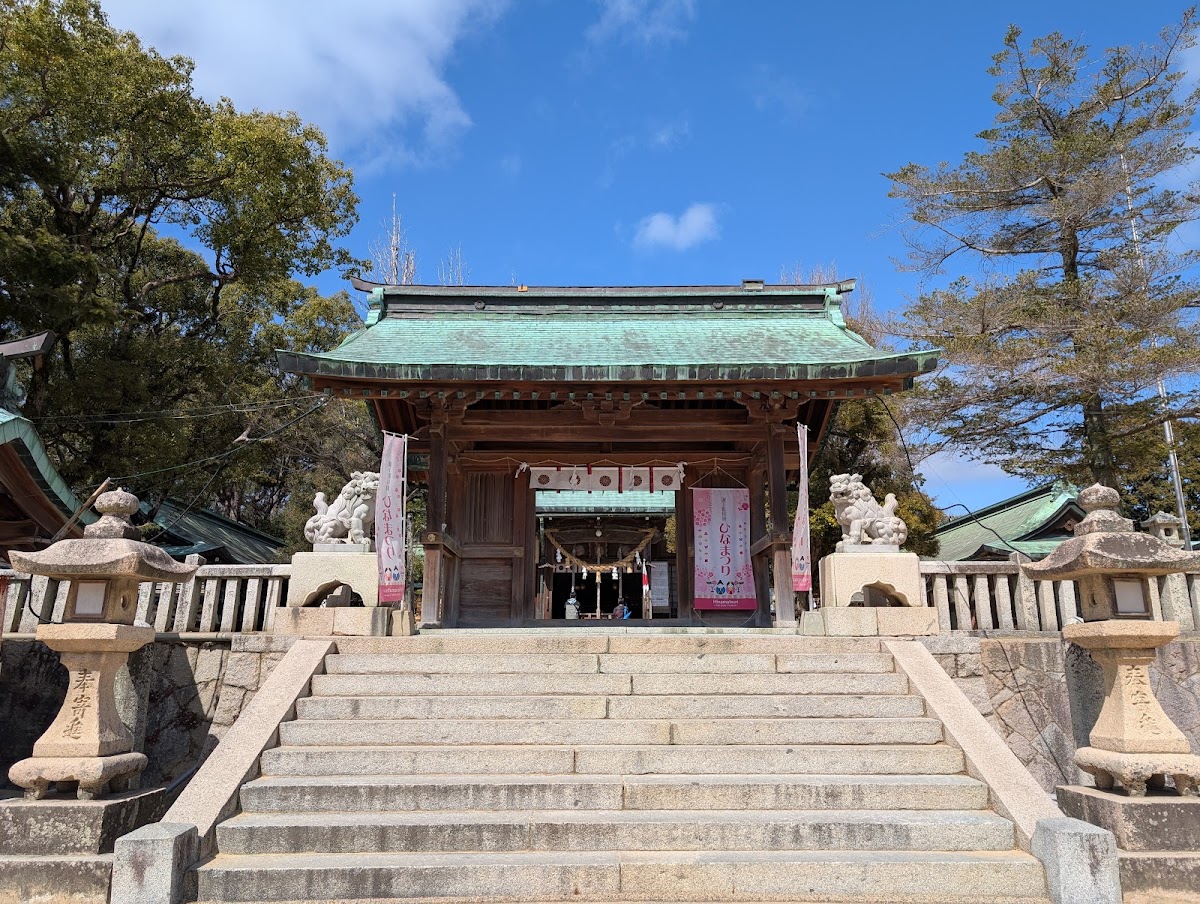
The current main hall is a late Edo period building in the Nagare-zukuri style. The worship hall has an Irimoya-zukuri style, giving it a dignified atmosphere. The vermilion-lacquered shrine buildings are beautiful and evoke a sense of solemnity in visitors.
Arakuma Inari Shrine
One of the subsidiary shrines within the grounds, it is believed to bring blessings for business prosperity and abundant harvests. The approach to the shrine, lined with vermilion torii gates, is impressive.
Hachiman Shrine
This shrine, dedicated to Emperor Ōjin, is believed to bring good fortune and success in competitions.
Renpeikan Site
The site of a martial arts training ground established by the Chōfu Domain during the late Edo period is located within the shrine grounds. It is said that patriots of the late Edo period, such as Takasugi Shinsaku, also studied martial arts here.
Kemari Monument
There is a stone monument commemorating the traditional event called “Suhōteisai,” which will be described later. This festival is said to have originated from kemari, considered one of Japan’s oldest ball games.
Sacred Tree
Within the shrine grounds stands a large camphor tree estimated to be several hundred years old, known as a power spot. There is a legend that touching the trunk will grant you vitality.
Benefits and Power Spot of Imimiya Shrine
Main Benefits
- Matchmaking and Marital Harmony: Due to the enshrinement of Emperor Chuai and Empress Jingu, a married couple.
- Prayers for Safe Childbirth: Due to Empress Jingu’s safe delivery of Emperor Ojin.
- Child Rearing and Fertility: Due to the enshrinement of three generations of parent-child deities.
- Protection from Evil and Good Fortune: Due to its long history of being revered by the imperial court and samurai families.
- Good Luck in Competitions: Due to the heroic tales of the Kumaso subjugation and the Silla expedition.
- Family Safety: Due to the enshrinement of family deities.
Attractiveness as a Power Spot
Imimiya Shrine is considered to be located in a location with excellent feng shui, and is thought to have been chosen since ancient times as a place where “energy” gathers. In particular, the forest behind the main hall is said to have a sacred atmosphere and the power to purify the mind and body.
The sacred camphor tree is said to emit particularly strong energy, and many worshippers place their hands on it and offer prayers.
Annual Events and Festivals
Suho-tei Festival
This is the largest festival of Imimiya Shrine, held annually from August 7th to 13th. It has a history of approximately 800 years and is designated as an Intangible Folk Cultural Property of Yamaguchi Prefecture.
This festival is said to have originated from a kemari (traditional Japanese football) game played by Emperor Chuai to pray for victory in his campaign against the Kumaso people. “Suho-tei” refers to the court where kemari is played, and traditional kemari ceremonies are still performed on the shrine grounds today.
The highlight of the festival is the “Kiriko Ritual” on the final day, where a portable shrine is paraded through the town, and many stalls line the streets, creating a lively atmosphere.
New Year’s Visit
Many worshippers visit during the first three days of the New Year. The New Year’s Day Festival includes a ritual praying for peace in the new year. ### Setsubun Festival
On February 3rd, a bean-throwing ceremony takes place, attracting many people praying for protection against evil.
Annual Grand Festival
Held on the weekend closest to October 15th, the Autumn Grand Festival features Kagura (sacred dance) performances and a portable shrine procession.
Other Events
- Shichi-Go-San: Many families visit in November.
- Summer Purification Ceremony: A Shinto ritual held on June 30th to purify oneself of the impurities accumulated over the past six months.
- Year-End Purification Ceremony: A Shinto ritual held on December 31st to purify oneself of the impurities accumulated over the past year.
Goshuin (Shrine Seal) Information
Regular Goshuin
At Imimiya Shrine, you can receive a beautiful goshuin. The seal features the words “Imimiya Shrine” in ink and a red stamp in the center, “Nagato Province, Toyoura District” in the upper right, and the date in the lower left.
The offering fee is usually 300 yen.
Special Goshuin (Shrine Seal)
During the Suho-tei Festival and New Year’s, specially designed goshuin are sometimes offered. These limited-edition goshuin, featuring colorful decorations and gold leaf, are popular among goshuin enthusiasts.
Goshuin Notebook
Original goshuin notebooks are also available. These elegant notebooks, featuring designs of the shrine and sacred trees, make excellent souvenirs.
Reception Hours
Goshuin are usually available from 9:00 AM to 5:00 PM. However, hours may change during Shinto rituals and festivals, so it is recommended to check in advance if you wish to be sure to receive one.
Amulets and Sacred Items
Popular Amulets
- Matchmaking Amulet: A popular pair of pink and light blue amulets.
- Safe Childbirth Amulet: An amulet for safe childbirth, inspired by Empress Jingu.
- Exorcism Amulet: Particularly popular with those in their unlucky years.
- Academic Success Amulet: Popular with students and those taking exams.
- Traffic Safety Amulet: Various types of amulets for cars are also available.
Ema (Votive Tablets)
The ema, on which you write your wishes, are designed with images of the shrine and sacred trees. There are also special ema for matchmaking and safe childbirth prayers.
Fortune Slips
In addition to regular fortune slips, there are also fortune slips for specific purposes, such as love fortune slips and fertility fortune slips.
Manners and Etiquette for Visiting a Shrine
Basic Etiquette for Visiting a Shrine
- Bow before passing through the torii gate: A greeting before entering the sacred area.
- Walk along the edge of the path: The center is the path of the gods.
- Purify yourself at the water basin: Left hand → Right hand → Mouth → Left hand with ladle
- In front of the main hall: Two bows, two claps, one bow
Attire for Visiting a Shrine
There are no particularly strict regulations, but please dress neatly as you are meeting with the gods. For formal visits or prayers, it is preferable to wear attire that is not too casual.
About Prayers
Prayers for safe childbirth, first shrine visit for a newborn, Shichi-Go-San (7-5-3) festival, and protection against misfortune require reservations. You can make a reservation by phone at the shrine office or visit in person to discuss. The prayer fee varies depending on the content of the prayer, but usually starts from 5,000 yen.
Access Information
Address
1-18 Miyanouchi-cho, Chofu, Shimonoseki City, Yamaguchi Prefecture 752-0967
Access by Train
Using JR
- Get off at Chofu Station on the JR Sanyo Main Line, approximately 30 minutes on foot
- Approximately 5 minutes by taxi from Chofu Station
- Bus access is also available from Chofu Station (see below)
Using JR Shinkansen
- Take the JR Sanyo Main Line from Shin-Shimonoseki Station to Chofu Station (approximately 10 minutes)
Access by Bus
Using Sanden Bus
- Approximately 25 minutes by bus bound for “Jokamachi Chofu” from JR Shimonoseki Station, get off at “Jokamachi Chofu” bus stop, approximately 5 minutes on foot
- Approximately 5 minutes by bus bound for “Shimonoseki Station” or via “Jokamachi Chofu” from JR Chofu Station
Access by Car
Using Expressway
- Approximately 15 minutes from Shimonoseki IC on the Chugoku Expressway
- Approximately 15 minutes from the Shimonoseki Interchange on the Kanmon Expressway
General Roads
- Approximately 20 minutes from Shimonoseki city center via National Route 9
Parking
There is free parking on the temple grounds (approximately 30 regular cars). It gets crowded during New Year’s and festivals, so we recommend using public transportation.
There are also paid parking lots nearby for Chofu sightseeing.
Nearby Tourist Attractions
The Chofu area, where Imimiya Shrine is located, is an area that retains historical townscapes known as “Chofu Castle Town.”
Kozanji Temple
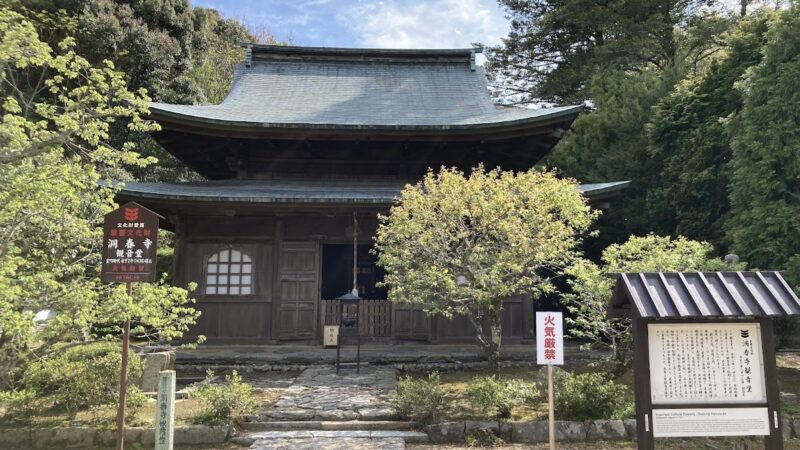
An ancient Rinzai Zen temple with a national treasure Buddha hall. It is also famous as the place where Takasugi Shinsaku raised his army. Approximately 10 minutes on foot from Imimiya Shrine.
Chofu Mori Residence
The residence of Mori Mototoshi, the last lord of the Chofu domain. A beautiful Japanese garden is a highlight. Approximately 15 minutes on foot from Imimiya Shrine.
Chofu Garden
A vast Japanese garden covering approximately 30,000 square meters. Enjoy seasonal flowers and autumn foliage. Approximately 10 minutes on foot from Imimiya Shrine.
Old Townscape along the Dangugawa River
A charming townscape with white-walled earthen fences. Perfect for a stroll.
Shimonoseki City Museum of Art
A museum located in the Chofu district, exhibiting works by local artists.
Ganryujima Island
The site of the duel between Miyamoto Musashi and Sasaki Kojiro. Approximately 10 minutes by boat from Shimonoseki Port.
Best Season for Visiting Imimiya Shrine
Spring (March-May)
The cherry blossoms in the shrine grounds are in full bloom, and the fresh greenery is refreshing. The weather is mild, making it ideal for visiting.
Summer (June-August)
The Suho-tei Festival in August is a must-see. However, it is hot in summer, so precautions against heatstroke are necessary.
Autumn (September-November)
This season features the annual festival in October and beautiful autumn foliage in the surrounding area. The weather is pleasant, making it an ideal time for sightseeing.
Winter (December-February)
This season is filled with events such as New Year’s visits and Setsubun festivals. Visiting the shrine in the crisp winter air is a refreshing experience.
Estimated Visit Time and Suggested Sightseeing Course
Visiting Imimiya Shrine Only
If you want to leisurely explore the grounds, approximately 30 minutes to 1 hour is a good estimate. If you plan to receive a Goshuin (shrine stamp), allow an additional 10-20 minutes depending on the crowd.
Half-Day Course (approx. 3-4 hours)
- Visit to Imimiya Shrine (1 hour)
- Visit to Kozanji Temple (30 minutes)
- Stroll through the castle town and lunch (1 hour)
- Visit to Chofu Mori Residence or Chofu Garden (1 hour)
Full-Day Course (approx. 6-7 hours)
Morning:
- Visit to Imimiya Shrine (1 hour)
- Visit to Kozanji Temple (30 minutes)
- Stroll through the castle town and lunch (1.5 hours)
Afternoon:
- Visit to Chofu Mori Residence (1 hour)
- Visit to Chofu Garden (1 hour)
- Travel to Shimonoseki city center (30 minutes)
- Visit to Karato Market or Kaikyokan Aquarium (1.5 hours)
Frequently Asked Questions
What are the visiting hours?
The shrine grounds are generally open 24 hours a day for worship, but the shrine office (for receiving Goshuin stamps and amulets) is open from 9:00 to 17:00.
Are pets allowed?
Pets are allowed, but please keep them on a leash and be considerate of others by cleaning up after them. Pets are not allowed inside the shrine buildings.
Is photography allowed?
Photography is generally permitted on the shrine grounds. However, please be considerate of those performing religious ceremonies or other worshippers.
Is it barrier-free?
There are steps on the shrine grounds, but there are routes accessible by wheelchair. If you require assistance, please consult the shrine office.
Can weddings be held here?
Shinto wedding ceremonies can be held here. Please inquire at the shrine office for details.
Summary
Imimiya Shrine is a venerable shrine with a history spanning 1800 years. It is a rare shrine nationwide that enshrines three generations of deities: Emperor Chuai, Empress Jingu, and Emperor Ojin. It offers a variety of blessings, including matchmaking, safe childbirth, and protection from evil, attracting worshippers not only from the local area but from all over Japan.
The Suho-tei Festival, held every August, boasts an 800-year tradition and is preserved as an important cultural asset of Yamaguchi Prefecture. Furthermore, it is located within the historic townscape of Chofu, a castle town, and surrounded by many other attractions such as Kozanji Temple and the Chofu Mori Residence, making it an attractive tourist destination.
When visiting Shimonoseki, be sure to visit Imimiya Shrine and experience its ancient history and power. A quiet and respectful visit will surely bring divine blessings.
When visiting, we recommend observing the worship etiquette described in this article and approaching the deities with reverence. Temple stamps and amulets will surely become wonderful memories of your trip.