Complete Guide to Takekoma Shrine | Thorough Explanation of Deities, Blessings, Access, Amulets, and Goshuin Information
What is Takekoma Shrine?
Takekoma Shrine is a historic shrine located in Iwanuma City, Miyagi Prefecture, and is a prestigious shrine counted as one of Japan’s three major Inari shrines. It is said to have been founded in 842 AD, boasting a history of over 1,100 years.
As a representative Inari shrine of the Tohoku region, it has long been known for its divine blessings of business prosperity, abundant harvests, and family safety, and is one of Tohoku’s leading power spots, attracting approximately 1.5 million visitors annually.
Positioning as one of Japan’s Three Major Inari Shrines
Takekoma Shrine is considered one of Japan’s three major Inari shrines, but there are actually various theories regarding which shrines constitute Japan’s three major Inari shrines. Generally, the following shrines are mentioned:
- Fushimi Inari Taisha (Kyoto Prefecture)
- Toyokawa Inari (Aichi Prefecture)
- Takekoma Shrine (Miyagi Prefecture) or Yutoku Inari Shrine (Saga Prefecture), Kasama Inari Shrine (Ibaraki Prefecture)
Takekoma Shrine has been particularly revered as the head shrine of “Inari-san” in the Tohoku and Hokkaido regions.
Deities enshrined at Takekoma Shrine
Takekoma Shrine enshrines three deities.
Main Deity
Ukanomitama-no-kami
A widely known deity of grain and food, and the main deity of Inari shrines. Believed to bestow blessings of abundant harvests, business prosperity, and industrial development.
Ukemochi-no-kami
A goddess who presides over food, believed to possess the power to create all kinds of food. This deity is the guardian of all industries related to food, including agriculture, fishing, and livestock farming.
Wakumusubi-no-kami
This deity presides over the growth of grains and is especially revered as the god who brings bountiful rice harvests.
These three deities are all gods related to food, agriculture, and industry, and possess the divine virtue of protecting the foundation of life.
Benefits of Takekoma Shrine
Takekoma Shrine is known for its wide range of benefits.
Main Benefits
Business Prosperity and Success
Business prosperity, a representative benefit of Inari shrines, is the most famous divine virtue at Takekoma Shrine. Many worshippers visit to pray for the success of startups, new businesses, and the prosperity of their stores.
Abundant Harvest and Industrial Development
You can pray for the development of all industries, from primary industries such as agriculture and fishing to manufacturing and service industries.
Family Safety and Harmony
This shrine offers blessings for peace in the home and the health of family members.
Protection from Misfortune and Bringing Good Fortune
This shrine is believed to ward off misfortune and bring good luck, making it suitable for those visiting during their unlucky years.
Matchmaking and Fulfillment of Good Relationships
This shrine also offers blessings for forming good relationships between people, and is visited by those praying for success in love and good relationships.
Traffic Safety
This shrine also offers divine protection for safe travel, and prayers for traffic safety are accepted.
History and Origins of Takekoma Shrine
Origin of Founding
Takekoma Shrine is said to have been founded in 842 (Jōwa 9), by Ono no Takamura. Ono no Takamura was a well-known court official and scholar of the early Heian period, and it is said that he invited the Inari deity to this area when he was appointed as the governor of Mutsu Province in the Tohoku region.
Initially, it was known as “Takekoma-dera Temple,” a syncretic Shinto-Buddhist temple, and flourished as a betto-ji (temple in charge of the temple).
Development from the Medieval to Early Modern Periods
From the Kamakura period to the Muromachi period, it received reverence from samurai families such as the Oshu Fujiwara clan and the Date clan. Date Masamune, in particular, was a devout follower of Takekoma Shrine, contributing to the construction of shrine buildings and donating land to the shrine.
During the Edo period, under the patronage of the Sendai Domain, it developed into the foremost Inari shrine in Tohoku, and became affectionately known as “Takekoma no Oinari-san” among the common people.
After the Meiji Restoration
Following the Meiji-era decree separating Shinto and Buddhism, the name was changed from Takekoma-dera Temple to Takekoma Shrine. In 1873 (Meiji 6), it was ranked as a local shrine, and later promoted to a prefectural shrine.
Many of the shrine buildings were destroyed in the air raids of 1945 (Showa 20), but after post-war reconstruction, the magnificent shrine buildings of today were rebuilt.
Recovery from the Great East Japan Earthquake
In the Great East Japan Earthquake of 2011, Iwanuma City suffered significant damage, but the main hall of Takekoma Shrine miraculously escaped major damage. Since the earthquake, it has become a symbol of recovery, attracting many worshippers.
Highlights of the Shrine Grounds
Main Hall and Worship Hall
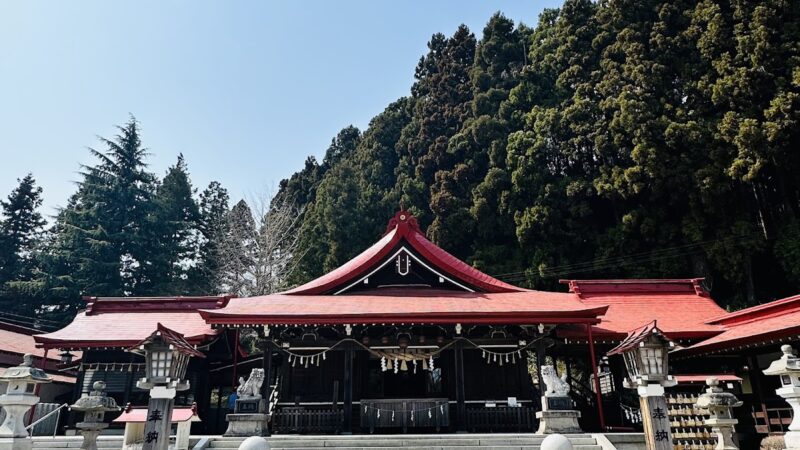
The current main hall was rebuilt in 1958 and is a magnificent shrine built in the Gongen-zukuri style. The brightly painted vermilion hall exudes a solemn atmosphere characteristic of Inari shrines.
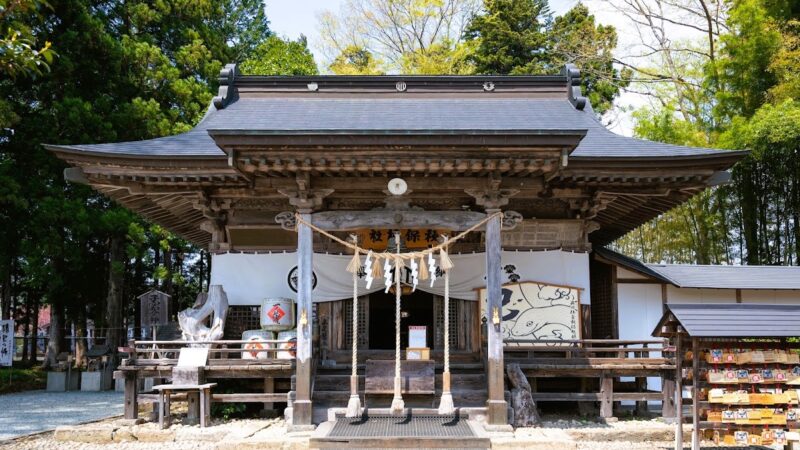
A large shimenawa (sacred rope) hangs in front of the worship hall, welcoming worshippers.
Karamon Gate (Mukai Karamon Gate)
The Karamon gate, standing in front of the main hall, is a beautiful gate adorned with intricate carvings. The vermilion-painted gate, characteristic of Inari shrines, is a popular spot for photography.
Zuishinmon Gate
The Zuishinmon Gate, standing at the entrance to the shrine grounds, is a magnificent gate rebuilt in 2008. Statues of guardian deities are enshrined on either side, watching over worshippers.
Sacred Horse Stable
Within the shrine grounds is a stable housing a statue of a sacred horse. Sacred horses are considered vehicles of the gods and are believed to deliver wishes to the deities.
Inari Shrine and Subsidiary Shrines
Several subsidiary shrines are located within the grounds, each offering specific blessings. If time permits, a visit to these shrines is recommended.
Fox Statues in Front of the Mukai-Karamon Gate
Statues of foxes, symbols of Inari shrines, are placed throughout the grounds. Foxes are considered messengers of the Inari god and are depicted holding keys, jewels, or rice stalks in their mouths.
How to Worship and Manners
Basic Worship Procedure
- Bow Before the Torii Gate: Bow before entering the shrine grounds.
- Purify at the Water Basin: Purify your hands and mouth at the water basin.
- Hold the ladle in your right hand and purify your left hand.
- Switch the ladle to your left hand and purify your right hand.
- Switch the ladle back to your right hand, receive water in your left hand, and rinse your mouth.
- Finally, hold the ladle upright to purify the handle.
- Worship in Front of the Main Hall: Worship in front of the main hall using the “two bows, two claps, one bow” method.
- Bow deeply twice.
- Clap your hands twice.
- State your wish silently.
- Finally, bow deeply once.
- Bow Upon Exit: When leaving the shrine grounds, turn back in front of the torii gate and bow.
Points to Note When Visiting the Shrine
- The center of the approach to the shrine is considered the path of the gods, so it is preferable to walk along the sides.
- Please be quiet within the shrine grounds and refrain from speaking loudly.
- Please refrain from taking photographs in areas where photography is prohibited.
- It is recommended to check in advance if you are bringing a pet to the shrine.
Amulets and Souvenirs
Takekoma Shrine offers a variety of amulets and souvenirs.
Popular Amulets
Business Prosperity Amulet
This is the most popular amulet for those wishing for business prosperity. Various sizes are available, from large ones that can be displayed in shops and offices to small ones that can fit in a wallet.
Good Fortune Amulet
This amulet is for general good fortune and is believed to bring increased luck when worn.
Traffic Safety Amulet
This is a traffic safety amulet that can be placed on the dashboard of a car. Sticker types are also available.
Matchmaking Amulet
This amulet is for those wishing for a good match and is particularly popular among young women.
Amulet for Protection Against Misfortune
This amulet is for those in their unlucky year or those seeking protection from misfortune.
Amulet for Academic Success
This amulet is for students and those taking exams, praying for academic success.
Other Items Available
- Sacred Talisman: A sacred talisman to be placed on the household shrine.
- Ema (Votive Tablet): A votive tablet on which wishes are written and offered.
- Sacred Arrow: A sacred arrow for warding off evil and misfortune.
- Kumade (Rake): A lucky charm for business prosperity and good fortune (especially popular during the Hatsuumasai festival).
The shrine office’s operating hours are usually 9:00 AM to 4:30 PM, but may change during New Year’s and festivals.
Goshuin (Shrine Seal) Information
Takekoma Shrine offers Goshuin.
Regular Goshuin (Shrine Seal)
A regular goshuin features the calligraphy of “Takekoma Shrine” and the shrine’s seal. The offering fee is approximately 300 to 500 yen (this may vary depending on the season).
Special Goshuin
During special periods such as the New Year’s visit, the annual festival, and the Hatsuumasai festival, limited edition goshuin may be offered. These colorful designs and goshuin with special stamps are popular among goshuin collectors.
Goshuincho (Goshuin Notebook)
Takekoma Shrine also offers its own original goshuincho. The beautiful goshuincho, featuring designs of rice stalks and foxes, is recommended as a souvenir.
Hours of Offering
Goshuin are usually offered from 9:00 AM to 4:30 PM, but these hours may be extended during New Year’s and festivals due to crowds. Waiting times may occur during busy periods, so it is recommended to allow ample time for your visit.
Annual Events and Festivals
Takekoma Shrine holds various festivals and events throughout the year. ### New Year’s Visit (January 1st-3rd)
Takekoma Shrine’s New Year’s visit is one of the most popular in the Tohoku region, attracting approximately 400,000 visitors over the first three days. At midnight on New Year’s Day, drums ring out to announce the new year, and the shrine is bustling with worshippers.
Numerous stalls line the grounds, creating a festive New Year’s atmosphere.
Hatsuumasai Festival (First Horse Day of February)
The Hatsuumasai Festival, the most important festival of Inari shrines, is also celebrated grandly at Takekoma Shrine. Hatsuumasai is the first Horse Day of February, considered the day when Inari-sama descended.
Many worshippers visit to pray for business prosperity, and lucky charms such as kumade (rakes) and sacred arrows are given out. Stalls line the grounds, creating a lively atmosphere.
Hatsuumasai Festival (First Horse Day of February) ### Spring Grand Festival (April)
This grand festival celebrates the arrival of spring, featuring Kagura (sacred dance) performances and various Shinto rituals.
Summer Purification Ceremony (June 30th)
This ritual purifies and cleanses away the sins and impurities accumulated over the past six months. A ritual of passing through a ring of reeds is performed, and prayers are offered for good health and protection from illness.
Autumn Grand Festival (September)
This autumn grand festival expresses gratitude for a bountiful harvest. Various Shinto rituals are performed, including a portable shrine procession and Kagura performances.
Shichi-Go-San Festival (November)
Many families visit the shrine from mid-October to late November for Shichi-Go-San, a celebration of children’s growth. Prayers can be received.
Year-End Grand Purification Ceremony (December 31st)
This is a Shinto ritual to cleanse away the sins and impurities of the past year, an important event for welcoming the new year with a pure heart.
Prayers and Sorrows
Takekoma Shrine accepts various prayers and blessings.
Types of Prayers
- Business Prosperity
- Family Safety and Harmony
- Protection from Evil and Misfortune
- Traffic Safety and Vehicle Blessing
- Safe Childbirth and First Shrine Visit
- Shichi-Go-San Ceremony
- Passing Exams and Academic Success
- Recovery from Illness and Health
- Finding a Good Partner
- Fulfillment of Wishes
Prayer Reception
Prayers do not require reservations and are accepted at the shrine office on the day of the visit. However, congestion is expected during New Year’s, festivals, and auspicious days, so it is recommended to visit with plenty of time to spare.
The prayer fee (offering) varies depending on the content of the prayer, but generally starts from 5,000 yen.
Car Blessing
We also accept car blessings for new car purchases and after accidents. You can park your car in the designated area on the shrine grounds and receive the prayer.
Access
Access by Train
From JR Tohoku Main Line “Iwanuma Station”
- Walking: Approximately 15 minutes (approximately 1.2 km)
- Taxi: Approximately 5 minutes
- Local Bus: Get off at “Takekoma Shrine” bus stop on the Iwanuma City Bus.
The shrine is within walking distance from Iwanuma Station, and there are signs guiding you from the station to the shrine.
From Sendai Station
- Approximately 30 minutes to Iwanuma Station on the JR Tohoku Main Line (approximately 20 minutes using the rapid train)
From Fukushima
- Direct train to Iwanuma Station on the JR Tohoku Main Line
Access by Car
From Sendai
- Approximately 30 minutes south on National Route 4, via Iwanuma city center
- Approximately 10 minutes from the Iwanuma Interchange on the Sendai Eastern Expressway
From Fukushima
- Approximately 15 minutes north on National Route 4, via Iwanuma city center
- Approximately 15 minutes from the Watari Interchange on the Joban Expressway
Parking
There is free parking available for visitors at Takekoma Shrine.
- Normal times: There are multiple parking lots around the shrine grounds, with a total of approximately 200 parking spaces.
- New Year’s and festival times: Temporary parking lots are opened, allowing for parking of several hundred cars.
During busy periods such as the first three days of the New Year and the Hatsuumasai festival, surrounding roads may become congested, so please consider using public transportation.
Car Navigation Settings
- Address: 1-1 Inari-cho, Iwanuma City, Miyagi Prefecture
- Phone Number: 0223-22-2101
Nearby Tourist Attractions
When visiting Takekoma Shrine, why not also visit tourist attractions around Iwanuma City?
Iwanuma Seaside Green Space (Sennen Kibou no Oka)
This is a disaster prevention park built on the coastal area damaged by the tsunami during the Great East Japan Earthquake. There is also a memorial monument to pass on the memory of the disaster to future generations, making it a symbol of reconstruction.
Greenpia Iwanuma
This is a comprehensive leisure facility in Iwanuma City, with hot springs, a swimming pool, and accommodation facilities. It is ideal for resting after visiting the shrine. ### Kinja Suijinja Shrine
Another famous shrine in Iwanuma City, known for its blessings of financial fortune and business prosperity. Many people visit it along with Takekoma Shrine.
Abukuma River Riverbed
Known as a cherry blossom viewing spot, the “Iwanuma Cherry Blossom Festival” is held here in spring.
Useful Information for Visitors
Visiting Hours
- Shrine grounds: 24 hours (limited lighting at night)
- Shrine office/gift shop: 9:00 AM – 4:30 PM (may vary depending on the season)
- Prayer reception: 9:00 AM – around 4:00 PM
Accessibility Information
- The shrine grounds are generally flat, but there are some steps.
- Wheelchair access is possible, but assistance is recommended.
- Accessible parking spaces are available.
Toilets
Toilets for visitors are located on the shrine grounds.
Nearby Restaurants and Rest Areas
There are restaurants and souvenir shops around Takekoma Shrine, which you can use for rest and meals after your visit. You can also enjoy local Iwanuma cuisine.
Summary: Points to Note When Visiting Takekoma Shrine
Takekoma Shrine is one of Japan’s three major Inari shrines, with a history of over 1,100 years. It is the foremost Inari shrine in Tohoku, known for its wide range of blessings, including business prosperity, abundant harvests, and family safety.
Points to Note When Visiting
- Excellent Access: Easily accessible, just a 15-minute walk from JR Iwanuma Station and about 30 minutes by car from Sendai.
- Annual Events: Various festivals are held throughout the year, including Hatsumode (first shrine visit of the year) and Hatsuumasai (first horse festival).
- Diverse Amulets and Offerings: Various amulets and Goshuin (shrine stamps) are available, including amulets for business prosperity.
- Prayer Services Available: Various prayers can be received without reservation.
- Nearby Sightseeing: Can be visited in conjunction with other tourist spots in Iwanuma City.
This shrine is recommended not only for those wishing for business prosperity and success, but also for everyone wishing for family safety and good fortune. When visiting Tohoku, be sure to visit Takekoma Shrine.
It’s also an ideal stop during Sendai sightseeing, and a valuable place to experience the traditional Japanese Inari faith culture. You can also enjoy the beautiful scenery of the shrine grounds in each of the four seasons, so you’ll discover something new every time you visit.