Complete Guide to Tsuno Shrine | A Thorough Explanation of the History, Benefits, and Visiting Methods of Hyuga Province’s Ichinomiya
Tsuno Shrine, located in Tsuno-cho, Koyu-gun, Miyazaki Prefecture, is a prestigious shrine that has long been revered as the Ichinomiya (first-ranked shrine) of Hyuga Province. It has ties to Emperor Jimmu’s eastward migration and is a popular power spot in Miyazaki Prefecture, attracting many visitors. This article comprehensively covers everything you need to know before visiting Tsuno Shrine, from its history, benefits, visiting methods, highlights, and access information.
What is Tsuno Shrine? The Status and History of Hyuga Province’s Ichinomiya
Tsuno Shrine is a Shikinaisha (a shrine listed in the Engishiki, an ancient Japanese legal text) and is positioned as the Ichinomiya of Hyuga Province. Its former shrine rank was Kokuhei Shosha (a national shrine of the lower rank), and it is currently designated as a Beppyo Jinja (a shrine listed in the special register) of the Association of Shinto Shrines. Before the Meiji era, it was also called “Miyazaki-sha” or “Miyazaki-gu,” and locally it is affectionately known as “Ichinomiya Jinja” (the Ichinomiya Shrine).
An Ichinomiya refers to the shrine with the highest rank in a given region (former province). The fact that Tsuno Shrine is considered the Ichinomiya of Hyuga Province means it is one of the most prestigious shrines in Miyazaki Prefecture.
Deity Enshrined: Ōnamuchi-no-Mikoto
The deity enshrined at Tsuno Shrine is Ōnamuchi-no-Mikoto. Ōnamuchi-no-Mikoto is another name for Ōkuninushi-no-Mikoto and is known as the god of nation-building. He is also famous as the principal deity of Izumo Taisha Shrine and is believed to possess divine virtues in a wide range of fields, including matchmaking, agriculture, commerce, and medicine.
History and Origin of Tsuno Shrine
Deep Connection to Emperor Jimmu
Tsuno Shrine is said to have been founded in 666 BC, six years before Emperor Jimmu ascended to the throne as the first emperor in Yamato. According to the Nihon Shoki (Chronicles of Japan), Emperor Jimmu began his eastward migration from Miyazaki Palace in Hyuga Province to Yamato, stopping at this location along the way.
It is said that Emperor Jimmu prayed here for peace in the land, tranquility at sea, and lasting military fortune, and enshrined Ōkuninushi-no-Mikoto. This historical background is one of the reasons why Tsuno Shrine is considered a highly prestigious shrine.
Changes Throughout History
Tsuno Shrine has undergone several changes throughout its long history. During the Edo period, Tachibana Sanki, who visited all the Ichinomiya (first-ranked shrines) in Japan, visited Tsuno Shrine, and records and a map of the shrine grounds from that time remain. These materials provide insight into the appearance of the shrine grounds at that time.
In the Meiji era, the shrine’s name was reorganized due to the separation of Shinto and Buddhism, and it was ranked as a National Shrine of the lower rank. After World War II, it became a Special Shrine and continues to attract the faith of many people to this day.
The Benefits and Power Spot Appeal of Tsuno Shrine
Tsuno Shrine is known as one of the leading power spots in Miyazaki Prefecture and is believed to offer various benefits.
Main Benefits
Healing from Illness: Ōkuninushi-no-Mikoto is also known as the god of medicine, and is believed to grant blessings for healing from illness. Many worshippers visit to pray for good health.
Matchmaking: Ōkuninushi-no-Mikoto has the divine power of matchmaking, making it popular among those seeking good relationships. It is believed to bring blessings not only for romantic success but also for good relationships in general.
Prosperity of Descendants and Family Safety: Many worshippers visit to pray for the happiness and prosperity of their families.
Business Prosperity: With the divine power of the god of commerce, it is deeply revered by business owners and merchants praying for success in their ventures.
Long-Lasting Military Fortune and Good Luck: Because Emperor Jimmu prayed for long-lasting military fortune here, it is believed to bring blessings for success in competitions and good fortune in life.
Evaluation as a Power Spot
Tsuno Shrine is highly regarded as a powerful spiritual spot due to its historical background as a place associated with Emperor Jimmu and its rich natural environment. Upon entering the grounds, one can feel a solemn and pure atmosphere, and many visitors experience spiritual purification and renewed energy.
Guide to Tsuno Shrine Grounds and Highlights
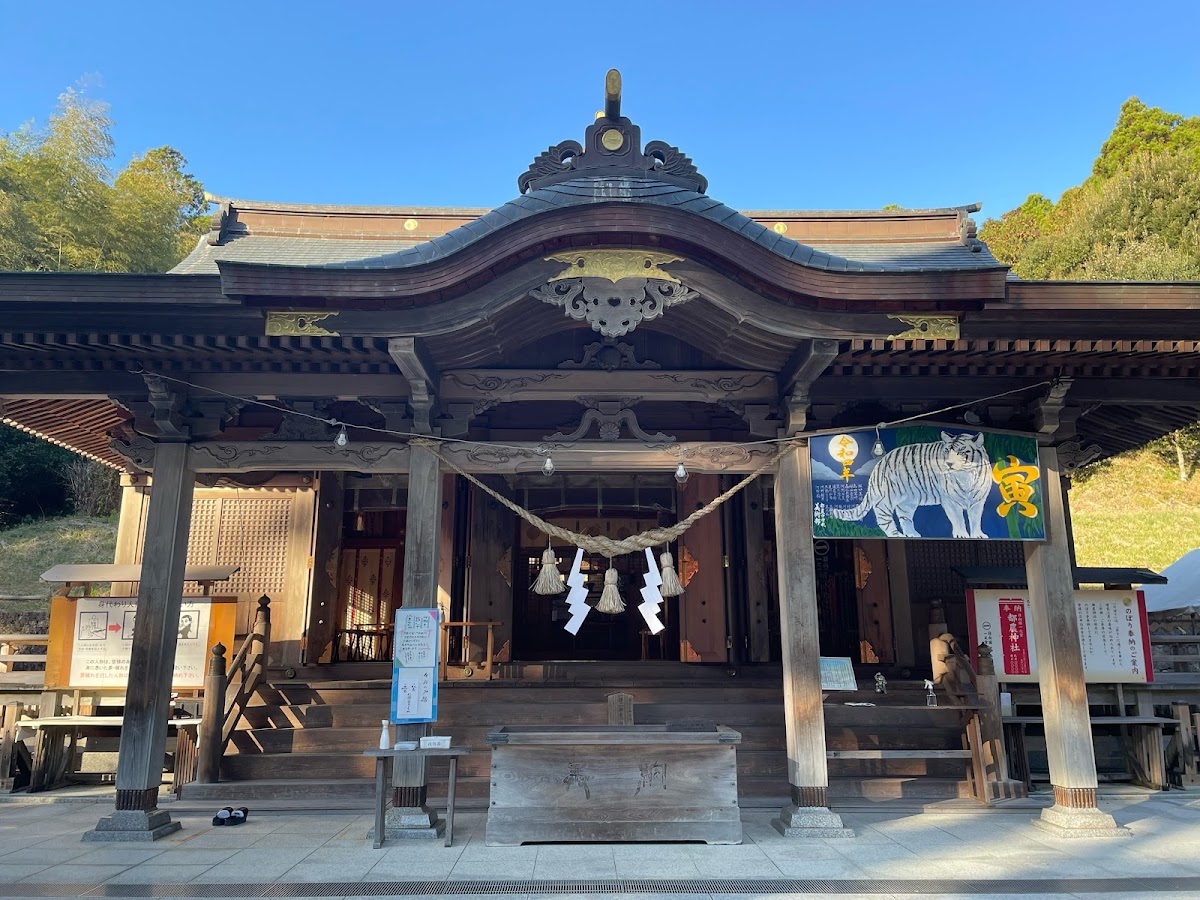
Main Hall and Worship Hall
The main hall of Tsuno Shrine is a magnificent building that preserves the traditional style of shrine architecture. Many visitors offer prayers in the worship hall. A barrier-free passage is provided next to the main hall for wheelchair users and the elderly, ensuring an accessible environment for everyone.
Facilities on the Shrine Grounds
The shrine grounds include a purification fountain, a shrine office, and a gift shop where visitors can obtain amulets and goshuin (shrine stamps). Various festivals are held throughout the seasons, making it a center of faith for the local community.
Okumiya (Inner Shrine) – Taki Shrine
Located in the Fujimi district, at the foot of Mt. Makinai, approximately 1.2 km north-northwest of Tsuno Shrine, is Taki Shrine, considered the inner shrine of Tsuno Shrine. Visiting both shrines is believed to provide a deeper religious experience. In this tranquil, nature-filled environment, one can feel an even greater sense of spiritual power.
Worship Methods and Manners
Basic Worship Etiquette
When visiting Tsuno Shrine, please observe the following basic etiquette:
- Bow before passing through the torii gate: Before entering the shrine grounds, bow before the torii gate.
- Purify yourself at the water basin: Purify your left hand, then your right hand, then receive water in your left hand and rinse your mouth, and finally purify the handle of the ladle.
- How to walk on the approach to the shrine: The center of the approach is considered the path of the gods, so it is polite to walk along the sides.
- Worship at the main hall: The basic procedure is two bows, two claps, and one bow. Place your offering in the offering box, ring the bell, bow deeply twice, clap twice, and finally bow once.
Attire for worship
There are no strict dress code regulations, but clean and subdued clothing that reflects the sacred nature of the place is desirable. Avoid revealing or overly flashy clothing.
Photography
Photography is generally permitted within the shrine grounds, but there are areas where photography is prohibited, such as inside the main hall. Please be considerate of other worshippers.
Goshuin (stamps) and amulets
Goshuin (stamps)
At Tsuno Shrine, you can receive a goshuin as proof of your worship. It is common to leave your goshuin book at the shrine office and receive it after your visit. The offering fee is approximately 300 to 500 yen. The prestigious Goshuin (temple/shrine stamp) of the Ichinomiya (first-ranked shrine) of Hyuga Province is popular among Goshuin collectors.
Amulets and Souvenirs
Tsuno Shrine offers a variety of amulets and souvenirs.
- Health Amulet: An amulet for praying for recovery from illness
- Matchmaking Amulet: An amulet for praying for a good match
- Business Prosperity Amulet: An amulet for praying for business success
- Traffic Safety Amulet: An amulet for praying for safe travel
- Academic Success Amulet: An amulet for praying for academic improvement
Each amulet embodies the divine virtues of Ōkuninushi-no-Mikoto.
Annual Events and Festivals
Tsuno Shrine holds various festivals throughout the year.
Main Annual Events
Hatsumode (January 1st-3rd): The shrine is bustling with many worshippers as the new year begins. 2026 is the Year of the Horse, making this shrine particularly noteworthy as it is associated with horses.
Reitaisai (First Saturday and Sunday of December): The most important festival at Tsuno Shrine, featuring a portable shrine procession and offering ceremonies.
Setsubun Festival (February 3rd): Traditional ceremonies such as bean-throwing are held.
Natsukoshi no Oharae (June 30th): A Shinto ritual to purify and cleanse away the sins and impurities accumulated over the past six months.
Visiting the shrine during these events allows you to experience a different atmosphere than usual.
Access Information
Access by Car
From Miyazaki Airport: Head north on National Route 10, approximately 1 hour and 20 minutes.
From Miyazaki City: Head north on National Route 10, approximately 1 hour.
From Nobeoka City: Head south on National Route 10, approximately 40 minutes.
Parking is available on the shrine grounds and is free of charge. There are also parking spaces for large vehicles.
Access by Public Transportation
By JR: Get off at Tsuno Station on the JR Nippo Main Line.
- Walking: Approximately 25 minutes
- Taxi: Approximately 5 minutes
Walking from Tsuno Station allows you to enjoy the peaceful rural scenery on your way to the shrine.
Accessibility Information
Tsuno Shrine has a pathway accessible from beside the main hall to make it easier for wheelchair users and the elderly to visit. A route with minimal steps from the parking lot to the shrine grounds is also provided, ensuring that many people can visit the shrine.
Nearby Tourist Attractions
Sites Associated with Wakayama Bokusui
Tsuno Town is the birthplace of the poet Wakayama Bokusui. Visiting the Wakayama Bokusui Memorial Museum and the site of his birthplace, along with a visit to Tsuno Shrine, allows you to enjoy a tour of sites associated with Emperor Jimmu and Wakayama Bokusui.
Tsuno Winery
Tsuno Town is also known as the only town in Miyazaki Prefecture with a winery. At Tsuno Winery, you can observe the winemaking process using locally grown grapes, and you can also sample and purchase wine. It is located about 10 minutes by car from Tsuno Shrine.
Osuzuyama Waterfalls
Osuzuyama, towering behind Tsuno Town, boasts a beautiful group of waterfalls, selected as one of Japan’s Top 100 Waterfalls. It is a popular hiking course rich in nature.
Best Season for Visiting
Tsuno Shrine can be visited throughout the year, but each season offers a different charm.
Spring (March-May): Beautiful cherry blossoms and fresh greenery, with pleasant weather.
Summer (June-August): Events such as the Summer Purification Ceremony take place. Miyazaki summers are hot, so early morning or evening visits are recommended.
Autumn (September-November): Beautiful autumn foliage, mild weather, ideal for visiting.
Winter (December-February): The shrine is bustling with many visitors during the annual festival and New Year’s visits. While Miyazaki is relatively mild, warm clothing is necessary.
For Schools and Corporations
Tsuno Shrine accepts group visits from schools and corporations. It can be used as an opportunity to learn about traditional Japanese culture and history as part of school trips or employee training.
Group Visit Application
If you wish to visit as a group, we recommend contacting the Tsuno Shrine office in advance to discuss the date, time, number of people, and desired content (whether or not you require prayers).
Contact Information:
- Phone: 0983-25-3256
- FAX: 0983-25-0617
Educational Value
Tsuno Shrine is an important place related to the history of Japan’s founding, specifically Emperor Jimmu’s eastward migration, and therefore has value from a history education perspective. Furthermore, learning about its status as an Ichinomiya (first-ranked shrine) and shrine etiquette can deepen your understanding of traditional Japanese culture.
Digital Stamp Rally and SNS
Kikitabi Digital Stamp Rally
Miyazaki Prefecture sometimes holds a digital stamp rally called “Kikitabi” where you can visit tourist spots. Tsuno Shrine is one of the target spots, and you can enjoy visiting the shrine using a smartphone app. (Please check the official website for the implementation period.)
Official Instagram
Tsuno Shrine operates an official Instagram account (@tunojinjya), where it shares seasonal scenery, event details, and announcements. With over 3,000 followers, it’s used for gathering information before visiting and sharing memories after the visit.
With over 200 posts, you can see beautiful photos of the shrine grounds and scenes from festivals. Checking it before your visit will help you plan a more fulfilling pilgrimage.
Foreign Language Support
Tsuno Shrine is also committed to welcoming foreign tourists. Some signs within the grounds are in English, allowing visitors to understand basic worship procedures and history.
The Miyazaki Prefecture official tourism website also provides foreign language information on tourist spots, including Tsuno Shrine, in English, Korean, and Chinese (simplified and traditional).
Important Information and Tips for Visiting the Shrine
Important Points for Visiting the Shrine
- Visiting Hours: Generally, daytime hours (9:00 AM to 5:00 PM) are recommended. Avoid visiting early in the morning or late at night.
- Pets: Bringing pets onto the shrine grounds is generally discouraged. It is recommended to check in advance.
- Eating and Drinking: Eating and drinking are prohibited on the shrine grounds. Please refrain from eating or drinking outside of designated areas.
- Smoking: Smoking is strictly prohibited on the shrine grounds.
Useful Information
- Estimated Time Required: Allow approximately 30 minutes to 1 hour for a thorough visit.
- Restrooms: Restrooms are available on the shrine grounds.
- Rest Areas: There are rest areas on the shrine grounds.
- Nursing Room: Please inquire at the shrine office for details.
To Fully Enjoy the Charms of Tsuno Shrine
Tsuno Shrine is not merely a tourist spot, but a sacred shrine with a history of over 2600 years. To fully enjoy its charm, keep the following points in mind:
Know the History
Having some basic knowledge about Emperor Jimmu’s eastward migration and Ōkuninushi-no-Mikoto beforehand will make your visit more meaningful. We recommend visiting after understanding the historical background introduced in this article.
Calm Your Mind
Visiting a shrine is not merely sightseeing; it is a sacred act of facing the gods. By leaving the hustle and bustle of everyday life and calming your mind during your visit, you will be able to feel the power of Tsuno Shrine more strongly.
Allow Your Time
Instead of rushing through your visit, take your time to stroll around the shrine grounds and soak up the atmosphere. Experiencing the changing seasons and the beauty of nature is also a great part of visiting a shrine.
Interacting with the Local Community
Tsuno Town boasts not only Tsuno Shrine, but also numerous other attractive spots, including places associated with Wakayama Bokusui and wineries. Enjoying the entire region will make your trip even more fulfilling.
Summary
Tsuno Shrine is a prestigious shrine, the Ichinomiya (first-ranked shrine) of Hyuga Province, with a rich history connected to Emperor Jimmu. It offers various blessings, including healing from illness, matchmaking, and business prosperity, and is a popular power spot in Miyazaki Prefecture.
The shrine grounds, surrounded by beautiful nature, soothe the hearts of visitors and provide renewed vitality. Barrier-free access is also being implemented, creating an environment where everyone can easily visit and pray.
When visiting Miyazaki, be sure to visit Tsuno Shrine and experience its history and spiritual power. Praying here, where Emperor Jimmu prayed for the peace of the land, with your own wishes in mind, will surely be a memorable experience.
I sincerely pray that your visit to Tsuno Shrine will bring you many fortunate encounters and good fortune in your life.