Complete Guide to Otsuki Taisha Shrine | A Thorough Explanation of its History, Blessings, and the Charm of the Sanyare Dance
Otsuki Taisha Shrine, located in Shimotoyama, Ritto City, Shiga Prefecture, is a shrine listed in the Engishiki Jinmyocho (a historical record of shrines) and has been revered by the local people since ancient times. This guide provides a detailed explanation of the many attractions of this ancient shrine, including its main hall, designated as a National Important Cultural Property, the “Sanyare Dance of Omi Konan,” registered as a UNESCO Intangible Cultural Heritage, and its deep connection to the Otsuki clan, who served the imperial court for a thousand years.
What is Otsuki Taisha Shrine?
Otsuki Taisha Shrine is located on a gentle hillside on the left bank of the Konkatsu River in Ritto City, Shiga Prefecture. Its former shrine rank was Gosha (village shrine). It has several pronunciations, including “Otsuki Taisha,” “Otsugi Taisha,” and “Ozuki Taisha,” and was formerly known as “Ozue no Yashiro,” “Ozue-no-miya,” and “Ozue Daimyojin.”
The shrine’s crests are “descending wisteria” and “facing rabbit,” which are deeply connected to the family crest of the Otsuki clan. Every year on May 5th, the Hanagasa Odori, one of the “Omi Konan Sanyare Dances,” is performed on the shrine grounds. This traditional performing art is registered as a component of the UNESCO Intangible Cultural Heritage “Furyu Odori” (elegant dance).
Deities and Divine Virtues
Main Deity
The main deity of Otsuki Grand Shrine is Ochiwake-no-Mikoto. Ochiwake-no-Mikoto is also written as Ikihayawake-no-Mikoto, Ochiwake-no-Ō, and Sobetsu-no-Mikoto, and is considered a prince of Emperor Suinin, the 11th emperor. This deity was worshipped as the ancestral god of the Otsukiyama-no-Kimi, an ancient local powerful clan.
Enshrined Deities
Along with the main deity, Ōnamuchi-no-Mikoto is enshrined. Ōkuninushi-no-Mikoto is another name for Ōnamuchi-no-Mikoto and is widely worshipped as the god of nation-building and matchmaking.
Benefits
The following benefits are believed to be offered at Kotsuki Taisha Shrine:
- Family Safety and Prosperity of Descendants: As the shrine enshrines Ochibetsu-no-Mikoto, who is of imperial lineage, it is a place of worship for the prosperity of the family line.
- Matchmaking and Successful Relationships: Benefits of matchmaking through the divine virtues of Ōnamuchi-no-Mikoto.
- Abundant Harvests and Business Prosperity: Protection of agriculture and industry as Ōkuninushi-no-Mikoto.
- Protection from Evil and Good Fortune: The divine power of a shrine that has protected the region since ancient times.
History of Kotsuki Taisha Shrine
Founding and Ancient Times
The founding date of Kotsuki Taisha Shrine is not clear, but since it is listed as one of the eight shrines in Kurita District in the “Engishiki Jinmyōchō” compiled in 927 AD, it is understood that it already had a considerable rank in the early Heian period. It is believed that the shrine was founded when the ancient Kotsukiyama clan, who held power in this region, enshrined their ancestral deity, Ochibetsu-no-Mikoto. The Kotsuki clan was a family descended from a son of Emperor Suinin, and during the Nara period, they had deep ties to the imperial court, including providing court ladies (uneme) to the court.
The Kotsuki Clan and its Prosperity as a Government Official
The existence of the Kotsuki clan is indispensable when discussing the history of Kotsuki Grand Shrine. From the Heian period to the Meiji Restoration, the Kotsuki clan maintained a firm position as a “government official” in the imperial court society for approximately 1,000 years.
A government official was a family that oversaw the ceremonies, precedents, and customs of the imperial court. The Kotsuki clan inherited this position for generations, participating in the management of important ceremonies and events of the imperial court. Therefore, Kotsuki Taisha Shrine has a history of receiving deep reverence from the Imperial family and protection from the Imperial Court.
Development in the Middle Ages
In the Middle Ages, Kotsuki Taisha Shrine became a revered shrine of the Aochi clan, lords of Aochi Castle. The Aochi clan ruled the area as lords of Aochi Manor (Aochi Manor) and held Kotsuki Taisha Shrine in high esteem.
The current main hall was built in 1519 by Aochi Motozane, the lord at the time, and is a valuable cultural asset that preserves the architectural style of the late Muromachi period. During this period, the shrine buildings were improved under the protection of the Aochi clan, and Shinto rituals were actively performed.
From the Early Modern to the Modern Period
Throughout the Edo period, Kotsuki Taisha Shrine continued to attract the faith of the people as the local tutelary deity. It also had deep ties with the Tendai sect, and it is believed that Buddhist elements were incorporated during the era of syncretism of Shinto and Buddhism.
Following the Meiji-era decree separating Shinto and Buddhism, Buddhist elements were removed, and the shrine was established as a purely Shinto shrine. Under the Meiji-era shrine ranking system, it was designated a Gosha (village shrine), positioning it as an important local shrine.
Highlights of the Shrine Grounds
Main Hall (National Important Cultural Property)
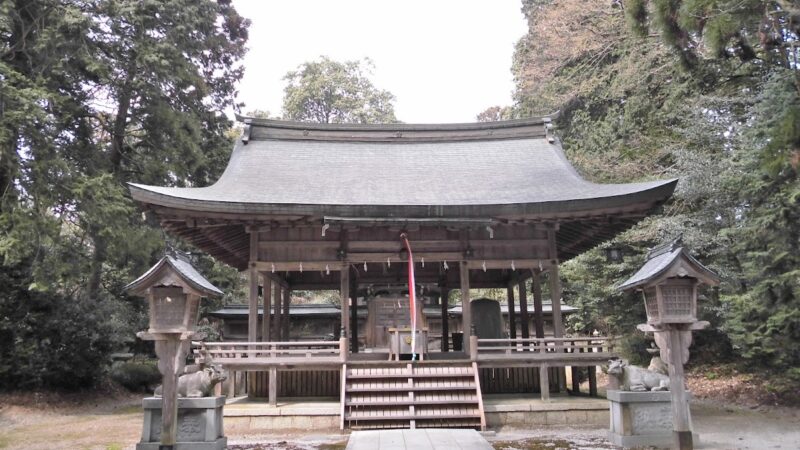
The greatest highlight of Kotsuki Taisha Shrine is its main hall, designated as a National Important Cultural Property. Built in 1519 (Eisho 16), it exhibits the typical shrine architectural style of Ikkensha Nagare-zukuri and Hiwadabuki.
Ikkensha Nagare-zukuri is a style where the front pillars are one ken (approximately 1.8 meters) apart, and the roof extends long and flowing forward. As a valuable structure that conveys the architectural techniques of the late Muromachi period, it holds high historical value in architecture.
The details of the main hall showcase the excellent carving techniques of the time, and the decorative designs also reflect the characteristics of the era. The cypress bark roof requires periodic re-thatching, making it an important structure from the perspective of preserving traditional techniques.
Worship Hall and Subsidiary Shrines
In front of the main shrine is the worship hall, where worshippers offer their prayers. Within the shrine grounds, in addition to the main shrine, several subsidiary shrines are enshrined, each embodying the local faith.
The shrine grounds are located on a hillside overlooking the Kinsho River, possessing a tranquil atmosphere surrounded by abundant nature. Ancient trees stand tall, allowing visitors to enjoy the beauty of the four seasons.
Divine Emblems: “Descending Wisteria” and “Facing Rabbit”
The divine emblems of Kotsuki Grand Shrine are the “Descending Wisteria” and the “Facing Rabbit.” The Descending Wisteria suggests a connection to the Fujiwara clan and is also the family crest of the Kotsuki clan. The Facing Rabbit is a design of a rabbit facing forward, symbolically representing the rabbit, which has long been considered a sacred animal.
These divine crests are used in the decoration of the shrine buildings, sacred objects, and festival costumes, and are an important element that represents the identity of Otsuki Grand Shrine.
Festivals and Annual Events
Ozue Festival (Flower Umbrella Dance) – May 5th
The most important festival of Otsuki Grand Shrine is the “Ozue Festival,” held annually on May 5th. At this festival, the “Flower Umbrella Dance” is performed, and this dance is registered as a UNESCO Intangible Cultural Heritage “Fūryū Odori” (Elegant Dance) as one of the “Sanyare Dances of Ōmi Konan.”
Characteristics of the Hanagasa Odori (Flower Umbrella Dance)
The Hanagasa Odori is a traditional performing art with the following characteristics:
- Vibrantly Colored Costumes: Dancers wear brightly colored costumes, adding vibrancy to the festival.
- Large Flower Umbrellas: The dance is performed using distinctive large flower umbrellas.
- Participation of Child Performers: Local children participate in the dance, ensuring the continuation of the tradition.
- Music of Flute and Drums: The dance unfolds to traditional music played on flutes and drums.
What is the Sanyare Odori?
“Sanyare Odori” is a general term for folk performing arts passed down in the Omi-Konan region (southern Shiga Prefecture), characterized by the chant “Sanyare, Sanyare.” The Hanagasa Odori of Kotsuki Taisha Shrine is one type of this, a performing art rooted in folk beliefs praying for a bountiful harvest and protection from disease.
In 2022, its value was recognized internationally when it was registered as a UNESCO Intangible Cultural Heritage under the name “Fūryū Odori” (Elegant Dance). This tradition, preserved and passed down by the local community, is expected to continue to be carefully preserved and passed down in the future.
Other Annual Events
In addition to the Kozue Festival, the following annual events are held at Kotsuki Taisha Shrine:
- Saitansai (January 1st): A festival celebrating the New Year
- Spring Festival: A festival celebrating the arrival of spring and praying for a bountiful harvest
- Autumn Festival: A festival expressing gratitude for the harvest and repaying divine blessings
- Monthly Festival: A regular monthly festival
Through these festivals, the bond between the local people and the shrine is maintained.
Cultural Properties
Nationally Designated Important Cultural Property
- Main Hall: Built in Eisho 16 (1519), one-bay nagare-zukuri style, cypress bark roofing
UNESCO Intangible Cultural Heritage
- Omi Konan Sanyare Dance (Flower Umbrella Dance): Registered as a component of “Furyu Odori” (Elegant Dance)
Other Cultural Properties
The shrine grounds are believed to house historically valuable materials such as ancient documents and sacred treasures, many of which are not open to the public. These are invaluable resources for understanding the history of the Kotsuki clan and the ancient history of the area.
Historical Connections between Kotsuki Taisha and Surrounding Areas
Relationship with Hiyoshi Nishi Hongu
Kotsuki Taisha has deep ties to the Tendai sect, and its historical connection to Hiyoshi Taisha (Hiyoshi Nishi Hongu) in particular has been noted. During the period of syncretism of Shinto and Buddhism, it is believed that the area was under the influence of the Tendai sect, centered around Enryaku-ji Temple on Mount Hiei, and this influence can be seen in the forms of worship.
History of the Konze River Basin
The Konze River basin, where Kotsuki Taisha Shrine is located, has been a vital transportation hub since ancient times, and is dotted with numerous archaeological sites and ancient shrines. This entire region is known by the place name “Konze” and has long been a center of mountain worship and Shugendo (mountain asceticism).
Kotsuki Taisha Shrine is thought to have functioned as a political and religious center within this historical context of the region.
Visiting Information
Location
Address: 1231 Shimotoyama, Ritto City, Shiga Prefecture
Access
Public Transportation
- JR Kusatsu Line: Get off at “Tehara Station,” approximately 20 minutes on foot
- Bus: Ritto City Community Bus “Konze-go” is available (please check the route and timetable)
By Car
- Meishin Expressway: Approximately 10 minutes from “Ritto IC”
- Parking: Parking spaces for visitors are available on the shrine grounds (limited number of spaces)
Visiting Hours
- Shrine Grounds are Free: Visiting during daytime hours is recommended
- Shrine Office: The office may be unattended, so it is advisable to check in advance if you wish to receive a Goshuin (shrine stamp) or other items.
Visiting Manners
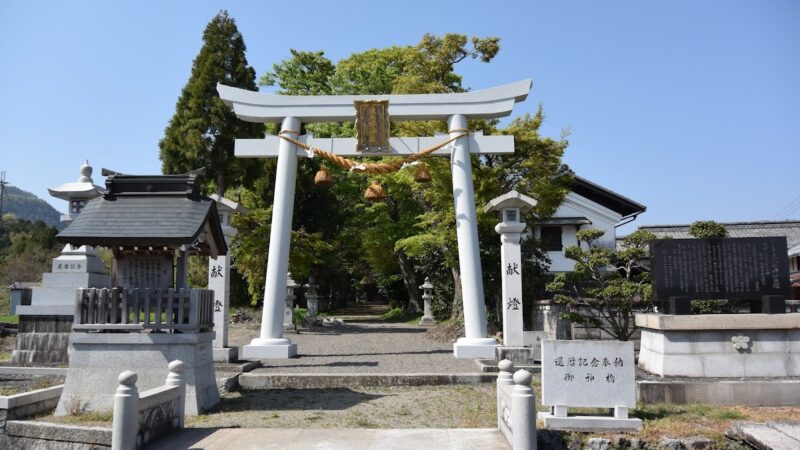
- Bow when passing through the torii gate
- Cleanse your hands and mouth at the water basin
- At the front of the main hall, worship using the two bows, two claps, and one bow ritual.
- Maintain tranquility within the shrine grounds and be considerate of other worshippers.
- Photography is permitted, but please be aware of areas where photography is prohibited, such as inside the main hall.
Nearby Tourist Attractions
Konze-yama Mountain and Konze-ji Temple
Konze-yama Mountain, located behind Kotsuki Taisha Shrine, is a sacred mountain that has long been an object of mountain worship. Within the mountain lies Konze-ji Temple, an ancient Tendai sect temple, which houses valuable cultural assets, including a national treasure bronze bell and important cultural property Buddhist statues.
Ritto Historical and Folk Museum
This museum allows visitors to learn about the history and culture of Ritto City, and exhibits materials related to the Kotsuki clan and Kotsuki Taisha Shrine. It is a facility where you can systematically understand the history of Ritto from ancient times to the present day.
Konze no Sato
A tourist base that utilizes the nature and history of the Konze River basin, and is also used as a starting point for hiking trails. You can enjoy historical walks while appreciating the beauty of nature throughout the four seasons.
Summary of the Charms of Kotsuki Taisha Shrine
Kotsuki Taisha Shrine is a shrine with multifaceted charms, as follows:
- Deep History: As a shrine listed in the Engishiki (an ancient Japanese legal code), it boasts a history of over a thousand years and has deep ties to the imperial court as the tutelary deity of the Kotsuki clan, a family of government officials.
- Architectural Value: The main hall, a nationally important cultural property, is a valuable structure that preserves the architectural style of the late Muromachi period.
- Intangible Cultural Heritage: It is the place where the “Omi Konan Sanyare Dance,” registered as a UNESCO Intangible Cultural Heritage, is passed down.
- Natural Environment: The shrine grounds are tranquil, surrounded by the rich nature of the Konsho River basin.
- Local Belief: A tutelary deity that has been protected and revered by the local people from ancient times to the present day.
By visiting Kotsuki Taisha Shrine, you can experience the essence of Japanese shrine faith, the relationship between local communities and shrines, and the weight of history spanning over a thousand years. Especially during the Kozue Festival on May 5th, you can enjoy a precious opportunity to experience living traditional culture through the vibrant Hanagasa Odori (flower umbrella dance).
Why not reflect on history in the tranquil grounds and feel the cultural diversity of Japan and the preciousness of local traditions? Kotsuki Taisha Shrine, as a valuable cultural heritage connecting the past, present, and future, will undoubtedly continue to be protected and passed down by many people.