Complete Guide to Kojakuji Temple | History, Highlights, and Access Information for the Origin of Korankei’s Autumn Foliage
About Kojakuji Temple
Kojakuji Temple is an ancient Soto Zen temple located in Iimori, Asuke-cho, Toyota City, Aichi Prefecture. Its mountain name is Hanseizan, and as a temple standing in the heart of Korankei, known as one of the Tokai region’s premier autumn foliage spots, it is beloved by many worshippers and tourists.
Founded in 1427 (Oei 34), this temple is not merely a tourist spot, but a “temple of origin” that gave birth to Korankei’s autumn foliage culture itself, deeply rooted in the region’s history and culture. Approximately 4,000 maple trees are planted within the temple grounds and surrounding area, and in autumn, their fiery red leaves captivate visitors.
Basic Information about Koshakuji Temple
- Sect: Soto Zen
- Mountain Name: Iimoriyama
- Principal Image: Holy Kannon Bodhisattva
- Founded: 1427 (Oei 34)
- Founders: Regent Nijo Yoshimoto, Takino (daughter of Asuke Shigenori), Naruse Miyoshimaru Motohisa and Motonao, and others
- Location: 39 Iimori, Asuke-cho, Toyota City, Aichi Prefecture
- Telephone: 0565-62-0057 (Inquiries via Korankei Tourism Association are recommended)
Koshakuji Temple has a historical background, having been built on the site of the Asuke clan’s residence, and possesses value as a valuable cultural asset where the samurai culture and Buddhist culture of this region are fused.
History of Koshakuji Temple
The Asuke Clan and the Founding of Koshakuji Temple
The founding of Koshakuji Temple dates back to the Muromachi period, specifically to the 34th year of the Oei era (1427). It is said to have been built on the site of the residence of the Asuke clan, a powerful local family who ruled this area. The temple’s founders include Regent Nijō Yoshimoto, Takino (daughter of Asuke Shigenori), and Naruse Miyoshimaru Motohisa and Motonao, ancestors of the Naruse clan.
The Asuke clan was a powerful family in this region from the Kamakura period to the Muromachi period. The construction of a temple on the site of their residence represents a typical medieval pattern of land conversion from samurai residence to temple. Due to this historical background, Koshakuji Temple is not merely a religious facility, but also an important historical site that conveys the history of the region to the present day.
The Beginning of Korankei’s Autumn Leaves and Abbot San’ei
The greatest contributor to Koshakuji Temple becoming known as the “temple where Korankei’s autumn leaves originated” is the 11th head priest, Abbot San’ei. Around 1634, he began a practice of planting one maple or cedar tree in the temple grounds and along the approach to the temple for each recitation of the Heart Sutra.
This painstaking tree-planting activity continued for approximately 20 years, resulting in the beautiful maple trees covering the slopes of Mount Iimori. Two cedar trees, said to have been planted by Abbot San’ei, still remain on the temple grounds, serving as living witnesses to nearly 400 years of history.
Abbot San’ei’s tree-planting activities were not merely about beautifying the temple grounds, but were based on a profound spirituality rooted in Buddhist practice, gratitude to nature, and a gift to future generations. This spirit possesses a foresight that resonates with modern environmental protection activities and is one of the most important legacies in Koshakuji Temple’s history.
From the Edo Period to the Present
Throughout the Edo period, Koshakuji Temple served as a center of local faith as a Soto Zen temple. The maple trees planted by Abbot San’ei grew year after year, displaying magnificent autumn foliage. This beautiful scenery gradually gained popularity, and by the late Edo period, it was already known as a famous spot for viewing autumn leaves.
In the Meiji era, along with the wave of modernization, development as a tourist destination progressed. In the Taisho era, it was given the name “Korankei,” and in the early Showa era, it gained nationwide recognition as a leading autumn foliage spot in Aichi Prefecture.
Currently, it is a major tourist destination attracting hundreds of thousands of visitors from all over Japan during the autumn foliage season, but Koshakuji Temple itself maintains its quiet mountain temple atmosphere. The fact that it retains its solemn atmosphere as a Zen temple even amidst the hustle and bustle of tourism is a major part of Koshakuji Temple’s appeal.
Highlights of Koshakuji Temple
Temple Gate and Approach
A visit to Koshakuji Temple begins with a beautiful approach surrounded by maple and cedar trees. Especially during the seasons of fresh greenery and autumn leaves, the entire approach is dyed in green and red, creating a fantastical experience as if walking through a natural tunnel.
The temple gate, while simple, has a dignified structure, perfectly representing the characteristics of a Soto Zen temple. Bowing before passing through the gate is proper etiquette, and it’s important to be aware that this is a sacred area.
Stone Buddhas and monuments are scattered along both sides of the approach, each with its own history and story. Instead of rushing past, taking your time to appreciate these stone structures will lead to a deeper pilgrimage experience.
Main Hall and Temple Grounds
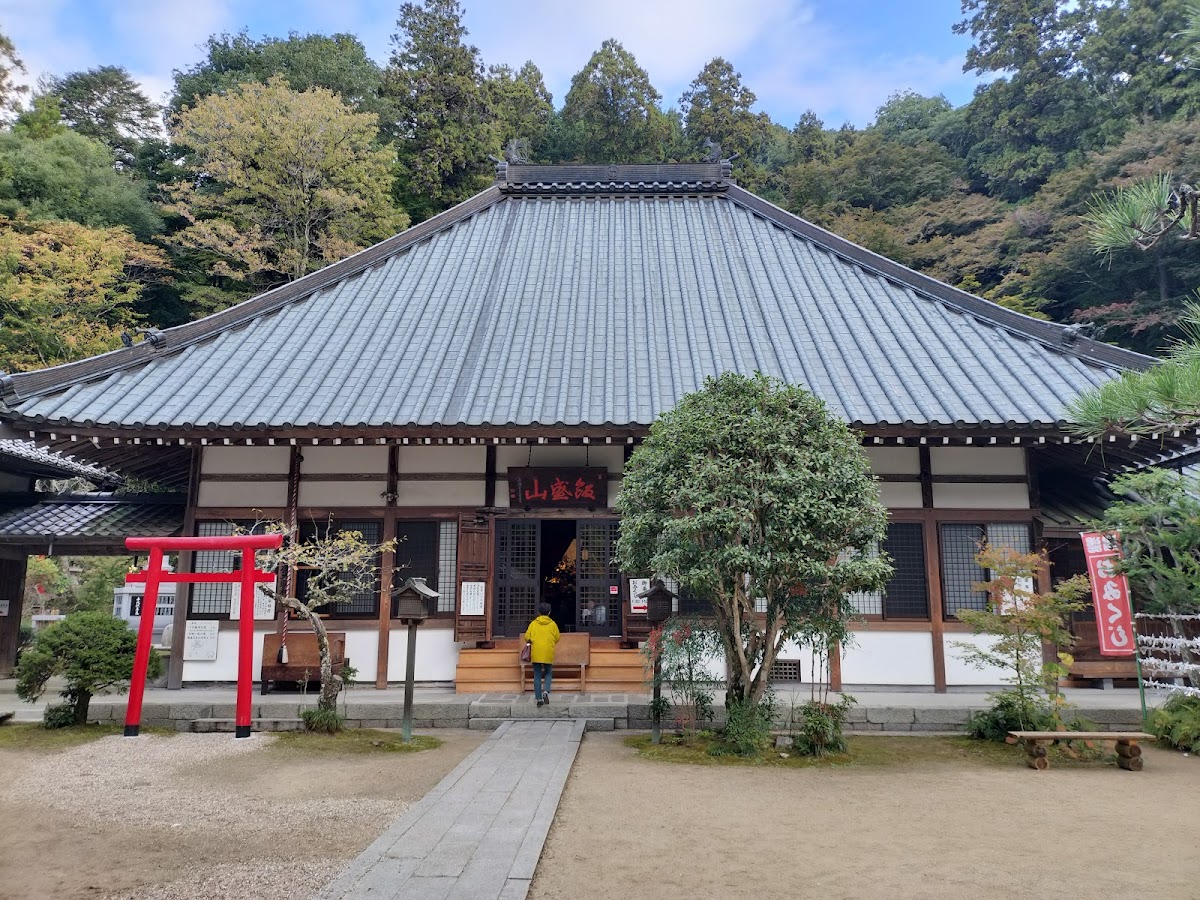
The main hall houses the principal image, the Holy Kannon Bodhisattva. As befits a Soto Zen temple, it is a simple, tranquil space imbued with solemnity. When visiting, please quietly join your hands together and offer your prayers with a calm heart.
The temple grounds are not particularly large, but the well-maintained gardens and plantings are beautifully arranged. The moss-covered stone steps and ancient trees, in particular, possess a charm befitting a temple with a long history.
From the temple grounds, you can look up at the maple forest spreading across the slopes of Mt. Iimori, which is breathtakingly beautiful, especially during the autumn foliage season. The vibrant green of the new leaves in spring is also magnificent, and in recent years, these “green maples” have attracted considerable attention.
Cedars Associated with Abbot San’ei
Two cedar trees, said to have been planted by Abbot San’ei, remain on the temple grounds. These cedars, approximately 400 years old, are precious relics that convey the history of Koshakuji Temple and Korankei Gorge.
These cedars are not merely ancient trees, but are carefully protected as “living cultural assets” symbolizing the spirit of Abbot San’ei’s ascetic practice. The thick trunk and straight, upward-reaching form of this cedar tree seem to embody the “straightforward mind” principle of Zen practice.
When you visit, be sure to stop in front of this cedar tree and reflect on the thoughts of the monk who lived 400 years ago. You will realize that the beautiful autumn foliage we enjoy today is the result of this monk’s diligent efforts.
Nature of Iimoriyama
Koshakuji Temple is located on the slopes of Iimoriyama Mountain, and you can climb the mountain path from the temple grounds. Walking trails are maintained throughout the mountain, allowing you to stroll through the maple forest.
Approximately 4,000 maple trees are planted on the mountain, and 11 varieties have been identified. Because each variety, such as Iroha maple, Oomomiji maple, and Yamamomiji maple, changes color at slightly different times and in different shades, you can enjoy the autumn foliage for an extended period.
From spring to summer, it is covered in deep green; in autumn, it is dyed a fiery red; and in winter, the snow-covered branches present a beauty reminiscent of an ink painting. The charm of Iimoriyama lies in its ability to be enjoyed in every season.
Relationship with Korankei
Origin of the Name Korankei
The name “Korankei” is said to have been given during the Taisho era by the writer Oshima Ungai. “Ko” represents the fragrance of Koshakuji Temple, “Ran” represents the mountain air (stormy air), and “Kei” represents the valley of the Tomoe River, a beautifully expressive name that perfectly captures the characteristics of this place.
Until then, this area was simply called “Iimoriyama” or “Asuke’s Autumn Leaves,” but with the beautiful name “Korankei,” it became a popular tourist destination enjoyed by many more people.
The Center of Korankei Tourism
Today, Korankei is the foremost autumn foliage spot in the Tokai region, with approximately 4,000 maple trees centered around Koshakuji Temple. Every November, the “Maple Leaf Festival” is held, featuring illuminations and various events.
While the Korankei Gorge tourist area is extensive, its spiritual and historical center is undoubtedly Koshakuji Temple. Many tourists visit the autumn leaves along the Tomoe River and around the Taigetsubashi Bridge, but to truly experience the charm of Korankei Gorge, we highly recommend visiting Koshakuji Temple.
Viewing the autumn leaves in the tranquil atmosphere of the temple offers a deeper experience than mere sightseeing. Visiting in the early morning, when there are fewer people, allows you to experience the quiet beauty of the autumn leaves that Abbot San’ei might have seen.
Annual Events and Activities
Springtime of Fresh Greenery
From late April to May, it’s the season of fresh greenery. As if releasing the energy stored during winter, the young maple leaves sprout, enveloping the entire temple grounds in vibrant green.
In recent years, the beauty of the fresh green leaves (“Aomomiji”) has also been attracting attention. In contrast to the hustle and bustle of the autumn foliage season, it’s becoming increasingly popular as a quiet and refreshing time for worship. The translucent green of the new leaves has a different kind of beauty than the autumn leaves.
Summer Asuke Festival
From late July to early August, the Asuke area holds its summer festival. Koshakuji Temple, as a local temple, is involved in this festival. Asuke’s summers are cool and refreshing with its deep greenery and clear streams, making it a popular summer resort.
Autumn Maple Festival
The “Korankei Maple Festival,” held throughout November, is the biggest event of the year. During this period, the entire Korankei Gorge is illuminated, allowing visitors to enjoy the autumn leaves in a fantastical way, different from the daytime.
The area around Koshakuji Temple is also beautifully lit up, and the sight of the autumn leaves floating against the night sky is breathtaking. However, it gets extremely crowded during this period, so those who want to worship at a leisurely pace should choose early mornings or late evenings on weekdays. Furthermore, various events are held on weekends, including monkey shows, Japanese drum performances, and sales of local specialty products, offering plenty of enjoyment beyond just viewing the autumn foliage.
Winter Serenity
From December to March, the winter season sees fewer tourists, allowing visitors to experience the tranquil atmosphere inherent to Koshakuji Temple. When it snows, the temple grounds are enveloped in a beauty reminiscent of a sumi-e (ink painting).
Visiting the temple in the winter cold allows you to connect with the true essence of Koshakuji Temple as a Zen temple. During this time, visits are primarily by local believers, allowing you to see the temple as a place of faith rather than a tourist destination.
What to do at Koshakuji Temple
Worship and Zen Meditation Experience
At Koshakuji Temple, general visitors can quietly offer prayers in the main hall. As a Soto Zen temple, Zen meditation sessions are held irregularly.
If you are interested in a Zen meditation experience, it is recommended to inquire with the temple in advance. While it may be difficult during peak tourist season, it may be possible during quieter periods.
Photography
Photography is generally permitted on the temple grounds, but consideration must be given to the privacy of those inside the main hall and other visitors. Especially during the autumn foliage season, many photography enthusiasts visit, so please be careful not to disturb other visitors when using tripods.
The best times to take beautiful photos are early morning when the sun rises and at night when the temple is lit up. Early mornings, especially when mist hangs in the air, offer a chance to capture fantastical photographs.
Goshuin (Temple Seal)
You can receive a Goshuin at Koshakuji Temple. However, during peak tourist season, it can get very crowded, and the availability of Goshuin may be limited. If you definitely want a Goshuin, it is recommended to call ahead or visit during off-peak seasons.
It is important to bring your Goshuincho (stamp book) and make your request respectfully. Remember that a Goshuin is not just a commemorative stamp, but proof of your visit, so please treat it with respect.
Funeral and Perpetual Memorial Grave Consultation
As a local family temple, Koshakuji Temple also accepts consultations regarding funerals, memorial services, and perpetual memorial graves. Those who wish to have a respectful memorial service based on the teachings of the Soto Zen sect can contact the temple directly by email or phone.
Perpetual memorial graves, in particular, are chosen by those who have no successors or who wish to have their remains buried in a beautiful natural setting. Being able to rest eternally amidst the beautiful nature of Korankei is an attractive option for many.
Access Information
Access by Train and Bus
From Nagoya:
- Get off at Higashi-Okazaki Station on the Meitetsu Nagoya Main Line
- Take the Meitetsu Bus bound for Asuke (approx. 70 minutes)
- Get off at the Korankei bus stop and walk for about 10 minutes.
From Toyota City:
- Get off at Toyota-shi Station on the Meitetsu Mikawa Line
- Take the Meitetsu Bus bound for Asuke (approx. 45 minutes)
- Get off at the Korankei bus stop and walk for about 10 minutes.
During the autumn foliage season (November), extra buses will be added, but congestion is still expected, so we recommend planning your trip with plenty of time to spare.
Access by Car
From Nagoya:
- Approximately 45 minutes from the Tomei Expressway “Toyota IC” via National Route 153
- Approximately 15 minutes from the Sanage Green Road “Rikiishi IC”
From Iida:
- Approximately 60 minutes south on National Route 153
Parking Information:
There is no dedicated parking lot for Koshakuji Temple, but there are several paid parking lots around Korankei. During the autumn foliage season, these often fill up early in the morning, so using public transportation is strongly recommended.
Traffic restrictions are in place on weekends during the Momiji Festival, and surrounding roads become very congested. If possible, consider visiting on a weekday, or aim to arrive early in the morning (before 7 AM) or late in the evening (after 5 PM).
Exploring the Temple Grounds on Foot
From the Korankei bus stop or parking lot to Koshakuji Temple, it’s about a 10-15 minute walk along the Tomoe River promenade. Along the way, there are photo opportunities such as Taigetsubashi Bridge and Tomoebashi Bridge, allowing you to enjoy the autumn foliage along the river.
The path to Koshakuji Temple has stone steps and is a somewhat steep slope. It is recommended to wear comfortable shoes. Particular caution is needed during rainy weather or when the path is wet with fallen autumn leaves, as it can be slippery.
Nearby Tourist Attractions
Asuke Townscape
Within walking distance of Koshakuji Temple lies the townscape of Asuke, which retains the atmosphere of an Edo-period post town. Designated as an Important Preservation District for Groups of Traditional Buildings, you can stroll through the charming streets lined with old merchant houses and storehouses.
Sanshu Asuke Yashiki
This open-air museum recreates the life of a farming family in the past, and you can observe demonstrations of traditional crafts such as straw weaving and loom weaving. It is about a 15-minute walk from Koshakuji Temple, making it ideal to visit in conjunction with it.
Asuke Castle Ruins
The ruins of the Asuke clan’s castle, with well-preserved remains of the mountain castle. From the main keep, you can enjoy a spectacular view of the town of Asuke and Korankei Gorge. It’s also a popular hiking spot.
Manners and Precautions for Visiting the Temple
Basic Manners for Visiting the Temple
- Bow at the Temple Gate: When entering the temple grounds, bow at the temple gate before entering.
- Be Quiet: Refrain from loud conversations on the temple grounds and pray quietly.
- Photography Manners: Refrain from taking photos inside the main hall and be considerate of other visitors in your photos.
- Take Your Trash Home: Do not litter on the temple grounds or in the surrounding area; always take your trash home with you.
- No Smoking: Smoking is prohibited throughout the temple grounds.
Precautions During Crowded Times
The temple gets extremely crowded on weekends during the autumn foliage season. Please note the following:
- Keep stops on the approach to the shrine brief and avoid obstructing the passage of those behind you.
- Take photographs in locations that do not disturb other visitors.
- Avoid prolonged stays on the shrine grounds and be considerate of other visitors.
- If you are accompanied by small children, please supervise them to prevent them from running around or making loud noises.
Clothing and Items to Bring
- Comfortable shoes: As there are stone steps and slopes, comfortable walking shoes such as sneakers are recommended.
- Seasonal clothing: As it is a mountainous area, temperatures will be lower than in urban areas. Especially from autumn to winter, take precautions against the cold.
- Rain gear: Mountain weather is unpredictable, so a folding umbrella is recommended.
- Drinks: Remember to stay hydrated, especially in summer. However, please limit eating and drinking on the shrine grounds.
Summary: The Charm of Koshakuji Temple
Koshakuji Temple is not merely a tourist spot; it is an ancient Soto Zen temple with nearly 400 years of history, and the “temple of origin” that created the autumn foliage culture of Korankei Gorge. Knowing the historical background—how Abbot San’ei’s diligent tree-planting activities created the beautiful autumn scenery we see today—will deepen the significance of your visit.
Koshakuji Temple displays different expressions in each season, not only during the autumn foliage season, but also in the fresh green of spring, the deep green of summer, and the tranquility of winter. The solemn atmosphere of a Zen temple harmoniously blends with the beauty of nature, leaving a deep impression on the hearts of visitors.
When visiting Korankei Gorge, be sure to take the time to visit Koshakuji Temple and quietly pray while reflecting on the spirit of Abbot San’ei. Spending time in the temple grounds, slightly removed from the hustle and bustle of tourist areas, will surely be a special and memorable experience.
Koshakuji Temple stands in the heart of Korankei Gorge, one of Aichi Prefecture’s most famous spots for autumn foliage. Its history, nature, and tranquil atmosphere make it an irreplaceable place that teaches us something important about life in the modern age.