Complete Guide to Sashino Shrine: The History of the Shikinaisha Shrine on Mt. Ryujin and the Charm of the Someya Twelve-Seat Kagura
Sashino Shrine, located in Someya, Ishioka City, Ibaraki Prefecture, is a historic shrine situated on the slopes of Mt. Ryujin. It is a Shikinaisha shrine listed in the Engishiki Jinmyocho (a list of shrines compiled in the Heian period) and is affectionately known locally as “Ryujin-san.” This article provides a detailed introduction to the history of Sashino Shrine, its enshrined deities, highlights, and the Someya Twelve-Seat Kagura performed at its annual festival.
What is Sashino Shrine?
Sashino Shrine is located at 1856 Toge, Someya, Ishioka City, Ibaraki Prefecture, on the slopes of Mt. Ryujin (Ryujin-yama), which is at the very tip of the Yamizo mountain range. Built in the mountains at an altitude of approximately 200 meters, this shrine has long been revered by the local community as a deity that controls rain.
Status as a Shikinaisha Shrine
Sashino Shrine is a Shikinaisha shrine located in Niihari District, Hitachi Province, as listed in the Engishiki Jinmyocho (a list of shrines compiled in the Heian period). Currently, there are four shrines considered to be the Shikinaisha Sashino Shrine:
- Sashino Shrine in Kasama, Kasama City
- Sashino Shrine in Kakioka, Ishioka City
- Sashino Shrine in Someya, Ishioka City (introduced in this article)
- Sashino Shrine in Murakami, Ishioka City
Since the three shrines in Ishioka City belonged to Ibaraki District, not Niihari District in ancient times, Kasama has long been considered the most likely candidate. However, each shrine has its own unique history and beliefs, and Sashino Shrine in Someya also holds an important position.
Origin of the Alternate Name “Ryujin Shrine”
During the Edo period, it was called “Ryujin Shrine” or “Ryujingu.” This name originates from its location on Ryujin Mountain, and even today, it is affectionately known as “Ryujin-san” by locals. It is also sometimes called “Someya Sashino Shrine,” distinguishing it from other Sashino Shrines.
History of Sashino Shrine
Founding and Origin
Regarding the founding of Sashino Shrine, it is said that in March of the 4th year of Jōwa (837), during the reign of Emperor Ninmyō, Sashino Shrine was established in Niihari District, Hitachi Province. According to tradition, when Sashiragi no Kimi, a descendant of Aratawake no Mikoto (great-great-grandson of Toyokiirihiko no Mikoto), was appointed as the governor of Niihari Province, he enshrined his ancestral deity on Ryūjin-yama Mountain.
The name “Sashino” is said to be a corruption of “Sashira,” indicating a deep connection with the ancient powerful clans of this region.
Connection to the “Nihon Sandai Jitsuroku”
The “Nihon Sandai Jitsuroku” mentions “Murakami no Kami,” and Sashino Shrine is considered one of the candidate shrines for this Murakami no Kami. This suggests that it was a historically significant shrine known to the imperial court since ancient times.
Fire and Reconstruction
In September 1862 (Bunkyu 2), the shrine suffered a major disaster when its main building burned down. However, thanks to the efforts of the local people, it was rebuilt, resulting in the current shrine building. This history of reconstruction speaks to the deep faith the local people have in Sashino Shrine.
Deities Enshrined and Subsidiary Deities
Main Deities
The main deities enshrined at Sashino Shrine are the following two gods:
Toyokiirihiko-no-Mikoto
A prince of the 10th Emperor Sujin, he is said to have made significant contributions to the pacification of the eastern provinces. He is revered as the ancestral deity of the eastern provinces, including Hitachi Province.
Takaokami-no-Kami
A dragon god who controls rain and water. In agricultural regions, he has held an important position as an object of prayer for rain and bountiful harvests. The mountain name, Ryujin-yama, and the alternative name, “Ryujin-jinja,” both originate from the characteristics of this deity.
Enshrined Deities
In addition to the main deity, the following deities are enshrined:
- Kunitokotachi-no-Mikoto
- Ōnamuchi-no-Mikoto
- Sukunahikona-no-Mikoto
- Kuninosatsuchi-no-Mikoto
- Toyokumunu-no-Mikoto
- Sarutahiko-no-Mikoto
- Kanayamahiko-no-Mikoto
- Amenohiwashi-no-Mikoto
- Takemikazuchi-no-Mikoto
These deities possess diverse divine virtues, including those related to land creation, agriculture, guidance, mining, and as guardians of Hitachi Province, and are worshipped as beings who respond to various wishes of the region.
Highlights of the Shrine Grounds
The Approach to the Shrine and the Male and Female Slopes
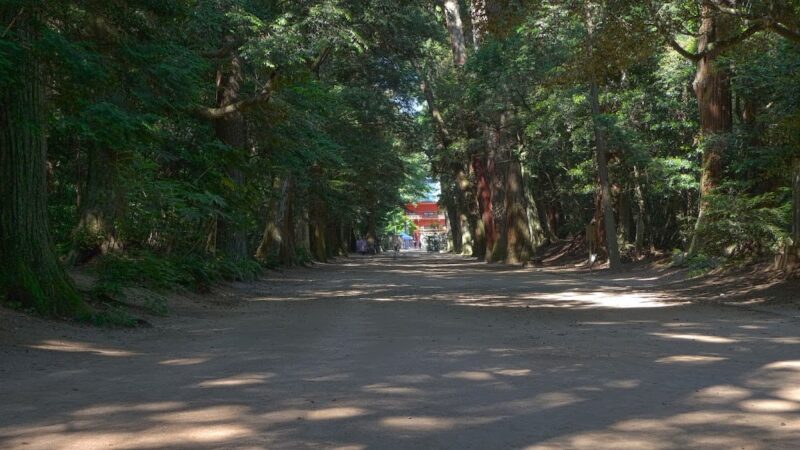
The approach to Sashino Shrine is a charming path leading up the middle of Mt. Ryujin. Partway up, the path splits into two: the steep stone steps of the “Male Slope” and the gentler “Female Slope.” The Female Slope has a red handrail, making it safe even for those who are not confident in their physical strength.
Interestingly, this Female Slope was used as a filming location for the first episode of the 2024 NHK Taiga drama “Hikaru Kimi e” (To You, My Shining Self). It’s a place worth visiting for drama fans as well.
The Shrine Building and the Nature of the Grounds
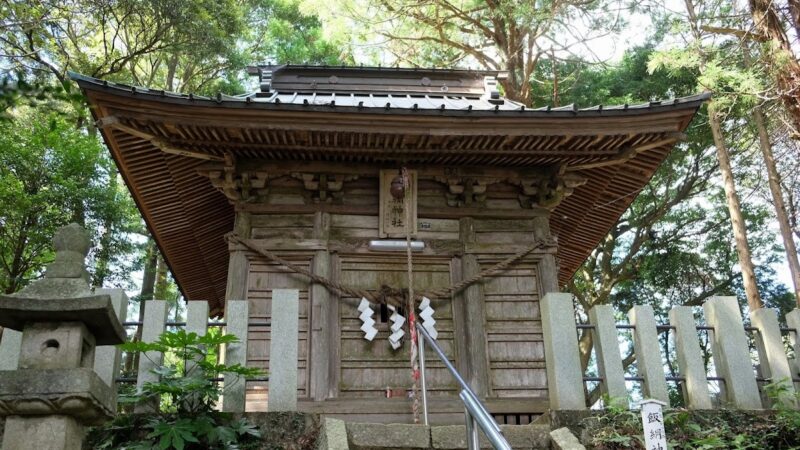
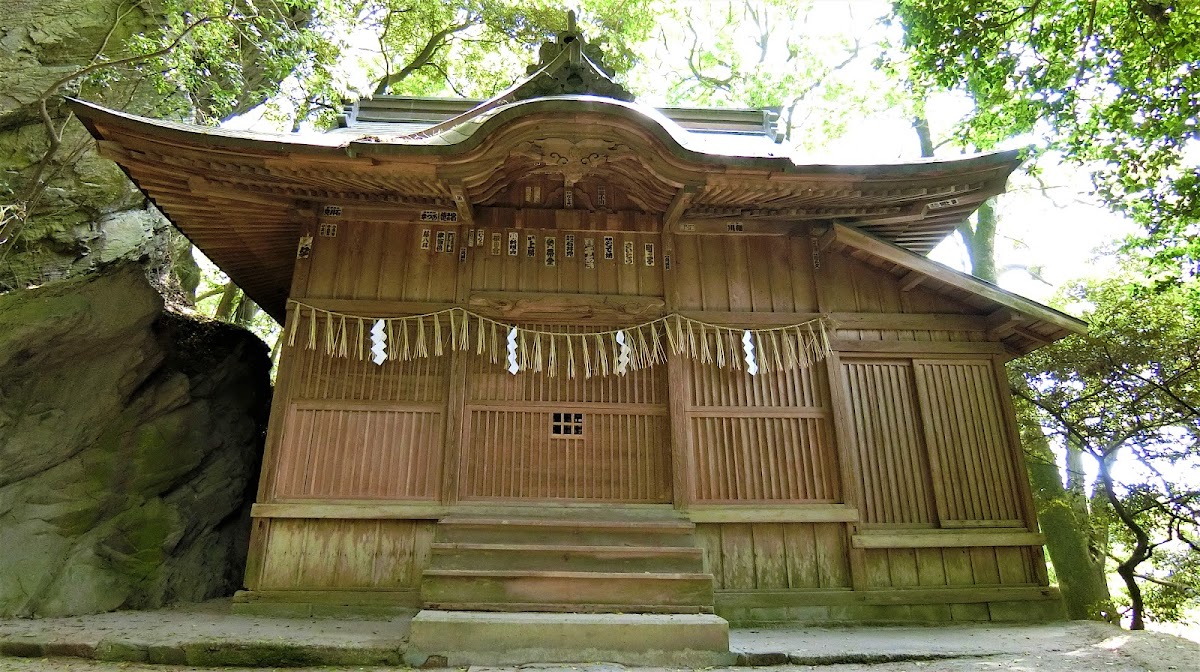
The shrine building, situated on the middle of Mt. Ryujin, is surrounded by a broadleaf forest. To the left of the front is a cliff with exposed rock face, creating a mystical atmosphere that evokes remnants of mountain worship.
Sashino Shrine, nestled amidst the rich nature of the Yamizo mountain range, offers beautiful scenery throughout the seasons. Especially during the seasons of fresh greenery and autumn leaves, simply walking along the approach to the shrine will leave you feeling refreshed.
Geographical Characteristics of Mt. Ryujin
Mt. Ryujin is located at the very tip of the Yamizo mountain range, at the eastern end of the Tsukuba mountain range. This geographical location suggests that it was an important place connecting the eastern provinces and the central region in ancient times. Its location on the mountainside is likely one of the reasons it was chosen as a sacred place.
What is the Someya Twelve-Seat Kagura?
The “Someya Twelve-Seat Kagura,” performed at the annual festival of Sashino Shrine, is a valuable traditional performing art designated as an Ibaraki Prefecture Intangible Folk Cultural Property. This kagura, performed every April at the festival, is an important event that conveys the history and culture of the region to the present day.
History and Origins of the Someya Twelve-Seat Kagura
The Someya Twelve-Seat Kagura is a type of village kagura, with ancient origins and a deeply rooted tradition in the region. The name “Twelve Seats” comes from the fact that it consists of twelve performances.
There are various theories regarding the transmission of this Kagura (Shinto ritual dance), but its connection to Kagura from surrounding regions has been pointed out, making it a valuable example of the spread and development of Kagura culture in Hitachi Province. Although it faced a crisis of interruption during the Showa era, it has been preserved to this day thanks to the efforts of the local people.
Preservation and Transmission of Kagura
Currently, the Someya Twelve-Seat Kagura is carefully preserved and transmitted by the local people with the cooperation of the Ishioka Hayashiren Preservation Society’s Someya Hayashiren. Through its performance at the annual festival, the techniques and spirit are passed on to younger generations, and it also plays a role in strengthening the bonds of the local community.
Performances of the Someya Twelve-Seat Kagura
The Someya Twelve-Seat Kagura consists of twelve performances, each with its own unique meaning and story. Here, we introduce the main performances.
First Performance: Sarutahiko’s Dance
The performance that kicks off the Kagura is “Sarutahiko’s Dance.” Sarutahiko-no-Mikoto is known as the god of opening paths, and this performance embodies a prayer for the safety and success of the entire Kagura performance. Dancers wearing Tengu-like masks perform a powerful yet elegant dance.
Sarutahiko-no-Mikoto is also one of the deities enshrined at Sashino Shrine, and this performance also expresses respect for the shrine’s deity.
Second Act: Arrow Minister
“Arrow Minister” is a performance representing a warrior god. Dancers with bows and arrows perform a magnificent dance. This performance has the meaning of warding off evil spirits and praying for a bountiful harvest and the safety of the region.
Third Act: Naginata User
“Naginata User” is a performance using a naginata (long-handled sword), elevating martial arts techniques into Kagura. This performance requires the skilled technique of the dancers and is characterized by its impressive movements.
Fourth Act: Sword Dance
The “Sword Dance” is a performance using swords, symbolizing the purification of impurities and cleansing of the sacred space with the sacred weapon of the sword. While the Sword Dance is a common performance in many Kagura (Shinto ritual dances), the Someya Sword Dance has its own unique choreography.
Fifth Act: Bean Scattering
“Bean Scattering” is a Kagura performance based on the Setsubun bean-scattering ritual. The folk belief of inviting good fortune and warding off evil is expressed in the form of Kagura. It is one of the performances that is easily accessible to the audience.
Sixth Act: Fox’s Field Plowing
“Fox’s Field Plowing” is a performance depicting an agricultural ritual. Dancers wearing fox masks perform actions of plowing a field, praying for a bountiful harvest. It is an interesting performance that shows the connection between Inari worship and agriculture.
Seventh Act: Seed Sowing
“Seed Sowing” is also an agricultural ritual performance, where prayers for a bountiful harvest are offered through the act of sowing seeds. Together with “The Fox’s Rice Field Plowing,” it represents the entire process of agriculture, conveying the beliefs of an era when agriculture was the foundation of life.
Eighth Act: Miko Dance
“Miko Dance” is a performance that expresses feminine elegance. Dancers dressed in miko (shrine maiden) attire dance with kagura bells and fans. It represents the role of the miko, an intermediary between gods and humans, adding splendor to the entire kagura performance.
Other Performances
In addition to the above, the Twelve Kagura Performances include a variety of other acts. Each performance has meaning on its own, but together they form a single narrative, carrying meanings such as offerings to the gods, prayers for a bountiful harvest, and the expulsion of evil spirits.
Annual Festival and Events
Spring Festival
The annual festival of Sashino Shrine is held every April. At this annual festival, the Someya Twelve-Seat Kagura dance is performed, attracting many worshippers and tourists. The festival is an important annual event in the region and serves as an opportunity to reaffirm community bonds.
On the day of the festival, following the Shinto rituals, the Kagura dance is performed, with twelve performances presented throughout the day. The tradition continues to be preserved through the cooperation of the local people.
Other Events
Besides the annual festival, various Shinto rituals are held at Sashino Shrine throughout the year. Events unique to a shrine dedicated to Takaokami-no-kami, such as prayers for rain, have also been passed down.
Goshuin Information
Sashino Shrine offers Goshuin (stamped seals). Goshuin are important mementos of one’s connection to the shrine, and many people receive them as proof of their visit.
Please note that Goshuin may only be available during the annual festival or on specific days, so it is recommended to check in advance. If you have a Goshuin notebook, why not collect the Goshuin from Sashino Shrine? ## Access and Visiting Information
Location
Address: 1856, Someya, Ishioka City, Ibaraki Prefecture
Transportation Access
Access by Car
- Approximately 15 minutes from the Ishioka-Omitama Smart Interchange on the Joban Expressway
- Approximately 20 minutes from the Chiyoda-Ishioka Interchange on the Joban Expressway
- Approximately 15 minutes by car from Ishioka city center
Access by Public Transportation
- Approximately 20 minutes by taxi from Ishioka Station on the JR Joban Line
- Access by car is recommended due to limited bus service.
Parking
There is parking space near the shrine, but congestion is expected during events such as festivals. We recommend visiting with ample time.
Points to Note When Visiting
- As the shrine is located on the mountainside of Mt. Ryujin, we recommend wearing comfortable walking shoes.
- The men’s path is a steep stone staircase, so those who are not confident in their physical strength should use the women’s path.
- As the shrine is in a rich natural environment, it is advisable to take precautions against insects depending on the season.
- As the shrine is located in the mountains, please be aware of changes in the weather.
Nearby Tourist Attractions
Historical Sites in Ishioka City
Ishioka City, where Sashino Shrine is located, is a historical area where the ancient capital of Hitachi Province was located. Nearby attractions include:
- Hitachi-no-Kuni Sōsha-gū: A prestigious shrine known as the principal shrine of Hitachi Province.
- Ishioka City Furusato History Museum: A facility where you can learn about the history and culture of the region.
- Ishioka Townscape: A charming townscape with historical buildings remaining.
Other Sashino Shrines
Visiting other Sashino Shrines, which are considered candidates for the Shikinaisha (shrines listed in the Engishiki), is also an interesting experience:
- Sashino Shrine in Kasama, Kasama City: Located near the summit of Mt. Sashino (Sashino-yama).
- Sashino Shrine in Kakioka, Ishioka City: A candidate shrine located in the Kakioka area.
- Sashino Shrine in Murakami, Ishioka City: A candidate shrine located in the Murakami area.
Each shrine has its own unique history and characteristics, and comparing them while visiting is one of the pleasures of the experience.
The Faith of Sashino Shrine and the Local Community
Rain-Praying Faith
Sashino Shrine, which enshrines Takaokami-no-kami, has been worshipped as a god of rain since ancient times. In an era when agriculture was the basis of livelihood, moderate rain was essential for a bountiful harvest, and prayers for rain were offered at Sashino Shrine during droughts.
The mountain name, Ryujin-yama (Dragon God Mountain), and the alternative name, Ryujin-jin (Dragon Shrine), also reflect the belief in the dragon god who controls water and rain. Even today, this traditional belief is passed down in the hearts of the local people.
Center of the Local Community
Sashino Shrine has played a role not only as a place of worship but also as the center of the local community. The annual festival and the dedication of Kagura (sacred dance) are important opportunities for local people to gather and reaffirm their bonds.
The activities to preserve the Someya Twelve-Seat Kagura create intergenerational exchange and contribute to the preservation and development of local culture. The activities of the Ishioka Hayashiren Preservation Society’s Someya Hayashiren group possess not only cultural value in preserving traditional performing arts, but also social value in fostering a sense of community.
Cultural Value of Sashino Shrine
Historical Value as a Shikinaisha Shrine
Being listed in the Engishiki Jinmyocho (a list of shrines compiled in the Heian period) indicates that it is a historically significant shrine recognized by the imperial court since before the Heian period. It is an important historical source for studying the relationship between ancient beliefs and politics in Hitachi Province.
Folkloric Value of Someya Twelve-Seat Kagura
The Someya Twelve-Seat Kagura, a designated intangible folk cultural property of Ibaraki Prefecture, is a valuable cultural asset that conveys the tradition of village kagura in Hitachi Province. The kagura performances, music, costumes, and masks are important subjects of study in folklore and performing arts history.
In particular, performances including agricultural rituals provide clues to understanding the beliefs and lives of the former agricultural society.
Harmony with the Natural Environment
Nestled amidst the rich natural environment of Mt. Ryujin, Sashino Shrine is a prime example of harmony between shrine architecture and the natural surroundings. The broadleaf forests and rocky cliffs within the shrine grounds reflect the characteristics of a shrine that incorporates elements of mountain worship.
Sashino Shrine in the Modern Age
Value as a Tourism Resource
In recent years, Sashino Shrine has become a destination for tourists interested in history and culture, as well as those seeking power spots. Its use as a filming location for a historical drama series has also contributed to its renewed popularity.
Following the popularity of collecting Goshuin (shrine stamps), visitors now come from all over Japan.
Challenges in the Preservation of Traditional Culture
On the other hand, there are challenges in the preservation of traditional culture, including the Someya Twelve-Seat Kagura. The declining birthrate, aging population, and changes in lifestyles are making it difficult to secure successors.
However, the enthusiasm of the local people and the renewed recognition of its value as a cultural asset continue the preservation efforts. Increased interest from outside the region is also encouraging these efforts.
Contribution to Regional Development
Sashino Shrine and the Someya Twelve-Seat Kagura are important cultural resources of Ishioka City and contribute to regional development. Many people visit during the annual festival, and a positive impact on the local economy is expected.
As part of community development utilizing history and culture, the existence of Sashino Shrine is becoming increasingly important.
Summary
Sashino Shrine is a historic shrine located on Mt. Ryujin in Someya, Ishioka City, Ibaraki Prefecture. It possesses many attractions, including its status as an Engishiki-listed shrine, its devotion to Toyokiirihiko-no-Mikoto and Takaokami-no-Kami, and the Someya Twelve-Seat Kagura, a prefecturally designated intangible folk cultural property.
From its reconstruction after a fire in 1862, its deep connection with the local community, and the renewed recognition of its value as a cultural asset in modern times, Sashino Shrine has served as a cornerstone of people’s faith and culture across generations.
Experiencing history and tradition amidst the rich natural beauty of Mt. Ryujin will leave a profound impression on visitors. When you visit Ishioka City, be sure to stop by Sashino Shrine and experience its history and culture.
If you visit during the annual festival, you can witness the dedication of the Someya Twelve-Seat Kagura dance, which will allow you to understand the shrine’s charm even more deeply. Receiving a Goshuin (shrine stamp), walking along the approach, and offering prayers at the shrine—in such a simple act of worship, you will find the history of faith that has continued for over a thousand years.