Complete Guide to Kozenji Temple | A 700-Year-Old Ancient Temple and Birthplace of Fujiko Fujio A in Himi City
Located in Marunouchi, Himi City, Toyama Prefecture, Kozenji Temple is an ancient Soto Zen temple with a history of approximately 700 years. Rooted in the community as a temple associated with the Maeda family of the Kaga Domain, Kozenji Temple has recently become widely known as the birthplace of manga artist Fujiko Fujio A. This article will introduce the temple’s charm in its entirety, including its history, cultural assets, access information, and stone statues of Fujiko characters.
About Kozenji Temple
Kozenji Temple is a Soto Zen temple whose mountain name is Kaikeizan. Its main hall is located in Marunouchi, Himi City, Toyama Prefecture, and it is an indispensable presence when discussing the history and culture of Himi City.
Basic Information
- Official Name: Kaieizan Kōzenji Temple
- Sect: Sōtō Zen
- Location: Marunouchi, Himi City, Toyama Prefecture
- Founded: 1327 (Karyaku 2)
- Founder: Gasan Jōseki
- Principal Image: Shakyamuni Buddha
Kōzenji Temple was founded by Gasan Jōseki, a senior disciple of Keizan Jōkin, the founder of the head temple Sōjiji. Gasan Jōseki is considered Keizan Jōkin’s foremost disciple and a high-ranking monk who greatly contributed to the development of the Sōtō Zen sect.
History and Development of Kōzenji Temple
From Founding to the Muromachi Period
The history of Kōzenji Temple dates back to 1327 (Karyaku 2). Founded by Gasan Shōseki, a leading disciple of Keizan Jōkin, this temple was positioned as an important center of the Sōtō Zen sect from the beginning.
During the Muromachi period, it attracted the faith of influential local figures and samurai families, expanding its influence. It was during this period that the temple’s foundation was established, laying the groundwork for its later development.
Deep Relationship with the Maeda Family of the Kaga Domain
An essential aspect of Kōzenji Temple’s history is its deep relationship with the Maeda family of the Kaga Domain. In the Edo period, Kōzenji Temple was designated as a prayer temple of the Kaga Domain and received strong patronage from the lord of the domain.
Development during the Kan’ei Era (1624-1644)
During the Kan’ei era, the temple received a vermilion seal certificate from the Kaga Domain and a donation of temple land. During this period, the temple developed significantly, and the temple complex was greatly improved. Its status as a place of prayer for the Kaga Domain lord elevated the prestige of Kōzenji Temple and strengthened its role as a religious and cultural center in the region.
With donations from the Maeda family, the main hall and other buildings were renovated, and many cultural artifacts were acquired. The prosperity of this era formed the foundation of Kōzenji Temple, which continues to this day.
The Great Fire of Showa and Reconstruction
The greatest turning point in the history of Kōzenji Temple was the Great Fire of Showa. A massive fire that struck Himi City completely destroyed the temple complex.
Reconstruction from Total Loss
Despite suffering catastrophic damage from the fire, Kōzenji Temple began its path to reconstruction with the support of its parishioners and local residents. The reconstruction project in the Showa era was not merely a restoration, but an opportunity for the temple to be reborn as a modern structure with contemporary functions.
The rebuilt main hall retains the traditional style of temple architecture while incorporating modern construction methods, such as enhanced fire resistance. Through this reconstruction project, the bonds of the local community strengthened, and Kōzenji Temple became a more familiar presence to the citizens of Himi.
Karashima (Exclave) and the Karashima Grand Festival
Besides the main hall located in Marunouchi, Himi City, Kōzenji Temple has an exclave called Karashima. This Karashima is an important place for understanding the history and faith of Kōzenji Temple.
What is Karashima?
Karashima is a small island floating in Toyama Bay and has been an object of worship since ancient times. Kōzenji Temple manages Karashima as an exclave, and an important festival is held there every year.
The Karashima Grand Festival
The “Karashima Grand Festival” is held annually on Karashima. This festival, held to pray for safety at sea and a bountiful catch, is an important annual event for local fishermen and residents.
The Karashima Grand Festival, primarily conducted by the head priest of Kōzenji Temple, is a traditional event dating back to the Kaga Domain era and is recognized as an intangible cultural asset of Himi City. During the festival, a Buddhist service is held to pray for maritime safety and a good catch, attracting many worshippers.
Cultural Assets of Kōzenji Temple
Kōzenji Temple houses numerous valuable cultural assets accumulated over its long history. While many were lost in the Great Fire of the Showa era, important cultural assets still remain.
Red Seal Document from the Kaga Domain
One of the most important cultural assets held by Kōzenji Temple is a red seal document bestowed by the Kaga Domain. This document was issued during the Kan’ei era when Kōzenji Temple was recognized as a prayer temple of the domain, and is a valuable historical document that speaks to the high status of Kōzenji Temple at that time.
Buddhist Statues and Artifacts
Kōzenji Temple houses Buddhist statues and artifacts dating back to the Edo period, including the principal image of Shakyamuni Buddha. Many of these were donated by the Kaga Domain and influential figures in the region, reflecting the deep faith of the time.
Ancient Documents and Records
Kōzenji Temple also houses ancient documents and records documenting the temple’s history. These historical materials are used as important resources in the historical research of Himi City.
Birthplace of Manga Artist Fujiko Fujio A
Kōzenji Temple has recently attracted particular attention as the birthplace of Fujiko Fujio A, one of Japan’s leading manga artists.
Fujiko Fujio A and Kōzenji Temple
Fujiko Fujio A (real name: Abiko Motoo) was born at Kōzenji Temple in 1934 (Showa 9). Mr. A’s father served as the 49th head priest of Kōzenji Temple, and Mr. A spent his childhood there until the fifth grade of elementary school.
Afterward, the family moved to Takaoka City, but it is said that his childhood experiences at Kōzenji Temple greatly influenced his creative work. Some suggest that his upbringing in the unique environment of a temple is reflected in his later works such as “Ninja Hattori-kun” and “Kaibutsu-kun.”
Fujiko Character Stone Statues
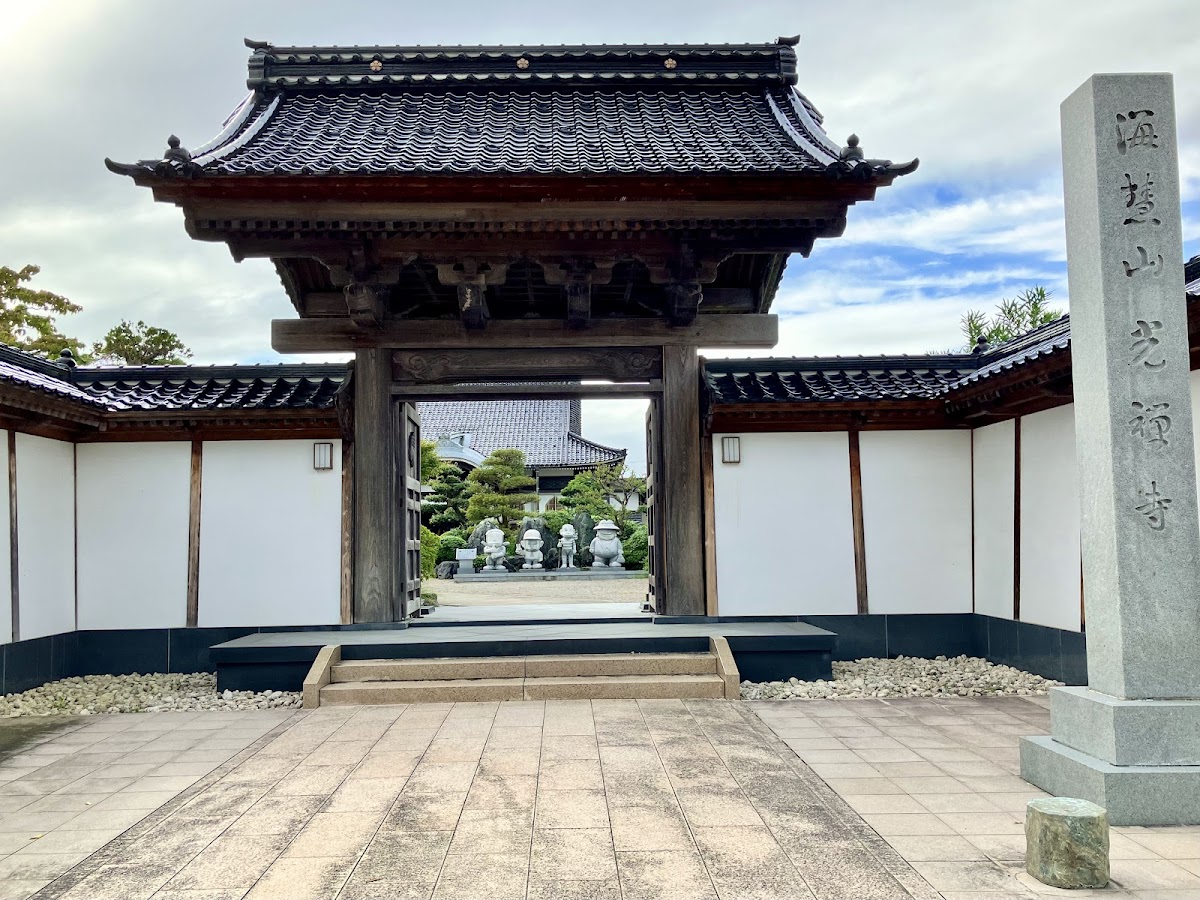
In March 2009 (Heisei 21), stone statues of Fujiko Fujio A’s representative characters were installed at the temple gate of Kōzenji Temple. These statues were created to commemorate the connection between Mr. A and Kōzenji Temple.
Character Statues Installed
- Ninja Hattori-kun – One of Fujiko Fujio A’s representative works, a popular series featuring a ninja boy as the protagonist.
- Kaibutsu-kun – An adventure story about a prince from Monster Land who is active in the human world.
- Pro Golfer Saru – A masterpiece of sports manga centered on golf.
- The Laughing Salesman – A dark humor work aimed at adults.
These statues are life-sized (1.4 to 1.7 meters tall) and based on the settings in the manga, delighting visitors. The sight of these characters greeting you as you pass through the temple gate is a unique charm of Kōzenji Temple.
Collaboration with Fujiko Fujio A Manga World
Kōzenji Temple is positioned as one of the important spots in the “Fujiko Fujio A Manga World” promoted by Himi City. Within the “Ninja Hattori-kun Encounter Town” project, centered around the Himimachi shopping street in Himi City, Kōzenji Temple has become a pilgrimage site for many fans.
Access to Kōzenji Temple
Here’s how to access Kōzenji Temple.
Location
〒935-0066 Marunouchi, Himi City, Toyama Prefecture
Access by Public Transportation
Using the JR Himi Line
- Approximately 15 minutes on foot from JR Himi Station
- Take the Himi City Loop Bus from JR Himi Station, get off at the “Himimachi” bus stop, and walk for approximately 3 minutes.
Himi Station can be accessed by transferring at Takaoka Station on the JR Jōhana Line. The journey from Takaoka Station takes approximately 30 minutes.
Access by Car
If using the Hokuriku Expressway
- Approximately 30 minutes from Takaoka IC via National Route 160
- Approximately 10 minutes from Himi IC via National Route 160
Parking
Kōzenji Temple has parking spaces for visitors. However, since the number of spaces is limited, we recommend using nearby public parking lots during busy times.
Nearby Tourist Attractions
When visiting Kōzenji Temple, we recommend also visiting nearby tourist attractions.
Himi-machi Shopping Street, Himi City
This shopping street is within walking distance of Kōzenji Temple and features numerous monuments and objects of characters created by Fujiko Fujio A. Highlights include the “Ninja Hattori-kun Karakuri Clock.”
Himi City Shiokaze Gallery (Fujiko Fujio A Art Collection)
This facility exhibits original drawings and materials by Fujiko Fujio A. Visiting it in conjunction with Kōzenji Temple will allow you to gain a deeper understanding of Mr. A’s world.
Himi Fishing Port
Himi Fishing Port, where fresh seafood from Toyama Bay is landed, is a representative tourist spot in Himi. There are also many restaurants where you can enjoy seafood, including Himi winter yellowtail.
Kōzenji Temple Visiting Information
Visiting Hours and Admission Fees
While Kōzenji Temple is generally open to visitors, it is recommended to check in advance regarding viewing the interior of the main hall.
- Temple Grounds Visiting: Free
- Main Hall Viewing: Advance Contact Required
- Fujiko Character Stone Statues: Free to View
Visiting Etiquette
Kōzenji Temple is a temple that still conducts religious activities. Please note the following points when visiting.
- Visit the temple in silence.
- Photography is permitted only in designated areas within the temple grounds.
- Photography inside the main hall requires permission.
- Please refrain from visiting when religious services or events are taking place.
- Please take all your trash with you.
Volunteer Guides
Himi City has volunteer tourist guides who can show you around tourist spots in the city, including Kōzenji Temple. For those who want to learn more about the history and charm of Kōzenji Temple, we recommend using a guide.
Guide Application
Applications can be made through the Himi City Tourism Association. Advance reservations are required, so we recommend contacting them a few days before your planned visit.
Annual Events at Kōzenji Temple
As a Sōtō Zen temple, Kōzenji Temple holds various religious services and events throughout the year.
Main Annual Events
Spring Events
- Spring Equinox Ceremony (March)
- Flower Festival (April 8th) – A ceremony celebrating the birth of Buddha
Summer Events
- Obon Festival (August) – A memorial service for the Obon festival
- Karashima Grand Festival (Summer) – A prayer for safety at sea
Autumn Events
- Autumn Equinox Ceremony (September)
- Daruma Memorial Service (October) – A memorial service for the death anniversary of Bodhidharma
Winter Events
- Enlightenment Ceremony (December 8th) – A memorial service commemorating the enlightenment of Buddha
- New Year’s Eve Bell Ringing (December 31st)
Some of these events are open to general visitors as well as temple parishioners. Please contact Kōzenji Temple directly for details.
Kōzenji Temple and the Culture of Himi City
Kōzenji Temple is not merely a religious facility, but an important element in shaping the culture of Himi City.
Center of the Local Community
Kōzenji Temple, which has existed since the Edo period, is a central presence in the Marunouchi district of Himi City. The community ties centered around the temple continue to play an important role even today.
Educational and Cultural Activities
Kōzenji Temple irregularly holds religious experience programs such as Zen meditation sessions and sutra copying sessions. Through these activities, it plays a role in conveying the teachings of the Sōtō Zen sect and the spirit of Zen to the local people.
Value as a Tourist Resource
Since gaining attention as the birthplace of Fujiko Fujio A, Kōzenji Temple has become an important tourist resource in Himi City. It attracts not only manga fans but also many tourists interested in history and culture, contributing to the promotion of tourism in Himi City.
Enjoying the Charms of Kōzenji Temple to the Fullest
Here are some tips for enjoying the charms of Kōzenji Temple to the fullest when you visit.
Best Time to Visit
Kōzenji Temple displays different expressions throughout the seasons.
Spring (March-May)
During cherry blossom season, the temple grounds are in full bloom. The mild climate is ideal for strolling.
Summer (June-August)
The lush green grounds create a cool and refreshing atmosphere. This is also the time of the Karashima Grand Festival.
Autumn (September-November)
During the autumn foliage season, the temple grounds are ablaze with color, offering a beautiful landscape. The mild climate makes it perfect for sightseeing.
Winter (December-February)
The snow-covered grounds create a tranquil and serene atmosphere. However, caution is advised regarding snowfall.
Photography Tips
Here are some recommended spots for taking photos at Kōzenji Temple.
- Temple Gate and Fujiko Character Stone Statues – A symbolic photo spot of Kōzenji Temple
- Front of the Main Hall – Capture the beauty of traditional temple architecture
- Temple Grounds Garden – Enjoy the beauty of nature in every season
- Streetscape from the Temple Gate – Enjoy a view of Himi City
When taking photos, please be considerate of other visitors and do not enter areas where photography is prohibited.
Local Gourmet Information
There are many restaurants around Kōzenji Temple where you can enjoy Himi’s seafood.
Himi Udon
Himi udon, a specialty of Himi, is characterized by its thin, hand-stretched noodles. There are many long-established udon restaurants in the area.
Himi’s Winter Yellowtail
Although only available in winter, there are many restaurants where you can enjoy winter yellowtail, a representative delicacy of Himi.
Local Fish Cuisine
Many restaurants in Himi offer dishes made with fresh local fish caught in Toyama Bay, allowing you to fully enjoy Himi’s food culture.
Future Prospects of Kōzenji Temple
Kōzenji Temple aims to manage its temple in a way that adapts to the new era while preserving tradition.
Preservation and Public Access to Cultural Properties
While many cultural properties were lost in the Great Fire of the Showa era, the temple is focusing on preserving the remaining valuable cultural properties. There are plans to increase opportunities to open these cultural properties to more people in the future.
Commemoration of Fujiko Fujio A
As the birthplace of Fujiko Fujio A, efforts to pass on his achievements to future generations continue. In cooperation with Himi City, the temple plans to play a role as a center for disseminating manga culture.
Strengthening Community Collaboration
Kōzenji Temple plans to continue developing various cultural and educational activities as a center of the local community. It also emphasizes its role in conveying Zen teachings to the modern age through activities such as Zen meditation sessions and Dharma talks.
Summary
Kōzenji Temple, a Soto Zen Buddhist temple with a history of approximately 700 years, is an important temple that embodies the history and culture of Himi City. It possesses multifaceted charm, including its prestige as a temple associated with the Maeda family of the Kaga Domain, its reconstruction after the Great Fire of the Showa era, and its status as the birthplace of Fujiko Fujio A.
The stone statues of Fujiko characters that greet visitors upon entering the temple gate symbolize the fusion of tradition and modern culture, attracting people of all ages. Traditional events, such as the Karashima Grand Festival, are also preserved, and the temple plays a central role in the community’s faith.
When visiting Himi City, be sure to visit Kōzenji Temple. In its grounds, steeped in 700 years of history, you can spend a tranquil time and connect with the origins of Fujiko Fujio A. Kōzenji Temple is a representative cultural spot of Himi City, open to history enthusiasts, manga fans, and all those seeking peace of mind.