
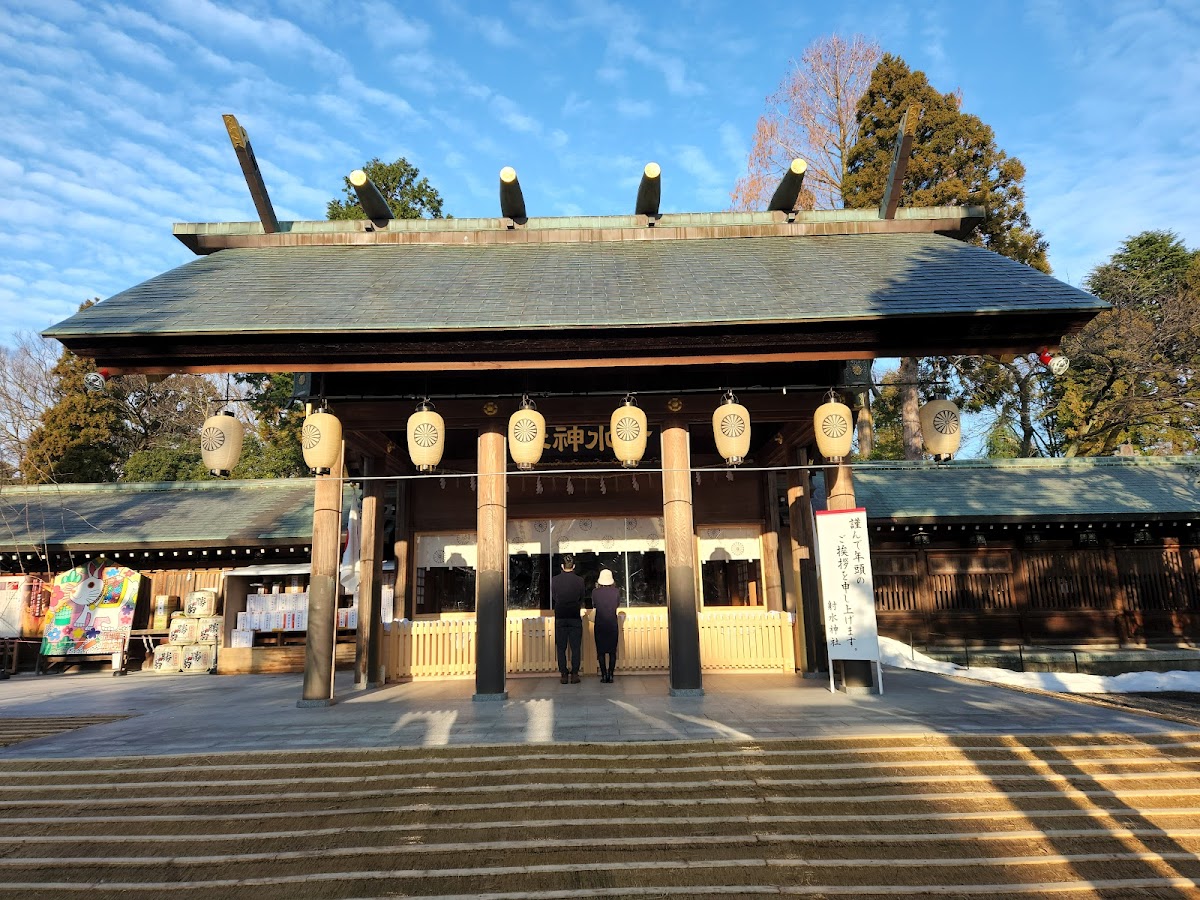
Complete Guide to Imizu Shrine | Deities, Blessings, Access, Amulets, and Goshuin Information
Imizu Shrine is a historic shrine located in Kojō, Takaoka City, Toyama Prefecture. Situated within Takaoka Kojō Park, it is affectionately known as “Imizu-sama” by locals. Known for its blessings related to matchmaking, protection from evil, and safe childbirth, it attracts many visitors during important life events such as New Year’s visits, Shichi-Go-San (a traditional rite of passage for children), and weddings.
This article provides a detailed explanation of everything you need to know before visiting Imizu Shrine, including its history, deities, blessings, highlights of the grounds, goshuin (shrine stamps), amulets, annual events, and access information.
History and Origins of Imizu Shrine
Ancient Beliefs
Imizu Shrine has ancient origins, and is a venerable shrine listed in the Engishiki Jinmyōchō (a list of shrines compiled in the Heian period) as a Shikinaisha (a shrine listed in the Engishiki) in Etchū Province (present-day Toyama Prefecture). While there are various theories regarding its founding date, it is believed to have a history of at least 1000 years.
It is said that in ancient times, it was enshrined at the foot of Mount Futagami and has been revered by the local people as the guardian shrine of Imizu County. The name Imizu originates from the ancient Imizu County, which referred to the area facing Toyama Bay.
Relationship with Takaoka Castle
The current Imizu Shrine is located within Takaoka Old Castle Park because, in 1609 (Keicho 14), when Maeda Toshinaga, the second lord of the Kaga Domain, built Takaoka Castle, he enshrined the shrine within the castle as its guardian deity.
In the Meiji era, after the abolition of the feudal system and the establishment of prefectures, it was ranked as a National Shrine of the second rank in 1871 (Meiji 4), establishing its position as the principal shrine of Etchu Province. Since then, it has been one of Toyama Prefecture’s representative shrines, attracting many worshippers from both within and outside the prefecture.
Modern Imizu Shrine
After World War II, it became affiliated with the Association of Shinto Shrines and plays an important role as the local guardian deity and a place for life-changing rituals. Located in Takaoka Kojō Park, a place of relaxation for citizens, it is an open shrine visited by many people on a daily basis.
Deities and Blessings
Main Deity
The main deity of Imizu Shrine is Ninigi-no-Mikoto. Ninigi-no-Mikoto is a god who is the grandson of Amaterasu Ōmikami and an important deity in Japanese mythology, known for the myth of the descent of the heavenly grandchild. He is worshipped as the guardian deity of industries, including rice cultivation, and as a god of pacifying the land.
Enshrined Deities
In addition to the main deity, the following deities are enshrined:
- Okuninushi-no-Mikoto: Famous as the god of matchmaking
- Sugawara-no-Michizane: The god of learning
- Other Deities: Several deities are enshrined as guardian deities of the region.
Main Benefits
The main benefits you can receive at Imizu Shrine are as follows:
1. Matchmaking and Marital Harmony
Because Okuninushi-no-Mikoto is enshrined here, the shrine is known for its blessings of matchmaking. Many people seeking good relationships or praying for marital harmony visit the shrine. Wedding ceremonies are also held here, and it is a popular venue for Shinto wedding ceremonies.
2. Safe Childbirth and Fertility
Ninigi-no-Mikoto, from the myth of his marriage to Konohanasakuya-hime and the prosperity of his descendants, is believed to grant blessings for safe childbirth and fertility. Many people visit on the Day of the Dog in their fifth month of pregnancy to pray for a safe delivery.
3. Protection from Evil and Family Safety
As a deity protecting the land, it offers blessings for protection from evil and family safety. Many people visit for exorcisms during their unlucky years, and for purification rites when building a new house or moving.
4. Business Prosperity and Abundant Harvest
As a guardian deity of industry, it also offers blessings for business prosperity and success. Many local companies hold New Year’s visits and prayer ceremonies here.
5. Academic Achievement
Because Sugawara no Michizane is enshrined here, it also offers blessings for academic achievement and passing exams. Many students and their parents visit during exam season.
Highlights of the Shrine Grounds
Main Hall and Worship Hall
The main hall of Imizu Shrine conveys the beauty of traditional shrine architecture to this day. The main hall has a solemn atmosphere that warmly welcomes worshippers, allowing them to pray in a tranquil setting.
Main Gate
The main gate, which serves as the entrance to the shrine grounds, welcomes worshippers with its magnificent structure. Passing through the torii gate and the main gate, one feels as if stepping into a sacred space far removed from the secular world.
Water Basin
The water basin, where one purifies one’s body and mind before praying, is a place to purify oneself according to traditional customs. Using the ladle, one cleanses their hands and mouth, and approaches the deity with a pure heart.
Shrine Office/Gift Shop
The shrine office, where goshuin (stamped seals), amulets, and ema (votive tablets) are given out, is known for its friendly service. Various prayer requests are also accepted here.
Subsidiary Shrines
There are several subsidiary shrines (absent shrines/minor shrines) within the shrine grounds, each enshrining a different deity. By visiting these subsidiary shrines within the grounds in addition to the main shrine, you can receive even greater blessings.
Harmony with Takaoka Old Castle Park
Imizu Shrine is located within Takaoka Old Castle Park, making it a unique place to visit while enjoying the changing seasons. It offers different scenery in each season: cherry blossoms in spring, fresh greenery in summer, autumn leaves in fall, and snowscapes in winter.
Goshuin (Shrine Seal) Information
Types of Goshuin
Imizu Shrine offers standard goshuin. These are traditional goshuin with “Imizu Shrine” written in ink and stamped with the shrine’s seal.
Reception Hours
Goshuin are usually available from 9:00 AM to around 4:30 PM. However, hours may change during festivals and events, so it is recommended to check in advance if you wish to be sure to receive one.
Offering Fee
The offering fee for a Goshuin (temple/shrine stamp) is generally around 300 to 500 yen (this may change).
Goshuincho (Stamp Book)
Imizu Shrine may also offer its own original Goshuincho. Please inquire directly with the shrine office regarding designs and availability.
Manners for Receiving a Goshuin
A Goshuin is given as proof of your visit. Always complete your prayers first before requesting a Goshuin at the shrine office. It is important to prepare your Goshuincho, show the open page, and politely make your request.
Amulets and Items Offered
Main Amulets
Imizu Shrine offers amulets for various blessings:
Matchmaking Amulet
A popular amulet for those wishing for a good match. Many have cute designs in pink and red, making them especially popular with young women.
Safe Childbirth Amulet
An amulet for pregnant women wishing for a safe childbirth. Wearing this together with a maternity belt is a prayer for a healthy delivery for both mother and child.
Protection Against Misfortune
This amulet is for those in their unlucky year or those seeking protection from misfortune. Wearing it is believed to protect you from various calamities.
Academic Success Amulet
This amulet is for students and those taking exams. Through the divine grace of Sugawara no Michizane, it is believed to bring academic success and passing exams.
Traffic Safety Amulet
This amulet is for those who drive cars or bicycles. It comes in various forms, such as those that can be placed in a car or as a keychain.
Health Amulet
This amulet is a prayer for health and longevity. It is popular among those wishing for recovery from illness and maintaining good health.
Other Items Available
Ema (Votive Tablets)
Ema, on which you can write your wishes and dedicate them, are also available. You can dedicate them with various wishes, such as finding love, passing exams, or safe childbirth.
Fortune Slips
You can also draw fortune slips to predict your luck. Read them carefully, not just for good or bad fortune, but as a message from the gods.
Demon-Repelling Arrows and Rakes
During the New Year, demon-repelling arrows are given, and rakes are given to those wishing for business prosperity.
Annual Events and Festivals
First Shrine Visit of the New Year (January 1st-3rd)
The first shrine visit of the New Year is the busiest time at Imizu Shrine. From New Year’s Day to the third day, many worshippers visit to pray for happiness in the new year. Sweet sake and sacred sake are sometimes offered.
Setsubun Festival (Around February 3rd)
At the Setsubun Festival, held the day before the beginning of spring, beans are scattered to ward off evil and pray for good health throughout the year. Lucky beans are scattered with the chant, “Good fortune in, demons out!”
Spring Grand Festival (Spring)
The Spring Grand Festival, celebrating the arrival of spring, includes Shinto rituals praying for a bountiful harvest and the prosperity of the region.
Summer Purification Ceremony (June 30th)
This Shinto ritual purifies the body and mind of those who have accumulated impurities over the past six months. A ritual called “Chino-wa Kuguri” (passing through a ring of reeds) is performed, purifying the mind and body and praying for health and happiness for the remaining half of the year.
Autumn Grand Festival (Autumn)
The Autumn Grand Festival, celebrating the harvest of autumn, is one of Imizu Shrine’s important festivals. It expresses gratitude for the harvest and prays for a bountiful harvest in the coming year.
Shichi-Go-San (November)
November is the season for Shichi-Go-San. Families celebrate the growth of their 3, 5, and 7-year-old children and pray for their continued healthy growth. Commemorative photography services are sometimes offered.
Year-End Purification Ceremony (December 31st)
As the culmination of the year, the Year-End Purification Ceremony is held. This Shinto ritual cleanses away the impurities accumulated throughout the year, allowing one to welcome the new year with a pure heart.
How to Worship and Etiquette
Basic Worship Etiquette
Knowing the correct etiquette for worshipping at a shrine will allow for a more heartfelt visit.
1. How to Pass Through the Torii Gate
The torii gate is the entrance to the sacred area. Bow before passing through the gate. The center of the path is considered the path of the gods, so it is polite to walk along the side.
2. Proper Ritual of Watering Hands
Purify your body and mind at the water basin:
- Hold the ladle in your right hand and purify your left hand.
- Switch the ladle to your left hand and purify your right hand.
- Switch the ladle back to your right hand, receive water in your left hand, and rinse your mouth.
- Purify your left hand once more.
- Hold the ladle upright and purify the handle.
- Return the ladle to its original position.
3. Worship at the Main Hall
The basic method of worship at the main hall is “two bows, two claps, one bow”:
- Quietly place your offering in the offering box.
- Ring the bell (if present).
- Bow deeply twice (two bows).
- Clap your hands twice at chest height (two claps).
- State your wish sincerely.
- Finally, bow deeply once (one bow).
Dress Code for Visiting the Shrine
While everyday attire is acceptable, it’s considered good manners to avoid overly casual clothing (such as flip-flops and tank tops). Especially if you are receiving a prayer, please dress appropriately.
Access Information
Location
Address: 1-1 Kojō, Takaoka City, Toyama Prefecture 933-0044
Imizu Shrine is located within Takaoka Kojō Park.
Access by Train
From JR Takaoka Station
- Walking: Approximately 15 minutes
- Bus: From Takaoka Station, take the Kaetsuno Bus bound for “Shimin Byōin-mae” (Citizen’s Hospital), get off at the “Kojō Kōen-guchi” bus stop, and walk approximately 3 minutes.
JR Takaoka Station is approximately 20 minutes by local train from Toyama Station (a stop on the Hokuriku Shinkansen) and approximately 40 minutes from Kanazawa Station.
Using the Manyo Line (Tram)
Take the Manyo Line from Takaoka Station and get off at the “Emergency Medical Center” tram stop. It’s about a 5-minute walk from there. Traveling by tram is recommended as you can enjoy the scenery of Takaoka along the way.
Access by Car
From the Expressway
- Approximately 10 minutes from the Nōetsu Expressway Takaoka IC
- Approximately 15 minutes from the Hokuriku Expressway Kosugi IC
Setting Your Car Navigation System
You can search using the phone number “0766-22-3104” or the address “1-1 Kojō, Takaoka City, Toyama Prefecture”.
Parking
Takaoka Kojō Park has multiple parking lots:
- Capacity: Approximately 150 cars (for the entire park)
- Fee: Free
- Operating Hours: 24 hours
During New Year’s visits and festivals, congestion is expected, so using public transportation is recommended. Temporary parking may be available.
Nearby Tourist Attractions
Takaoka Old Castle Park
Takaoka Old Castle Park, where Imizu Shrine is located, is a park developed on the site of Takaoka Castle, built by Maeda Toshinaga, the second lord of the Kaga Domain. The vast grounds, approximately 210,000 square meters, retain the moat and earthworks, and it has been selected as one of “Japan’s Top 100 Castles.”
In spring, it is known as a famous cherry blossom viewing spot and has been selected as one of “Japan’s Top 100 Cherry Blossom Viewing Spots.” The sight of approximately 1,800 cherry trees in full bloom is breathtaking. The autumn foliage is also beautiful, making it a place of relaxation for citizens throughout the four seasons.
Takaoka Great Buddha
Located about a 10-minute walk from Takaoka Station, the Takaoka Great Buddha is considered one of the “Three Great Buddhas of Japan,” along with the Great Buddha of Nara and the Great Buddha of Kamakura (although there are various theories). The seated statue of Amida Buddha, approximately 16 meters tall, was created using the combined techniques of Takaoka’s traditional copperware manufacturing industry.
Zuiryuji Temple
This Soto Zen temple, designated a National Treasure, is the family temple of Maeda Toshinaga. Its magnificent layout and beautiful architecture are a must-see. It is located about a 10-minute walk from Takaoka Station.
Kanaya-machi
Kanaya-machi, known as the birthplace of Takaoka’s metal casting, boasts a beautiful townscape with cobblestone streets and rows of houses with latticework windows. Shops and galleries selling traditional crafts line the streets, making it a pleasant place to stroll.
Yamamachi-suji
Yamamachi-suji, designated as an Important Preservation District for Groups of Traditional Buildings, is a historical townscape lined with storehouses. It is a valuable area that conveys the prosperity of the Meiji era.
Precautions for Visiting the Shrine
Visiting Hours
While entry to the shrine grounds is generally permitted during the daytime, the shrine office is only open from 9:00 AM to approximately 5:00 PM. If you wish to receive a Goshuin (shrine stamp) or amulet, please visit within these hours.
Photography
Photography is generally permitted on the shrine grounds, but there are areas and times where photography is restricted, such as inside the main hall or during Shinto rituals. Please check before taking photos or follow the signs. Also, please be considerate of other visitors.
Pets
Since shrines are sacred places, it is generally considered good manners to refrain from bringing pets. If you absolutely must bring a pet, please check with the shrine in advance.
Eating, Drinking, and Smoking
Please refrain from eating, drinking, or smoking on the shrine grounds. It is good manners for visitors to take their trash with them and keep the grounds clean.
Application for Prayer and Ceremony
Various Prayers
Imizu Shrine accepts prayers for various life rituals and wishes:
- First Shrine Visit: Giving thanks for the birth of a baby and praying for healthy growth
- Shichi-Go-San: Celebrating and praying for the growth of children at ages 3, 5, and 7
- Exorcism: Praying for protection from misfortune during unlucky years
- Safe Childbirth Prayer: Generally performed on the Day of the Dog in the 5th month of pregnancy
- Prayer for Success in Exams: Praying for success in exams
- Business Prosperity: Praying for the development of business
- Family Safety: Praying for the health and happiness of the family
- Traffic Safety: Blessing of cars, etc.
How to Apply for Prayer
If you wish to have a prayer performed, you can apply at the shrine office on the day of your visit. However, during periods when crowds are expected (such as New Year’s or the Shichi-Go-San season), or for special prayers such as weddings, it is recommended to make a reservation by phone in advance.
Offering Fee
The offering fee for prayers varies depending on the content of the prayer. Generally, it starts from 5,000 yen, but please contact the shrine directly for details.
Weddings
Imizu Shrine offers traditional Shinto wedding ceremonies. You can have a wedding ceremony in a solemn atmosphere, following Japanese traditions. If you wish to have a wedding ceremony, reservations are required several months in advance, so please inquire early.
The Charm of Imizu Shrine
History and Tradition
With a history of over 1000 years, Imizu Shrine is deeply connected to the history of the region as the main shrine of Etchu Province. Its status as a Shikinaisha (a shrine listed in the Engishiki) and its history as a shrine associated with the Maeda family enhance the value of this shrine.
Harmony with Nature
Located within Takaoka Old Castle Park, a major attraction is that visitors can enjoy the changing seasons while praying. The shrine reveals a different face each time you visit: during cherry blossom season, the season of fresh greenery, the season of autumn leaves, and the season of snowscapes.
Easy Access
Located within walking distance of Takaoka Station, this shrine is easily accessible to tourists from outside the prefecture. With many other tourist attractions nearby, such as the Takaoka Great Buddha and Zuiryuji Temple, it’s easy to incorporate into your sightseeing route.
Strong Connection to the Community
Affectionately known as “Imizu-sama” by locals, it’s an open shrine where people visit regularly. It’s deeply rooted in the community, a place visited for important life events such as New Year’s visits, Shichi-Go-San (a traditional rite of passage for children), and exorcisms.
Diverse Blessings
With a variety of blessings including matchmaking, safe childbirth, protection from evil, and academic success, it attracts visitors with diverse wishes. It’s a shrine that provides emotional support at every stage of life.
Summary
Imizu Shrine is a historic shrine representing Takaoka City, Toyama Prefecture. This shrine is full of charm, boasting the prestige of being a Shikinaisha (a shrine listed in the Engishiki, an ancient Japanese legal code), a history associated with the Maeda family, and the beautiful setting of Takaoka Old Castle Park.
It offers a variety of blessings, including matchmaking, safe childbirth, protection from evil, and academic success, making it a shrine worth visiting at various milestones in life. Its convenient location, within walking distance of Takaoka Station, is also a major draw, making it a must-visit spot during your Toyama sightseeing trip.
Why not enjoy the changing seasons, offer your prayers in peace, and pray for the blessings of the gods? Whether it’s your first time or you’ve visited many times before, you’re sure to find new discoveries and peace of mind.
We sincerely pray that your visit to Imizu Shrine will bring happiness and peace to your life.


