The History and Charm of Myochi-ji Temple (Echizen City, Fukui Prefecture) | A Nichiren Buddhist Temple Dedicated to Reizan Gaerikosodate Kishimojin
Located in Takefu Yanagi-cho, Echizen City, Fukui Prefecture, Myochi-ji Temple is a Nichiren Buddhist temple with a history of over 720 years. Its mountain name is Honkyozan, and it is a beloved temple in the region, dedicated to Reizan Gaerikosodate Kishimojin. This article provides a detailed explanation of Myochi-ji Temple’s history, its temple buildings, the guardian deity it worships, and its role in modern times.
About Myochi-ji Temple
Myochi-ji Temple is a Nichiren Buddhist temple founded during the Einin era (1293-1299). Its former head temple was the Daihonzan Myoken-ji Temple (Shijo-monryu), and it belongs to the Enshi Hoen (Ryugenkai) lineage. The temple was founded by Ryūgeju Nichizō Shōnin, a grand-disciple of the founder of the sect, Nichiren Shōnin, and has developed as an important base for the propagation of Nichiren Buddhism in the Hokuriku region.
Location and Basic Information
- Location: Takefu Yanagi-machi, Echizen City, Fukui Prefecture
- Mountain Name: Honkyōzan
- Sect: Nichiren Buddhism
- Former Head Temple: Myōkenji Temple (Shijō School)
- Dharma Connection: Enshi Dharma Connection (Ryūgenkai)
- Principal Image: Ten Realms Mandala
- Founder: Ryūgeju Nichizō Shōnin
- Founder: Nichishin Shōnin
History of Myōchi-ji Temple
Founding and Conversion from Shingon Buddhism
The history of Myōchi-ji Temple dates back to the Einin era (1293-1299). Initially, a Shingon Buddhist temple of the Koyasan sect existed on this site. However, when Nichizo Shonin, a leading disciple of Nichiren Shonin, spread his teachings in the Hokuriku region, this temple converted to the Nichiren sect.
Nichizo Shonin was a disciple of Nichiro Shonin, a direct disciple of Nichiren Shonin, and actively spread the teachings of the Lotus Sutra in Kyoto and the Hokuriku region. During Nichizo Shonin’s propagation in Hokuriku, the monks and parishioners of this temple, which had been Shingon Buddhist, were deeply impressed by his sermons and decided to convert to the teachings of the Lotus Sutra. This marked the beginning of Myochi-ji Temple as a Nichiren Buddhist temple.
Official Temple Name in Tenju 1st Year
After the conversion, the temple’s name was officially adopted in Tenju 1st year (1375) by its founder, Nichishin Shonin. The first year of the Tenju era (1858) coincided with the Nanboku-cho period, a time of political instability throughout Japan. However, Myochi-ji Temple established a firm position as a center of local faith.
Nichishin Shonin dedicated himself to developing the temple’s foundations, improving the temple buildings, and organizing the parishioners. During this period, Myochi-ji Temple became recognized as an important center of Nichiren Buddhism in the Echizen region.
The Great Fire of 1852 and Reconstruction
A major turning point in Myochi-ji Temple’s history was the great fire of 1852. This fire destroyed the main hall and the priest’s quarters, and many other buildings were lost. Fortunately, the temple gate escaped destruction and still retains its pre-Edo period appearance.
After the fire, the main hall and priest’s quarters were rebuilt with the cooperation of the parishioners. This reconstruction project demonstrates the strong unity of the local community and illustrates how important Myochi-ji Temple was to the local area.
From the Meiji Era to the Present
Despite the impact of the anti-Buddhist movement during the Meiji era, Myochi-ji Temple has survived as a center of local faith. As times have changed through the Showa, Heisei, and Reiwa eras, the temple has maintained its traditions while fulfilling the role of an “open temple” that meets the needs of modern society.
Currently, Myochi-ji Temple operates under the concept of “an open temple that begins with listening,” offering not only traditional Buddhist services such as funerals, memorial services, and Buddhist rites, but also activities that serve as a spiritual haven for modern people, including life counseling and Dharma talks.
Temple Grounds (Buildings)
The grounds of Myochi-ji Temple contain buildings of historical value.
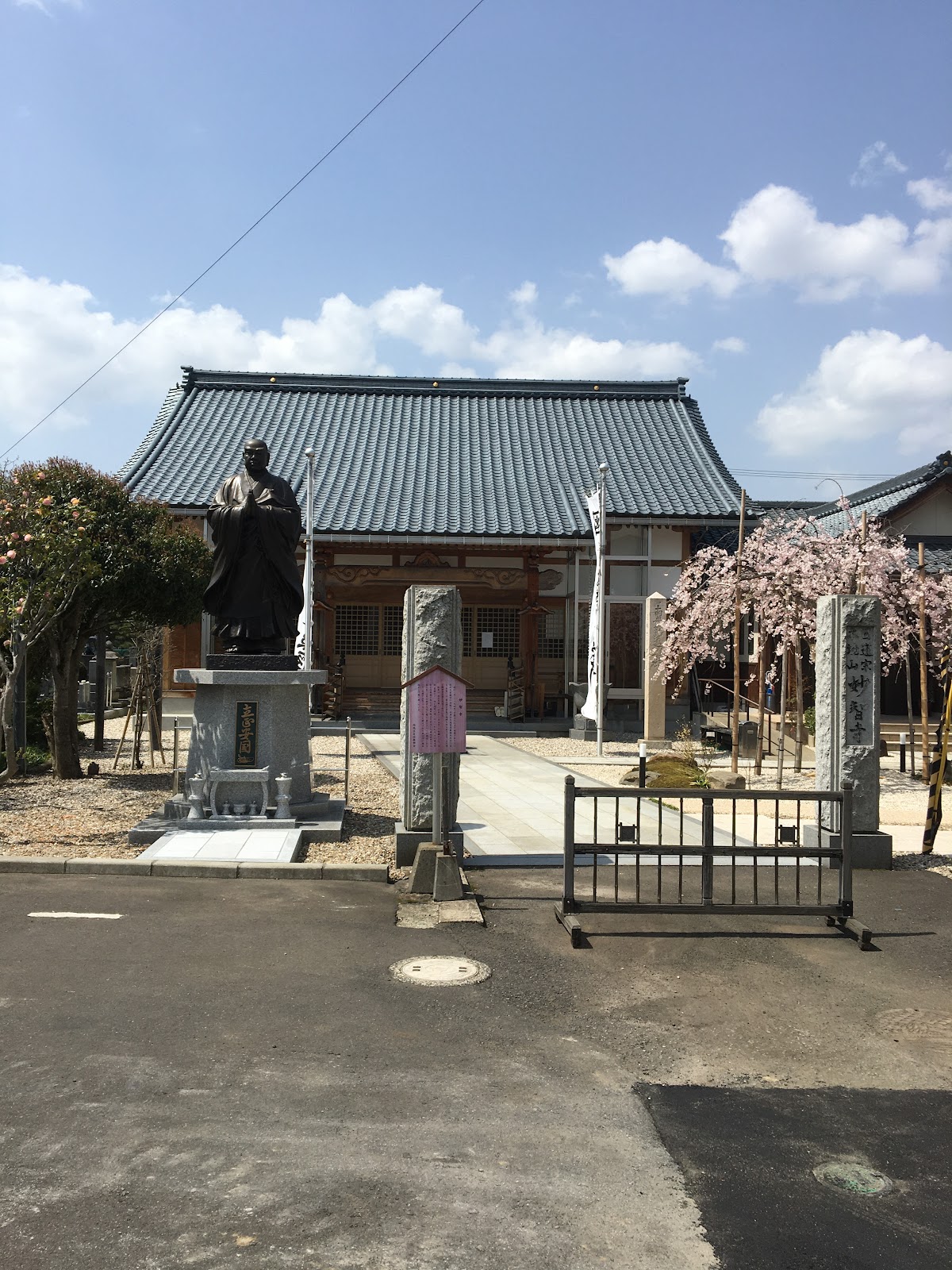
Main Gate
The main gate, which survived the great fire of 1852 (Kaei 5), is one of the oldest buildings at Myochi-ji Temple. This gate, which preserves the architectural style of the Edo period, welcomes visitors as a symbol of the temple’s history.
The temple gate’s structure adheres to the general style of Nichiren Buddhist temples, while also incorporating features adapted to the climate and environment of the Echizen region. Its robust construction, capable of withstanding even the harsh winter snowfall, demonstrates the high skill of the craftsmen.
Main Hall
Rebuilt after the great fire of 1852 (Kaei 5), the main hall is the central building of Myochi-ji Temple. The Ten Realms Mandala, the principal image, is enshrined within, and daily services and religious ceremonies are held here.
In the inner sanctuary of the main hall, images of Nichiren Shonin and successive founders are enshrined, allowing for a solemn atmosphere of worship. The ceiling and transoms feature intricate carvings, showcasing the high level of architectural skill of the late Edo period.
Priest’s Quarters
Rebuilt along with the main hall, the priest’s quarters serve as the living space for the head priest, as well as a place for temple administration and interaction with parishioners. In modern times, it is also used for Dharma talks and consultations, fulfilling the role of an open temple.
About the Guardian Deity
Myochi-ji Temple is widely known as the “Temple of Kishimojin, the Child-Rearing Deity of Reizan.” Within the temple grounds are the Kishimojin Hall and the Daikokuten Hall, attracting many worshippers.
Kishimojin, the Child-Rearing Deity Who Returned from Reizan
The most distinctive object of worship at Myochi-ji Temple is Kishimojin, the Child-Rearing Deity Who Returned from Reizan. Kishimojin was originally an Indian yaksha deity who stole and ate other people’s children, but after being admonished by Buddha, she reformed and became the guardian deity of children and safe childbirth.
The Kishimojin at Myochi-ji Temple has the special title of “Reizan-gaeri” (Returned from Reizan). This is based on the belief that Nichiren Shonin received the teachings of the Lotus Sutra at Reizan (Vulture Peak), and is considered particularly miraculous.
Faith in Kishimojin
Kishimojin at Myochi-ji Temple is believed to grant the following blessings:
- Fertility: Grants the wishes of couples hoping for children
- Safe Childbirth: Protects pregnant women for safe childbirth
- Child Rearing: Watches over the healthy growth of children
- Family Safety: Protects the peace and well-being of the entire family
She is particularly revered by mothers raising children, and there is a constant stream of visitors praying for the health and growth of their children. Many families also visit during life ceremonies such as Shichi-Go-San (a traditional Japanese rite of passage for children) and Hatsumiyamairi (a first shrine visit for newborns).
Daikokuten
Myochi-ji Temple also enshrines Daikokuten (Daikokuten). Daikokuten is known as one of the Seven Lucky Gods and is worshipped as a god of good fortune and wealth.
In the Nichiren sect, Daikokuten holds a special position as a benevolent deity who protects the Lotus Sutra. Daikokuten at Myochi-ji Temple is revered by worshippers praying for business prosperity and family fortune.
Worship of Daikokuten
- Business Prosperity: Success and prosperity in business
- Abundant Harvest: Abundant agricultural harvests
- Family Fortune: Prosperity and development of the family
- Good Fortune and Prosperity: Bringing about general good fortune
On the monthly temple festival days, worshippers gather to pray to Daikokuten, and prayers are offered.
Annual Events and Temple Activities
Myochi-ji Temple observes annual events based on the traditions of the Nichiren sect.
Main Annual Events
- New Year’s Day Ceremony: Praying for safety and prosperity in the new year
- Setsubun Ceremony: Exorcising evil spirits through bean-throwing
- Spring Equinox Ceremony: Ancestor memorial service
- Flower Festival: Celebrating the birth of Buddha
- Oeshiki Ceremony: Memorial service for Nichiren Shonin (October 13th)
- Autumn Equinox Ceremony: Ancestor memorial service
- New Year’s Eve Bell Ringing: The end of the year
These events are open not only to temple members but also to local residents, and are bustling with many participants.
Modern Temple Activities
Myochi-ji Temple, as an “open temple that begins with listening,” engages in the following activities:
- Life Counseling: Counseling on life’s troubles by the head priest
- Dharma Talks: Explaining Buddhist teachings in an easy-to-understand way
- Sutra Copying Sessions: Practicing sutra copying to calm the mind
- Provision of Cemeteries and Rental Cemeteries: A form of memorial service that meets modern needs
- Publication of Temple Newsletter: Communicating temple activities and Buddhist teachings
These activities transcend the traditional framework of temples and serve as a spiritual haven for modern people.
Myochi-ji Temple and the Nichiren Sect
Understanding the teachings and history of the Nichiren sect is important for understanding Myochi-ji Temple.
Teachings of the Nichiren Sect
The Nichiren sect is a Buddhist sect founded by the Kamakura period monk Nichiren Shonin (1222-1282). The Lotus Sutra is considered the supreme scripture, and it is taught that anyone can attain Buddhahood by chanting the title “Namu Myoho Renge Kyo.”
Nichiren Shonin was convinced that the Lotus Sutra was the true teaching of Shakyamuni Buddha and the only teaching that could save the Latter Day of the Law. Based on this strong belief, he espoused the “Four Maxims” criticizing other sects and fearlessly offered admonitions to those in power.
Shijo School and Myokenji Temple
Myokenji Temple, the former head temple of Myochiji Temple, is a major head temple of the Nichiren sect in Kyoto and the central temple of the Shijo school. The Shijo school is a lineage that inherited the teachings of Nichizo Shonin, a senior disciple of Nichiren Shonin, and developed mainly in Kyoto.
Nichizo Shonin succeeded in missionary work in Kyoto, spreading his followers to the nobility and samurai class. The fact that Myochiji Temple was founded by Nichizo Shonin indicates that it was an important base for Nichiren sect missionary work in the Hokuriku region.
Echizen City and Myochi-ji Temple
The Takefu district of Echizen City, where Myochi-ji Temple is located, is a historically rich area that flourished as the center of Echizen Province since ancient times.
History of Takefu
Takefu was the political and cultural center where the Echizen Provincial Government was located. In the Middle Ages, it developed as a commercial city, and many temples and shrines were built. Myochi-ji Temple was also founded during this period and has played an important role as a center of faith in the region.
Connection with the Local Community
For over 720 years, Myochi-ji Temple has been deeply connected to the local community. Through Buddhist services such as funerals and memorial services, it has accompanied people through important life events, providing spiritual support.
Even today, Myochi-ji Temple continues to contribute to the community through various activities as an important part of the local community. The publication of temple newsletters and the holding of Dharma talks not only spread Buddhist teachings but also function as a place for interaction among local residents.
Visitor Information
Access
Access to Myochi-ji Temple is as follows:
- Train: Approximately 15 minutes on foot from JR Hokuriku Main Line “Takefu Station”
- Car: Approximately 10 minutes from Hokuriku Expressway “Takefu IC”
- Parking: Visitor parking is available on the temple grounds
Visiting Hours
- Opening Hours: During the day (It is recommended to check with the temple for specific times)
- Prayer/Consultation: It is recommended to contact in advance
Visitor Etiquette
Basic etiquette when visiting a Nichiren Buddhist temple:
- Bow at the Temple Gate: Bow at the temple gate when entering the temple grounds
- Procedure for Washing Hands: Cleanse your hands and mouth at the water basin
- Worship at the Main Hall: Join your hands in prayer and chant “Namu Myoho Renge Kyo”
- Be Quiet: Be quiet on the temple grounds
- Photography: Please check as permission may be required in some locations.
Funerals, Memorial Services, and Buddhist Rituals
Myochi-ji Temple conducts various Buddhist ceremonies based on the customs of the Nichiren sect.
Funerals
Nichiren sect funerals aim to send the deceased to the Pure Land of Mount Ryozen and help them attain Buddhahood as a disciple of Buddha. During the funeral, the mantra “Namu Myoho Renge Kyo” is chanted, praying for the deceased’s attainment of Buddhahood.
Memorial Services
We handle various memorial services, including annual memorial services (first anniversary, third anniversary, seventh anniversary, etc.) and monthly memorial services. Memorial services are an opportunity to remember the deceased and for the bereaved family to learn about Buddhist teachings.
Types of Memorial Services
- Ancestral Memorial Service: Commemorating ancestors of all generations
- Memorial Service for Stillborn Children: Commemorating children who were unable to be born
- Pet Memorial Service: Commemorating pets that were members of the family
- Perpetual Memorial Service: Commemorating those without successors
Cemeteries and Rental Cemeteries
Myochi-ji Temple offers not only traditional cemeteries but also rental cemeteries tailored to modern lifestyles.
Cemetery Features
- Well-Managed Environment: Managed responsibly by the temple
- Perpetual Memorial Service: Peace of mind even without successors
- Convenience of Memorial Services: Smooth memorial services within the temple grounds
Rental Cemeteries
In response to the rise of nuclear families and declining birth rates, rental cemeteries are available for use for a set period. This allows those concerned about grave inheritance to use the service with peace of mind.
Summary: Myochi-ji Temple as a Spiritual Sanctuary
Since its founding during the Einin era, Myochi-ji Temple has been a center of faith for the people of Echizen City for over 720 years. Despite various historical events, including conversion from Shingon Buddhism to Nichiren Buddhism and reconstruction after a great fire in 1852, it continues to be a spiritual sanctuary for those praying for child-rearing and family safety, as the “Temple of the Sacred Mountain and Child-Rearing Kishimojin.”
As an “open temple that begins with listening,” Myochi-ji Temple, while preserving tradition, responds to the needs of modern society and will continue to be an indispensable presence in the community. By offering a wide range of services, from traditional Buddhist ceremonies such as funerals, memorial services, and Buddhist services to modern activities such as life counseling and Dharma talks, it fulfills its role as a “spiritual sanctuary that will last forever.”
If you have the opportunity to visit Echizen City, Fukui Prefecture, we highly recommend visiting Myochi-ji Temple and experiencing its history and the depth of its faith. As you pass through the temple gate and offer your prayers in the tranquil grounds, you will surely feel the history of people’s prayers and faith spanning over 720 years.