Complete Guide to Omushi Shrine: History and Cultural Assets of the Shikinaisha Myojin Taisha in Echizen City and Yosano Town
Omushi Shrine is one of two Shikinaisha Myojin Taisha shrines in Japan, each possessing its own unique history and cultural assets. Located in Echizen City, Fukui Prefecture, and Yosano Town, Kyoto Prefecture, these shrines preserve ancient beliefs and are revered as spiritual pillars of their respective regions. This article provides a comprehensive explanation of the detailed history, cultural assets, enshrined deities, and features of the grounds of both shrines.
What is Omushi Shrine?
There are mainly two shrines in Japan that bear the name Omushi Shrine. Both are Shikinaisha listed in the Engishiki Jinmyocho (a list of shrines compiled in the Heian period), and are particularly prestigious shrines with the highest rank of “Myojin Taisha” (a major shrine).
Omushi Shrine in Echizen Province (Echizen City, Fukui Prefecture)
Omushi Shrine, located in Omushi-cho, Echizen City, Fukui Prefecture, is one of the most important shrines in Echizen Province. It is said to have a history as old as Ise Grand Shrine, and is believed to have been founded in the 7th year of Emperor Sujin’s reign (around 91 BC). Its former shrine rank was Prefectural Shrine, and it continues to attract many worshippers as a center of local faith.
Omushi Shrine in Tango Province (Yosano Town, Kyoto Prefecture)
Omushi Shrine, located in Atsue, Yosano Town, Yosa District, Kyoto Prefecture, is situated on a plateau east of the middle reaches of the Noda River, in an area called Kayadani. It sits in a scenic location at the foot of the western peaks of the Oe Mountain Range, and its former shrine rank was Prefectural Shrine.
History of Omushi Shrine (Echizen City)
Founding Legend
Several legends remain regarding the founding of Omushi Shrine in Echizen City. According to the most plausible legend, it was first enshrined on the peak of Mount Niu (present-day Onigatake) in the 7th year of Emperor Sujin’s reign. This shrine, as the deity of land creation, has been deeply involved in the development and growth of Echizen Province.
Legend of the Extermination of Pests
The most famous legend that gives the shrine its name, Ōmushi Shrine, is the miracle of the extermination of pests in the 26th year of Emperor Suinin’s reign (around 4 BC). At that time, a massive locust infestation plagued the country, devouring crops and causing great hardship for the people. It is said that when the people prayed at the shrine, the locusts miraculously disappeared, and a bountiful harvest followed.
Emperor Suinin, delighted by this miracle, renamed the shrine “Ōmushi Shrine” and moved it from the mountaintop to its current location. This legend is a valuable historical document illustrating the importance of agriculture in ancient times and the social role played by shrines.
Changes Since the Heian Period
During the Heian period, the shrine was listed in the “Engishiki Jinmyocho” (a list of shrines compiled in the Heian period) as “Omushi Shrine, Niu District, Echizen Province, Myojin Taisha” (a major shrine), indicating its importance to the imperial court. Myojin Taisha shrines were particularly important in national rituals and held the status of receiving offerings (heihaku) during special festivals.
It continued to exist as a powerful local shrine even after the medieval period, and its worship continued uninterrupted through the turbulent Sengoku period. During the Edo period, it received patronage from the Fukui Domain, and the shrine buildings were renovated.
In the Meiji era, it was ranked as a prefectural shrine, and after the reforms to the shrine system following World War II, it has reached its current status.
History of Omushi Shrine (Yosano Town)
Founding and Ancient Beliefs
Omushi Shrine in Yosano Town, Kyoto Prefecture, also has a history dating back to ancient times. It is listed in the “Engishiki Jinmyocho” (a historical record of shrines) as “Omushi Shrine, Yosa District, Tango Province, Myojin-dai” (a major shrine). As the guardian deity of the fertile Kaya Valley, it held characteristics of an agricultural and pioneering deity.
Connection to the Region
It has attracted worshippers along with the agricultural development of the Noda River basin and has functioned as a spiritual pillar of the region. Due to its location at the foot of the Oeyama mountain range, a connection to mountain worship has also been pointed out.
Deities Enshrined
Deities Enshrined at Omushi Shrine in Echizen City
Omushi Shrine in Echizen City enshrines Amatsuhikohikohohodemi-no-Mikoto as its main deity. This deity, known as Yamasachihiko in Japanese mythology, married Toyotama-hime, the daughter of the sea god, and became the grandfather of Emperor Jimmu.
He possesses characteristics as both an agricultural and sea god, and is worshipped as a guardian deity of abundant harvests and maritime safety. He is also associated with legends of warding off harmful insects, and is particularly revered as a guardian deity of crops.
Deity of Omushi Shrine in Yosano Town
Regarding the deity of Omushi Shrine in Yosano Town, while his characteristics as a pioneering and agricultural god are emphasized, the specific name of the deity varies depending on the historical source.
Cultural Property
Nationally Designated Important Cultural Property
Omushi Shrine in Echizen City houses two wooden seated male deity statues created during the Heian period, which are designated as National Important Cultural Properties. These statues are highly valued in art history as excellent examples of Heian period divine sculpture.
The divine statue is carved from a single piece of cypress wood, exhibiting the style of the mid-Heian period. Its serene expression and dignified posture reflect the syncretic Shinto-Buddhist thought of the time. While usually closed to the public, it may be viewable on special occasions.
Omushi Shrine Miyabashi Bridge
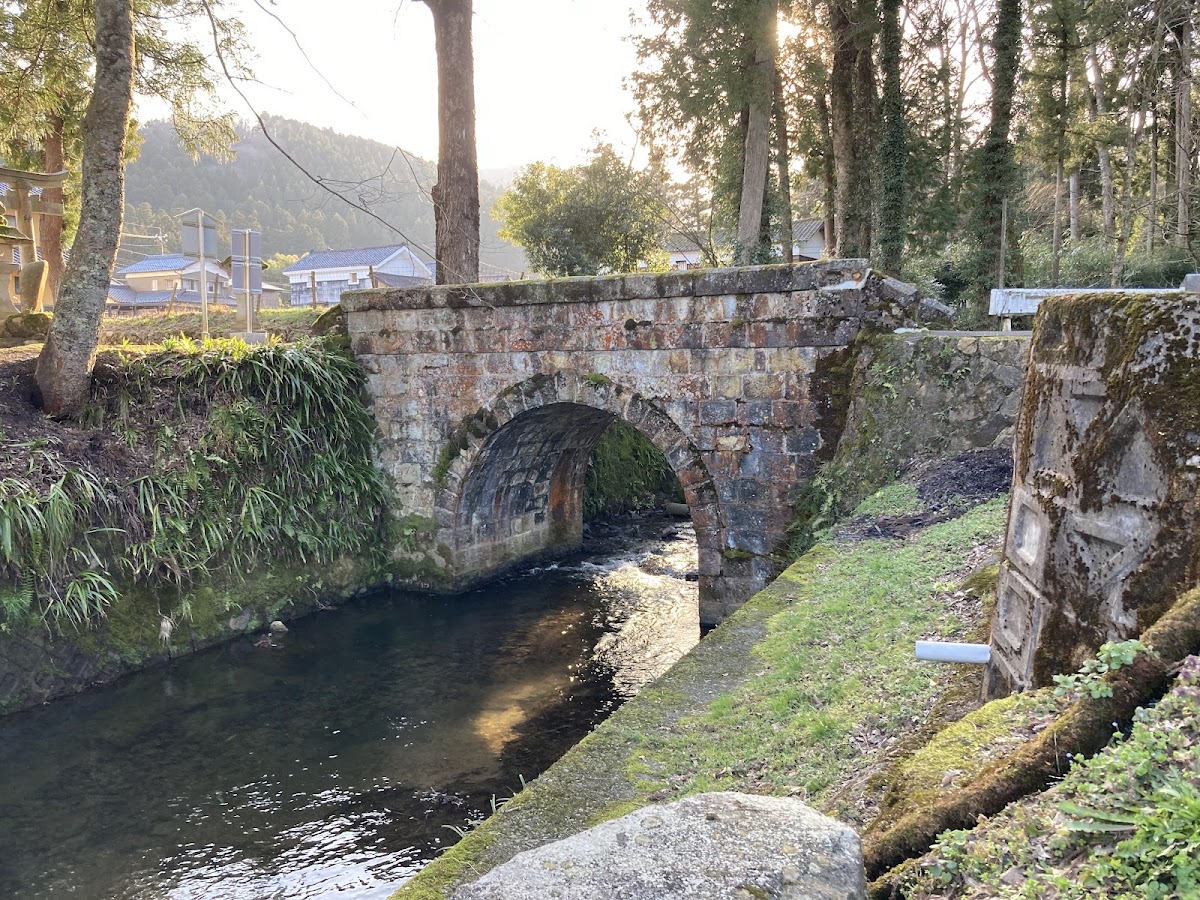
On the approach to Omushi Shrine in Echizen City stands the Omushi Shrine Miyabashi Bridge, a historically significant stone single-arch bridge. Designated a city cultural property, its main structure is a semi-circular arch approximately 3.7 meters in diameter, constructed from Edo-period cut stone.
The exquisite stonework, with its side walls constructed from bush-hammered stone, demonstrates a high level of craftsmanship despite its small scale. Its appearance blends seamlessly into the landscape of the approach, making it beloved by citizens and enhancing the historical atmosphere of the shrine.
Other Cultural Properties
Both shrines house numerous historical materials, including ancient documents, sacred treasures, and votive offerings. These are valuable historical materials that illustrate the long history of the shrines and their connection to the local community.
Features of the Shrine Grounds
Grounds of Omushi Shrine, Echizen City
Omushi Shrine in Echizen City is located in Omushi-cho, approximately 4 kilometers west of Takefu Station, off National Route 365 and west along National Route 190.
Approach and Torii Gate
A large torii gate stands at the entrance to the approach, and a second torii gate is found further north. The approach crosses the Miyabashi Bridge and continues to the shrine building, creating a solemn atmosphere.
Shrine Building
The main hall is built in the traditional shrine architectural style and, along with the worship hall, forms the center of the shrine grounds. Hundreds of years old trees stand around the shrine building, giving a sense of solemnity befitting a sacred place.
Subsidiary Shrines
In addition to the main shrine, several subsidiary shrines are enshrined within the grounds, reflecting the diverse beliefs of the region.
Grounds of Omushi Shrine in Yosano Town
Omushi Shrine in Yosano Town is located on the eastern plateau of Kayadani, at the western foot of the Oe Mountain Range. Situated in a rich natural environment, the shrine grounds offer views of the Kayadani countryside.
The shrine building exhibits the traditional architectural style of the Tango region, harmoniously integrated with the surrounding natural environment.
Rituals and Annual Events
Annual Festival
Both shrines hold various rituals throughout the year. The annual festival is the most important, attracting many worshippers.
At Omushi Shrine in Echizen City, a festival praying for a bountiful harvest has been held since ancient times, and special rituals related to the legend of warding off harmful insects are also performed.
Seasonal Festivals
Festivals such as the spring Kinensai (harvest festival) and the autumn Niinamesai (harvest festival) are held to coincide with agricultural milestones, attracting the faith of local residents. These festivals preserve the traditions of agricultural beliefs that have continued since ancient times.
Access and Visiting Information
Access to Omushi Shrine, Echizen City
By Train Approximately 10 minutes by car from JR Hokuriku Main Line “Takefu Station”. Public transportation is limited, so taking a taxi is recommended.
By Car Approximately 15 minutes by car from Hokuriku Expressway “Takefu IC”. The shrine has a parking lot for visitors.
Address Omushi-cho, Echizen City, Fukui Prefecture
Access to Omushi Shrine, Yosano Town
By Train Access by car or bus from the nearest station on the Kyoto Tango Railway Miyazu Line.
By Car Approximately 20 minutes from Yosa-Amanohashidate IC on the Kyoto Jukan Expressway.
Address
On’e, Yosano-cho, Yosa-gun, Kyoto Prefecture
Notes on Visiting
Both shrines are generally open to visitors, but advance reservations may be required to view cultural properties. In particular, if you wish to view the wooden seated statue of a male deity, a nationally designated important cultural property, it is recommended to inquire with the shrine in advance.
When visiting, please observe proper shrine etiquette and worship in silence. Photography is only permitted in designated areas, and it is generally discouraged to photograph inside the shrine buildings.
Significance of the Faith at Omushi Shrine
Faith as an Agricultural Deity
As can be seen from the legend of the extermination of harmful insects, which gives Omushi Shrine its name, it is a shrine with a strong character as an agricultural deity. Prayers for abundant harvests, which have continued since ancient times, continue to attract the faith of people who wish for the development of local agriculture.
Connections with the Local Community
Both shrines have played a role as spiritual pillars in their respective local communities. The social functions of Shinto shrines, such as strengthening community bonds through festivals and preserving traditional culture, remain important today.
Value in Historical Research
As a Shikinaisha (a shrine listed in the Engishiki, an ancient Japanese legal code), Omushi Shrine provides valuable historical materials for studying the ancient Shinto system and local governance. Furthermore, the divine statues and ancient documents housed there as cultural properties hold high value as subjects of research in art history and history.
Nearby Attractions
Around Echizen City
Echizen City is known as a town of traditional crafts, such as “Echizen cutlery” and “Echizen washi (Japanese paper).” When visiting Omushi Shrine, it is recommended to visit facilities where you can see and experience these crafts. Also, the Takefu city area has many historical buildings and museums, making it suitable for historical walks.
Around Yosano Town
Yosano Town is close to Amanohashidate and is famous as a production area for Tango chirimen (a type of silk crepe). In addition to visiting Omushi Shrine, you can enjoy sightseeing in Amanohashidate and the seafood of Tango. The rural scenery of Kayadani is also beautiful, allowing you to fully enjoy the changing seasons.
Related Shrines
About Achie Shrine
Besides Omushi Shrine, several other Shikinaisha (shrines listed in the Engishiki) are located in Yosano Town, and Achie Shrine is one of them. These shrines demonstrate the spread of Shinto belief in ancient Tango Province.
About Tokoura Shrine
Tokoura Shrine, also located in Yosano Town, is a historical shrine that, along with Omushi Shrine, has supported the local faith. A historical walk visiting these shrines is also interesting.
Summary
Omushi Shrine, a Shikinaisha (shrine listed in the Engishiki) located in Echizen City, Fukui Prefecture and Yosano Town, Kyoto Prefecture, is a shrine with a long history dating back to ancient times and possesses valuable cultural assets. Its name, derived from a legend of warding off harmful insects, symbolizes its character as an agricultural deity, and even today it attracts the faith of people praying for a bountiful harvest. At Omushi Shrine in Echizen City, there is a wooden seated statue of a male deity, designated as a National Important Cultural Property, and highly regarded as an excellent example of Heian period divine sculpture. Furthermore, the Miyabashi Bridge spanning the approach to the shrine is a valuable cultural asset showcasing exquisite stonework techniques.
Both shrines have deep ties to the local community and continue to pass down traditional culture through festivals. Omushi Shrine, with its harmonious blend of status as a Shikinaisha (a shrine listed in the Engishiki, an ancient Japanese legal code) and deeply rooted local faith, is an important presence for understanding Japanese shrine culture.
For history enthusiasts, those interested in cultural properties, and those seeking peace of mind, a visit to Omushi Shrine will be a valuable experience. Why not experience the depth of Japanese spiritual culture in this sacred place where ancient beliefs still thrive?