Complete Guide to Sorinji Temple: History, Highlights, and Access Information for Yanaka’s Hagi-dera Temple
About Sorinji Temple
Sorinji Temple is a Nichiren Buddhist temple located in Yanaka, Taito-ku, Tokyo. Its official name is Myoyuzan Sorinji, and it is known as a venerable temple with a history dating back to the Edo period. Because of the many bush clover plants (hagi) planted on its grounds, it is also called “Hagi-dera” (Bush Clover Temple), and in autumn, the beautiful bush clover blossoms welcome visitors.
The temple enshrines Funamori Soshi as its principal deity, and during the Edo period, it played an important role as one of the three head temples of the Rokujo-mon branch of Honkoku-ji Temple. Even today, it remains an important cultural property in the Yanaka-Nezu-Sendagi area, attracting many worshippers and tourists.
History and Origin of Sorinji Temple
Founding and Founder
The founding of Sorinji Temple dates back to the time of Tokugawa Ieyasu. The founder was a man named Saito Sorin, who served Tokugawa Ieyasu. Saito Sorin initially founded Sorinji Temple in Sunpu (present-day Shizuoka Prefecture), with the Funamori Soshi as its principal image.
The Funamori Soshi is a statue of Nichiren Shonin said to have been carved on a ship during his exile to Izu. This statue has attracted faith for safe voyages and protection from maritime disasters, and has been revered by many people. Saito Sorin’s establishment of the temple with this statue as its principal image marks the beginning of Sorinji Temple.
History of Relocation to Edo
With Tokugawa Ieyasu’s entry into Edo, Sorinji Temple also relocated to Edo during the Keicho era (1596-1615). Initially, it was given land outside Kanda Shoheibashi and built its main hall there. Later, it moved to Ueno Higashi-Teramachi, and then in Genroku 14 (1701), it moved to its current location in Yanaka, Taito Ward, Tokyo, then Yanaka Shinbori Village, Hotaruzawa.
Since its relocation in the 14th year of the Genroku era (1701), Sorinji Temple has maintained its main hall in Yanaka for over 300 years. Throughout the Edo period, it played a vital role as a center of faith and a cultural hub in the region.
Sorinji Temple in the Edo Period
During the Edo period, Sorinji Temple held a special position among Nichiren Buddhist temples. As one of the three head temples of the Rokujo-mon branch of Honkoku-ji Temple, it played a coordinating role for Nichiren Buddhist temples in Edo, along with Hoenji Temple in Honjo and Koryuji Temple in Asakusa.
A head temple was a temple responsible for coordinating temples of the same sect under the shogunate’s religious policies. Through this important role, Sorinji Temple greatly contributed to the development of Nichiren Buddhist faith in Edo.
Even back then, many bush clover plants were planted on the grounds of Sorinji Temple, and it was known as a famous spot where magnificent bush clover flowers bloomed in autumn. This tradition has been passed down to the present day, and it is the reason why the temple is affectionately known as “Hagi-dera” (Bush Clover Temple).
Highlights of the Temple Grounds
Main Hall and Funamori Soshi
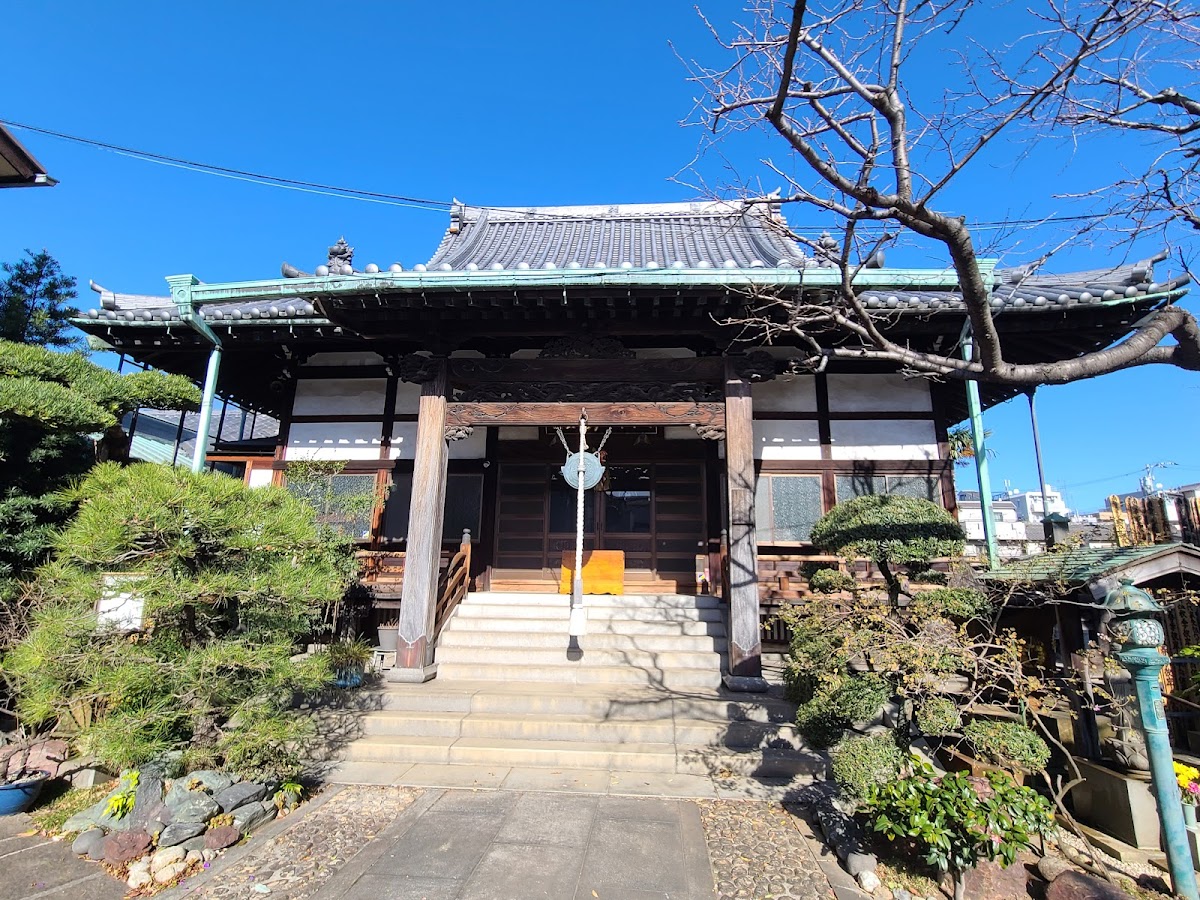
The main hall is the heart of Sorinji Temple. It houses the principal image, Funamori Soshi. This statue is said to have been carved by Nichiren Shonin himself while he was exiled to Izu, and has long been revered as a powerful Buddhist image for safe voyages and protection from maritime disasters.
The main hall has stood in Yanaka since its relocation in 1701 (Genroku 14), undergoing several repairs along the way. The traditional style of the Nichiren sect is preserved inside, allowing visitors to worship in a solemn atmosphere.
Bell Tower and Bronze Bell
Within the temple grounds is a magnificent bell tower, housing a historic bronze bell (the main bell). This bell tower is a valuable structure that preserves the architectural style of the Edo period. The sound of the bronze bell once marked the time in the town of Yanaka, keeping time and the rhythm of people’s lives.
Even today, the temple bell is rung during special events such as the New Year’s Eve bell ringing, and its solemn sound resonates throughout the Yanaka, Nezu, and Sendagi area. The area around the bell tower is a particularly picturesque spot within the temple grounds, attracting many visitors who stop to admire it.
Bush Clover Garden
The bush clover garden, which is the reason why Sorinji Temple is called “Bush Clover Temple,” is one of the temple’s greatest attractions. Since its relocation in 1701 (Genroku 14), many bush clover plants have been planted on the grounds.
During the blooming season from September to October, the temple grounds are adorned with delicate white, purple, and pink bush clover flowers. The sight of the bush clover branches swaying in the wind is truly a symbol of autumn. During this time, many visitors and tourists come to admire the bush clover, and the usually quiet temple grounds become lively.
Bush clover has long been a representative flower of autumn in Japan, and has been frequently featured in waka and haiku poetry. The bush clover at Sorinji Temple has a long history of being a beloved autumn spot in Yanaka, cherished by many writers and artists.
Other Highlights
Besides the main hall, bell tower, and bush clover garden, the temple grounds offer various other points of interest. Historical artifacts from the Edo period, such as stone monuments and Buddhist statues, are scattered throughout, each with its own fascinating history.
Furthermore, the temple grounds, with their quiet and peaceful atmosphere typical of Yanaka, are cherished by locals as a place to escape the hustle and bustle of the city and find peace of mind. The grounds, which show different expressions with each season, offer new discoveries with every visit.
Access Information
Access from the Nearest Station
Sorinji Temple is accessible from multiple train lines.
From JR Yamanote Line/Keihin Tohoku Line “Nippori Station”:
- Approximately 10 minutes on foot from the West Exit
- Head towards Yanaka Ginza, pass through the Yanaka residential area, and you will arrive.
From Tokyo Metro Chiyoda Line “Sendagi Station”:
- Approximately 8 minutes on foot from Exit 1
- Walk up Dango-zaka slope towards Yanaka.
From Tokyo Metro Chiyoda Line “Nezu Station”:
- Approximately 12 minutes on foot from Exit 1
- Go via Nezu Shrine towards Yanaka.
Address and Map
Address: 5-4-11 Yanaka, Taito-ku, Tokyo
Yanaka is an area with many narrow alleys, so we recommend using a smartphone map app. It’s close to Yanaka Ginza Shopping Street, so using the shopping street as a landmark will make it easier to find.
Access by Car and Parking
The roads in the Yanaka area are narrow, and parking is limited, so we recommend using public transportation. If you are visiting by car, you will need to use a nearby coin-operated parking lot, but be aware that these lots are often full on weekends and during tourist seasons.
Visiting Information
Visiting Hours
Sōrinji Temple is generally open for daytime visits. However, prior confirmation may be required to view the interior of the main hall. Visiting hours may change during special ceremonies or events, so it is recommended to check in advance.
Admission Fee
Entry to the temple grounds is free. However, separate fees may be required during special openings or events.
Annual Events and Festivals
Sōrinji Temple holds various events throughout the year.
Main Annual Events:
- First three days of the New Year: New Year’s memorial service
- Spring Equinox Service: Spring equinox memorial service
- Autumn Equinox Service: Autumn equinox memorial service
- Best time to see the bush clover (September-October): The time when the bush clover in the temple grounds is at its most beautiful
- New Year’s Eve bell ringing: Ringing of the bell on New Year’s Eve
Visiting the temple while admiring the flowers is especially recommended during the bush clover blooming season. Many visitors come during this time, but it is relatively quiet in the early morning or on weekdays.
The Charm of the Yanaka-Nezu-Sendagi Area
What is Yanaka-Nezu-Sendagi?
“Yanaka-Nezu-Sendagi,” where Sorinji Temple is located, is a collective name for the three areas of Yanaka, Nezu, and Sendagi. This area, which retains a strong sense of old Tokyo’s downtown atmosphere, is known for its Showa-era streetscapes and numerous temples and shrines.
In recent years, the area has seen an increase in cafes, galleries, and general stores housed in renovated old houses, creating a unique blend of tradition and modernity that attracts many tourists from both Japan and abroad.
Nearby Tourist Attractions
There are many sights within walking distance of Sorinji Temple.
Yanaka Ginza Shopping Street:
Approximately a 5-minute walk from Sorinji Temple. This shopping street retains a Showa-era retro atmosphere, perfect for enjoying street food and shopping. The view from Yuuyake Dandan (Sunset Steps) is also famous.
Yanaka Cemetery:
Approximately a 3-minute walk from Sorinji Temple. This vast cemetery is known for its cherry blossoms, and the tunnel of cherry blossoms in spring is magnificent. Many famous people are buried here.
Nezu Shrine:
Approximately a 15-minute walk from Sorinji Temple. This shrine is famous for its azaleas, and its Edo-period architectural style is designated as an Important Cultural Property.
Asakura Sculpture Museum:
Approximately an 8-minute walk from Sorinji Temple. This museum showcases the studio and residence of sculptor Fumio Asakura.
Ueno Park:
Approximately a 20-minute walk from Sorinji Temple. A representative Tokyo park with museums, art galleries, a zoo, and more.
Recommendation for a Stroll Through Yanaka, Nezu, and Sendagi
When visiting Sorinji Temple, we recommend combining it with a stroll through the Yanaka, Nezu, and Sendagi area. The charm of Yanaka, Nezu, and Sendagi lies in its relaxed atmosphere, where you can stroll through narrow alleys, visit old temples and townhouses, and take a break at a cafe.
While it’s bustling with tourists, especially on weekends, weekdays and early mornings offer a quiet and peaceful experience. Yanaka, Nezu, and Sendagi, with its ever-changing seasonal appearances, is an area where you can discover something new every time you visit.
Cultural Value of Sorinji Temple
Position in the Nichiren Sect
Sorinji Temple holds an important position in the history of the Nichiren sect. As mentioned earlier, it functioned as a head temple during the Edo period, and even today, as a temple belonging to the Enshi Hōen (Ryūgenkai) lineage, it continues to uphold the traditions of the Nichiren sect.
By enshrining the precious principal image, Funamori Soshi, it plays an important role in conveying the footsteps of Nichiren Shonin to the present day. The statue of the founder, said to have been carved by Nichiren Shonin during his difficult exile to Izu, can be considered a valuable legacy that represents the origin of faith.
Role in Yanaka’s History
Since relocating to Yanaka in 1701 (Genroku 14), Sōrinji Temple has been deeply involved in the formation of Yanaka’s history and culture. During the Edo period, Yanaka developed as a temple town, a center of faith with many temples.
Sōrinji Temple was one of the most important temples, serving as a spiritual pillar for the local people. The bush clover planted on the temple grounds became a beloved symbol of Yanaka and attracted many cultural figures to the area.
Even today, Sōrinji Temple plays a vital role in shaping the local identity as an important cultural asset that conveys the history of Yanaka.
Cultural Significance as a Bush Clover Temple
The nickname “Bush Clover Temple” succinctly expresses the cultural characteristics of Sorinji Temple. Bush clover (hagi) has been a beloved flower in Japan since the Manyoshu era and is counted as one of the seven autumn flowers.
The bush clover at Sorinji Temple is not merely decorative, but embodies traditional Japanese aesthetics. The bush clover flowers blooming on the temple grounds evoke the beauty and transience of the changing seasons, and hold a profound meaning that resonates with the Buddhist concept of impermanence.
The fact that many people visit every autumn to admire the bush clover demonstrates that Japan’s traditional flower-viewing culture has been passed down to the present day.
Manners and Precautions for Visiting the Temple
Basic Manners for Visiting the Temple
When visiting Sorinji Temple, please observe the following basic manners.
Upon Entering the Temple Grounds:
- Bow at the temple gate before entering the grounds.
- Walk quietly and refrain from loud conversations.
- Put your mobile phone on silent mode.
Visiting the Main Hall:
- Join your hands in prayer before the main hall.
- Place your offering quietly.
- Take photographs only in designated areas.
Upon Exiting:
- Bow towards the main hall before leaving the temple gate.
- Always take your trash with you.
Regarding Photography
Photography of the temple grounds is generally permitted, but there may be restrictions on photographing the interior of the main hall or the principal image of Buddha. It is best to check before taking photos, or refrain from doing so if unsure.
Also, be mindful of the privacy of other visitors and take care when taking photos that include people. Photography should be especially avoided during religious services.
Regarding Attire
There are no specific dress code regulations, but please dress appropriately and respectfully for visiting a temple. It’s best to avoid clothing that exposes too much skin or overly casual footwear such as sandals.
Sorinji Temple and Other Sorinji Temples
Sorinji Temples Nationwide
There are temples named “Sorinji” throughout Japan. The main ones are listed below:
Sorinji Temple in Shizuoka City, Shizuoka Prefecture:
A Nichiren Buddhist temple located near the founding site of Sorinji Temple in Taito Ward. It has historical ties to Saito Sorin.
Sorinji Temple in Onan Town, Shimane Prefecture:
A Rinzai Zen temple of the Tenryuji school, and the family temple of the Kuchiba clan, lords of Biwakou Castle during the Sengoku period. It is said to have originated from a hermitage of Nasu Yoichi Munetaka.
Sorinji Temple in Hannō City, Saitama Prefecture:
Known as a Shingon Buddhist temple.
Sorinji Temple in Imizu City, Toyama Prefecture:
Functions as a center of local faith.
Sorinji Temple, Minami-Alps City, Yamanashi Prefecture:
It possesses the main hall of the Shichimen Myojin Shrine and is a valuable cultural asset that preserves the architectural style of the early Edo period.
Uniqueness of Sorinji Temple, Taito Ward
Sorinji Temple in Yanaka, Taito Ward, occupies a particularly historically important position among these. It has unique characteristics, such as having Funamori Soshi as its principal deity, functioning as a head temple during the Edo period, and being affectionately known as the “Hagi Temple” (Bush Clover Temple).
Furthermore, its location in the Yanaka-Nezu-Sendagi tourist area makes it easily accessible to many people, and it plays a role in widely disseminating the history and culture of Nichiren Buddhism.
Recommended Itinerary for Visiting Sorinji Temple
Half-Day Course
Morning:
- From JR Nippori Station to Yanaka Ginza (10-minute walk)
- Breakfast and shopping in Yanaka Ginza (30 minutes)
- Visit Sorinji Temple (30 minutes)
- Stroll through Yanaka Cemetery (30 minutes)
- Visit Nezu Shrine (1 hour including travel time)
Afternoon:
- Lunch around Nezu (1 hour)
- Visit Asakura Sculpture Museum (1 hour)
- Relax at a cafe in Yanaka (30 minutes)
Full-Day Course
In addition to the half-day course:
- Visit museums and art galleries in Ueno Park
- Stroll around Shinobazu Pond
- Shopping at Ameyoko
Seasonal Recommendations
Spring (March-May):
Cherry blossoms in Yanaka Cemetery and azaleas at Nezu Shrine are in full bloom. The fresh greenery at Sorinji Temple is also beautiful during this time. Summer (June-August):
Relatively few tourists, allowing for a peaceful visit. Early mornings and cool evenings are recommended.
Autumn (September-November):
The best season to visit, as the bush clover at Sorinji Temple is in full bloom. The autumn foliage is also beautiful, making it ideal for a stroll through Yanaka, Nezu, and Sendagi.
Winter (December-February):
Few tourists, allowing for a calm and peaceful visit. Ringing the New Year’s Eve bell and visiting for the first shrine visit of the year are also recommended.
Summary
Sorinji Temple is a historic Nichiren Buddhist temple located in Yanaka, Taito-ku, Tokyo. Its mountain name is Myoyuzan, and its principal image is Funamori Soshi. The main hall has been located in its current location since Genroku 14 (1701).
Founded by Saito Sorin, who served Tokugawa Ieyasu, Sorinji Temple has a history of over 400 years since its founding in Sunpu. During the Edo period, it played an important role as a head temple. Known as “Hagi-dera” (Bush Clover Temple) due to the many bush clover plants planted on its grounds, Sorinji Temple welcomes visitors with its beautiful bush clover blossoms in autumn.
Its location in the Yanaka-Nezu-Sendagi area, a charming neighborhood in Tokyo that retains its old-town atmosphere, is another major attraction. Many tourist spots, such as Yanaka Ginza Shopping Street, Yanaka Cemetery, and Nezu Shrine, are within walking distance, making it easy to enjoy a leisurely day stroll.
As a valuable cultural asset that tells the history of Nichiren Buddhism, and as the iconic bush clover temple of Yanaka, Sorinji Temple continues to be cherished by many. In its tranquil grounds, you can find peace of mind and reflect on history, offering a special time away from the hustle and bustle of everyday life.
Access is convenient, within walking distance of JR Nippori Station and Tokyo Metro Sendagi Station. Why not visit Sorinji Temple as part of your Yanaka-Nezu-Sendagi stroll? The temple grounds are especially beautiful during the bush clover blooming season from September to October.
Sorinji Temple is a hidden gem in Tokyo, where history, culture, and natural beauty harmonize perfectly. It quietly continues to convey to us, who live in the modern age, the traditional Japanese aesthetic and spirituality.