Enmei-in Temple Complete Guide: The Historic Nichiren Buddhist Temple in Nippori and the Truth Behind the Enmei-in Incident
Located in Nishi-Nippori, Arakawa Ward, Tokyo, Enmei-in Temple is a Nichiren Buddhist temple that has existed since the early Edo period. This guide will provide a detailed explanation of this temple, which boasts many historical episodes, including its deep connection with the Tokugawa Shogunate, a natural monument (a large oak tree) over 600 years old, and the Edo-period scandal known as the “Enmei-in Incident.”
Basic Information about Enmei-in Temple
Official Name: Hojusan Enmei-in
Sect: Nichiren Buddhism
Principal Image: Great Mandala
Former Head Temple: Daihonzan Myoken-ji Temple (Kyoto)
Location: 3-chome, Nishi-Nippori, Arakawa-ku, Tokyo
Access:
- 3-minute walk from JR Nippori Station
- 6-minute walk from JR/Tokyo Metro Nishi-Nippori Station
Opening Hours: 8:30 AM – 4:00 PM
Located in the Yanaka/Nippori area, full of old-town charm, the temple grounds are enveloped in tranquility, creating a space that makes you forget the hustle and bustle of the city.
History and Founding of Enmei-in Temple
Founded in the Early Edo Period
The history of Enmei-in Temple dates back to the early Edo period, specifically Keian 1 (1648). According to temple tradition, Enmei-in Temple was founded in Shinbori Village (present-day Nippori) by Abbot Nichicho of Keishoin Temple, with Lady Misawa, the wet nurse of Tokugawa Ietsuna, the fourth shogun of the Tokugawa shogunate, as its founder.
Deep Connection with Shichimen Daimyojin
Enmei-in Temple was established as a guardian temple for Shichimen Daimyojin, enshrined on Mount Shichimen in Minobu, Yamanashi Prefecture. It is said that Abbot Nichicho underwent a hundred-day retreat on Mount Shichimen in Minobu, Yamanashi Prefecture, received a spiritual dream, and established his own unique prayer method.
This faith in Shichimen Daimyojin was particularly revered for its efficacy in prayers for safe childbirth, and it attracted strong devotion from the Tokugawa shogunate and other samurai families.
The Birth of Tokugawa Ietsuna and Enmei-in Temple
The reason Enmei-in Temple became deeply connected to the shogunate was that O-Raku-no-kata, a concubine of the third shogun Tokugawa Iemitsu, became a devout follower of Enmei-in Temple. O-Raku-no-kata prayed for a child and received prayer from Nichijo Shonin.
As a result, in Keian 2 (1649), her eldest son, Takechiyo (later the fourth shogun, Ietsuna), was born. This event led to Enmei-in Temple gaining immense trust from the shogunate and the Ooku (women’s quarters of the Edo Castle) as a “temple that grants blessings of children” and a “temple that ensures safe childbirth.”
With the prayer for Ietsuna’s safe childbirth fulfilled, Misawa-no-Tsubone, in gratitude, became the founder of Enmei-in Temple, and under the patronage of the shogunate, the temple greatly prospered.
The Shogunate and the Mito Tokugawa Family’s Faith
Enmei-in Temple received deep faith not only from the Tokugawa shogunate but also from the Mito Tokugawa family. Throughout the Edo period, Enmei-in Temple received the patronage of the shogunate and the three Tokugawa branch families, and as a branch temple of Myoken-ji Temple in Kyoto, a Nichiren Buddhist temple, it was positioned as one of the important temples in Edo.
Enmei-in Incident: An Edo Period Scandal
Indispensable to understanding the history of Enmei-in Temple is the “Enmei-in Incident” that occurred in the mid-Edo period. This was a love scandal between the head priest and a lady-in-waiting in the Ooku (women’s quarters of Edo Castle) that shook Edo society at the time.
Overview of the Incident
The Enmei-in Incident refers to the nyobon (a sexual relationship between a Buddhist priest and a woman) incident that occurred between the head priest of Enmei-in Temple, Nichido, and a lady-in-waiting from the Ooku. This incident became a major scandal in the Edo period, which was dominated by a strict social hierarchy and religious precepts.
The Custom of Overnight Stays at the Temple
Because Enmei-in Temple was known as a temple for fertility and safe childbirth, the Ooku (women’s quarters of the Edo Castle), which longed for an heir to the Shogun, had a custom called “overnight stay” (tsuya sanro), where ladies-in-waiting would visit the temple on behalf of the Shogun’s wife and concubines. This involved staying overnight to pray, with the ladies-in-waiting staying at the temple and receiving prayers.
It is believed that a romantic relationship developed between the head priest, Nichido, and a lady-in-waiting during one of these overnight stays.
Impact of the Incident
This incident was treated as a serious matter affecting the Shogunate’s prestige, and severe punishments were imposed. It was not only a violation of Buddhist precepts by monks, but also involved a lady-in-waiting serving the Shogun’s family, making it recognized as an incident that shook the Shogunate’s authority.
The Enmei-in Incident remains a subject of research today as an important historical event for understanding the relationship between temples and shrines and the Shogunate during the Edo period, the realities of the Ooku, and the social norms of the time.
Cultural Properties and Highlights
Tokyo Metropolitan Designated Natural Monument: “Enmei-in’s Great Castanopsis Tree”
The greatest highlight of Enmei-in Temple is the great castanopsis tree (Ōshii) towering over the temple grounds, over 600 years old. This giant tree is designated as a Tokyo Metropolitan Designated Natural Monument and is a symbol of Enmei-in Temple.
Characteristics:
- Age: Over 600 years
- Tree Species: Castanopsis sieboldii (Castanopsis family)
- Designation: Tokyo Metropolitan Designated Natural Monument
This great castanopsis tree is believed to have stood on this site even before Enmei-in Temple was founded, and can be considered a living witness to the history of the Nippori and Yanaka areas. It is extremely rare to find such a massive tree preserved in the heart of the city.
Temple Associated with Yaoya Oshichi
Enmei-in Temple is also known as a temple associated with “Yaoya Oshichi“, famous for the anecdote of a fire during the Edo period. Oshichi was a tragic woman who, during the Great Fire of Tenna (1682), fell in love with a temple page she met at a temple where she took refuge. Driven by her desire to see him again, she committed arson and was executed by burning.
Enmei-in Temple is one of the temples that preserves the legend of Oshichi, and many visitors come to it.
Main Hall and Temple Grounds
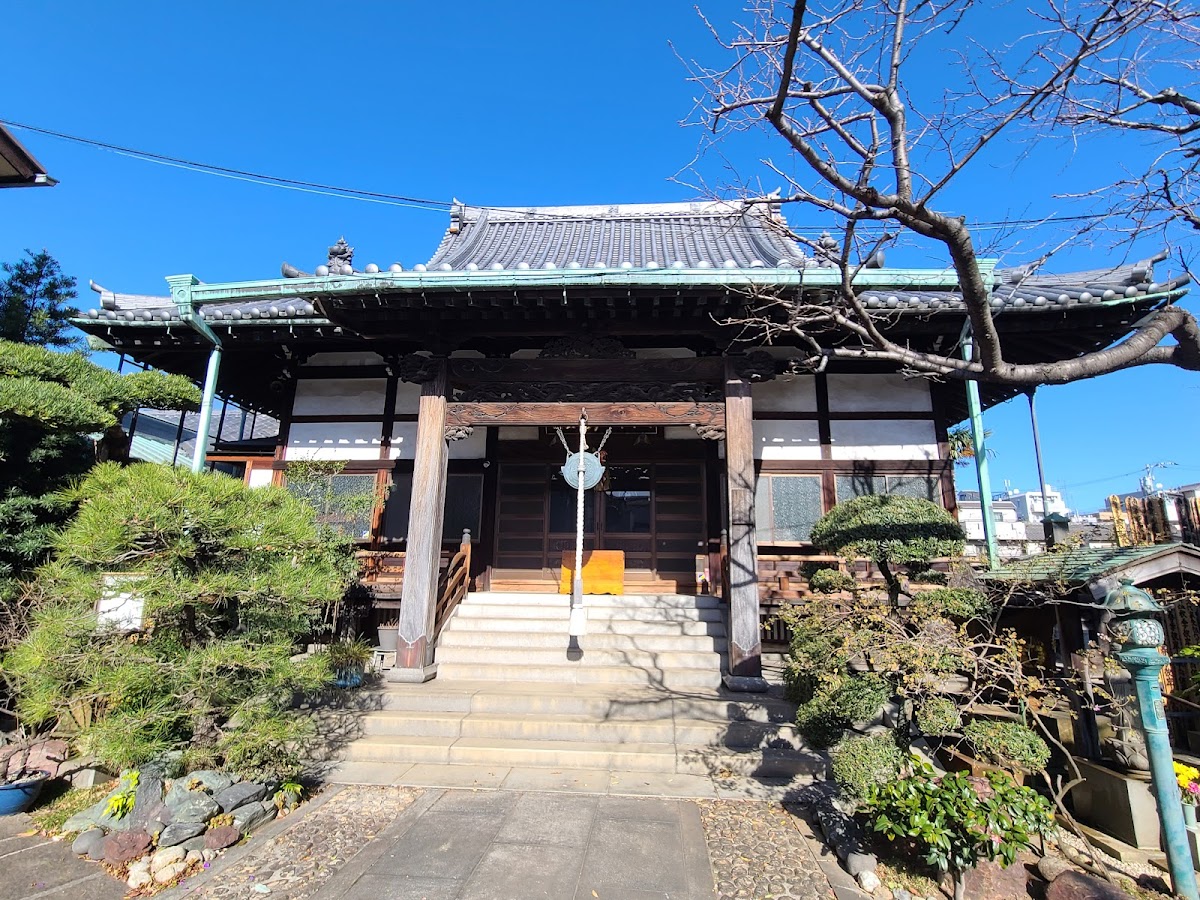
The main hall of Enmei-in Temple houses the principal image, the Great Mandala. As a Nichiren Buddhist temple, it is an important religious facility that conveys the teachings of Nichiren Shonin to the present day.
The temple grounds are enveloped in silence, creating a calm atmosphere that is hard to believe is in the heart of the city. It is a must-visit spot when strolling through the temple district of Yanaka and Nippori.
Religious Characteristics of Enmei-in Temple
Teachings of the Nichiren Buddhism
Enmei-in Temple is a Nichiren Buddhist temple. Nichiren Buddhism is a Buddhist sect founded by Nichiren (1222-1282), a monk of the Kamakura period. It considers the Lotus Sutra as its fundamental scripture and emphasizes the chanting of the mantra “Namu Myoho Renge Kyo.”
Enshi Hōen (Enshi Lineage)
Enmei-in Temple belongs to the Enshi Hōen lineage. This indicates a lineage based on master-disciple relationships within the Nichiren sect, representing Enmei-in Temple’s lineage and historical connections.
Shichimen Daimyōjin Worship
A distinctive feature of Enmei-in Temple’s worship is its reverence for Shichimen Daimyōjin. Shichimen Daimyōjin is considered a goddess who protects the Lotus Sutra in the Nichiren sect and has particularly attracted the devotion of women.
Mount Shichimen on Mount Minobu is one of the sacred sites of the Nichiren sect, and Enmei-in Temple played an important role as the temple that invited Shichimen Daimyōjin to Edo (present-day Tokyo).
Modern Enmei-in Temple
Goshuin (Temple Seals) and Worship
Modern Enmei-in Temple is open to worshippers seeking Goshuin and tourists enjoying a stroll through the temple district of Yanaka and Nippori. Opening hours are 8:30 AM to 4:00 PM, and Goshuin are available.
Gagaku (Japanese Court Music) and Cultural Activities
Enmei-in Temple also hosts performances of Gagaku, a traditional Japanese musical form, and functions as a place for preserving Japanese traditional culture.
Cemetery and Perpetual Memorial Services
Enmei-in Temple also has a cemetery, which is used as a burial place for the general public. Despite being in the heart of the city, it offers a quiet environment and accepts requests for perpetual memorial services.
Attractions Around Enmei-in Temple
The Charm of the Yanaka and Nippori Area
The Yanaka and Nippori area, where Enmei-in Temple is located, is known as one of Tokyo’s leading temple districts. This area, with its streets retaining the atmosphere of the Edo period and numerous temples, is a popular strolling spot known as “Yanaka, Nezu, and Sendagi” (Yanaka-Nezu-Sendagi).
Main nearby attractions:
- Yanaka Cemetery: A vast cemetery known for its cherry blossoms
- Yanaka Ginza: A retro shopping street from the Showa era
- Asakura Sculpture Museum: The studio and museum of sculptor Fumio Asakura
- Nippori Textile Town: A street lined with specialty shops selling fabrics and handicraft supplies
Easy Access
Located just a 3-minute walk from JR Nippori Station, it’s easily accessible for tourists visiting Tokyo. The Keisei Skyliner, which connects Narita Airport to central Tokyo, also stops at Nippori Station, making it convenient for travelers.
Points to Note When Visiting Enmei-in Temple
Manners for Visiting
- Bow at the Temple Gate: Bow at the temple gate before entering the grounds.
- Purification at the Water Basin: Purify your hands and mouth before praying.
- Praying at the Main Hall: Quietly join your hands in prayer and offer your prayers.
- Photography: Photography is permitted on the temple grounds, but consideration for the interior of the main hall and other visitors is necessary.
Recommended Time to Visit
- Spring: The cherry blossoms in the Yanaka area are beautiful. The large oak tree at Enmei-in Temple is also vibrant with fresh green leaves.
- Autumn: The season of autumn leaves. You can pray in a calm atmosphere.
- Weekdays: A relatively quiet time to pray.
Time Required
While a visit to Enmei-in Temple itself takes about 15-30 minutes, if you allocate about half a day to combine it with a stroll around the surrounding Yanaka area, you can enjoy it at a leisurely pace.
Historical Significance of Enmei-in Temple
Position in Edo’s Religious History
Enmei-in Temple is an important example illustrating the relationship between temples and shrines and the shogunate during the Edo period. As a temple under the patronage of the shogunate, it played a crucial role within Edo’s religious and social network.
Center of Women’s Faith
Enmei-in Temple, which attracted particularly strong faith from women as a temple for safe childbirth and fertility, is a valuable resource for understanding the religious life of women in the Edo period. The custom of ladies-in-waiting staying overnight at the temple during vigils demonstrates a facet of women’s religious practices at the time.
Urban History and Nature Conservation
The 600-year-old chinquapin tree is evidence of the protection of valuable nature throughout Tokyo’s urban development history. Maintaining such a giant tree in a modern urban environment is highly significant, making Enmei-in Temple an important spot for considering the coexistence of urban life and nature.
Summary
Enmei-in Temple in Nishi-Nippori, Arakawa Ward, Tokyo, is a Nichiren Buddhist temple founded in 1648 (Keian 1) during the early Edo period by Nichijo Shonin, with Misawa-no-Tsubone, the wet nurse of Tokugawa Ietsuna, as its founder. It was established as a temple guarding Shichimen Daimyojin and attracted strong devotion from the Tokugawa shogunate and the Ooku (women’s quarters of the Edo Castle), particularly as a place of prayer for safe childbirth and fertility.
Within the temple grounds stands a large oak tree, a Tokyo Metropolitan Government-designated natural monument, over 600 years old, and the temple is also known for its connection to Yaoya Oshichi. Furthermore, in the mid-Edo period, a scandal known as the “Enmei-in Incident” involving the head priest and a lady-in-waiting from the Ooku occurred, shaking society at the time.
Located just a 3-minute walk from JR Nippori Station, it’s a must-visit spot when exploring the temple district of Yanaka and Nippori. Despite being in the heart of the city, the temple grounds are enveloped in tranquility, making it a valuable place to experience the history and culture that has continued since the Edo period. Even today, Enmei-in Temple remains a beloved temple for many worshippers and tourists, open to the community through cultural activities such as the issuance of Goshuin (temple stamps) and performances of Gagaku (ancient court music). Enmei-in is an indispensable presence for understanding Tokyo’s history and culture.