Complete Guide to Sozenji Temple | History and Highlights of Osaka’s Ancient Temple, Home to the Headstone of Ashikaga Yoshinori and the Grave of Hosokawa Gracia
Located in Higashiyodogawa Ward, Osaka City, Sozenji Temple is an ancient Soto Zen temple with a history of over 1300 years, dating back to the Nara period. Known as a place associated with important figures in Japanese history, such as the headstone of Ashikaga Yoshinori and the grave of Hosokawa Gracia, it also holds historical significance as the site of the “Revenge at Sozenji Baba.” This article comprehensively introduces all the information you need to know before visiting, from the detailed history of Sozenji Temple and its highlights to access methods.
Basic Information about Sozenji Temple
Official Name: Ryounzan Sozenji Temple
Sect: Soto Zen Buddhism
Principal Image: Seated statue of Shakyamuni Buddha (attributed to Saicho)
Location: 1-chome, Higashinakajima, Higashiyodogawa-ku, Osaka City, Osaka Prefecture
Founding: Said to have been founded by Gyoki during the Tenpyo era (729-749)
Access: Immediately accessible from Sozenji Station on the Hankyu Kyoto Line
This temple is located on a coastal sandbar that developed at the northernmost tip of the Uemachi Plateau, which runs north-south through Osaka. Excavations at the surrounding “Sozenji Ruins” have yielded Yayoi period pottery, Haji ware, and bronze bells. This provides valuable evidence that this area was a place of human habitation from ancient times.
History of Sozenji Temple | 1300 Years of Buddhist Tradition from the Nara Period to the Present
Founding in the Nara Period and the Hossō Sect Era
There are several traditions regarding the founding of Sozenji Temple. The most widely known is the theory that it was founded by Gyōki Bodhisattva during the Tenpyō era (729-749). On the other hand, there is also a theory that it was founded by Prince Shōtoku, and that initially only the Kannon Hall was built.
For approximately 700 years from its founding, the temple continued to uphold the Buddhist tradition as a Hossō sect temple. The Hossō sect is a representative sect of Nara Buddhism based on the Yogacara philosophy, and belonged to the same lineage as Kōfukuji Temple and Yakushiji Temple. During this long period, Sozenji Temple is thought to have played an important role as a center of local faith.
Turning Point in the Muromachi Period | Restoration as Ashikaga Yoshinori’s Family Temple
The most important turning point in the history of Sozenji Temple occurred during the Muromachi period. On June 24, 1441 (Kakitsu 1), Ashikaga Yoshinori, the sixth shogun of the Muromachi shogunate, was assassinated by Akamatsu Mitsusuke at the Akamatsu residence in Harima Province. This is a major event in Japanese history known as the “Kakitsu Incident.”
After killing Yoshinori, Akamatsu Mitsusuke buried Yoshinori’s head near the Kannon Hall while fleeing to Harima. Following this incident, the seventh shogun, Ashikaga Yoshikatsu, built a temple on the site of the Kannon Hall to commemorate Yoshinori, and rebuilt it as Sozenji Temple.
With this rebuilding, Sozenji Temple changed its sect from the Hossō sect to the Sōtō sect, and for over 580 years since then, it has continued to be a temple that transmits the teachings of the Sōtō sect. Its status as the family temple of the Ashikaga shogunate holds extremely important significance in the temple’s history and formed the foundation for its subsequent development.
History from the Sengoku Period Onward
From the Sengoku period to the Edo period, Sozenji Temple functioned as an important center of the Soto Zen sect in Osaka. In particular, the fact that the tomb of Hosokawa Gracia (Hosokawa Tamako) was located at this temple demonstrates its deep connection with Sengoku warlords.
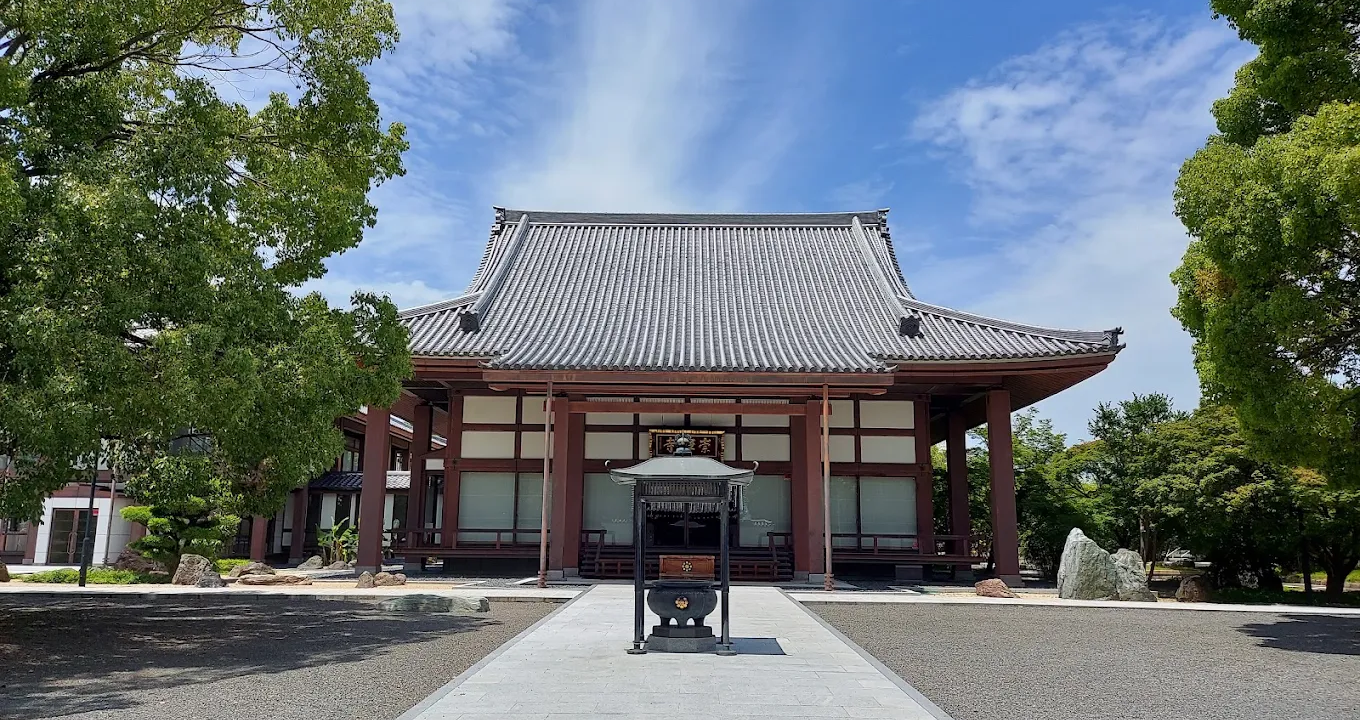
Even after the Meiji Restoration, the temple continued to exist as a center of local faith, but its magnificent main buildings were destroyed in the Osaka air raids of World War II. After the war, it was rebuilt with reinforced concrete, resulting in its current form.
Highlights of the Temple Grounds | Important Historical Sites that Tell the Story
Ashikaga Yoshinori’s Head Mound
The most important historical site at Sozenji Temple is the head mound of Ashikaga Yoshinori. Yoshinori, who was assassinated in the Kakitsu Incident, had his head buried here by Akamatsu Mitsusuke. The head mound still remains on the temple grounds, making it a valuable historical site that conveys the rise and fall of the Muromachi Shogunate.
Ashikaga Yoshinori is known as an authoritarian shogun who instilled “fear in all men.” His reign, while aiming to strengthen the shogunate’s power, provoked much opposition. The fact that his dramatic end took place at Sozenji Temple holds significant importance in the study of Japanese history.
Grave of Hosokawa Gracia
The grave of Hosokawa Gracia (Hosokawa Tamako, daughter of Akechi Mitsuhide), one of the most prominent women of the Sengoku period, is also located at Sozenji Temple. Gracia is known for her tragic end, having refused to become a hostage of Ishida Mitsunari just before the Battle of Sekigahara.
It is an interesting fact that Gracia, who remained a devout Christian, has her grave in a Buddhist temple. This temple’s grave is considered one of several burial sites associated with Gracia, serving as a place to commemorate her turbulent life.
Grave of the Enjo Brothers | The Revenge at Sozenji Baba
Sozenji Temple is also widely known as the setting for the “Revenge at Sozenji Baba.” This incident is a tragic vendetta from the Edo period in which the Enjo brothers attempted to avenge their father’s death but were instead killed in a counterattack.
Within the temple grounds is the grave of the Enjo brothers who were killed in the counterattack, commemorating this historical event. The story of “The Revenge at Sozenji Baba” has been passed down since the Edo period and has been featured in storytelling and plays.
Main Hall and Seated Shakyamuni Buddha Statue
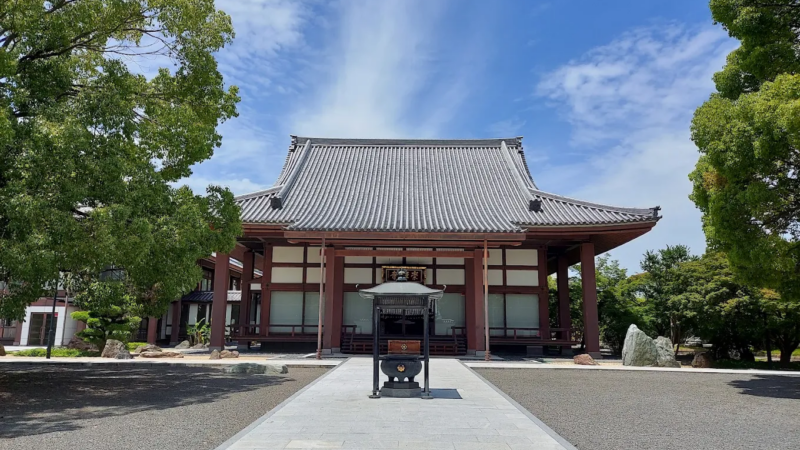
The current main hall was rebuilt in reinforced concrete after the war, but it houses the principal image, a seated statue of Shakyamuni Buddha. This statue is said to be the work of Saicho and is considered a valuable cultural asset that conveys the style of the early Heian period.
As is typical of Soto Zen temples, the main hall is also used for Zen meditation practice, and Zen meditation sessions for local residents and businesses are held regularly.
Sozenji Ruins
The area surrounding the temple is an archaeologically important site known as the “Sozenji Ruins.” Excavations have unearthed Yayoi period pottery, Haji ware, and bronze bells, indicating that this area was a place of human habitation from ancient times.
Its geographical location at the northernmost tip of the Uemachi Plateau was a crucial transportation hub in ancient times and also deeply connected to the Yodo River system. This historical background may have given rise to the legends of temple founding by Gyōki and Prince Shōtoku.
Sōzenji Temple and the Sōtō Zen School | Zen Teachings and Practice
What is the Sōtō Zen School?
The Sōtō Zen School, to which Sōzenji Temple belongs, is one of the two major Zen Buddhist schools in Japan (the other being the Rinzai school). Founded in the Kamakura period by Zen Master Dōgen, it is a school based on “shikantaza,” that is, simply sitting in meditation.
The Soto Zen sect’s head temples are Eihei-ji Temple in Fukui Prefecture and Soji-ji Temple in Kanagawa Prefecture, and it is one of the largest Buddhist sects in Japan, with approximately 14,000 temples nationwide.
Zen Practice at Sozen-ji Temple
Based on the teachings of the Soto Zen sect, Sozen-ji Temple regularly holds Zen meditation sessions. General participants are welcome, and even beginners can experience the practice of Zen. The temple also conducts Zen meditation experiences as part of corporate employee training, conveying the significance of Zen in modern society.
The Soto Zen teaching of self-reflection and attaining inner peace through Zen meditation is supported by many people in today’s stressful society.
Access and Surrounding Information
Access by Train
The most convenient way to access Sozen-ji Temple is by using the Hankyu Kyoto Line.
Get off at “Sozen-ji Station” on the Hankyu Kyoto Line, and it’s a short walk away.
The fact that the station name itself is the temple name demonstrates the importance of Sozen-ji Temple in this area. Sozenji Station is located approximately 10 minutes from Osaka Umeda Station and approximately 30 minutes from Kyoto Kawaramachi Station, making it very easily accessible from within Osaka city.
Access by Car
If you are visiting by car, using the Hanshin Expressway is convenient. However, it is recommended to check in advance whether there is parking available on the temple grounds. There are also several coin-operated parking lots in the surrounding area.
Nearby Attractions
The area around Sozenji Temple is a residential area in Higashiyodogawa Ward, Osaka City, but it is close to the Yodogawa River embankment, making it a pleasant environment for strolling. Shin-Osaka Station is also relatively close, making it possible to stop by during sightseeing or business trips.
Annual Events and Cultural Activities at Sozenji Temple
Main Annual Events
As a Soto Zen temple, Sozenji Temple holds various Buddhist events throughout the year. The main events include the following:
- Shōshō-e (January): New Year’s memorial service
- Shunki Higan-e (March): Memorial service for ancestors
- Hanamatsuri (April): Memorial service celebrating the birth of Buddha
- Urabon-e (August): Memorial service for the Obon festival
- Autumn Higan-e (September): Memorial service for ancestors
- Daruma-ki (October): Memorial service in remembrance of Bodhidharma
Cultural Activities
In addition to religious ceremonies, our temple also engages in cultural activities to deepen interaction with the local community. We offer experiential programs such as Zen meditation sessions and sutra copying sessions, as well as seasonal nature observation events.
About Cemeteries and Perpetual Memorial Services
Sōzenji Temple manages a cemetery and accepts applications for burial plots and perpetual memorial services from the general public. As a temple cemetery located in an urban area, its convenient location makes it popular with many parishioners and users.
Perpetual memorial graves have seen increasing demand in recent years as a form of memorial service for those without successors or those who do not wish to burden their descendants. Sozenji Temple also offers memorial services that meet these modern needs.
The Charm of Sozenji Temple | Where History and Modernity Intersect
Historical Value
The greatest charm of Sozenji Temple lies in its rich history. For 1300 years since its founding in the Nara period, and while changing sects from the Hosso sect to the Soto sect, the temple has continuously preserved its Buddhist teachings in this location, a history that can be considered a microcosm of Japanese Buddhist history.
Its connections to important figures and events in Japanese history, such as Ashikaga Yoshinori, Hosokawa Gracia, and the Tojo brothers, elevate the temple beyond a mere religious facility. For history enthusiasts, it is an important spot to visit.
Tranquility in the City
Despite being located in the urban area of Osaka City, a tranquil atmosphere is maintained within the temple grounds. The reinforced concrete temple buildings, rebuilt after the war, are modern, but the spirit of Zen and the weight of history that breathe life into them offer peace of mind to visitors.
Connections with the Community
Sozenji Temple, whose name is also used for the train station, is a beloved local landmark. Its strong ties with local residents and its function as a living place of faith, rather than merely a tourist attraction, are major characteristics of this temple.
Summary | The Significance of Visiting Sozenji Temple
Sozenji Temple is a rare temple where the past and present intersect, boasting a long history dating back to the Nara period, connections to historical figures such as Ashikaga Yoshinori and Hosokawa Gracia, and the continued practice of Soto Zen Buddhism.
Despite its convenient location within Osaka city, Sozenji Temple, with its rich history and tranquil atmosphere, is a place worth visiting not only for history enthusiasts but also for modern people seeking inner peace. Its excellent accessibility, being just a short walk from Hankyu Sozenji Station, is another attractive feature.
Sozenji Temple offers a chance to experience Japanese history firsthand and connect with the spirit of Zen. If you’re visiting Osaka, why not pay a visit? This ancient temple, where the flame of Buddhist teachings continues to burn for 1300 years, is sure to speak to you about something important.