Complete Guide to Konzoji Temple | History, Benefits, and Visiting Information for the 76th Temple of the Shikoku 88 Temple Pilgrimage
About Konzoji Temple
Konzoji Temple is a Tendai Jimon sect temple located in Kinzoji-cho, Zentsuji City, Kagawa Prefecture. Its official name is Keisokuzan Hodoin Konzoji, and as the 76th temple of the Shikoku 88 Temple Pilgrimage, it welcomes many pilgrims every day.
The principal image is Yakushi Nyorai (Medicine Buddha), with Nikko Bosatsu and Gekko Bosatsu (Sunlight Bodhisattva and Moonlight Bodhisattva) as attendant deities. As a branch temple of Onjoji Temple (Mii-dera Temple), the head temple of the Tendai Jimon sect, it is an important center of Tendai Buddhism in the Sanuki region.
Kanakura-ji Temple is not merely a pilgrimage site; it is also the birthplace of Chisho Daishi Enchin, a temple associated with General Nogi Maresuke, and a temple dedicated to “Okaruten-san,” the god of fertility and safe childbirth. It continues to be deeply revered by the local people.
History of Kanakura-ji Temple
Founding and Chisho Daishi Enchin
The history of Kanakura-ji Temple is deeply intertwined with Chisho Daishi Enchin, a high-ranking priest of the Tendai sect. Enchin was born in Kanakura in 814 AD. His mother was the niece of Kobo Daishi Kukai, making him related to Kukai by blood.
From a young age, Enchin was intelligent and showed a talent for interpreting Buddhist scriptures. He also possessed strong spiritual intuition, and there is a legend that Hariti appeared to him when he was five years old. This Hariti is none other than the Kishimojin, affectionately known as “Okaruten-san” today.
Enchin later studied Tendai Buddhism at Mount Hiei, traveled to Tang China to study esoteric Buddhism, and after returning to Japan, served as the 5th head priest of Enryaku-ji Temple for 24 years from 868. As the founder of the Tendai Jimon sect and one of the eight prominent Buddhist monks who traveled to Tang China, he left a significant mark on the history of Japanese Buddhism. He is also counted among the Five Great Masters of Sanuki, and his achievements are still recounted today.
Development of the Temple
The predecessor of Kinkura-ji Temple was a temple called Dozen-ji located in Harada village. It is said that Enchin moved and expanded this temple to Kinkura village, his birthplace, and renamed it Kinkura-ji Temple in 928 (Encho 6).
The temple developed as a place associated with Chisho Daishi and has functioned as an important base for the Tendai Jimon sect. It has long been known as a pilgrimage site on the Shikoku Pilgrimage, and has become a sacred place visited by many pilgrims.
Connection to General Nogi Maresuke
Another distinctive feature of Kinkura-ji Temple is its deep connection to General Nogi Maresuke, a military figure of the Meiji era. In 1898, General Nogi, who was appointed as the first commander of the 11th Division of the former Imperial Japanese Army and stationed in Zentsu-ji, temporarily resided in the guest hall of Kinkura-ji Temple for about three years.
Due to delays in the construction of the division commander’s residence, General Nogi and his family lived at Kinkura-ji Temple during that time. The general was known for his strict and upright character, and it is said that his life at Kinkura-ji Temple was simple.
Items related to General Nogi are displayed in the guest hall (currently closed to the public since 2020), and a bronze statue of the general has been erected on the temple grounds. This historical connection has made Kinkura-ji Temple widely known as “the temple where General Nogi resided.”
Highlights of Kanakura-ji Temple
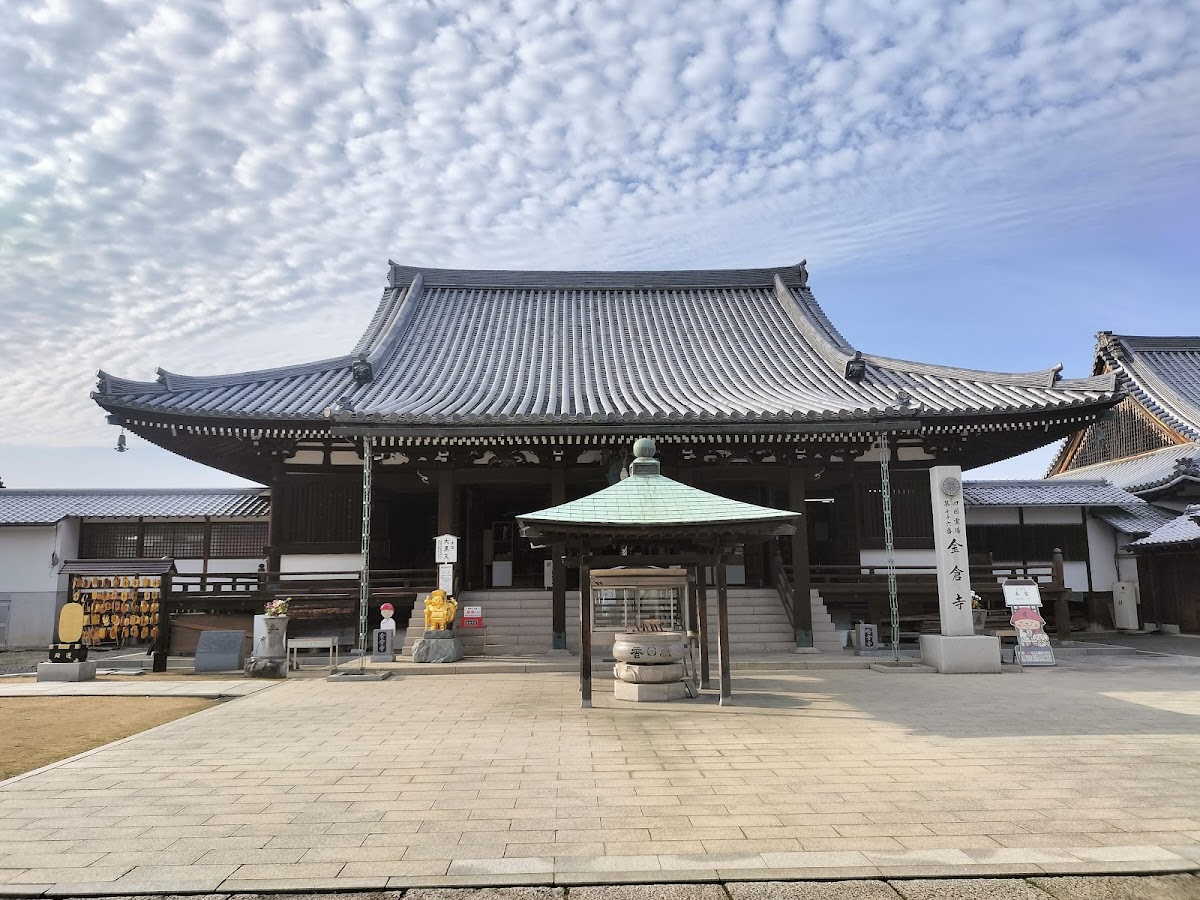
Main Hall and Principal Image of Yakushi Nyorai
The main hall of Kanakura-ji Temple houses a statue of Yakushi Nyorai, said to have been created by Chisho Daishi Enchin. Yakushi Nyorai is a Buddha known for its blessings of healing illnesses and longevity, and many worshippers pray here for good health.
Nikko Bosatsu and Gekko Bosatsu are placed as attendant deities, and the temple is worshipped in a triad format. The main hall is an important place of worship for pilgrims on the Shikoku Pilgrimage and is a central place where sutra copying and chanting take place.
Daishi Hall
The Daishi Hall houses statues of both Kobo Daishi Kukai and Chisho Daishi Enchin. Both were high-ranking priests who received the title of “Daishi” and are counted among the Five Great Masters of Sanuki.
In particular, Chisho Daishi is from the temple’s birthplace, making the Daishi Hall an important hall visited by many worshippers. Pilgrims visit both the main hall and the Daishi Hall, and offer prayers and sutra copying.
Hariti Hall (Okaruten-san)
The Hariti Hall is particularly revered by locals at Kinkura-ji Temple. The Hariti enshrined here, affectionately known as “Okaruten-san,” has long been worshipped as a guardian deity of fertility, safe childbirth, and child-rearing.
Hariti is also known as Kishimojin, and according to legend, she was originally a demon who stole and ate other people’s children. However, through the teachings of Buddha, she reformed and became a goddess who protects children and women.
Due to the legend that Hariti appeared to Chisho Daishi when he was five years old, she is especially revered and worshipped at Kinkura-ji Temple. Even today, many families visit the temple to pray for safe childbirth, fertility, first shrine visits for newborns, and Shichi-Go-San (a traditional Japanese rite of passage for children), offering their prayers to “Okaruten-san.”
Facilities Related to General Nogi
A bronze statue of General Nogi Maresuke stands on the temple grounds, conveying his dignified presence. The guest hall displays items actually used by the general and related materials (currently closed to the public), allowing visitors to experience the history of the Meiji era.
The period when General Nogi was stationed in Zentsuji was a crucial time before the Russo-Japanese War, and it influenced the formation of his character as a military leader. His simple life at Kinkura-ji Temple is recounted as an episode symbolizing the general’s character.
Cultural Properties
Kinkura-ji Temple houses valuable cultural properties. The following two are particularly important:
National Important Cultural Property: “Portrait of Chisho Daishi on Silk”
This portrait, created during the Kamakura period, is a valuable work depicting the figure of Chisho Daishi Enchin. As an important cultural heritage that conveys the image of Enchin, the founder of the Tendai Jimon sect, it has been designated a National Important Cultural Property.
Zentsuji City Designated Cultural Property: “Ryokai Mandala on Silk”
This mandala, believed to have been created during the Muromachi period, is an artistic work expressing the worldview of Esoteric Buddhism. The mandala, depicting both the Vajradhatu and Garbhadhatu realms, is designated a city cultural property as a masterpiece of Esoteric Buddhist art.
These cultural properties are not usually open to the public, but may be available for viewing on special occasions.
Benefits and Faith at Kanakura-ji Temple
Prayers for Conception and Safe Childbirth
The most prominent feature of Kanakura-ji Temple is the blessings for conception and safe childbirth bestowed upon Hariti, also known as “Okaru-ten-san.” Locally, it is widely known as a temple visited by couples hoping to conceive and pregnant women seeking prayers for safe childbirth.
Especially on the Day of the Dog (Inu no Hi), many pregnant women and their families visit to receive prayers for safe childbirth. Because dogs are known for their fertility and easy births, they are considered a symbol of safe childbirth. In Japan, there is a long-standing custom of wearing a maternity belt on the Day of the Dog in the fifth month of pregnancy to pray for a safe delivery.
Kanakura-ji Temple provides a calendar of Days of the Dog and accepts reservations for prayers. Those who receive prayers for safe childbirth are given amulets and maternity belts, and many return to report a safe delivery.
Child Rearing & Family Harmony
Hariti is a guardian deity of children, and many worshippers visit the temple to pray for child-rearing concerns and the healthy growth of their children. Many families visit Kinkura-ji Temple at milestones in their children’s growth, such as their first shrine visit, Shichi-Go-San (a traditional Japanese rite of passage for children), and prayers for school entrance.
“Okaru-ten-san” is worshipped as a guardian deity of women and children, watching over the happiness of the entire family.
Healing from Illness & Health and Longevity
The principal deity, Yakushi Nyorai (Medicine Buddha), is believed to grant blessings for healing from illness and longevity as the Buddha of medicine. Those suffering from chronic illnesses or poor health particularly visit the temple to pray for recovery.
Yakushi Nyorai’s twelve great vows include a pledge to relieve the suffering of all sentient beings and to bring health to their bodies and minds, and many worshippers visit seeking healing.
The Merits of the Shikoku Pilgrimage
As the 76th temple of the Shikoku 88 Temple Pilgrimage, Kinkura-ji Temple is an important place for pilgrims. It is believed that by completing the Shikoku pilgrimage, one can extinguish worldly desires, fulfill wishes, and purify mind and body.
Kinkura-ji Temple is one of the temples located within Zentsu-ji City, and together with the 75th temple Zentsu-ji and the 77th temple Doryu-ji, it forms the sacred site of Sanuki. Many pilgrims affectionately refer to it as “O-Shikoku-san” and visit it with great respect.
Visiting Information and Access
Basic Information
Temple Name: Keisokuzan Hodoin Konzoji
Sect: Tendai Jimon Sect
Principal Image: Yakushi Nyorai (Medicine Buddha)
Pilgrimage Site: 76th Temple of the Shikoku 88 Temple Pilgrimage
Address: 1160 Kinzoji-cho, Zentsuji City, Kagawa Prefecture
Phone: 0877-62-0845
Visiting Hours and Fees
Visiting Hours: 7:00~17:00 (Temple Office Reception Hours)
Admission Fee: Free entry to the grounds
Parking: Free parking available (approximately 30 regular cars)
Access Method
Access by Train
- Approximately 5 minutes on foot from JR Dosan Line “Kinzoji Station”
- Approximately 15 minutes on foot from JR Dosan Line “Zentsuji Station”
Kinzoji Station is the nearest station to Kinzoji Temple, and it is very close and convenient. It is also within walking distance from Zentsuji Station, making it possible to visit in conjunction with a pilgrimage to other temples in Zentsuji City.
Access by Car
- Approximately 5 minutes from Takamatsu Expressway “Zentsuji IC”
- Approximately 2 km from Zentsuji city center, along National Route 319
Parking is adjacent to the temple grounds and has space for approximately 30 regular cars. For large buses, it is recommended to contact in advance.
For Pilgrimage on Foot
- Approximately 3.5 km (approximately 50 minutes on foot) from Temple No. 75, Zentsuji
- Approximately 4 km (approximately 1 hour on foot) to Temple No. 77, Doryuji
The temples within Zentsuji City are relatively close to each other, making it possible to visit them all on foot without difficulty.
Proper Worship Etiquette
When visiting this temple as part of the Shikoku Pilgrimage, please follow the proper etiquette below.
- Bow at the Temple Gate: Before entering the temple grounds, bow and clasp your hands together at the temple gate.
- Purify at the Water Basin: Cleanse your hands and mouth.
- Ring the Bell: Ring the bell before praying (do not ring it on your way out).
- Pray at the Main Hall: Offer your votive slips, coins, candles, and incense, and recite the sutras.
- Pray at the Daishi Hall: Pray in the same way as at the Main Hall.
- Receive your pilgrimage stamp at the Sutra Office: Receive your pilgrimage stamp in your sutra book.
For general visitors, pray at the Main Hall, Daishi Hall, and Kariteibo Hall, and offer your prayers at each.
About Prayers and Reservations
Various Prayers
Kanakura-ji Temple accepts various prayers.
Prayer for Safe Childbirth
This is generally performed on the Day of the Dog in the fifth month of pregnancy. Bringing your own maternity belt is possible, and a blessed maternity belt can also be provided.
Prayer for Conception
This is a prayer for couples who wish to have children. Many people visit to receive the blessings of Hariti.
First Shrine Visit
This is the first shrine visit for a baby after birth. The guideline is 31 days after birth for boys and 33 days for girls.
Shichi-Go-San
This is a prayer celebrating the growth of children at ages 3 (boys and girls), 5 (boys), and 7 (girls).
Other
We accept various prayers, including protection from evil, family safety, traffic safety, academic success, and business prosperity.
How to Make a Reservation
We recommend making a reservation for prayers. Especially on the Day of the Dog, weekends, and holidays, it is expected to be crowded, so making a reservation by phone in advance will ensure a smoother experience.
Reservations and Inquiries: 0877-62-0845
When making a reservation, please specify the type of prayer you wish to have, the date and time, and the number of people. You can also confirm the duration of the prayer and the offering fee (prayer fee).
Items Related to Okaruten-san
Kanakura-ji Temple offers various items related to Hariti.
- Safe Childbirth Amulet: An amulet worn by pregnant women for prayers for safe childbirth.
- Fertility Amulet: An amulet for those wishing to have children.
- Maternity Belt: A maternity belt used during prayers for safe childbirth.
- Talisman: A talisman to be enshrined in the home.
- Ema: An ema (votive tablet) on which to write wishes and offer them.
These items can be obtained at the temple office.
Annual Events
Kanakura-ji Temple holds various events throughout the year.
January
- New Year’s visit, New Year’s prayers
February
- Setsubun Festival
March
- Spring Equinox Festival
April
- Flower Festival (Buddha’s Birthday)
August
- Segaki Festival
September
- Autumn Equinox Festival
December
- Last Daishi Festival
The temple is especially crowded with many visitors during the New Year’s visit and the equinox periods. Also, on the Day of the Dog each month, visitors come to pray for safe childbirth.
Nearby Temples and Tourist Spots
Temple No. 75, Zentsu-ji Temple
Zentsū-ji Temple, located approximately 3.5 km from Kanakura-ji Temple, is the head temple of the Shingon sect’s Zentsu-ji branch, known as the birthplace of Kobo Daishi Kukai. It boasts one of the largest scales among the 88 temples of the Shikoku Pilgrimage, with vast grounds comprising the East and West Precincts.
Temple No. 77: Doryuji Temple
Located approximately 4km from Kinkuraji Temple, Doryuji Temple is known for its efficacy in healing eye diseases. Its principal image, Yakushi Nyorai (Medicine Buddha), is revered as the “Eye-Healing Yakushi.”
Sightseeing in Zentsuji City
Zentsuji City is a place associated with Kobo Daishi (Kukai), and has many historical sites and temples. Attractions include the former Zentsuji Kaikosha (a nationally important cultural property) and the Japan Ground Self-Defense Force Zentsuji Garrison Museum.
Points to Note When Visiting Kinkuraji Temple
Clothing and Belongings
For those visiting as part of the Shikoku Pilgrimage, formal attire such as a white robe, straw hat, and walking stick is required. However, for general visitors, everyday clothing is acceptable. However, as it is a temple, please avoid revealing clothing and dress appropriately.
Photography
Photography is generally permitted within the temple grounds, but please refrain from taking photos inside the main hall or during prayers. Consideration for other visitors is also important.
Manners
- Please be quiet within the temple grounds and avoid disturbing other visitors.
- Smoking is permitted only in designated areas.
- Please take your trash with you.
- Please refrain from bringing pets to the temple, or at least carry them.
The Charm of Kanakura-ji Temple
Kanakura-ji Temple, as the 76th temple of the Shikoku 88 Temple Pilgrimage, plays an important role in pilgrimage culture. It is a temple with multifaceted charm, possessing historical significance as the birthplace of Chisho Daishi Enchin, its connection to General Nogi Maresuke, and the worship of Hariti, affectionately known as “Okaruten-san.”
For pilgrims, it is a temple worth visiting as a pilgrimage site; for locals, it is a place to pray for conception and safe childbirth; and for history enthusiasts, it is a place associated with Chisho Daishi and General Nogi.
Kanakura-ji Temple is worth visiting from various perspectives: as a pilgrimage site; for locals, as a place to pray for conception and safe childbirth; and for history buffs, as a place associated with Chisho Daishi and General Nogi.
When you visit Zentsuji City, be sure to stop by Kinzoji Temple. In its tranquil grounds, offering a prayer will allow you to feel the weight of over a thousand years of history and faith.
Summary
Kinzoji Temple is a Tendai Jimon sect temple located in Zentsuji City, Kagawa Prefecture, and is the 76th temple on the Shikoku 88 Temple Pilgrimage. It holds great historical value as the birthplace of Chisho Daishi Enchin and as a temple associated with General Nogi Maresuke. It is also a temple that attracts local devotion as it enshrines “Okaruten-san,” the god of fertility and safe childbirth.
Its convenient location, just a 5-minute walk from JR Kinzoji Station, is another attractive feature. It is popular not only with Shikoku pilgrims but also with many people who visit to pray for safe childbirth and fertility. The temple grounds include the main hall, Daishi Hall, and Kariteibo Hall, and house valuable cultural assets, including nationally designated Important Cultural Properties.
If you are visiting Shikoku, or if you are considering praying for a safe delivery or to conceive a child, please be sure to visit Kinkura-ji Temple.